

Furnace Error Code 13: What It Means and How to Fix It
Your furnace just shut down in the middle of a Michigan cold snap. You check the thermostat, walk down to the basement, and see a flashing LED or digital display showing error code 13. The house is getting colder. You need answers now.
Error code 13 is one of the most common furnace fault codes we see during heating season in Macomb County and Oakland County. It signals that your furnace detected a safety issue, either with the limit switch or the flame rollout switch, and shut itself down to prevent damage or danger. This is not a malfunction. It is your furnace protecting you.
In this guide, we will explain exactly what furnace error code 13 means, what causes it, how to diagnose the problem yourself, and when you need to call a reliable HVAC contractor in Metro Detroit for professional repair. We have been troubleshooting these codes in Southeast Michigan homes for over 35 years, so we know what works and what wastes your time.
What Is Furnace Error Code 13?
Furnace error code 13 indicates that either the limit switch or the flame rollout switch has tripped. Both are safety devices designed to shut down your furnace when something goes wrong.
The limit switch is a temperature sensor mounted on the furnace plenum or heat exchanger. When the temperature inside the furnace exceeds a safe threshold (typically 200°F), the limit switch opens and cuts power to the burners. This prevents the heat exchanger from overheating and cracking. The furnace will not restart until the temperature drops back below the limit and the switch resets.
The flame rollout switch detects when flames are rolling out of the burner chamber instead of staying inside where they belong. This happens when the burners are not getting enough combustion air, when the heat exchanger is cracked, or when there is a blockage in the venting system. Flame rollout is dangerous because it can ignite materials near the furnace and indicates incomplete combustion, which produces carbon monoxide.
Different furnace manufacturers use different codes for these issues. Carrier, Lennox, Goodman, Bryant, and Rheem all have variations. Some use code 13 specifically for limit switch trips. Others use it for flame rollout. Some combine both under the same code. Always check your furnace manual or the label inside the furnace cabinet for the exact definition of code 13 for your model.
If you are dealing with a furnace that will not turn on at all, you may also want to review our guide on furnace not turning on causes and fixes for Michigan homes.
What Causes Furnace Error Code 13
Error code 13 does not happen randomly. Something triggered the limit switch or flame rollout switch. Here are the most common causes we see in Southeast Michigan homes.
Restricted Airflow
This is the number one cause of limit switch trips. When your furnace cannot pull enough air through the return ducts, it cannot cool the heat exchanger properly. The temperature inside the furnace climbs until the limit switch cuts power.
Restricted airflow happens when:
- The furnace filter is clogged with dust, pet hair, or debris.
- Return air vents are blocked by furniture, rugs, or storage boxes.
- Too many supply registers are closed, forcing all the heated air through a few rooms.
- The ductwork is undersized for the furnace capacity (common in older Michigan ranches built in the 1960s and 1970s).
- The blower motor is running slower than it should due to a failing capacitor or motor bearing.
We see this constantly during polar vortex events when homeowners close vents in unused rooms to "save energy." Closing vents does not save energy. It reduces airflow, increases static pressure in the ducts, and forces your furnace to work harder. If you are experiencing short cycling along with error codes, read our post on why your furnace cycles on and off every few minutes.
Cracked Heat Exchanger
A cracked heat exchanger is the most serious cause of error code 13. The heat exchanger is the metal chamber where combustion gases heat the air that circulates through your home. Over time, the repeated heating and cooling cycles cause metal fatigue. Cracks develop. When the heat exchanger cracks, flames can escape into the blower compartment, tripping the flame rollout switch.
Heat exchanger cracks are more common in furnaces that are 15 years or older. They are also more common in furnaces that have been running with dirty filters or restricted airflow for years, because the constant overheating accelerates metal fatigue.
A cracked heat exchanger is not repairable. The heat exchanger is the most expensive component in a furnace. Replacing it costs nearly as much as installing a new furnace. In most cases, replacement is the better option. For cost details, see our breakdown of furnace replacement costs in Troy Michigan.
Carbon Monoxide Warning: A cracked heat exchanger can allow combustion gases, including carbon monoxide, to mix with the air circulating through your home. If you smell gas, see soot around the burners, notice a yellow or orange flame instead of blue, or if your carbon monoxide detector goes off, turn off your furnace immediately and call a technician. Do not run the furnace until it has been inspected.
Flame Rollout Switch Activation
The flame rollout switch trips when flames are pushed out of the burner chamber. This happens when:
- The burners are misaligned or dirty, causing uneven combustion.
- The gas pressure is too high or too low.
- The heat exchanger is cracked or blocked.
- The venting system is blocked by ice, snow, bird nests, or debris.
- The inducer motor is failing and not pulling enough combustion air through the burners.
Flame rollout is a serious safety issue. If you see flames coming out of the burner chamber or scorch marks on the furnace cabinet, do not attempt to fix this yourself. Call a licensed technician immediately.
Blower Motor or Capacitor Failure
If the blower motor fails or runs too slowly, the furnace cannot move enough air across the heat exchanger. The heat builds up, and the limit switch trips. Blower motor issues are common in furnaces that are 10 to 15 years old.
The blower capacitor is a small cylindrical component that gives the motor the electrical boost it needs to start. When the capacitor fails, the motor struggles to start or runs at reduced speed. Replacing a capacitor is a straightforward repair that costs $150 to $300 depending on the model.
Ductwork Problems in Michigan Homes
Many older homes in Sterling Heights, Warren, and Clinton Township have ductwork that was sized for smaller, less efficient furnaces. When homeowners upgrade to a high-efficiency furnace with higher airflow requirements, the old ductwork cannot keep up. The increased static pressure causes the furnace to overheat and trip the limit switch.
We also see return ducts that are too small, return grilles that are located in the wrong place, or homes with only one return vent for the entire house. These issues restrict airflow and cause repeated error codes. A proper ductwork evaluation is part of our heating and cooling services in Metro Detroit.
How to Diagnose Error Code 13 Yourself
Before you call a technician, there are a few things you can check yourself. These steps are safe for homeowners and can save you a service call if the problem is simple.
Step 1: Check Your Furnace Filter
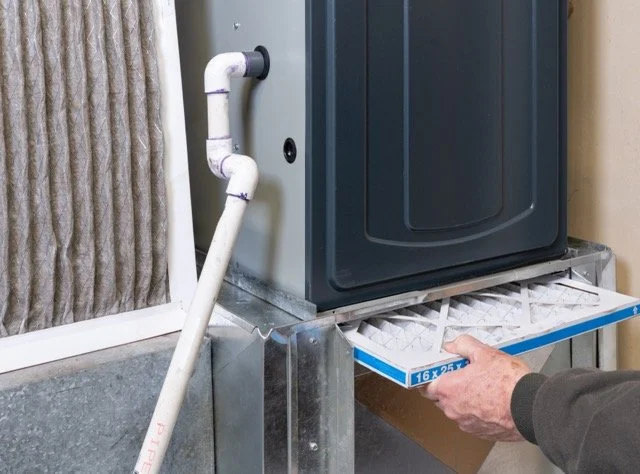
Turn off your furnace at the thermostat. Locate the filter. It is usually in the return air grille on the wall or ceiling, or inside the furnace cabinet near the blower. Pull it out and hold it up to a light. If you cannot see light through it, the filter is clogged and restricting airflow.
Replace the filter with a new one. Make sure you install it with the airflow arrow pointing in the correct direction (toward the furnace, away from the return duct). Turn the furnace back on and see if the error clears.
In Michigan, you should be changing your furnace filter every 30 to 60 days during heating season. If you have pets, change it every 30 days. If you have a high-efficiency pleated filter, check it monthly. A clogged filter is the easiest problem to fix and the most common cause of error code 13.
Step 2: Inspect Return Vents and Registers
Walk through your home and check every return air vent. Make sure nothing is blocking them. Move furniture, rugs, or storage boxes away from the vents. Check that all supply registers in each room are open. Even if you do not use a room, keep the vents open to maintain proper airflow.
If you have a basement furnace room, check the return duct connection at the furnace. Make sure the duct is not disconnected, crushed, or blocked.
Step 3: Listen for Blower Motor Operation
Set your thermostat to heat and increase the temperature 5 degrees above the current room temperature. Go to the furnace and listen. You should hear the burners ignite first, followed by the blower motor starting 30 to 90 seconds later.
If the burners fire but the blower never starts, you have a blower motor, capacitor, or control board issue. This requires a technician.
If the blower starts but sounds weak, grinding, or squealing, the motor bearings may be failing. Turn off the furnace and call for service.
Step 4: Look for Visible Soot or Scorch Marks
With the furnace off and cool, open the burner access panel if you feel comfortable doing so. Look for black soot around the burners, scorch marks on the furnace cabinet, or discoloration on the heat exchanger. These are signs of incomplete combustion or flame rollout.
If you see soot or scorch marks, do not run the furnace. Call a technician immediately. This indicates a serious safety issue.
When to Stop and Call a Professional
If you smell gas, see soot, hear unusual noises, or the error code persists after changing the filter and checking the vents, stop. Do not attempt further diagnosis. Turn off the furnace and contact a licensed HVAC technician.
Error code 13 can indicate a cracked heat exchanger, which poses a carbon monoxide risk. This is not a DIY repair. You need a trained technician with combustion analysis equipment to diagnose the problem safely.
When to Call a Michigan HVAC Technician
You should call a technician immediately if:
- You smell gas or see flames outside the burner chamber.
- You see soot, scorch marks, or discoloration around the burners or heat exchanger.
- Your carbon monoxide detector goes off.
- The furnace flame is yellow or orange instead of blue.
- The error code returns immediately after you replace the filter.
- The furnace is 15 years or older and has never had a heat exchanger inspection.
- You hear grinding, squealing, or loud banging noises from the furnace.
NEXT Heating & Cooling offers 24-hour emergency HVAC service throughout Macomb County, Oakland County, and St. Clair County. We prioritize furnace safety issues and can usually get a technician to your home the same day. Our NATE-certified HVAC technicians carry diagnostic equipment to test combustion efficiency, measure airflow, and inspect heat exchangers for cracks.
We do not work on commission. We do not upsell unnecessary equipment. If your furnace can be repaired safely, we will repair it. If it needs to be replaced, we will explain why and give you options without pressure. That is the NEXT difference.

What a NEXT Technician Does During a Code 13 Service Call
When you call us for error code 13, here is what happens.
We start with a visual inspection of the furnace, burners, and heat exchanger. We look for soot, scorch marks, rust, or visible cracks. We check the filter, blower motor, and ductwork connections.
Next, we perform a combustion analysis. We use a digital analyzer to measure the oxygen, carbon monoxide, and carbon dioxide levels in the exhaust gases. This tells us if the furnace is burning fuel efficiently and safely. If the combustion readings are off, it indicates a problem with the burners, heat exchanger, or venting system.
We test the limit switch and flame rollout switch with a multimeter to see if they are functioning correctly. We measure the airflow across the heat exchanger using a manometer or anemometer. Residential furnaces need 400 cubic feet per minute (CFM) of airflow per ton of heating capacity. If the airflow is low, we diagnose the cause, whether it is a clogged filter, undersized ductwork, or a failing blower motor.
We inspect the heat exchanger using a camera or mirror. We look for cracks, holes, or rust. If we suspect a crack, we may perform a pressure test or use a combustion leak detector to confirm.
We clean the flame sensor and inspect the burners for alignment and debris. We check the gas pressure and adjust it if necessary. We test the inducer motor to make sure it is pulling enough combustion air through the system.
If the ductwork is undersized or improperly designed, we measure the static pressure in the supply and return ducts. High static pressure indicates that the ductwork cannot handle the airflow from the furnace. We will recommend ductwork modifications if needed.
Once we identify the problem, we explain it to you in plain language. We give you repair options with upfront pricing. If the furnace needs to be replaced, we explain why and provide a written estimate. We do not leave until you understand what is wrong and what your options are.
Cost Reality: What to Expect
The cost to fix error code 13 depends on the cause.
A diagnostic service call costs $89 to $150 in Southeast Michigan. This includes the technician visit, troubleshooting, and a written estimate for any needed repairs. At NEXT, we waive the diagnostic fee if you proceed with the repair.
If the problem is a clogged filter or closed vents, the fix is free. Change the filter yourself and the error should clear.
If the blower capacitor failed, replacement costs $150 to $300 depending on the capacitor size and furnace model.
If the blower motor needs to be replaced, expect $400 to $800 for the part and labor. Variable-speed blower motors cost more than single-speed motors.
If the limit switch or flame rollout switch is faulty, replacement costs $150 to $350.
If the heat exchanger is cracked, replacement is not cost-effective. A new heat exchanger costs $1,000 to $2,000 for the part alone, plus 6 to 10 hours of labor to disassemble and reassemble the furnace. Total cost: $2,500 to $4,500. At that price, you are better off replacing the entire furnace with a new, high-efficiency model that comes with a 10-year parts warranty and better energy savings.
If the furnace is 15 years or older and the heat exchanger is cracked, replacement is the right move. A new furnace costs $3,500 to $7,000 installed, depending on the brand, efficiency rating, and whether you need ductwork modifications. For a detailed cost breakdown, see our guide on furnace replacement costs in Troy Michigan.
If you are a member of our Next Care Plan, you get priority scheduling, no service call fees, and 10% off all repairs. The plan costs $5 per month ($60 per year) and includes two annual tune-ups (fall furnace check and spring AC check). Members avoid most emergency breakdowns because we catch problems during the tune-ups.
Preventing Error Code 13
Most error code 13 issues are preventable with basic maintenance.
Change your furnace filter every 30 to 60 days during heating season. Mark it on your calendar. Set a phone reminder. A clean filter is the single most important thing you can do to prevent limit switch trips.
Schedule an annual furnace tune-up every fall before heating season starts. A tune-up includes cleaning the burners, testing the limit switch and flame rollout switch, inspecting the heat exchanger, measuring airflow, and checking combustion efficiency. Tune-ups catch small problems before they become expensive breakdowns.
Keep return vents and supply registers clear. Do not block them with furniture or close them to "save energy." Your furnace needs proper airflow to operate safely.
If your furnace is 10 years or older, have the heat exchanger inspected annually. Heat exchanger cracks develop gradually. Catching them early prevents carbon monoxide exposure and emergency replacements in the middle of winter.
If your home has ductwork issues (hot and cold spots, weak airflow, high energy bills), get a ductwork evaluation. Undersized or leaky ducts cause repeated furnace problems and waste energy. Fixing the ductwork solves the root cause instead of patching symptoms.
Consider joining the $5/month HVAC maintenance plan. Members get two annual visits (fall furnace tune-up and spring AC tune-up), priority scheduling, 10% repair discounts, and no service call fees. The plan pays for itself the first time you need a repair.
Ready to Get Started?
NEXT Heating & Cooling has been keeping Michigan homes comfortable for over 35 years. Get honest diagnostics and fair pricing from NATE-certified technicians who show up on time.
Schedule Your Service