

Furnace Limit Switch Tripped? What It Means & How to Fix It

Your furnace kicked off in the middle of a Michigan winter night. The house is cold, the thermostat is calling for heat, but nothing happens. You head down to the basement and notice the blower is not running, or maybe it is running but no warm air is coming out. Chances are good your furnace limit switch tripped.
The limit switch is a safety device that shuts down your furnace when it detects temperatures that are too high inside the unit. It is doing its job, protecting your home from overheating or potential fire hazards. But when it trips repeatedly, something is wrong. The question is whether you can reset it yourself or if you need professional heating and cooling services in Metro Detroit to diagnose the root cause.
We have been servicing furnaces across Macomb County, Oakland County, and St. Clair County for over 35 years. We have seen every reason a limit switch trips, from simple dirty filters to serious blower motor failures and cracked heat exchangers. This guide walks you through what the limit switch does, why it trips, how to reset it safely, and when to call a technician.
What the Furnace Limit Switch Does
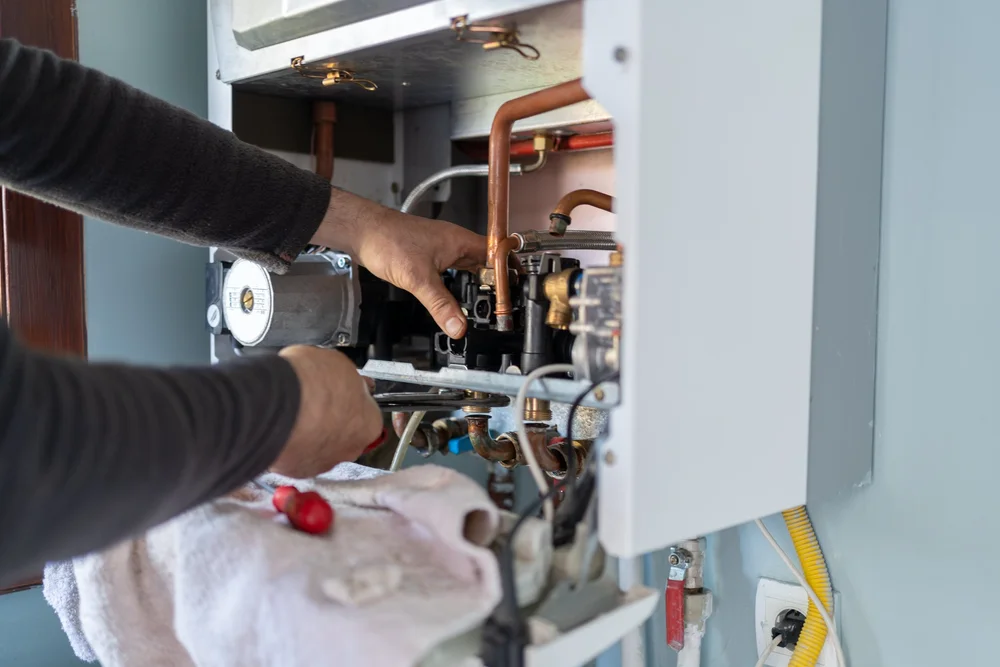
The furnace limit switch is a temperature-activated safety control mounted on or near the heat exchanger plenum. It monitors the air temperature inside the furnace cabinet. When the air gets too hot, typically between 160°F and 200°F depending on the furnace model, the limit switch opens the circuit and shuts down the burners.
Most modern furnaces use a combination fan and limit control. This single device does two jobs:
- Fan control: It tells the blower motor when to turn on after the heat exchanger warms up, usually around 90°F to 110°F, and when to turn off after the burners shut down.
- Limit control: It cuts power to the gas valve if the plenum temperature exceeds the high-limit setpoint, preventing overheating.
The limit switch is not optional. Michigan mechanical code and all furnace manufacturers require this safety device. Without it, a furnace could overheat to dangerous levels, crack the heat exchanger, or start a fire.
When the limit switch trips, it is telling you the furnace is running too hot. That heat buildup happens for a reason, and ignoring it puts your home at risk.
Why Your Limit Switch Keeps Tripping
A furnace limit switch trips because the heat exchanger is getting too hot. That overheating is always caused by restricted airflow. When air cannot move freely through the furnace, heat builds up inside the cabinet faster than it can be carried away. Here are the most common reasons we see in Sterling Heights, Warren, and Troy homes.
Dirty or Clogged Air Filter
This is the number one cause of limit switch trips. A clogged filter blocks return air from entering the furnace. Without enough airflow, the heat exchanger temperature spikes. If you have not changed your filter in three months or more, start here. Check the filter slot, pull out the filter, and hold it up to a light. If you cannot see light through it, replace it immediately.
Michigan winters are hard on filters. Homes with pets, older ductwork, or high dust levels may need monthly filter changes. If you are running a high-MERV filter (MERV 11 or higher) without a properly sized return duct system, you are choking your furnace even with a clean filter.
Blocked or Closed Supply Registers
Closing too many registers in unused rooms restricts airflow and increases static pressure in the ductwork. The furnace cannot push enough air through the system, so heat backs up into the cabinet. Walk through your home and confirm that at least 80% of your supply vents are open. Move furniture, rugs, or curtains that might be blocking registers.
Blower Motor Failure or Weak Capacitor
If the blower motor is not running at full speed, or not running at all, the furnace overheats quickly. A failing blower capacitor is a common culprit. The capacitor gives the motor the electrical boost it needs to start and run. When it weakens, the motor struggles or fails to start. You might hear clicking sounds, a humming noise, or nothing at all when the furnace tries to run. For more details on capacitor issues, see our guide on AC capacitor failure in Warren, MI, which covers similar symptoms in cooling systems.
Blower motors themselves wear out over time. Bearings seize, windings fail, and the motor slows down or stops. If your furnace is 15 years old or more and the blower is original, age may be the issue.
Dirty Blower Wheel or Evaporator Coil
Dust and debris accumulate on the blower wheel fins and the evaporator coil (if you have central air conditioning). A dirty blower wheel cannot move air efficiently. A clogged evaporator coil restricts airflow through the entire system. Both conditions reduce the volume of air passing over the heat exchanger, causing it to overheat.
This is why annual furnace maintenance matters. A technician cleans these components during a tune-up, preventing the buildup that leads to limit switch trips.
Undersized or Leaky Ductwork
Older Michigan homes, especially 1960s and 1970s ranches, often have undersized return ducts. The furnace tries to pull air through a duct system that is too small, creating negative pressure and reducing airflow. Leaky ducts lose conditioned air before it reaches the living space, forcing the furnace to run longer and hotter to meet the thermostat setpoint.
If you have had loud furnace noises or uneven heating for years, ductwork may be the root cause. A Manual D duct design evaluation can identify sizing problems.
Cracked or Damaged Heat Exchanger
This is the most serious cause of repeated limit switch trips. A cracked heat exchanger allows combustion gases to escape into the air stream, and it disrupts normal airflow patterns inside the furnace. The limit switch may trip because the furnace is running inefficiently and overheating in localized areas.
A cracked heat exchanger is not repairable. The furnace must be replaced. If your furnace is more than 15 years old and the limit switch trips frequently even after filter changes and blower cleaning, a heat exchanger inspection is critical. Carbon monoxide exposure is a real risk.
How to Reset a Tripped Limit Switch Safely
If your furnace limit switch tripped for the first time, you can try resetting it yourself. Follow these steps carefully. If the switch trips again after you reset it, stop and call a technician. Repeated trips indicate a problem that will not fix itself.
- Turn off the furnace. Switch the furnace power to OFF at the wall switch near your unit or at the circuit breaker panel. Wait five minutes for components to cool down.
- Check and replace the air filter. Remove the furnace filter and inspect it. If it is visibly dirty, clogged, or has not been changed in over 90 days, replace it with a new filter of the correct size and MERV rating.
- Verify all vents are open. Walk through your home and confirm that all supply registers are open and unblocked by furniture, rugs, or curtains. Check return air grilles as well.
- Locate the limit switch reset button. Open the furnace access panel. The limit switch is typically mounted on the plenum near the heat exchanger. Look for a small red or white button on the switch body. Some modern furnaces have auto-reset switches with no manual button.
- Press the reset button. Press the reset button firmly until you hear or feel a click. If there is no button, the switch will reset automatically once the furnace cools down.
- Restore power and test. Turn the furnace power back on and set your thermostat to call for heat. Monitor the furnace for at least one full heating cycle to confirm it runs normally without tripping again.
Safety Warning: Do not bypass or disable the limit switch. Some homeowners try to jump the switch terminals to keep the furnace running. This removes the only safety device preventing a fire or carbon monoxide leak. Never do this.
If the furnace runs through a complete cycle without tripping, you likely solved the problem with a filter change and open vents. If it trips again within a few hours or days, you have a deeper issue that requires professional diagnosis.
When DIY Ends and You Need a Technician
Some limit switch problems are beyond homeowner fixes. Call a reliable HVAC contractor in Metro Detroit if you experience any of these situations:
- The limit switch trips repeatedly even after replacing the filter and opening all vents.
- The blower motor does not start when the furnace calls for heat.
- You hear loud banging, screeching, or grinding noises from the furnace.
- You smell gas, burning plastic, or a metallic odor near the furnace.
- The furnace is more than 15 years old and has never had a professional inspection.
- You see visible rust, corrosion, or cracks on the heat exchanger when you open the access panel.
- Your carbon monoxide detector goes off or you experience headaches, dizziness, or nausea when the furnace runs.
A licensed technician will perform a full diagnostic, including:
- Measuring static pressure in the duct system to identify airflow restrictions.
- Testing the blower motor and capacitor with a multimeter.
- Inspecting the heat exchanger with a camera scope for cracks or corrosion.
- Checking the limit switch calibration and setpoint.
- Cleaning the blower wheel, evaporator coil, and burner assembly.
- Verifying proper gas pressure and combustion efficiency.
If you are in Shelby Township, Clinton Township, or Chesterfield and need emergency HVAC repair in Macomb County, we offer 24/7 service. A furnace that will not stay running in January is an emergency.
What Furnace Limit Switch Repairs Cost in Michigan
Repair costs depend on what caused the limit switch to trip. Here is what homeowners in Southeast Michigan can expect to pay in 2026:
- Limit switch replacement: $150 to $350, including the part and labor. Most switches cost $25 to $75, with the rest being service call and labor.
- Blower motor capacitor replacement: $150 to $300. Capacitors are inexpensive ($15 to $40), but the labor and diagnostic time add to the cost.
- Blower motor replacement: $400 to $800, depending on motor size and furnace model. Variable-speed ECM motors cost more than single-speed PSC motors.
- Blower wheel cleaning: $150 to $250 if done as a standalone service. Usually included in annual maintenance visits.
- Evaporator coil cleaning: $200 to $400 if heavily clogged and requires removal.
- Heat exchanger replacement: $1,200 to $2,500. At this cost, most homeowners choose to replace the entire furnace instead, especially if the unit is over 15 years old.
For context, a full furnace replacement in Michigan costs $3,500 to $7,000 for a mid-efficiency unit and $5,000 to $10,000 for a high-efficiency model with a variable-speed blower and modulating gas valve. If your furnace is nearing the end of its lifespan and needs a major repair, replacement may be the smarter investment.
We never push unnecessary replacements. Our NATE-certified HVAC technicians give you honest diagnostics and clear options. If a $200 repair buys you three more years of reliable heat, we will tell you that. If the furnace is on its last legs and you will be throwing good money after bad, we will tell you that too.
Preventing Limit Switch Trips Through Maintenance
Most limit switch trips are preventable. Regular maintenance keeps airflow strong and prevents the conditions that cause overheating. Here is what you should do:
Change Your Filter Every 60 to 90 Days
This is the single most important thing you can do. Set a calendar reminder. Buy a six-pack of filters and keep them near the furnace. If you have pets or live in a dusty area, change the filter every 30 to 60 days.
Schedule Annual Furnace Tune-Ups
A professional tune-up catches problems before they cause breakdowns. Our technicians clean the blower wheel, inspect the heat exchanger, test the limit switch, measure airflow, and verify safe combustion. We also check the capacitor and lubricate motor bearings if applicable.
The Next Care Plan includes two annual visits: a fall furnace tune-up and a spring AC tune-up. At $5 per month, it is the most cost-effective way to prevent expensive repairs. Members also get priority scheduling, 10% off repairs, and no service call fees.
Keep Vents and Returns Clear
Do not close more than 20% of your supply registers. Do not block return air grilles with furniture or curtains. Your furnace needs unrestricted airflow to operate safely and efficiently.
Inspect Ductwork for Leaks
If you notice dusty air coming from vents, uneven heating, or high energy bills, have your ductwork inspected. Sealing duct leaks improves airflow and reduces the strain on your furnace.
Replace Aging Equipment Before It Fails
Furnaces last 15 to 20 years on average. If yours is approaching that age and you are starting to see frequent repairs, plan for replacement before you are stuck in a cold house in January. We offer financing options and can schedule installations around your timeline.
Ready to Get Started?
NEXT Heating & Cooling has been keeping Michigan homes comfortable for over 35 years. Get honest diagnostics and fair pricing from NATE-certified technicians who show up on time.
Schedule Your ServiceFrequently Asked Questions
Yes, you can reset the limit switch if it has a manual reset button. Turn off the furnace power, wait five minutes, replace the air filter if it is dirty, open any closed vents, then press the reset button on the limit switch. Restore power and test. If the switch trips again, call a technician. Do not repeatedly reset a switch that keeps tripping, as this indicates a serious problem.
A bad limit switch may trip at incorrect temperatures, fail to reset, or prevent the blower from turning on or off at the right times. Symptoms include the furnace cycling on and off rapidly, the blower running continuously even when the furnace is off, or the furnace shutting down with no obvious cause. A technician can test the switch with a multimeter to confirm whether it is functioning correctly.
If the limit switch continues to trip after a filter change, you likely have a deeper airflow restriction. Common causes include a failing blower motor or capacitor, a dirty blower wheel, blocked ductwork, closed or blocked vents, or a cracked heat exchanger. A technician needs to measure static pressure, inspect the blower assembly, and check the heat exchanger to identify the root cause.
Replacing a furnace limit switch typically costs $150 to $350 in Southeast Michigan, including the part and labor. The switch itself costs $25 to $75, with the remainder covering the service call, diagnostic time, and installation. If the limit switch is part of a combination fan and limit control, the part may cost slightly more. Labor rates vary by contractor, but expect one to two hours of work.
Yes, a dirty or clogged air filter is the most common cause of limit switch trips. The filter blocks return airflow, preventing enough air from passing over the heat exchanger. Without adequate airflow, the heat exchanger temperature rises rapidly and the limit switch trips to prevent overheating. Replacing the filter often solves the problem immediately.
Yes, repeated limit switch trips indicate your furnace is overheating, which can damage components, crack the heat exchanger, or create a fire hazard. A cracked heat exchanger can leak carbon monoxide into your home, which is deadly. If your limit switch trips more than once, do not keep resetting it. Call a licensed HVAC technician immediately to diagnose and repair the problem.
Schedule a professional furnace tune-up once per year, ideally in the fall before heating season begins. Annual maintenance includes cleaning the blower wheel, inspecting the heat exchanger, testing the limit switch, checking the capacitor, and verifying proper airflow. Homeowners should also change the air filter every 60 to 90 days and keep vents unobstructed. The Next Care Plan includes seasonal tune-ups and helps prevent most limit switch issues.