

Furnace Maintenance Near Me: What Michigan Homeowners Need
You search "furnace maintenance near me" in October because you know Michigan winter is coming. The question is not whether you need maintenance. The question is what you are actually paying for when a technician shows up at your door.
Most homeowners in Sterling Heights, Rochester Hills, and across Macomb County have heard they should get their furnace serviced annually. Few understand what happens during that visit or why it matters more here than in warmer climates. A professional tune-up is not a quick filter swap and a pat on the back. It is a systematic inspection designed to catch problems before they leave you without heat at 2 AM during a polar vortex.
At NEXT Heating & Cooling, we have been performing furnace maintenance across Southeast Michigan for over 35 years. We see what happens when homeowners skip annual service. We also see the difference it makes when they stay ahead of problems. Here is what you need to know about furnace and AC installation services and maintenance in Michigan.
What Professional Furnace Maintenance Actually Includes
A legitimate furnace tune-up follows a checklist developed by the Air Conditioning Contractors of America (ACCA). The technician is not just looking for obvious problems. They are measuring, testing, and verifying that every component operates within manufacturer specifications.
Heat Exchanger Inspection
The heat exchanger is the most critical safety component in your furnace. It separates combustion gases (including carbon monoxide) from the air circulating through your home. Cracks or holes allow those gases to mix with your breathing air.
A thorough inspection includes visual examination with a flashlight and mirror, looking for rust, corrosion, or visible cracks. On older furnaces (15+ years), we may use a combustion analyzer to measure carbon monoxide levels in the flue and supply air. If readings are elevated, we investigate further.
Heat exchangers typically develop cracks after 15 to 20 years of service, especially in furnaces that cycle on and off frequently due to oversizing or thermostat issues. If you are experiencing short-cycling problems, that stress accelerates wear on the heat exchanger.
Burner Cleaning and Flame Adjustment
Gas burners accumulate dust, rust, and debris over time. Dirty burners produce uneven flames, incomplete combustion, and soot buildup inside the heat exchanger. This reduces efficiency and can create carbon monoxide.
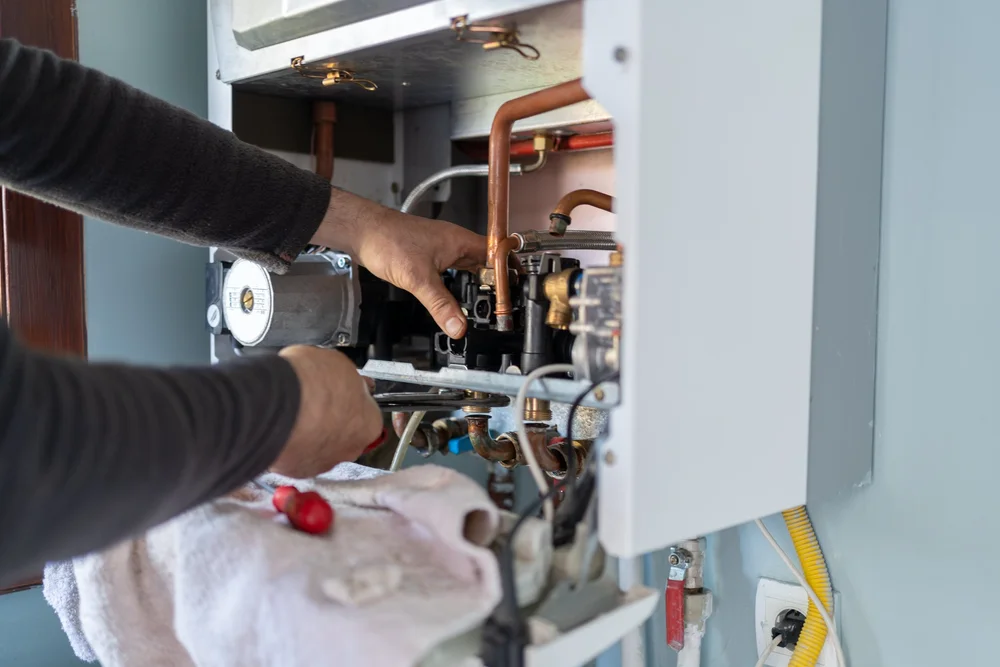
During maintenance, the technician removes the burner assembly, vacuums out debris, and inspects the flame sensor. They then fire up the furnace and observe the flame pattern. A proper flame is blue with minimal yellow tips. Yellow or orange flames indicate incomplete combustion and require adjustment.
On Carrier, Lennox, and Trane furnaces, burner orifices are sized specifically for natural gas pressure in Southeast Michigan. If you have propane or if gas pressure is off-spec, flames will not burn correctly no matter how clean the burners are.
Blower Motor and Belt Inspection
The blower motor moves heated air through your ductwork. If it runs too slow, your furnace overheats and shuts down on the limit switch. If it runs too fast, it creates noise and wastes energy.
Belt-driven blowers (common in older furnaces) require annual belt inspection. A worn or loose belt slips, reducing airflow and causing the furnace to overheat. Direct-drive motors (standard on newer equipment) do not have belts but still need lubrication on older models.
We measure amp draw on the blower motor to verify it is not working harder than it should. High amp draw indicates a failing motor or restricted airflow, often from a clogged filter or blocked return vents.
Safety Control Testing
Modern furnaces have multiple safety switches that shut down the system if something goes wrong. These include the limit switch (prevents overheating), pressure switch (verifies proper venting), and flame sensor (confirms burner ignition).
During maintenance, we test each safety control to ensure it trips when it should. A malfunctioning limit switch, for example, might allow the furnace to overheat and crack the heat exchanger. A faulty flame sensor causes nuisance shutdowns, leaving you without heat on cold nights.
If you notice a burning smell from your furnace, it could indicate a safety control issue or dust buildup that maintenance would catch early.
Filter Replacement and Airflow Verification
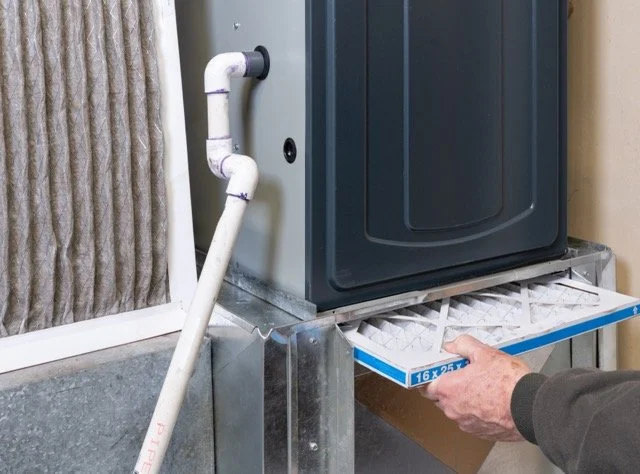
A clogged filter is the most common cause of furnace problems. It restricts airflow, causing the furnace to overheat, cycle frequently, and work harder than necessary. In Michigan homes with pets or older ductwork, filters clog faster than the standard 30-day replacement interval.
We measure temperature rise across the heat exchanger to verify airflow is within the range stamped on the furnace data plate. If temperature rise is too high, airflow is restricted. If it is too low, the blower is moving too much air or the burners are not firing correctly.
Homeowners often ask whether expensive filters are worth it. The answer depends on your goals. Standard pleated filters (MERV 8-11) balance airflow and filtration for most homes. High-efficiency filters (MERV 13+) capture more particles but restrict airflow unless your system is designed for them. We recommend what matches your furnace specifications and indoor air quality needs.
Why Michigan Winters Demand Annual Furnace Service
Furnaces in Arizona run a few months per year. Furnaces in Southeast Michigan run six to seven months straight, often 12 to 16 hours per day during January and February cold snaps. That extended runtime accelerates wear on every component.
Polar Vortex Events Stress Equipment
When temperatures drop below zero for days at a time, furnaces run almost continuously. Components that normally cycle on and off stay hot for extended periods. Heat exchangers expand and contract repeatedly. Blower motors run without rest. Ignition systems fire hundreds of times per day.
This stress reveals weak points. A heat exchanger with microscopic cracks develops visible failures. A blower motor bearing that was marginal in October seizes in January. A pressure switch that worked fine in moderate weather fails when wind affects venting.
Annual maintenance before heating season identifies these vulnerabilities while you still have time to address them. Waiting until the furnace fails during a polar vortex means emergency service calls, higher repair costs, and days without heat while parts are ordered.
Lake-Effect Cold and Humidity
Southeast Michigan sits downwind of the Great Lakes. Lake-effect weather brings not just cold but moisture. That moisture condenses inside furnace cabinets, vent pipes, and flue systems, accelerating rust and corrosion.
High-efficiency furnaces (90+ AFUE) produce condensate as part of normal operation. If the condensate drain line freezes or clogs, water backs up into the furnace and triggers a safety shutdown. We see this frequently in January when temperatures drop suddenly after a thaw. Maintenance includes checking and cleaning the condensate system before it becomes a problem.
For homeowners considering upgrades, our guide on 96% AFUE furnaces in Michigan explains the condensate management requirements and whether the efficiency gain justifies the complexity.
Carbon Monoxide Risks in Older Homes
Many homes in Sterling Heights, Royal Oak, and Grosse Pointe Farms were built in the 1950s through 1970s. The furnaces in those homes are often second or third replacements, installed in basements with marginal ventilation and aging vent pipes.
Carbon monoxide is odorless and invisible. A cracked heat exchanger, blocked vent, or backdrafting flue can introduce it into living spaces without any obvious warning. Michigan building code requires carbon monoxide detectors within 10 feet of every bedroom, but detectors only alert you after CO is already present.
Annual maintenance catches the conditions that lead to carbon monoxide problems before they become dangerous. We inspect vent pipes for rust, blockages, and proper pitch. We test combustion efficiency and measure CO levels in the flue. We verify the furnace room has adequate combustion air.
If your furnace is 15 years or older and you have not had it inspected recently, do not wait. The risk is real, and the solution is straightforward.
Signs Your Furnace Needs Immediate Attention
Annual maintenance prevents most problems, but some symptoms require immediate service regardless of when your last tune-up occurred.
Strange Noises During Operation
Furnaces make normal sounds: a low hum from the blower, a click when the gas valve opens, a whoosh when burners ignite. Abnormal sounds indicate mechanical problems.
- Banging or booming at startup: Delayed ignition. Gas builds up before igniting, creating a small explosion. This stresses the heat exchanger and can crack it over time.
- Screeching or squealing: Blower motor bearing failure or loose belt. If the motor seizes, you lose all heat until it is replaced.
- Rattling or vibrating: Loose panels, cracked heat exchanger, or failed blower wheel. Vibration can disconnect gas lines or electrical connections.
- Clicking that does not stop: Flame sensor or ignition control failure. The furnace tries repeatedly to light but cannot establish a flame.
If your system is making unusual sounds, our article on HVAC noise diagnosis covers what different sounds mean and when to call for service.
Yellow or Flickering Pilot Light
On older furnaces with standing pilot lights, the flame should be blue with a small yellow tip. A yellow, orange, or flickering flame indicates incomplete combustion and possible carbon monoxide production.
This happens when the pilot orifice is dirty, combustion air is insufficient, or the gas pressure is incorrect. It also occurs when the heat exchanger has cracks that disrupt airflow around the burners.
Modern furnaces use electronic ignition instead of standing pilots, but the burner flame color still matters. If you see yellow flames during operation, shut down the furnace and call for service.
Frequent Cycling or Short-Cycling
A furnace should run for 10 to 15 minutes per cycle in moderate weather, longer during extreme cold. If it cycles on and off every few minutes, something is wrong.
Common causes include clogged filters, oversized equipment, faulty thermostats, and failing limit switches. Short-cycling wastes energy, increases wear on components, and reduces comfort by creating temperature swings.
We wrote an entire guide on why furnaces short-cycle because it is one of the most common problems we diagnose in Macomb and Oakland counties.
Rising Energy Bills Without Explanation
Furnace efficiency degrades gradually. A system that was 95% efficient when new might drop to 85% after 10 years without maintenance. You do not notice the decline because it happens slowly, but your energy bills reflect it.
If your gas bills increase significantly compared to previous winters (adjusted for weather), your furnace is working harder than it should. Dirty burners, restricted airflow, and worn components all reduce efficiency.
Annual maintenance restores most of that lost efficiency. According to ENERGY STAR, regular tune-ups can improve furnace efficiency by 5% to 15%, paying for the service cost through lower utility bills.
The Real Cost of Skipping Maintenance
Homeowners skip furnace maintenance for understandable reasons. Life gets busy. The furnace seems fine. The cost feels like an unnecessary expense. Then something breaks in January, and the real costs become clear.
Average Emergency Repair Costs in Southeast Michigan (2026):
- Heat exchanger replacement: $1,500 to $2,500 (often cheaper to replace the entire furnace)
- Blower motor replacement: $600 to $1,200
- Ignition control board: $400 to $800
- Pressure switch: $250 to $500
- Emergency service call premium: $150 to $300 on top of repair costs
Most of these failures are preventable with annual maintenance. A technician spots a heat exchanger developing cracks during a tune-up, giving you time to plan a replacement. They catch a blower motor drawing high amps before it seizes. They clean a pressure switch before it fails and leaves you without heat.
Skipping maintenance also voids most manufacturer warranties. Carrier, Lennox, Trane, and other brands require proof of annual service to honor warranty claims. If your heat exchanger fails and you cannot provide service records, you pay full price for the replacement even if the furnace is only five years old.
Shortened Equipment Lifespan
A well-maintained furnace lasts 18 to 25 years in Michigan. A neglected furnace fails at 10 to 15 years. That difference represents thousands of dollars in premature replacement costs.
The American Society of Heating, Refrigerating and Air-Conditioning Engineers (ASHRAE) publishes equipment life expectancy data based on maintenance practices. Systems with annual professional service last 40% longer than those without.
If you are weighing whether to repair or replace your current system, our guide on the 50% rule for HVAC replacement provides a framework for that decision.
Energy Waste Adds Up
A furnace loses approximately 5% efficiency per year without maintenance. Over five years, that is a 25% efficiency drop. On a system that was 95% AFUE when new, you are now running at 70% efficiency.
For a typical 2,000-square-foot home in Sterling Heights with a $1,200 annual heating bill, that efficiency loss costs an extra $300 per year. Over five years, that is $1,500 wasted on energy bills, far more than the cost of annual maintenance.
Maintenance restores most of that lost efficiency by cleaning burners, adjusting airflow, and ensuring proper combustion. The service pays for itself through lower utility bills.
How to Find Reliable Furnace Maintenance Near Me
Not all HVAC companies provide the same quality of service. Some send salespeople instead of technicians. Some rush through maintenance visits to maximize the number of stops per day. Some recommend unnecessary repairs or equipment replacements.
Verify Michigan Mechanical Contractor License
Michigan law requires anyone performing HVAC work to hold a Mechanical Contractor License issued by the Department of Licensing and Regulatory Affairs (LARA). This is not optional. Unlicensed contractors cannot legally work on heating systems.
Ask for the license number and verify it at michigan.gov/lara. The license confirms the contractor carries required insurance and has passed competency exams. It also gives you recourse if something goes wrong.
At NEXT Heating & Cooling, we hold Michigan Mechanical Contractor License and maintain all required insurance. We have been licensed and operating in Southeast Michigan for over 35 years under Premier Builder Inc.
Look for NATE Certification
North American Technician Excellence (NATE) is the industry standard for HVAC technician certification. NATE exams test real-world knowledge of heating, cooling, and system diagnostics. Technicians must pass written and practical exams to earn certification.
Not every good technician is NATE-certified, but certification provides objective proof of competency. It signals that the company invests in training and values technical expertise over sales skills.
Our technicians at NEXT Heating & Cooling are NATE-certified and receive ongoing training on new equipment and diagnostic techniques. We do not pay commissions on equipment sales, so our techs focus on solving problems rather than upselling.
Read Recent Reviews and Check References
Google reviews and Better Business Bureau ratings reveal how companies handle problems, not just how they perform when everything goes smoothly. Look for patterns in reviews from the past 12 months.
Red flags include complaints about high-pressure sales tactics, surprise charges not disclosed upfront, technicians who recommend new equipment for every problem, and companies that do not return calls after receiving payment.
Green flags include mentions of technicians who explain problems clearly, provide multiple repair options with honest cost comparisons, show up on time, and follow up after service to ensure everything works correctly.
NEXT Heating & Cooling maintains a BBB A+ rating and 5.0-star Google reviews because we focus on long-term relationships over one-time transactions. We explain what we find, give you options, and let you decide what makes sense for your budget and timeline.
Ask About Maintenance Plans
Companies that offer preventive maintenance plans typically provide better service than those focused primarily on equipment sales. Maintenance plans create recurring revenue, which incentivizes quality work and customer retention.
Ask what the maintenance visit includes. A legitimate tune-up should list specific tasks: heat exchanger inspection, burner cleaning, blower motor testing, safety control verification, filter replacement, and combustion analysis.
Avoid vague promises like "complete system check" or "21-point inspection" without details about what those points are. You are paying for specific work, and you deserve to know exactly what you are getting.
Get a Written Service Agreement
Before the technician starts work, you should receive a written agreement that lists the services included, the cost, and any additional charges that might apply. This protects both parties and prevents misunderstandings.
If the technician finds problems during maintenance, they should explain the issue, show you the failed component if possible, and provide a written estimate for repairs. You should never feel pressured to approve repairs on the spot.
At NEXT Heating & Cooling, we provide detailed written estimates for any repairs we recommend. We explain why the repair is needed, what happens if you postpone it, and how much it will cost. You make the decision with full information.
Next Care Plan: Affordable Maintenance for Southeast Michigan
We created the Next Care Plan because we saw too many homeowners skipping maintenance due to cost concerns. At $5 per month ($60 per year), it removes the financial barrier while providing comprehensive preventive service.
What the Plan Includes
Two annual home visits scheduled around Michigan weather patterns:
- Fall furnace tune-up (September-October): Complete inspection, cleaning, and testing before heating season. We catch problems while you still have time to address them before cold weather arrives.
- Spring AC tune-up (April-May): System cleaning, refrigerant check, and performance testing before cooling season. This prevents the June rush when everyone calls for service during the first heat wave.
Both visits include filter replacement, safety control testing, and a written report of system condition with recommendations for any needed repairs.
Additional Benefits
Priority scheduling means you get faster service when you need repairs. During polar vortex events when our schedule fills quickly, Next Care Plan members move to the front of the line.
Ten percent discount on all repairs reduces the cost of any work your system needs. On a $500 repair, that is $50 saved. On a $2,000 repair, it is $200.
No service call fees for repairs means you do not pay the $89 to $150 diagnostic charge that most companies add to every service visit. If you need three service calls in a year (not uncommon on older systems), that alone saves more than the plan costs.
The Math on Preventive Maintenance
Annual furnace maintenance costs $120 to $200 with most contractors in Southeast Michigan. The Next Care Plan provides two visits (furnace and AC) for $60 per year. That is $30 per visit, less than half the typical cost.
The plan pays for itself if you need even one repair during the year, thanks to the 10% discount and waived service call fee. It pays for itself many times over if it prevents a major failure like a heat exchanger crack or blower motor seizure.
More importantly, it gives you peace of mind. You know your heating and cooling systems are being maintained by licensed and certified technicians who catch problems early, before they leave you without heat or air conditioning.
Ready to Get Started?
NEXT Heating & Cooling has been keeping Michigan homes comfortable for over 35 years. Get honest diagnostics and fair pricing from NATE-certified technicians who show up on time.
Schedule Your ServiceFrequently Asked Questions
Annual maintenance before heating season (September through October) is the industry standard and what most manufacturers require to maintain warranty coverage. Michigan winters are hard on furnaces due to extended runtime and polar vortex conditions. Annual service catches wear before it causes failures during cold weather. If your furnace is over 15 years old or has had repeated problems, consider twice-yearly inspections.
Standard furnace maintenance ranges from $120 to $200 depending on the contractor and what is included. Emergency service during winter costs significantly more, often with premium charges of $150 to $300 on top of regular rates. The Next Care Plan from NEXT Heating & Cooling provides comprehensive maintenance for $60 per year ($5 per month), covering both fall furnace and spring AC tune-ups. This is less than half the typical cost of a single maintenance visit.
Homeowners can and should replace filters monthly, keep vents clear, and ensure the area around the furnace stays clean. However, critical tasks like heat exchanger inspection, combustion analysis, gas pressure testing, and safety control verification require specialized tools and training. Michigan law requires licensed contractors for any work involving gas lines or combustion systems. DIY maintenance also voids manufacturer warranties, which require proof of professional annual service.
Skipping maintenance increases the likelihood of mid-winter breakdowns, voids manufacturer warranties, and reduces equipment lifespan by 40% according to ASHRAE data. Efficiency drops approximately 5% per year without service, costing $200 to $400 annually in wasted energy for typical Michigan homes. Small problems that could be caught early (dirty flame sensors, worn belts, restricted airflow) turn into expensive emergency repairs. Heat exchanger cracks can develop without warning, creating carbon monoxide risks.
A professional maintenance visit should take 60 to 90 minutes minimum. The technician should provide a written report listing what was inspected, what was cleaned, and any problems found. They should show you the filter they replaced and explain any recommendations. Red flags include visits that take less than 30 minutes, no written documentation, immediate recommendations to replace the entire system without explaining specific failures, or high-pressure sales tactics. Legitimate contractors explain problems clearly and give you options with honest cost comparisons.
Yes, through multiple pathways. Maintenance restores 5% to 15% lost efficiency (ENERGY STAR data), saving $200 to $400 annually on utility bills for typical Michigan homes. It prevents emergency repairs that cost $500 to $2,500 on average. It extends equipment life by 40%, delaying a $4,000 to $8,000 furnace replacement by several years. Maintenance preserves manufacturer warranty coverage, potentially saving thousands if a major component fails. The service typically pays for itself within the first year through energy savings alone.
September through early October is ideal. This gives you time to address any problems found during the inspection before cold weather arrives. It also avoids the November rush when everyone remembers they need service as temperatures drop. Scheduling early means more appointment availability, no emergency premiums, and parts can be ordered without rush charges if repairs are needed. If you wait until the furnace fails in January, you may wait days for service during high-demand periods like polar vortex events.