

Why Your AC Freezes Up in Summer | Metro Detroit HVAC Contractor
It's 85 degrees outside. The humidity is thick enough to cut with a knife — typical Michigan summer weather. You walk past your indoor AC unit and notice something strange: ice. Actual ice, coating the copper lines and maybe even the evaporator coil inside the air handler.
That's not supposed to happen. Your air conditioner should be removing heat, not creating a mini ice rink in your basement or utility closet.
We see this problem constantly during Michigan summers, especially in homes across Sterling Heights, Troy, and Warren. The good news: most freeze-ups have straightforward causes. The bad news: ignoring a frozen AC can destroy your compressor, which costs $1,500 to $3,000 to replace.
Here's what's actually happening, why it happens, and what you need to do about it — from a Metro Detroit HVAC contractor who has been diagnosing frozen coils for over three decades.
How Your AC Actually Works (The Science Behind Cooling)
To understand why your AC freezes, you need to understand how air conditioning actually works. It's not magic — it's physics.
Your air conditioner doesn't "create" cold air. It removes heat from your indoor air and dumps it outside. It does this using refrigerant — a chemical compound that changes from liquid to gas and back again, absorbing and releasing heat in the process.
Here's the cycle:
- Warm indoor air blows across the evaporator coil (inside your house)
- Refrigerant inside the coil is cold — typically 40-45°F — and absorbs heat from that warm air
- The refrigerant evaporates (turns from liquid to gas) as it absorbs heat
- The now-gaseous refrigerant travels to the outdoor condenser unit
- The compressor compresses the gas, making it hot (150-200°F)
- The outdoor coil releases that heat into the outside air, and the refrigerant condenses back to liquid
- The liquid refrigerant flows back inside through the expansion valve, which drops its pressure and temperature, and the cycle repeats
The evaporator coil is supposed to be cold — that's normal. But it should stay above freezing. When the coil temperature drops below 32°F, moisture in the air (and Michigan summer air has plenty of moisture) freezes on contact.
Once ice starts forming, it acts as an insulator. Less air can flow across the coil. The refrigerant gets even colder. More ice forms. It's a runaway cycle that ends with a solid block of ice and an AC system that can't cool your house.
The Three Main Causes of AC Freeze-Ups
There are three reasons your evaporator coil drops below freezing: restricted airflow, low refrigerant, or mechanical failure. Let's break down each one.
1. Restricted Airflow (The Most Common Cause)
If not enough warm air flows across the evaporator coil, the refrigerant doesn't absorb enough heat. The coil stays too cold, and ice forms.
What restricts airflow?
- Dirty air filters — This is the number one cause we see. A clogged filter blocks airflow like a hand over your mouth. In Michigan's humid summers, filters clog faster than in dry climates. If you haven't changed your filter in 90 days (or 60 days if you have pets), that's probably your problem.
- Blocked return vents — Furniture pushed against return grilles, closed doors isolating rooms, or rugs covering floor returns all reduce airflow.
- Closed supply registers — Closing too many registers (especially in unused rooms) reduces total system airflow and can cause freeze-ups.
- Dirty evaporator coils — Years of dust buildup on the coil itself blocks heat transfer. This is why seasonal AC tune-ups include coil cleaning.
- Failing blower motor — If the blower motor is weak or failing, it can't move enough air across the coil.
Airflow problems are usually easy to fix. Start with the filter. Check your vents. If ice keeps forming after addressing those, you likely have a different issue.
2. Low Refrigerant from Leaks
Refrigerant doesn't "run out" like gasoline. Your AC is a sealed system. If refrigerant is low, you have a leak.
When refrigerant leaks out, system pressure drops. Lower pressure means lower temperature — basic thermodynamics. The evaporator coil gets colder than it should, and ice forms.
Common leak locations in Michigan homes:
- Evaporator coil — Corrosion from condensation and chemicals in the air (especially in homes with poor ventilation)
- Outdoor condenser coil — Damage from lawn equipment, hail, or just age
- Service valves — Connections where refrigerant lines meet the outdoor unit
- Line set — The copper lines running between indoor and outdoor units, sometimes damaged during installation or home renovations
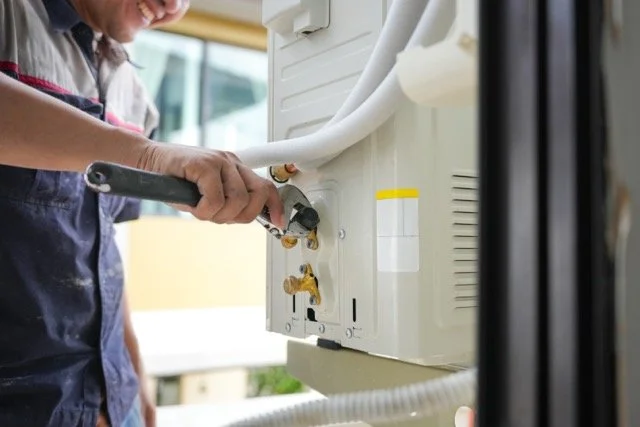
You can't fix a refrigerant leak yourself. It requires a licensed HVAC technician with EPA 608 certification. We locate the leak, repair it, vacuum the system to remove air and moisture, and then recharge it with the correct amount of refrigerant.
Important: If a contractor offers to "just add refrigerant" without finding and fixing the leak, walk away. That's like putting air in a leaking tire without patching the hole. You'll be paying for refrigerant refills every summer.
3. Mechanical Failures
Less common, but still possible:
- Blower motor failure — If the blower motor runs too slowly or stops entirely, airflow drops and ice forms. You'll usually hear unusual sounds or notice weak airflow from your vents.
- Thermostat problems — A faulty thermostat might run the AC continuously without cycling off, or it might not signal the blower to run. Either can cause freeze-ups.
- Expansion valve failure — The expansion valve (or metering device) controls refrigerant flow into the evaporator coil. If it sticks or fails, too much or too little refrigerant enters the coil, causing temperature problems.
- Reversing valve issues (heat pumps only) — If you have a heat pump and it's stuck in heating mode while trying to cool, you'll get ice and no cooling.
Mechanical failures require professional diagnosis. The symptoms overlap with other issues, so testing is necessary to identify the actual problem.
What to Do When You See Ice on Your AC
You walk past your furnace room and see ice on the copper lines or around the air handler. Here's exactly what to do:
Step 1: Turn off the system immediately. Switch your thermostat to OFF (not just to a higher temperature). Continuing to run a frozen AC can damage the compressor, which costs $1,500-$3,000 to replace.
Step 2: Turn the fan to ON. Switch your thermostat fan setting from AUTO to ON. This circulates warm air over the frozen coil to help it thaw faster. Don't try to chip or scrape the ice off — you'll damage the coil fins.
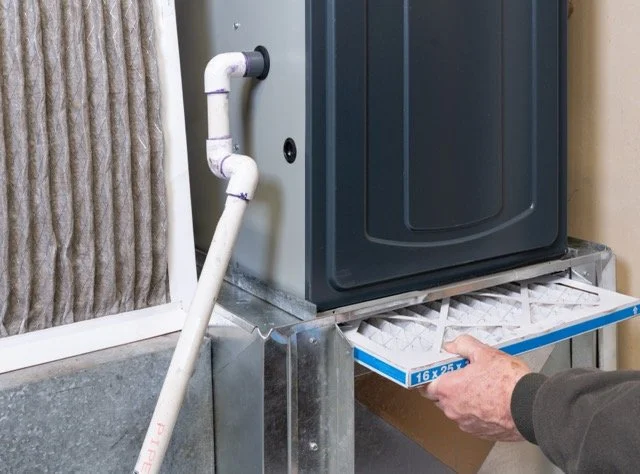
Step 3: Check and replace your air filter. A clogged filter is the most common cause of freeze-ups. If your filter looks dirty or hasn't been changed in over 60 days, replace it. This might solve your problem entirely.
Step 4: Wait for complete thaw. It takes 2-4 hours for a frozen coil to thaw completely. Place towels around the indoor unit to catch condensation water. There will be a lot of it — a frozen coil can produce several gallons of water as it melts.
Step 5: Check all vents and registers. Make sure all supply registers are open and no return vents are blocked by furniture, curtains, or rugs.
Step 6: Restart and monitor. After the coil is completely thawed and you've replaced the filter, turn the system back to COOL. Watch it for the next 24 hours. If ice reforms, you have a refrigerant leak or mechanical problem that requires professional repair.
If you're in the Royal Oak, Bloomfield Hills, or Rochester Hills area and ice keeps forming even after changing the filter and checking vents, it's time to call for AC repair service. You likely have a refrigerant leak or failing component that needs professional attention.
How to Prevent AC Freeze-Ups
Most freeze-ups are preventable. Here's what Michigan homeowners should do:
Change Your Air Filter Regularly
This is the single most important thing you can do. In Michigan's humid summers, air filters collect moisture along with dust, which accelerates clogging.
Filter change schedule:
- Standard 1-inch filters: Every 30-60 days during cooling season
- If you have pets: Every 30 days
- If someone has allergies or asthma: Every 30 days with a MERV 11-13 filter
- Thicker 4-5 inch media filters: Every 6-12 months (check manufacturer recommendations)
Set a phone reminder. Put it on your calendar. This one simple task prevents the majority of freeze-ups we see in Macomb County and Oakland County homes.
Schedule Seasonal Maintenance
A professional AC tune-up in spring catches problems before they cause freeze-ups. During a maintenance visit, we:
- Clean the evaporator coil
- Clean the condenser coil
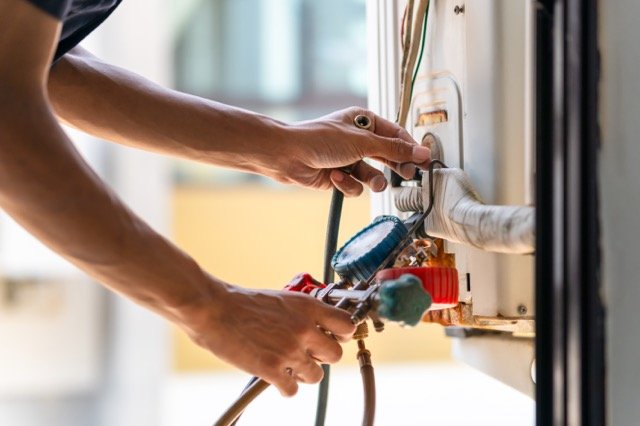
- Check refrigerant charge and pressures
- Test blower motor operation and amperage
- Inspect electrical connections
- Verify proper airflow (CFM measurements)
- Check drain line for clogs
- Test thermostat calibration
The Next Care Plan includes two annual visits — a spring AC tune-up and a fall furnace tune-up — for just $5 per month. Members also get priority scheduling and 10% off repairs, which more than pays for itself if you ever need service.
Keep Vents and Registers Open
Don't close more than 20% of your supply registers, even in unused rooms. Your AC system is designed to move a specific volume of air. Closing too many vents restricts airflow and can cause freeze-ups.
Also check that:
- Return vents aren't blocked by furniture
- Curtains or drapes don't cover supply registers
- Floor registers aren't covered by rugs
- Interior doors stay open or have adequate undercut (at least 1 inch gap at bottom) for return air to flow
Don't Run Your AC When It's Cold Outside
Air conditioners aren't designed to run when outdoor temperatures drop below 60°F. Running your AC on cool Michigan spring or fall nights can cause the outdoor coil to freeze, which damages the compressor.
If you need cooling on a 55-degree evening, open your windows instead.
Cost Reality: What Freeze-Up Repairs Actually Cost in Southeast Michigan
The cost to fix a frozen AC depends entirely on what's causing it. Here's what you can expect to pay in the Metro Detroit area in 2026:
Air filter replacement: $5-$30 (DIY) — This is the cheapest fix and solves about 40% of freeze-up cases we see.
Professional coil cleaning: $150-$400 — If your evaporator coil is caked with dust and debris, professional cleaning restores airflow. We use specialized cleaners and rinse systems that won't damage the coil fins.
Refrigerant leak detection and repair: $300-$1,500 — The cost varies based on leak location. A leaking service valve might cost $300 to fix. A leaking evaporator coil might cost $1,200-$2,500 because the coil itself needs replacement. After repair, we add refrigerant to bring the system to proper charge (R-410A refrigerant costs about $75-$150 per pound).
Blower motor replacement: $400-$800 — Includes the motor, labor, and testing. Variable-speed blower motors (found in higher-efficiency systems) cost more than single-speed motors.
Expansion valve replacement: $300-$600 — Requires recovering refrigerant, replacing the valve, and recharging the system.
Evaporator coil replacement: $1,000-$2,500 — If the coil is severely corroded or leaking, replacement is often more cost-effective than repair. This is major work and takes 4-6 hours. At this price point, you might consider whether replacing the entire AC system makes more financial sense, especially if your system is over 12 years old.
Compressor replacement: $1,500-$3,000 — This is what happens when you ignore a frozen coil and keep running the system. The compressor tries to pump liquid refrigerant instead of gas (called "liquid slugging") and destroys itself. Compressor replacement is expensive enough that most homeowners opt to replace the entire outdoor unit instead.
Cost Prevention: A $60/year maintenance plan prevents most of these problems. Catching a small refrigerant leak during a spring tune-up costs $300-$500. Ignoring it until the compressor fails costs $2,000-$4,000. The math is pretty clear.
When to Call NEXT Heating & Cooling
Call us if:
- Ice reforms within 24 hours after thawing and changing the filter
- You see ice but your filter is clean and all vents are open
- The system runs but produces no cooling
- You hear hissing sounds (refrigerant leak) or grinding sounds (compressor damage)
- Water is leaking from the indoor unit
- The circuit breaker keeps tripping
- You haven't had professional maintenance in over a year
We've been serving Macomb County, Oakland County, and St. Clair County for over 35 years. Our NATE-certified technicians show up on time, diagnose the actual problem (not what they want to sell you), and give you honest options with upfront pricing.
We carry parts for all major brands on our trucks — Carrier, Lennox, Trane, Rheem, Bryant, Goodman, Amana, York, and RUUD. Most repairs are completed the same day.
No commission-based sales. No pressure. Just straight answers from technicians who have been keeping Michigan homes comfortable through every kind of weather for decades.
AC Frozen? We Can Help.
NEXT Heating & Cooling has been diagnosing and repairing frozen AC systems in Southeast Michigan for over 35 years. Get honest diagnostics and fair pricing from NATE-certified technicians who show up on time.
Schedule Your AC RepairFrequently Asked Questions About Frozen AC Systems
No. Pouring hot water on a frozen coil can crack the copper tubing or damage the coil fins due to thermal shock. It also creates a mess and doesn't speed up the thaw significantly. Just turn off the cooling, switch the fan to ON, and let it thaw naturally over 2-4 hours. Place towels around the unit to catch condensation water.
Typically 2-4 hours with the fan running on ON mode. Thicker ice takes longer. You'll know it's fully thawed when you no longer see ice on the copper lines or around the air handler, and water has stopped dripping from the unit. Don't restart cooling until the thaw is complete — running the compressor with ice still present can cause damage.
This usually indicates a refrigerant leak. During the day, outdoor temperatures are higher and the system runs harder, which keeps refrigerant pressures up. At night, cooler outdoor temps and lower system load cause pressures to drop, and the evaporator coil gets too cold. You need a professional to locate and repair the leak, then recharge the system to the correct level.
Yes, but it's less common than indoor airflow problems. A severely clogged outdoor condenser coil restricts heat rejection, which raises system pressures and can affect indoor coil temperature. If your outdoor unit is packed with cottonwood seeds (common in Michigan), grass clippings, or leaves, clean it with a garden hose from the inside out. But check your indoor filter first — that's the more likely culprit.
Some condensation on the larger insulated copper line (the suction line) is normal — that line carries cold refrigerant and will sweat in humid Michigan air if the insulation is damaged or missing. However, ice formation is never normal. If you see actual ice (not just moisture), you have a problem — usually restricted airflow or low refrigerant. Also, the smaller uninsulated line should feel warm, not cold. If both lines are cold or icy, you definitely have an issue.
Setting your thermostat to 65°F instead of 72°F won't cause a freeze-up if your system is working properly. The thermostat just tells the system when to turn on and off — it doesn't control coil temperature. However, running your AC continuously in very hot weather (90°F+) without giving it breaks can contribute to ice formation if you already have marginal airflow or slightly low refrigerant. But the thermostat setting itself isn't the root cause.
Regular filter changes prevent about 40% of freeze-ups — the ones caused by restricted airflow. But they won't prevent freeze-ups caused by refrigerant leaks or mechanical failures. That's why professional maintenance matters. During a tune-up, we check refrigerant charge, test blower motor performance, clean coils, and catch small problems before they become expensive failures. The Next Care Plan costs $5/month and includes spring AC and fall furnace maintenance.