

Furnace Service Call Cost in Metro Detroit (2026 Pricing)
Your furnace quit at 11 PM on a Tuesday in January. The house is dropping below 60 degrees. You call an HVAC contractor, and before anyone even shows up, you're wondering what this is going to cost.
Let me give you the straight answer: a standard furnace service call in Southeast Michigan runs between $89 and $150 for the diagnostic visit. Emergency calls after hours or on weekends can push that to $150 to $250. If you approve a repair, most contractors apply the service call fee toward the total cost.
I've been diagnosing furnace problems across Macomb, Oakland, and St. Clair counties for over three decades. The service call fee isn't a scam or a cash grab. It covers the cost of getting a licensed, insured technician to your house with the tools, training, and truck stock to figure out what's wrong. Here's what you're actually paying for, what affects the final price, and how to avoid unnecessary service calls in the first place.
What a Furnace Service Call Actually Includes
A service call isn't just someone showing up and poking around your furnace for five minutes. When you schedule heating and cooling services in Metro Detroit, here's what happens during a proper diagnostic visit.
The technician arrives with a fully stocked service van: multimeter, manometer, combustion analyzer, refrigerant gauges, hand tools, and common replacement parts. They start by asking what symptoms you've noticed. Furnace won't ignite? Blower runs but no heat? Strange noises? Pilot light issues?
Then they run through a systematic checklist. They test the thermostat, verify power to the furnace, check the flame sensor and ignitor, measure gas pressure, inspect the heat exchanger for cracks, test the blower motor and capacitor, examine the vent system for blockages, and verify proper airflow across the heat exchanger. On a Carrier or Lennox furnace with an integrated control board, they'll pull diagnostic codes to pinpoint faults.
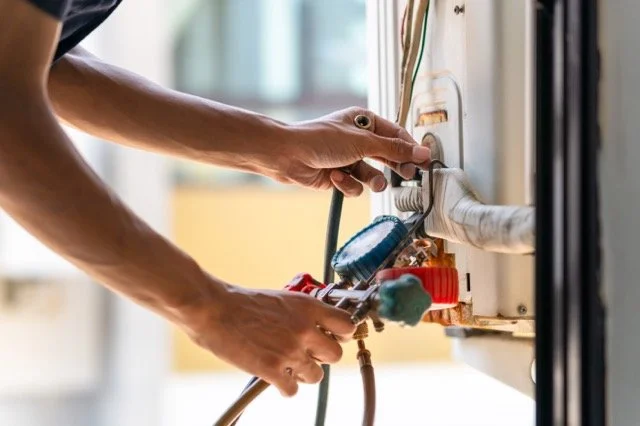
This process takes 30 to 60 minutes for a straightforward diagnosis, longer if the problem is intermittent or involves multiple failed components. At the end, you get a clear explanation of what's wrong, what it will cost to fix, and whether repair makes sense or if replacement is the smarter move.
The service call fee covers that time, expertise, and the overhead of running a licensed HVAC business in Michigan. It doesn't automatically include the repair itself.
Real Furnace Service Call Pricing in Southeast Michigan
Here's what you'll actually pay for a furnace service call in 2026 across Metro Detroit:
- Standard diagnostic visit (regular hours, Monday-Friday): $89 to $150
- After-hours service call (evenings, weekends): $125 to $200
- Emergency service call (late night, holidays): $150 to $250
- Same-day priority scheduling: Add $25 to $50 to the base fee
At NEXT Heating & Cooling, our standard service call fee is $119 during regular business hours. That gets you a NATE-certified HVAC technician at your door, a complete furnace diagnostic, and a written estimate for any needed repairs. If you approve the repair on the spot, we apply the $119 toward the total cost.
Emergency calls after 6 PM or on weekends run $175. We don't like charging more, but the reality is we're paying technicians overtime rates and pulling them away from their families. The fee reflects that cost.
Why some contractors charge less (and what that means): You'll occasionally see $49 or $69 service call specials advertised. Those are loss leaders. The contractor is betting they'll upsell you on a repair or replacement to make up the difference. There's nothing inherently wrong with that model, but understand what you're signing up for. If the diagnosis is genuinely free, the repair price is probably inflated to compensate.
When Service Call Fees Get Waived
Most reputable HVAC contractors will waive or credit the service call fee if you proceed with the recommended repair. Here's how that typically works in practice.
Let's say your furnace won't ignite. The tech diagnoses a failed ignitor. The repair costs $225 including parts and labor. You approve the work. The contractor applies your $119 service call fee toward that $225 total, so your final bill is $106 plus the original $119 you already paid, for a total of $225. You're not paying twice.
Some scenarios where the fee stands as-is:
- You decline the repair and want a second opinion
- The problem requires a major replacement (new furnace, heat exchanger) and you decide to wait or shop around
- The diagnosis reveals no mechanical fault (thermostat batteries dead, breaker tripped, air filter so clogged the system shut down on high limit)
If you're enrolled in a preventive HVAC maintenance plan in Metro Detroit, many contractors waive service call fees entirely or offer steep discounts. Our Next Care Plan costs $5 per month and includes two annual tune-ups plus no service call fees for members. If you need three service calls in a year, the plan has already paid for itself.
What You're Paying For Beyond the Diagnosis
When you hand over $119 for a service call, you're not just paying someone to look at your furnace. You're paying for a business model that keeps trained technicians available when Michigan winter hits hard.
Here's the breakdown of what that fee actually covers:
Licensing and insurance. Every HVAC contractor in Michigan must hold a mechanical contractor license issued by the state. That requires proof of experience, bonding, and liability insurance. If a tech damages your furnace or causes a gas leak, that insurance protects you. Unlicensed handymen don't carry it.
Ongoing training and certification. NATE certification isn't a one-time test. Techs recertify every two years and attend training on new equipment, refrigerant regulations, and building codes. Manufacturers like Carrier, Trane, and Lennox require factory training before techs can work on their equipment under warranty. That education costs money.
Truck stock and specialized tools. A properly equipped service van carries $15,000 to $25,000 in tools, parts inventory, and diagnostic equipment. Combustion analyzers cost $2,000. Refrigerant recovery machines run $1,500. We stock common parts (ignitors, flame sensors, capacitors, thermocouples) so we can fix your furnace on the first visit instead of making you wait three days for an order.
Overhead and availability. Keeping a team of techs on call seven days a week, maintaining a fleet of service vehicles, paying for dispatch software, and covering rent on a shop in Mount Clemens all factor into the cost structure. When you call at 9 PM on a Sunday because your furnace died during a polar vortex event, someone has to be available to answer that call and dispatch a truck.
The service call fee is how we keep the lights on between the big jobs. It's not profit. It's cost recovery for showing up prepared to solve your problem.
Common Furnace Problems and Typical Repair Costs
Once the diagnostic is done, here's what common furnace repairs actually cost in Southeast Michigan. These prices include parts, labor, and the service call fee (assuming you proceed with the work).
Ignitor replacement: $150 to $300. Hot surface ignitors fail frequently on furnaces that cycle on and off a lot. The part itself costs $40 to $80 depending on the brand (Carrier, Goodman, Rheem all use different ignitors). Labor adds another hour. This is one of the most common repairs we make in Sterling Heights and Warren every November.
Flame sensor cleaning or replacement: $100 to $200. The flame sensor is a thin metal rod that sits in the burner flame and confirms ignition. Carbon buildup causes it to fail, shutting the furnace down after a few seconds. Cleaning takes 15 minutes. Replacement takes 30 minutes and costs $50 for the part.
Blower motor or capacitor: $400 to $800. Blower motors wear out after 15 to 20 years of continuous use. Capacitors fail more often, especially on older furnaces. A capacitor replacement runs $150 to $250. A full blower motor swap (motor plus housing) can hit $800 on a high-efficiency furnace with a variable-speed ECM motor.
Gas valve replacement: $400 to $700. Gas valves rarely fail, but when they do, the furnace won't deliver gas to the burners. The part costs $200 to $350 depending on BTU rating and brand. Labor adds another two hours because the valve has to be installed, leak-tested, and verified with a manometer.
Heat exchanger replacement: $1,500 to $3,000. This is the big one. A cracked heat exchanger is a safety hazard (potential carbon monoxide leak) and almost always means it's time to replace the furnace rather than repair it. The part alone costs $800 to $1,200, and labor involves tearing down the entire furnace. On a 15-year-old furnace, replacement makes more financial sense.
If you're facing a major repair and wondering whether to fix or replace, read our breakdown on furnace replacement costs in Troy, MI for a detailed cost comparison.
How to Avoid Unnecessary Service Calls
Not every furnace problem requires a service call. Here's what you can check yourself before calling a contractor and potentially saving $119.
Check the thermostat first. Verify it's set to "heat" mode, not "cool" or "off." Make sure the temperature setting is at least five degrees above the current room temperature. Replace the batteries if it's battery-powered. I've driven to houses in Clinton Township where the only problem was dead AA batteries.
Verify the furnace has power. Check the circuit breaker panel. Furnaces typically run on a dedicated 15-amp or 20-amp breaker. If it's tripped, reset it. Also check the furnace's on/off switch (it looks like a light switch, usually mounted on the side of the furnace or at the top of the basement stairs). Someone may have accidentally flipped it off.
Inspect the air filter. A completely clogged filter will cause the furnace to overheat and shut down on the high-limit switch. Pull the filter out. If you can't see light through it, replace it. Filters cost $3 to $15 at any hardware store. This fixes about 10% of the "no heat" calls we get.
Look for error codes. Most modern furnaces have an LED indicator light on the control board. It will flash a sequence (three blinks, pause, two blinks, pause, repeat) that corresponds to a specific fault code. Check your furnace's manual or look up the code online. It won't always tell you how to fix it, but it gives you information to share with the tech when you call.
Check the condensate drain (high-efficiency furnaces only). If you have a 90%+ AFUE condensing furnace, it produces water as a byproduct of combustion. That water drains through a plastic tube into a floor drain or condensate pump. If the drain clogs, the furnace shuts down. Look for standing water in the drain pan or a clogged tube.
When to call immediately without troubleshooting: If you smell gas, hear a loud bang or boom when the furnace tries to ignite, see visible flames outside the burner area, or detect a strong smell of exhaust fumes inside the house, shut the furnace off at the breaker and call for emergency service. These are safety issues, not DIY situations.
For a deeper dive into seasonal preparation, check out our guide on HVAC maintenance in Clinton Township to see what actually prevents breakdowns.
Why Service Call Costs Vary Across Metro Detroit
You'll see different service call pricing depending on where you live in Southeast Michigan. A contractor in Bloomfield Hills might charge $150 for a standard call while one in Warren charges $95. Here's why.
Geographic overhead. Rent, insurance, and operating costs are higher in Oakland County than in Macomb County. A shop in Troy pays more for commercial space than one in Mount Clemens. Those costs get passed along in service pricing.
Drive time and service area. If you're in Lake Orion and the contractor is based in Sterling Heights, you're paying for 45 minutes of windshield time each way. Some contractors build that into the service call fee. Others charge a flat travel fee on top of the diagnostic cost.
Time of year. Service call pricing spikes in November and December when demand surges. Every HVAC contractor in Michigan is slammed the week after Thanksgiving. Some raise prices during peak season to manage demand. Others keep pricing flat but extend wait times to three or four days.
Business model differences. Large franchise operations (the ones with radio ads and billboards) have higher overhead than small independent shops. They charge more to cover marketing budgets, call center staff, and corporate fees. Independent contractors like NEXT Heating & Cooling keep overhead lean and pass the savings to customers.
Contractor experience and certification. A one-man operation with a pickup truck and a basic tool set charges less than a fully licensed, insured, NATE-certified contractor with a fleet of vans and factory training on every major brand. You get what you pay for. The cheaper option isn't always the better value if they misdiagnose the problem or void your equipment warranty by installing the wrong part.
If you're comparing quotes and wondering what the price difference actually buys you, our page on Metro Detroit's reliable HVAC contractor explains what to look for in a service provider beyond the lowest bid.
Need a Furnace Diagnostic?
NEXT Heating & Cooling has been keeping Michigan homes warm for over 35 years. Get honest diagnostics, fair pricing, and NATE-certified technicians who show up on time. No upselling. No pressure. Just straight answers.
Schedule Your Service CallFrequently Asked Questions
Yes. The service call fee covers the diagnostic visit, not the repair itself. Even if the problem requires a part we don't have on the truck or a major replacement you decide not to proceed with, you still pay for the technician's time and expertise to diagnose the issue. Most contractors will apply that fee toward the repair cost if you approve the work.
Yes. Emergency service calls after hours, on weekends, or during holidays typically cost $150 to $250 instead of the standard $89 to $150. You're paying for immediate availability and overtime labor rates. If it's not a true emergency (no heat in freezing weather, gas smell, safety concern), waiting until regular business hours will save you $50 to $100.
Some contractors advertise free diagnostics as a promotional offer, but there's usually a catch. The repair pricing is often inflated to make up for the "free" visit, or the offer only applies if you proceed with a costly repair or replacement. Legitimate service call fees (around $100 to $150) are standard across the HVAC industry and reflect the real cost of sending a trained technician to your home.
Rarely. Most homeowners insurance policies don't cover routine furnace repairs or diagnostics. They may cover damage caused by a covered peril (like a lightning strike that fried the control board), but normal wear-and-tear failures aren't covered. Check your policy or call your insurance agent to confirm. Home warranty plans sometimes cover HVAC service calls, but read the fine print on what's excluded.
A preventive furnace tune-up typically costs $100 to $150 and includes cleaning, inspection, and minor adjustments to keep your system running efficiently. A service call is diagnostic only, focused on identifying a specific problem. If you're proactive about maintenance, you'll avoid many of the service calls that happen when furnaces fail mid-winter. Our Next Care Plan includes two annual tune-ups for $60 per year, which is cheaper than a single emergency service call.
Ask what the service call fee covers, whether it's applied toward the repair cost if you proceed, what the typical timeframe is for the visit, and whether the technician will have common parts on the truck to complete repairs the same day. Also confirm the contractor is licensed, insured, and certified to work on your furnace brand. If they can't answer those questions clearly, call someone else.
No. The service call fee is the same whether you have a Carrier, Lennox, Trane, Goodman, or Rheem furnace. What varies is the repair cost after diagnosis. Some brands use proprietary parts that cost more or require specialized tools. High-efficiency modulating furnaces with complex control boards take longer to diagnose than basic single-stage units. But the initial diagnostic fee is flat regardless of equipment brand.