

HVAC Financing Options for Michigan Homeowners (2026)
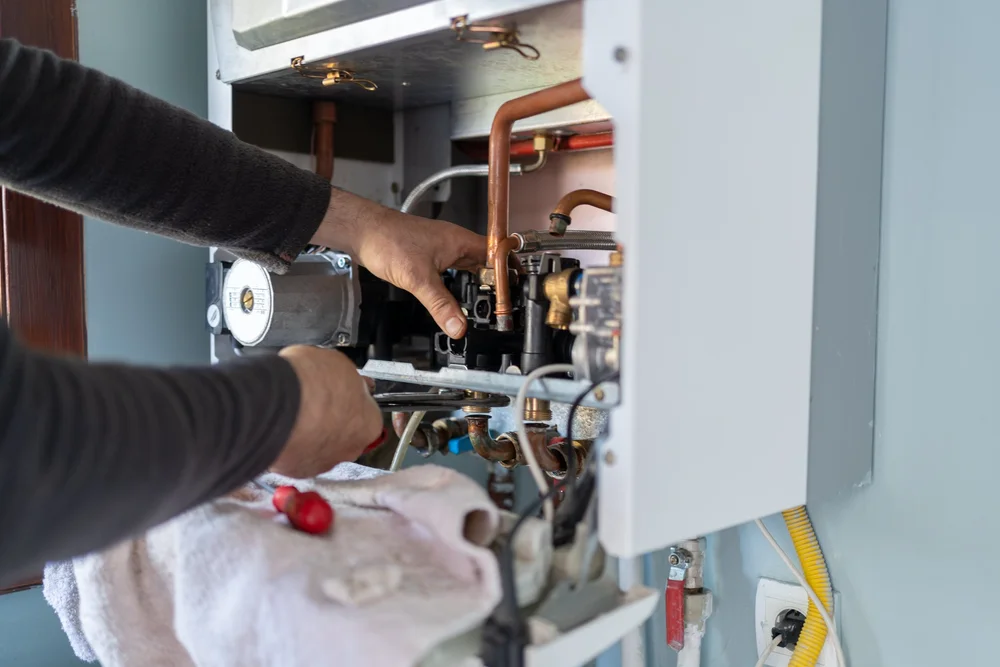
Your furnace quits on a January night when the temperature drops to 8 degrees. Your air conditioner dies during a July heat wave in Sterling Heights. These are not convenient moments to come up with $5,000 to $12,000 in cash.
HVAC financing exists for exactly this reason. Most Michigan homeowners replace their heating and cooling equipment through payment plans, not lump-sum checks. The question is not whether financing is available, but which option makes sense for your situation and how to avoid paying more than you need to.
We have been installing heating and cooling services in Metro Detroit for over 35 years. We have seen every financing scenario, from zero-interest promotional offers to high-rate credit cards that cost homeowners thousands in unnecessary interest. This guide walks through what actually works in 2026.
How HVAC Financing Actually Works
HVAC financing is typically a personal loan or revolving credit account tied to the equipment purchase. The contractor partners with a lender who approves applications, sets interest rates, and manages payments. You make monthly payments directly to the lender, not the HVAC company.
Here is how the process usually unfolds:
Application: Most contractors submit your application electronically during the estimate or installation visit. You provide basic information: name, address, Social Security number, income. The lender runs a credit check and returns an approval decision within minutes. Soft credit inquiries (pre-qualification checks) do not affect your credit score. Hard inquiries (formal applications) typically reduce your score by 5 to 10 points temporarily.
Approval and Terms: If approved, the lender offers a credit limit, interest rate, and repayment term. Credit limits range from $1,000 to $50,000 depending on your credit profile. Interest rates vary from 0% (promotional) to 8.99% to 24.99% (standard). Terms typically span 12 to 120 months.
Installation and Payment: The contractor completes the installation. The lender pays the contractor directly. You begin making monthly payments according to the agreed schedule. Some plans allow deferred payments (no payment for 6 or 12 months), but interest often accrues during that period unless it is a true 0% APR offer.
Most financing programs use one of two structures: installment loans (fixed monthly payment, fixed term) or revolving credit (similar to a credit card, minimum payment required). Installment loans are simpler and more predictable. Revolving credit offers flexibility but can lead to prolonged debt if you only pay the minimum.
0% APR Financing: What Michigan Homeowners Need to Know
Zero-percent APR financing sounds perfect: borrow $8,000 for a new furnace, pay $8,000 back over 24 months with no interest. No catch, no hidden fees. When executed correctly, that is exactly what happens.
The critical details:
Promotional Period: 0% APR is typically a limited-time offer tied to manufacturer promotions. Carrier, Lennox, Trane, Rheem, Bryant, and Goodman all run seasonal campaigns, usually in spring and fall when demand is lower. These promotions last 30 to 90 days. Miss the window, and you are back to standard rates.
Deferred Interest Trap: Some 0% offers are actually deferred interest plans disguised as zero-interest deals. If you fail to pay off the entire balance before the promotional period ends, the lender charges you all the interest that would have accrued from day one. A $6,000 furnace at 19.99% APR over 18 months could retroactively cost you $1,200 in interest if you are one day late or $1 short on the final payment.
True 0% APR plans waive interest entirely during the promotional period. Any remaining balance after the period ends accrues interest going forward, but you are not penalized for past months. Always confirm which type of plan you are signing.
Credit Requirements: 0% APR offers require strong credit, typically a FICO score of 680 or higher. Lenders view these promotions as loss leaders, they make no money on interest, so they limit approval to low-risk borrowers. If your score is below 680, you will likely receive a higher-rate offer instead.
Payment Discipline: To benefit from 0% APR, you must pay off the balance before the promotional period expires. Divide the total cost by the number of months and set up automatic payments for that amount. A $7,200 system on 24-month 0% APR requires $300 per month. Pay $299, and you risk triggering deferred interest.
We have worked with homeowners in Troy and Warren who saved thousands by timing their HVAC system replacement around manufacturer promotions. We have also seen families hit with surprise interest charges because they did not read the fine print. Ask your contractor to explain the exact terms before you sign.
Manufacturer Rebates and Utility Incentives in Southeast Michigan
Financing is one way to reduce upfront costs. Rebates and incentives reduce the total cost, which lowers the amount you need to finance in the first place.
Manufacturer Rebates: Equipment manufacturers offer rebates on high-efficiency systems to encourage upgrades. In 2026, Carrier offers up to $1,700 in rebates on qualifying heat pumps and furnaces. Lennox, Trane, and Rheem run similar programs. Rebates typically require a minimum SEER2 rating (Seasonal Energy Efficiency Ratio, the updated efficiency standard) of 16 for air conditioners or 95% AFUE (Annual Fuel Utilization Efficiency) for furnaces.
These rebates are usually processed through the contractor. The manufacturer sends the rebate check to you or applies it as a credit at the time of purchase. Processing takes 6 to 12 weeks.
Utility Incentives: DTE Energy and Consumers Energy both offer rebates for energy-efficient HVAC upgrades. DTE provides up to $500 for qualifying furnaces and $300 for central air conditioners. Consumers Energy offers similar amounts. Requirements include installing ENERGY STAR-certified equipment and submitting proof of purchase within 60 days.
Combining manufacturer and utility rebates can reduce your project cost by $1,000 to $2,500. A $9,000 furnace installation drops to $7,000 after rebates, which means you finance $2,000 less and pay less interest over the loan term.
Rebate programs change annually. Your reliable HVAC contractor in Metro Detroit should track current offers and apply them automatically. We build rebate calculations into every estimate we provide, so you see the true net cost upfront.
Michigan Homeowner Tip: Stack rebates whenever possible. A high-efficiency Carrier furnace might qualify for a $1,200 manufacturer rebate and a $500 DTE rebate simultaneously. That is $1,700 off the purchase price before financing even enters the equation.
Financing vs. Paying Cash: The Real Cost Comparison
Paying cash eliminates interest and simplifies the transaction. You write a check, the contractor installs the equipment, and you are done. No monthly payments, no credit checks, no fine print.
But cash is not always the best financial move, even if you have it available.
Opportunity Cost: Money spent on an HVAC system is money you cannot invest elsewhere. If you have $10,000 in a savings account earning 4.5% annual interest, withdrawing it to pay for a furnace costs you $450 per year in lost interest. Over five years, that is $2,250 in foregone earnings.
If you can finance the same furnace at 0% APR for 24 months, you keep the $10,000 invested, earn $450 per year, and pay no interest on the loan. The math favors financing in this scenario.
Emergency Reserve: Draining your savings to pay cash for an HVAC replacement leaves you vulnerable to other emergencies. A roof leak, car repair, or medical bill could force you into high-interest credit card debt if you have no cash reserves. Financial advisors typically recommend maintaining 3 to 6 months of expenses in liquid savings.
Financing your furnace while preserving your emergency fund provides flexibility. If nothing goes wrong, you pay off the loan as planned. If something does go wrong, you have cash available to handle it.
Tax Considerations: HVAC financing interest is generally not tax-deductible for primary residences. Home equity loans and home equity lines of credit (HELOCs) may offer deductible interest if the funds are used for home improvements, but standard HVAC financing does not. Consult a tax professional for your specific situation.
When Cash Makes Sense: Pay cash if you have excess savings beyond your emergency fund, no better investment opportunities, and no access to low-interest financing. Cash also makes sense if your credit score is too low to qualify for reasonable rates. A 22% APR loan costs you far more than the opportunity cost of using cash.
We have installed systems for homeowners in Shelby Township who paid cash because they had the funds available and wanted the transaction finished. We have also worked with families in Royal Oak who financed at 0% APR specifically to preserve their savings. Both approaches work, the right choice depends on your financial position and priorities.

What Affects Your Monthly Payment
Your monthly payment is determined by three variables: the amount financed, the interest rate, and the loan term. Change any one of these, and the payment changes.
Amount Financed: This is the total cost of the equipment and installation minus any rebates, down payments, or trade-ins. A $12,000 system with $2,000 in rebates and a $1,000 down payment leaves $9,000 to finance.
Reducing the amount financed is the most effective way to lower your payment. Every $1,000 you finance translates to roughly $20 to $30 per month in payments, depending on the term and rate.
Interest Rate: Your credit score drives your interest rate. FICO scores above 740 typically qualify for the lowest rates (0% to 5.99%). Scores between 680 and 739 see rates from 6.99% to 11.99%. Scores between 620 and 679 face rates from 12.99% to 18.99%. Scores below 620 often receive rates above 20% or get denied entirely.
A $10,000 loan at 0% APR for 60 months costs $167 per month. The same loan at 15% APR costs $238 per month, a $71 difference. Over five years, you pay $4,260 in interest at the higher rate.
Improving your credit score before applying can save you thousands. Pay down credit card balances, dispute errors on your credit report, and avoid opening new accounts in the months before you apply for HVAC financing.
Loan Term: Longer terms reduce monthly payments but increase total interest paid. Shorter terms increase monthly payments but reduce total interest.
Example: $8,000 financed at 8% APR
- 24-month term: $361/month, $664 total interest
- 36-month term: $251/month, $1,036 total interest
- 60-month term: $162/month, $1,720 total interest
The 60-month term costs $199 less per month than the 24-month term, but you pay $1,056 more in interest over the life of the loan. Choose the shortest term you can comfortably afford to minimize interest costs.
Down Payment: Some contractors require a down payment, typically 10% to 20% of the project cost. Others finance the full amount. A down payment reduces the financed amount and demonstrates financial commitment, which can improve your approval odds or lower your interest rate.
If you have cash available but want to preserve liquidity, consider a modest down payment (10% to 15%) to reduce the loan balance while keeping most of your savings intact.
When Financing Makes Sense (and When It Doesn't)
Financing works best in specific situations. It can be a smart financial tool or an expensive mistake, depending on how you use it.
When to Finance:
Emergency Replacements: Your furnace dies in February. You need heat immediately. You do not have $6,000 in cash available. Financing is the practical solution. Focus on getting approved quickly and choosing a repayment term you can manage. If you have to accept a higher interest rate due to time constraints, plan to pay off the loan early once you have rebuilt your savings.
0% APR Availability: If you qualify for true 0% APR financing and can pay off the balance during the promotional period, financing costs you nothing. This is free money. Use it.
Cash Preservation: You have the cash to pay outright, but using it would deplete your emergency fund or prevent you from investing in higher-return opportunities. Financing at a low rate (under 6%) while keeping your cash working elsewhere often makes financial sense.
Energy Savings Offset Payments: High-efficiency equipment reduces your monthly utility bills. If your new furnace saves you $80 per month in heating costs and your loan payment is $120 per month, your net cost is only $40 per month. The equipment partially pays for itself.
We regularly see this in older homes with 60% to 70% AFUE furnaces. Upgrading to a 96% AFUE model can cut heating bills by 30% to 40%, especially during Michigan winters. The savings do not cover the entire payment, but they reduce the financial burden significantly.
When to Avoid Financing:
High Interest Rates: If your credit score only qualifies you for rates above 18%, financing is expensive. A $7,000 system at 22% APR over 60 months costs $11,400 total, a $4,400 interest charge. You are better off saving cash, borrowing from family, or exploring alternatives like a home equity loan with lower rates.
Inability to Make Payments: Financing commits you to monthly payments for months or years. If your income is unstable or your budget is already stretched, adding a $200 monthly payment creates financial stress. Missed payments damage your credit score and can result in late fees or default.
If you cannot afford the monthly payment on a new system, consider repairing your existing equipment instead. A $500 repair buys you time to save for a replacement. It is not a permanent solution, but it is better than taking on debt you cannot manage.
Deferred Interest Traps: Deferred interest plans (often marketed as "no payments for 12 months") are dangerous unless you have a clear payoff plan. If you fail to pay the balance in full before the promotional period ends, you owe all the accrued interest retroactively. These plans benefit the lender, not you. Avoid them unless you are certain you can pay off the balance on time.
Homeowners in Clinton Township and Lake Orion have asked us whether they should finance repairs or replacements. The answer depends on the equipment age and condition. If your furnace is 18 years old and the repair costs $1,200, financing a replacement makes more sense. If your furnace is 8 years old and the repair costs $400, pay cash for the repair and plan for replacement in 5 to 7 years. Our HVAC maintenance plan in Metro Detroit helps extend equipment life and reduce the likelihood of emergency failures, giving you more time to budget for replacements.
Related Reading: If your furnace is struggling to maintain airflow, it might be time for service rather than replacement. Learn more about furnace airflow problems and when repairs are sufficient.
Understanding Your Financing Options in 2026
HVAC financing has evolved. Lenders now offer more flexible terms, faster approvals, and better promotional rates than they did a decade ago. But the fundamentals remain the same: borrow only what you need, choose the shortest term you can afford, and read every word of the contract before you sign.
Michigan winters do not wait for you to save up cash. Neither do broken air conditioners in July. Financing gives you immediate access to comfort and safety when your equipment fails. Used wisely, it spreads the cost over time without breaking your budget.
Used carelessly, it saddles you with years of high-interest payments that cost far more than the equipment itself.
We have been installing HVAC systems in Southeast Michigan since 1991. We have worked with every financing company, seen every promotional offer, and helped thousands of homeowners navigate the decision. Our advice: focus on total cost, not monthly payment. A low monthly payment on a 10-year loan often costs more than a higher payment on a 3-year loan. Do the math before you commit.
If you are considering emergency HVAC repair in Macomb County or planning a system replacement, ask about current financing promotions. Timing your purchase around manufacturer rebate periods can save you thousands, and combining 0% APR financing with utility incentives maximizes your savings.
HVAC financing is a tool. Like any tool, it works when you use it correctly. Know your credit score, understand the terms, and have a payoff plan before you sign. The goal is not just to afford the equipment, but to afford it in a way that makes financial sense for your household.
Ready to Explore Your Financing Options?
NEXT Heating & Cooling has been keeping Michigan homes comfortable for over 35 years. We partner with multiple lenders to offer competitive financing options, including 0% APR promotions on qualifying systems. Our NATE-certified technicians provide honest diagnostics and fair pricing with no commission-based upselling.
Get Your Free EstimateFrequently Asked Questions About HVAC Financing
Most HVAC financing programs require a minimum credit score of 620 to 640 for approval. Scores above 680 qualify for better interest rates, often in the 6% to 10% range. Scores above 740 typically access the lowest rates, including 0% APR promotional offers. If your score is below 620, you may still get approved but will face higher interest rates (18% to 24%) or require a co-signer.
You can finance both repairs and replacements. Most lenders set a minimum loan amount, typically $1,000 to $1,500, so minor repairs under that threshold must be paid out of pocket. Major repairs like compressor replacements ($1,200 to $3,500) or heat exchanger replacements ($1,500 to $4,000) usually qualify for financing. Full system replacements ($5,000 to $15,000) are the most common financed purchases.
True 0% APR financing charges no interest during the promotional period. Any remaining balance after the period ends accrues interest going forward, but you are not penalized for past months. Deferred interest plans charge no interest during the promotional period only if you pay off the entire balance before the period ends. If you carry any balance past the deadline, the lender charges all the interest that would have accrued from day one, often at rates of 18% to 24%. Always confirm which type of plan you are signing.
Most HVAC financing applications are submitted electronically and return approval decisions within 5 to 15 minutes. Some lenders provide instant approvals. If the lender needs additional documentation (proof of income, bank statements), approval can take 24 to 48 hours. Emergency installations often proceed based on conditional approval, with final documentation submitted after the work is complete.
Applying for HVAC financing triggers a hard credit inquiry, which typically reduces your credit score by 5 to 10 points temporarily. The impact fades within a few months. Making on-time payments improves your credit score over time by building positive payment history. Missing payments damages your score significantly, often by 50 to 100 points per missed payment. If you pay off the loan as agreed, the long-term effect on your credit is neutral to positive.
Most HVAC financing programs allow early payoff without prepayment penalties. Paying off the loan early reduces the total interest you pay, especially on loans with standard interest rates (6% to 18%). Always confirm the terms before signing. Some lenders include prepayment penalties in the fine print, though this is uncommon in HVAC financing. If you plan to pay off the loan early, ask your contractor or lender to confirm no penalties apply.
Yes, but the terms are less favorable. Homeowners with credit scores below 620 can often access financing through subprime lenders who specialize in higher-risk borrowers. Interest rates range from 20% to 30%, and loan terms are typically shorter (24 to 36 months). Some contractors offer in-house financing or rent-to-own programs for customers who cannot qualify through traditional lenders. If your credit is poor, consider repairing your existing equipment while you work to improve your credit score, then finance a replacement when you qualify for better rates.