

How to Choose the Right HVAC Contractor in Metro Detroit

Your furnace quits on a January night when it's 12 degrees outside. Your AC dies during a July heat wave. These are the moments when you need an HVAC contractor fast — and that urgency can lead to expensive mistakes.
I've been working on HVAC systems in Southeast Michigan for over three decades. I've seen what happens when homeowners hire the wrong contractor: oversized equipment that short-cycles and wastes energy, ductwork that was never properly sealed, furnaces installed without proper combustion air, and bills that could have been half the price.
The HVAC industry has a trust problem. Some contractors push unnecessary replacements because they work on commission. Others lowball the estimate, then hit you with "unexpected" costs once the old equipment is already torn out. And plenty just don't know what they're doing — Michigan requires a mechanical contractor license, but not every company follows the rules.
This guide walks through exactly what to look for when hiring a Metro Detroit HVAC contractor. I'll cover the credentials that actually matter, the questions that separate good contractors from bad ones, and the red flags that should send you looking elsewhere.
Whether you're in Sterling Heights dealing with a failing furnace, or in Rochester Hills planning an AC upgrade, the contractor you choose determines whether you get 15-20 years of reliable comfort or a decade of expensive service calls.
Essential Credentials Every Michigan HVAC Contractor Must Have
Let's start with the non-negotiables. These aren't optional — they're legal requirements and industry standards that protect you from incompetent or uninsured work.
Michigan Mechanical Contractor License
In Michigan, anyone doing HVAC work for compensation must hold a valid mechanical contractor license issued by the Department of Licensing and Regulatory Affairs (LARA). This isn't a casual certification — it requires passing exams on Michigan mechanical code, demonstrating years of experience, and maintaining continuing education.
The license number should be on their website, their truck, and their estimate. If a contractor can't provide it immediately, walk away. Unlicensed work voids equipment warranties, violates building codes, and leaves you with zero recourse if something goes wrong.
You can verify any Michigan contractor license at michigan.gov/lara. Takes 30 seconds. Do it before you sign anything.
NATE Certification (North American Technician Excellence)
NATE certification is the industry standard for HVAC technician competency. It's a voluntary exam-based program that tests real-world knowledge — not just theory, but actual diagnostic and installation skills.
NATE-certified technicians at companies like NEXT Heating & Cooling have proven they understand refrigerant charging, airflow calculations, combustion analysis, and electrical troubleshooting. They're not learning on your equipment.
Ask if the technician coming to your home is NATE-certified. Not just the company — the actual person doing the work. There's a difference.
Insurance: Liability and Workers' Compensation
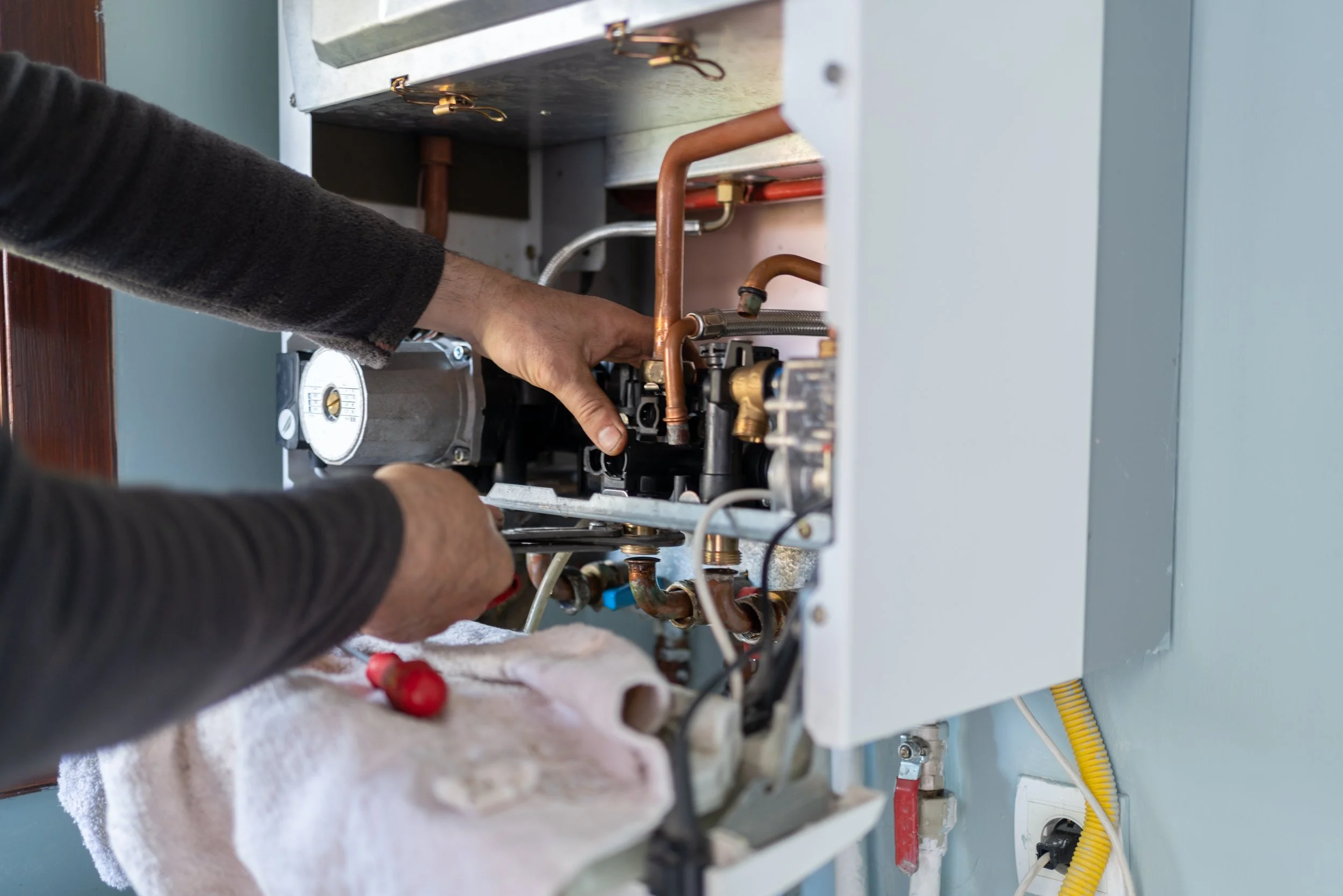
HVAC work involves gas lines, electrical systems, refrigerants, and heavy equipment. If something goes wrong — a gas leak, a fire, an injury — you need to know the contractor's insurance covers it, not your homeowner's policy.
Every legitimate contractor carries:
- General liability insurance — covers property damage and accidents during the job
- Workers' compensation insurance — covers injuries to their employees on your property
Ask for proof of both. A real contractor will email you certificates of insurance without hesitation. If they dodge the question or say "we're covered, don't worry," that's a red flag.
BBB Accreditation and Online Reviews
Better Business Bureau accreditation isn't required, but it signals a company willing to be held accountable. BBB A+ rating means the business has resolved complaints fairly and operates with transparency.
Beyond BBB, check Google reviews, Facebook, and Yelp. Look for patterns. One bad review isn't a deal-breaker — but ten reviews mentioning surprise charges, no-show technicians, or pressure tactics? That's a pattern.
At NEXT Heating & Cooling, we maintain a 5.0-star rating because we do what we say we'll do. That's the standard you should expect.
Manufacturer Authorizations
Top equipment manufacturers — Carrier, Lennox, Trane, Rheem, Bryant — only authorize contractors who meet training and service standards. If a contractor is a factory-authorized dealer, it means the manufacturer trusts them to install and service their equipment correctly.
This matters for warranties. Many manufacturers void warranties if the equipment is installed by an unauthorized contractor. You could spend $6,000 on a new furnace and have zero warranty coverage because the installer wasn't qualified.
Ask which brands they're authorized to install. If they say "we work with all brands" but can't show authorizations, that's a problem.
Questions to Ask Before Hiring an HVAC Contractor
Credentials get you in the door. But the real evaluation happens in the conversation. Here are the questions that separate contractors who care about your home from contractors who just want your money.
1. "Will you perform a Manual J load calculation?"
This is the single most important question you can ask.
A Manual J load calculation determines the exact heating and cooling capacity your home needs based on square footage, insulation levels, window types, air leakage, and dozens of other factors. It's the only way to properly size HVAC equipment.
Most contractors skip this step. They look at the old equipment, assume "same size will work," and move on. That's how you end up with an oversized furnace that short-cycles, wastes energy, and dies early — or an undersized AC that runs constantly and never cools the house.
If a contractor says "we'll just match what you have" or "I can eyeball it," they're guessing. And guesses cost you thousands in wasted energy and premature equipment failure.
A proper load calculation takes 30-45 minutes. Any contractor offering full-service HVAC installation in Metro Detroit should do this automatically.
2. "How do you diagnose problems before recommending replacement?"
Good contractors diagnose first, recommend second. Bad contractors walk in with a replacement quote already in mind.
Ask what diagnostic tools they use. You should hear about:
- Digital multimeters for electrical testing
- Refrigerant gauges for AC and heat pump systems
- Combustion analyzers for gas furnace efficiency and safety testing
- Manometers for gas pressure and airflow measurement
- Infrared thermometers for temperature differential checks
If they show up with a clipboard and a sales pitch, that's not a technician — that's a salesperson.
3. "Can you show me the problem?"
This is a trust test. A good technician will walk you to the furnace room, show you the failed component, explain what it does and why it failed, and give you options.
A bad contractor will say "your heat exchanger is cracked" without showing you the crack, or "your compressor is shot" without explaining what a compressor does or why it matters.
I've spent 35 years showing homeowners exactly what's wrong with their equipment. If I say your furnace is short-cycling, I'll show you the flame sensor, explain how it works, and demonstrate the problem. That's how you build trust.
4. "What are my options, and what do you recommend?"
Beware the contractor who only gives you one option — and it's always the most expensive one.
A good contractor presents a range:
- Repair — if the equipment is worth fixing
- Standard replacement — reliable mid-tier equipment that fits most budgets
- Premium replacement — high-efficiency systems for long-term savings
Then they explain which option they'd choose for their own home, and why. That's the conversation you want.
If they immediately push the $12,000 system without discussing a $6,000 option, they're selling, not advising.
5. "Do your technicians work on commission?"
This question makes bad contractors uncomfortable. And it should.
Commission-based pay incentivizes unnecessary replacements. A tech who makes $500 for selling you a new furnace has a financial reason to tell you your current furnace can't be fixed — even if it can.
At NEXT Heating & Cooling, our technicians are paid hourly. They have zero financial incentive to upsell you. Their job is to diagnose accurately and present honest options. That's it.
Ask the question. If they hesitate or get defensive, you have your answer.
6. "What does your estimate include?"
A detailed estimate should break down:
- Equipment model numbers and specifications
- Labor costs
- Permit fees (if applicable)
- Disposal of old equipment
- Warranty terms (parts and labor)
- Timeline for completion
Vague estimates like "furnace replacement: $5,500" are worthless. What furnace? What efficiency rating? What's included in that price?
If the estimate doesn't specify equipment models and AFUE/SEER ratings, ask for clarification. You're comparing apples to oranges otherwise.
Red Flags That Signal a Bad HVAC Contractor
Some warning signs are obvious. Others are subtle. Here's what to watch for.
Red Flag #1: High-Pressure Sales Tactics
"This price is only good today."
"If you don't replace this furnace now, it could crack and leak carbon monoxide."
"We can give you a discount if you sign right now."
Legitimate contractors don't operate this way. HVAC decisions are expensive and long-term. You should have time to think, compare estimates, and make an informed choice.
Pressure tactics exist for one reason: to prevent you from getting a second opinion. That's a red flag the size of a billboard.
Red Flag #2: No Written Estimate
If a contractor gives you a verbal quote and says "we'll figure out the details later," run.
Every estimate should be in writing, with equipment specs, labor costs, and warranty terms clearly stated. Verbal agreements are worthless when disputes arise.
Red Flag #3: Asking for Full Payment Upfront
Standard payment terms in the HVAC industry: a deposit (usually 25-50%) to order equipment, with the balance due upon completion.
If a contractor asks for 100% payment before starting work, that's a massive red flag. You lose all leverage if the job goes sideways.
Red Flag #4: No Permit When One Is Required
Most HVAC replacements require a permit from your local building department. The permit ensures the work is inspected and meets code.
Some contractors skip permits to save time and money. That's illegal, and it puts you at risk. If the work doesn't pass inspection (or if there's never an inspection), you could face fines, insurance issues, or problems selling your home.
Ask if a permit is required for your job. If the answer is yes, make sure it's pulled before work begins.
Red Flag #5: Unwilling to Provide References
A contractor with 10+ years in business should have dozens of satisfied customers willing to vouch for them. If they can't provide references, or if they dodge the request, that tells you something.
Ask for three recent references in your area. Call them. Ask about punctuality, cleanliness, communication, and whether the final cost matched the estimate.
What Good HVAC Service Actually Looks Like in Southeast Michigan
You've seen the credentials and asked the questions. Now let's talk about what good service feels like when it's happening.
They Show Up On Time
This sounds basic, but it's where many contractors fail. If your appointment is at 10 a.m., the truck should be in your driveway at 10 a.m. — or you should get a call explaining why it's not.
We schedule realistic time windows and stick to them. Your time matters.
They Protect Your Home
Good technicians wear boot covers. They lay down drop cloths. They don't track dirt through your house or leave tools scattered across your basement.
HVAC work is messy, but your home shouldn't look like a construction zone when we leave.
They Explain What They're Doing
You shouldn't have to guess what's happening. A good technician walks you through the process: "I'm checking the heat exchanger for cracks. I'm testing the gas pressure. I'm measuring airflow at the registers."
If you have questions, they answer them in plain English — not HVAC jargon designed to make you feel lost.
They Give You Options, Not Ultimatums
When your furnace needs a $400 repair but the unit is 18 years old, a good contractor presents both options: fix it and get another year or two, or replace it now and avoid the risk of a winter breakdown.
They'll tell you what they'd do in your situation, but they won't pressure you. It's your home, your budget, your decision.
They Stand Behind Their Work
Good contractors warranty their labor — typically one year minimum. If something goes wrong because of the installation, they come back and fix it at no charge.
They also register your equipment warranty with the manufacturer, so you're covered if a component fails.
Bad contractors disappear after the check clears. Good contractors answer the phone when you call six months later.

The Real Cost of Choosing the Wrong Contractor
Hiring the wrong HVAC contractor isn't just frustrating — it's expensive. Here's what it actually costs when you choose poorly.
Premature Equipment Failure
A properly installed furnace should last 15-20 years. But if the contractor skips the load calculation and installs an oversized unit, that furnace will short-cycle constantly — starting and stopping dozens of times per day.
Short-cycling wears out components fast. Your heat exchanger cracks early. Your blower motor burns out. What should have been a 20-year furnace dies in 10.
That's a $5,000-$7,000 mistake.
Wasted Energy
An oversized furnace or AC doesn't just fail early — it wastes energy while it's running. Short-cycling prevents the system from reaching peak efficiency, so you're burning more gas and using more electricity for the same amount of heating and cooling.
Over a decade, that's $3,000-$5,000 in unnecessary utility bills.
Comfort Problems That Never Get Fixed
Maybe your furnace works, but your bedroom is always 5 degrees colder than the living room. Or your AC runs constantly but never cools the second floor.
These are ductwork and airflow issues — and they should have been addressed during installation. A contractor who doesn't test and balance airflow leaves you with a system that technically works but never feels right.
You'll spend years adjusting the thermostat, buying space heaters, and wondering why you're uncomfortable in your own home.
Expensive Emergency Repairs
When a furnace is installed incorrectly — improper venting, wrong gas pressure, skipped combustion testing — it's only a matter of time before something fails.
And it always fails at the worst possible moment. January. 15 degrees outside. No heat. Emergency service call.
That's $500-$1,500 for a repair that wouldn't have been necessary if the installation had been done right in the first place.
The Hidden Cost: Lost Trust
The worst part of hiring a bad contractor isn't the money — it's the feeling that you've been taken advantage of.
You trusted someone to do right by your home, and they didn't. That's hard to recover from.
At NEXT Heating & Cooling, we've built our reputation on being the contractor you can trust. No commission-based sales. No pressure tactics. No surprises. Just honest diagnostics, fair pricing, and work that lasts.
That's the standard you deserve.
How NEXT Heating & Cooling Does Things Differently
We've been serving Southeast Michigan for over 35 years under Premier Builder Inc. We're not the biggest HVAC company in Metro Detroit — and that's the point.
We're not trying to be a high-volume operation that rushes through jobs to hit quotas. We're trying to be the contractor you recommend to your neighbor.
Old-School Values, Modern Training
Our technicians are NATE-certified and trained on the latest equipment from Carrier, Lennox, Trane, Rheem, Bryant, Goodman, Amana, York, and RUUD. But we operate with old-school values: show up on time, do the work right, charge a fair price, and stand behind it.
No commissioned salespeople. No pressure tactics. No upselling equipment you don't need.
Honest Diagnostics, Every Time
When you call us because your furnace isn't blowing hot air, we don't show up with a replacement quote. We show up with diagnostic tools.
We test. We measure. We show you the problem. Then we give you options — including repair options if the equipment is worth fixing.
Our job is to solve your problem, not sell you the most expensive solution.
Preventive Maintenance That Actually Prevents Problems
We offer the Next Care Plan — a $5/month HVAC maintenance subscription that includes two annual visits (fall furnace tune-up, spring AC tune-up), priority scheduling, 10% repair discounts, and no service call fees.
It's not a gimmick. It's a system that keeps your equipment running efficiently and catches small problems before they become expensive emergencies.
Furnace repairs in Michigan average $1,500-$4,000. AC compressor replacements run $1,200-$3,500. A $60/year maintenance plan that prevents those failures is the best investment you can make in your home comfort system.
We're Part of This Community
NEXT Heating & Cooling is based in Mount Clemens, and we serve homeowners throughout Macomb County, Oakland County, and St. Clair County. We work with Habitat for Humanity of Oakland County and LifeBUILDERS in Detroit because we believe in giving back to the communities that support us.
When you hire us, you're hiring a local company that's been here for decades and will be here for decades more. We're not a national chain that disappears when the franchise closes. We're your neighbors.
Ready to Get Started?
NEXT Heating & Cooling has been keeping Michigan homes comfortable for over 35 years. Get honest diagnostics and fair pricing from NATE-certified technicians who show up on time.
Schedule Your ServiceFrequently Asked Questions
Visit michigan.gov/lara and search the license verification database. Enter the contractor's name or license number. You'll see their license status, expiration date, and any disciplinary actions. Every legitimate Michigan HVAC contractor must hold a mechanical contractor license issued by the Department of Licensing and Regulatory Affairs.
A standard 80% AFUE gas furnace installation typically runs $3,500-$5,500 in Southeast Michigan. A high-efficiency 95%+ AFUE furnace runs $5,000-$8,000. Variables include equipment brand, home size, ductwork condition, and whether modifications are needed. Always get three written estimates with equipment model numbers and AFUE ratings specified. Beware quotes significantly below market — they often involve low-quality equipment or hidden costs.
Yes. Get at least three written estimates from licensed contractors. Compare equipment specifications (not just price), warranty terms, and what's included in the quote. The cheapest bid isn't always the best value — focus on equipment quality, installation standards, and contractor reputation. A reputable contractor like NEXT Heating & Cooling will encourage you to get multiple bids because we're confident our pricing and service quality will stand up to comparison.
NATE (North American Technician Excellence) is the leading certification program for HVAC technicians. It's a voluntary exam-based program that tests real-world diagnostic and installation skills. NATE-certified technicians have proven competency in areas like refrigerant charging, airflow measurement, combustion analysis, and electrical troubleshooting. When you hire a NATE-certified technician, you're getting someone who's been independently tested and verified — not just someone who completed an in-house training program.
A standard furnace or AC replacement typically takes 6-10 hours (one full day). Complex installations — homes with challenging ductwork, multiple zones, or equipment relocation — may take 2 days. If a contractor says they can do it in 2-3 hours, they're cutting corners. Proper installation includes load calculations, ductwork inspection and sealing, refrigerant charging (for AC), combustion testing (for furnaces), airflow balancing, and final system testing. Rushing this process leads to problems down the road.
Most HVAC replacements require a mechanical permit from your local building department. The permit ensures the work is inspected and meets Michigan mechanical code. Requirements vary by municipality, but furnace and AC replacements typically require permits. Your contractor should handle the permit application and schedule the inspection. If a contractor offers to skip the permit "to save money," that's illegal and puts you at risk. Unpermitted work can cause problems with insurance claims, home sales, and code compliance.
A proper HVAC maintenance visit includes: visual inspection of all components, air filter replacement, thermostat calibration, electrical connection testing, blower motor lubrication, condensate drain cleaning, refrigerant pressure check (for AC), combustion analysis and gas pressure test (for furnaces), heat exchanger inspection, airflow measurement, and safety control testing. The visit should take 60-90 minutes. Quick 15-minute "tune-ups" are marketing gimmicks, not real maintenance. NEXT Heating & Cooling's Next Care Plan includes two comprehensive annual visits (fall and spring) for $5/month.