

Why Is My Air Conditioning Unit So Loud? Michigan HVAC Tech
You're sitting in your living room in Sterling Heights on a hot July afternoon, and your air conditioner sounds like it's auditioning for a heavy metal band. That grinding, squealing, or banging noise isn't just annoying — it's your AC unit telling you something is wrong.
After 35 years of furnace and AC installation services across Southeast Michigan, we've diagnosed thousands of loud AC units. Some noises are minor annoyances you can fix yourself. Others are warning signs that your compressor is about to fail, which can cost $1,200 to $3,500 to replace.
This guide explains exactly what's causing that noise, when it's an emergency, and what you should do about it. We'll cover the seven most common loud AC sounds we hear in Macomb, Oakland, and St. Clair counties, what they mean mechanically, and how much it typically costs to fix them.
What Normal AC Operation Sounds Like
Before we dive into problem sounds, let's establish what's normal. A healthy air conditioning system makes noise — it's running a compressor, fan motor, and refrigerant pump. But those sounds should be consistent and relatively quiet.
Here's what you should hear during normal operation:
- Gentle humming from the outdoor condenser unit — this is the compressor running
- Soft whooshing from your indoor vents as air moves through ductwork
- A single click when the thermostat calls for cooling and the system starts up
- Brief rushing sound as refrigerant flows through the lines when the system cycles on
In Southeast Michigan homes, especially older ranches built in the 1960s and 70s, you might also hear some ductwork expansion and contraction as temperatures change. That's the metal flexing — it sounds like a faint "tick" or "pop" and is completely normal.
If your AC is louder than a normal conversation (about 60 decibels), or if the sound has changed noticeably in the past few weeks, something is wrong.
7 Common Loud AC Noises and What They Mean
We've categorized these by the actual sound you're hearing. Match your noise to the description, and you'll know what component is failing.
1. Grinding or Metal-on-Metal Scraping
What it sounds like: A harsh, continuous grinding noise that gets louder as the unit runs. It sounds like someone is dragging a metal file across concrete.
What's causing it: The motor bearings in your outdoor condenser fan or indoor blower motor are failing. Bearings are small metal balls that allow the motor shaft to spin smoothly. When they wear out, metal rubs directly on metal.
Why it happens: Normal wear and tear, especially in units over 10 years old. Lack of lubrication accelerates bearing failure. In Michigan, outdoor units that run through humid summers and freezing winters wear faster than units in milder climates.
What to do: Shut down the system immediately. Running a motor with failed bearings will destroy the motor completely. A blower motor replacement typically costs $400-$800. A condenser fan motor runs $300-$600.

2. Squealing or Screeching
What it sounds like: A high-pitched squeal, similar to a car with a bad serpentine belt. It might start and stop, or run continuously.
What's causing it: Either a worn blower motor belt (in older systems) or a motor bearing that's just starting to fail. Some older Carrier and Goodman units still use belt-driven blowers.
Why it happens: Belts stretch and crack over time. Motor bearings dry out without regular lubrication. If you haven't had maintenance in 2+ years, this is common.
What to do: If it's a belt, replacement is inexpensive — usually $150-$250 including labor. If it's a bearing, you're looking at motor replacement. Don't ignore this sound. What starts as squealing ends as grinding, and then the motor seizes.
3. Banging or Clanking
What it sounds like: A loud metallic banging or clanking, especially when the system starts up or shuts down. It sounds like someone is hitting the unit with a wrench.
What's causing it: One of three things:
- A loose or broken fan blade inside the condenser unit
- A failing compressor with loose internal components (serious problem)
- Loose mounting hardware or a cracked compressor mount
Why it happens: Vibration loosens hardware over time. Fan blades can crack from debris impact (we see this a lot after severe storms in Metro Detroit). Compressor mounts deteriorate with age.
What to do: Shut the system down and call for service. A loose fan blade is a $200-$400 repair. A failing compressor means you're looking at $1,200-$3,500 for replacement, or potentially replacing the entire outdoor unit if the system is over 12 years old.
4. Hissing or Bubbling
What it sounds like: A steady hissing sound near the outdoor unit or refrigerant lines, or a bubbling/gurgling noise that sounds like water percolating.
What's causing it: A refrigerant leak. The hissing is refrigerant escaping under high pressure. The bubbling sound is refrigerant boiling as it moves through the evaporator coil at the wrong pressure.
Why it happens: Corrosion in the copper refrigerant lines, failed coil joints, or vibration damage. In Michigan, road salt spray can corrode outdoor unit coils if the unit is near a driveway. We also see freeze damage in units that weren't properly winterized.
What to do: Shut down the system. Refrigerant leaks are an EPA violation to ignore, and running the system low on refrigerant will destroy the compressor. Leak repair costs $200-$800 depending on location, plus refrigerant recharge ($100-$400 depending on type). If you have an older R-22 system, refrigerant is expensive and scarce — this might be the point where replacement makes more sense than repair.
Michigan Homeowner Alert: If you have an AC system using R-22 refrigerant (common in systems installed before 2010), refrigerant costs have skyrocketed since the 2020 phase-out. We're seeing R-22 recharge costs of $150-$200 per pound. Most systems need 6-15 pounds. That's $900-$3,000 just for refrigerant. Read our guide on the R-410A refrigerant phase-out to understand what's coming next.
5. Loud Buzzing or Humming
What it sounds like: A loud electrical buzzing, like a transformer on a utility pole, or a deep humming that vibrates the whole unit.
What's causing it: Electrical problems — typically a failing contactor, capacitor, or loose wiring. The contactor is a relay that sends power to the compressor and fan motor. When it fails, it buzzes loudly and may not fully engage.
Why it happens: Electrical components wear out from repeated cycling. Michigan's temperature swings mean your AC cycles more frequently than in milder climates, accelerating wear. Capacitors fail faster in extreme heat (we see a spike in July and August).
What to do: Shut the system down. Electrical failures can cause compressor damage or even fires. Contactor replacement is $150-$300. Capacitor replacement is $120-$250. If you're hearing buzzing and the outdoor fan isn't spinning, it's almost certainly the capacitor.
6. Rattling
What it sounds like: A loose, vibrating rattle — like something is shaking inside the unit. It might get louder when the fan speeds up.
What's causing it: Usually debris inside the condenser unit (leaves, twigs, acorns), loose access panels, or loose mounting bolts. Sometimes it's a failing motor mount.
Why it happens: Outdoor units in Michigan deal with falling leaves in autumn, cottonwood seeds in spring, and debris from storms year-round. Vibration loosens screws over time.
What to do: This is the one noise you can often fix yourself (see DIY section below). If it's debris, cleaning it out takes 10 minutes. If it's loose panels, tightening screws is simple. If the rattle persists after cleaning and tightening, call for service — it might be internal component wear.
7. Rapid Clicking
What it sounds like: Fast, repeated clicking when the system tries to start, or continuous clicking while running.
What's causing it: A failing relay, defective thermostat, or low refrigerant charge causing the compressor to short-cycle (start and stop rapidly).
Why it happens: Relays wear out from repeated use. Thermostats can develop bad connections. Low refrigerant causes the compressor to overheat and shut down on the safety switch, then try to restart.
What to do: If it's clicking at the thermostat, check the battery (many homeowners forget thermostats have batteries). If it's clicking at the outdoor unit, call for service. This often indicates a refrigerant leak or electrical problem. Relay replacement is $100-$200. If it's a refrigerant issue, see the hissing section above for costs.

When a Loud AC Is an Emergency
Most loud AC noises are problems that need repair within a few days. But some sounds indicate immediate danger. Shut down your system at the thermostat AND at the circuit breaker if you hear:
- Loud banging followed by complete silence — the compressor may have seized
- Burning smell with buzzing — electrical fire risk
- Continuous loud grinding — motor failure in progress
- Hissing with a chemical smell — large refrigerant leak (refrigerant can displace oxygen in enclosed spaces)
NEXT Heating & Cooling offers 24-hour emergency HVAC service across Macomb, Oakland, and St. Clair counties. If you're experiencing any of these symptoms, call us immediately at the number on our Metro Detroit's reliable HVAC contractor page.
What Causes AC Units to Get Louder Over Time
Every air conditioning system gets louder as it ages. Understanding why helps you decide whether to repair or replace.
Normal Mechanical Wear
An AC compressor cycles on and off thousands of times per cooling season. In Southeast Michigan, where we run AC from May through September (and sometimes into October), that's 15,000-20,000 cycles over a system's lifetime. Every cycle creates vibration. Vibration loosens hardware, wears bearings, and fatigues metal.
By year 12-15, most AC systems are noticeably louder than they were when new. That's normal aging, not necessarily failure.
Lack of Preventative Maintenance
This is the biggest factor we see in premature AC noise problems. An air conditioning system needs annual maintenance — cleaning coils, checking refrigerant charge, lubricating motors, tightening electrical connections, and inspecting fan blades.
Homeowners who skip maintenance see noise problems 3-5 years earlier than those who maintain their systems. A dirty condenser coil forces the compressor to work harder, generating more heat and vibration. Low refrigerant causes the compressor to run longer cycles. Dry motor bearings create friction.
The Next Care Plan costs $5/month and includes two annual tune-ups (spring AC check, fall furnace check). We've tracked the data: customers on the Care Plan average 40% fewer emergency repairs than those who skip maintenance. That's not marketing — that's what happens when you catch small problems before they become loud, expensive failures.
Michigan-Specific Environmental Factors
Southeast Michigan is hard on outdoor AC units:
- Temperature extremes: Your outdoor unit sits through -10°F polar vortex events in January and 95°F heat in July. That 105-degree temperature swing causes metal expansion and contraction that loosens joints and fasteners.
- Humidity: Metro Detroit summers are humid. Moisture accelerates corrosion, especially on aluminum fins and copper coils.
- Road salt: If your outdoor unit is within 30 feet of a road or driveway, salt spray corrodes the coil fins. We see this constantly in Clinton Township and Warren.
- Storm debris: Michigan thunderstorms drop branches, hail, and wind-blown debris that damages fan blades and dents coils.
These factors don't make your AC fail — they just accelerate normal wear. A system in Phoenix might last 18 years. In Michigan, 14-16 years is more realistic.
DIY Checks Before Calling a Technician
Some loud AC problems are homeowner-fixable. Here's what you can safely check without tools or technical knowledge:
Step 1: Turn Off the System
Shut down your AC at the thermostat. Wait 5 minutes for the system to fully power down before inspecting anything.
Step 2: Check for Debris
Look inside the outdoor condenser unit (the big metal box outside). You're looking for leaves, sticks, cottonwood seeds, or other debris blocking the fan or stuck in the coil fins. We've pulled out everything from newspapers to squirrel nests.
If you see debris, carefully remove it by hand. Don't use a hose — high-pressure water bends the delicate aluminum fins.
Step 3: Inspect the Outdoor Unit Panels
Check if any access panels or screws have come loose. A rattling panel sounds like a serious mechanical problem but takes 30 seconds to tighten.
Step 4: Check the Air Filter
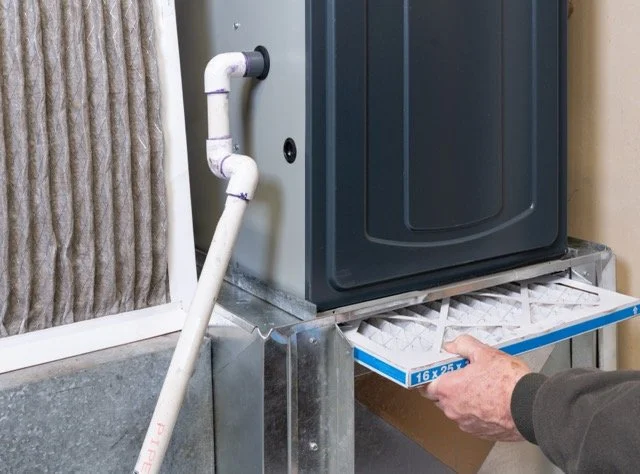
A clogged indoor air filter forces the blower motor to work harder, creating a louder-than-normal hum. If your filter is gray or brown (instead of white), replace it. Filters cost $3-$15 at any hardware store. Change them every 1-3 months depending on usage.
Step 5: Listen for the Noise Location
Turn the system back on and stand near the outdoor unit. Is the noise coming from the top (fan motor), the side (compressor), or the bottom (mounting)? Knowing the location helps your technician diagnose faster, which saves you money on labor.
What NOT to Attempt
Do not remove the outdoor unit's cover panels. Do not touch electrical components. Do not add refrigerant yourself (it's illegal without EPA certification). Do not spray water into the unit while it's running.
If the simple checks above don't solve the noise, it's time to call a professional. Attempting repairs beyond basic cleaning and filter changes can damage the system or void warranties.
How NEXT Diagnoses and Fixes Loud AC Units
When you call NEXT Heating & Cooling about a loud AC, here's exactly what happens:
The Diagnostic Process
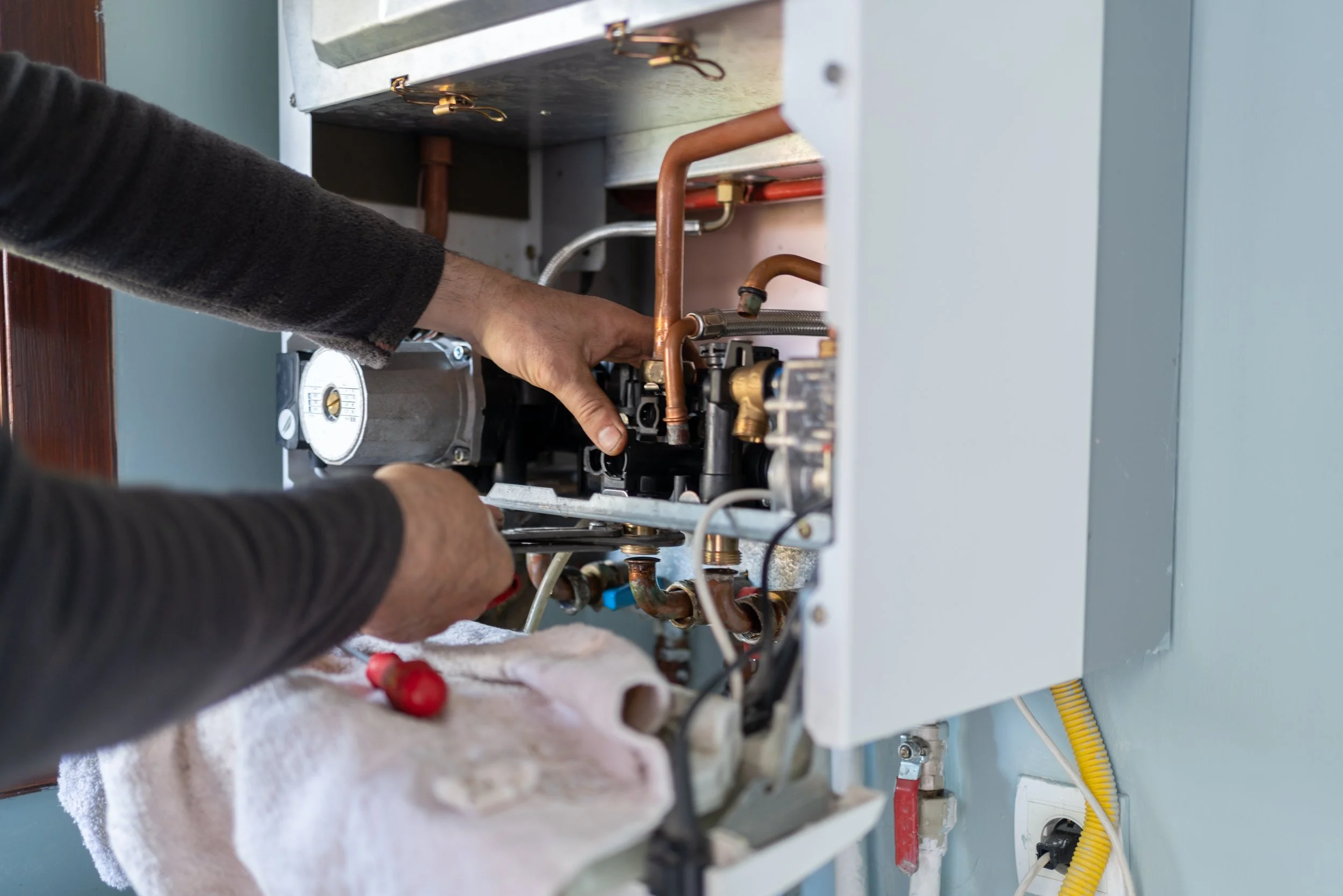
Our NATE-certified HVAC technicians start with a sound identification. We've diagnosed thousands of noisy systems — we can usually identify the problem component within 60 seconds of hearing it run.
We then perform a full system inspection:
- Electrical connections and component testing (contactor, capacitor, relays)
- Refrigerant pressure check (overcharge and undercharge both cause noise)
- Fan motor amp draw (tells us if the motor is working too hard)
- Compressor amp draw and sound analysis
- Visual inspection of all moving parts, mounts, and hardware
- Ductwork inspection (sometimes the noise is coming from loose ductwork, not the AC)
We'll show you the problem component and explain what failed. No technical jargon — just clear explanation of what's wrong and why it happened.
Common Repairs and Real Michigan Costs
Here's what we actually charge for the most common loud AC repairs in Southeast Michigan (parts and labor included):
- Capacitor replacement: $120-$250
- Contactor replacement: $150-$300
- Fan motor replacement: $300-$600
- Blower motor replacement: $400-$800
- Compressor replacement: $1,200-$3,500 (depends on tonnage and refrigerant type)
- Refrigerant leak repair + recharge: $300-$1,200 (highly variable based on leak location and refrigerant type)
We give you options, not pressure. If your compressor is failing and your system is 14 years old, we'll explain the cost to replace the compressor versus the cost to replace the entire outdoor unit. We'll show you the efficiency difference and help you calculate payback period.
We don't work on commission. Our technicians get paid the same whether you repair or replace. That's part of "changing contractor culture" — you get honest recommendations based on what makes sense for your home and budget, not what makes us the most money.
When Replacement Makes More Sense Than Repair
The industry rule of thumb: if the repair cost is more than 50% of replacement cost AND your system is over 10 years old, replacement is usually smarter financially.
Example: Your 13-year-old AC needs a $2,000 compressor replacement. A new outdoor unit costs $3,500-$4,500 installed. That's a close call, but we'd recommend replacement because:
- The new unit is 30-40% more efficient (lower electric bills)
- You get a 10-year parts warranty (versus 1 year on the compressor repair)
- The old unit's other components (fan motor, coil, capacitor) are the same age and likely to fail soon
- New refrigerants are cheaper and more environmentally friendly
But if your system is 6 years old and needs a $400 fan motor, repair is the obvious choice. We'll walk through the math with you.
Read our detailed guide on AC condenser unit replacement costs in Southeast Michigan to understand what you'd actually pay for a new outdoor unit in 2026.
Preventative Maintenance: The Best Noise Solution
The absolute best way to prevent loud AC problems is annual maintenance. We've said it before, but the data is overwhelming: maintained systems last 4-6 years longer and have 60% fewer breakdowns.
The $5/month HVAC maintenance plan includes:
- Spring AC tune-up (before cooling season)
- Fall furnace tune-up (before heating season)
- Priority scheduling (you get first available appointments during heat waves)
- 10% discount on all repairs
- No service call fees
During the spring AC tune-up, we clean coils, check refrigerant, lubricate motors, tighten electrical connections, and test capacitors. We catch failing components before they fail catastrophically. A $150 capacitor replacement during maintenance is a lot cheaper than a $2,500 compressor replacement after the capacitor failure destroys the compressor.
We've been serving Macomb County, Oakland County, and St. Clair County for over 35 years under Premier Builder Inc. The same values that built NEXT Exteriors — honest work, fair pricing, no pressure — now apply to HVAC. We're not the biggest HVAC company in Metro Detroit, and that's the point. We're the one your neighbor recommends.
Ready to Get Started?
NEXT Heating & Cooling has been keeping Michigan homes comfortable for over 35 years. Get honest diagnostics and fair pricing from NATE-certified technicians who show up on time.
Schedule Your ServiceFrequently Asked Questions
Sudden loud noises usually indicate a component failure — most commonly a failing motor bearing, loose fan blade, or electrical problem like a bad capacitor or contactor. If the noise appeared suddenly rather than gradually increasing over months, something has broken or come loose. Shut down the system and call for service. Running it with a failed component often causes additional damage to other parts.
Yes, some increase in noise is normal as systems age. Vibration loosens hardware, bearings wear, and components naturally degrade over 10-15 years. However, if your AC is significantly louder than it was a year ago, or if you're hearing new types of sounds (grinding, squealing, banging), that's not normal aging — that's a component starting to fail. Annual maintenance catches these issues before they become loud, expensive problems.
You can safely clean debris from the outdoor unit, replace the air filter, and tighten loose access panels — these fix about 15% of loud AC complaints. However, most noise problems require professional diagnosis and repair. Do not attempt to repair electrical components, add refrigerant, or disassemble the unit. Those tasks require EPA certification, specialized tools, and technical knowledge. Incorrect DIY repairs can damage the system, void warranties, or create safety hazards.
Repair costs range from $120 for a simple capacitor replacement to $3,500 for a compressor replacement. Most common repairs (fan motor, contactor, debris removal, refrigerant leak repair) cost $200-$800. The exact cost depends on which component failed and whether your system uses standard or specialty parts. We provide upfront pricing before starting any work — no surprises on the bill.
If your system is under 10 years old and the repair costs less than $1,000, repair usually makes sense. If your system is over 12 years old and needs a major repair (compressor, coil, or multiple components), replacement often provides better long-term value. New systems are 30-40% more efficient, come with 10-year warranties, and use modern refrigerants that are cheaper and more environmentally friendly. We'll walk through the math with you based on your specific situation.
A properly functioning AC should operate at 50-60 decibels — about the volume of a normal conversation. If you have to raise your voice to talk over your AC, or if you can hear it clearly from inside your house with windows closed, it's too loud. Grinding, squealing, banging, or hissing sounds are never normal, regardless of volume. These indicate mechanical or refrigerant problems that need professional attention.
Yes, we offer 24/7 emergency HVAC service across Macomb, Oakland, and St. Clair counties. If your AC is making loud banging noises, burning smells with buzzing, or has completely failed during a heat wave, call us immediately. Our emergency technicians carry common parts on their trucks and can often complete repairs the same day. Learn more on our emergency HVAC repair guide.