

Why Is My Air Conditioning Unit So Loud? Michigan HVAC
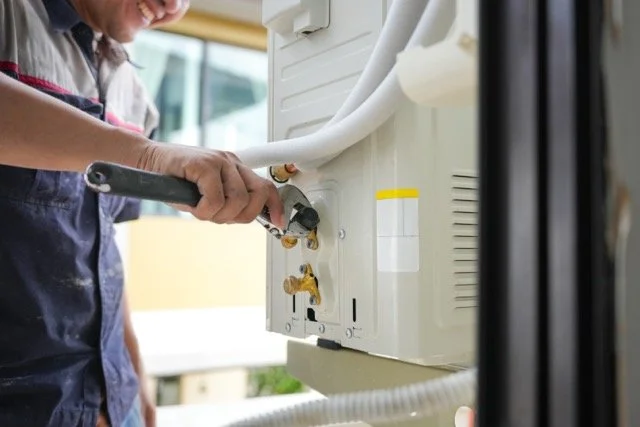
You're sitting on your deck in Sterling Heights on a humid July evening, and your air conditioning unit sounds like it's trying to launch itself into orbit. Maybe it's grinding. Maybe it's squealing. Maybe it's banging like someone's inside with a hammer. Whatever the noise, you know one thing for certain: that's not normal.
Here's the truth from 35 years of servicing HVAC systems across Southeast Michigan—every noise your AC makes is trying to tell you something. Some noises mean a $150 repair if you catch them early. Others mean you're weeks away from a $1,500 compressor failure or a full system replacement. The difference between those outcomes often comes down to whether you call a reliable HVAC contractor in Metro Detroit when you first hear the problem, or wait until the unit stops cooling altogether.
This guide breaks down exactly what each type of AC noise means, what's causing it, and when it requires immediate attention. We'll cover the Michigan-specific factors that make AC units louder here than in other states, what your technician checks during a noise complaint call, and the real costs you're looking at for repair versus replacement.
The Anatomy of Your AC System (Why Location Matters for Noise)
Before we diagnose specific noises, you need to understand where sounds originate in your AC system. Your central air conditioner has two main components:
The outdoor condenser unit sits on a concrete pad next to your house. This is where most loud noises come from. Inside this metal cabinet, you've got a compressor (the heart of the system), a condenser fan motor, a fan blade, refrigerant lines, and electrical contactors. The compressor is doing heavy mechanical work—compressing refrigerant from a gas to a liquid—and it generates both heat and vibration. Normal operation produces a steady hum around 50-60 decibels. Anything louder than a normal conversation (about 70 decibels) deserves investigation.
The indoor air handler lives in your basement, attic, or utility closet. This unit contains the evaporator coil, the blower motor, and the blower wheel that moves air through your ductwork. Noises here are usually related to airflow problems, motor bearing wear, or loose components rattling in the sheet metal cabinet.
When you call our office and say "my air conditioning unit is so loud," the first question we ask is: where is the noise coming from? That immediately narrows down the possible causes. Outdoor noises point to compressor, fan motor, or refrigerant issues. Indoor noises usually mean blower problems or ductwork vibration.
7 Common AC Noises and What They Mean
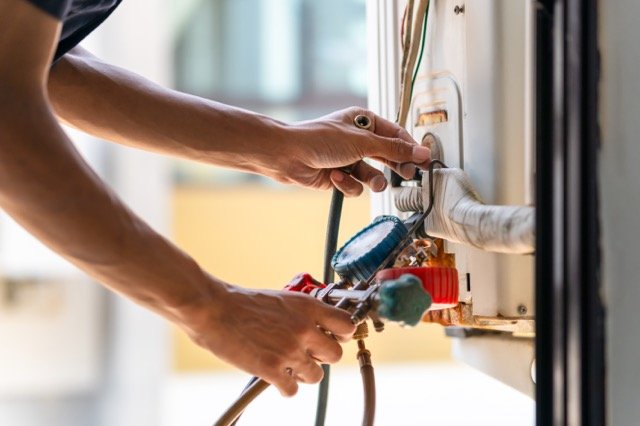
Let's break down the most common sounds we hear on service calls in Macomb and Oakland counties, what's causing them, and how urgent they are.
1. Grinding or Metal-on-Metal Scraping
What it sounds like: A harsh, continuous grinding or scraping noise that gets louder over time. It might sound like someone dragging a metal file across concrete.
What causes it: This is almost always worn motor bearings—either in the compressor or the condenser fan motor. Bearings are precision metal components that allow shafts to spin smoothly. Over time, they wear down from friction and heat. Once the bearing surfaces start making direct metal-on-metal contact, you hear grinding. In Michigan, we see accelerated bearing wear because outdoor units run hard during our humid summers, then sit dormant through harsh winters. Temperature cycling degrades lubricants and causes thermal expansion and contraction in metal components.
Urgency level: High. If you hear grinding, shut the system off and call for service immediately. Continued operation will destroy the motor or compressor, turning a $400 motor replacement into a $2,500 compressor replacement or worse.
2. High-Pitched Squealing or Screeching
What it sounds like: A loud, sustained squeal—similar to a car with a bad serpentine belt. It might start when the unit kicks on and continue throughout the cooling cycle.
What causes it: Usually a failing fan motor or a worn belt (in older belt-driven blower systems). The squeal comes from a motor bearing that's running dry or a belt that's cracked and slipping. Some homeowners also hear this when refrigerant pressure is too high—the compressor is working against excessive resistance and the internal components are straining.
Urgency level: Moderate to high. A squealing motor will fail completely within days or weeks. If it's a belt, replacement is cheap ($80-$150 including labor). If it's a motor bearing, you're looking at motor replacement ($350-$600 for a condenser fan motor, $400-$800 for a blower motor).
3. Banging or Clanking
What it sounds like: Loud, rhythmic banging—like someone hitting the unit with a hammer every few seconds. Or a single loud clank when the system starts up.
What causes it: This is typically a loose or broken component inside the unit. Common culprits include a loose fan blade that's hitting the condenser coil or cabinet, a broken mounting bracket, or a failing compressor with internal damage. In older units (15+ years), we sometimes see compressor pistons or connecting rods that have broken loose and are banging around inside the compressor shell. A single clank at startup can also be a failing contactor (the electrical relay that turns the compressor on).
Urgency level: High. Shut the unit off immediately. Loose components can cause secondary damage—a fan blade that's hitting the coil will eventually puncture the coil and cause a refrigerant leak. Internal compressor damage means the compressor is done.
4. Hissing or Bubbling
What it sounds like: A steady hissing sound, like air escaping from a tire. Or a bubbling sound similar to water boiling.
What causes it: Hissing usually indicates a refrigerant leak. Refrigerant is under high pressure—around 250-450 PSI depending on operating conditions. When there's a leak in a copper line, valve, or coil, refrigerant escapes with a characteristic hiss. Bubbling sounds can indicate refrigerant flow problems—either low refrigerant charge causing the evaporator coil to "boil" unevenly, or a restriction in the refrigerant lines. Another cause of hissing: the expansion valve (which meters refrigerant flow) is failing or partially clogged.
Urgency level: High. Refrigerant leaks are environmental hazards and they destroy system efficiency. Running an AC with low refrigerant causes the compressor to overheat and fail. A leak repair typically costs $300-$800 depending on location and severity, plus refrigerant recharge ($100-$300). If the leak is in the evaporator coil buried inside your air handler, you're looking at $1,200-$2,500 for coil replacement.
Michigan-Specific Note: Refrigerant leaks are more common here than in warmer climates because of thermal cycling. Copper refrigerant lines expand and contract with temperature changes. Over 10-15 Michigan winters, this cycling can cause microscopic cracks at brazed joints—especially where the lines enter the outdoor unit. We see this constantly in homes with original AC installations from the 2000s.
5. Clicking
What it sounds like: Rapid clicking when the system tries to start, or a single click repeated every few seconds while the unit is running.
What causes it: Clicking at startup usually means a failing contactor or capacitor. The contactor is an electrical relay that closes to send power to the compressor and fan motor. When it's worn out, it clicks repeatedly as it tries to close but can't maintain the connection. A failing start capacitor (which gives the compressor the electrical "kick" it needs to start) causes similar symptoms. Continuous clicking during operation can indicate a defrost control board issue or a failing thermostat relay.
Urgency level: Moderate. The system might still run, but it's failing to start consistently. Capacitors are cheap ($20-$80 for the part, $150-$250 total with labor). Contactors run $80-$200 installed. If you ignore it, the compressor will eventually fail to start at all, and you'll have no cooling on the hottest day of summer.
6. Buzzing or Humming
What it sounds like: A loud electrical buzzing or humming sound. The unit might be vibrating noticeably.
What causes it: Buzzing is almost always electrical. Common causes include a failing contactor (the contacts are pitted and arcing), a failing compressor motor (the windings are shorting), loose electrical connections, or a failing capacitor. We also see buzzing from debris lodged in the condenser fan—a stick or leaf caught between the fan blade and the housing will cause vibration and buzzing.
Urgency level: Moderate to high. Electrical issues can cause compressor damage or create fire hazards. If the buzzing is accompanied by a burning smell or the circuit breaker trips, shut the system off immediately and call for emergency service.
7. Rattling
What it sounds like: A loose, rattling sound—like bolts in a can. It might be constant or intermittent.
What causes it: Rattling usually means loose hardware, debris in the unit, or a loose fan blade. Outdoor units accumulate leaves, twigs, acorns, and other debris over time. A small stick caught in the fan housing will rattle. Loose mounting bolts (securing the compressor or fan motor to the base) also cause rattling. In older units, the fan blade itself can come loose on the motor shaft.
Urgency level: Low to moderate. Rattling is annoying but usually not immediately damaging. That said, loose components can cause secondary problems—a loose fan blade can eventually wobble enough to crack, and then you're replacing the fan. Debris should be cleaned out during routine maintenance.
If you're hearing any of these noises, our heating and cooling services in Metro Detroit include comprehensive diagnostic testing to pinpoint the exact cause and provide repair options before minor issues become major failures.
Michigan-Specific Factors That Make AC Units Louder
Southeast Michigan creates unique conditions that accelerate AC noise problems. Here's what we see after servicing thousands of systems in Macomb, Oakland, and St. Clair counties:
Thermal Cycling and Freeze-Thaw Damage
Your outdoor condenser unit sits outside year-round. In Michigan, that means it experiences temperature swings from -10°F in January to 95°F in July—a 105-degree range. Metal components expand when hot and contract when cold. Over 10-15 years, this cycling causes mounting bolts to loosen, refrigerant line joints to develop microscopic cracks, and fan blades to warp slightly. We routinely find outdoor units in Troy or Rochester Hills where the compressor mounting bolts have worked themselves loose after a decade of freeze-thaw cycles. The result: vibration and noise.
High Humidity and Rust
Michigan summers are humid—often 70-90% relative humidity. Outdoor units are constantly exposed to moisture, which causes rust on metal components, especially older units without corrosion-resistant coatings. Rust on fan blades throws them out of balance, causing wobble and noise. Rust on mounting brackets weakens structural integrity, allowing components to vibrate.
Cottonwood, Maple Seeds, and Debris
If you live in Macomb County, you know about cottonwood season. Those fluffy seeds get sucked into condenser units and clog the coil fins, restricting airflow. Restricted airflow makes the fan motor work harder and run louder. Maple "helicopters" do the same thing. We've pulled handfuls of seeds, leaves, and even small animal nests out of condenser units during spring tune-ups. All of that debris causes noise and reduces efficiency.
Older Homes with Undersized Ductwork
Many homes built in the 1960s and 1970s—common in Warren, St. Clair Shores, and Roseville—have undersized ductwork. The original heating system was designed for a furnace only, and when AC was added later, the ducts weren't upgraded. Undersized ducts restrict airflow, which forces the blower motor to work harder and creates turbulence noise—a whooshing or roaring sound in the ducts. The blower motor also runs louder because it's straining against resistance.
Concrete Pad Settlement
Michigan soil is clay-heavy and prone to settling, especially after wet springs. Outdoor condenser units sit on concrete pads. Over time, the pad can settle unevenly, causing the unit to tilt. Even a slight tilt (1-2 degrees) puts stress on compressor and fan motor mounts, leading to vibration and noise. We carry shims on every service truck specifically to level units that have settled.
When Loud AC Noise Means Emergency Service
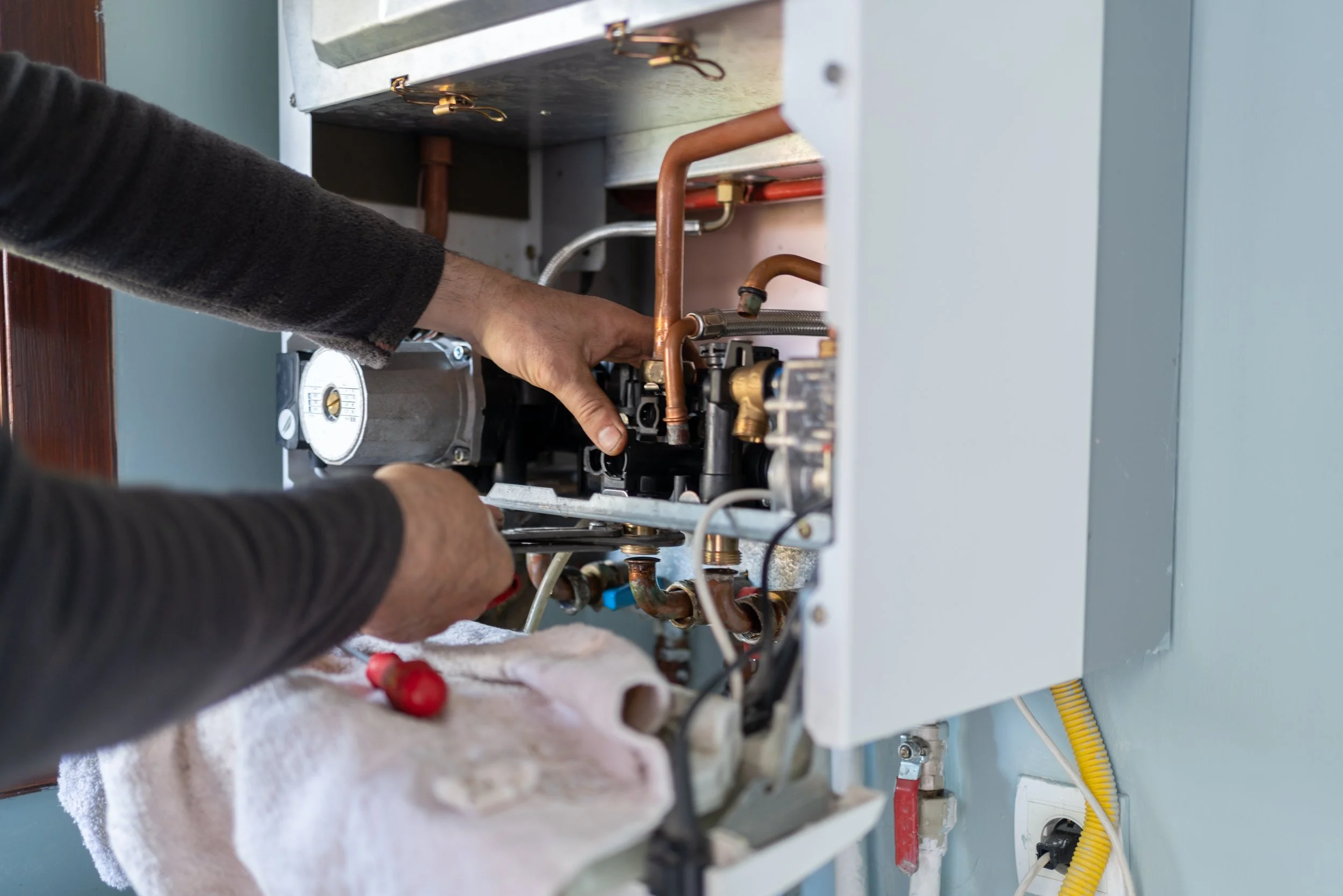
Not every noise requires a 2 a.m. service call, but some do. Here's when to treat a loud AC unit as an emergency:
- Grinding or metal-on-metal scraping: Shut the system off immediately and call for same-day service. Continued operation will destroy the motor or compressor.
- Loud banging or clanking: Shut it off. A loose component is causing damage with every cycle.
- Hissing with a chemical smell: Refrigerant leak. Shut it off and call immediately. Refrigerant exposure is a health hazard, especially in enclosed spaces.
- Buzzing with a burning smell or tripped breaker: Electrical fault. Shut it off at the breaker and call for emergency service. This is a fire hazard.
- Any noise accompanied by no cooling: If the unit is making noise but not producing cold air, something has failed mechanically. You need service before the problem cascades into more expensive damage.
NEXT Heating & Cooling offers 24/7 emergency service across Southeast Michigan. If you're in Sterling Heights, Clinton Township, or Chesterfield and your AC is making concerning noises late at night or on a weekend, we'll get a NATE-certified HVAC technician to your home. We don't charge predatory after-hours rates—we charge fair pricing because that's how we've operated for 35 years.
What Your HVAC Tech Checks During a Noise Complaint Call
When you call us about a loud AC unit, here's exactly what our technicians do on-site. This is the process we follow on every noise diagnostic call:
Step 1: Listen and Locate
First, we run the system and listen. We identify whether the noise is coming from the outdoor condenser or the indoor air handler. We note when the noise occurs—at startup, during continuous operation, or at shutdown. We classify the noise type (grinding, squealing, banging, etc.). This takes about 5 minutes and immediately narrows down the possible causes.
Step 2: Visual Inspection
We inspect the outdoor unit for obvious issues: loose fan blades, debris in the housing, rust on components, refrigerant oil stains (indicating leaks), and the condition of electrical connections. We check that the unit is level on its pad. We inspect the indoor air handler for loose panels, debris on the blower wheel, and proper motor mounting.
Step 3: Electrical Testing
We use a multimeter to test voltage and amperage at the compressor, fan motor, and capacitor. Low voltage or high amperage indicates a failing component. We test the contactor for pitting or arcing. We check the start capacitor with a capacitance meter—capacitors lose capacity over time, and a weak capacitor makes the compressor work harder and run louder.
Step 4: Mechanical Testing
We manually spin the fan blade (with the power off) to check for bearing resistance. A fan blade should spin freely with minimal resistance. If it's stiff or grinds, the motor bearings are shot. We check compressor mounting bolts for tightness. We inspect refrigerant line connections for leaks using electronic leak detectors or soap bubbles.
Step 5: Airflow Testing
If the noise is coming from the indoor unit, we check static pressure in the ductwork. High static pressure indicates restricted airflow (dirty filter, blocked return, undersized ducts), which makes the blower work harder and louder. We inspect the blower wheel for dirt buildup—a dirty blower wheel is out of balance and causes vibration.
Step 6: Diagnosis and Options
Once we've identified the cause, we explain it in plain English. We show you the failed component. We give you repair options with upfront pricing—no surprises. If the unit is old and the repair is expensive, we also provide replacement options with cost-benefit analysis. You make the decision. We don't upsell. That's the NEXT Heating & Cooling difference—honest diagnostics, no pressure.
Cost Reality—Repair vs. Replacement for Noisy AC Units
Let's talk real numbers. Here's what common AC noise repairs actually cost in Southeast Michigan in 2026, and when replacement makes more financial sense than repair.
Common Repair Costs
- Capacitor replacement: $150-$250 (part is $20-$80, labor is $100-$150)
- Contactor replacement: $180-$280
- Condenser fan motor replacement: $400-$700 (motor is $200-$400, labor is $200-$300)
- Blower motor replacement: $450-$850
- Refrigerant leak repair and recharge: $400-$1,200 (depends on leak location and refrigerant type—R-410A is cheaper than older R-22)
- Compressor replacement: $1,800-$3,500 (this is major surgery—often not worth it on units over 10 years old)
- Evaporator coil replacement: $1,200-$2,500
When Repair Makes Sense
Repair is the smart choice when:
- The unit is less than 8 years old
- The repair cost is less than 30% of replacement cost
- The failed component is minor (capacitor, contactor, fan motor)
- The rest of the system is in good condition
When Replacement Makes Sense
Replacement is the smarter long-term investment when:
- The unit is 12+ years old (average AC lifespan in Michigan is 12-15 years)
- The repair cost exceeds 50% of replacement cost
- The compressor has failed (compressor replacement often costs as much as a new unit)
- You've had multiple repairs in the past 2-3 years (repair costs add up)
- The unit uses R-22 refrigerant (phased out in 2020—extremely expensive now)
- Your energy bills have been climbing (older units lose efficiency—new units save $300-$600/year on cooling costs)
A new central AC system in Southeast Michigan costs $3,500-$7,000 depending on size, efficiency rating (SEER), and brand. For a 3-ton Carrier or Lennox system (the most common size for Michigan homes), you're looking at $4,500-$5,500 installed. That includes the outdoor condenser, indoor evaporator coil, new refrigerant lines if needed, and labor. High-efficiency systems (16+ SEER) cost more upfront but save significantly on energy bills—worth it if you plan to stay in the home long-term.
For detailed pricing specific to your home size and system needs, check our guide on the best central air conditioner for Michigan homes in 2026.
The $5/Month Insurance Policy: Most AC noise problems start small and escalate. A $150 capacitor replacement today prevents a $2,500 compressor failure six months from now. That's why we created the Next Care Plan—$5/month gets you two annual tune-ups (spring AC check, fall furnace check), priority scheduling, 10% off repairs, and no service call fees. Our techs catch failing components during tune-ups before they cause noise or breakdowns. It's preventive maintenance that actually prevents problems.
How to Prevent AC Noise Problems
Most loud AC units don't fail overnight—they get louder gradually as components wear out. Here's how to prevent noise problems before they start:
1. Schedule Annual Spring Tune-Ups
This is the single most effective prevention strategy. A spring tune-up (ideally in April or early May, before the heat hits) includes cleaning the condenser coil, checking refrigerant levels, testing electrical components, lubricating motor bearings, tightening mounting hardware, and testing system performance. Our techs catch 80% of potential failures during tune-ups—before they cause noise or breakdowns. The cost: $120-$180 for a standalone tune-up, or included free with the Next Care Plan.
2. Replace Your Air Filter Every 1-3 Months
A clogged filter restricts airflow, which makes the blower motor work harder and run louder. It also causes the evaporator coil to freeze, which leads to refrigerant flow problems and compressor strain. Standard 1-inch filters should be replaced monthly during cooling season (June-August). Thicker 4-inch media filters last 3-6 months. This is the easiest maintenance task homeowners can do themselves.
3. Keep the Outdoor Unit Clear
Trim bushes and vegetation at least 2 feet away from the condenser unit. Clear leaves, grass clippings, and debris from around the base. After storms, check for sticks or debris that might have blown into the unit. Good airflow around the condenser keeps it running efficiently and quietly.
4. Hose Down the Condenser Coil
Once a year (spring is ideal), turn off power to the unit and gently spray the condenser coil fins with a garden hose from the inside out. This removes cottonwood seeds, pollen, and dirt buildup that restricts airflow. Don't use a pressure washer—it'll bend the delicate aluminum fins. If the coil is heavily clogged, call a pro for chemical coil cleaning.
5. Check the Concrete Pad for Settling
Walk around your outdoor unit and look at the pad. Is it level? If it's tilted, the compressor and fan motor are under stress. Small shims (available at hardware stores) can level the unit. If the pad has settled significantly, it might need professional releveling or replacement.
6. Listen for Changes
You know what your AC normally sounds like. If it suddenly gets louder or develops a new noise, don't ignore it. Early intervention prevents expensive failures. Call for service when you first notice the change—not three weeks later when the unit stops cooling.
7. Upgrade Old Systems Before They Fail
If your AC is 12+ years old and starting to make noise, consider proactive replacement. Waiting for complete failure means you're shopping for a new system during a heat wave when demand is high and availability is limited. Replacing an aging system in spring or fall gives you time to research options, compare quotes, and schedule installation when crews aren't slammed.
For more on when to replace versus repair, read our post on furnace replacement costs in Michigan—the same decision framework applies to AC systems.
Hearing Unusual AC Noises? We'll Diagnose It.
NEXT Heating & Cooling has been keeping Southeast Michigan homes comfortable for over 35 years. Our NATE-certified technicians provide honest diagnostics, fair pricing, and same-day service across Macomb, Oakland, and St. Clair counties. No upselling. No surprises. Just straight answers and reliable repairs.
Schedule Your Diagnostic Service