

How to Prepare Your AC for Michigan Summer Heat | NEXT
It's mid-March in Southeast Michigan. The furnace is still running most nights, but you know what's coming. By late June, you'll be dealing with 85-degree days, 70% humidity, and an air conditioner that hasn't run since September. The question isn't whether your AC will work when you need it — it's whether it'll keep working through July and August without a breakdown.
We've been servicing air conditioners across Macomb County, Oakland County, and St. Clair County for over 35 years. Every spring, we see the same pattern: homeowners who skip AC prep in April end up calling us in July when the system quits during a heat wave. By then, our schedule is packed, parts take longer to get, and you're stuck waiting in a hot house.
This guide covers what you need to do now — before summer hits — to keep your air conditioner running when it matters most. We'll walk through what homeowners can handle themselves, what needs a professional, and how to tell if your system won't make it through another Michigan summer.
Why Michigan Summers Are Harder on Air Conditioners
Michigan doesn't get the credit it deserves for brutal summers. Everyone talks about the winters, but our summers create a different kind of stress on HVAC systems — one that shortens equipment life if you're not paying attention.
The problem is humidity. Southeast Michigan averages 60-70% relative humidity during summer months, sometimes higher after storms roll through from Lake Huron or Lake St. Clair. Your air conditioner has to do two jobs: cool the air and remove moisture. In dry climates like Arizona, AC units only cool. Here, they're working double duty every time they run.
That extra workload shows up in a few ways. Evaporator coils freeze when airflow drops. Condensate drain lines clog with algae because they're constantly wet. Compressors cycle more frequently trying to maintain temperature and humidity setpoints. Blower motors run longer to move enough air through the system.
Add in Michigan's temperature swings — 55 degrees at night, 88 degrees by afternoon — and your system is constantly starting and stopping. Every startup puts stress on electrical components. The capacitor that helps your compressor start? It's rated for a certain number of cycles. More cycles means it wears out faster.
We see this play out in service calls. The AC units that fail in Troy or Rochester Hills aren't necessarily older than units in drier states — they've just worked harder. A 12-year-old Carrier or Lennox system in Michigan has handled more humidity and more start/stop cycles than the same model would see in Colorado.
That's why spring prep matters. You're not just checking if the system works — you're making sure it can handle three months of continuous humidity load without breaking down when you need it most.
Spring AC Checklist: What Homeowners Can Do
There are tasks homeowners can handle safely before calling a professional. These won't replace a proper tune-up, but they'll catch obvious problems and improve efficiency. Plan to spend about an hour on this checklist, ideally in April before you need cooling.
Clear Debris from the Outdoor Unit
Your condenser unit — the big box outside — needs airflow to reject heat. Walk around it and remove anything within two feet: leaves, grass clippings, mulch, branches, landscaping fabric. We've pulled entire birds' nests out of units in Shelby Township that were blocking half the coil surface.
Check the top of the unit where the fan exhausts. Make sure shrubs or bushes haven't grown over it since last fall. Trim back anything that's encroaching. The unit needs clear space on all sides to breathe.
Replace or Clean Air Filters
Dirty filters are the number one cause of AC problems we see during service calls. A clogged filter restricts airflow to the evaporator coil inside your furnace or air handler. When airflow drops, the coil gets too cold and freezes. Ice buildup blocks airflow completely, and the system shuts down.
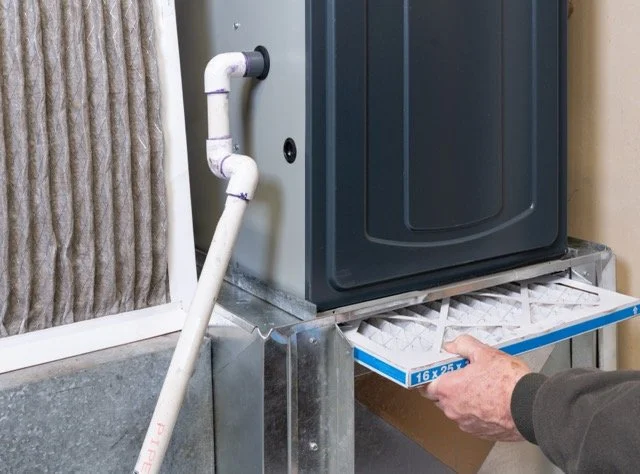
If you have disposable filters, replace them. If you have reusable filters, pull them out and rinse them with a garden hose, let them dry completely, then reinstall. Don't run the system without a filter — dust will coat the evaporator coil and you'll be calling us for a cleaning.
Standard 1-inch filters should be changed monthly during cooling season. If you have a 4-inch or 5-inch media filter, check the manufacturer's recommendation — usually every 6-12 months depending on the brand.
Test Thermostat Operation
Set your thermostat to cooling mode and drop the temperature setting 5 degrees below current room temperature. You should hear the outdoor unit start within a few minutes. Go outside and confirm the fan is spinning and you hear the compressor running (a low hum).
Inside, check that cool air is coming from your vents within 10-15 minutes. If the air feels room temperature or warm, you likely have a refrigerant issue or a failed component — time to call a licensed HVAC contractor.
If you have a programmable or smart thermostat, verify the schedule is set for cooling season. We get calls every June from homeowners whose thermostats are still set to heat mode from winter.
Inspect the Condensate Drain Line
Your AC removes moisture from the air, and that water has to go somewhere. Most systems drain through a PVC pipe near the indoor unit. In basements, this usually drains to a floor drain or sump pit. In attics, it drains outside or to a condensate pump.
Look for standing water around the indoor unit. Check the drain line for clogs. A simple test: pour a cup of water into the drain pan (the metal tray under your evaporator coil). It should drain immediately. If it sits there, the line is clogged.
Pour a cup of white vinegar down the drain line to kill algae and prevent clogs. Do this twice a year — spring and mid-summer. If the line is already clogged, you'll need a wet/dry vacuum to clear it or call us to handle it during a tune-up.
Listen for Unusual Sounds
Run the system for 20 minutes and listen. Normal sounds: a hum from the compressor, air moving through vents, the outdoor fan spinning. Abnormal sounds: grinding, squealing, banging, clicking, or rattling.
Squealing usually means a blower motor belt is worn (if you have a belt-driven system). Grinding suggests a motor bearing is failing. Clicking can indicate a failing capacitor or contactor. Rattling often means loose panels or debris in the unit.
Any of these sounds mean you need service before summer. Don't wait until July when the system quits completely. Early diagnosis prevents bigger repairs.
What Professional AC Tune-Ups Actually Cover
Homeowner maintenance keeps your system running, but it doesn't catch refrigerant leaks, electrical failures, or efficiency losses. That's what professional tune-ups are for. Here's what our NATE-certified technicians check during a complete AC service.
Refrigerant Level and Pressure Testing
Your AC uses refrigerant (most systems in Michigan use R-410A) to absorb heat from your house and reject it outside. The refrigerant level has to be exact — measured in ounces, not pounds. Too little and the system can't cool properly. Too much and you risk compressor damage.
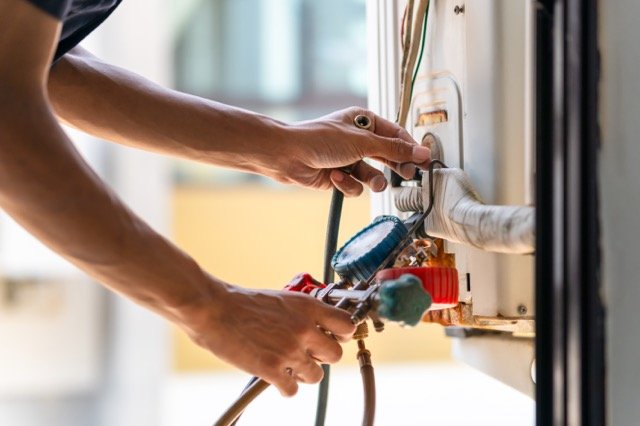
We connect gauges to the service ports and measure suction and discharge pressures. These readings tell us if the charge is correct, if there's a restriction in the system, or if the compressor is losing efficiency. If pressures are low, we check for leaks using electronic leak detectors or UV dye.
Refrigerant doesn't "burn off" like gas in a car. If the level is low, there's a leak somewhere. We find it, fix it, then recharge the system to manufacturer specs. Topping off refrigerant without fixing the leak is a waste of money — you'll be calling again in six months.
Electrical Connection Testing
Air conditioners pull significant amperage, especially when the compressor starts. We test voltage at the disconnect, check wire connections for corrosion or looseness, and measure amp draw on the compressor and blower motor.
Capacitors are tested with a multimeter. These components help motors start and run efficiently. They fail gradually, so a capacitor testing at 80% of rated capacity might work now but fail in July. We replace them during the tune-up before they cause a breakdown.
Contactors — the relays that switch power to the compressor and fan — are inspected for pitting or burning. A worn contactor can arc and fail, leaving you without cooling. If we see damage, we replace it on the spot.
Condenser Coil Cleaning
The outdoor coil (condenser) rejects heat from your house. If it's coated in dirt, pollen, or cottonwood fluff, it can't reject heat efficiently. The system runs longer, uses more energy, and puts extra stress on the compressor.
We clean coils with low-pressure water or specialized coil cleaner, depending on how dirty they are. High-pressure washing can bend the aluminum fins, so we're careful about technique. Clean coils can improve efficiency by 10-15%, which shows up on your electric bill.
Blower Motor and Belt Inspection
Inside your furnace or air handler, the blower motor moves air across the evaporator coil and through your ductwork. We check the motor for unusual noise, test amp draw, and lubricate bearings if the motor has oil ports (many newer motors are sealed and don't need lubrication).
If your system uses a belt-driven blower, we check belt tension and condition. Worn belts squeal and can snap, leaving you without airflow. We replace them during the tune-up if they show cracks or glazing.
Ductwork and Airflow Assessment
Proper airflow is critical for AC performance. We measure temperature drop across the evaporator coil (should be 15-20 degrees) and check static pressure in the duct system. High static pressure means restricted airflow — usually from undersized ducts, closed vents, or duct leaks.
In older homes in Royal Oak or Grosse Pointe Farms, we often find ductwork that was sized for heating only. When AC was added later, the ducts weren't upgraded. The result is poor cooling performance and high energy bills. If we find this during a tune-up, we'll recommend ductwork evaluation as a separate service.
Signs Your AC Won't Make It Through Summer
Sometimes a tune-up reveals problems that can't be fixed with maintenance. Here are the signs we look for that indicate your system is near the end of its life.
Age: 15 Years or Older
Air conditioners in Michigan typically last 15-20 years with proper maintenance. After 15 years, efficiency drops, refrigerant leaks become more common, and parts are harder to find. If your system is 15+ years old and needs a major repair (compressor, coil replacement), replacement often makes more financial sense than repair.
Check the data plate on your outdoor unit. The serial number includes the manufacture date. Most brands use a letter-number code in the first four characters. For Carrier, Lennox, Trane, Bryant, and Goodman, the first two digits indicate the year. If you're not sure how to decode it, ask during your tune-up.
Rising Energy Bills
Compare your summer electric bills from the last three years. If costs are climbing but your usage habits haven't changed, your AC is losing efficiency. Worn compressors draw more amps. Dirty coils force longer run times. Refrigerant leaks reduce cooling capacity.
A system that's 30% less efficient than when it was new will cost you hundreds of dollars extra per summer in Clinton Township or Warren. At some point, the energy waste exceeds the cost of a new, high-efficiency system.
Frequent Repairs
If you've called for AC repairs twice in the last two years, the system is telling you something. Capacitors, contactors, and fan motors are normal wear items. But if you're replacing compressors, reversing valves, or evaporator coils, you're throwing money at a dying system.
We use a simple rule: if the repair cost is more than half the cost of replacement, and the system is over 10 years old, replacement makes more sense. We'll give you both options — repair and replace — with honest cost projections so you can make the call.
Uneven Cooling
Some temperature variation between rooms is normal, but if one floor is 10 degrees warmer than another, something's wrong. Common causes: duct leaks, undersized equipment, failed zone dampers, or a system that's lost capacity due to refrigerant loss or compressor wear.
During a tune-up, we'll measure supply air temperatures at different vents to diagnose the problem. Sometimes it's fixable with duct sealing or balancing. Sometimes it means the system can't keep up with your home's cooling load anymore.
Strange Noises or Smells
Grinding, squealing, or banging noises indicate mechanical failure. Burning smells suggest electrical problems. Musty odors point to mold in the ductwork or drain pan. None of these should be ignored.
If your system is making noise that wasn't there last year, have it checked before summer. A $200 repair in April beats a $2,500 compressor replacement in July.
Related: If your AC is showing signs of failure, read our guide on when to replace your AC unit in Michigan for a detailed breakdown of replacement costs and equipment options.
Cost Reality: Tune-Up vs. Emergency Repair
Let's talk numbers. A professional AC tune-up in Southeast Michigan costs $120-200 depending on the contractor and what's included. That's a known, budgeted expense you can plan for in April.
Emergency repairs in July? Different story. Here's what common summer AC failures cost:
- Capacitor replacement: $150-300
- Contactor replacement: $150-250
- Blower motor replacement: $400-800
- Condensate pump replacement: $250-450
- Refrigerant leak repair and recharge: $500-1,500 depending on leak location
- Evaporator coil replacement: $1,200-2,500
- Compressor replacement: $1,800-3,500
Most of these failures are preventable with regular maintenance. A worn capacitor caught during a spring tune-up costs $150 to replace on our schedule. The same capacitor failing in July during a heat wave costs $300+ for emergency service, and you're waiting in a hot house while we fit you into the schedule.
We track this data across thousands of service calls. Homeowners who skip annual maintenance spend 3-4 times more on repairs over the life of their system compared to those who maintain regularly. The math isn't close.
That's why we offer the Next Care Plan — $5 per month ($60/year) for two annual tune-ups (spring AC, fall furnace), priority scheduling, 10% off repairs, and no service call fees. It pays for itself the first time you need a repair.
When to Schedule Service (Before the Rush)
Timing matters. Our call volume follows a predictable pattern every year. April and May are steady — we can usually schedule service within a few days. June picks up as temperatures climb. July and August? We're running two weeks out for non-emergency calls, and parts take longer because every HVAC contractor in Michigan is ordering the same components.
The sweet spot for AC service is late April through mid-May. The weather is mild, so you're not desperate for cooling yet. Our techs have time to thoroughly inspect your system, not rush through a tune-up to get to the next emergency call. If we find a problem, we can order parts and schedule the repair without you suffering in the heat.
By the time the first 85-degree day hits in June, your system has been tested, cleaned, and verified. You're not gambling that it'll work — you know it will.
If you're on the Next Care Plan, we reach out in early April to schedule your spring service. You pick the date, we show up on time, and you're done before summer starts. No emergency calls, no waiting, no stress.
For homeowners not on a maintenance plan, call now. Don't wait until it's 90 degrees and the system quits. By then, everyone else is calling too, and you're competing for appointment slots.
Ready to Get Started?
NEXT Heating & Cooling has been keeping Michigan homes comfortable for over 35 years. Get honest diagnostics and fair pricing from NATE-certified technicians who show up on time. Schedule your spring AC tune-up before the summer rush.
Schedule Your ServiceFrequently Asked Questions
Wait until overnight lows are consistently above 55 degrees — usually late May or early June in Southeast Michigan. Running AC when it's too cold outside can damage the compressor because refrigerant pressures drop too low. If you need cooling on a random warm April day, use fans or open windows instead of starting the AC.
Standard 1-inch filters should be changed monthly during cooling season (June-September). If you have pets, run the system constantly, or have allergies, check filters every 2-3 weeks. Thicker 4-inch or 5-inch media filters last 6-12 months depending on the brand. When in doubt, pull the filter and hold it up to light — if you can't see through it clearly, replace it.
For efficiency and comfort in Michigan's humidity, set your thermostat to 72-75 degrees when you're home. Raise it to 78-80 when you're away for more than 4 hours. Don't set it below 68 — the evaporator coil can freeze, and you won't get better cooling. Use ceiling fans to improve comfort without lowering the temperature setting.
Yes, especially in Michigan's humid climate. Annual service catches refrigerant leaks, electrical failures, and efficiency losses before they cause breakdowns. Systems that get yearly tune-ups last 5-7 years longer than those that don't, and they use 15-20% less energy. The cost of one emergency repair usually exceeds the cost of several years of preventive maintenance.
With proper maintenance, 15-20 years. Michigan's humidity and temperature swings put more stress on AC systems than dry climates, so equipment here tends to wear out slightly faster than the national average. Systems that skip maintenance often fail around 10-12 years. Brands like Carrier, Lennox, and Trane typically outlast budget brands when maintained properly.
A complete tune-up includes refrigerant pressure testing, electrical connection inspection, capacitor and contactor testing, condenser coil cleaning, blower motor inspection, condensate drain cleaning, thermostat calibration, and airflow measurement. Our NATE-certified techs also check for duct leaks and give you a written report of system condition with recommendations for any needed repairs.
You can remove surface debris with a garden hose on low pressure, spraying from inside the unit outward. But don't use high pressure — it bends the aluminum fins and reduces airflow. For deep cleaning (pollen, cottonwood, dirt buildup), professional cleaning with specialized coil cleaner works better and won't damage the fins. If you're not comfortable working around electrical components, leave it to a licensed technician.