

How to Vet HVAC Contractors in Detroit: 7-Question Checklist

You're comparing HVAC contractors in Metro Detroit, and the quotes range from $3,500 to $12,000 for what sounds like the same furnace. One guy showed up two hours late in an unmarked van. Another spent five minutes in your basement and immediately said you need a whole new system. A third won't give you a written estimate until you "commit to moving forward."
This is the reality of hiring HVAC contractors in Southeast Michigan. The barrier to entry is low, the potential for profit is high, and homeowners often don't know what questions to ask until after they've already signed a contract.
After 35 years serving Macomb, Oakland, and St. Clair counties, we've seen what happens when homeowners hire the wrong contractor. Furnaces installed without permits. AC units oversized by 50% because "bigger is better." Ductwork left disconnected in crawl spaces. Equipment that fails two winters in because it was never commissioned properly.
This guide gives you the exact questions to ask, the red flags to watch for, and the licensing requirements that separate legitimate heating and cooling services in Metro Detroit from the operators who disappear when your furnace quits in January.
Red Flags: Warning Signs Before You Hire
Some warning signs are obvious. Others are subtle. Here's what we've learned from cleaning up after bad contractors in Sterling Heights, Troy, and Warren.
They Won't Provide a License Number
In Michigan, anyone performing HVAC work for compensation must hold a mechanical contractor license issued by the state. This isn't optional. If a contractor hesitates when you ask for their license number, or says "my guy has one" without providing specifics, that's your signal to end the conversation.
You can verify any Michigan mechanical contractor license through the state's online database. It takes two minutes. A legitimate contractor will give you their license number proudly — it represents years of training, testing, and adherence to state codes.
The Diagnosis Happens in Under Five Minutes
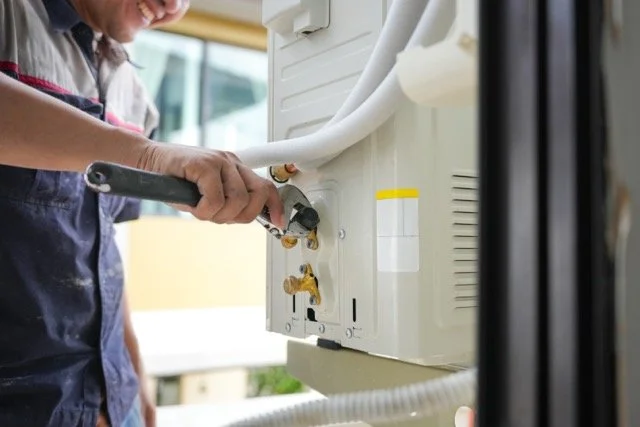
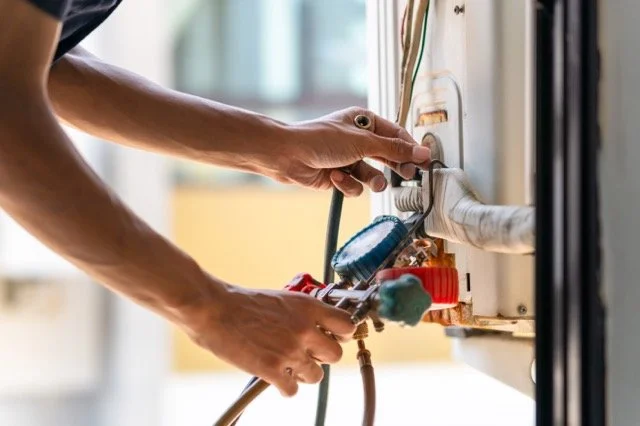
We've diagnosed thousands of furnaces and air conditioners across Southeast Michigan. A proper diagnostic takes time. We check airflow, measure temperature splits, test capacitors, inspect heat exchangers, verify refrigerant pressures, and review the thermostat wiring.
When a contractor walks into your basement, glances at your furnace, and immediately tells you it needs to be replaced, they're selling equipment — not diagnosing problems. A furnace that short-cycles might have a clogged filter, a failing limit switch, or an oversized system. But you won't know unless someone actually tests the components.
The Price Drops Significantly If You "Sign Today"
High-pressure sales tactics are common in residential HVAC. The "special pricing expires tonight" approach is designed to prevent you from getting competing bids or thinking through the decision.
Legitimate contractors price jobs based on equipment cost, labor hours, permit fees, and overhead. Those numbers don't change because you signed a contract the same day. If a contractor can suddenly knock $2,000 off the price because you're ready to commit, the original quote was inflated.
Real Example: A homeowner in Clinton Township received a quote for $14,500 for a Carrier furnace and AC replacement. When she said she needed to think about it, the sales rep "called his manager" and came back with $10,800. She called us for a second opinion. We installed the same equipment, properly sized and permitted, for $9,200.
They Recommend the Biggest System Available
Oversizing HVAC equipment is one of the most common mistakes in residential installations. Contractors who don't perform load calculations often default to "bigger is better" logic. It's not.
An oversized furnace short-cycles, never reaching steady-state efficiency. An oversized AC unit cools the house too quickly without removing humidity, leaving you cold and clammy. Both scenarios waste energy and shorten equipment life.
Proper sizing requires a Manual J load calculation that accounts for your home's square footage, insulation levels, window area, air infiltration, and orientation. It's not a guess based on the old unit's tonnage. If a contractor quotes a system size without measuring anything, find someone else. We cover this in detail in our guide on what size AC unit Michigan homes actually need.
No Written Estimate or Contract
Verbal agreements mean nothing when your furnace fails in February and the contractor claims they never promised a warranty. Every legitimate HVAC job should include a written estimate that specifies:
- Equipment make, model, and efficiency ratings (SEER for AC, AFUE for furnaces)
- Labor costs broken out separately from materials
- Permit fees and inspection requirements
- Warranty terms for parts and labor
- Payment schedule and accepted methods
- Timeline for completion
If a contractor says "we'll figure out the details later" or wants a large deposit before providing a written contract, walk away.
The 7-Question Contractor Vetting Checklist
Ask these questions before hiring any HVAC contractor in Metro Detroit. Their answers will tell you everything you need to know about their legitimacy and competence.
Question 1: What's Your Michigan Mechanical Contractor License Number?
This is the foundation. Michigan requires mechanical contractor licensing for anyone installing, altering, or repairing HVAC systems. The license ensures the contractor has met state requirements for experience, insurance, and knowledge of mechanical codes.
A legitimate contractor will provide their license number immediately. You can verify it at Michigan's Department of Licensing and Regulatory Affairs website. Check that the license is current, not expired or suspended.
At NEXT Heating & Cooling, we're licensed under Premier Builder Inc., the same company that's been serving Southeast Michigan since 1991. Our credentials are listed on our about page, and we're happy to provide documentation before any work begins.
Question 2: Do You Carry General Liability and Workers' Compensation Insurance?
Insurance protects you from liability if something goes wrong during the installation. General liability covers property damage — if a technician drops a furnace through your basement stairs, their insurance pays for repairs. Workers' compensation covers injuries to the contractor's employees on your property.
Ask to see certificates of insurance. Don't accept "we're insured" as an answer. Request the actual certificate and verify it's current. If a contractor is evasive about insurance, they either don't have it or don't want you to know their coverage limits.
Question 3: Are Your Technicians NATE-Certified?
NATE (North American Technician Excellence) certification is the industry standard for HVAC technical competence. It's a voluntary certification that requires technicians to pass rigorous exams on installation, service, and system design.
Not every good technician is NATE-certified, but certification demonstrates a commitment to ongoing education and technical knowledge. It's especially important for complex installations like heat pumps in Michigan winters or high-efficiency variable-speed systems.
Question 4: Will You Perform a Load Calculation Before Sizing Equipment?
This question separates professionals from parts changers. A Manual J load calculation is the only accurate way to size HVAC equipment. It accounts for your home's unique characteristics — insulation, windows, air leakage, ductwork, and orientation.
If a contractor says "we'll match your old unit" or "we'll go by square footage," they're guessing. Your old unit might have been oversized to begin with. Square footage alone ignores insulation levels, window quality, and a dozen other factors that affect heating and cooling loads.
A proper load calculation takes 30-45 minutes and involves measuring your home. It's the foundation for every equipment recommendation we make.
Question 5: What Brands Do You Install and Why?
Contractor brand preferences reveal a lot about their business model. Some contractors are locked into single-brand contracts with distributors. Others install whatever they can get the cheapest. The best contractors offer multiple brands and can explain the differences.
We install Carrier, Lennox, Trane, Rheem, Bryant, Goodman, Amana, York, and RUUD. Each manufacturer has strengths. Carrier and Trane are known for reliability and dealer support. Rheem offers excellent value in the mid-tier market. Lennox makes some of the quietest systems available.
When a contractor can only offer one brand, or can't explain why they recommend a specific model for your situation, it's a red flag. Equipment selection should be based on your home's needs, not the contractor's distributor relationships. Our breakdown of the best furnace brands for Michigan homes covers what to look for.
Question 6: Will You Pull Permits and Schedule Inspections?
Most municipalities in Southeast Michigan require permits for furnace and AC replacements. Permits ensure the work meets code and gets inspected by a qualified building official. They also create a paper trail that protects you if you sell your home.
Some contractors skip permits to save time and money. This is illegal and leaves you liable. If the installation doesn't meet code, you're responsible for bringing it up to standard — even if you didn't do the work.
Ask explicitly: "Will you pull permits for this work?" If the answer is anything other than "yes," find another contractor.
Question 7: What's Included in Your Warranty?
HVAC warranties have two components: manufacturer parts warranty and contractor labor warranty. Manufacturer warranties typically cover parts for 5-10 years, depending on the equipment tier. Labor warranties vary widely by contractor.
Some contractors offer one year of labor coverage. Others offer none, arguing that manufacturer warranties should be sufficient. We provide a two-year labor warranty on all installations because we stand behind our work.
Ask these specific warranty questions:
- How long is the parts warranty, and what does it cover?
- How long is the labor warranty?
- Are there any conditions that void the warranty? (Many require annual maintenance.)
- If the company goes out of business, is the warranty transferable?
Get warranty terms in writing. Verbal promises don't count when your heat exchanger cracks in year three.
Michigan Licensing Requirements Explained
Michigan takes HVAC licensing seriously, and for good reason. Improperly installed heating and cooling equipment can cause carbon monoxide poisoning, house fires, and refrigerant leaks.
Here's what Michigan requires for mechanical contractor licensing:
State Mechanical Contractor License
Anyone performing HVAC work for compensation must hold a mechanical contractor license issued by the Michigan Department of Licensing and Regulatory Affairs (LARA). This includes installation, repair, alteration, or maintenance of heating, cooling, and ventilation systems.
To obtain a mechanical contractor license, applicants must:
- Demonstrate at least three years of experience in the mechanical trade
- Pass a written examination covering Michigan mechanical codes
- Maintain general liability insurance
- Maintain workers' compensation insurance (if they have employees)
- Designate a licensed master mechanical contractor as the responsible person
The license must be renewed every three years. Contractors who let their licenses lapse are not legally permitted to perform HVAC work in Michigan.
EPA Section 608 Certification
Any technician who handles refrigerants must hold EPA Section 608 certification. This federal requirement ensures technicians understand proper refrigerant handling, recovery, and disposal to prevent environmental damage.
There are four levels of 608 certification:
- Type I: Small appliances (window AC units, dehumidifiers)
- Type II: High-pressure refrigerants (residential and commercial AC, heat pumps)
- Type III: Low-pressure refrigerants (large chillers)
- Universal: All of the above
For residential work, technicians need at least Type II certification. Universal certification is standard for professional HVAC techs. If a contractor can't show you their 608 cards, they're not qualified to work on your AC or heat pump.
Local Business Licenses
Many Michigan cities require separate business licenses for contractors operating within city limits. Sterling Heights, Troy, Warren, and other municipalities maintain their own licensing databases.
Local licenses don't replace state mechanical contractor licenses — they're an additional requirement. A contractor working in Troy needs both a Michigan mechanical contractor license and a Troy business license.
How to Verify a Contractor's Credentials: Visit Michigan LARA's online license verification system. Search by company name or license number. Check that the license is active, not expired or suspended. For EPA 608 certification, ask to see the technician's physical card — the EPA doesn't maintain a public database.
What Fair Pricing Actually Looks Like
HVAC pricing in Metro Detroit varies based on equipment tier, installation complexity, and contractor overhead. But there are ranges that make sense — and quotes that should raise immediate questions.
Furnace Replacement: 2026 Southeast Michigan Pricing
For a standard 80,000-100,000 BTU gas furnace replacement in a home with existing ductwork:
- Economy tier (80% AFUE single-stage): $3,200-$4,500
- Mid-tier (95% AFUE two-stage): $4,800-$6,800
- Premium tier (96%+ AFUE modulating): $6,500-$9,200
These ranges include equipment, labor, permits, disposal of the old furnace, and basic ductwork modifications. They assume straightforward installations in homes with accessible furnace rooms and properly sized gas lines.
Prices increase when:
- The furnace is in a cramped crawl space or attic
- Gas line upgrades are needed (older homes often have undersized gas piping)
- Ductwork requires significant modification or replacement
- Electrical upgrades are necessary (high-efficiency furnaces need dedicated circuits)
- Chimney liner installation is required (for 80% AFUE furnaces venting through masonry chimneys)
If you're comparing quotes, make sure each contractor is pricing the same scope of work. One quote might include a new thermostat and humidifier; another might not. Get itemized estimates so you can compare apples to apples. We detail realistic costs in our Michigan furnace replacement pricing guide.
Central AC Replacement: 2026 Southeast Michigan Pricing
For a standard 2.5-3.5 ton central air conditioner replacement with existing ductwork and line sets:
- Economy tier (14 SEER single-stage): $3,800-$5,200
- Mid-tier (16-17 SEER two-stage): $5,500-$7,500
- Premium tier (18+ SEER variable-speed): $7,200-$10,500
These prices include the outdoor condenser unit, indoor evaporator coil, refrigerant, electrical disconnect, pad, and labor. They assume the existing line set is in good condition and properly sized.
Prices increase when:
- Refrigerant line sets need replacement (common in homes over 20 years old)
- The outdoor unit location requires extensive electrical work
- Ductwork modifications are needed to improve airflow
- The indoor coil doesn't fit the existing furnace plenum
Understanding SEER ratings and energy efficiency helps you evaluate whether higher-tier equipment makes financial sense for your situation.
What You're Actually Paying For
When you hire a reliable HVAC contractor in Metro Detroit, your money covers more than just the equipment sitting in your basement. Here's the breakdown:
Equipment costs typically represent 40-50% of the total job price. Contractors buy equipment at wholesale prices, but they're not making 100% markup. Distributor costs are higher than most homeowners realize, especially for premium brands like Carrier and Lennox.
Labor costs cover the technicians' time, expertise, and benefits. A proper furnace installation takes 6-10 hours with a two-person crew. That includes removing the old unit, modifying ductwork, running new gas and electrical lines, installing and leveling the new furnace, commissioning the system, and testing all safety controls.
Overhead and insurance account for 15-20% of the job cost. This includes liability insurance, workers' compensation, vehicle maintenance, tool replacement, office expenses, and licensing fees.
Permits and inspections typically cost $100-300, depending on the municipality. Some contractors skip permits to undercut competitors. Don't reward this behavior.
Warranty and service commitments have real costs. When we offer a two-year labor warranty, we're accepting the risk that we'll need to return for warranty service. That's built into our pricing.
Why Some Quotes Are Suspiciously Low
When a quote is significantly below market rate, something's missing. Common corners that get cut:
- No permit pulled (saves $200-300 but leaves you liable)
- Unlicensed or uninsured labor (saves 15-20% but creates massive liability)
- Improper equipment sizing (no load calculation performed)
- Skipped commissioning steps (system never properly tested)
- Substandard materials (undersized ductwork, improper venting, cheap thermostats)
- No warranty (contractor disappears after installation)
The cheapest quote is rarely the best value. You want fair pricing from a contractor who will still be in business when you need service in three years.
When to Walk Away: Deal-Breakers
Some situations aren't worth trying to salvage. Here are the absolute deal-breakers that should end your relationship with a contractor immediately.
They Ask for Full Payment Upfront
Standard practice in residential HVAC is a deposit at contract signing (typically 25-50%) and final payment upon completion. Full payment upfront is a massive red flag.
If a contractor demands 100% payment before starting work, they either have serious cash flow problems or they're planning to take your money and disappear. Walk away.
They Discourage You from Getting Other Quotes
Legitimate contractors expect homeowners to shop around. We encourage it. If a contractor pressures you to sign immediately and discourages competing bids, they know their pricing or quality won't hold up to comparison.
High-pressure sales tactics — "this price expires tonight," "I can only offer this discount if you sign now," "my manager will be upset if I leave without a contract" — are manipulation strategies, not legitimate business practices.
Their Reviews Mention Incomplete Work or Disappearing
Before hiring any contractor, check their Google reviews, BBB rating, and any available complaints through LARA. Pay special attention to patterns:
- Multiple mentions of incomplete work
- Complaints about contractors not returning calls after deposit
- Reports of unlicensed subcontractors doing the actual work
- Disputes over warranty claims
- Repeated issues with equipment sizing or performance
One or two negative reviews among hundreds aren't necessarily disqualifying — every contractor occasionally has an unhappy customer. But patterns of similar complaints indicate systemic problems.
They Can't Provide Local References
A contractor who's been serving Southeast Michigan for years should have dozens of satisfied customers willing to serve as references. Ask for three recent references in your city — preferably jobs similar to yours.
If a contractor hesitates or says "we don't give out customer information," that's suspicious. Most homeowners are happy to share their experience if the work was done well.
Call the references. Ask specific questions: Did the crew show up on time? Was the job site left clean? Did the equipment perform as promised? Would you hire them again?
The Contract Is Vague or Incomplete
A professional contract specifies exactly what work will be performed, what equipment will be installed, and what you're paying for. If the contract uses vague language like "furnace replacement" without specifying make, model, efficiency rating, and warranty terms, don't sign it.
Vague contracts give contractors room to substitute cheaper equipment or skip promised work. Everything should be spelled out: equipment specifications, labor scope, permit responsibilities, payment schedule, warranty terms, and completion timeline.
Ready to Get Started?
NEXT Heating & Cooling has been keeping Michigan homes comfortable for over 35 years. Get honest diagnostics and fair pricing from NATE-certified technicians who show up on time. We pull permits, perform load calculations, and stand behind our work with real warranties.
Schedule Your ServiceWhy Preventive Maintenance Matters
Hiring the right contractor doesn't end with installation. The longevity and performance of your HVAC system depends on regular maintenance. Furnaces and air conditioners are complex machines with dozens of components that wear over time.
Annual maintenance catches small problems before they become expensive failures. A $180 capacitor replacement during a tune-up is better than a $1,800 compressor replacement in July. A cracked heat exchanger discovered during inspection is better than a carbon monoxide incident in January.
Our Next Care Plan costs $5 per month and includes two annual visits — a fall furnace tune-up and a spring AC tune-up. Members get priority scheduling, 10% off repairs, and no service call fees. The plan pays for itself if you need even one service call.
More importantly, regular maintenance preserves manufacturer warranties. Most equipment warranties require proof of annual professional maintenance. Skip the maintenance, void the warranty.