

Furnace Short Cycling: Why It Happens & 4 Michigan Fixes
You hear it again — the furnace kicks on, runs for maybe two minutes, shuts off. Five minutes later, it repeats. Your house feels cold even though the thermostat says it's heating. Your energy bill climbs higher each month. Welcome to furnace short cycling, one of the most common problems we diagnose in Michigan basements from Sterling Heights to Troy.
Short cycling isn't just annoying. It destroys furnace components, wastes fuel, and leaves your family uncomfortable during the coldest months. After 35 years of furnace installation and repair across Southeast Michigan, we've seen the same four causes account for about 80% of short cycling complaints. The good news? Three of them are fixable without replacing your entire system.
This guide explains exactly what short cycling is, why it happens in Michigan homes specifically, and the four most common fixes our NATE-certified technicians use every winter. We'll tell you which problems you can handle yourself and when to call a professional.
What Is Furnace Short Cycling?
A normal heating cycle runs 10 to 15 minutes. The furnace fires, heats the air, distributes it through your ductwork, and shuts off when the thermostat reaches the set temperature. In a properly functioning system, this happens three to seven times per hour depending on outdoor temperature and insulation quality.
Short cycling means your furnace turns on and off much more frequently — sometimes every two to five minutes. The burners ignite, the blower starts, and then the system shuts down before completing a full heating cycle. The house never reaches the target temperature, or it overshoots and drops rapidly.
This pattern causes three serious problems. First, it dramatically increases wear on mechanical components. Every startup cycle stresses the igniter, gas valve, blower motor, and control board. A furnace designed for 100,000 cycles over 15 years might burn through that lifespan in five years when short cycling. Second, it wastes energy. Most furnace efficiency happens during the middle of the heating cycle, not during startup and shutdown. Short cycling keeps your system in the least efficient operating range. Third, it creates uncomfortable temperature swings. Michigan winters demand consistent heat, not a roller coaster.
Michigan-Specific Context: Basement furnace installations in Southeast Michigan face unique challenges. Cold foundation walls create temperature differentials that can confuse thermostats. Older homes in Royal Oak and Grosse Pointe Farms often have undersized return air ducts, which restricts airflow and triggers short cycling. Lake-effect cold from Lake St. Clair pushes furnaces harder, making any underlying issue worse.
Fix #1: Dirty or Clogged Air Filter
This is the simplest cause and the one you should check first. A clogged air filter restricts airflow into the furnace. When the blower can't pull enough air through the heat exchanger, the temperature inside the furnace climbs rapidly. The high-limit safety switch detects overheating and shuts down the burners to prevent damage. The blower continues running to cool the heat exchanger, then the system tries to restart. The cycle repeats every few minutes.
Michigan homes accumulate filter-clogging debris faster than most regions. Construction dust from ongoing renovations in Bloomfield Hills subdivisions, pet dander in homes with multiple dogs, and the fine particulate that comes through windows during dry summer months all contribute. If you have a standard 1-inch pleated filter, check it monthly during heating season. If you can't see light through it when you hold it up to a window, replace it.
Filter Types and Replacement Schedules for Michigan Homes
Basic fiberglass filters (the blue ones from hardware stores) cost $1 but do almost nothing for air quality. They catch large debris but let most dust through. Replace them monthly.
Pleated filters with MERV 8-11 ratings capture smaller particles including pollen, mold spores, and pet dander. These are the workhorses for most Michigan homes. Replace every 60 to 90 days during heating season, more often if you have pets or ongoing construction.
High-efficiency MERV 13-16 filters catch even finer particles but restrict airflow significantly. Many older furnaces can't handle the static pressure these filters create. If your system wasn't designed for them, a MERV 13 filter will cause the exact short cycling problem you're trying to avoid. Before upgrading to high-efficiency filtration, consult with a technician who can measure your system's airflow capacity. We often recommend whole-home air quality solutions instead of forcing high-MERV filters into systems that can't handle them.
The fix: Check your filter right now. If it's dirty, replace it and see if the short cycling stops. This $15 fix solves the problem about 30% of the time.
Fix #2: Thermostat Issues
Your thermostat is the brain of your heating system. If it's getting bad information about your home's temperature, it sends bad commands to the furnace. We see three common thermostat problems that cause short cycling in Michigan homes.
Poor Placement
Thermostats installed near exterior doors feel cold drafts every time someone enters. Units mounted on exterior walls in older homes sense the cold radiating through inadequate insulation. Thermostats in direct sunlight during winter afternoons read artificially high temperatures. In each case, the thermostat tells the furnace to cycle based on conditions that don't represent the actual house temperature.
Basement thermostats are particularly problematic in Michigan. Many older homes in Warren and St. Clair Shores have the only thermostat in the basement near the furnace. Basements stay warmer than upper floors, so the thermostat thinks the house is comfortable while bedrooms upstairs remain cold. The furnace short cycles trying to satisfy a temperature reading that doesn't match living space conditions.
Calibration Drift
Mechanical thermostats lose calibration over time. A unit that's 10+ years old might read 68°F when the actual room temperature is 64°F. The furnace heats to what it thinks is 72°F, overshoots to 76°F, and shuts down. The temperature drops rapidly, triggering another short cycle.
Anticipator Settings (Older Thermostats)
If you have an old round dial thermostat, there's a small lever inside called the heat anticipator. This controls how long the furnace runs before shutting off. If it's set incorrectly, the furnace will short cycle. Most homeowners have never adjusted this setting, and many HVAC techs don't check it anymore because programmable thermostats have largely replaced mechanical units.
The fix: First, verify your thermostat placement. It should be on an interior wall, about five feet off the floor, away from windows, doors, and heat sources. If it's in a bad location, relocating it requires running new wire — a job for a professional.
Second, if your thermostat is more than 10 years old, consider upgrading. Modern programmable and smart thermostats maintain better calibration and include features that prevent short cycling. A Honeywell T6 or Ecobee3 Lite costs $150-$200 installed and often pays for itself in energy savings within a year. We install these regularly as part of our heating system upgrades across Macomb County.

Fix #3: Oversized Furnace
This is the problem most homeowners don't expect. An oversized furnace — one with too much heating capacity for your home — will short cycle by design. It produces heat faster than your house can absorb it, reaches the thermostat setpoint in minutes, and shuts down. Then the house cools quickly because the furnace never ran long enough to warm the structure, and the cycle repeats.
Why do contractors install oversized furnaces? Several reasons, most of them bad. Some use rules of thumb instead of proper load calculations. "This is a 1,800-square-foot ranch, so we'll put in an 80,000 BTU furnace" ignores insulation quality, window efficiency, air sealing, and a dozen other factors. Others oversize intentionally, thinking bigger is better or assuming homeowners want excess capacity "just in case." Some contractors worry about callbacks on the coldest days, so they add 20-30% to the calculated load as a safety margin.
The result is epidemic oversizing in Southeast Michigan. We regularly find 100,000 BTU furnaces in 1,500-square-foot homes that need only 60,000 BTU. The problem compounds in newer homes with good insulation and modern windows — they need even less heating capacity than older homes of the same size.
How to Tell If Your Furnace Is Oversized
Watch how long your furnace runs on a cold day (20°F or below). If it heats the house to setpoint in less than 10 minutes and then sits idle for 15-20 minutes, it's probably oversized. If your house feels uncomfortably warm near the furnace and cold in distant rooms, that's another sign. Oversized furnaces create uneven heating because they shut off before the blower distributes heat throughout the ductwork.
Check your utility bills. An oversized furnace costs more to operate than a properly sized unit, even though it runs for shorter periods. The inefficiency of constant startups and shutdowns outweighs the reduced runtime.
The fix: Unfortunately, there's no cheap solution to an oversized furnace. You can't "turn it down" or make it smaller. Some technicians suggest running the blower on continuous fan mode to improve air distribution, but this doesn't solve the short cycling and adds to your electric bill. The real fix is replacing the furnace with a correctly sized unit based on a Manual J load calculation.
If you're facing furnace replacement in Troy or surrounding areas, insist on a proper load calculation. Our technicians perform Manual J calculations on every installation, not because it's fast or easy, but because it's the only way to size equipment correctly. An accurate calculation accounts for insulation levels, window types, air infiltration, and Michigan's climate zone. The result is a furnace that runs in long, efficient cycles instead of short, wasteful bursts.
Two-Stage and Modulating Furnaces: These units help solve the oversizing problem. A two-stage furnace runs at 65% capacity most of the time and only ramps to 100% on the coldest days. A modulating furnace adjusts output from 40% to 100% in small increments. Both technologies reduce short cycling even if the furnace is slightly oversized. Carrier, Lennox, and Trane all make excellent two-stage and modulating models that work well in Michigan's variable winter conditions. Learn more about the differences in our guide to single-stage vs two-stage vs modulating furnaces.
Fix #4: Flame Sensor Problems
The flame sensor is a thin metal rod that sits in the burner flame. It's a safety device that verifies the gas valve opened and the burners actually ignited. If the sensor doesn't detect flame within a few seconds, it shuts down the gas valve to prevent unburned gas from accumulating in the heat exchanger.
Over time, the flame sensor develops a coating of carbon and combustion residue. This coating acts as an insulator, preventing the sensor from detecting the flame properly. The furnace ignites, the sensor fails to confirm the flame, and the control board shuts everything down. Thirty seconds later, the system tries again. This creates a distinctive short cycling pattern: ignition, three seconds of burner operation, shutdown, wait period, repeat.
Michigan's natural gas contains trace amounts of sulfur and other compounds that accelerate flame sensor fouling. Homes in Clinton Township and Chesterfield that use propane instead of natural gas see even faster buildup. Dirty air filters make the problem worse by restricting combustion air, which creates incomplete combustion and more carbon deposits.
DIY Flame Sensor Cleaning (Proceed With Caution)
If you're comfortable working on your furnace, you can clean the flame sensor yourself. Turn off the furnace at the breaker and the gas valve. Remove the access panel and locate the flame sensor — it's usually a thin rod (about the diameter of a pencil) extending into the burner area, held by a single screw or bracket.
Remove the sensor and gently clean it with fine-grit sandpaper or a dollar bill (the texture is perfect for removing carbon without scratching). Don't use steel wool or anything abrasive. Wipe it clean, reinstall it in the exact same position, and restore power. If the furnace runs normally, you've solved the problem.
However, if you're not confident in your ability to identify the flame sensor or reinstall it correctly, call a technician. An improperly positioned sensor won't detect the flame and will prevent your furnace from running at all. Our service calls include flame sensor inspection and cleaning as standard procedure during any furnace repair.
When to Call a Professional
You've checked the filter. You've verified thermostat placement. The furnace still short cycles. Now it's time to call a technician, because the remaining causes require diagnostic equipment and mechanical expertise.
What a Technician Checks During a Short Cycling Diagnosis
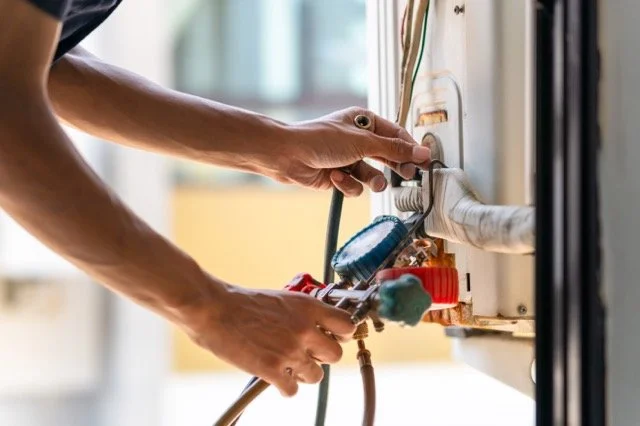
A thorough diagnostic includes measuring actual airflow across the heat exchanger using a manometer. We check static pressure in the ductwork to identify restrictions. We test the igniter, gas valve, and flame sensor with a multimeter. We verify the high-limit switch operates at the correct temperature. We inspect the heat exchanger for cracks or damage that might cause safety shutdowns. We examine the ductwork for disconnected sections or excessive leakage.
In about 20% of short cycling cases, we find multiple problems. A dirty filter combined with a failing blower motor. An oversized furnace with a poorly placed thermostat. A fouled flame sensor in a system that also has ductwork restrictions. Solving short cycling sometimes requires addressing several issues simultaneously.
The Cost of Ignoring Short Cycling
Homeowners sometimes live with short cycling for months or even years, assuming it's just an annoyance. This is expensive. Short cycling typically increases heating costs by 15-30% compared to normal operation. On a $200/month winter gas bill, that's $30-$60 wasted every month.
More importantly, short cycling destroys furnace components. Heat exchangers crack from thermal stress. Ignitors fail from excessive cycling. Blower motors burn out from constant startups. Control boards overheat. A furnace that should last 15-18 years might need replacement in 8-10 years when subjected to continuous short cycling.
We've seen furnaces in Rochester Hills and Lake Orion with heat exchanger cracks directly attributable to years of short cycling. At that point, the repair cost approaches replacement cost, and the homeowner faces an unexpected $4,000-$7,000 expense. A $150 service call to diagnose and fix short cycling early would have prevented the entire problem.
If your furnace is short cycling, don't wait. The longer it continues, the more damage accumulates. Contact a reliable HVAC contractor in Metro Detroit who will diagnose the actual cause instead of immediately pushing equipment replacement.
Prevention Through Maintenance: Most short cycling causes develop gradually. A clean flame sensor gets dirty over months. A properly sized furnace becomes "oversized" when you add insulation and new windows. Regular maintenance catches these problems early. The Next Care Plan includes two annual visits (fall furnace tune-up and spring AC tune-up) for $5/month. Our technicians clean flame sensors, check airflow, verify thermostat operation, and catch developing problems before they cause short cycling or system failure. It's the same preventive approach we've used for 35+ years — catch small problems before they become expensive emergencies.
Ready to Fix Your Short Cycling Furnace?
NEXT Heating & Cooling has been solving Michigan HVAC problems for over 35 years. Our NATE-certified technicians provide honest diagnostics and fix the actual problem, not just the symptoms. Serving Macomb, Oakland, and St. Clair counties.
Schedule Your Service CallFrequently Asked Questions About Furnace Short Cycling
A properly functioning furnace cycles three to seven times per hour depending on outdoor temperature, thermostat settings, and home insulation. Each cycle should run 10-15 minutes. If your furnace cycles more than eight times per hour or runs for less than 10 minutes per cycle, it's short cycling and needs diagnosis.
Absolutely. A clogged filter restricts airflow, causing the heat exchanger to overheat. The high-limit safety switch detects the overheating and shuts down the burners. This happens every few minutes, creating a classic short cycling pattern. Replacing a $15 filter solves the problem about 30% of the time in our experience serving Southeast Michigan.
Yes, significantly. Short cycling causes excessive wear on the igniter, gas valve, blower motor, and control board. It creates thermal stress that can crack heat exchangers. A furnace designed for 100,000 cycles over 15 years might burn through that lifespan in 5-7 years when short cycling continuously. The damage is cumulative and expensive.
Watch your furnace on a cold day (below 20°F). If it heats your home to the thermostat setpoint in less than 10 minutes and then sits idle for 15-20 minutes before restarting, it's probably oversized. Other signs include uneven heating (warm near the furnace, cold in distant rooms) and higher-than-expected gas bills despite short runtimes. A Manual J load calculation from a qualified technician confirms whether your furnace matches your home's actual heating needs.
If you're comfortable working on your furnace and can correctly identify the flame sensor, cleaning it is straightforward. Turn off power and gas, remove the sensor, gently clean it with fine-grit sandpaper, and reinstall it in the exact same position. However, if you're uncertain about any step, call a professional. An incorrectly positioned flame sensor won't detect the flame and will prevent your furnace from running. Our service calls include flame sensor inspection and cleaning as standard procedure.
It depends on the cause. A new air filter costs $15. Thermostat replacement runs $150-$300 installed. Flame sensor cleaning during a service call is typically $100-$150. If the furnace is oversized, replacement is the only real solution, costing $3,500-$7,000 depending on size and efficiency. The diagnostic service call itself typically costs $100-$150, which we apply toward repair costs. The key is diagnosing the actual cause instead of guessing, which is why we recommend working with NATE-certified technicians who have the training and equipment to identify the problem correctly.
Yes. The Next Care Plan includes two annual visits with comprehensive system inspection, filter checks, flame sensor cleaning, airflow measurement, and thermostat verification. If short cycling develops between scheduled visits, plan members get priority scheduling and no service call fees. The plan costs $5/month ($60/year) and includes 10% discounts on any needed repairs. Most short cycling problems we catch during routine maintenance visits, before they cause comfort issues or equipment damage. Learn more about the Next Care Plan benefits.