

Furnace Replacement Estimate: What Michigan Homeowners Pay in 2026

You want a number. Not a range, not "it depends," not a sales pitch. Just the real cost of replacing your furnace in Southeast Michigan.
Here it is: most homeowners in Macomb, Oakland, and St. Clair counties pay between $3,500 and $11,000 for a complete furnace replacement. That includes the equipment, installation labor, permits, and startup. Where you land in that range depends on your home size, the efficiency level you choose, and what shape your existing ductwork is in.
I have been sizing and installing furnaces across Metro Detroit for over 35 years through Premier Builder Inc., the parent company of NEXT Heating & Cooling. I have seen every configuration: 1960s ranches with undersized ductwork, two-story colonials with zone control systems, old bungalows with gravity furnaces still chugging along. The estimate process is the same every time, and it starts with understanding what actually drives the cost.
This is not a sales page. This is the breakdown I give homeowners when they ask what a furnace replacement really costs, what makes one estimate higher than another, and how to spot the red flags that mean you are talking to the wrong contractor. If you are researching furnace installation and repair in Southeast Michigan, this is the information you need before you call anyone for an estimate.
What Drives Your Furnace Replacement Estimate
The price you pay for a new furnace is not random. Five factors control it, and every legitimate estimate accounts for all of them.
Home Size and Heating Load Calculation
A 1,200-square-foot ranch needs a different furnace than a 3,000-square-foot colonial. The contractor should measure your home and calculate the heating load using ACCA Manual J standards. This calculation factors in square footage, ceiling height, insulation levels, window count, and how many exterior walls you have.
A proper load calculation prevents the two most expensive mistakes: oversizing and undersizing. An oversized furnace short-cycles, meaning it turns on and off too frequently. That wastes fuel, wears out components faster, and creates hot and cold spots. An undersized furnace runs constantly on cold nights and never catches up, leaving you uncomfortable and driving up your gas bill.
Most homes in Sterling Heights, Warren, and Troy need furnaces between 60,000 and 120,000 BTU (British Thermal Units). A 1,500-square-foot home typically needs 60,000 to 80,000 BTU. A 2,500-square-foot home typically needs 100,000 to 120,000 BTU. But those are rough guidelines. The only way to know for sure is a load calculation.
Equipment Efficiency Ratings (AFUE)
AFUE stands for Annual Fuel Utilization Efficiency. It tells you how much of the fuel your furnace burns actually heats your home. A furnace with 80% AFUE converts 80 cents of every dollar of natural gas into heat. The other 20 cents goes up the flue as exhaust.
Michigan code requires a minimum 80% AFUE for new furnaces. Most contractors stock three efficiency tiers:
- 80% AFUE (single-stage): Entry-level, lowest upfront cost, highest operating cost
- 92-95% AFUE (two-stage): Mid-tier efficiency, better comfort, moderate operating cost
- 96-98% AFUE (modulating): High-efficiency, best comfort, lowest operating cost
Higher AFUE costs more upfront but saves money every month. A 96% AFUE furnace uses about 16% less gas than an 80% AFUE furnace. Over 15 years, that difference adds up, especially during Michigan winters when your furnace runs hard from November through March.
Brand and Model Selection
Brand matters, but not the way most homeowners think. Carrier, Lennox, Trane, Bryant, Rheem, Goodman, and Amana all make reliable furnaces. The difference is not quality. The difference is warranty terms, parts availability, and how many local contractors are trained to service that brand.
At NEXT Heating & Cooling, we install equipment from all the major manufacturers because we want to match the furnace to your home and budget, not push whatever brand pays us the highest commission. We do not work on commission. Our NATE-certified technicians get paid the same whether you choose the $3,500 Goodman or the $9,000 Carrier.
Here is what matters more than the brand name: the warranty. Standard parts warranties run 5 to 10 years. Labor warranties vary by contractor. Some offer one year, some offer five, some charge extra for extended coverage. Ask about both before you sign.
Installation Complexity
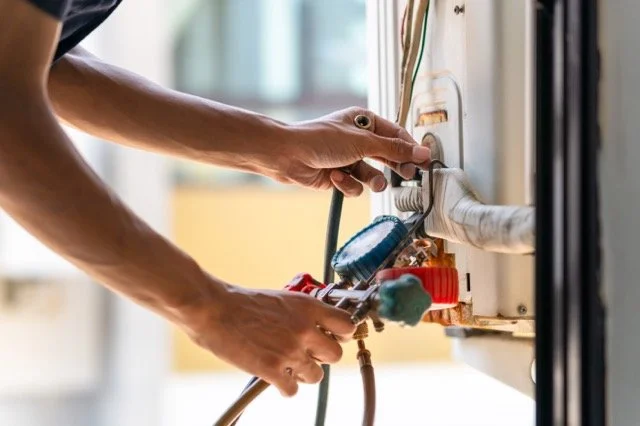
Some furnace replacements are straightforward: disconnect the old unit, set the new one in the same spot, connect the ductwork and gas line, fire it up. Those take four to six hours.
Others are complicated. If your home has an old gravity furnace, the ductwork will not work with a modern forced-air system. If your furnace sits in a tight crawl space or a closet with no clearance, the installer might need to relocate it. If your gas line is undersized or your electrical panel is full, you need upgrades before the furnace goes in.
Michigan mechanical code requires permits for furnace replacements. The permit costs $50 to $150 depending on the municipality. The inspection happens after installation. A contractor who skips the permit is cutting corners, and you are liable if something goes wrong.
Michigan-Specific Factors
Southeast Michigan has specific challenges that affect furnace installation costs. Most homes here have basements, which means furnace rooms with limited headroom, tight corners, and old ductwork that has been patched and modified over decades. Homes built before 1980 often have ductwork sized for lower-efficiency furnaces. A high-efficiency furnace moves more air, which means the ducts might need modifications to handle the increased airflow.
Venting is another Michigan-specific cost driver. High-efficiency furnaces (90% AFUE and above) use PVC venting that exhausts through the sidewall. Standard-efficiency furnaces (80% AFUE) use metal flue pipes that vent through the roof. If you are upgrading from 80% to 95% AFUE, the contractor has to install new PVC venting, seal the old chimney flue, and sometimes add a condensate pump to drain the moisture the furnace produces. That adds $500 to $1,200 to the estimate.
Furnace Replacement Cost Breakdown for Southeast Michigan
Here is what you actually pay in 2026 for a complete furnace replacement in Macomb, Oakland, and St. Clair counties. These numbers include equipment, installation labor, permits, startup, and warranty registration.
Entry-Level Systems: $3,500 to $5,000
This tier covers 80% AFUE single-stage furnaces from Goodman, Amana, York, and RUUD. These are reliable workhorses. They heat your home, they last 15 to 20 years with proper maintenance, and they cost the least upfront.
What you get:
- 60,000 to 100,000 BTU capacity
- 80% AFUE efficiency
- Single-stage operation (on or off, no modulation)
- 5-year parts warranty, 1-year labor warranty
- Standard installation (no ductwork modifications)
- Permit and inspection included
This tier makes sense if your budget is tight, your home is small to mid-sized, and you plan to move within 10 years. The operating cost is higher than mid-tier or high-efficiency systems, but the upfront savings might matter more depending on your situation.
Mid-Tier Systems: $5,000 to $7,500
This tier covers 92% to 95% AFUE two-stage furnaces from Carrier, Lennox, Trane, Bryant, and Rheem. Two-stage means the furnace runs at low capacity most of the time and only ramps up to high capacity on the coldest nights. That improves comfort, reduces noise, and lowers your gas bill compared to single-stage systems.
What you get:
- 60,000 to 120,000 BTU capacity
- 92-95% AFUE efficiency
- Two-stage operation (low and high heat)
- 10-year parts warranty, 2-year labor warranty (varies by contractor)
- PVC venting and condensate drain
- Permit and inspection included
This is the sweet spot for most Michigan homeowners. You get significant efficiency gains over 80% AFUE, better comfort, and a reasonable payback period. If you plan to stay in your home for 10+ years, the fuel savings will cover the higher upfront cost.
Real-World Example: A 2,000-square-foot colonial in Rochester Hills with a 95% AFUE furnace uses about 700 therms of natural gas per heating season. At $1.20 per therm (2026 DTE rates), that is $840 per year. The same home with an 80% AFUE furnace would use about 830 therms, or $996 per year. The difference is $156 annually, or $2,340 over 15 years.
High-Efficiency Systems: $7,500 to $11,000+
This tier covers 96% to 98% AFUE modulating furnaces with variable-speed blowers. Modulating means the furnace adjusts its output in 1% increments from 40% to 100% capacity. It runs almost continuously at low capacity, maintaining even temperatures throughout your home with minimal temperature swings.
What you get:
- 60,000 to 140,000 BTU capacity
- 96-98% AFUE efficiency
- Modulating burner and variable-speed blower
- 10-year parts warranty, 5-year labor warranty (varies by contractor)
- Advanced controls and smart thermostat compatibility
- PVC venting, condensate pump, and premium installation
- Permit and inspection included
This tier makes sense if you value comfort as much as efficiency, you plan to stay in your home long-term, and you want the lowest possible operating cost. The upfront premium is substantial, but the fuel savings and comfort gains justify it for the right homeowner.
If you are comparing estimates for furnace installation in Troy, you will see these same tiers reflected in the pricing. The key is understanding what you get at each level and how long it takes to recover the higher upfront cost through lower operating expenses.
Equipment Options: Single-Stage vs. Two-Stage vs. Modulating
The efficiency rating (AFUE) tells you how much fuel the furnace converts into heat. The staging tells you how the furnace delivers that heat. Understanding the difference helps you choose the right system for your home and budget.
Single-Stage Furnaces
A single-stage furnace has one setting: full blast. When the thermostat calls for heat, the burner lights at 100% capacity. When the temperature reaches the setpoint, the burner shuts off. This is the simplest, most affordable design.
The downside is comfort. Most of the heating season in Michigan does not require full capacity. A 100,000 BTU furnace running at full blast on a 35-degree night overshoots the target temperature, shuts off, lets the house cool down, then fires up again. That creates temperature swings of 3 to 5 degrees. You feel the hot air blowing, then you feel it stop, then you feel the chill.
Single-stage furnaces work fine for small homes, mild climates, or homeowners who prioritize upfront cost over comfort. For Michigan winters, most people prefer two-stage or modulating systems.
Two-Stage Furnaces
A two-stage furnace has two settings: low (typically 60-70% capacity) and high (100% capacity). The furnace runs on low most of the time. It only switches to high when the outdoor temperature drops below 20 degrees or when you turn the thermostat up more than 3 degrees.
This improves comfort significantly. The furnace runs longer cycles at lower capacity, which means steadier temperatures, less noise, and better air circulation. You are less likely to notice hot and cold spots in different rooms.
Two-stage furnaces cost $1,000 to $2,000 more than single-stage systems. The comfort improvement is worth it for most homeowners. If you have hot and cold spots in your current home, upgrading to two-stage will help.
Modulating Furnaces
A modulating furnace adjusts its output in 1% increments from 40% to 100% capacity. It monitors the outdoor temperature, indoor temperature, and thermostat setpoint, then delivers exactly the amount of heat needed to maintain comfort. The furnace runs almost continuously at low capacity instead of cycling on and off.
This is the most comfortable system you can install. Temperature swings are minimal, often less than 1 degree. The blower runs quietly at low speed most of the time. Air circulation is constant, which eliminates hot and cold spots and improves indoor air quality by filtering the air continuously.
Modulating furnaces cost $2,500 to $4,000 more than single-stage systems. They also require variable-speed blowers, which add another $500 to $800. The total premium is substantial, but the comfort and efficiency gains are real. If you are building a new home or doing a major renovation, modulating systems are worth the investment.
Beyond the Furnace: What Else Affects Your Estimate
The furnace is the biggest line item, but it is not the only cost. A complete estimate includes everything needed to make the system work safely and efficiently.
Ductwork Modifications or Replacement
Old ductwork is one of the most common hidden costs. If your home was built before 1990, the ducts were sized for a lower-efficiency furnace that moved less air. Modern high-efficiency furnaces move more air at lower temperatures, which means the ducts might be undersized.
Undersized ducts create back pressure, which reduces airflow, increases noise, and shortens the life of the blower motor. The contractor should measure the ducts and calculate whether they can handle the new furnace. If not, you need modifications.
Ductwork costs vary widely:
- Minor modifications (adding a return duct, sealing leaks): $300 to $800
- Major modifications (resizing supply ducts, adding zone dampers): $1,500 to $3,500
- Complete duct replacement: $5,000 to $10,000+
Most homes in Shelby Township, Clinton Township, and Chesterfield need minor to moderate ductwork modifications when upgrading to high-efficiency furnaces. A good contractor will identify this during the estimate, not after the furnace is installed.
Thermostat Upgrades
Your old thermostat might not work with your new furnace. Two-stage and modulating furnaces require compatible thermostats that can communicate with the furnace and control the staging. Basic mechanical thermostats do not work.
Thermostat options:
- Programmable thermostat: $150 to $300 installed. You set a schedule, and the thermostat adjusts the temperature automatically.
- Smart thermostat: $250 to $500 installed. Wi-Fi connectivity, remote control via smartphone app, learning algorithms that optimize your schedule. Popular models include Honeywell Home T9, Ecobee SmartThermostat, and Google Nest Learning Thermostat.
Smart thermostats save 10% to 15% on heating costs by learning your patterns and adjusting temperatures when you are away. If you are already spending $5,000+ on a new furnace, adding a $300 smart thermostat is a smart investment.
Air Quality Add-Ons
Michigan winters are dry. Furnaces make it worse by heating the air, which lowers relative humidity. Indoor humidity below 30% causes dry skin, respiratory irritation, static electricity, and damage to wood floors and furniture.
A whole-home humidifier connects to your furnace and adds moisture to the air as it circulates. Cost: $400 to $800 installed. This is one of the most cost-effective comfort upgrades you can make.
Other air quality options:
- Electronic air cleaner: $800 to $1,500. Removes particles smaller than standard filters, including pollen, pet dander, and mold spores.
- UV air purifier: $600 to $1,200. Kills bacteria, viruses, and mold on the evaporator coil and in the air stream.
- Heat recovery ventilator (HRV): $1,500 to $3,000. Brings fresh outdoor air into your home while recovering heat from the exhaust air. Critical for tight, well-insulated homes that do not get enough natural ventilation.
These are optional, but they solve real problems. If you have allergies, asthma, or respiratory issues, air quality upgrades are worth discussing during the estimate.
Electrical Upgrades or Gas Line Work
Most furnaces need a dedicated 120-volt circuit. If your electrical panel is full, you need a subpanel or panel upgrade. Cost: $500 to $2,000 depending on the scope.
Gas line sizing matters for high-capacity furnaces. A 100,000 BTU furnace needs a larger gas line than a 60,000 BTU furnace. If your existing line is undersized, the contractor has to upsize it from the meter to the furnace. Cost: $400 to $1,200.
These are not common, but they happen. A thorough estimate includes a check of your electrical panel and gas line to identify potential issues before installation day.
Permits and Inspections
Michigan mechanical code requires a permit for furnace replacement. The permit costs $50 to $150 depending on the municipality. The contractor pulls the permit, installs the furnace, then schedules the inspection. The inspector verifies that the installation meets code, the venting is correct, and the system operates safely.
Some contractors skip permits to save time or avoid scrutiny. This is a red flag. If something goes wrong (a fire, a carbon monoxide leak), your homeowner's insurance can deny the claim because the work was not permitted. You are also liable if you try to sell the home and the buyer's inspector discovers unpermitted work.
A legitimate contractor includes the permit in the estimate and handles the inspection. If the estimate does not mention a permit, ask why.
How to Get an Accurate Furnace Replacement Estimate
Phone quotes are worthless. A contractor who gives you a price without visiting your home is guessing. The estimate might be too low (and they will hit you with change orders after the work starts) or too high (and you overpay).
Here is how to get a real, accurate furnace replacement estimate.
Schedule an In-Home Assessment
The contractor needs to visit your home, measure the space, inspect the existing furnace and ductwork, and evaluate your heating needs. This takes 45 to 90 minutes. If a contractor offers to quote you over the phone or based on square footage alone, hang up.
During the visit, the contractor should:
- Measure your home (square footage, ceiling height, number of rooms)
- Inspect the furnace room (clearances, venting, gas line, electrical)
- Check the ductwork (size, condition, leaks, insulation)
- Ask about your comfort issues (hot and cold spots, noise, high bills)
- Discuss your budget and priorities
A good contractor will ask questions, take notes, and explain the process. A bad contractor will walk around for 10 minutes, then push you toward the most expensive system without explaining why you need it.
Request a Load Calculation
Ask the contractor to perform a Manual J load calculation. This is the industry-standard method for sizing HVAC equipment. It accounts for insulation levels, window types, air leakage, and local climate data to determine the exact heating capacity your home needs.
A proper load calculation takes 30 to 60 minutes. Some contractors use software that automates the process. Others do it by hand. Either way, the result should be a specific BTU number, not a vague "you need a 100,000 BTU furnace because your house is 2,000 square feet."
If the contractor refuses to do a load calculation or says "we do not need one, we have been doing this for 30 years," find a different contractor. Oversized and undersized furnaces cost you money and comfort. The only way to get the size right is a load calculation.
Review Equipment Options and Efficiency Ratings
The contractor should present at least two options: a base model and a higher-efficiency model. Some will present three or four options covering the full range from entry-level to premium.
For each option, the estimate should include:
- Brand and model number
- BTU capacity
- AFUE rating
- Staging (single-stage, two-stage, modulating)
- Warranty terms (parts and labor)
- Estimated annual operating cost
Ask the contractor to explain the differences. Why does one system cost $2,000 more than the other? What do you get for the extra money? How long does it take to recover the upfront cost through lower energy bills?
A good contractor will walk you through the math. A bad contractor will pressure you toward the most expensive option without explaining the benefits.

Verify the Estimate Includes Permits and Warranty
A complete estimate covers everything: equipment, labor, permits, inspections, startup, and warranty registration. If any of those are missing, ask why.
Red flags:
- No permit listed (means the contractor plans to skip it)
- No warranty terms (means you are on your own after installation)
- Vague line items like "installation" or "materials" (means the contractor has not thought through the details)
- Pressure to sign the same day (means the contractor is more interested in closing the sale than solving your problem)
A good estimate is detailed, transparent, and easy to understand. You should know exactly what you are paying for and what happens after the furnace is installed.
Compare Multiple Estimates
Get at least three estimates from licensed contractors. Compare not just the price, but also the equipment quality, warranty terms, and contractor credentials.
Questions to ask:
- Is the contractor licensed and insured? (Michigan requires a mechanical contractor license for HVAC work.)
- Are the technicians NATE-certified? (NATE is the North American Technician Excellence certification, the industry gold standard.)
- How long has the company been in business?
- What is the labor warranty? (1 year, 5 years, lifetime?)
- Who handles service calls after installation? (Some contractors subcontract service work, which creates confusion and delays.)
At NEXT Heating & Cooling, we handle every step in-house: the estimate, the installation, the inspection, and the ongoing service. Our technicians are NATE-certified and trained on all major brands. We have been serving Southeast Michigan for over 35 years under Premier Builder Inc., and we stand behind every system we install.
If you are comparing estimates and one contractor is significantly cheaper than the others, there is a reason. They might be skipping the permit, using refurbished equipment, or planning to hit you with change orders after the work starts. Cheap upfront often means expensive later.
When to Replace vs. Repair Your Furnace
Not every furnace problem requires a replacement. Sometimes a repair is the smarter move. Here is how to decide.
Age Threshold
Furnaces last 15 to 20 years with proper maintenance. If your furnace is 15+ years old and needs a major repair, replacement usually makes more sense than repair.
Why? Because older furnaces have lower efficiency (80% AFUE or less), higher operating costs, and more frequent breakdowns. If you spend $1,500 on a repair today, you might spend another $1,500 on a different repair next year. At some point, you are throwing good money after bad.
If your furnace is under 10 years old, repair is usually the better option unless the damage is catastrophic (cracked heat exchanger, failed blower motor, major refrigerant leak).
Repair Cost vs. Replacement Value
A common rule of thumb: if the repair cost is more than 50% of the replacement cost, replace instead of repair.
Example: Your furnace needs a new heat exchanger. The repair costs $2,000. A new furnace costs $4,500. The repair is 44% of the replacement cost, so repair might make sense if the furnace is under 12 years old.
But if the furnace is 18 years old, the repair only buys you a few more years. You will still need a replacement soon. In that case, replacing now makes more sense.
This is where an honest contractor earns your trust. We have turned down plenty of replacement jobs because the homeowner was better off with a repair. If you are researching furnace maintenance plans vs. one-off repairs, you will see that preventive maintenance catches small problems before they become expensive repairs.
Efficiency Loss Over Time
Furnaces lose efficiency as they age. A furnace that started at 80% AFUE might be running at 70% AFUE after 15 years due to wear on the heat exchanger, burner, and blower. That means you are wasting 30% of every dollar you spend on natural gas.
If your gas bills have been creeping up year after year, efficiency loss might be the culprit. A new 95% AFUE furnace will cut your heating costs by 25% to 30% compared to an old 70% AFUE system. Over 15 years, that savings adds up to thousands of dollars.
Safety Concerns
Two safety issues require immediate replacement: cracked heat exchangers and carbon monoxide leaks.
The heat exchanger is the metal chamber where combustion happens. Over time, the metal expands and contracts with temperature changes, which can cause cracks. A cracked heat exchanger allows combustion gases (including carbon monoxide) to mix with the air circulating through your home. This is dangerous.
If a technician tells you the heat exchanger is cracked, do not repair it. Replace the furnace. Heat exchanger replacement costs almost as much as a new furnace, and it does not solve the underlying problem: the furnace is old and worn out.
Carbon monoxide detectors are required in Michigan homes. If your detector goes off and the source is the furnace, shut it down immediately and call a licensed HVAC contractor. Do not try to troubleshoot it yourself. Carbon monoxide is odorless, colorless, and deadly.
When to Call for Service: If your furnace is making strange noises, producing a burning smell, short-cycling, or failing to heat your home evenly, call a licensed contractor. These are signs of underlying problems that get worse if ignored. Our team at NEXT Heating & Cooling offers 24/7 emergency service for Southeast Michigan homeowners who need immediate help. We do not charge extra for nights or weekends during true emergencies.
Ready to Get Your Furnace Replacement Estimate?
NEXT Heating & Cooling has been keeping Michigan homes comfortable for over 35 years. Our NATE-certified technicians provide honest diagnostics, fair pricing, and no-pressure estimates. We install all major brands and stand behind every system with comprehensive warranties.
Schedule Your Free EstimateIf you are ready to move forward, we also offer the NEXT Care Plan, a $5/month maintenance subscription that includes two annual tune-ups (fall furnace check, spring AC check), priority scheduling, and 10% off all repairs. Preventive maintenance is the single best way to extend the life of your new furnace and avoid expensive breakdowns.
Frequently Asked Questions
A straightforward furnace replacement takes four to six hours. If the installation requires ductwork modifications, venting changes, or electrical upgrades, it can take eight to ten hours or span two days. The contractor should give you a timeline during the estimate. We schedule installations to minimize disruption, and most homes have heat restored the same day we start work.
No. Michigan law requires a licensed mechanical contractor to install furnaces. DIY installation voids the manufacturer warranty, violates building codes, and creates serious safety risks. Furnaces involve natural gas, electrical connections, and combustion systems. Mistakes can cause fires, carbon monoxide leaks, and equipment failure. Hire a licensed contractor.
Carrier, Lennox, Trane, Bryant, Rheem, Goodman, and Amana all make reliable furnaces that handle Michigan winters. The best brand for you depends on your budget, efficiency goals, and comfort priorities. We recommend focusing on the efficiency rating (AFUE) and staging (single-stage vs. two-stage vs. modulating) rather than the brand name. A 95% AFUE two-stage Goodman performs similarly to a 95% AFUE two-stage Carrier.
Not necessarily. If your air conditioner is under 10 years old and working well, you can replace just the furnace. However, if your AC is 12+ years old or needs frequent repairs, replacing both at the same time makes sense. You save on labor costs, ensure the systems are compatible, and avoid a second major expense in a few years. Many contractors offer package pricing for furnace and AC replacements. If you are considering both, check out our guide on furnace and AC repair in Royal Oak.
A 95% AFUE furnace uses about 16% less natural gas than an 80% AFUE furnace. For a typical 2,000-square-foot home in Southeast Michigan, that translates to $150 to $200 per year in savings. Over 15 years, the savings total $2,250 to $3,000, which offsets most or all of the higher upfront cost. The exact savings depend on your home size, insulation levels, thermostat settings, and local gas rates.
Call a licensed HVAC contractor immediately. Most contractors offer 24/7 emergency service during the heating season. We prioritize emergency calls and typically respond within two to four hours. If the repair is straightforward (igniter replacement, thermostat issue), we can restore heat the same day. If the furnace needs replacement, we can install a new system within 24 to 48 hours. Keep space heaters on hand as a backup, but never use gas-powered generators or grills indoors due to carbon monoxide risk.
Get your estimate in the fall. Contractors are less busy in September and October, which means faster scheduling, more availability, and sometimes better pricing. Waiting until December or January means you are competing with emergency calls and last-minute replacements. If your furnace is 15+ years old or showing signs of trouble, schedule an estimate before the heating season starts. Proactive planning saves you stress and money.