

Leaky Ducts: Why Your AC Can't Keep Up This Summer
Your AC runs constantly. The thermostat says 72°F, but your living room feels like 78°F. Your utility bill climbed $60 last month compared to last summer. You had a tech out last week who said the AC is "working fine." So why can't your house stay cool?
The answer is probably hiding in your basement, attic, or crawlspace: leaky air ducts.
According to Energy Star, the typical home loses 20-30% of conditioned air through duct leaks, holes, and poorly sealed connections. That's not a minor efficiency loss — that's throwing away nearly a third of the cooling you're paying for. In Southeast Michigan, where we deal with humid summers and older housing stock, duct leakage is one of the most common reasons homeowners call us at NEXT Heating & Cooling saying their AC "just doesn't work anymore."
Here's what 35 years of heating and cooling services in Metro Detroit has taught us: leaky ducts don't just waste energy. They create pressure imbalances that force your AC to work harder, pull in unconditioned air from spaces you don't want to cool, and sabotage even the most efficient equipment. A brand-new 18 SEER Carrier or Lennox system connected to leaky ductwork will perform like a 12 SEER unit — and you'll never hit the comfort or savings you paid for.
This post walks through what leaky air ducts actually do to your cooling system, why Michigan homes are especially vulnerable, how to spot the signs, and what professional duct sealing involves. If you've been frustrated with your AC performance this summer, this is probably why.
What Leaky Air Ducts Actually Do to Your AC System
Let's start with the mechanics. Your central air conditioning system works by pulling warm air from your home through return ducts, cooling it at the evaporator coil, and pushing that cooled air back through supply ducts into your living spaces. The system is designed to operate within specific pressure ranges — balanced supply and return airflow keeps the refrigerant cycle efficient and prevents strain on the compressor and blower motor.
When ducts leak, that balance breaks down in three ways:
1. Conditioned air escapes before it reaches you. Supply ducts carry the cold air your AC just spent energy creating. If those ducts have gaps at joints, crushed sections, or disconnected flex duct, that 55°F air leaks into your attic, crawlspace, or basement — spaces you're not trying to cool. Your living room never gets the CFM (cubic feet per minute) of airflow it needs to hit the thermostat setpoint, so the AC keeps running.
2. Unconditioned air infiltrates through return leaks. Return ducts pull air back to the AC for cooling. If return ducts leak, they suck in hot, humid air from attics or dusty air from crawlspaces instead of recirculating the air from your conditioned rooms. Your AC now has to work harder to cool air that's hotter and more humid than it should be. This also explains why homes with leaky returns often have excessive dust — the system is pulling in attic insulation fibers, dirt, and allergens.
3. Pressure imbalances force equipment to overwork. Duct leaks create negative or positive pressure zones that throw off airflow calculations. Your blower motor runs longer trying to move enough air. Your compressor cycles more frequently because the system can't maintain temperature. Over time, this accelerated wear shortens equipment lifespan. We've seen 15-year furnaces and ACs fail early in homes with severe duct leakage — not because the equipment was bad, but because it was fighting a losing battle every day.

Here's the part that frustrates homeowners: a leaky duct system makes even brand-new equipment underperform. You can install an 18 SEER Trane or Bryant AC with a variable-speed air handler, but if 25% of your airflow is escaping through duct leaks, you'll never see the efficiency or comfort that system is capable of delivering. The SEER rating assumes proper duct design and sealing. Without it, you're paying for performance you're not getting.
This is why we always include a visual duct inspection as part of our Next Care Plan maintenance visits. Catching duct issues early prevents years of wasted energy and equipment stress.
The Michigan Duct Problem: Why It's Worse Here
Duct leakage is a national issue, but Southeast Michigan has a few specific factors that make it worse:
Housing stock built before modern duct sealing standards. The majority of homes in Macomb, Oakland, and St. Clair counties were built between 1960 and 1990 — before the building science community fully understood duct leakage impacts. Many of these homes have ductwork installed with minimal sealing: a few screws at the joints, maybe some duct tape (which degrades in 5-10 years), and no mastic sealant or foil tape. Flex duct connections were often left loose or poorly secured. We see this constantly in ranch homes in Sterling Heights, Warren, and Clinton Township.
Basement duct systems with poor insulation. Michigan homes typically have furnaces and air handlers in basements, with supply and return ducts running through unconditioned basement spaces. If those ducts aren't insulated (or if the insulation has degraded), you're losing cooling capacity to the surrounding basement air. Worse, return ducts often pull in damp basement air, adding humidity load to your AC and making your home feel sticky even when the temperature is technically correct.
Temperature differentials that amplify leakage effects. Michigan summer days can hit 90°F with high humidity, while your conditioned air is 55°F. That 35°F+ temperature difference creates strong pressure gradients that pull and push air through even small duct gaps. In milder climates, duct leakage has less dramatic impact. Here, it's the difference between a comfortable 72°F and a frustrating 77°F.
Humidity infiltration from unconditioned spaces. Leaky return ducts pulling in humid attic or crawlspace air add latent heat load (moisture removal demand) to your AC. Your system has to work harder to dehumidify, which is energy-intensive and often results in that clammy feeling even when the thermostat says you've reached setpoint. This is especially common in older homes in Grosse Pointe Farms and Royal Oak where attic ductwork was poorly sealed during original installation.
Michigan HVAC Reality: We've tested homes in Troy and Rochester Hills where duct leakage accounted for 30-40% efficiency loss. That's not an exaggeration — we use blower door tests and duct pressure diagnostics to quantify it. Sealing those ducts often delivers bigger comfort and cost improvements than upgrading to a higher-efficiency AC.
Signs Your Ductwork Is Leaking (And Costing You Money)
How do you know if your ducts are the problem? Here are the signs we tell homeowners in Southeast Michigan to watch for:
Hot and cold spots room to room. If your bedroom is 74°F while your living room is 68°F (both on the same thermostat), you've got airflow distribution problems. Often this means supply ducts serving the warmer room have leaks, or return air isn't being pulled evenly. We see this frequently in split-level homes and two-story colonials where ductwork runs long distances through unconditioned spaces.
High utility bills despite new equipment. You upgraded to a 16 SEER Carrier AC two years ago, but your summer electric bills are still $200+/month. If the equipment checks out fine during a tune-up, the problem is almost always duct leakage or poor insulation. Your new AC is working exactly as designed — it's just fighting a system that's hemorrhaging conditioned air.
Excessive dust accumulation. Dusting your home weekly and it's covered again in three days? Leaky return ducts are pulling in attic insulation fibers, dirt, and outdoor particulates. This also degrades your indoor air quality and clogs your air filter faster, reducing airflow and efficiency further.
Whistling or hissing sounds from ducts. Air escaping through gaps under pressure makes noise. If you hear whistling near duct joints or registers when the AC is running, that's air leaking out. It's often loudest near the air handler or at poorly sealed boot connections where ducts meet ceiling or floor registers.
Rooms that never reach thermostat setting. Your thermostat is in the hallway showing 72°F, but your home office is stuck at 76°F no matter how long the AC runs. That room isn't getting adequate CFM because of supply duct leakage or undersized ductwork. This is common in home additions or finished basements where ductwork was added without proper load calculations.
Visible duct damage in basement or attic. Take a flashlight into your basement or attic and look at exposed ductwork. Are there disconnected joints? Crushed flex duct? Gaps at seams? Duct tape that's peeling off? Missing or damaged insulation? If you can see light through duct connections, air is definitely escaping.
If you're experiencing two or more of these symptoms, duct leakage is likely costing you hundreds of dollars per year in wasted energy — and making your home less comfortable every day.
What Duct Sealing Actually Involves
Professional duct sealing is not the same as slapping some duct tape on visible gaps (which, ironically, is one of the least effective methods). Here's what a proper duct sealing process looks like when you work with a reliable HVAC contractor in Metro Detroit:
Duct pressure testing and diagnostics. We start by measuring total duct leakage using a duct blaster test. This quantifies how much air is escaping and helps us identify the worst leak points. We also perform visual inspections of accessible ductwork in basements, attics, and crawlspaces to locate disconnected sections, crushed ducts, or damaged insulation.
Manual sealing with mastic and foil tape. For accessible ductwork, we use mastic sealant (a thick, paintable compound) and UL-listed foil tape to seal joints, seams, and connections. Mastic is applied with a brush or gloved hand and creates an airtight, permanent seal that doesn't degrade over time like cloth duct tape. We also secure loose connections with sheet metal screws to ensure mechanical integrity before sealing.
Aeroseal for inaccessible ducts. For ductwork hidden in walls, ceilings, or floor cavities, we use Aeroseal — a process where aerosolized sealant particles are blown through the duct system under pressure. The particles stick to leak edges and gradually seal gaps from the inside out. This is especially effective for older homes where accessing all ductwork would require destructive drywall removal. Aeroseal can reduce duct leakage by 80-90% in many cases.
Insulation upgrades for unconditioned spaces. In Michigan, any ductwork running through unconditioned basements, attics, or crawlspaces should be insulated to at least R-6 (R-8 is better). We wrap sealed ducts with foil-faced fiberglass insulation or replace old, degraded insulation entirely. This prevents conductive heat gain/loss and condensation issues.
Return air pathway verification. We also check that return air pathways are adequate and properly sealed. Undersized returns or leaky return ducts create negative pressure that pulls in unconditioned air and reduces system efficiency. Sometimes adding a return duct or sealing existing returns delivers as much improvement as sealing the supply side.
Post-sealing testing and verification. After sealing, we re-test duct leakage to verify improvement. A well-executed duct sealing job should reduce total leakage to under 10% — often under 5% for newer systems. We also measure airflow at registers to confirm balanced distribution and proper CFM delivery to each room.
When replacement makes more sense: If ductwork is severely undersized, crushed beyond repair, or poorly designed (e.g., too many sharp bends, inadequate return air), sealing alone won't fix the problem. In those cases, we recommend partial or full duct replacement designed to ACCA Manual D standards. This is common in older homes where original ductwork was sized for heating only and can't handle modern AC airflow requirements.
The Real Cost of Leaky Ducts in Southeast Michigan
Let's talk numbers. What does duct leakage actually cost you?
Energy waste: $300-$800 annually. If your ductwork is losing 25% of conditioned air, you're paying to cool air that never reaches your living spaces. For a typical 2,000 sq ft home in Sterling Heights with a $150/month summer electric bill, that's $37.50 per month — $225 over a six-month cooling season — wasted on leakage alone. Over a decade, that's $2,250. Homes with worse leakage (30-40%) can waste $500-$800 per year.
Shortened equipment lifespan. AC systems forced to run longer cycles and fight pressure imbalances wear out faster. A well-maintained AC in a properly sealed duct system can last 15-18 years. The same equipment fighting severe duct leakage might fail at 10-12 years. Replacing an AC system costs $4,000-$8,000 depending on size and efficiency — losing 3-5 years of lifespan is a significant hidden cost.
Indoor air quality degradation. Leaky return ducts pulling in unconditioned air introduce dust, allergens, mold spores, and outdoor pollutants. This affects respiratory health and comfort, especially for family members with allergies or asthma. While harder to quantify financially, the health and quality-of-life impact is real.
Comfort loss and thermostat wars. Hot and cold spots lead to constant thermostat adjustments and family disagreements about temperature settings. You can't put a price on consistent comfort, but the frustration of never feeling comfortable in your own home is one of the top reasons homeowners call us.
ROI on professional duct sealing. Professional duct sealing typically costs $1,500-$3,500 depending on home size, accessibility, and method (manual vs Aeroseal). With annual energy savings of $300-$800, payback is often 2-5 years. Factor in extended equipment life and improved comfort, and the ROI is compelling. Many utility companies also offer rebates for duct sealing, which can reduce upfront cost by $300-$500.
We've worked with homeowners in Troy and Bloomfield Hills who saw 25-30% reductions in cooling costs after duct sealing — and finally achieved even temperatures throughout their homes. That's not a sales pitch; that's building science working as it should.
When to Call NEXT Heating & Cooling for a Duct Inspection
If you're experiencing any of the symptoms we've covered — hot and cold spots, high bills, excessive dust, or an AC that runs constantly without cooling effectively — it's time for a professional duct inspection.
Here's what our process looks like:
Free duct inspection and assessment. We'll visually inspect accessible ductwork in your basement, attic, or crawlspace, looking for obvious leaks, damage, and insulation issues. We'll also discuss your comfort concerns and review your utility bills to identify patterns consistent with duct leakage.
Blower door and duct pressure testing (when needed). For homes where duct leakage is suspected but not visually obvious, we can perform blower door testing and duct blaster diagnostics to quantify total leakage and identify problem areas. This data-driven approach ensures we're fixing the right problems and not guessing.
Honest assessment: repair vs replacement. Not every duct system needs full replacement. Often, targeted sealing and insulation upgrades solve the problem at a fraction of the cost. But if your ductwork is undersized, poorly designed, or beyond repair, we'll tell you that upfront. We don't upsell unnecessary work — we've built our reputation on honest diagnostics and fair pricing. That's the NEXT Heating & Cooling difference.
Next Care Plan preventive maintenance. Our $5/month Next Care Plan includes two annual visits — a fall furnace tune-up and a spring AC tune-up. During these visits, our NATE-certified technicians inspect ductwork, check airflow, and catch small issues before they become expensive problems. Members also get priority scheduling, 10% off repairs, and no service call fees. For $60/year, it's the easiest way to protect your HVAC investment and catch duct issues early.
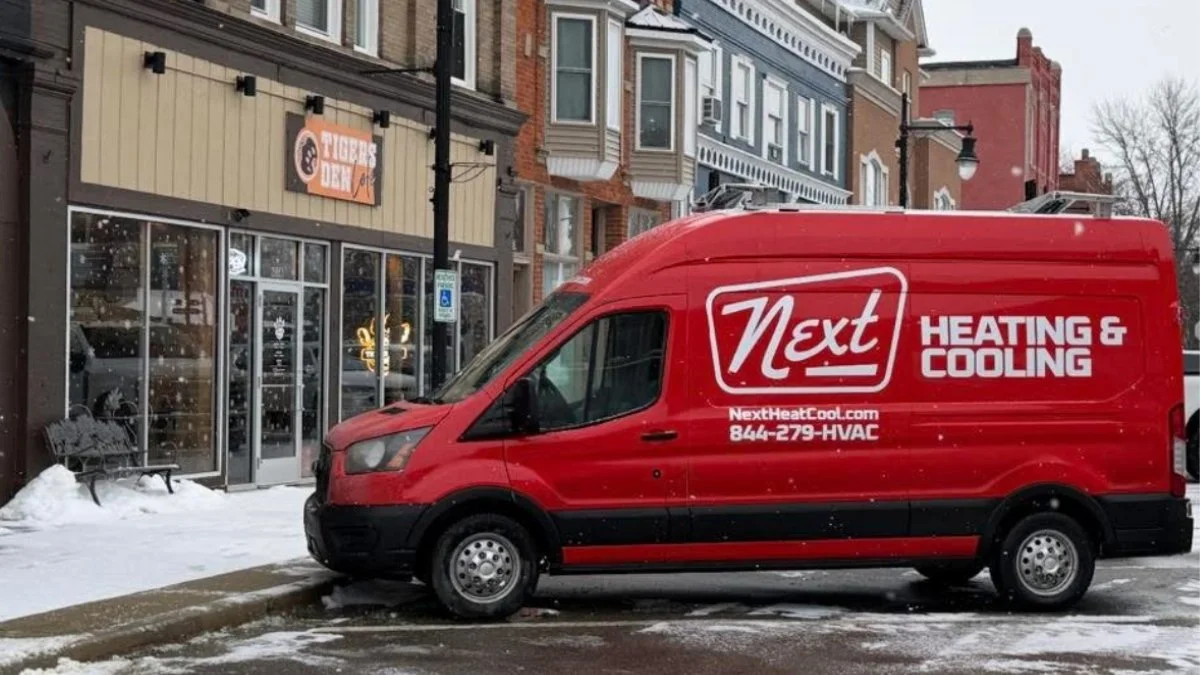
We serve homeowners throughout Southeast Michigan — from Lake Orion and Shelby Township to Chesterfield and St. Clair Shores. If your AC can't keep up this summer and you suspect ductwork might be the culprit, we'll give you straight answers and practical solutions.
Leaky ducts are one of the most overlooked causes of poor AC performance, high energy bills, and comfort problems in Michigan homes. The good news? It's fixable. Professional duct sealing delivers measurable improvements in efficiency, comfort, and equipment longevity — often with better ROI than upgrading to a higher-efficiency AC.
If you've been frustrated with your cooling system this summer, don't assume the AC is the problem. The real issue might be hiding in your ductwork, quietly wasting your money and sabotaging your comfort every day.
Ready to Get Started?
NEXT Heating & Cooling has been keeping Michigan homes comfortable for over 35 years. Get honest diagnostics and fair pricing from NATE-certified technicians who show up on time. We'll inspect your ductwork, identify leaks, and give you real solutions — not sales pitches.
Schedule Your Duct InspectionFrequently Asked Questions About Leaky Air Ducts
Professional duct sealing typically costs $1,500-$3,500 for a typical Southeast Michigan home, depending on home size, duct accessibility, and sealing method. Manual sealing with mastic and foil tape is on the lower end; Aeroseal for hard-to-reach ducts costs more but is often necessary for older homes. Many utility companies offer rebates of $300-$500, which reduces net cost. With annual energy savings of $300-$800, payback is usually 2-5 years.
You can seal accessible ductwork yourself using mastic sealant and foil tape (never cloth duct tape, which degrades quickly). However, most significant leaks occur at connections hidden in walls, ceilings, or floor cavities that you can't reach without professional equipment. Professional HVAC contractors also perform blower door and duct pressure testing to quantify leakage and verify results — something DIY methods can't do. For best results, hire a licensed contractor for comprehensive sealing.
Key indicators of duct leakage include hot and cold spots room-to-room, excessive dust, high utility bills despite recent equipment upgrades, and whistling sounds from ducts. If your AC is short-cycling, blowing warm air, or has frozen coils, those point to equipment issues like refrigerant leaks or compressor failure. A professional HVAC inspection can diagnose the root cause — sometimes it's both. NEXT Heating & Cooling provides honest diagnostics to identify whether ductwork, equipment, or both need attention.
Absolutely. Duct leakage affects heating and cooling equally. In winter, heated air escapes through supply leaks while return leaks pull in cold basement or attic air, forcing your furnace to work harder. Sealing ducts improves heating efficiency, reduces hot and cold spots, and lowers gas bills. Many Michigan homeowners see 15-25% reductions in heating costs after duct sealing — especially in older homes with basement duct systems.
Properly applied mastic sealant and foil tape last 20+ years — essentially the life of the duct system. Aeroseal sealing is similarly durable. Cloth duct tape, by contrast, degrades in 5-10 years and should never be used for permanent sealing. Professional duct sealing is a one-time investment that continues delivering energy savings and comfort improvements for decades.
Yes. Our Next Care Plan includes two annual maintenance visits (fall furnace tune-up and spring AC tune-up), and our NATE-certified technicians perform visual duct inspections during these visits. We check for visible leaks, damaged insulation, and airflow issues. If we identify significant duct problems, we'll provide recommendations and a quote for sealing or repair. The plan costs just $5/month and also includes priority scheduling, 10% off repairs, and no service call fees.
We serve all of Macomb County, Oakland County, and St. Clair County, including Detroit, Mount Clemens, Bloomfield Hills, Rochester Hills, Royal Oak, Grosse Pointe Farms, Lake Orion, Sterling Heights, Shelby Township, Clinton Township, Macomb, Chesterfield, Troy, Warren, St. Clair Shores, and surrounding communities. If you're in Southeast Michigan and need duct sealing or HVAC service, we'll be there with honest diagnostics and fair pricing.