

AC Making a Hissing or Buzzing Sound? Metro Detroit Guide

You're sitting in your living room on a humid July evening in Sterling Heights when you hear it — a hissing sound from the AC unit outside, or maybe a loud buzzing that wasn't there last week. You turn the thermostat off, then back on. The noise returns.
Here's what 35 years of heating and cooling services in Metro Detroit has taught us: AC noises don't fix themselves. A hissing sound usually means refrigerant is escaping. A buzzing sound points to electrical components failing. Both get worse the longer you wait, and both can turn a $300 repair into a $3,000 replacement if you ignore them through the summer.
This guide breaks down what each sound means, what's actually broken, and when you need to call a reliable HVAC contractor in Metro Detroit before the problem escalates into an emergency service call during the next heatwave.
What That Hissing Sound Actually Means
A hissing sound from your air conditioner is refrigerant escaping under pressure. It's not always loud — sometimes it sounds like air leaking from a tire, other times it's a high-pitched whistle you can hear from across the yard.
Where Refrigerant Leaks Happen
Most refrigerant leaks in Southeast Michigan AC systems occur at three places:
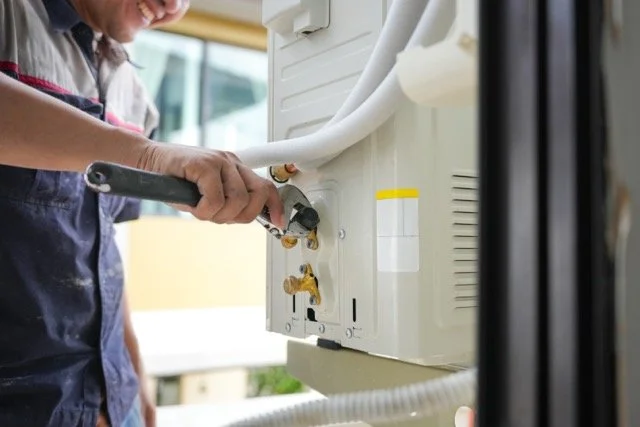
- Line set connections: Where the copper refrigerant lines connect to the outdoor condenser and indoor evaporator coil. These connections use flare fittings or brazed joints. Over time, vibration from the compressor running causes these joints to develop micro-cracks. You'll see oil residue around the connection if it's leaking — refrigerant carries compressor oil with it.
- Evaporator coil: The indoor coil that sits above your furnace or inside your air handler. Michigan's humidity causes condensation on this coil every time the AC runs. If the condensate doesn't drain properly (common in homes with clogged drain lines), the standing water becomes acidic and corrodes the aluminum fins and copper tubing. We see this constantly in Clinton Township and Warren homes built in the 1970s and 1980s where the original drain pans have rusted through.
- Service valves: The Schrader valves techs use to check refrigerant pressures. If a valve core isn't seated properly or the cap is missing, refrigerant slowly leaks out. This is why you should never let an unlicensed "handyman" add refrigerant — improper valve handling causes more leaks than it fixes.
Why You Can't Just "Top Off" the Refrigerant
Here's what most homeowners don't understand about refrigerant: your AC system is a sealed loop. It doesn't "use up" refrigerant like a car uses gasoline. If the refrigerant level is low, it means there's a leak. Adding more refrigerant without fixing the leak is like filling a tire that has a nail in it — it'll just leak out again.
The EPA requires licensed technicians to locate and repair leaks before adding refrigerant. This isn't optional. If someone offers to "top off your Freon" without leak detection, they're breaking federal law and setting you up for the same problem next summer.
There's another issue: most AC systems in Metro Detroit installed before 2015 use R-22 refrigerant (Freon). Production of R-22 ended in 2020. What's left is recycled supply, and prices have gone from $50 per pound in 2018 to $150+ per pound in 2026. If your system needs more than 3-4 pounds of R-22, you're looking at $600-$800 just for the refrigerant, plus labor to find the leak and repair it.
At that price point, replacement with a modern R-410A or R-32 system often makes more financial sense, especially if your AC is over 12 years old. Our techs walk through this math with homeowners during every refrigerant leak diagnosis — no pressure, just honest numbers so you can make an informed decision.
The Expansion Valve Hiss
Not every hissing sound is a leak. If you hear a brief hissing sound when the AC first starts up, that's normal — it's refrigerant rushing through the expansion valve as the system equalizes pressure. This sound lasts 2-3 seconds and stops.
If the hissing is continuous or gets louder over time, that's a leak. If you hear it combined with reduced cooling performance — the house takes longer to cool down, or the indoor humidity feels higher than normal — call for service before the system loses enough refrigerant to damage the compressor.
The Buzzing Sound Breakdown
Buzzing sounds from an AC unit are almost always electrical. The outdoor condenser unit has several electrical components that can fail and cause buzzing: the contactor, the capacitor, the compressor itself, or loose wiring connections.
Contactor Failure
The contactor is an electrical relay that controls power to the compressor and condenser fan motor. When the thermostat calls for cooling, the contactor closes and sends 240 volts to the compressor. When the thermostat is satisfied, the contactor opens and cuts power.
A failing contactor makes a loud buzzing or humming sound because the contacts inside are pitted or corroded. The contactor tries to close, but the damaged contacts can't make a solid connection. You hear the buzzing, but the compressor doesn't start. The condenser fan might run (it's on a separate circuit), but no cold air comes out of the vents because the compressor isn't running.
Contactors fail for three reasons in Michigan:
- Normal wear: Every time the AC cycles on and off, the contactor opens and closes. Over 10-15 years, that's 50,000+ cycles. The metal contacts wear down, develop pitting, and eventually can't conduct electricity properly.
- Voltage fluctuations: Summer thunderstorms in Southeast Michigan cause power surges and voltage drops. These electrical events damage contactors faster than normal wear. If you've had multiple power outages or brownouts during storm season, your contactor is at higher risk of failure.
- Insect nests: Ants, wasps, and spiders love the warmth of the contactor housing. They build nests inside the electrical compartment, and their bodies create conductive paths between terminals. This causes arcing, which burns the contacts. We pull dead insects out of AC units every summer in Troy and Rochester Hills — it's more common than homeowners realize.
Contactor replacement is straightforward. A NATE-certified HVAC technician can swap it in 20-30 minutes. The part costs $30-$80 depending on the amperage rating. Total repair cost is usually $150-$250 including labor.
Related issue: If your AC is making a buzzing sound and won't start, but you can get it running by tapping the outdoor unit with a stick or broom handle, that's a classic sign of contactor failure. The vibration temporarily jolts the contacts into making a connection. This works once or twice, but the contactor will fail completely within days. Don't rely on this as a long-term fix.
Capacitor Failure
The capacitor stores electrical energy and provides the extra voltage boost needed to start the compressor and fan motors. Think of it like a battery that charges and discharges rapidly. When a capacitor fails, it can't provide that starting boost, and the motor hums or buzzes but doesn't spin.
Capacitors fail more often in hot weather because heat degrades the internal components. Metro Detroit's humid summers — where outdoor temperatures hit 90°F with 70% humidity — are brutal on capacitors. We replace more capacitors in July and August than the rest of the year combined.
A failing capacitor makes a buzzing or humming sound from the outdoor unit. The compressor tries to start but can't overcome the initial resistance. If you let this continue, the compressor will overheat and trip the circuit breaker. Repeated overheating shortens compressor life.
Capacitor replacement costs $150-$300 including the service call. The part itself is $20-$60. A dual-run capacitor (which powers both the compressor and fan motor) costs slightly more than a single capacitor. This is a same-day repair — no need to order parts or wait for availability.
If you're hearing similar issues and want to understand the broader context of why your air conditioning unit is so loud, that guide covers other common noise problems we diagnose across Southeast Michigan.
Compressor Electrical Issues
If the contactor and capacitor are both good, but you still hear buzzing, the problem might be inside the compressor itself. The compressor has internal windings (copper wire coils) that create the magnetic field to drive the piston or scroll mechanism. If these windings short circuit or develop a ground fault, the compressor will buzz but not start.
This is a more serious problem. Compressor replacement on a residential AC system costs $1,800-$3,500 depending on tonnage and refrigerant type. At that price point, most homeowners choose full system replacement instead, especially if the AC is over 10 years old.
Our techs use a multimeter to test compressor windings before recommending replacement. We measure resistance between the common, start, and run terminals. If the readings are out of spec or show a short to ground, the compressor is done. We'll show you the meter readings and explain what they mean — no guesswork, no upselling.
Michigan-Specific AC Noise Triggers
Southeast Michigan's climate creates unique stress on AC systems that accelerates component failure and causes noises you wouldn't hear in drier or more temperate regions.
Humidity and Corrosion
Michigan summers are humid. Dew points in the 60s and 70s are normal from June through August. This constant moisture accelerates corrosion on aluminum fins, copper tubing, and electrical connections.
The evaporator coil inside your home is especially vulnerable. Every time the AC runs, warm humid air passes over the cold coil, and condensation forms. If the drain line is clogged or the drain pan is rusted through (common in older homes), that water sits on the coil instead of draining away. The standing water becomes slightly acidic from dissolved minerals and CO2, and it eats through the aluminum fins and copper tubing.
We see this most often in Macomb County homes built in the 1960s through 1980s — ranch-style homes with the furnace and AC coil in the basement. The drain line runs to a floor drain or sump pump, and over 30-40 years, the line gets clogged with algae and biofilm. Water backs up, the coil corrodes, refrigerant leaks out. The homeowner hears hissing and calls us for a diagnosis.
The fix: evaporator coil replacement costs $1,200-$2,200 depending on coil size and access difficulty. If the furnace or air handler is old and the refrigerant is R-22, replacement of the entire system is usually the better investment.
Voltage Fluctuations During Storms
Summer thunderstorms in Metro Detroit cause power surges, voltage sags, and brief outages. These electrical events damage AC components — especially contactors, capacitors, and control boards.
A voltage surge sends more than 240 volts through the system for a fraction of a second. This overloads the contactor contacts and causes pitting. A voltage sag (brownout) drops below 200 volts, forcing the compressor to draw more current to maintain operation. This overheats the motor windings and shortens compressor life.
If your AC starts making buzzing sounds after a storm, there's a good chance the storm damaged electrical components. Our techs check for surge damage during every noise diagnosis. We look for burn marks on contactors, bulging capacitors, and tripped breakers.
Prevention: Install a whole-home surge protector at your electrical panel. This costs $400-$700 installed and protects your entire HVAC system (plus appliances, electronics, etc.) from voltage spikes. It's cheaper than replacing a compressor after a lightning strike takes out your AC.
For homeowners dealing with storm-related damage, our guide on AC power surge damage walks through the repair versus replacement decision after severe weather events.
Ice Buildup and Refrigerant Pressure
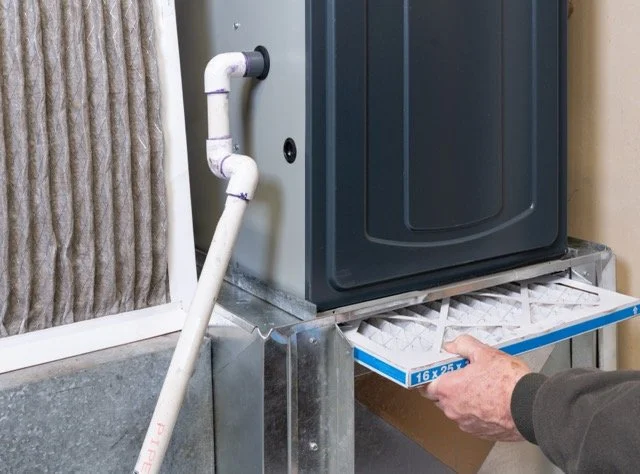
Michigan's high humidity also causes ice buildup on the evaporator coil when airflow is restricted. This happens when the furnace filter is clogged, the blower motor is failing, or the ductwork has leaks that reduce return air volume.
When ice forms on the coil, refrigerant can't absorb heat properly. Pressure drops in the suction line, and the compressor works harder to maintain cooling. This creates abnormal sounds — hissing from refrigerant rushing through the expansion valve at higher velocity, or buzzing from the compressor straining under low suction pressure.
The ice itself makes cracking and popping sounds as it melts and refreezes. Homeowners often describe this as a "gurgling" or "bubbling" sound from the indoor unit.
If you see ice on the refrigerant lines or indoor coil, turn the AC off and let it thaw completely (this takes 4-8 hours). Then check the furnace filter and replace it if it's dirty. If the ice returns after replacing the filter, you have a deeper problem — low refrigerant, failing blower motor, or ductwork leaks. Call for a diagnostic.

When a Strange Noise Becomes an Emergency
Most AC noises are annoying but not dangerous. A few are urgent — they indicate problems that can cause equipment failure, property damage, or safety hazards if you don't address them immediately.
Loud Hissing with a Chemical Smell
If you hear loud hissing from the outdoor unit and smell a sweet, chemical odor (like ether or chloroform), that's a major refrigerant leak. R-410A refrigerant is heavier than air and displaces oxygen at ground level. In an enclosed space (like a basement mechanical room), a large leak can cause dizziness, headaches, or loss of consciousness.
Turn off the AC at the thermostat and the circuit breaker. Open windows and leave the area. Call for emergency service. Do not try to locate the leak yourself.
R-410A is not flammable, but it breaks down into toxic gases (hydrofluoric acid and carbonyl fluoride) if exposed to open flame or electric heating elements. This is rare in residential settings, but it's why techs take refrigerant leaks seriously.
Buzzing with Smoke or Burning Smell
If you hear buzzing from the outdoor unit and see smoke or smell burning plastic, you have an electrical fire starting. This happens when wire insulation melts, contactors arc, or capacitors rupture.
Turn off the AC at the circuit breaker immediately. Do not open the electrical panel on the outdoor unit — let a licensed technician handle it. Call for emergency service.
Electrical fires in AC units are uncommon but not unheard of. We respond to 2-3 per year in our service area, usually after severe storms or in systems with rodent damage to wiring.
Continuous Loud Buzzing That Won't Stop
If the outdoor unit is buzzing loudly and won't stop even after you turn off the thermostat, the contactor is stuck in the closed position. This means power is continuously flowing to the compressor even though the thermostat isn't calling for cooling.
Turn off the AC at the circuit breaker to stop the buzzing. A stuck contactor will overheat the compressor and cause permanent damage if left running. Call for same-day service.
What Our Techs Check First During a Noise Diagnosis
When you call NEXT Heating & Cooling for an AC noise problem, here's the systematic process our NATE-certified technicians follow. This isn't guesswork — it's a methodical troubleshooting sequence that identifies the problem quickly and accurately.
Step 1: Listen and Locate
The tech arrives and listens to the AC running. Where is the sound coming from — outdoor unit or indoor air handler? Does it happen during startup, continuous operation, or shutdown? Is it constant or intermittent?
A hissing sound from the outdoor unit points to refrigerant leaks at line connections or service valves. Hissing from the indoor unit suggests evaporator coil leaks or expansion valve issues. Buzzing from the outdoor unit indicates electrical problems — contactor, capacitor, or compressor.
Step 2: Visual Inspection
The tech opens the electrical panel on the outdoor unit and inspects the contactor, capacitor, and wiring connections. We're looking for:
- Burn marks or pitting on contactor contacts
- Bulging or leaking capacitors (the top of the capacitor should be flat, not domed)
- Loose wire connections or corroded terminals
- Insect nests or debris inside the electrical compartment
- Oil residue around refrigerant line connections (indicates leaks)
This visual inspection catches 60-70% of noise problems immediately. A tech with experience can spot a failing capacitor or pitted contactor in seconds.
Step 3: Electrical Testing
If the visual inspection doesn't reveal the problem, the tech uses a multimeter to test electrical components:
- Contactor: Measure voltage across the coil terminals (should be 24 volts when thermostat is calling for cooling). Measure resistance across the load terminals when the contactor is open (should be infinite resistance). If the contactor shows continuity when open, it's stuck closed.
- Capacitor: Measure capacitance with a capacitor tester. Compare the reading to the label rating (printed on the capacitor). If the measured capacitance is more than 10% below the rated value, the capacitor is weak and should be replaced.
- Compressor windings: Measure resistance between common, start, and run terminals. Calculate the sum of start-to-common and run-to-common resistances — it should equal start-to-run resistance (within 1-2 ohms). If readings are way off or show a short to ground, the compressor has failed.
Step 4: Refrigerant Pressure Testing
If the noise is hissing and the visual inspection shows oil residue, the tech connects gauges to the service valves and measures refrigerant pressures. We're looking at suction pressure (low side) and discharge pressure (high side).
Normal pressures for R-410A on a 90°F day: suction around 118-125 psi, discharge around 350-400 psi (varies by system). If suction pressure is low (below 100 psi) and discharge is also low, the system is undercharged — there's a leak.
The tech uses electronic leak detection or UV dye to pinpoint the leak location. Once found, we explain the repair options and costs before proceeding.
Step 5: Honest Recommendations
After diagnosis, the tech explains what's wrong, what it costs to fix, and whether repair makes sense given the system's age and condition. If your AC is 15 years old, uses R-22 refrigerant, and needs a $1,200 evaporator coil replacement, we'll tell you that a new system is probably the better investment.
We don't work on commission. Our techs get paid the same whether you repair or replace. This is part of "changing contractor culture" — we give you the information you need to make the right decision for your home and budget, without pressure.
Real Repair Costs in Metro Detroit
Here's what AC noise-related repairs actually cost in Southeast Michigan in 2026. These are real numbers from our service data — not inflated "worst case" estimates.
Contactor Replacement
Cost: $150-$250
Includes diagnostic service call, new contactor (30-90 amp rating), and labor. Same-day repair. We carry contactors on every truck.
Capacitor Replacement
Cost: $150-$300
Includes diagnostic service call, new dual-run or single capacitor (5-80 MFD rating), and labor. Same-day repair. Dual-run capacitors cost $20-$40 more than single capacitors.
Refrigerant Leak Repair and Recharge
Cost: $400-$1,200+
Highly variable depending on leak location and refrigerant type. A simple line connection repair costs $400-$600 including labor, leak repair, vacuum, and recharge (for R-410A systems). Evaporator coil leaks are more expensive because the coil is harder to access — expect $1,200-$2,200 for coil replacement.
R-22 systems cost significantly more because of refrigerant pricing. If you need 5+ pounds of R-22, you're looking at $800-$1,200 just for refrigerant, plus labor. At that point, system replacement is usually the smarter financial decision.
Compressor Replacement
Cost: $1,800-$3,500
Includes new compressor, labor, refrigerant recovery and recharge, and system testing. This is a full-day job. At this price point, most homeowners choose full system replacement instead — you get a new outdoor unit, new indoor coil, new line set, and a 10-year parts warranty for $4,500-$7,500 depending on system size and efficiency rating.
For a detailed breakdown of what new AC systems cost in our area, including brand comparisons and efficiency options, see our guide on the best AC units for Michigan homes.
Warranty note: If your AC is under 10 years old, the compressor may still be covered under the manufacturer's parts warranty. Labor isn't covered, but you'd only pay for the technician's time to replace the compressor — not the $800-$1,500 compressor itself. Always check your warranty status before approving repairs.
Emergency Service Premium
If you need service outside normal business hours (weeknights after 6pm, weekends, holidays), expect an additional $75-$150 emergency service fee on top of repair costs. This covers the tech's overtime pay and the cost of keeping trucks and inventory ready for after-hours calls.
Most noise problems aren't true emergencies unless you're seeing smoke, smelling refrigerant, or have no cooling during a heatwave. If you can wait until the next business day, you'll save the emergency fee.
How the Next Care Plan Catches These Problems Early
Most AC noise problems don't appear overnight. Contactors develop pitting gradually over thousands of cycles. Capacitors weaken slowly as heat degrades the internal dielectric. Refrigerant leaks start as tiny pinhole leaks that take months to drop system charge low enough to affect performance.
This is why preventive maintenance matters. A trained technician can spot these problems during a routine tune-up — before they cause noise, before they cause breakdowns, and before they turn into expensive emergency repairs.
The NEXT Care Plan costs $5 per month ($60 per year) and includes two annual visits: a fall furnace tune-up and a spring AC tune-up. During the spring AC visit, our techs:
- Inspect and test the contactor for pitting and proper operation
- Measure capacitor capacitance and compare to rated values
- Check refrigerant pressures and look for signs of leaks
- Clean the condenser coil to maintain proper heat transfer
- Inspect electrical connections and tighten loose terminals
- Test the thermostat and verify proper system cycling
- Check the condensate drain line and clear any blockages
If we find a weak capacitor or pitted contactor during the tune-up, we replace it on the spot (you get a 10% discount on parts and labor as a Care Plan member). The repair costs $135-$225 instead of $150-$300, and you avoid the noise problem and potential breakdown later in the summer.
The math: AC compressor replacement costs $1,800-$3,500. A refrigerant leak repair costs $400-$1,200. A single avoided breakdown pays for 7-15 years of Care Plan membership. Members also get priority scheduling — if your AC does break down during a July heatwave, you move to the front of the queue instead of waiting 2-3 days for service.
Over 35 years in business, we've seen the data: homeowners with annual maintenance have 60-70% fewer emergency breakdowns than those who skip tune-ups. Their systems last 3-5 years longer. Their energy bills are 10-15% lower because clean coils and proper refrigerant charge improve efficiency.
Preventive maintenance isn't sexy. It doesn't give you the dopamine hit of buying a new high-efficiency system. But it's the single most cost-effective thing you can do to keep your AC running quietly and reliably through Michigan summers.
Ready to Get Started?
NEXT Heating & Cooling has been keeping Michigan homes comfortable for over 35 years. Get honest diagnostics and fair pricing from NATE-certified technicians who show up on time. No upselling. No pressure. Just straight answers about what's wrong and what it costs to fix.
Schedule Your ServiceFrequently Asked Questions
A hissing sound with normal cooling usually means you have a small refrigerant leak that hasn't dropped the charge low enough to affect performance yet. The leak will get worse over time — refrigerant pressure forces the leak open wider as the season progresses. Call for a diagnostic before the leak gets larger and cooling performance drops. Early leak detection and repair costs $400-$600. Waiting until the system stops cooling entirely often means you've lost all the refrigerant, and the compressor may have been damaged by running with low charge.
Technically yes, but we don't recommend it unless you have electrical experience and proper safety equipment. The contactor handles 240 volts — enough to cause serious injury or death if you touch live terminals. You need to turn off power at the disconnect and the circuit breaker, verify power is off with a multimeter, then replace the contactor with an exact match (same voltage and amperage rating). If you wire it incorrectly, you can damage the compressor or create a fire hazard. Professional contactor replacement costs $150-$250 and takes 20 minutes — the small cost difference isn't worth the safety risk for most homeowners.
This is called "short cycling" and usually means the compressor is trying to start but can't. The most common causes are a weak capacitor (can't provide enough starting torque) or a failing compressor (internal mechanical resistance is too high). The system tries to start, draws high current, overheats, and trips the internal overload protector. After cooling down for a few minutes, it tries again. This cycle repeats. If you're experiencing this, turn the AC off and call for service — repeated failed start attempts will damage the compressor permanently. For more detail on this specific problem, see our guide on furnace short-cycling, which covers similar cycling issues in heating systems.
Don't. Running an AC with low refrigerant damages the compressor. Refrigerant doesn't just cool your home — it also cools and lubricates the compressor. When refrigerant level drops, the compressor runs hotter and loses lubrication. This causes internal wear and eventual failure. A $400 refrigerant leak repair becomes a $2,500 compressor replacement if you keep running the system. Turn off the AC and call for service as soon as you notice reduced cooling performance or hear hissing sounds.
It can be, but most buzzing sounds aren't immediately dangerous. A buzzing contactor or capacitor is annoying and will cause system failure, but it's not a fire hazard by itself. However, if you see sparks, smell burning plastic, or see smoke coming from the outdoor unit, that's an electrical fire starting. Turn off power at the circuit breaker immediately and call for emergency service. Electrical fires in AC units are rare but serious — don't ignore warning signs like burning smells or visible arcing.
Power outages and surges during storms damage AC electrical components. When power returns, the voltage spike can pit contactor contacts, weaken capacitors, or damage control boards. If your AC starts making buzzing or clicking sounds after a storm, there's a good chance the storm damaged something. Call for a diagnostic — storm damage often qualifies for homeowners insurance coverage if the repair cost exceeds your deductible. Our techs can document the damage for insurance claims if needed.
Yes. Care Plan members don't pay service call fees for diagnostics. If your AC starts making strange noises, call us and we'll send a tech out to diagnose the problem at no charge. You only pay for the actual repair if parts need to be replaced, and you get a 10% discount on parts and labor. Non-members pay a $79-$99 diagnostic fee that gets applied to the repair if you proceed. The Care Plan also includes two annual tune-ups (spring AC, fall furnace) where we catch problems before they cause noise or breakdowns. Learn more at our Next Care Plan page.