

Musty AC Smell in Birmingham MI: Causes & How to Fix It
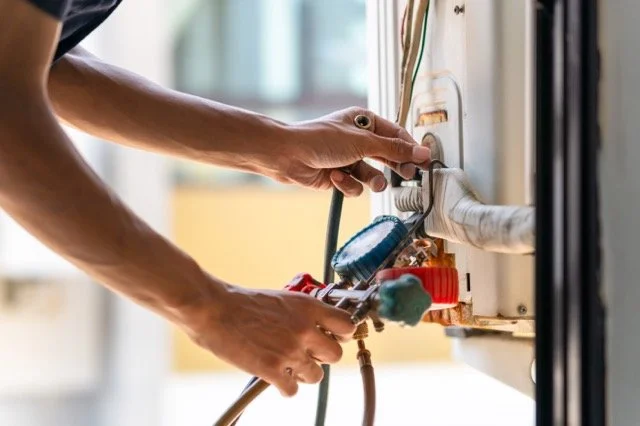
You turn on your AC on the first warm day of the year, and instead of cool, fresh air, you get hit with a smell like wet gym socks or an old basement. If you're a Birmingham homeowner, you're not alone. That musty AC smell is one of the most common service calls we get at NEXT Heating & Cooling every spring and summer across Southeast Michigan.
The good news? In most cases, it's fixable without replacing your entire system. The bad news? If you ignore it, you're circulating mold spores, bacteria, and allergens through every room in your house. And in Birmingham's older homes—especially those beautiful 1950s and 1960s ranches with original ductwork—this problem tends to be more stubborn than in newer construction.
This guide walks you through exactly what causes that musty smell, the four main culprits we see in Birmingham homes, and the fix order that actually works. We've been diagnosing and repairing AC systems across Oakland County for over 35 years, and we'll show you what to check yourself and when it's time to call in NATE-certified HVAC technicians.
What That Musty Smell Actually Is (And Why It Matters)
Let's start with the science. That musty smell coming from your AC vents isn't just unpleasant—it's biological. You're smelling microbial volatile organic compounds (MVOCs), which are gases released by mold, mildew, and bacteria as they grow and metabolize.
Here's what happens: Your air conditioner cools air by passing it over cold evaporator coils. As warm, humid Michigan air hits those cold coils, moisture condenses—just like a cold glass of water "sweats" on a hot day. That condensation is supposed to drip into a drain pan and exit through a condensate line. But when that moisture doesn't drain properly, or when your system cycles on and off frequently without enough airflow, you create the perfect environment for biological growth: dark, damp, and around 50-80°F.
According to EPA indoor air quality guidelines, mold can begin growing on damp surfaces within 24-48 hours. Once it takes hold on your evaporator coil, drain pan, or inside your ductwork, every time your AC runs, it distributes those spores throughout your home.
Health Impact: For most people, musty AC smells are just annoying. But for anyone with asthma, allergies, or respiratory sensitivities, inhaling mold spores can trigger symptoms—coughing, sneezing, headaches, and in severe cases, respiratory infections. If you've noticed your allergies getting worse only when the AC is running, this is likely why.
Birmingham's older homes are particularly vulnerable. Many were built before modern HVAC codes required proper condensate drainage and vapor barriers. If your home was built before 1980 and still has original ductwork, there's a good chance you're dealing with one or more of the issues we'll cover next.
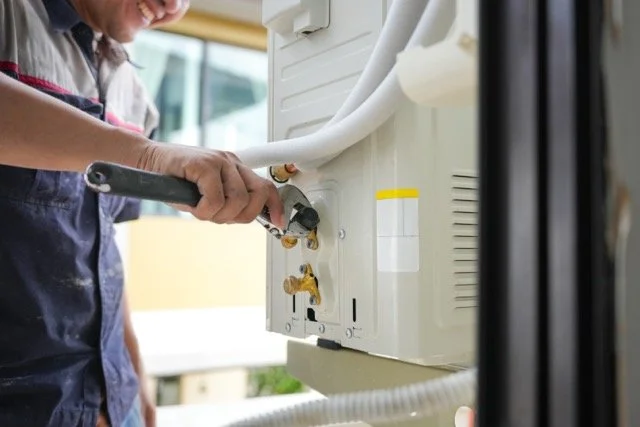
The 4 Main Causes of Musty AC Smells
After diagnosing thousands of AC odor complaints across Oakland County, we've found that 90% of musty smells come from one of these four sources. Here's what we look for during every service call.
1. Mold and Mildew on the Evaporator Coil
This is the most common culprit. Your evaporator coil sits inside the air handler (the indoor unit, usually in your basement or attic). It's a maze of thin aluminum fins and copper tubing, and it's constantly wet during cooling season. If airflow is restricted—usually due to a dirty filter—the coil stays damp longer, and mold takes hold in the spaces between the fins.
You can't see this without opening the access panel on your air handler. When we open it up during a service call, we're looking for dark spots, fuzzy growth, or a slimy film on the coil surface. In severe cases, you'll smell it immediately when the panel comes off.
2. Clogged or Stagnant Condensate Drain Line
Your AC produces gallons of condensation every day. That water drips into a shallow drain pan beneath the evaporator coil, then exits through a PVC or rubber drain line—usually a 3/4-inch pipe that runs to a floor drain, sump pump, or outside.
Over time, that drain line accumulates algae, mold, and sludge. If it clogs, water backs up into the drain pan and sits there. That stagnant water is a breeding ground for bacteria, and the smell gets pulled into your airstream every time the blower runs.
In Birmingham homes with basement AC units, we often find drain lines that haven't been cleaned in years. The water sits in the pan, evaporates slowly, and leaves behind biofilm—a slimy layer that smells like a swamp.
3. Dirty or Clogged Air Filter
This one's simple but often overlooked. Your air filter traps dust, pollen, pet dander, and other particles before they reach the evaporator coil. When the filter gets clogged, airflow drops. That means:
- The evaporator coil runs colder and stays wetter longer
- Moisture doesn't evaporate between cooling cycles
- Dust and organic matter trapped in the filter itself can start to smell musty, especially if it gets damp
We recommend checking your filter every 30 days during cooling season and replacing it every 60-90 days, depending on your home. If you have pets, a dusty house, or run your AC constantly, replace it monthly. A standard 1-inch pleated filter rated MERV 8-11 works well for most homes. Avoid cheap fiberglass filters—they don't filter enough—and avoid MERV 13+ filters unless your system was designed for them, as they can restrict airflow.
4. Contaminated Ductwork
If the smell persists even after you've addressed the coil, drain, and filter, the problem might be in your ducts. This is especially common in Birmingham's older homes, where original sheet metal ductwork has been in place for 50+ years.
Ductwork can harbor mold if:
- There's been a leak or flood in your basement or crawlspace
- Ducts aren't properly insulated, causing condensation on the outside of the metal
- Dust and organic debris have built up inside the ducts over decades
- There are gaps or disconnected sections allowing humid air or pests to enter
Professional duct cleaning can help, but only if the underlying moisture problem is fixed first. Otherwise, you're just temporarily removing the symptom. For homes with severe duct contamination, ductwork replacement or sealing is sometimes the only long-term solution.
The Fix Order: What to Check First
If you're a DIY-minded homeowner, here's the order we recommend tackling this problem. Start with the easiest, cheapest fixes first, then move to the more involved ones if the smell persists.
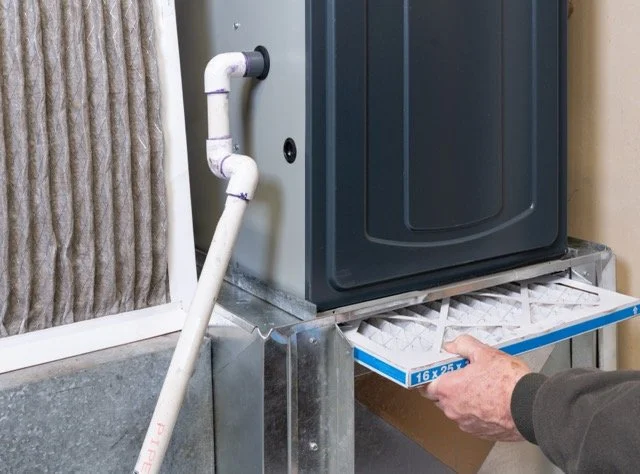
Step 1: Replace Your Air Filter
Cost: $10-$25. Time: 5 minutes.
Turn off your AC, locate your filter (usually in a slot near the air handler or in a return air grille), pull it out, and replace it with a new one. Make sure the airflow arrow points toward the blower. Run the AC for a few hours and see if the smell improves.
If the old filter is clogged with dust or damp to the touch, that was likely contributing to the problem. But if the smell continues, move to step 2.
Step 2: Inspect and Clean the Condensate Drain Line
Cost: $5-$15 for supplies. Time: 20-30 minutes.
Find the condensate drain line near your indoor AC unit. It's usually a 3/4-inch PVC pipe coming out of the air handler. Follow it to where it drains (floor drain, sump, or outside).
Check for:
- Standing water in the drain pan (visible when you open the access panel)
- Slow drainage when you pour a cup of water into the pan
- Visible algae or slime at the drain opening
To clean it, pour a 50/50 mix of white vinegar and water down the drain line. Let it sit for 30 minutes, then flush with clean water. For stubborn clogs, you can use a wet/dry vacuum to suck out debris from the drain line outlet. Some homeowners use condensate drain tablets (available at hardware stores) quarterly to prevent buildup.
If water won't drain at all, the line is clogged and may need professional clearing with a shop vac or compressed air.
Step 3: Visually Inspect the Evaporator Coil
Cost: $0 (DIY inspection). Time: 10 minutes.
Turn off power to your AC at the breaker. Remove the access panel on your air handler (usually held on with a few screws). Shine a flashlight on the evaporator coil—it looks like a metal radiator with thin vertical or horizontal fins.
Look for:
- Dark spots, fuzzy growth, or discoloration on the coil
- Dust buildup between the fins
- A musty smell when you get close
If you see mold, don't try to clean it yourself with household cleaners—you can damage the coil or push contaminants deeper into the system. This is where you call a professional. We use EPA-registered antimicrobial coil cleaners and specialized brushes to safely remove biological growth without harming the aluminum fins.
Step 4: Check Supply Vents and Ductwork
Cost: $0 (visual inspection). Time: 15 minutes.
Remove a few supply vent covers throughout your home. Use a flashlight to look a few feet into the duct. You're looking for visible mold, dust buildup, or moisture. If you see any of these, or if the musty smell is stronger near certain vents, your ductwork is likely contaminated.
Professional duct cleaning costs $400-$800 for a typical Birmingham home, depending on the size of the system and the level of contamination. But if you're also dealing with leaky or undersized ducts, a full duct evaluation and sealing might be a better long-term investment.
When DIY Isn't Enough
If you've done steps 1-4 and the smell persists, or if you found mold on the coil or in the ducts, it's time to call in the pros. At NEXT Heating & Cooling, a typical musty smell diagnosis and cleaning service runs $150-$400, depending on what we find. That includes:
- Full system inspection (coil, drain, blower, ductwork)
- Evaporator coil cleaning with antimicrobial treatment
- Condensate drain line clearing and treatment
- Filter replacement
- Recommendations for duct cleaning or UV light installation if needed
If your system needs more extensive work—like a new evaporator coil (typically $800-$1,500 installed) or duct replacement—we'll give you a clear breakdown of costs and options. No pressure, no upselling. Just honest diagnostics. That's part of our commitment to changing contractor culture in Southeast Michigan.
Why Birmingham Homes Get This More Than Others
Birmingham has some of the most beautiful residential architecture in Oakland County—tree-lined streets, well-maintained ranches and colonials, and a strong sense of community. But many of these homes were built between 1950 and 1980, and that comes with some HVAC challenges.
Here's why we see more musty AC issues in Birmingham compared to newer communities:
Older Ductwork and Air Handlers
Homes built before 1980 often have original sheet metal ductwork that's never been cleaned, sealed, or insulated. Over decades, dust, pollen, and organic debris accumulate inside. Add in Michigan's humid summers, and you've got conditions ripe for mold growth.
Many Birmingham homes also have air handlers in unconditioned basements. If your basement is damp or prone to flooding, moisture can migrate into the ductwork or condense on the outside of the metal, creating more opportunities for biological growth.
Oversized or Undersized AC Systems
We often find that older homes have AC systems that were either oversized (installed by a contractor who didn't do a proper load calculation) or undersized (original equipment that's no longer adequate after insulation upgrades or additions).
An oversized AC cools the house too quickly, then shuts off before it has a chance to remove enough humidity. The evaporator coil stays damp, and you end up with a clammy house and a musty smell. An undersized system runs constantly, but if airflow is poor or the coil is dirty, you get the same result.
Proper AC sizing requires a Manual J load calculation based on your home's square footage, insulation, windows, and orientation. If you're considering upgrading to a high-efficiency AC system, this is the time to get it right.
Michigan's Humid Summers
Southeast Michigan isn't the Deep South, but our summers are more humid than most people realize. Dew points in July and August regularly hit 65-70°F, which means your AC is working hard to remove moisture from the air. If your system isn't maintaining proper airflow or if the drain line isn't keeping up, that moisture has nowhere to go but into your ducts and living spaces.
This is also why AC freeze-ups are so common in Metro Detroit—restricted airflow combined with high humidity creates ice on the coil, which then melts and floods the drain pan.
Prevention: How to Keep Your AC Smelling Fresh
Once you've fixed the immediate problem, here's how to keep it from coming back.
Replace Filters on Schedule
Set a reminder on your phone to check your filter every 30 days during cooling season (May through September in Michigan). Replace it every 60-90 days, or sooner if it looks dirty. This is the single most important thing you can do to prevent musty smells and extend the life of your equipment.
Schedule Annual AC Maintenance
A professional tune-up in the spring catches small problems before they become expensive repairs. During a maintenance visit, we:
- Inspect and clean the evaporator coil
- Clear the condensate drain line
- Check refrigerant levels and airflow
- Test the blower motor and capacitor
- Look for duct leaks or disconnected sections
Our Next Care Plan includes two annual visits (spring AC tune-up and fall furnace tune-up) for just $5/month. You also get priority scheduling, 10% off repairs, and no service call fees. Over the life of your equipment, that preventive maintenance saves thousands in avoided breakdowns and energy waste.
Consider a UV Light for the Air Handler
UV-C germicidal lights are installed inside your air handler, directly above or below the evaporator coil. They emit ultraviolet light that kills mold, bacteria, and viruses on contact. According to ASHRAE (American Society of Heating, Refrigerating and Air-Conditioning Engineers) research, properly installed UV lights can reduce microbial growth on coils by 90% or more.
Installation costs $300-$600 depending on the system, and the bulbs need to be replaced every 1-2 years ($50-$100). It's not necessary for every home, but if you've had recurring mold issues, have severe allergies, or just want the cleanest possible indoor air, it's worth considering.
Keep Humidity in Check
Your AC removes some humidity, but if your home consistently feels damp or clammy, you might need a whole-home dehumidifier. Ideal indoor humidity during summer is 40-50%. Above 60%, you're creating conditions for mold growth not just in your HVAC system, but throughout your home.
We install Aprilaire and Honeywell whole-home dehumidifiers that work with your existing HVAC system. They're especially useful in Birmingham homes with finished basements or poor attic ventilation.
Don't Close Too Many Vents
Some homeowners close vents in unused rooms to "save energy," but this actually creates problems. Closing vents increases pressure in the ductwork, reduces airflow across the evaporator coil, and can cause the coil to freeze or stay damp longer. Keep at least 80% of your vents open for proper system balance.
When to Call NEXT Heating & Cooling
You should call a professional if:
- The musty smell persists after you've replaced the filter and cleaned the drain line
- You see visible mold on the evaporator coil or inside ducts
- Water is backing up in the drain pan or leaking onto the floor
- The smell is accompanied by reduced cooling performance or higher energy bills
- You or your family are experiencing allergy symptoms that worsen when the AC runs
- Your AC is more than 10-12 years old and you're considering replacement
At NEXT Heating & Cooling, we've been serving Birmingham and the surrounding Oakland County communities for over 35 years. Our NATE-certified technicians show up on time, diagnose the problem honestly, and give you options without pressure. No commission-based sales. No upselling unnecessary equipment. Just straightforward HVAC service from a local contractor you can trust.
We carry all the major brands—Carrier, Lennox, Trane, Rheem, Bryant, Goodman, Amana, York, and RUUD—and we'll help you choose the right system for your home and budget. Whether you need a simple coil cleaning, a full duct evaluation, or a new high-efficiency AC installation, we'll walk you through every option.
And if you ever have an emergency—a complete AC failure during a heat wave, a frozen coil flooding your basement, or a strange smell that just won't go away—we offer 24/7 emergency HVAC service across Southeast Michigan.
Ready to Get Rid of That Musty AC Smell?
NEXT Heating & Cooling has been keeping Birmingham homes comfortable for over 35 years. Get honest diagnostics and fair pricing from NATE-certified technicians who show up on time and explain every step of the process.
Schedule Your AC Service