

Summer Heat Wave AC Emergency Plan for St. Clair Shores
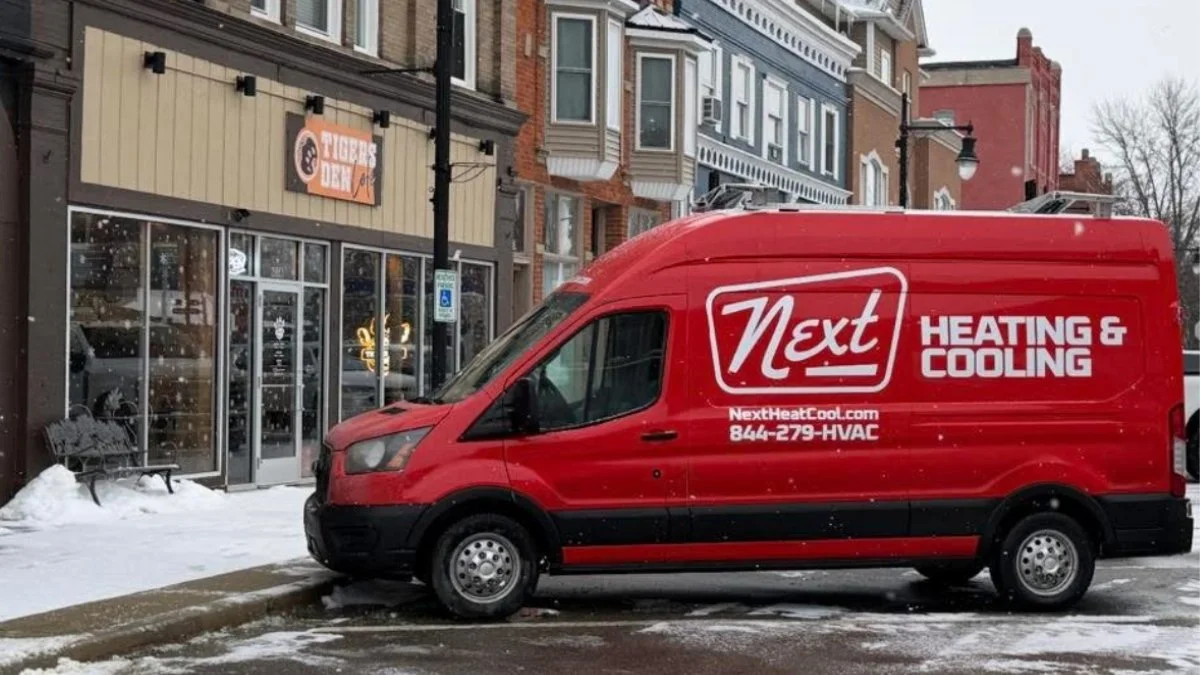
It's 3 PM on a Tuesday in July. The National Weather Service just issued a heat advisory for Macomb County — 94°F with a heat index pushing 102°F. You walk past the thermostat and notice it reads 81°F inside, even though it's set to 72°F. You put your hand near a floor register. No cold air. Your AC just quit during the worst possible week.
This scenario plays out across St. Clair Shores, Sterling Heights, and Clinton Township every summer when the first major heat wave hits Southeast Michigan. Air conditioners that have been sitting idle since September suddenly get asked to run 18 hours a day in 90-degree heat. Capacitors fail. Compressors seize. Contactors burn out. And homeowners scramble to figure out what to do next.
Here's your emergency plan — what to do in the first 15 minutes, how to keep your family safe while you wait for repair, when to call for emergency service, and what to expect when the technician arrives. This isn't theory. This is what we've learned responding to hundreds of AC emergencies across Macomb County over 35 years.
First 15 Minutes — Immediate Actions When Your AC Fails
The first thing most homeowners do when they realize the AC isn't working is keep adjusting the thermostat. They drop it from 72°F to 68°F, then to 65°F, convinced the system just needs more encouragement. This doesn't help. Worse, it can cause additional damage if there's an underlying electrical or mechanical issue.
Here's what to do instead:
Turn Off Your Thermostat Immediately
Switch your thermostat to OFF — not just raising the temperature, but fully off. If your AC has a failed capacitor or seized compressor, letting it continue to attempt starting will burn out the contactor and potentially damage the compressor windings. You're preventing a $200 repair from becoming a $2,500 repair.
Check the Electrical Panel
Go to your electrical panel and find the breaker labeled "AC," "Air Conditioner," or "Condenser." In most St. Clair Shores homes built in the 1970s-1990s, this is a double-pole 30-amp or 40-amp breaker. Check if it's tripped (the handle will be in the middle position or pointing toward OFF).
If it's tripped, flip it fully off, then back on. Wait five minutes, then try your AC again. If the breaker trips immediately, do not reset it again. You have either a short circuit, a grounded compressor, or a failed contactor. Continuing to reset the breaker can start an electrical fire. Call for emergency HVAC service at this point.
Inspect Your Air Filter
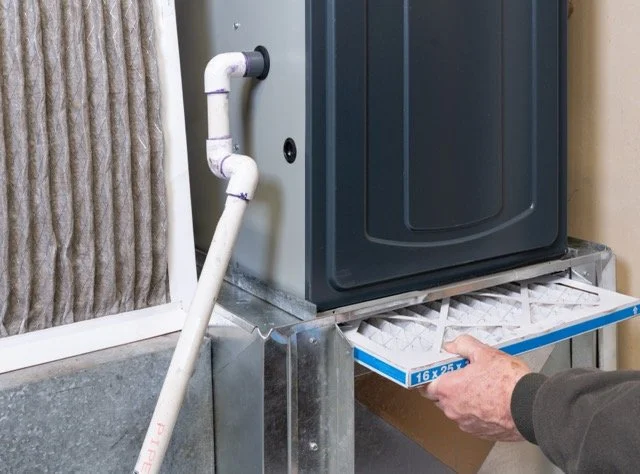
Go to your furnace or air handler (usually in the basement or utility closet) and pull out the air filter. Hold it up to a light. If you can't see light through it, it's completely blocked. A clogged filter restricts airflow to the point where the evaporator coil freezes, triggering a safety shutdown.
If the filter is packed solid, replace it with a new one. Then leave the system off for 30-60 minutes to let any ice on the coil melt. After an hour, try restarting. If it works, you just saved yourself a service call. If it doesn't, the filter wasn't the only problem.
Document What You're Experiencing
Before you call a technician, write down what you observed:
- Is the outdoor unit running at all? (You should hear the fan and compressor)
- Is the indoor blower running?
- Did you hear any unusual sounds before it quit? (Clicking, buzzing, grinding?)
- Do you smell anything burning or chemical-like?
- When did you last have the system serviced?
This information helps the technician diagnose faster and bring the right parts. When you call HVAC services in Metro Detroit, having these details ready speeds up the entire process.
Emergency Cooling Strategies While You Wait for Repair
Let's be realistic: even with emergency service, you might be waiting 2-6 hours for a technician during a heat wave. Every HVAC contractor in Southeast Michigan is slammed when temperatures hit the 90s. You need a plan to keep your family safe in the meantime.
Close Blinds and Curtains on Sun-Facing Windows
Solar heat gain through windows is massive. A south-facing window can add 500-1,000 BTUs of heat per hour to a room. Close all blinds, curtains, or shades on windows receiving direct sunlight. If you have blackout curtains, even better. This single step can keep indoor temperatures 5-7°F cooler.
Create Cross-Ventilation
Open windows on opposite sides of your house to create airflow. The best setup: open windows on the shaded (north or east) side of the house in the morning, and windows on the west side once the sun moves past. Position a box fan in one window blowing OUT — this pulls cooler air through the other windows.
This works better than you'd think, especially in St. Clair Shores where you often get a lake breeze off Lake St. Clair in the late afternoon. We've seen homeowners drop indoor temps from 86°F to 78°F just with strategic fan placement.
Focus Cooling Efforts on Critical Rooms
You don't need to cool the entire house. Prioritize bedrooms and any room with vulnerable family members (infants, elderly, anyone with medical conditions). Close doors to unused rooms. Set up box fans in doorways to move air from cooler areas into bedrooms.
The Ice Bucket Fan Trick
Fill a large bowl or bucket with ice. Position a box fan so it blows across the ice toward you. As the ice melts, the fan pushes cooler, slightly humidified air into the room. This won't cool a whole room, but it creates a 6-8 foot zone that's noticeably more comfortable. It's enough to make sleeping tolerable.
Stay Hydrated and Avoid Heat-Generating Activities
Don't use the oven or stove. Order takeout or eat cold meals. Delay laundry and dishwasher cycles until evening. Each of these activities adds 500-2,000 BTUs of heat to your home. Take cool showers. Drink water constantly. Wear lightweight, loose-fitting clothing.
If you have infants or elderly family members, monitor them closely. Heat exhaustion can develop quickly in vulnerable populations when indoor temperatures exceed 85°F for extended periods.
When to Call for Emergency HVAC Service vs. Wait Until Morning
Emergency service calls cost more. Most HVAC contractors in Macomb County charge $150-250 for an after-hours service call fee on top of the diagnostic fee and repair costs. So when does it make sense to call immediately versus waiting until the next business day?
Call for Emergency Service If:
Indoor temperature exceeds 85°F and continues rising. At this point, you're approaching unsafe conditions, especially if humidity is high. The National Weather Service considers indoor temperatures above 85°F with high humidity a health risk for vulnerable populations.
You have infants, elderly family members, or anyone with medical conditions. Heat-related illness develops faster in these groups. If someone in your household has cardiovascular issues, respiratory problems, or takes medications that affect temperature regulation, don't wait.
You smell burning, see smoke, or hear loud buzzing from the outdoor unit. These indicate electrical problems that could cause a fire. Turn off the AC at the breaker and call immediately — this is a safety issue, not just a comfort issue.
You notice a chemical or sweet smell near the indoor unit. This could indicate a refrigerant leak. While modern R-410A refrigerant is less toxic than older R-22, it displaces oxygen in enclosed spaces and can cause dizziness or nausea in high concentrations. Ventilate the area and call for service.
It's forecast to stay above 90°F for multiple days. If you're looking at a three-day heat wave, waiting until "tomorrow" just extends your misery and increases health risks. Get on the schedule early.
You Can Probably Wait Until Morning If:
Indoor temperature is uncomfortable but stable below 82°F. You can create adequate airflow with fans. No vulnerable household members. No unusual smells or sounds. Forecast shows cooler weather arriving within 24 hours.
In these cases, call first thing in the morning (7-8 AM) to get on the schedule early. You'll avoid after-hours fees and likely get service the same day.
At NEXT Heating & Cooling, we offer 24/7 emergency service because we know AC failures don't follow business hours. But we're also honest about when emergency service is truly necessary versus when you can wait safely. We're not trying to upsell you on after-hours fees you don't need.
Next Care Plan members get priority scheduling. If you're enrolled in our $5/month HVAC maintenance plan, you move to the front of the line during heat waves. We schedule our maintenance members first, often getting them service 2-4 hours faster than non-members during peak demand.
What Emergency AC Repair Looks Like in St. Clair Shores
When the technician arrives, here's what the diagnostic process looks like for a typical summer AC failure:
Initial Visual Inspection (5-10 minutes)
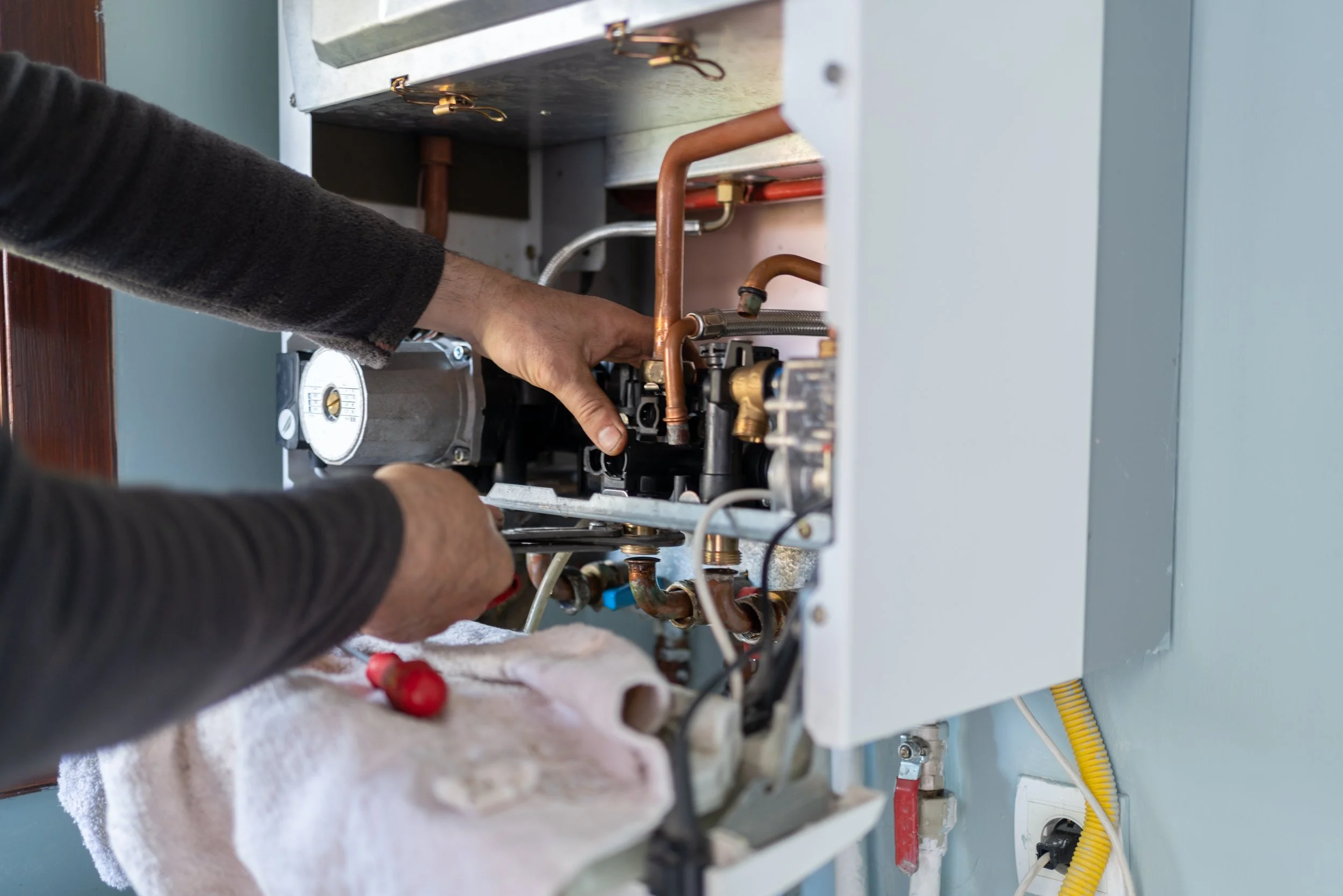
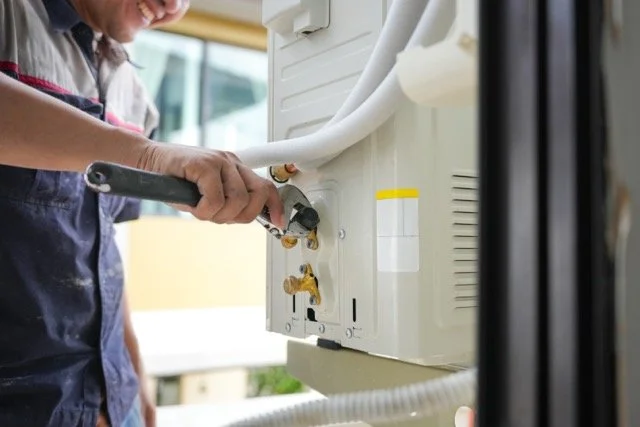
The technician checks the outdoor condenser unit first. They're looking for obvious issues: debris blocking airflow, a seized fan motor, a burnt contactor, or a capacitor with a bulging top (a clear sign of failure). They'll also check voltage at the disconnect box to confirm power is reaching the unit.
Inside, they inspect the evaporator coil for ice buildup, check the blower motor operation, and verify the thermostat is sending the correct signals. In homes with older thermostats (the round Honeywell dial type common in 1970s-80s St. Clair Shores homes), we often find the issue is a failed thermostat, not the AC itself.
Electrical Testing (10-15 minutes)
Using a multimeter, the technician tests the capacitor (the most common failure point in Michigan summer heat), the contactor, and the compressor windings. A dual-run capacitor for a typical 3-ton AC should read around 35-45 microfarads on the compressor side and 5-7 microfarads on the fan side. If readings are off by more than 10%, the capacitor needs replacement.
They'll also check amp draw on the compressor. A Carrier or Lennox 3-ton compressor should draw 15-20 amps under normal operation. If it's pulling 30+ amps, the compressor is struggling and likely near failure.
Refrigerant Check (If Applicable)
If the system is running but not cooling adequately, the technician connects gauges to check refrigerant pressures. For R-410A systems (standard since 2010), they're looking for suction pressure around 118-125 PSI and discharge pressure around 250-300 PSI on a 90°F day. Low suction pressure indicates a refrigerant leak.
Finding and repairing refrigerant leaks takes time. Small leaks in the evaporator coil or condenser coil can take 30-60 minutes to locate using electronic leak detectors or UV dye. This is why refrigerant leak repairs often can't be completed the same day — the technician may need to order a replacement coil.
Common Summer AC Failures We See in St. Clair Shores
Failed Capacitor (40% of summer calls): Capacitors store electrical charge to help start the compressor and fan motor. Heat degrades them. A capacitor that's been sitting through a Michigan winter, then suddenly asked to start a compressor 50 times a day in 95°F heat, fails fast. Replacement takes 15-30 minutes. Cost: $150-400 depending on capacitor type.
Burnt Contactor (20% of summer calls): The contactor is an electrical relay that energizes the compressor and fan. Pitting on the contact points causes arcing, which burns the contacts. You'll hear clicking but the compressor won't start. Replacement takes 20-40 minutes. Cost: $100-250.
Seized Compressor (15% of summer calls): This is the worst-case scenario. The compressor motor has seized due to lack of lubrication, bearing failure, or electrical burnout. The unit hums loudly, draws excessive amperage, and trips the breaker. Compressor replacement on a 10+ year old system rarely makes financial sense. This usually means replacement. Cost: $1,200-3,500 for compressor replacement, or $3,500-7,000 for full system replacement.
Refrigerant Leak (15% of summer calls): Small leaks in the evaporator coil, condenser coil, or line set cause gradual refrigerant loss. The system runs but doesn't cool effectively. Repair involves finding the leak, fixing it, evacuating the system, and recharging with refrigerant. Cost: $400-1,500 depending on leak location.
Frozen Evaporator Coil (10% of summer calls): Caused by restricted airflow (dirty filter, blocked return vents) or low refrigerant. Ice builds up on the indoor coil, blocking airflow completely. The fix: turn off the system, let it thaw (1-2 hours), address the underlying cause. Often no-cost if it's just a dirty filter.
Cost Reality — What to Expect for Emergency AC Service
Let's talk numbers. Michigan homeowners are practical and budget-conscious, so here's what emergency AC service actually costs in Southeast Michigan in 2026:
Service Call and Diagnostic Fees
Standard business hours (Monday-Friday, 8 AM - 5 PM): $89-150 service call fee, which typically includes the first hour of diagnostic time. At NEXT Heating & Cooling, our diagnostic fee is $129, waived if you proceed with the recommended repair.
After-hours emergency service (evenings, weekends, holidays): $150-250 service call fee on top of diagnostic and repair costs. This covers the technician's time, vehicle costs, and the reality that they're leaving their family dinner or weekend plans to help you.
Common Repair Costs
- Capacitor replacement: $150-400 (parts $20-60, labor $130-340)
- Contactor replacement: $100-250 (parts $15-40, labor $85-210)
- Thermostat replacement: $150-400 for a programmable digital thermostat
- Fan motor replacement: $400-800 (parts $150-350, labor $250-450)
- Refrigerant recharge (no leak): $200-500 depending on refrigerant type and amount
- Refrigerant leak repair: $400-1,500 depending on location and complexity
- Compressor replacement: $1,200-3,500 (parts $600-2,000, labor $600-1,500)
- Evaporator coil replacement: $800-2,200 (parts $400-1,200, labor $400-1,000)
When Replacement Makes More Financial Sense
Here's the decision framework we use with homeowners in St. Clair Shores and Sterling Heights:
If your AC is 12+ years old and needs a compressor or coil replacement: Replace the entire system. A compressor replacement costs $1,500-3,500. A full system replacement costs $4,000-7,000. You're paying 40-60% of replacement cost to fix a 12-year-old system that will likely need additional repairs within 2-3 years. The new system will be significantly more efficient (16-18 SEER vs. 10-13 SEER on older units), lowering your electric bills by $200-400 per year.
If your AC is under 8 years old: Repair almost always makes sense, assuming it's not a compressor failure caused by a manufacturing defect or installation error.
If your AC is 8-12 years old: This is the gray area. Factor in the repair cost, the system's efficiency, and your plans for the house. If you're planning to stay in the home for 5+ years, replacement often makes more sense. If you're selling within 2 years, repair and disclose.
We don't make commission on equipment sales at NEXT Heating & Cooling, so our technicians give you the honest cost-benefit analysis. If a $200 capacitor will get you another 3-4 years from a 10-year-old system, we'll tell you that. If you're throwing good money after bad, we'll tell you that too.
Next Care Plan members save 10% on all repairs. That $400 contactor replacement becomes $360. A $1,500 refrigerant leak repair becomes $1,350. The $60/year maintenance plan pays for itself on a single mid-size repair.
Preventing the Next Heat Wave Emergency
The best emergency plan is not needing one. Here's what actually prevents summer AC failures based on 35 years of service data across Macomb County:
Spring Tune-Ups Catch Failures Before They Happen
We see the pattern every year: homeowners who skip spring maintenance are 3-4 times more likely to call for emergency service in July. A pre-summer AC tune-up catches weak capacitors, dirty coils, low refrigerant, and failing contactors before they cause a breakdown.
A capacitor that measures 38 microfarads in May (slightly low, but functional) will likely fail by July when it's asked to start the compressor 60 times a day in 95°F heat. Replacing it during a $129 tune-up prevents a $350 emergency service call in July.
The ideal time for AC maintenance in Southeast Michigan is April or early May — after the risk of hard freeze has passed but before the first heat wave. By mid-May, every HVAC contractor is booked solid for 2-3 weeks.
Warning Signs Your AC Is Struggling
Pay attention to these symptoms in May and June. If you notice them, schedule service before the heat wave hits:
- Short cycling: The AC runs for 5-8 minutes, shuts off, then starts again 5 minutes later. This indicates a failing capacitor, oversized system, or refrigerant issue.
- Weak airflow from registers: Could be a dirty filter, blocked return vents, or a failing blower motor.
- Unusual sounds: Grinding (bearing failure), clicking (contactor or relay issue), hissing (refrigerant leak), or buzzing (electrical problem).
- Rising electric bills: If your June electric bill is 20-30% higher than last June with similar usage, your AC is losing efficiency — likely due to refrigerant loss or a failing compressor.
- Inconsistent cooling: Some rooms cold, others warm. Usually indicates ductwork issues or a system that's oversized and short-cycling.
We covered short cycling in detail in a previous post — the diagnostic process is similar for AC systems.
Filter Replacement Schedule for Michigan Humidity
Standard advice is to change your filter every 90 days. That's not realistic for Southeast Michigan, especially if you have pets or live near a construction zone. Here's what actually works:
- May-September (cooling season): Check the filter monthly. Replace when you can't see light through it. For most homes, this means every 4-6 weeks during summer.
- October-April (heating season): Check every 6-8 weeks. Heating produces less airborne particulate than cooling, so filters last slightly longer.
- Homes with pets: Check every 3-4 weeks year-round. Pet hair clogs filters fast.
- Homes with construction or remodeling: Check weekly during the project. Drywall dust will pack a filter in days.
Use a standard pleated filter rated MERV 8-11. Avoid the cheap fiberglass filters (they don't filter anything) and avoid MERV 13+ filters unless your system was specifically designed for them (the airflow restriction can cause the evaporator coil to freeze).
Why the Next Care Plan Prevents Emergencies
Our Next Care Plan is $5/month ($60/year) and includes two annual visits: a fall furnace tune-up and a spring AC tune-up. During the spring visit, we:
- Test the capacitor and replace if readings are borderline
- Inspect the contactor for pitting and arcing
- Check refrigerant pressures and look for leaks
- Clean the condenser coils (dirt and cottonwood reduce efficiency by 20-30%)
- Lubricate the fan motor bearings
- Test amp draw on the compressor
- Inspect electrical connections for corrosion
- Verify the condensate drain is clear
Members get priority scheduling during emergencies, 10% off all repairs, and no service call fees. The plan pays for itself if you need a single service call during the year.
Building Your Home Cooling Resilience Plan
Beyond maintaining your AC, here's how to build resilience into your home so a single equipment failure doesn't create a crisis:
Keep Emergency Supplies Ready
Store these items so you're not scrambling during a heat wave:
- Two 20-inch box fans (keep them in the basement or garage)
- Blackout curtains or reflective window film for south and west-facing windows
- A cooler and ice packs
- Battery-powered or USB fans for power outages
- The phone number for your HVAC contractor saved in your phone
Know Your System's Age and Expected Lifespan
Central air conditioners in Southeast Michigan last 12-18 years on average. Systems that get annual maintenance and aren't oversized tend toward the 16-18 year range. Systems that are neglected or oversized (short-cycling constantly) fail closer to 10-12 years.
Check the data plate on your outdoor condenser unit. It will have a manufacturing date code — usually a two-digit number indicating the year and month. A plate showing "1405" means May 2014. If your system is 12+ years old, start budgeting for replacement. You're in the high-risk zone for major component failure.
Maintain a Relationship with a Trusted HVAC Contractor
When your AC quits at 4 PM on the hottest day of the year, you don't want to be Googling "emergency AC repair near me" and hoping the first result is legitimate. You want a contractor you already know and trust.
At NEXT Heating & Cooling, we've been serving St. Clair Shores, Clinton Township, and Macomb County since Premier Builder Inc. was founded in 1991. Our technicians are NATE-certified, we carry Michigan Mechanical Contractor licensing, and we're BBB A+ accredited. We don't run commission-based sales, so you get honest diagnostics and fair pricing.
We're the same ownership as NEXT Exteriors — a company that's built its reputation on showing up on time, doing the work right, and treating homeowners with respect. We're bringing that same culture to HVAC.
Consider Backup Cooling Options for Extreme Events
For homeowners with medical conditions or vulnerable family members, consider a backup plan:
- Portable AC unit: A 10,000-14,000 BTU portable unit can cool a bedroom to tolerable levels. Cost: $400-700. Not efficient, but effective for emergencies.
- Window AC unit: A 8,000-12,000 BTU window unit for the primary bedroom provides reliable backup. Cost: $250-500.
- Whole-house generator: If you're concerned about extended power outages during heat waves, a standby generator ensures your AC keeps running. Cost: $4,000-8,000 installed, but it also covers refrigeration, medical equipment, and comfort during winter power outages.
These aren't necessary for most homeowners, but they're worth considering if you have health conditions that make heat dangerous.
Need Emergency AC Service in St. Clair Shores?
NEXT Heating & Cooling offers 24/7 emergency service across Macomb County, Oakland County, and St. Clair County. Our NATE-certified technicians show up on time with honest diagnostics and fair pricing. No commission-based upselling — just straight answers about what your system needs.
Schedule Emergency Service