

DTE & Consumers Energy AC Rebates Chesterfield Township 2026
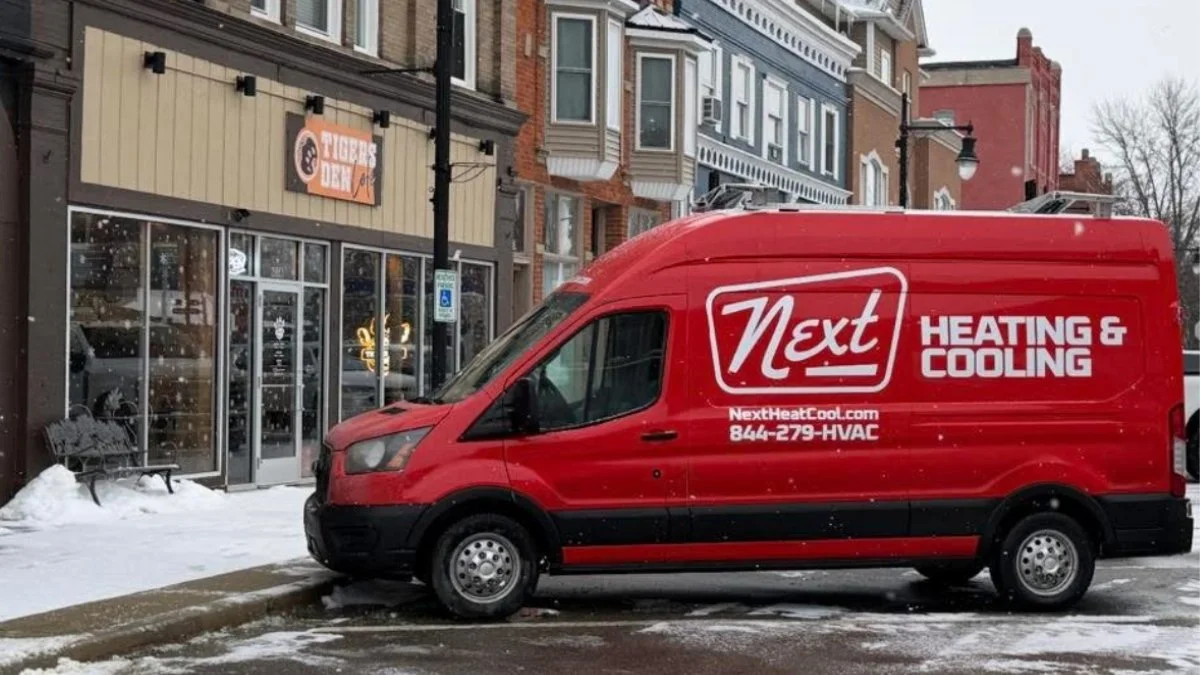
If you're replacing an air conditioner in Chesterfield Township this year, you're sitting on potential savings most homeowners don't know exist. Between DTE Energy rebates, federal tax credits, and manufacturer promotions, a qualifying high-efficiency AC system can put $900 to $2,300 back in your pocket.
Here's what we've learned installing heating and cooling services in Metro Detroit for over 35 years: most Chesterfield Township homeowners leave money on the table because they don't understand which equipment qualifies, how to apply, or how to stack multiple incentives.
This guide breaks down exactly what DTE and Consumers Energy offer for Chesterfield Township in 2026, which systems qualify, and the step-by-step process to claim every dollar you're entitled to. We'll use real equipment examples from Carrier, Lennox, and Trane—brands we install daily—and show you actual installed costs with rebates applied.
DTE Energy AC Rebate Programs for Chesterfield Township
Most of Chesterfield Township falls within DTE Energy's service territory. If you receive your electric bill from DTE, you qualify for their residential cooling rebates when you install qualifying equipment.
2026 DTE Central Air Conditioning Rebates
DTE offers tiered rebates based on system efficiency:
| Equipment Type | Minimum Efficiency | Rebate Amount |
|---|---|---|
| Central Air Conditioner | SEER2 15.2 or higher | $300 |
| Central Air Conditioner | SEER2 16 or higher | $450 |
| Air-Source Heat Pump | SEER2 16, HSPF2 8.1 | $600 |
| Air-Source Heat Pump | SEER2 18, HSPF2 9.0 | $900 |
What SEER2 actually means: In 2023, the Department of Energy changed how we measure air conditioner efficiency from SEER to SEER2. The new test procedure better reflects real-world operating conditions. A SEER2 15.2 system is roughly equivalent to the old SEER 16 rating. Higher numbers mean lower operating costs—a SEER2 18 system uses about 20% less electricity than a SEER2 15 system running the same hours.
Chesterfield Township Tip: If you're near the New Baltimore border or along the M-29 corridor, double-check your utility provider. A handful of homes in western Chesterfield are serviced by Consumers Energy, which has different rebate amounts and requirements.
DTE Smart Thermostat Rebate
When you install a qualifying AC system, DTE offers an additional $100 rebate for enrolling a smart thermostat in their Smart Savers program. Eligible models include:
- Ecobee SmartThermostat Premium
- Google Nest Learning Thermostat (3rd Gen or newer)
- Honeywell Home T9 or T10 Pro
- Carrier Cor or Infinity Touch
The Smart Savers program allows DTE to make minor temperature adjustments (typically 1-2 degrees) during peak demand days—usually 10-15 days per summer. You maintain full override control. In our experience installing these systems across Sterling Heights and Clinton Township, most homeowners never notice the adjustments.
Consumers Energy AC Rebates (Border Areas)
If your Chesterfield Township home is serviced by Consumers Energy—primarily properties west of Gratiot Avenue near the Macomb/New Haven border—you'll work with their rebate structure instead.
2026 Consumers Energy Cooling Rebates
| Equipment Type | Minimum Efficiency | Rebate Amount |
|---|---|---|
| Central Air Conditioner | SEER2 15.2 | $250 |
| Air-Source Heat Pump | SEER2 16, HSPF2 8.5 | $500 |
| Ductless Mini-Split Heat Pump | SEER2 18, HSPF2 9.5 | $600 per outdoor unit |
Consumers Energy also offers a $50 rebate for programmable thermostats and $75 for Wi-Fi-enabled smart thermostats when installed with qualifying equipment. Unlike DTE, Consumers doesn't require enrollment in a demand response program to receive the thermostat rebate.
For homeowners considering ductless systems, we've written a detailed comparison of ductless mini-split vs central air for Michigan homes that covers when each option makes sense.
Qualifying Equipment Requirements
Not every air conditioner qualifies for rebates. Both DTE and Consumers Energy require:
- Minimum efficiency ratings as listed in the tables above
- Professional installation by a licensed Michigan HVAC contractor
- Proper load calculation to ensure correct system sizing
- ENERGY STAR certification for most qualifying models
- Replacement of existing equipment (new construction typically doesn't qualify)
Equipment Examples That Qualify for Maximum Rebates
Based on current manufacturer specifications and what we're installing in Macomb County homes this season:
For DTE's $450 Central AC Rebate (SEER2 16+):
- Carrier Comfort 16 (SEER2 16.2)
- Lennox Merit ML16XC1 (SEER2 16.0)
- Trane XR16 (SEER2 16.5)
- Bryant Evolution 180B (SEER2 16.0)
- Rheem Classic RA16 (SEER2 16.0)
For DTE's $900 Heat Pump Rebate (SEER2 18, HSPF2 9.0):
- Carrier Infinity 24 (SEER2 18, HSPF2 10.0)
- Lennox XP25 (SEER2 20, HSPF2 10.0)
- Trane XV20i (SEER2 19.5, HSPF2 10.0)
These are variable-speed systems with two-stage or modulating compressors. They cost more upfront—typically $2,000-$4,000 more than base models—but the combination of utility rebates, federal tax credits, and lower operating costs closes that gap significantly.
Why we recommend heat pumps for Chesterfield Township: Heat pumps provide both cooling and heating. Modern cold-climate models work efficiently down to -15°F, covering 95% of Michigan winter days. Even if you keep your gas furnace as backup, a heat pump can handle shoulder seasons (October, November, March, April) at a fraction of the cost of running natural gas. We've covered the economics in detail in our heat pump cost guide for Metro Detroit.

How to Apply for Your AC Rebate
The rebate application process is straightforward, but timing matters. Both DTE and Consumers Energy require applications within 90 days of installation.
Step 1: Verify Your Utility Provider
Check your electric bill to confirm whether you're a DTE or Consumers Energy customer. If you're unsure, call the number on your bill—service representatives can confirm eligibility immediately.
Step 2: Choose Qualifying Equipment
Work with your HVAC contractor to select a system that meets minimum efficiency thresholds. At NEXT Heating & Cooling, we provide a rebate eligibility sheet with every estimate showing exactly which rebates your chosen system qualifies for and the total savings.
When you schedule a free estimate with a reliable HVAC contractor in Metro Detroit, ask specifically about rebate-eligible models. Any contractor worth hiring should know current utility rebate programs without you having to prompt them.
Step 3: Complete Installation
Your contractor must be licensed in Michigan. The Michigan Department of Licensing and Regulatory Affairs (LARA) requires mechanical contractors to carry specific licenses for HVAC work. NEXT Heating & Cooling operates under a Michigan Mechanical Contractor License through Premier Builder Inc.
Save all documentation:
- Itemized invoice showing equipment model numbers
- Manufacturer's specification sheet with SEER2/HSPF2 ratings
- Contractor license number
- Proof of payment
- Warranty registration
Step 4: Submit Your Rebate Application
For DTE Energy customers:
- Visit dteenergy.com/residential/energy-efficiency/rebates
- Create an account or log in using your DTE account number
- Select "Cooling Equipment" under residential rebates
- Upload required documentation (invoice, spec sheet, proof of payment)
- Submit application
For Consumers Energy customers:
- Visit consumersenergy.com/residential/save-energy/rebates
- Download the HVAC rebate application form
- Complete all required fields
- Attach supporting documentation
- Mail or upload online through the customer portal
Step 5: Receive Your Rebate
Processing times vary by season. Expect 6-8 weeks during normal periods (January-April, September-November) and up to 12 weeks during peak installation season (May-August). DTE typically issues rebates as account credits or checks. Consumers Energy primarily sends checks to the mailing address on file.
Both utilities send confirmation emails when applications are received and when rebates are approved. If you haven't received confirmation within two weeks of submission, call customer service.
Stacking Rebates with Federal Tax Credits
Here's where the savings multiply. The federal Energy Efficient Home Improvement Credit (25C)—extended through 2032 under the Inflation Reduction Act—provides additional incentives that stack with utility rebates.
2026 Federal Tax Credits for Cooling Equipment
| Equipment Type | Efficiency Requirement | Tax Credit |
|---|---|---|
| Central Air Conditioner | SEER2 16+, EER2 12.5+ | $600 |
| Air-Source Heat Pump | SEER2 16+, HSPF2 9.0+ | $2,000 |
The federal credit is claimed when you file your taxes using IRS Form 5695. Unlike rebates, which reduce your upfront cost, tax credits reduce your tax liability. If you owe $3,000 in federal taxes and claim a $2,000 heat pump credit, you'll owe $1,000.
Important limitation: The 25C credit has an annual cap of $1,200 for energy efficiency improvements combined, with a $600 sub-limit for single items like air conditioners. Heat pumps get a separate $2,000 credit that doesn't count against the $1,200 cap. This is why heat pumps offer dramatically better total incentives than AC-only systems.
Maximum Total Savings Example: A Chesterfield Township homeowner installing a qualifying heat pump (SEER2 18, HSPF2 10.0) can receive:
• DTE rebate: $900
• Federal tax credit: $2,000
• Smart thermostat rebate: $100
Total: $3,000 in combined incentives
Real Cost Example: New AC System in Chesterfield Township
Let's walk through actual installed costs using a real scenario we see weekly in Chesterfield Township: a 1,800-square-foot ranch built in 1985 with an existing 3-ton AC system that's 18 years old and failing.
Scenario 1: Standard Efficiency Central AC
Equipment: Carrier Comfort 14 (SEER2 14.3, minimum legal efficiency)
Installed cost: $5,800
DTE rebate: $0 (doesn't meet SEER2 15.2 minimum)
Federal tax credit: $0 (doesn't meet SEER2 16 minimum)
Net cost: $5,800
Scenario 2: Mid-Efficiency Central AC
Equipment: Trane XR16 (SEER2 16.5)
Installed cost: $7,200
DTE rebate: $450
Federal tax credit: $600
Net cost: $6,150
Cost difference vs. Scenario 1: $350 more after incentives for a system that uses 15% less electricity and comes with better warranty coverage (10-year parts vs. 5-year).
Scenario 3: High-Efficiency Heat Pump
Equipment: Carrier Infinity 24 Heat Pump (SEER2 18, HSPF2 10.0)
Installed cost: $11,400
DTE rebate: $900
Federal tax credit: $2,000
Smart thermostat rebate: $100
Net cost: $8,400
Cost difference vs. Scenario 1: $2,600 more after incentives, but this system provides both cooling and heating. In a typical Chesterfield Township winter, running the heat pump during shoulder seasons (when temperatures are above 25°F) instead of a gas furnace saves $400-$600 annually in natural gas costs.
Payback calculation: The additional $2,600 investment pays back in 4-5 years through reduced gas bills alone, not counting the 25% lower cooling costs compared to the base model.
These installed costs include everything: equipment, labor, permits, disposal of old equipment, electrical disconnect, condensate line, thermostat wire if needed, and startup. We provide detailed breakdowns in every estimate because transparency matters. If you're getting quotes significantly lower than these ranges, ask what's not included—or whether the contractor is licensed and insured.
For more detail on what drives these costs, we've published a comprehensive breakdown of AC condenser unit replacement costs in Southeast Michigan.
Why Proper Installation Matters More Than Equipment Brand
A $12,000 Lennox system installed incorrectly will perform worse and fail sooner than a $7,000 Trane system installed properly. The quality of installation determines:
- Refrigerant charge: Overcharging or undercharging by even 10% reduces efficiency by 20% and shortens compressor life
- Airflow: Systems need 400 CFM per ton of cooling. Too little airflow freezes the evaporator coil; too much reduces dehumidification
- Ductwork sealing: Leaky ducts waste 20-30% of cooled air in the average Michigan home
- Condensate drainage: Improper drainage causes water damage and mold growth
- Electrical connections: Loose connections create voltage drop, reducing compressor life
This is why working with NATE-certified HVAC technicians matters. NATE (North American Technician Excellence) certification requires passing comprehensive exams on installation best practices, refrigerant handling, and system diagnostics. It's the only industry-recognized certification focused on technical competence rather than sales.
Ready to Claim Your AC Rebate?
NEXT Heating & Cooling handles rebate documentation for every installation. We'll identify which systems qualify for maximum incentives, complete the paperwork, and ensure you receive every dollar available. Get honest diagnostics and fair pricing from NATE-certified technicians who've been serving Macomb County for over 35 years.
Schedule Your Free EstimateWhat to Do Before Installing a New AC System
Before committing to any equipment, address these three things:
1. Get a Manual J Load Calculation
A proper load calculation accounts for your home's square footage, insulation levels, window types, orientation, and occupancy to determine the correct system size. Oversized systems short-cycle (run in brief bursts), which reduces dehumidification and wears out components faster. Undersized systems run constantly and never reach comfortable temperatures.
We perform Manual J calculations on every installation. It takes 30-45 minutes and costs nothing—it's part of doing the job right. If a contractor quotes you a system size based solely on your home's square footage or "what was there before," that's a red flag.
2. Inspect Your Ductwork
Many Chesterfield Township homes built in the 1960s-1980s have original ductwork that's undersized, poorly sealed, or damaged. Installing a high-efficiency system on bad ductwork is like putting premium tires on a car with a bent frame—you won't get the performance you paid for.
Common ductwork problems we find in Macomb County homes:
- Disconnected flex duct in attics (common after insulation contractors work in the space)
- Crushed or kinked flex duct reducing airflow by 40-60%
- Unsealed joints leaking 20-30% of conditioned air into unconditioned spaces
- Undersized return ducts creating negative pressure and reducing system capacity
Ductwork inspection and sealing typically costs $400-$1,200 depending on accessibility and scope. It's not glamorous, but it's often the difference between a system that works as designed and one that underperforms from day one.
3. Consider Preventive Maintenance
Once you've invested in a new system, protect it. The Next Care Plan costs $5/month and includes two annual visits—a fall furnace tune-up and spring AC tune-up. We check refrigerant levels, clean coils, test electrical components, and catch small problems before they become expensive failures.
Data from our service records: homes on preventive maintenance plans experience 67% fewer emergency breakdowns and their equipment lasts an average of 3-5 years longer than homes with no regular service. For more on what these plans cover and why they pay for themselves, read our guide on what HVAC maintenance plans cover and why they pay off in Michigan.
Common Mistakes That Cost Chesterfield Township Homeowners Money
Installing Equipment That Barely Meets Minimum Efficiency
A SEER2 15.2 system qualifies for DTE's $300 rebate, but a SEER2 16 system gets $450—and uses less electricity every month. The equipment cost difference is typically $400-$600. The higher rebate and lower operating costs close that gap in the first year.
Waiting Until the System Fails Completely
Emergency replacements in July mean:
- No time to compare contractors or get multiple quotes
- Limited equipment selection (you get what's in stock, not what's optimal)
- Rushed installation without proper planning
- Potential for overlooking rebate opportunities in the urgency
If your AC is 12+ years old and showing signs of decline (reduced cooling capacity, rising electric bills, frequent repairs), plan the replacement during shoulder season (April-May or September-October) when contractors have more availability and you have time to research incentives.
Not Keeping Installation Documentation
Both utility rebates and federal tax credits require proof of purchase and equipment specifications. We've seen homeowners lose $900 in DTE rebates because they couldn't locate the invoice six weeks after installation. Create a home maintenance folder—digital or physical—and save everything.
Choosing a Contractor Based Solely on Price
The lowest bid often comes from contractors who:
- Skip load calculations and install the wrong size
- Don't pull permits (required in most Michigan municipalities)
- Use unlicensed technicians
- Carry inadequate insurance
- Don't warranty their labor
When the system underperforms or fails prematurely, you'll spend more fixing it than you saved on installation. We're not the cheapest option in Chesterfield Township—and we're honest about that. What we offer is 35 years of doing it right: proper load calculations, licensed technicians, permits pulled, manufacturer warranties honored, and labor guaranteed.
Frequently Asked Questions
Yes. Utility rebates and federal tax credits stack—you can claim both on the same equipment installation. The rebate reduces your upfront cost, and the tax credit reduces your tax liability when you file your return. They're administered by different entities and don't conflict.
Check your electric bill—the utility name appears at the top. Most of Chesterfield Township is DTE territory, but some western areas near Gratiot Avenue are serviced by Consumers Energy. If you're still unsure, call the customer service number on your bill and ask directly.
SEER2 is the updated efficiency measurement standard that took effect in 2023. It uses testing procedures that better reflect real-world conditions, including higher static pressure in ductwork. SEER2 ratings are typically 4-5% lower than old SEER ratings for the same equipment. A SEER 16 system under the old standard rates around SEER2 15.2 under the new standard.
No. Both DTE and Consumers Energy require professional installation by a licensed contractor to qualify for rebates. This protects you—improper installation voids manufacturer warranties, violates EPA refrigerant handling regulations, and typically violates local building codes. HVAC work in Michigan requires specific licensing for good reason: refrigerant is a controlled substance, electrical work must meet code, and improper installation creates safety hazards.
DTE and Consumers Energy both process rebates within 6-8 weeks during normal periods. During peak season (June-August), processing can take up to 12 weeks. You'll receive email confirmation when your application is received and again when the rebate is approved. If you haven't heard anything within two weeks of submission, call customer service to confirm receipt.
Modern cold-climate heat pumps work efficiently down to -15°F. Chesterfield Township averages only 5-8 days per winter below that threshold. Even if you keep your gas furnace as backup for the coldest days, a heat pump can handle October through April shoulder seasons at a fraction of the cost of running natural gas. We've installed hundreds of heat pumps across Macomb County over the past five years, and the technology has improved dramatically—these aren't the heat pumps from the 1980s that struggled below 40°F.
Denials typically happen for three reasons: equipment doesn't meet minimum efficiency requirements, application submitted after the 90-day deadline, or incomplete documentation. If denied, you can resubmit with corrected information. Contact the utility's rebate department immediately—representatives can often identify what's missing and help you fix the application. At NEXT Heating & Cooling, we handle rebate documentation for our customers and guarantee the paperwork is complete before submission.