

What Do Bad Air Ducts Smell Like? 5 Odors to Watch For

You turn on your furnace for the first time after a Michigan summer, and instead of warm, clean air, you get hit with a smell that makes you wrinkle your nose. Or maybe it's spring, and your AC kicks on with a musty odor that fills the whole house.
Strange smells coming from your vents aren't just unpleasant — they're often warning signs. After 35 years servicing HVAC systems across Macomb, Oakland, and St. Clair counties, we've diagnosed hundreds of duct odor problems. Some are simple fixes. Others point to serious issues that need immediate attention.
Here's what those smells actually mean, when you should worry, and when to call a professional. We'll cover the five most common duct odors we encounter in Michigan homes, what causes them, and what you should do about each one.
1. Musty or Moldy Smell (Most Common)
This is the smell we get called about most often in Southeast Michigan. It's that damp, earthy odor — like opening a basement that's been closed up all summer, or pulling clothes out of a washer that sat too long.
What causes it: Moisture accumulation in your ductwork. Michigan's humidity swings create perfect conditions for this. Your AC removes moisture from the air as it cools. That condensation is supposed to drain away through your system's drain line. But if your ducts aren't properly sealed or insulated, condensation can form inside the ducts themselves.
In older Michigan homes — especially those 1960s and 1970s ranches with ductwork running through crawl spaces or uninsulated basements — this is extremely common. The metal ducts get cold when the AC runs. Warm, humid air hits those cold surfaces. Condensation forms. Mold spores (which are everywhere) find a damp surface and start growing.
Health concern: Mold spores circulating through your home can trigger allergies, asthma, and respiratory issues. The EPA identifies mold in HVAC systems as a significant indoor air quality problem. If you smell mold, you're breathing mold spores.
What to do: Start by replacing your air filter with a high-quality MERV 11 or higher filter. Check your AC drain line to make sure it's not clogged. If the smell persists after 24-48 hours, you need a professional inspection. We often find mold growth around the evaporator coil, in return air ducts, or in sections of ductwork with poor insulation.
Professional duct cleaning can remove existing mold and debris. But if the underlying moisture problem isn't fixed — through proper duct sealing, insulation, or addressing drainage issues — the mold will come back. This is where our heating and cooling services in Metro Detroit focus on root cause diagnosis, not just treating symptoms.
2. Burning or Metallic Smell
This one gets homeowners worried — and sometimes it should. A burning smell from your vents can range from completely normal to "shut everything down and call us now."
The normal version: It's the first cold night in October. You fire up your furnace for the first time since April. You smell something burning for 15-20 minutes, then it goes away. That's dust burning off your heat exchanger and heating elements. Totally normal. It happens every fall across Michigan.
The concerning version: The burning smell doesn't go away after 30 minutes. Or it smells like burning plastic or rubber. Or it's accompanied by smoke or visible haze coming from your vents. These point to real problems:
- Overheating blower motor: The motor that moves air through your system can overheat if the bearings are failing or if airflow is restricted (usually from a severely clogged filter). This creates a hot electrical smell.
- Electrical issues: Wiring problems, failing capacitors, or electrical shorts produce a distinct burning plastic or rubber smell. This is a fire hazard.
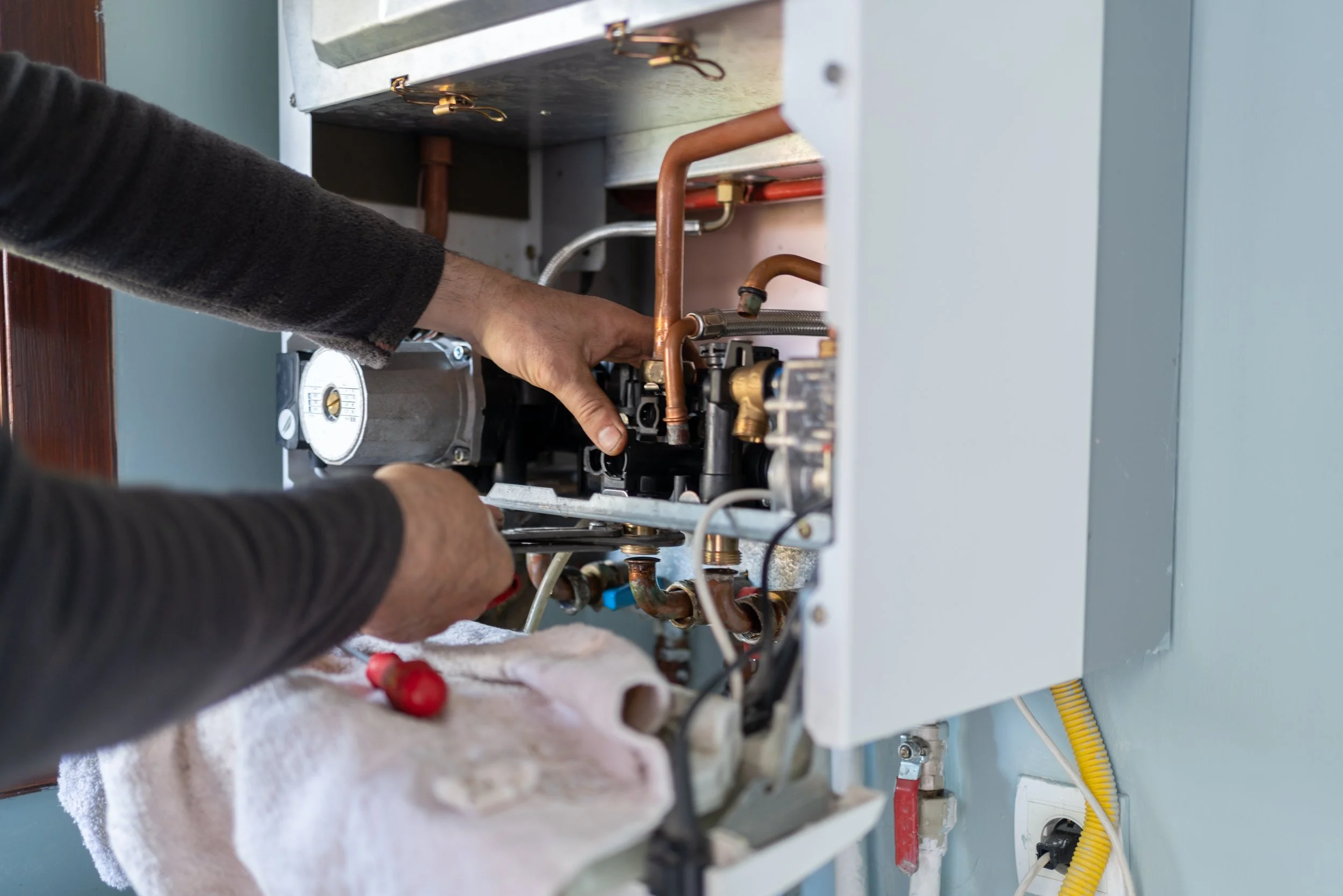
- Cracked heat exchanger: This is the serious one. Your furnace's heat exchanger keeps combustion gases separate from the air that circulates through your home. If it cracks, you can get incomplete combustion, which sometimes produces a metallic or chemical burning smell. This is also a carbon monoxide risk.
What to do: If it's the first furnace startup of the season and the smell fades in 20-30 minutes, you're fine. If it persists, shut down your system and call for service. Don't run a furnace that smells like burning plastic or electrical components.
This is exactly why we recommend seasonal maintenance through our Next Care Plan — we catch these issues during fall tune-ups before they become emergency calls on the coldest night of the year. For more on what those tune-ups include, check out our post on what your AC tech checks during tune-ups.
3. Rotten Egg or Sulfur Smell
This is the smell that should get your immediate attention. Natural gas is odorless, so utility companies add a chemical called mercaptan — which smells like rotten eggs or sulfur — so you can detect leaks.
If you smell rotten eggs near your furnace or coming from your vents:
- Don't turn any lights on or off (electrical sparks can ignite gas)
- Don't use your phone inside the house
- Get everyone outside immediately
- Call your gas company's emergency line from outside
- Call us after the gas company has cleared the scene
Natural gas leaks are rare, but they're serious. The gas company will come out 24/7, no charge, to check for leaks and make sure your home is safe.
The other rotten smell: Sometimes the rotten egg smell isn't gas — it's a dead animal in your ductwork. Mice, squirrels, birds, and even bats can get into duct systems, especially in older Michigan homes with gaps around where ducts connect to vents. If the smell is localized to one or two vents, and it's more decomposition than sulfur, that's likely the issue. Still unpleasant, but not an emergency. We can locate and remove the animal and seal the entry point.
4. Stale or Dusty Smell
This is the smell of neglect. It's not dramatic — just a stale, musty-dusty odor when your system kicks on. You might not even notice it until someone visits and asks, "What's that smell?"
What causes it: Years of accumulated dust, pet dander, pollen, and debris in your ductwork. Every time your system runs, it stirs up that dust and circulates it through your home. This is especially common in homes where:
- Air filters aren't changed regularly (or cheap fiberglass filters are used)
- Ductwork has never been professionally cleaned
- There are pets in the home
- The home is older with original ductwork
We see this constantly in Sterling Heights, Warren, and Clinton Township — homes built in the 1960s through 1980s where the ductwork has never been touched. One home we serviced last year in Troy had ductwork that hadn't been cleaned in 30+ years. When we opened it up, there was over an inch of dust coating the interior surfaces.
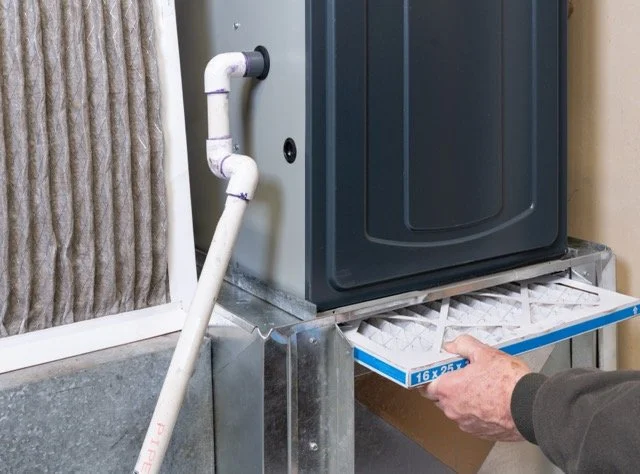
What to do: Start with a quality air filter. Upgrade from basic fiberglass (MERV 1-4) to at least MERV 8, or MERV 11 if you have allergies or pets. Change it every 60-90 days, not the 6 months the package claims.
If the smell persists, professional duct cleaning is the answer. The National Air Duct Cleaners Association (NADCA) recommends cleaning every 3-5 years for most homes, more often if you have pets, allergies, or recent renovations. Our residential HVAC services include thorough duct inspection and cleaning using NADCA-certified methods.
5. Chemical or Paint-Like Smell
A sweet, chemical smell — sometimes described as paint thinner, acetone, or formaldehyde — can come from several sources in your HVAC system.
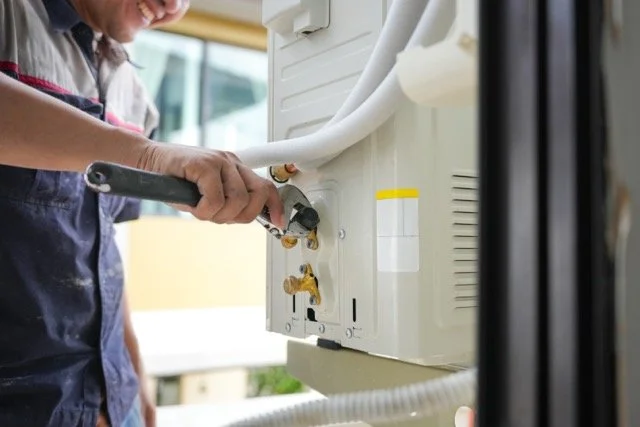
Refrigerant leak: This is the most common cause. Refrigerant (especially older R-22 and newer R-410A) has a sweet, slightly chemical odor. If your AC's refrigerant lines develop a leak, that smell gets pulled into your ductwork and distributed through your home. Besides the smell, you'll notice your AC isn't cooling as well, and your energy bills are climbing.
Refrigerant leaks need professional repair. The refrigerant is under pressure and requires EPA-certified technicians to handle. We locate the leak, repair it, vacuum the system, and recharge it to the proper level. Our NATE-certified technicians handle refrigerant work regularly across Southeast Michigan.
VOCs from construction or renovations: If you've recently remodeled, painted, installed new flooring, or had new furniture delivered, volatile organic compounds (VOCs) from those materials can get pulled into your return air ducts and circulated throughout your home. This usually fades over a few weeks as the materials off-gas.
Duct sealant or insulation: Newly installed or repaired ductwork sometimes has a chemical smell from mastic sealant or spray foam insulation. This should dissipate within a few days. If it doesn't, the installer may have used the wrong product or applied too much.
What to do: If the smell appeared suddenly and you haven't done any renovations, call for refrigerant leak testing. If it started after construction work, increase ventilation (open windows when weather permits) and run your system fan continuously to help clear the air faster. Consider upgrading to a higher MERV filter temporarily to capture more airborne particles.
What Causes These Odors? The Building Science
Understanding why ductwork develops odors helps you prevent them. Here's what we see most often in Michigan homes:
Moisture infiltration: Michigan's climate swings from humid summers to dry winters. Ductwork running through unconditioned spaces (attics, crawl spaces, uninsulated basements) experiences temperature extremes that create condensation. Poor duct insulation makes this worse. When ducts get wet, mold grows and metal components can rust, both creating odors.
Poor duct sealing: Studies show that typical duct systems lose 25-40% of the air they move through leaks in the ductwork. Those leaks also pull in dust, insulation fibers, and moisture from surrounding spaces. In Michigan basements, that means pulling in musty basement air. In attics, it means pulling in dust and potentially animal droppings.
Age and maintenance: Ductwork in homes built before 1990 often wasn't sealed properly to begin with. Decades of expansion and contraction from temperature changes open up joints and seams. Homes that have never had professional duct cleaning accumulate years of dust, pet dander, pollen, and skin cells — all organic material that can develop odors.
HVAC system issues: A failing blower motor, clogged evaporator coil, or undersized return air ductwork can all create airflow problems that lead to moisture accumulation and odors. We often find that thermostats not reaching set temperature are connected to restricted airflow from dirty ducts.
Signs Your Ductwork Needs Professional Service
Beyond obvious odors, watch for these indicators that your ductwork needs attention:
- Persistent odors after filter changes: If you've installed a new, quality filter and the smell continues after a week, the problem is deeper in the system
- Visible mold or dust around vents: Check your supply and return vents. If you see dust accumulation, dark staining, or fuzzy growth, that's what's inside your ducts
- Uneven heating or cooling with odors: Some rooms too hot, others too cold, plus strange smells usually indicates duct leakage or blockage
- Increased allergy symptoms: If household members develop or worsen respiratory symptoms, allergies, or sinus issues, poor indoor air quality from contaminated ducts may be the cause
- Higher energy bills: Leaky, dirty ductwork makes your HVAC system work harder, increasing energy consumption by 20-40%
- Dust accumulation on furniture: If you're dusting constantly and dust reappears within a day or two, your duct system is likely circulating excessive dust
We diagnose these issues regularly across Macomb County, Oakland County, and St. Clair County. If you're experiencing multiple symptoms, it's time for a professional duct inspection. Our technicians can assess whether you need cleaning, sealing, or more extensive ductwork repairs.
Cost Reality: Duct Cleaning vs. Duct Replacement in Michigan
Let's talk numbers. Michigan homeowners are practical about costs, and you deserve straight answers.
Professional duct cleaning: $400-$1,000 for a typical Michigan home (1,200-2,500 sq ft). This includes:
- Complete system inspection
- Cleaning of all supply and return ducts
- Brush and vacuum cleaning of registers and grilles
- Evaporator coil cleaning
- Blower motor and housing cleaning
- Before/after photos
Good duct cleaning takes 3-5 hours. If someone quotes you $99 for the whole house, they're not doing it right. NADCA-certified cleaning requires specialized equipment and trained technicians.
Duct sealing (Aeroseal or manual sealing): $1,500-$3,500 depending on home size and accessibility. This addresses leakage that causes energy waste and pulls in contaminated air. Aeroseal is a newer technology that seals leaks from the inside using aerosolized sealant particles. Manual sealing involves accessing ducts and sealing joints with mastic and metal tape.
The Department of Energy estimates that proper duct sealing can reduce heating and cooling costs by 20% or more. In a Michigan home spending $200/month on heating and cooling, that's $40/month or $480/year in savings. Duct sealing pays for itself in 3-7 years, then continues saving money for the life of the system.
Full ductwork replacement: $3,000-$8,000+ for complete duct system replacement. This is necessary when:
- Ducts are severely damaged or collapsed
- Asbestos-wrapped ducts need removal (common in pre-1980 homes)
- Ductwork is drastically undersized for current HVAC equipment
- Major home renovations require new duct routing
Most Michigan homes don't need full replacement. We're honest about this — if cleaning and sealing will solve your problem, that's what we recommend. We've been in business for 35+ years because we don't upsell unnecessary work. If you're also considering new equipment, read our guide on furnace replacement costs and best brands for Michigan.
How NEXT Heating & Cooling Diagnoses Duct Odors
When you call us about duct odors, here's our process — same approach whether you're in Mount Clemens, Royal Oak, or Shelby Township:
1. Visual inspection: We start with what we can see. We remove vent covers and inspect visible ductwork for dust accumulation, mold growth, moisture staining, or damage. We check your furnace and AC equipment for obvious issues like dirty coils or standing water.
2. Camera inspection: For persistent odors or suspected blockages, we use specialized duct cameras to see inside the ductwork without tearing into walls or ceilings. This shows us exactly what's in there — dust buildup, mold growth, disconnected sections, or animal intrusions.
3. Airflow testing: We measure airflow at multiple vents to identify restrictions or leakage. Poor airflow often causes the moisture problems that lead to odors. We also check static pressure in the duct system — high static pressure indicates restrictions that force your equipment to work harder.
4. Filter and equipment assessment: We check your current filter type and condition, inspect your evaporator coil, and examine your blower assembly. Often, the source of odors is at the equipment, not in the ducts themselves.
5. Honest assessment: We explain what we found, what's causing the odor, and give you options with real prices. If your ducts just need cleaning, we don't try to sell you replacement. If sealing will fix the problem, we don't push for cleaning. Our technicians aren't on commission — they're paid to diagnose accurately and fix problems correctly.
This diagnostic approach is part of why homeowners across Metro Detroit trust us for emergency HVAC service and routine maintenance. We show up on time, explain what we find, and give you the information to make good decisions.
Strange Smells From Your Vents?
NEXT Heating & Cooling has been diagnosing and fixing duct problems across Southeast Michigan for over 35 years. Our NATE-certified technicians will figure out what's causing the odor and give you honest options to fix it — no pressure, no upselling.
Schedule Your Duct InspectionFrequently Asked Questions
NADCA recommends duct cleaning every 3-5 years for most homes. Michigan homes may need more frequent cleaning if you have pets, family members with allergies or asthma, recent renovations, or if you've never had them cleaned. Homes with smokers or high dust accumulation should consider cleaning every 2-3 years. If you notice visible mold, excessive dust, or odors, don't wait — get them inspected and cleaned.
You can clean what you can reach — vacuum out your floor registers and wipe down return air grilles. But true duct cleaning requires specialized equipment: high-powered vacuum trucks, rotary brushes, and cameras to verify cleanliness. DIY attempts usually just stir up dust without removing it, making indoor air quality worse. Professional cleaning costs $400-$1,000 and actually removes accumulated debris from your entire duct system. It's worth paying for proper equipment and trained technicians.
Duct cleaning removes dust, debris, mold, and other contaminants that cause odors. But if the underlying problem isn't fixed — like moisture infiltration from leaky ducts or a drainage issue with your AC — the odors can return. That's why proper diagnosis matters. We identify what's causing the odor, not just treat the symptom. Sometimes cleaning is enough. Sometimes you also need duct sealing, better insulation, or equipment repairs to permanently solve the problem.
Proper duct cleaning for a typical Michigan home (1,200-2,500 sq ft) takes 3-5 hours. This includes setting up equipment, cleaning all supply and return ducts, cleaning registers and grilles, cleaning the blower and evaporator coil, and final inspection. Larger homes or homes with extensive ductwork take longer. Be skeptical of companies offering whole-house cleaning in 1-2 hours — they're not doing thorough work.
Standard homeowners insurance typically doesn't cover routine duct cleaning — it's considered maintenance. However, if duct contamination results from a covered event (like water damage from a burst pipe, fire damage, or storm damage), your policy may cover cleaning or replacement. Document everything with photos and get a written assessment from your HVAC contractor. Some Michigan insurers also cover mold remediation if it's caused by a covered peril. Check your specific policy and talk to your agent.
Duct cleaning removes accumulated dust, debris, and contaminants from inside your ductwork. Duct sealing fixes leaks and gaps in the ductwork that waste energy and pull in contaminated air from attics, basements, or crawl spaces. Many Michigan homes need both — cleaning to remove what's already there, and sealing to prevent future contamination and reduce energy waste. We test for leakage during our inspections and recommend sealing when we find significant air loss.
Yes. Contaminated ductwork circulates mold spores, dust mites, pollen, pet dander, and other allergens throughout your home every time your HVAC system runs. This can trigger or worsen asthma, allergies, sinus infections, and respiratory problems. The EPA identifies poor indoor air quality as one of the top five environmental health risks. If household members have unexplained respiratory symptoms that improve when away from home, contaminated ductwork may be the cause. Professional cleaning and proper filtration can significantly improve indoor air quality.