

What You're Paying For in an HVAC Service Call (Metro Detroit)

You just scheduled an HVAC service call in Sterling Heights, and the dispatcher mentioned a diagnostic fee. Then you start wondering: What exactly am I paying for? Is this just a trip charge? Why does it cost this much to have someone look at my furnace?
If you've ever felt confused about HVAC service call pricing, you're not alone. Most homeowners in Metro Detroit don't understand the breakdown—and honestly, many contractors don't explain it well. After 35 years serving Southeast Michigan through heating and cooling services in Metro Detroit, we've learned that transparency builds trust. So let's pull back the curtain and show you exactly what you're paying for when you call an HVAC contractor.
This isn't about justifying high prices. It's about helping you understand what fair pricing looks like—and what red flags to watch for when comparing contractors in Macomb, Oakland, and St. Clair counties.
What Is a Service Call Fee vs. Diagnostic Fee?
Let's start with the terminology, because these two terms get used interchangeably—but they're not quite the same thing.
A service call fee (sometimes called a trip charge) covers the cost of getting a technician to your home. This includes:
- Fuel and vehicle maintenance
- Drive time to your location in Troy, Warren, or wherever you are in Metro Detroit
- Scheduling and dispatch coordination
- Basic overhead (insurance, licensing, business operations)
In Southeast Michigan, standard service call fees typically range from $79 to $150, depending on the contractor and your location. Emergency service calls—like a furnace failure at 2 a.m. during a polar vortex event—usually cost more, often $150 to $300.
A diagnostic fee goes further. It covers the service call plus the technician's time and expertise to identify what's wrong with your system. This includes:
- Testing and troubleshooting (often 45 minutes to 90 minutes)
- Using specialized diagnostic equipment
- Analyzing system performance data
- Providing a written report with repair options and pricing
Diagnostic fees in Metro Detroit typically run $125 to $250. Many contractors, including Metro Detroit's reliable HVAC contractor NEXT Heating & Cooling, waive the diagnostic fee if you proceed with the recommended repair. That's fair—you're paying for the knowledge either way, but if the tech fixes your system, the diagnostic work becomes part of the repair.
Why the fee exists: You're not just paying for someone to show up. You're paying for a licensed, insured, NATE-certified technician who has invested thousands of hours learning how furnaces, air conditioners, heat exchangers, and refrigerant systems work. That expertise is what identifies the problem accurately the first time—instead of guessing and replacing parts until something works.
What Your HVAC Technician Does During a Service Call
Here's what actually happens during a diagnostic service call at a home in Rochester Hills or Shelby Township. This is the process our NATE-certified technicians follow—and what you should expect from any reputable contractor.
Initial Assessment and Safety Checks
Before touching anything, the technician assesses the situation. Is the furnace running? Is there a gas smell? Is the electrical panel tripped? Are there any immediate safety concerns like a cracked heat exchanger or carbon monoxide risk?
This takes 5 to 10 minutes and can literally save lives. We've found cracked heat exchangers in Macomb County basements that homeowners had no idea were leaking combustion gases into their living spaces.
Diagnostic Testing and Troubleshooting
Now the real work begins. Depending on the symptom you described, the technician will:
- Test electrical components: Using a multimeter to check voltage, amperage, and continuity on capacitors, contactors, transformers, and control boards
- Measure airflow: Using a manometer to check static pressure in the ductwork—critical for diagnosing why your AC isn't cooling properly or why some rooms are hotter than others
- Check refrigerant levels: Using manifold gauges to measure pressures and temperatures, identifying leaks or undercharge conditions
- Inspect heat exchangers: Looking for cracks, rust, or corrosion that could indicate a furnace is unsafe to operate
- Test thermostats and controls: Verifying calibration and proper communication with the equipment
- Examine ductwork and venting: Checking for disconnected ducts, improper venting, or combustion air issues
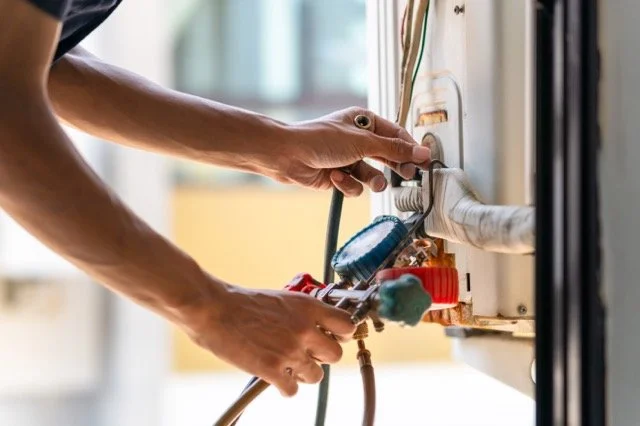
This process takes time. A thorough diagnostic on a furnace that won't ignite might take 60 to 90 minutes. The technician isn't just looking at the obvious problem—they're checking everything that could cause that symptom, ruling out possibilities, and confirming the root cause.
That's the difference between a qualified HVAC contractor in Metro Detroit and someone who just swaps parts until something works.
Documentation and Explanation
Once the technician identifies the problem, they should:
- Explain what's wrong in plain English (not HVAC jargon)
- Show you the failed component if possible
- Provide a written estimate for repair options
- Answer your questions without pressure
This is where honest contractors separate themselves from the commission-driven sales culture that plagues this industry. At NEXT Heating & Cooling, our technicians don't work on commission. They diagnose the problem, give you the facts, and let you decide. No upselling. No scare tactics.
Labor Rates: Why HVAC Techs Charge What They Do
Let's talk about labor rates, because this is where homeowners often feel sticker shock. In Metro Detroit, HVAC labor rates typically range from $85 to $150 per hour, depending on the complexity of the work and the contractor's experience level.
Why so much? Here's what goes into that hourly rate:
Skill Level and Training Costs
Becoming a licensed HVAC technician in Michigan isn't quick or cheap. It requires:
- Formal HVAC training (trade school or apprenticeship programs)
- Passing the Michigan Mechanical Contractor License exam
- EPA 608 certification for handling refrigerants
- NATE certification (North American Technician Excellence)—the gold standard for technical competency
- Ongoing continuing education to stay current with new equipment and building codes
Our technicians invest thousands of dollars and hundreds of hours every year in training. That expertise is what allows them to diagnose a failing capacitor in 15 minutes instead of spending two hours guessing.
Licensing and Insurance Requirements
In Michigan, HVAC contractors must carry:
- General liability insurance (typically $1 million to $2 million in coverage)
- Workers' compensation insurance
- Vehicle insurance for service trucks
- Bonding (for certain types of work)
These aren't optional. They protect you if something goes wrong. That protection costs money—and it's built into labor rates.
Overhead Costs
Every service truck you see in a Sterling Heights driveway represents significant overhead:
- Vehicle purchase or lease payments
- Fuel (especially relevant during Michigan winters when trucks run constantly)
- Maintenance and repairs
- Tool and equipment inventory (a fully stocked HVAC truck carries $15,000 to $30,000 in tools and parts)
- Office staff for scheduling, dispatch, and customer service
- Marketing and advertising
- Software for scheduling, invoicing, and customer management
When you pay $125 per hour for labor, the technician doesn't pocket $125. After overhead, insurance, taxes, and business costs, the actual profit margin is much smaller than most homeowners realize.
Emergency vs. Standard Rates
Emergency service calls—nights, weekends, holidays—cost more because you're asking a technician to leave their family dinner or wake up at 3 a.m. to fix your furnace during a January cold snap. Emergency rates in Metro Detroit typically run $150 to $200 per hour, plus the emergency service call fee.
Is it worth it? When it's 10 degrees outside and your furnace just quit, absolutely. But this is exactly why we recommend the Next Care Plan—our $5/month preventive maintenance plan that catches problems before they become 2 a.m. emergencies.
Parts Markup: Understanding Material Costs
Here's another area where homeowners get confused: parts pricing. You Google a furnace ignitor and see it listed for $35 online. Then your HVAC contractor charges you $95 for the same part. What gives?
Let's break down parts markup and why it exists.
Wholesale vs. Retail Pricing
HVAC contractors buy parts at wholesale prices from distributors. That $35 ignitor you found online? We probably pay $25 to $30 for it. But we charge $75 to $95 installed. Here's why:
- Inventory risk: We stock common parts on our trucks so we can fix your furnace today instead of making you wait three days for shipping. That means we've already paid for parts that might sit in inventory for months.
- Warranty support: When we install a part, we warranty the labor and the part itself. If it fails in six months, we come back and replace it at no charge. That warranty costs money.
- Overhead: Purchasing, inventory management, and logistics aren't free.
Typical parts markup in the HVAC industry runs 50% to 100% over wholesale cost. That might sound high, but it's standard across skilled trades—plumbing, electrical, automotive repair all work the same way.
OEM vs. Aftermarket Parts
Original Equipment Manufacturer (OEM) parts are made by the same company that built your furnace or AC unit—Carrier, Lennox, Trane, Rheem, Bryant, Goodman. Aftermarket parts are made by third-party manufacturers.
OEM parts cost more but typically offer better reliability and warranty coverage. Aftermarket parts are cheaper but may not fit as precisely or last as long. A reputable contractor will explain the difference and let you choose. We typically recommend OEM parts for critical components like heat exchangers, compressors, and control boards, but aftermarket parts can be a good value for things like fan motors or capacitors.
Why Markup Exists
Parts markup isn't price gouging. It's how contractors cover the cost of doing business. If we charged wholesale prices for parts, we'd have to charge higher labor rates or service call fees to make up the difference. The current model—moderate labor rates plus parts markup—is the industry standard because it works for both contractors and customers.
The key is transparency. You should always receive an itemized estimate showing parts costs and labor separately. If a contractor refuses to break down the pricing, that's a red flag.
Hidden Costs Homeowners Don't See
There are costs built into every service call that homeowners never think about—but they're real expenses that contractors must cover to stay in business.
Continuing Education and Certifications
HVAC technology changes constantly. New refrigerants (like the transition from R-410A to R-454B), high-efficiency equipment with complex control boards, smart thermostats, variable-speed systems—all of this requires ongoing training.
Our technicians attend manufacturer training sessions, industry conferences, and certification courses throughout the year. That's time away from billable work, plus tuition and travel costs. But it's what keeps them current on the latest Carrier, Lennox, and Trane equipment.
EPA 608 Certification
Federal law requires anyone handling refrigerants to hold EPA 608 certification. This certification costs money to obtain and must be maintained. It's not optional—it's a legal requirement to work on air conditioning and heat pump systems.
Tool and Equipment Investment
A professional HVAC technician's tool collection represents a significant investment:
- Refrigerant recovery machines: $1,500 to $3,000
- Manifold gauge sets: $300 to $800
- Multimeters and electrical testing equipment: $200 to $600
- Vacuum pumps: $300 to $800
- Combustion analyzers: $1,000 to $2,500
- Hand tools, power tools, and specialty tools: $3,000+
These tools don't last forever. They wear out, break, and need replacement. That cost is built into service pricing.
Vehicle Maintenance and Fuel
Service trucks in Metro Detroit rack up serious mileage. Between service calls in Clinton Township, Grosse Pointe Farms, and Lake Orion, a single truck can drive 200 to 300 miles in a day. Fuel costs, oil changes, tire replacements, brake jobs—it adds up fast.
And during Michigan winters, those trucks idle for hours to keep tools and parts from freezing. That's additional fuel cost that gets factored into pricing.
Business Insurance and Bonding
We mentioned insurance earlier, but it's worth repeating: comprehensive business insurance is expensive. General liability, workers' comp, vehicle insurance, and bonding can easily cost $20,000 to $50,000 per year for a small to mid-sized HVAC contractor.
But it's essential. If a technician gets hurt on the job, workers' comp covers their medical bills. If something goes wrong during a repair and your home is damaged, liability insurance covers it. You want your contractor to carry this coverage—and you're paying for that protection in their pricing.
What a Fair Service Call Should Include
Now that you understand what goes into service call pricing, let's talk about what you should expect from a professional, fair-priced service call in Metro Detroit.
Transparent Pricing Before Work Begins
You should know the diagnostic fee or service call fee before the technician arrives. No surprises. And before any repair work begins, you should receive a written estimate showing:
- Parts needed (with part numbers and descriptions)
- Labor hours estimated
- Total cost
- Warranty information
At NEXT Heating & Cooling, we provide this in writing every time. You approve the estimate before we touch a wrench.
Written Diagnostic Report
After diagnosing your system, the technician should provide a written report explaining:
- What's wrong
- Why it failed
- What needs to be repaired or replaced
- Any related issues discovered during the inspection
This documentation is valuable. It helps you understand the problem, and it gives you something to reference if you decide to get a second opinion or comparison quote.
Multiple Repair Options with Costs
Good contractors give you options. For example, if your 18-year-old furnace has a failed heat exchanger, a professional contractor should present:
- Option 1: Replace the heat exchanger (cost, pros, cons)
- Option 2: Replace the entire furnace (cost, pros, cons)
- Option 3: Do nothing and monitor the situation (risks explained)
You get to choose. The technician advises, but you decide. That's how it should work. If you're comparing furnace replacement costs in Troy, Michigan, having clear options helps you make an informed decision.
No-Pressure Decision Making
You should never feel pressured to decide on the spot. Take time to think about it. Get a second opinion if you want. A contractor who pressures you with "today only" discounts or scare tactics isn't someone you want working on your home.
Warranty on Labor and Parts
Reputable contractors warranty their work. At NEXT Heating & Cooling, we offer:
- 1-year labor warranty on repairs
- Manufacturer warranty on parts (typically 5 to 10 years depending on the component)
- Lifetime warranties on certain new equipment installations
Ask about warranty terms before agreeing to any work. And get it in writing.
Red Flags: When Pricing Doesn't Add Up
Not all HVAC contractors operate with the same integrity. Here are red flags that should make you pause and reconsider:
Unusually Low Service Call Fees
If a contractor advertises a $39 or $49 service call when everyone else charges $89 to $125, be skeptical. This is often a bait-and-switch tactic. They get in the door with a low fee, then push expensive repairs or replacements you may not need.
Fair pricing reflects real costs. If someone's pricing is dramatically lower than the market average, ask yourself: What are they cutting corners on? Licensing? Insurance? Training? Quality parts?
Pressure to Decide Immediately
High-pressure sales tactics—"This price is only good if you decide today"—are a huge red flag. Legitimate contractors don't operate this way. If your furnace truly needs replacement, that will still be true tomorrow. Take your time.
No Written Estimate
If a contractor refuses to provide a written estimate before starting work, walk away. Verbal estimates are worthless. You need documentation showing exactly what you're paying for.
Commission-Based Sales Tactics
Some HVAC companies pay their technicians on commission. This creates a conflict of interest—the tech makes more money if they sell you a new furnace instead of repairing the old one. Ask if the technician works on commission. If they do, get a second opinion before agreeing to major work.
At NEXT Heating & Cooling, our technicians are salaried. They have zero financial incentive to upsell you. They diagnose honestly and let you decide.
Refusal to Explain Charges
If you ask for an itemized breakdown and the contractor gets defensive or refuses, that's a problem. Transparent contractors welcome questions. They're proud of their work and happy to explain their pricing.
How to Get the Most Value from Your Service Call
Here's how to make sure you're getting your money's worth when you schedule HVAC service in Metro Detroit.
Ask Questions Before Booking
When you call to schedule, ask:
- What's your diagnostic fee or service call fee?
- Is it waived if I proceed with the repair?
- Are your technicians licensed and NATE-certified?
- Do you provide written estimates before starting work?
- What warranties do you offer on repairs?
A professional contractor will answer these questions clearly and confidently.
Request Itemized Estimates
Always ask for an itemized estimate showing parts and labor separately. This helps you understand what you're paying for and makes it easier to compare quotes if you're getting multiple opinions.
Understand What's Covered Under Warranty
If your furnace or AC is still under manufacturer warranty, some parts may be covered. Ask the technician to check warranty status before ordering parts. You might save hundreds of dollars.
Also, ask about labor warranty. If a repair fails three months later, will you pay full price for another service call, or is it covered?
Consider Preventive Maintenance Plans
This is where the Next Care Plan makes financial sense. For $5 per month ($60 per year), you get:
- Two annual home visits (fall furnace tune-up, spring AC tune-up)
- Priority scheduling when you need service
- 10% discount on repairs
- No service call fees for plan members
Regular maintenance prevents most emergency breakdowns. Our data shows that plan members experience 60% fewer emergency service calls than homeowners who skip maintenance. That's real money saved—not to mention the peace of mind knowing your system is checked twice a year.
If you're wondering whether furnace tune-ups are really necessary every year in Michigan, the answer is yes—especially given our brutal winters and the stress they put on heating equipment.
Build a Relationship with a Trusted Contractor
Don't just call whoever has the cheapest ad when your AC breaks in July. Find a contractor you trust—someone who's been in business for years, has good reviews, and treats you fairly. Build a relationship.
When you're a repeat customer, contractors prioritize you. You get faster service, better communication, and often better pricing because they value your long-term business.
We've served families in Macomb, Oakland, and St. Clair counties for over 35 years. Many of our customers have been with us for decades—because we show up on time, diagnose honestly, and charge fairly. That's the kind of relationship worth building.
Ready to Experience Honest HVAC Service?
NEXT Heating & Cooling has been keeping Michigan homes comfortable for over 35 years. Get honest diagnostics and fair pricing from NATE-certified technicians who show up on time. No commission-based sales. No pressure. Just straight answers and quality work.
Schedule Your Service CallFrequently Asked Questions About HVAC Service Call Costs
Standard service call fees in Metro Detroit typically range from $79 to $150, depending on the contractor and your location. Diagnostic fees (which include troubleshooting and diagnosis) usually run $125 to $250. Emergency service calls (nights, weekends, holidays) cost more, typically $150 to $300. Many contractors waive the diagnostic fee if you proceed with the recommended repair.
Yes, the diagnostic fee covers the technician's time and expertise to identify the problem. If you choose to proceed with the repair, many contractors (including NEXT Heating & Cooling) waive the diagnostic fee and roll it into the total repair cost. If you decline the repair, you pay the diagnostic fee for the service call and written report. This is standard practice across the HVAC industry.
HVAC labor rates ($85 to $150 per hour in Metro Detroit) reflect the technician's training, licensing, and certifications—plus business overhead like insurance, vehicle costs, tools, and inventory. When you pay $125 per hour, the technician doesn't pocket that amount. After overhead, insurance, taxes, and business expenses, the actual profit margin is much smaller. You're paying for expertise that diagnoses problems accurately the first time, not guesswork.
NATE (North American Technician Excellence) certification is the gold standard for HVAC technical competency. NATE-certified technicians have passed rigorous exams proving they understand how heating and cooling systems work—not just how to replace parts. While Michigan doesn't require NATE certification, it's a strong indicator of technical skill and professionalism. NATE-certified techs are more likely to diagnose problems accurately and recommend appropriate solutions instead of unnecessary equipment replacements.
Most professional HVAC contractors won't install customer-supplied parts, and here's why: If the part fails or causes additional damage, who's responsible? When contractors supply parts, they warranty both the part and the installation. If you supply the part and it fails, the contractor has no control over quality or warranty coverage. Additionally, online parts may be counterfeit, used, or incompatible with your specific equipment. It's safer and more reliable to let the contractor supply warranted parts.
Preventive maintenance is the best way to avoid emergency breakdowns. Annual furnace tune-ups (before winter) and AC tune-ups (before summer) catch small problems before they become 2 a.m. emergencies. NEXT Heating & Cooling's Next Care Plan costs just $5 per month and includes two annual tune-ups, priority scheduling, 10% repair discounts, and no service call fees for members. Our data shows plan members experience 60% fewer emergency calls than homeowners who skip maintenance. Regular maintenance saves money long-term.
Get a second opinion. Request itemized estimates from multiple contractors so you can compare parts, labor, and total costs. Be wary of estimates that are dramatically lower than others—that often indicates cut corners on quality, licensing, or insurance. Ask questions: Why does this repair cost this much? Are there less expensive options? What happens if I don't fix it right now? A reputable contractor will explain their pricing and give you options without pressure. If something doesn't feel right, trust your instincts and find another contractor.