

Why Does My Heat Pump Keep Running Constantly? | Michigan HVAC
You look out the window at your heat pump, and it's been running for hours. The outdoor unit never seems to shut off. Your utility bill is climbing. And you're wondering: is this normal, or do I have a problem?
Here's the truth from 35 years of servicing heat pumps across Southeast Michigan: the answer depends entirely on the outdoor temperature, how your system is sized, and whether certain components are working correctly. A heat pump running constantly during a polar vortex event in Sterling Heights might be operating exactly as designed. That same behavior on a 40-degree November afternoon in Troy signals a real problem.
At NEXT Heating & Cooling, our NATE-certified technicians diagnose heat pump issues daily across Macomb, Oakland, and St. Clair counties. This guide breaks down when constant operation is normal, when it's costing you money, and what to do about it.
How Heat Pumps Work Differently Than Furnaces
If you're used to a gas furnace, heat pump behavior can feel wrong at first. A furnace blasts hot air in short, intense cycles—maybe 15 minutes on, then 20 minutes off. It heats fast, shuts down, waits for the temperature to drop, then fires up again.
Heat pumps work the opposite way. They're designed to run longer cycles at lower intensity. Instead of creating heat by burning fuel, they extract heat energy from outdoor air and move it inside. Even when it's 20 degrees outside, there's still heat energy available—but the colder it gets, the harder your heat pump has to work to extract it.
Think of it this way: a furnace is like a sprint. A heat pump is like a marathon. It's supposed to run steadily, maintaining temperature rather than rapidly swinging it up and down. That's actually more efficient and more comfortable when the system is working correctly.
Michigan-Specific Reality: Heat pumps installed in Southeast Michigan homes are sized for our climate, which means they're optimized for temperatures between 30°F and 95°F. When we dip into single digits or below zero—like we do every January—your heat pump is operating outside its comfort zone. That's when auxiliary heat kicks in, and that's when you'll see the longest run times.
The key question isn't "Is my heat pump running constantly?" It's "Is it keeping up with the thermostat setting while running constantly?" If your home is staying at 70 degrees and the heat pump runs for hours, that might be normal. If your home is stuck at 65 degrees and dropping while the unit runs nonstop, you have a problem.
When Constant Running Is Actually Normal
Let's establish the baseline: there are specific conditions where a heat pump running continuously is expected behavior, not a malfunction. Understanding these scenarios will save you an unnecessary service call—and help you recognize when something genuinely needs attention.
The Balance Point: Where Physics Meets Michigan Weather
Every heat pump has what HVAC techs call a "balance point"—the outdoor temperature where the heat pump's output exactly matches your home's heat loss. Above that temperature, the heat pump cycles normally. Below it, the system runs continuously to keep up.
For most residential heat pumps installed in Michigan, that balance point sits between 25°F and 35°F, depending on your home's insulation, air sealing, and the heat pump's efficiency rating. A newer Carrier or Lennox variable-speed heat pump might maintain comfortable cycling down to 15°F. An older single-stage Goodman or Rheem unit might hit its limit at 30°F.
When we get those stretches in January where the temperature stays below 20°F for days—common in Mount Clemens, Clinton Township, and Warren—your heat pump will run almost constantly. That's not a defect. That's thermodynamics.
Extreme Cold Events: Polar Vortex Behavior
During polar vortex events, when temperatures drop below 10°F, even a perfectly functioning heat pump will struggle. At these temperatures, your auxiliary heat (electric resistance strips) takes over as the primary heat source, and the heat pump compressor may run continuously just to supplement.
If you're seeing this behavior during a cold snap and your home is staying warm, your system is doing exactly what it's designed to do. The outdoor unit might be covered in frost, the fan might run in reverse periodically for defrost cycles, and you might hear the compressor running steadily for 8-12 hours straight. All normal.

Recovery Mode: Catching Up After a Setback
If you lower your thermostat at night or when you're away, your heat pump will run continuously when you raise the temperature again. This is called "recovery," and it can take 2-4 hours depending on how much you dropped the temperature and how cold it is outside.
Unlike a furnace that can blast 140-degree air and recover quickly, a heat pump delivers air around 95-100 degrees—warm, but not hot. Recovery takes patience. If you set your thermostat back 5-7 degrees overnight, expect the heat pump to run straight through the morning until the home reaches your daytime setting.
The Thermostat Setting Test
Here's the simplest diagnostic you can do yourself: Is your home reaching and maintaining the temperature you've set? If yes, and the outdoor temperature is below 30°F, continuous operation is likely normal. If no—if the temperature is falling or stuck several degrees below your setting—you have an issue that needs professional diagnosis.
Our team at NEXT Heating & Cooling performs load calculations and system diagnostics for homeowners across Rochester Hills, Shelby Township, and Royal Oak who aren't sure if their heat pump behavior is normal. Sometimes it's a quick conversation. Sometimes it's a service call that identifies a real problem. Either way, you get clarity.
7 Common Causes of Problematic Continuous Running
When continuous operation isn't normal—when your home isn't staying warm, or the heat pump is running nonstop even in moderate weather—here are the seven causes we see most often in Southeast Michigan homes.
1. Dirty or Clogged Air Filter
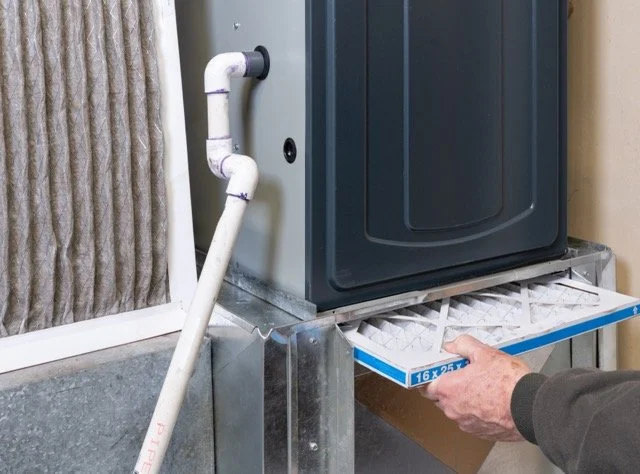
This is the most common cause, and the easiest fix. A clogged filter restricts airflow across the indoor coil, which reduces heat transfer efficiency. Your heat pump has to run longer to deliver the same amount of heat. In severe cases, restricted airflow can cause the system to overheat and shut down on safety limits, then restart and repeat the cycle.
Check your filter monthly during heating season. If it's gray, dusty, or you can't see light through it, replace it. Use a MERV 8-11 filter for most systems—higher MERV ratings restrict airflow unless your system is specifically designed for them. We see this issue constantly in older ranch homes in Macomb and St. Clair Shores where ductwork was undersized from the start.
2. Refrigerant Leak or Low Charge
Heat pumps rely on precise refrigerant charge to operate efficiently. If your system is even 10% low on refrigerant, efficiency drops by 20% or more. The compressor runs longer trying to compensate, and you'll notice the outdoor unit running constantly without delivering adequate heat.
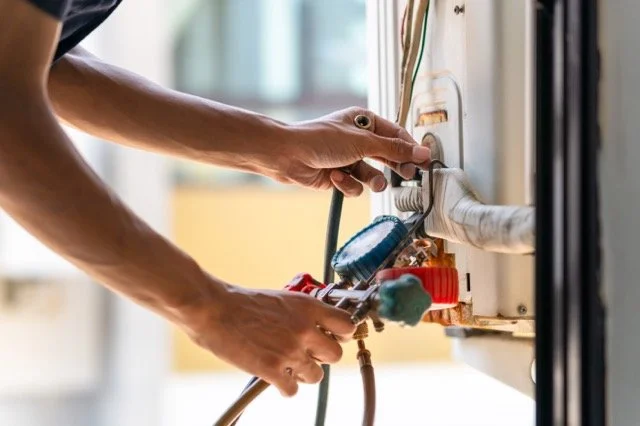
Signs of low refrigerant include ice buildup on the outdoor coil (even during heating mode), hissing sounds near the refrigerant lines, and indoor temperatures that never quite reach the thermostat setting. This requires a licensed technician with EPA 608 certification to diagnose and repair. Refrigerant doesn't "run out"—if it's low, there's a leak that must be found and fixed before recharging.
3. Thermostat Issues: Location, Calibration, or Wiring
A thermostat in the wrong location—near a drafty window, above a heat register, in direct sunlight—will misread your home's actual temperature and cause the heat pump to run continuously chasing a target it can't accurately measure.
Older mechanical thermostats can drift out of calibration. The thermostat might think it's 65 degrees when it's actually 68, so the heat pump keeps running. Loose or corroded wiring connections can cause intermittent communication problems between the thermostat and the heat pump control board.
We've replaced dozens of 15-20 year old thermostats in Bloomfield Hills and Lake Orion homes where upgrading to a modern programmable or smart thermostat immediately solved "phantom" heating problems. Sometimes the fix is that simple.
4. Undersized Heat Pump for Your Home
This is a sizing mistake made during installation, and it's more common than it should be. If a contractor installed a heat pump that's too small for your home's heat load—either because they didn't perform a proper Manual J load calculation, or because they undersized intentionally to save money—the system will run constantly trying to meet demand it was never designed to handle.
Undersized systems are especially problematic in larger two-story homes in Rochester Hills or Grosse Pointe Farms where heat loss through windows, walls, and attics exceeds the heat pump's capacity. The only real fix is replacing the outdoor unit with a properly sized system. That's an expensive mistake to correct, which is why working with a contractor who does load calculations correctly matters from the start.
5. Defrost Cycle Malfunctions
During heating mode, frost naturally builds up on the outdoor coil as moisture in the air condenses and freezes. Heat pumps have an automatic defrost cycle that reverses operation briefly to melt this frost. If the defrost cycle isn't working—due to a faulty defrost control board, a bad sensor, or a stuck reversing valve—frost accumulates and blocks airflow. The heat pump runs continuously but delivers less and less heat as the coil ices over.
You'll see thick ice covering the outdoor coil, sometimes encasing the entire unit. This is a clear sign of defrost system failure and requires professional repair. We see this frequently on heat pumps that are 10+ years old where the defrost timer or control board has failed.
6. Auxiliary Heat Not Engaging
When outdoor temperatures drop below the heat pump's effective range (usually 25-30°F), auxiliary electric heat strips should automatically engage to supplement the heat pump. If these strips aren't working—due to a tripped breaker, a blown fuse, a failed sequencer, or a faulty control board—the heat pump runs alone, struggling to keep up.
You'll notice this when outdoor temperatures are in the teens or single digits and your home temperature is slowly dropping despite the heat pump running constantly. Check your electrical panel for tripped breakers labeled "heat pump" or "auxiliary heat." If breakers are fine, this requires a technician to diagnose the control circuit.
7. Ductwork Leaks or Poor Insulation
If your ductwork is leaking—and studies show that 20-30% of conditioned air is lost through duct leaks in typical homes—your heat pump has to run much longer to compensate. Warm air escapes into your attic, crawlspace, or basement before it reaches your living spaces.
This is especially common in older homes in Detroit, Warren, and Sterling Heights where original ductwork was installed in the 1960s-1980s with minimal sealing. Ducts in unconditioned attics lose even more heat. We perform duct pressure testing and infrared camera inspections to identify these leaks. Sealing and insulating ductwork often reduces heat pump run time by 25-40%.
If you're experiencing issues similar to furnaces blowing cold air, the root cause might be shared—airflow restrictions, thermostat problems, or ductwork issues affect both systems.
The Cost Reality: What This Does to Your Energy Bills
Let's talk numbers. A heat pump running constantly when it shouldn't is expensive. Here's what Michigan homeowners actually pay when these problems go unfixed.
Normal vs. Problematic Energy Consumption
A properly functioning heat pump in Southeast Michigan uses approximately 3,000-5,000 kWh for heating during an average winter (November through March). At Michigan's average electricity rate of $0.17/kWh, that's $510-$850 for the season.
When a heat pump runs continuously due to low refrigerant, a clogged filter, or ductwork leaks, energy consumption can increase 30-50%. That same system now uses 4,500-7,500 kWh, costing $765-$1,275. You're paying an extra $250-$425 per winter for a problem that could be fixed for $150-$600 depending on the cause.
The Auxiliary Heat Cost Spike
Electric auxiliary heat is expensive—about 3-4 times the cost of heat pump operation per BTU delivered. If your auxiliary heat is running constantly because your heat pump isn't keeping up, or if it's stuck "on" due to a control problem, your electric bill can double or triple.
We've diagnosed homes in Troy and Chesterfield where faulty auxiliary heat controls caused $400-$600 monthly electric bills during January and February—bills that should have been $150-$200. One service call and a $300 repair saved them $1,000+ for the rest of the winter.
The Long-Term Equipment Cost
Beyond monthly bills, a heat pump running continuously under strain wears out faster. Compressors, motors, and contactors have finite lifespans measured in operating hours. A compressor designed to last 15-20 years with normal cycling might fail in 8-10 years if it runs twice as many hours due to an unresolved problem.
Compressor replacement costs $1,800-$3,500 depending on the system. In many cases, it's more cost-effective to replace the entire outdoor unit. That's why catching and fixing problems early—through regular maintenance and prompt repairs—saves thousands in the long run.
Our NEXT Care Plan includes seasonal tune-ups that catch these issues before they become expensive failures. At $5/month, it's the most cost-effective insurance you can buy for your heat pump.
When to Call a Technician vs. DIY Fixes
Some heat pump issues are homeowner-fixable. Others require a licensed technician with specialized tools and refrigerant certification. Here's how to know which is which.
DIY Fixes You Can Try First
Replace the air filter: This takes 2 minutes and costs $15-$30. Do this first, every time, before calling for service. If the filter is clogged, replace it and give the system 2-3 hours to see if performance improves.
Clear snow and ice from the outdoor unit: After heavy snow, gently clear snow away from the outdoor unit. Don't chip ice off the coils—you'll damage the fins. But clearing the area around the unit and removing snow blocking airflow is safe and helpful.
Check your thermostat settings: Make sure the thermostat is set to "heat" mode, not "emergency heat" (which bypasses the heat pump entirely and runs only auxiliary heat). Verify the temperature setting is where you think it is. Replace the thermostat batteries if it's battery-powered.
Check your electrical panel: Look for tripped breakers labeled for your heat pump or HVAC system. If you find one, reset it once. If it trips again immediately, don't keep resetting it—call a technician. That's a sign of an electrical fault or a failing component.
When to Call a Professional Immediately
Call a licensed HVAC contractor if you notice any of these symptoms:
- The outdoor unit is completely encased in ice or frost that doesn't melt during defrost cycles
- You hear grinding, squealing, or rattling noises from the outdoor unit
- The heat pump runs constantly and your home temperature is dropping
- You smell burning plastic or electrical odors from the indoor air handler
- The circuit breaker keeps tripping repeatedly
- You see ice or frost on the refrigerant lines inside your home
- The outdoor fan isn't spinning even though the compressor is running
These symptoms indicate problems that require diagnostic tools, refrigerant handling certification, or electrical expertise. Attempting DIY repairs on refrigerant systems or electrical components is dangerous and illegal in Michigan without proper licensing.
For heat pump issues during extreme cold, you might also want to understand what to expect from emergency HVAC service if you need after-hours help.
What a Service Call Actually Involves
When you call NEXT Heating & Cooling for a heat pump running constantly, here's what our NATE-certified technicians do:
- Visual inspection: Check the outdoor unit for ice buildup, physical damage, and proper clearances. Inspect the indoor air handler and ductwork.
- Thermostat verification: Test thermostat operation, calibration, and wiring connections.
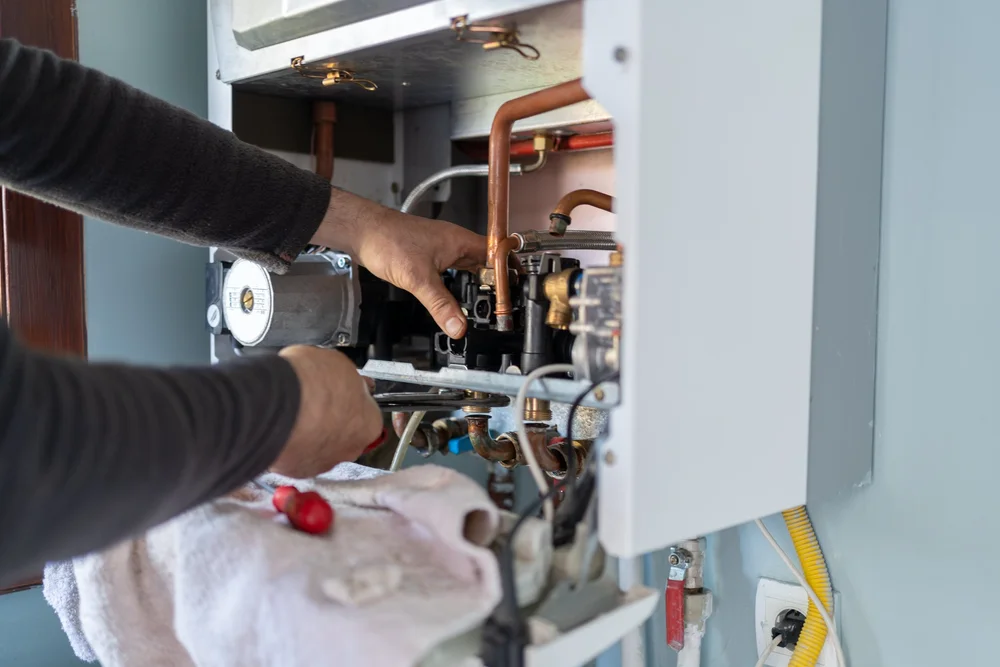
- Electrical testing: Measure voltage and amperage at the compressor, fan motor, and auxiliary heat elements. Check contactors, capacitors, and control boards.
- Refrigerant testing: Check refrigerant pressures and temperatures to verify proper charge. Look for signs of leaks.
- Airflow measurement: Verify airflow across the indoor coil meets manufacturer specifications. Check filter condition and duct connections.
- Defrost cycle testing: Observe defrost operation to ensure the system reverses correctly and melts frost as designed.
This diagnostic process takes 45-90 minutes depending on what we find. We'll explain what's wrong, what it costs to fix, and what happens if you don't fix it. No pressure, no upselling—just the information you need to make the right decision for your home and budget.
Heat Pump Maintenance That Prevents This Problem
Most heat pump problems that cause continuous running are preventable with regular maintenance. Here's what actually matters, based on 35 years of service data across Southeast Michigan.
The Seasonal Maintenance Schedule
Heat pumps work year-round, so they need maintenance twice a year—once before cooling season (spring) and once before heating season (fall). This is different from a furnace or AC, which only need annual service.
Fall heating tune-up (October-November): Clean outdoor coil, test defrost controls, verify refrigerant charge, check auxiliary heat operation, test thermostat accuracy, inspect electrical connections, lubricate motors, measure airflow.
Spring cooling tune-up (April-May): Clean outdoor coil, check reversing valve operation, verify refrigerant charge, test compressor performance, inspect condensate drain, check indoor coil, measure airflow.
These tune-ups catch small problems—a slightly low refrigerant charge, a dirty coil, a weak capacitor—before they cause the system to run constantly or fail completely. The cost of two annual tune-ups ($180-$300 total if you pay per visit) is far less than a single emergency repair call in January.
What the NEXT Care Plan Includes
Our $5/month NEXT Care Plan includes both seasonal tune-ups, priority scheduling when you need repairs, and 10% off all repair costs. For homeowners with heat pumps, it's the single best investment you can make in system longevity and reliability.
Members of the Care Plan rarely call us with "heat pump running constantly" problems, because we catch and fix the underlying causes during routine maintenance. That's the point—prevent the problem before it costs you money and comfort.
Regular maintenance is especially critical for heat pumps in lakefront homes near Grosse Pointe or St. Clair Shores, where salt air accelerates corrosion on outdoor coils. We see these systems need coil cleaning and corrosion protection more frequently than inland installations. If you're in a lakefront home, check out our guide on lakefront HVAC considerations.
Filter Changes: The Most Important Thing You Can Do
We can't emphasize this enough: change your filter every 30-60 days during heating season. Set a phone reminder. Buy filters in bulk. Make it automatic.
A $15 filter changed monthly prevents 50% of the service calls we make for heat pumps running constantly. It's the simplest, cheapest, most effective maintenance task you can do. If you have pets, a dusty home, or you run your heat pump fan continuously for air circulation, change filters every 30 days without exception.
Outdoor Unit Care
Keep the area around your outdoor unit clear. Trim back shrubs and vegetation to maintain 2-3 feet of clearance on all sides. Remove leaves, grass clippings, and debris that accumulate around the base. After storms, check for damage from falling branches or hail.
Never cover your heat pump outdoor unit in winter. Unlike an air conditioner, a heat pump runs during winter and needs full airflow. Covering it causes ice buildup, blocks airflow, and can damage the unit. It's designed to operate in Michigan winters uncovered.
When Maintenance Reveals a Bigger Problem
Sometimes a maintenance visit reveals that your heat pump is nearing the end of its useful life. Compressor efficiency has degraded, refrigerant leaks are becoming frequent, or electrical components are failing one by one. At that point, you're facing a decision: keep repairing an aging system, or replace it with a modern, more efficient unit.
We'll give you the information to make that choice: repair costs vs. replacement costs, expected lifespan of repairs, energy savings from a new system, available rebates and financing. What we won't do is pressure you into a sale. That's not how we operate. Our techs aren't on commission—they're paid to diagnose accurately and give you options, not to upsell equipment.
Heat Pump Running Constantly? Let's Figure Out Why
NEXT Heating & Cooling has been diagnosing and repairing heat pumps across Southeast Michigan for over 35 years. Our NATE-certified technicians will pinpoint the problem, explain your options, and give you honest pricing—no pressure, no upselling. Same-day service available.
Schedule Your Service CallFrequently Asked Questions
There's no fixed "minutes per hour" rule—it depends entirely on outdoor temperature and your home's heat loss. When outdoor temps are between 30-45°F, expect the heat pump to cycle normally: 10-15 minutes on, 10-15 minutes off. Below 30°F, it may run 30-45 minutes per hour or continuously. Below 20°F, continuous operation is normal if your home is maintaining temperature. If it's running constantly in moderate weather (above 35°F) and your home isn't reaching the thermostat setting, you have a problem.
Continuous operation during extreme cold won't damage a properly functioning heat pump—it's designed for that. However, continuous operation caused by a malfunction (low refrigerant, failed defrost controls, or electrical problems) puts excessive strain on the compressor and can shorten its lifespan significantly. The key is whether the system is running constantly because it's sized correctly and working hard in cold weather (normal), or because something is broken (problematic). If you're unsure, have a technician diagnose it.
No, unless you smell burning odors, hear loud mechanical noises, or see smoke. If the heat pump is running constantly but quietly and your home is staying warm, leave it running—that's likely normal cold-weather operation. If your home is getting colder despite the heat pump running, switch your thermostat to "emergency heat" mode temporarily (this bypasses the heat pump and runs only auxiliary heat), then call for service. Emergency heat is expensive to run, but it will keep your home warm while you wait for a technician.
If the outdoor unit is running but your home isn't getting warmer, the most common causes are: low refrigerant charge (leak), failed reversing valve (stuck in cooling mode), frozen outdoor coil (defrost system failure), or auxiliary heat not engaging during extreme cold. Check your air filter first—if it's clogged, replace it and wait 2-3 hours. If that doesn't help, you need a technician to diagnose the refrigerant system and controls. This isn't a DIY fix.
Repair costs depend entirely on the cause. A clogged filter costs $15-$30 and you can fix it yourself. A faulty thermostat runs $150-$350 installed. A refrigerant leak repair with recharge costs $400-$1,200 depending on leak location. A failed defrost control board runs $300-$600. A compressor replacement costs $1,800-$3,500, at which point replacement of the entire outdoor unit is often more cost-effective. Our diagnostic service call fee is $89-$129 (waived if you proceed with repairs), and we'll give you exact pricing before starting any work.
Absolutely. A clogged filter is the #1 cause of heat pumps running constantly when they shouldn't. Restricted airflow reduces heat transfer efficiency by 15-30%, forcing the heat pump to run much longer to deliver the same amount of heat. In severe cases, it can cause the system to overheat and shut down on safety limits, then restart repeatedly. Replace your filter every 30-60 days during heating season—more often if you have pets or run the fan continuously. This simple $15 fix prevents hundreds of dollars in wasted energy and potential repair costs.
Most residential heat pumps lose significant efficiency below 30-35°F, and become very inefficient below 20°F. Modern cold-climate heat pumps (Carrier Infinity, Lennox Signature, Trane XV) maintain better efficiency down to 5-10°F, but they still struggle in single digits and below zero. This is why heat pumps in Michigan have auxiliary electric heat—it supplements the heat pump when outdoor temps drop below its effective range. If you're considering a heat pump for a Michigan home, look for models with a heating capacity rating at 5°F, not just 47°F (the standard rating temperature).