

What Qualifies as an HVAC Emergency? When to Call 24/7 Service
It's 11 PM on a Tuesday in January. The temperature outside your Sterling Heights home has dropped to 4 degrees. Your furnace just shut down completely, and the house is already getting cold. You're standing in your basement, staring at a silent furnace, wondering: Is this an emergency? Should I call someone now, or wait until morning?
Here's the truth: not every HVAC problem is an emergency, but some absolutely are. Knowing the difference can save you money, protect your home, and—most importantly—keep your family safe. After 35 years of responding to emergency calls across Macomb, Oakland, and St. Clair counties, we've seen every scenario. Some required immediate action. Others could have waited.
This guide will help you make that call. We'll walk through what actually qualifies as an HVAC emergency, what can wait, and how to respond before the technician arrives. Whether you're dealing with a furnace failure during a polar vortex or an AC breakdown during a July heat wave, you'll know exactly what to do.
What Actually Qualifies as an HVAC Emergency
An HVAC emergency falls into one of three categories: immediate safety hazards, complete system failures during extreme weather, or scenarios that will cause significant property damage if not addressed quickly. Let's break down each one.
Safety Hazards That Require Immediate Action
These situations demand an immediate call to a licensed HVAC contractor or emergency services. Do not wait.
Gas leaks: If you smell natural gas (a rotten egg odor), leave the house immediately. Do not touch light switches, thermostats, or any electrical devices. Call 911 and your gas company from outside the home. Once authorities clear the home, call for emergency HVAC service to diagnose the leak source—often a cracked heat exchanger or faulty gas valve.
Carbon monoxide detector activation: If your CO detector sounds, evacuate immediately and call 911. Carbon monoxide is odorless and deadly. A malfunctioning furnace, blocked flue, or cracked heat exchanger can cause CO buildup. Never ignore a CO alarm, even if you "feel fine." CO poisoning symptoms—headache, dizziness, nausea—are easy to dismiss until it's too late.
Electrical issues with burning smells or sparks: If you see sparks, smell burning plastic or electrical odors, or notice scorch marks around your furnace or AC unit, shut down the system at the breaker immediately and call for emergency service. Electrical failures can cause house fires, especially in older homes with outdated wiring.
Refrigerant leaks: While not immediately life-threatening, significant refrigerant leaks (especially older R-22 systems) can be hazardous in enclosed spaces and require prompt attention. If you notice a sweet chemical smell near your AC unit or ice buildup on the refrigerant lines, shut down the system and call for service.
Michigan Safety Note: Older homes in Royal Oak, Grosse Pointe Farms, and Detroit often have furnaces installed in the 1980s or 1990s. These systems are more prone to cracked heat exchangers, especially after decades of Michigan winters. If your furnace is over 20 years old and showing any signs of malfunction, take safety symptoms seriously.
Complete System Failures During Extreme Weather
Comfort issues become emergencies when the weather turns extreme. In Michigan, that happens regularly.
No heat when outdoor temperatures drop below 15°F: This is a true emergency. Homes in Southeast Michigan lose heat quickly when furnaces fail during polar vortex events. Pipes can freeze within hours, causing thousands of dollars in damage. Vulnerable household members—elderly family members, infants, anyone with respiratory conditions—are at serious health risk.
We've responded to countless calls in Troy, Clinton Township, and Warren during January cold snaps where homeowners waited too long. By the time we arrived, pipes had already burst or the family had been forced to leave the home.
No AC during heat waves with vulnerable household members: If outdoor temperatures exceed 90°F with high humidity and you have elderly family members, infants, or anyone with heart or respiratory conditions in the home, a complete AC failure is an emergency. Heat-related illness is real, and Michigan summers—while shorter than southern states—can be dangerously humid.
Water Damage Scenarios
Active water leaks from HVAC equipment: If your furnace, AC unit, or water heater is actively leaking and the water is spreading across your basement floor or damaging finished spaces, this requires immediate attention. Water damage escalates quickly—ruined drywall, mold growth, structural damage. Shut off the water supply if possible and call for emergency service.
Condensate drain backups: In summer, AC condensate drain clogs can cause water to back up into your home. If you notice water pooling around your furnace or air handler, this needs prompt attention to prevent mold and water damage, especially in finished basements.
Furnace Emergencies Michigan Homeowners Face
Michigan winters test every furnace. Here are the furnace failures that qualify as emergencies and the ones that don't.
True Furnace Emergencies
Complete furnace failure when outdoor temps are below 15°F: This is the most common emergency call we receive in January and February. Whether you have a Carrier, Lennox, Trane, or Rheem furnace, a complete shutdown during extreme cold is dangerous. Homes built in the 1960s and 1970s—common in Macomb Township, Lake Orion, and Rochester Hills—lose heat faster due to poor insulation. Pipes in exterior walls and unheated crawl spaces can freeze within 4-6 hours.
Gas smell near the furnace: As mentioned earlier, this is a safety emergency. Leave the house and call 911. Once cleared, we'll inspect the heat exchanger, gas valve, and all connections.
Carbon monoxide detector activation: Any CO alarm tied to furnace operation is an emergency. We'll perform a combustion analysis to identify the source—cracked heat exchanger, blocked flue, improper venting, or backdrafting issues.
Flames or sparks visible from the furnace: Shut down the system immediately at the breaker and call for emergency service. This indicates a serious electrical or combustion problem.
Loud banging or explosion sounds at startup: This can indicate delayed ignition—gas builds up in the combustion chamber and ignites all at once. This is dangerous and can crack the heat exchanger or cause a fire. Shut down the furnace and call immediately.
Furnace Problems That Can Wait Until Morning
Not every furnace issue requires a middle-of-the-night service call. If outdoor temperatures are above 25°F and you can stay comfortable with space heaters or by closing off unused rooms, these issues can wait for regular business hours:
- Furnace short-cycling (turning on and off frequently): Annoying and inefficient, but not immediately dangerous if the house is staying warm enough.
- Reduced airflow or uneven heating: Often caused by dirty filters, closed vents, or ductwork issues. Uncomfortable, but not an emergency.
- Strange smells at first startup of the season: Dust burning off the heat exchanger is normal. If the smell persists beyond 20-30 minutes or smells like gas, then it's an emergency.
- Thermostat not responding correctly: Often a dead battery or wiring issue. You can troubleshoot this yourself or wait for regular service hours.
For homeowners enrolled in our $5/month HVAC maintenance plan, many of these non-emergency issues are caught during seasonal tune-ups before they escalate. Fall furnace inspections identify worn igniters, cracked heat exchangers, and failing blower motors before they leave you without heat in January.
Air Conditioning Emergencies in Southeast Michigan
Air conditioning failures feel less urgent than furnace breakdowns—until you're dealing with 95°F heat and 80% humidity in July. Here's when an AC failure becomes an emergency.
True AC Emergencies
Complete AC failure during heat waves (90°F+) with vulnerable household members: If you have elderly family members, infants, or anyone with heart, respiratory, or kidney conditions, a complete AC failure during a heat wave is a medical emergency. Heat exhaustion and heat stroke are real risks. We prioritize these calls.
Electrical issues with burning smells or sparks: Shut down the system at the breaker immediately. Electrical failures in AC units can cause fires, especially in older Bryant, Goodman, or Amana condensers with corroded wiring.
Refrigerant leaks causing ice buildup and complete cooling loss: While not immediately life-threatening, significant refrigerant leaks can cause the system to ice over completely, leaving you with no cooling. If you notice thick ice on the refrigerant lines or evaporator coil, shut down the system and call for service. Running the system with low refrigerant damages the compressor—a repair that can cost $1,200-$3,500.
Water leaking into living spaces from the air handler: If your upstairs air handler is leaking through the ceiling or water is pooling around your furnace, this requires immediate attention to prevent drywall damage, mold growth, and structural issues.
AC Problems That Can Wait
If outdoor temperatures are below 85°F or you can manage with fans and closed blinds, these issues can wait for regular business hours:
- AC running but not cooling efficiently: If the system is still providing some cooling, this is likely a refrigerant charge issue, dirty coils, or airflow problem. Uncomfortable, but not an emergency.
- Unusual noises without other symptoms: Rattling, buzzing, or humming sounds can indicate loose parts or failing components, but if the system is still cooling, it can wait.
- Thermostat not reaching set temperature: Often an airflow, insulation, or ductwork issue rather than an emergency equipment failure.
Many of these issues are preventable with spring AC tune-ups. Our technicians check refrigerant levels, clean coils, inspect electrical connections, and test capacitors—the components most likely to fail during the first heat wave. Homeowners who skip spring maintenance are the ones calling us in June when everyone else is too. If you're curious about what happens during a tune-up, read our guide on HVAC maintenance plan benefits Michigan homeowners need.
What Can Wait Until Regular Business Hours
Emergency service calls cost more—that's standard across the industry. If your situation doesn't fall into the categories above, you can save money by waiting for regular business hours. Here's what typically doesn't qualify as an emergency:
- Minor efficiency issues: Your system is running, but your energy bills are higher than expected. This suggests maintenance needs, not an emergency.
- Strange noises without safety concerns: If your furnace is making a new sound but still heating the house and you don't smell gas or see sparks, schedule a diagnostic during business hours.
- Uneven temperatures between rooms: This is almost always a ductwork or airflow issue, not an equipment emergency. We can diagnose and fix it during a regular service call.
- Thermostat glitches: If your thermostat isn't responding correctly but you can manually control the system at the unit, this can wait.
- Routine maintenance or tune-ups: Seasonal maintenance should be scheduled in advance—fall for furnaces, spring for AC. Don't wait until the first cold snap or heat wave.
If you're unsure whether your situation qualifies as an emergency, call us. We'll ask the right questions to help you decide. We don't upsell emergency service calls—if it can wait, we'll tell you.
How to Respond to an HVAC Emergency Before the Technician Arrives
You've determined you have a true HVAC emergency. Here's what to do while waiting for the technician to arrive.
Immediate Safety Steps
If you smell gas: Do not touch any electrical switches, thermostats, or light switches. Do not try to locate the leak. Leave the house immediately, taking family and pets with you. Call 911 and your gas company from outside. Do not re-enter until authorities clear the home.
If your carbon monoxide detector sounds: Evacuate immediately. Call 911. Do not assume it's a false alarm. CO poisoning symptoms (headache, dizziness, nausea, confusion) can make you think you're just tired or coming down with something. Get outside, get fresh air, and let emergency responders check the home.
If you see sparks or smell burning: Shut down the system at the thermostat first, then at the circuit breaker. Do not touch any wires or attempt repairs yourself. If you see active flames, evacuate and call 911.
System Shutdown Procedures
For non-life-threatening emergencies (complete system failure, water leaks, refrigerant leaks), shut down the system properly:
- Turn off the thermostat: Set it to "Off" mode, not just a lower temperature.
- Shut off power at the circuit breaker: Locate the breaker labeled "Furnace" or "HVAC" and flip it to the off position. For AC units, there's usually a disconnect box mounted near the outdoor condenser—flip the switch or pull the disconnect block.
- For gas furnaces: If you're comfortable doing so, turn the gas valve (located on the gas line leading to the furnace) to the "Off" position. The valve handle should be perpendicular to the pipe when off.
- For water leaks: Place towels or buckets to contain the water. If the leak is from a humidifier, turn off the water supply valve.
Temporary Comfort Measures
For furnace failures in winter:
- Close off unused rooms to concentrate heat in main living areas
- Use space heaters safely (never leave unattended, keep away from curtains and furniture, plug directly into wall outlets—not extension cords)
- Open cabinet doors under sinks to allow warm air to reach pipes
- Let faucets drip slightly to prevent pipe freezing
- Dress in layers and use blankets
For AC failures in summer:
- Close blinds and curtains to block direct sunlight
- Use fans to circulate air (box fans in windows can help create cross-ventilation)
- Stay hydrated—drink water even if you don't feel thirsty
- Move to the coolest room in the house (usually the basement)
- Take cool showers or apply cool, damp towels to your neck and wrists
- Avoid using the oven or stove—heat-generating appliances make things worse
Information to Have Ready
When you call for emergency service, have this information ready to help the technician diagnose the problem and bring the right parts:
- Make and model of your furnace or AC unit (usually on a label on the unit itself)
- Age of the system (if you know it)
- Symptoms: What's happening? When did it start? Any strange sounds, smells, or error codes on the thermostat?
- Recent changes: Any recent repairs, power outages, or storms?
- Outdoor temperature and indoor temperature
This information helps us prioritize the call and prepare. For example, if you have a 25-year-old Carrier furnace with a cracked heat exchanger, we know we're likely looking at a replacement rather than a repair, and we can set expectations accordingly.
Why NEXT Heating & Cooling Offers True 24/7 Emergency Service
Here's what frustrates Michigan homeowners: calling an HVAC company's "24/7 emergency line" and getting an answering service that takes a message and promises someone will call back "within an hour." An hour can feel like forever when it's 2°F outside and your house is dropping below 50°F.
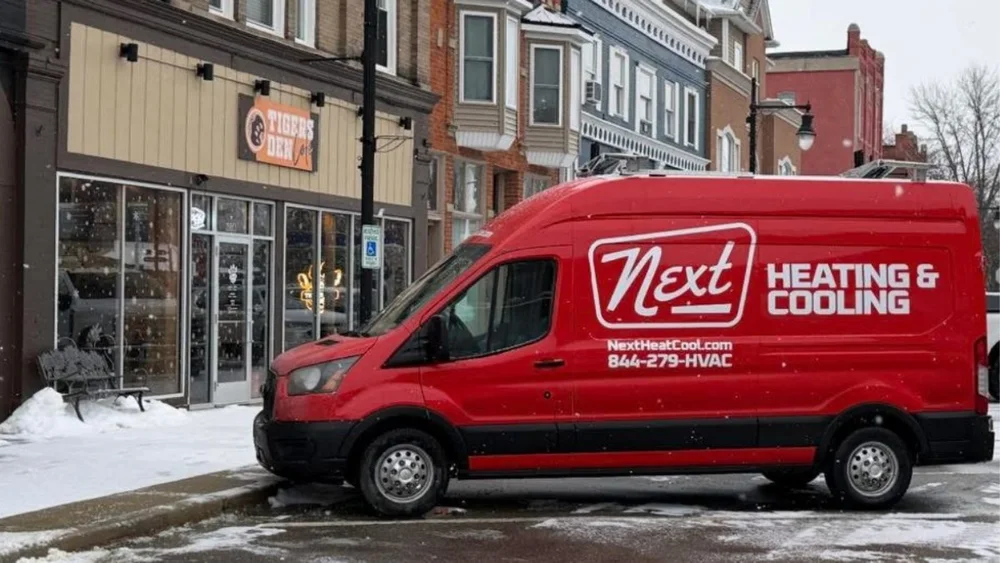
At NEXT Heating & Cooling, our emergency line connects you directly to a real person who can dispatch a NATE-certified technician immediately. We don't use answering services. We don't make you wait.
What True 24/7 Emergency Service Means
Real technicians on call: Our techs take emergency shifts. When you call, you're talking to someone who can actually help you, not a call center operator reading from a script.
Fully stocked service vehicles: Our trucks carry the most common emergency repair parts—igniters, blower motors, capacitors, contactors, thermostats. For many emergencies, we can fix the problem on the first visit without waiting for parts.
Transparent emergency pricing: Yes, emergency calls cost more—that's industry standard. But we tell you the cost upfront. No surprises. We don't inflate prices just because it's 2 AM. Our emergency service fee covers the after-hours dispatch, and repairs are priced the same as they would be during business hours.
Honest diagnostics: If your 25-year-old furnace has a cracked heat exchanger and it's not safe to run, we'll tell you. We'll also explain your options—temporary space heaters while you arrange a replacement, expedited installation scheduling, or financing options. We don't upsell. We don't push equipment you don't need. That's not who we are.
Why We Do This: NEXT Heating & Cooling operates under the same ownership as NEXT Exteriors—a company that's been serving Southeast Michigan since 1991. We built our reputation on old-school values: show up on time, do the work right, charge a fair price, and treat people's homes like they're our own. We're changing contractor culture, one service call at a time. Learn more about our story and credentials.
What to Expect When You Call
When you call our emergency line, here's what happens:
- We assess the situation: We'll ask questions to determine if it's a true emergency and what the likely cause is.
- We give you an estimated arrival time: Depending on your location and current call volume, we'll tell you when a technician can arrive. For true emergencies (no heat below 15°F, gas leaks, CO alarms), we prioritize immediately.
- We explain the emergency service fee: Transparent pricing, no surprises.
- The technician arrives with tools and parts: Our trucks are stocked for the most common emergency repairs.
- We diagnose the problem and explain your options: If it's a simple repair, we fix it. If it's a safety issue requiring shutdown, we explain why and what comes next. If you need a replacement, we give you options and honest pricing.
We serve all of Southeast Michigan—Mount Clemens, Sterling Heights, Clinton Township, Shelby Township, Troy, Warren, Royal Oak, Rochester Hills, Lake Orion, Bloomfield Hills, Grosse Pointe Farms, St. Clair Shores, Macomb, and Chesterfield. If you're in Macomb, Oakland, or St. Clair County and you need emergency HVAC service, we'll be there.

Preventing Future Emergencies
Most HVAC emergencies are preventable. Here's the truth: the homeowners who call us in a panic at midnight are almost always the ones who skipped their annual maintenance.
A fall furnace tune-up catches failing igniters, cracked heat exchangers, and weak blower motors before they leave you without heat. A spring AC tune-up identifies refrigerant leaks, failing capacitors, and dirty coils before the first heat wave. Our Next Care Plan covers both for $5/month—two seasonal tune-ups per year, priority scheduling, 10% off repairs, and no service call fees.
The cost of preventive maintenance is a fraction of what you'll pay for an emergency repair—or worse, a full system replacement because a minor issue wasn't caught in time. If you're interested in learning more about what maintenance catches before it becomes a crisis, read our post on HVAC maintenance plans in Macomb County and their real ROI.
Need Emergency HVAC Service in Metro Detroit?
NEXT Heating & Cooling provides true 24/7 emergency service across Southeast Michigan. Real technicians, honest diagnostics, transparent pricing. If you're facing an HVAC emergency, we're here to help.
Call for Emergency ServiceFrequently Asked Questions About HVAC Emergencies
Emergency service fees typically range from $150-$300 for after-hours dispatch, depending on the time and day. This covers the technician coming to your home outside regular business hours. The actual repair costs are the same as they would be during business hours—we don't inflate repair pricing just because it's an emergency. At NEXT Heating & Cooling, we provide transparent pricing upfront so there are no surprises. For homeowners enrolled in our Next Care Plan, emergency service call fees are waived.
For true emergencies—no heat below 15°F, gas leaks, carbon monoxide alarms, electrical hazards—we prioritize immediately and typically arrive within 1-2 hours depending on your location and current call volume. For less urgent issues during business hours, we can usually schedule same-day or next-day service. When you call our emergency line, we'll give you an honest estimated arrival time based on your situation and location in Macomb, Oakland, or St. Clair County.
First, check your thermostat batteries and circuit breaker—sometimes the fix is that simple. If the furnace still won't run, check the outdoor temperature. If it's below 15°F, this is an emergency—call for 24/7 service immediately. If it's above 25°F, you may be able to wait until morning by using space heaters safely and closing off unused rooms. Never smell gas? Leave the house immediately and call 911. Don't try to diagnose or fix gas-related issues yourself.
It depends on the outdoor temperature and who's in your home. If outdoor temps are above 90°F and you have elderly family members, infants, or anyone with heart or respiratory conditions, this is a medical emergency—call for immediate service. If temperatures are below 85°F and you can manage with fans and closed blinds, it can usually wait for regular business hours. However, if you're uncomfortable or concerned about vulnerable household members, don't hesitate to call. We'll help you assess the situation and prioritize accordingly.
The best prevention is regular seasonal maintenance—fall furnace tune-ups before winter and spring AC tune-ups before summer. During these visits, NATE-certified technicians inspect and clean critical components, identify worn parts before they fail, test safety controls, and ensure your system is ready for extreme weather. Most emergency breakdowns happen because a small issue went unnoticed and escalated. Our Next Care Plan provides two annual tune-ups for $5/month, catching problems before they leave you without heat or cooling when you need it most.
We provide 24/7 emergency HVAC service throughout Southeast Michigan, including all of Macomb County, Oakland County, and St. Clair County. This includes Mount Clemens, Sterling Heights, Clinton Township, Shelby Township, Macomb, Chesterfield, Troy, Warren, Royal Oak, Rochester Hills, Lake Orion, Bloomfield Hills, Grosse Pointe Farms, St. Clair Shores, and surrounding communities. If you're in Southeast Michigan and need emergency heating or cooling service, we'll be there.
We charge an emergency service fee for after-hours, weekend, and holiday calls—this is standard across the HVAC industry and covers the cost of having technicians on call 24/7. However, we provide transparent pricing upfront so you know exactly what to expect before the technician arrives. The actual repair costs are the same regardless of when the work is done—we don't inflate parts or labor pricing for emergencies. For Next Care Plan members, emergency service call fees are waived, and you receive 10% off all repairs.