

Why Is My Air Conditioning Unit So Loud? Michigan HVAC Tech

You're sitting in your living room in Sterling Heights on a hot July evening, and suddenly your air conditioner sounds like it's trying to launch itself into orbit. That's not normal. And if you're Googling "why is my air conditioning unit so loud" at 10 PM, you're probably wondering if you should shut it down, call someone immediately, or just wait until morning.
After 35 years keeping Michigan homes comfortable through humid summers and brutal winters, we've diagnosed thousands of noisy AC units across Macomb, Oakland, and St. Clair counties. Some noises are harmless quirks of aging equipment. Others are warning signs that ignoring them will cost you a compressor replacement or a full system failure in the middle of a heat wave.
Here's what you need to know about loud air conditioners — what causes the noise, when it's dangerous, and what to do about it. This isn't generic advice from a national blog. This is what we see every summer in Southeast Michigan homes, from 1960s ranches with original ductwork to newer builds with modern high-efficiency systems.
Normal AC Sounds vs. Problem Sounds
Let's start with the baseline: every air conditioner makes noise. The question is whether what you're hearing falls within normal operating range or signals a mechanical problem that needs attention.
Normal AC Operating Sounds
A properly functioning central air conditioning system typically operates at 50-60 decibels — about the volume of a normal conversation or background music. You'll hear:
- A low hum when the compressor kicks on: This is the outdoor unit starting up. It should be steady, not erratic.
- Gentle whooshing from vents: Airflow through ductwork. Higher fan speeds produce more noise, but it should be consistent.
- A click when the thermostat cycles: The relay switching the system on or off. One or two clicks are normal.
- Occasional expansion/contraction sounds: Metal ductwork expanding as cold air flows through it. These are brief pops or ticks, not continuous banging.
If your AC has been running quietly for years and suddenly sounds louder, something changed. Equipment doesn't get noisier with age unless parts are wearing out or coming loose.
Problem Sounds That Need Attention
These are the noises that should make you call a reliable HVAC contractor in Metro Detroit:
- Grinding or metal-on-metal screeching: Motor bearings failing or fan blades hitting something. This can destroy a motor if left unchecked.
- Loud banging or clanking: Loose components inside the unit, or a compressor with internal damage.
- High-pitched squealing: Belt-driven blower motor with a worn belt, or a motor bearing that's bone dry.
- Hissing or bubbling: Refrigerant leak. This is both a performance issue and an environmental concern.
- Buzzing or humming that won't stop: Electrical issue — contactor stuck, capacitor failing, or compressor struggling to start.
- Rattling that gets worse over time: Loose hardware, failing mounts, or debris inside the outdoor unit.
Pro Tip: If you hear grinding, squealing, or loud banging, shut the system down at the thermostat and call for service. Running equipment with severe mechanical noise can turn a $300 repair into a $2,500 compressor replacement.
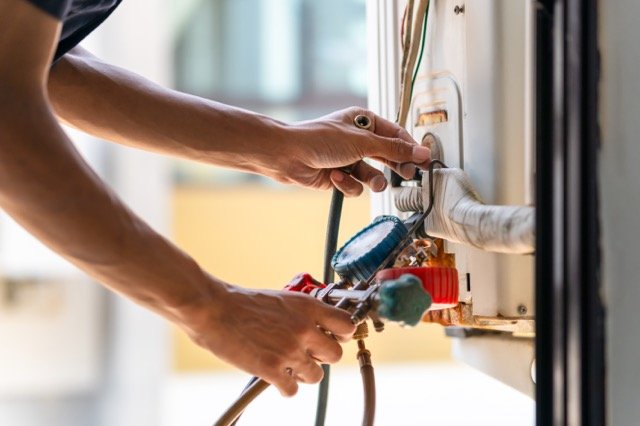
7 Common Causes of Loud AC Units
Here's what we actually find when homeowners call us about noisy air conditioners. These are the real culprits, in order of how often we see them during service calls across Southeast Michigan.
1. Loose or Damaged Fan Blades
The outdoor condenser unit has a large fan that pulls air through the coils to dissipate heat. If the fan blades are bent, cracked, or the mounting hardware has loosened, you'll hear rattling, clicking, or a rhythmic thumping sound.
This happens frequently in Michigan because of:
- Winter debris — sticks, leaves, ice chunks falling from roof edges
- Hail damage during summer storms
- Vibration over years of operation loosening the set screw on the fan shaft
Fan blade issues are usually straightforward repairs. A technician can replace damaged blades or tighten mounting hardware in under an hour. Cost typically runs $150-$350 depending on the part and labor.
2. Failing Compressor
The compressor is the heart of your AC system — it pressurizes refrigerant and pumps it through the coils. When a compressor starts to fail, it makes unmistakable sounds:
- Hard starting: A loud clunk or bang when it tries to turn on, sometimes followed by the breaker tripping
- Grinding or growling: Internal bearings wearing out
- Constant loud humming: Motor struggling but not starting (locked rotor)
Compressor failure is serious. These units are hermetically sealed — you can't rebuild them. Replacement costs $1,200-$3,500 depending on the system size and refrigerant type. On units older than 12-15 years, a failed compressor often means it's time to replace the entire AC system rather than sink money into aging equipment.
3. Refrigerant Leaks and Low Charge
If your AC is hissing, bubbling, or the outdoor unit is making a loud humming noise but not cooling effectively, you likely have a refrigerant issue. Low refrigerant charge forces the compressor to work harder, which increases noise and can lead to compressor failure.
Michigan homeowners need to pay attention to the R-410A refrigerant phase-out happening right now. If your system uses R-410A and develops a leak, refrigerant costs are climbing as the phase-out progresses. In many cases, repairing a leak and recharging the system costs nearly as much as upgrading to a newer, more efficient unit that uses the new A2L refrigerants.
4. Loose Panels or Hardware
This is the most common cause of rattling sounds — and the easiest fix. The sheet metal panels on outdoor condenser units are held in place with screws. Over time, vibration loosens them. Wind, temperature cycling, and years of operation all contribute.
You can often identify this yourself: carefully press on the side panels of the outdoor unit while it's running. If the rattling stops when you apply pressure, it's loose panels. Tightening the screws takes five minutes and costs nothing if you do it yourself, or $75-$150 for a service call if you want a technician to handle it and check for other issues.
5. Debris in the Outdoor Unit
We pull some interesting things out of outdoor AC units during service calls: sticks, leaves, acorns, plastic bags, kids' toys, and once, an entire bird's nest built between the fan and the coil.
Debris causes two problems:
- Mechanical noise: Objects hitting the fan blades create clicking, rattling, or thumping sounds
- Airflow restriction: Blocked coils reduce efficiency and force the system to run longer and harder
Michigan's seasonal cycles make this worse. Spring pollen clogs coils. Fall leaves pile up around units. Winter ice can form inside the cabinet if water gets trapped.
Prevention is simple: keep vegetation trimmed back at least two feet from the unit, clear leaves and debris seasonally, and don't store anything against the condenser.
6. Ductwork Problems
If the noise is coming from inside your house — banging, popping, or rattling from the vents or ductwork — the problem isn't the AC unit itself. It's the duct system.
Common ductwork noise issues include:
- Undersized ducts: Too much air forced through too small a space creates turbulence and whistling
- Loose duct connections: Sections coming apart create rattling or banging when air flows
- Expansion/contraction: Metal ducts expand when cold air flows through them, causing popping sounds
- Flex duct sagging: Creates air turbulence and flapping sounds
Ductwork issues are especially common in older Michigan homes — 1960s and 1970s ranches often have original duct systems that were never properly sealed or insulated. A ductwork inspection and sealing typically costs $500-$1,500 depending on the extent of the work, but it improves both noise levels and system efficiency.
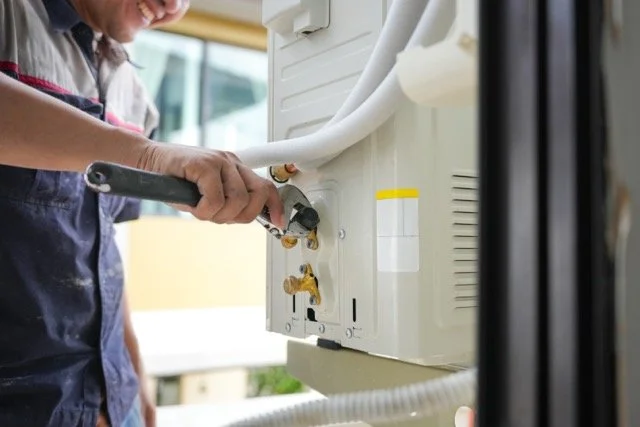
7. Aging Equipment and Worn Components
Air conditioners have a typical lifespan of 12-18 years in Michigan. As systems age, multiple components start wearing out simultaneously:
- Motor bearings lose lubrication and develop friction
- Mounting grommets harden and crack, losing their vibration-dampening properties
- Electrical contactors pit and arc, creating buzzing sounds
- Fan motors develop bearing wear
If your AC is 15+ years old and getting progressively louder each season, you're not dealing with one fixable problem — you're dealing with general wear across the entire system. At that point, the decision shifts from "repair" to "how much longer do I want to nurse this along before replacing it?"
How Michigan Weather Makes AC Noise Worse
Southeast Michigan's climate puts unique stress on air conditioning equipment. We don't have the year-round heat of the South, but our seasonal extremes create problems national HVAC blogs won't mention.
Winter Dormancy and Spring Startup
Your AC sits idle for 6-8 months every year. During that time:
- Lubricants in motor bearings can settle or dry out
- Debris accumulates in and around the unit
- Small animals sometimes nest inside the cabinet
- Moisture can freeze and cause minor component shifts
The first startup in late spring often reveals noise issues that developed over winter. This is why we see a surge of service calls in May and early June — homeowners turn on the AC for the first time and discover it sounds like a cement mixer.
Humidity and Corrosion
Michigan summers are humid. Dew points regularly hit 65-70°F in July and August. That humidity accelerates corrosion on electrical components, fasteners, and fan motors — especially on units that don't have good drainage or sit in shaded areas where moisture lingers.
Corroded electrical contactors buzz. Rusted fan bearings grind. Corroded mounting bolts lose their grip, allowing components to vibrate.
Temperature Swings and Thermal Cycling
Michigan can swing from 50°F to 90°F in the same week during spring and fall. That thermal cycling causes metal components to expand and contract repeatedly. Over years, this loosens fasteners, cracks mounting grommets, and stresses ductwork joints.
The popping and banging sounds you hear when the AC first kicks on? That's often ductwork expanding as cold air rushes through warm metal. It's more pronounced in homes with ductwork in unconditioned attics or crawl spaces.
When to Call an HVAC Technician
You don't need professional help for every noise. But you do need to know when a sound indicates imminent failure or safety risk.
DIY Troubleshooting Steps (Safe for Homeowners)
Before calling for service, try these steps:
- Turn off power at the disconnect box: Every outdoor AC unit has a shutoff box within sight of the unit. Flip it off before inspecting anything.
- Clear visible debris: Remove leaves, sticks, and anything else around or on top of the unit.
- Check for loose panels: Gently press on the side panels. If they move or rattle, tighten the screws.
- Inspect the fan blade: Look through the top grille (don't remove it). Is the blade bent, cracked, or obviously damaged?
- Listen at different locations: Is the noise coming from the outdoor unit, the indoor air handler, or the ductwork? Knowing the location helps the technician diagnose faster.
If those steps don't resolve the issue or you're uncomfortable doing them, call for service.
Signs You Need Immediate Professional Help
Call a licensed HVAC contractor right away if you notice:
- Grinding or metal-on-metal sounds: Motor or compressor damage in progress
- Electrical burning smell with buzzing: Arcing contactor or failing capacitor — fire risk
- Loud banging that shakes the unit: Internal compressor damage or catastrophic bearing failure
- Hissing with ice buildup on refrigerant lines: Leak or low charge causing coil freeze
- Unit won't start but makes loud humming: Locked compressor or failed start components
These aren't "wait and see" situations. Continuing to run equipment with these symptoms can turn a $300 repair into a $3,000 replacement.
What to Expect During a Service Call
When you call NEXT Heating & Cooling for a noisy AC diagnosis, here's what happens:
- System observation: The technician runs the unit and listens to identify the noise type and location
- Visual inspection: Checking for obvious damage, loose components, debris, and wear patterns
- Electrical testing: Measuring voltage, amperage, and capacitor function to rule out electrical causes
- Refrigerant pressure check: Verifying proper charge and looking for signs of leaks
- Component-specific testing: Isolating the fan motor, compressor, or other parts to pinpoint the source
Our NATE-certified HVAC technicians don't work on commission. We diagnose the actual problem, explain what's wrong in plain language, and give you options — repair, replace, or monitor. No pressure, no upselling equipment you don't need.

How Preventive Maintenance Stops Noise Before It Starts
The best way to deal with AC noise is to prevent it. Most of the issues we've covered — loose hardware, dirty coils, worn bearings, refrigerant leaks — develop gradually. Catching them early during routine maintenance prevents both the noise and the expensive failure.
What a Proper AC Tune-Up Includes
A legitimate air conditioning tune-up isn't just a guy showing up, checking the thermostat, and leaving. Here's what should happen:
- Coil cleaning: Both indoor evaporator and outdoor condenser coils
- Refrigerant pressure check: Verifying proper charge
- Electrical testing: Capacitor, contactor, and motor amp draw
- Condensate drain cleaning: Preventing clogs and water damage
- Blower motor inspection: Checking bearings and lubrication
- Thermostat calibration: Ensuring accurate temperature control
- Hardware tightening: All electrical connections and mounting bolts
- Ductwork inspection: Checking for leaks and loose connections
This level of service catches small problems — a slightly loose fan blade, early bearing wear, a capacitor starting to drift out of spec — before they turn into loud, expensive failures.
The NEXT Care Plan: $5/Month Prevents $3,000 Surprises
We offer the NEXT Care Plan — a $5/month HVAC maintenance subscription that includes two annual tune-ups (fall furnace service, spring AC service), priority scheduling, 10% repair discounts, and no service call fees.
Here's the cost reality: A compressor replacement runs $1,200-$3,500. A full AC replacement costs $3,500-$7,500 depending on size and efficiency. Ignoring a $150 repair that could have been caught during routine maintenance can cascade into equipment failure that costs 10-20 times more.
The Care Plan isn't a sales gimmick. It's preventive care that extends equipment life, maintains efficiency, and catches problems when they're still cheap to fix. Homeowners on the plan report fewer emergency calls, lower energy bills, and equipment that lasts 3-5 years longer than the industry average.
Repair vs. Replace: The Cost Reality
When your AC is loud and needs work, the decision isn't always obvious. Should you repair it or replace the whole system? Here's how we help homeowners in Troy, Warren, and Clinton Township make that call.
Typical Repair Costs for Common Noise Issues
Here's what you can expect to pay for repairs in Southeast Michigan (2026 pricing):
- Fan blade replacement: $150-$350
- Capacitor replacement: $150-$300
- Contactor replacement: $150-$350
- Blower motor replacement: $400-$800
- Compressor replacement: $1,200-$3,500
- Refrigerant leak repair + recharge: $500-$1,500
- Condenser fan motor: $300-$600
These prices include parts and labor from a licensed contractor with proper insurance and certifications. If someone quotes significantly lower, ask questions — they may not be licensed, insured, or using OEM parts.
The 50% Rule for Repair Decisions
Here's the guideline we use: If the repair cost exceeds 50% of a new system's price AND your equipment is more than 10 years old, replacement usually makes more financial sense.
Example: Your 14-year-old AC needs a $2,000 compressor replacement. A new 16 SEER system costs $4,500 installed. That's a 44% repair-to-replacement ratio, but the system is old. Even after the repair, you still have a 14-year-old unit with other components approaching end-of-life. The blower motor, capacitor, and coils could fail next season.
In that scenario, most homeowners choose replacement because:
- The new system comes with a 10-year parts warranty
- Modern equipment is 30-40% more efficient (lower electric bills)
- You eliminate the "next repair" uncertainty
- Newer systems are quieter by design
For a detailed breakdown of what AC replacement actually costs in Metro Detroit, see our guide on HVAC replacement costs in Michigan.
When Repair Makes Sense
Repair is the smart choice when:
- The unit is less than 8 years old
- The repair cost is under $500
- It's a single failed component (capacitor, contactor, fan motor)
- The system has been well-maintained and is otherwise healthy
- You're planning to sell the house within 2-3 years
We've repaired 20-year-old systems when it made sense for the homeowner's situation. The key is honest diagnosis and transparent cost discussion — not pushing a sale because it's more profitable.
Ready to Get Started?
NEXT Heating & Cooling has been keeping Michigan homes comfortable for over 35 years. Get honest diagnostics and fair pricing from NATE-certified technicians who show up on time. No commission-based sales. No pressure. Just straight answers and quality work.
Schedule Your ServiceFrequently Asked Questions
Sudden loud noises typically indicate a component failure or something coming loose. The most common causes are: loose fan blades or mounting hardware, a failing compressor, debris stuck in the outdoor unit, or worn motor bearings. If the noise is grinding, squealing, or banging, shut the system down and call for service — running it can cause more expensive damage.
Some startup noise is normal — a brief hum as the compressor engages, or a click from the relay. However, loud banging, grinding, or squealing at startup indicates a problem. Hard-starting compressors often signal a failing capacitor or compressor bearings. If your AC struggles to start or makes loud noises during startup, have it checked before the component fails completely.
A normal AC operates at 50-60 decibels — about the volume of a conversation. If your system is loud enough to hear clearly through closed windows, interferes with TV or conversation, or has gotten noticeably louder over time, something is wrong. Any grinding, squealing, or banging sounds are too loud and require immediate attention regardless of volume.
You can safely handle simple issues: clearing debris around the outdoor unit, tightening loose access panels, and checking for obvious obstructions. However, anything involving electrical components, refrigerant, or internal parts requires a licensed HVAC technician. Michigan law requires proper EPA 608 certification to handle refrigerant, and working on electrical components without training is dangerous.
Yes, usually. Noise often indicates mechanical inefficiency — worn bearings create friction, loose components cause vibration, and failing compressors work harder to achieve the same cooling. A struggling AC can use 20-40% more electricity than a properly functioning unit. Beyond the noise annoyance, you're paying higher electric bills for worse performance.
Repair costs range from $150 for simple fixes (tightening hardware, replacing a capacitor) to $3,500 for major component replacement (compressor). Most noise-related repairs fall in the $300-$800 range. The exact cost depends on what's causing the noise, the age of your equipment, and whether parts are still available. A diagnostic service call with NEXT Heating & Cooling will identify the problem and provide upfront pricing before any work begins.
The NEXT Care Plan includes two annual tune-ups that catch most noise issues before they become problems. If your AC does need repair, Care Plan members get 10% off all parts and labor, priority scheduling, and no service call fees. Many noise issues — loose hardware, dirty coils, worn contactors — are caught and fixed during routine maintenance, preventing the loud failure entirely. Learn more at nextheatcool.com/next-care-plan.