

Why Is My Air Conditioning Unit So Loud? | NEXT Heating

You're sitting in your living room in Sterling Heights on a humid July evening when you notice it—your air conditioning unit sounds like it's grinding metal, banging around, or squealing loud enough to hear through closed windows. That's not normal. And if you're Googling "why is my air conditioning unit so loud" at 10 PM, you're probably wondering whether you need to call someone now or if it can wait until morning.
After 35 years of keeping Southeast Michigan homes comfortable, our NATE-certified HVAC technicians have heard every AC noise imaginable. Most loud air conditioning units aren't just annoying—they're telling you something specific is failing. Some noises mean you need immediate repair. Others give you a few days. But none of them should be ignored.
Here's what those sounds actually mean, when you need to shut your system down immediately, and how much it'll cost to fix in Metro Detroit.
The Most Common AC Noises (And What They Mean)
Different sounds point to different problems. Here's what we diagnose most often when homeowners in Macomb County and Oakland County call us about loud AC units:
Grinding or Metal-on-Metal Scraping
This is the sound of motor bearings failing inside your blower assembly or condenser fan motor. When bearings wear out—often from years of use or lack of lubrication—the metal shaft grinds directly against the motor housing. You'll hear this coming from either your outdoor condenser unit or your indoor air handler.
What it means: The motor is about to seize. If you keep running it, you'll destroy the motor completely and need a full replacement instead of just new bearings. Turn the system off and call for service.
Banging or Clanking
Loud banging usually means something has come loose inside your system—a connecting rod, a piston pin in older reciprocating compressors, or a mounting bracket. In newer scroll compressors (standard in most Carrier, Lennox, and Trane units installed after 2010), banging often signals internal compressor failure.
What it means: Loose or broken internal components. If it's the compressor, you're looking at a major repair. If it's a fan blade or mounting hardware, it's a simpler fix—but it won't fix itself.
Squealing or Screeching
High-pitched squealing coming from your outdoor unit typically means the condenser fan motor bearings need lubrication or replacement. If the squeal comes from your indoor air handler, it could be the blower motor or—in older systems—a worn belt (though most modern AC systems use direct-drive motors without belts).
What it means: Bearing failure or belt wear. This gives you a little more time than grinding sounds, but not much. Bearings that squeal today will seize within weeks.
Hissing or Bubbling
Hissing sounds—especially if they're continuous and loud—usually indicate a refrigerant leak. You might also hear bubbling if refrigerant is escaping through a pinhole leak in the evaporator coil or condenser coil. Refrigerant leaks are serious: modern R-410A refrigerant operates at higher pressures than older R-22, so leaks can be more pronounced.
What it means: Refrigerant leak. Your system will lose cooling capacity, run constantly, and eventually damage the compressor if refrigerant levels drop too low. This requires immediate professional repair—refrigerant handling requires EPA 608 certification.
Buzzing or Humming
Electrical buzzing from your outdoor condenser unit often points to a failing contactor, capacitor, or compressor motor. If the unit hums loudly but won't start, it's usually a bad capacitor—the component that gives your compressor and fan motors the electrical jolt they need to start up.
What it means: Electrical component failure. Capacitors are inexpensive and quick to replace. Compressor motor issues are more serious. Either way, don't ignore electrical buzzing—it can lead to complete system failure or even electrical fire risk.
Clicking
Some clicking is normal—your thermostat clicks when it calls for cooling, and your contactor clicks when it engages the compressor. But rapid, repeated clicking or clicking that won't stop usually means a failing relay, contactor, or control board. If your compressor tries to start, clicks off, tries again, and keeps cycling, that's called "short cycling" and it points to electrical or refrigerant issues.
What it means: Normal if occasional. Abnormal if constant or rapid. Often tied to electrical controls or low refrigerant pressure preventing the compressor from starting properly.
Why Michigan AC Units Get Louder Over Time
Southeast Michigan's climate is tough on air conditioning systems. Here's why AC units serving homes in Troy, Rochester Hills, and Warren get progressively louder as they age:
Humidity Accelerates Wear
Michigan summers aren't just hot—they're humid. When your AC runs for long stretches pulling moisture out of the air, condensation builds up on your evaporator coil. Over time, this moisture can corrode components, rust mounting hardware, and degrade motor bearings. The result: more friction, more noise.
Lack of Annual Maintenance
Most homeowners don't think about their AC until it stops cooling. But annual maintenance—cleaning coils, lubricating motors, tightening electrical connections, checking refrigerant pressure—keeps components running quietly. Skip maintenance for three or four years and you'll hear the difference. Dirty coils force your system to work harder. Loose mounting bolts let components vibrate. Worn bearings grind.
That's exactly why we built the Next Care Plan—a $5/month preventive maintenance subscription that includes spring AC tune-ups and fall furnace service. Our techs catch the small stuff (loose fan blades, dirty coils, low refrigerant) before it becomes the loud stuff.
Ductwork Issues in Older Homes
Many homes in Metro Detroit were built in the 1960s and 70s with ductwork that wasn't properly sized or sealed. When your AC pushes air through undersized or leaky ducts, you'll hear whistling, rattling, or banging sounds as air struggles to move through the system. This isn't technically an AC problem—it's a ductwork problem—but it makes your whole system louder.
Age and Normal Wear
The average central air conditioner lasts 12-15 years in Michigan. As systems age, components simply wear out. Bearings lose lubrication. Compressor mounts sag. Fan blades get slightly bent or imbalanced. Even well-maintained systems get louder in their final years—it's physics, not neglect.
When a Loud AC Unit Means You Need Immediate Repair
Some noises are urgent. If you hear any of the following, turn your AC off at the thermostat and the circuit breaker, then call a reliable HVAC contractor in Metro Detroit for emergency service:
Shut your system down immediately if you hear or notice:
- Grinding metal sounds: Motor bearings are seizing. Running the system will destroy the motor.
- Burning smell with buzzing: Electrical component overheating. Fire risk.
- Loud hissing with visible ice on refrigerant lines: Major refrigerant leak. Compressor damage imminent.
- Repeated clicking with no startup: Compressor trying and failing to start. Electrical or mechanical failure.
- Banging followed by complete shutdown: Internal compressor failure. Catastrophic damage possible.
We offer 24-hour emergency HVAC service across Macomb, Oakland, and St. Clair counties because we know AC failures don't wait for business hours. If your system is making any of these sounds, don't wait until morning—call now.
What Your HVAC Tech Checks During a Noise Diagnosis
When you call us about a loud AC unit, here's exactly what our technicians do during the diagnostic visit:
Step 1: Listen and Locate the Source
We start by running your system and listening carefully to identify where the noise is coming from—outdoor condenser, indoor air handler, ductwork, or thermostat wiring. Different locations point to different components.
Step 2: Visual Inspection
We open up the condenser cabinet and air handler to visually inspect all moving parts: fan blades, motor mounts, compressor, contactor, capacitor, and electrical connections. We're looking for obvious damage—bent blades, loose wiring, rust, corrosion, or oil leaks around the compressor.
Step 3: Test Electrical Components
Using a multimeter, we test voltage and amperage at the contactor, capacitor, and compressor terminals. A failing capacitor will show incorrect microfarad readings. A struggling compressor will draw higher-than-spec amperage. Loose connections will show voltage drops.
Step 4: Check Refrigerant Pressure
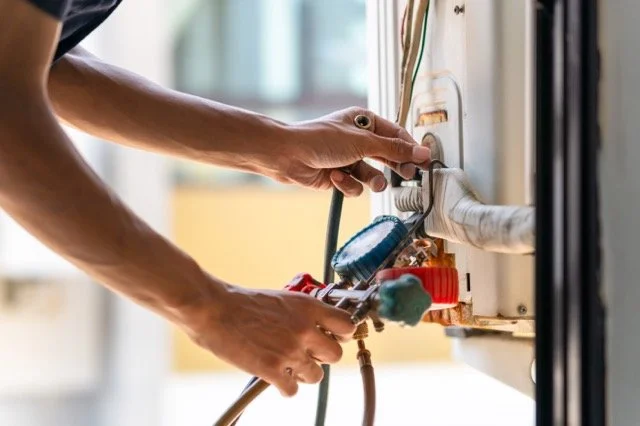
We connect gauges to your system's service ports and measure refrigerant pressure on both the high side (discharge) and low side (suction). Low pressure indicates a leak. High pressure can mean a restricted line or overcharged system. Both cause noise and inefficiency.
Step 5: Inspect Mounting Hardware
Loose bolts, worn rubber grommets, and sagging compressor mounts all create vibration and noise. We tighten everything and replace worn isolators if needed.
Step 6: Diagnose and Explain
Once we've identified the problem, we explain what's failing, why it's making noise, what happens if you don't fix it, and what the repair will cost. No pressure. No upselling. Just honest diagnostics and clear options—that's part of how we're changing contractor culture in Metro Detroit.
How Preventive Maintenance Keeps Your AC Quiet
The single best way to prevent loud AC problems is annual preventive maintenance. Here's what happens during a professional AC tune-up that keeps your system running quietly:
Coil Cleaning
Dirty condenser coils make your compressor work harder, which increases vibration and noise. We clean both your outdoor condenser coil and indoor evaporator coil to restore efficient heat transfer.
Motor Lubrication
Blower motors and condenser fan motors have oil ports that need periodic lubrication. Dry bearings cause squealing and grinding. A few drops of motor oil during a tune-up can add years to motor life.
Electrical Connection Tightening
Vibration loosens electrical connections over time. Loose connections cause arcing, buzzing, and overheating. We tighten every terminal during maintenance visits.
Refrigerant Level Check
Low refrigerant makes your compressor work harder and run louder. We check pressures and top off refrigerant if needed (though properly installed systems shouldn't need frequent recharging—if yours does, you have a leak).
Drain Line Clearing
Clogged condensate drains cause water backup, which can damage your air handler and create gurgling or bubbling sounds. We flush drain lines during every tune-up.
Our $5/month HVAC maintenance plan includes two annual visits—one spring AC tune-up and one fall furnace tune-up—plus priority scheduling and 10% off repairs. For the cost of one fast-food meal per month, you get peace of mind and a quieter, more efficient system.
Cost Reality: Repair vs. Replacement for Noisy AC Units
Here's what common AC noise repairs actually cost in Southeast Michigan in 2026:
Minor Repairs ($150-$500)
- Capacitor replacement: $150-$300
- Contactor replacement: $150-$350
- Fan blade replacement: $200-$400
- Tightening loose components/mounting hardware: $150-$250
Moderate Repairs ($500-$1,500)
- Condenser fan motor replacement: $400-$800
- Blower motor replacement: $500-$900
- Refrigerant leak repair + recharge: $500-$1,500 (depends on leak location)
- Control board replacement: $400-$800
Major Repairs ($1,500-$3,500)
- Compressor replacement: $1,500-$3,000
- Evaporator coil replacement: $1,200-$2,500
- Condenser coil replacement: $1,000-$2,200
When Replacement Makes More Sense
If your AC is more than 12 years old and needs a major repair (compressor, coil, or multiple component failures), replacement often makes more financial sense than repair. Here's why:
- A new high-efficiency AC system costs $3,500-$7,000 installed in Metro Detroit (depending on size, brand, and efficiency rating)
- New systems are 30-50% more efficient than 15-year-old units, saving $300-$600/year on cooling costs
- New systems come with 10-year parts warranties and 1-year labor warranties
- You avoid the risk of another expensive repair in 1-2 years
We never push replacement when repair makes sense. But we'll give you the honest math so you can make the right decision for your home and budget. That's the old-school contractor approach we bring to every service call.
For more detail on what new AC systems actually cost in Southeast Michigan, check out our guide on common AC issues and repair costs.
Ready to Get Started?
NEXT Heating & Cooling has been keeping Michigan homes comfortable for over 35 years. Get honest diagnostics and fair pricing from NATE-certified technicians who show up on time. No pressure. No upselling. Just straight answers about what's wrong and what it'll cost to fix.
Schedule Your ServiceFrequently Asked Questions About Loud AC Units
Some noise is normal—you'll hear the compressor hum when it starts, the fan whoosh as air moves, and occasional clicking from your thermostat and contactor. But grinding, banging, squealing, or loud hissing are not normal and indicate component failure. If your AC suddenly gets noticeably louder than it used to be, something is wrong.
Some simple fixes—like tightening loose screws on the condenser cabinet or clearing debris from around the outdoor unit—are safe DIY tasks. But anything involving electrical components, refrigerant, or internal motor work requires a licensed HVAC technician. Michigan mechanical code requires proper licensing for refrigerant handling, and mistakes can damage your system or create safety hazards.
It depends on what's causing the noise. Simple fixes like capacitor replacement run $150-$300. Fan motor replacement costs $400-$900. Compressor replacement—the most expensive repair—runs $1,500-$3,000. Most noise-related repairs fall in the $300-$800 range. We always diagnose first and give you the exact cost before starting any work.
Yes, eventually. Loud noises indicate failing components, and those components will fail completely if not repaired. Grinding motor bearings will seize. Loose fan blades will break. Refrigerant leaks will drain your system. The timeline varies—some failures happen in days, others take weeks—but ignoring the noise always makes the problem worse and more expensive.
Once per year, ideally in spring before cooling season starts. Annual maintenance catches small issues (dirty coils, loose connections, low refrigerant) before they become loud, expensive failures. Our Next Care Plan includes spring AC tune-ups for $5/month, which is far cheaper than emergency repairs in July when your system breaks down during a heat wave.
We service all major brands including Carrier, Lennox, Trane, Rheem, Bryant, Goodman, Amana, York, and RUUD. Our technicians are NATE-certified and trained on both modern high-efficiency systems and older equipment. Whether your AC was installed last year or 20 years ago, we have the expertise and parts access to diagnose and repair it properly.
Yes. We offer 24/7 emergency HVAC service across Macomb, Oakland, and St. Clair counties. If your AC is making dangerous noises (grinding, burning smell, electrical buzzing), turn it off and call us immediately. We'll get a technician to your home as quickly as possible to diagnose the problem and prevent further damage.