

AC Refrigerant Recharge Cost in Macomb County 2026
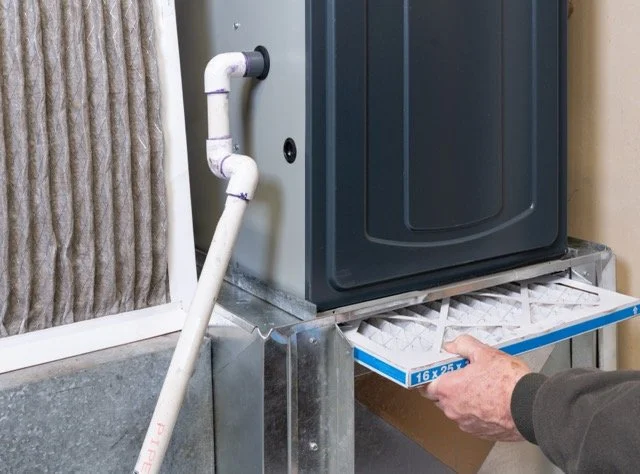
You call because your AC isn't cooling like it should. The tech shows up, checks pressures, and tells you: "You're low on refrigerant." Then comes the question every Michigan homeowner dreads: "How much will this cost?"
In Macomb County, a refrigerant recharge typically runs $150 to $800, depending on your system type, the size of the leak, and whether you're dealing with R-410A or the now-phased-out R-22. But here's what most contractors won't tell you up front: if your AC needs refrigerant, you have a leak. Refrigerant doesn't "run out" like gasoline—it's a closed-loop system. Adding more without fixing the leak is like filling a tire with a nail in it.
After 35 years serving Southeast Michigan through heating and cooling services in Metro Detroit, we've diagnosed hundreds of refrigerant issues in Sterling Heights, Clinton Township, Warren, and across Macomb County. Some are worth fixing. Many aren't. This guide shows you how to tell the difference—before you spend money on a repair that won't last.
What a Refrigerant Recharge Actually Is (And What It Isn't)
Let's clear up the most common misconception first: air conditioners don't consume refrigerant. They don't burn it, use it up, or need it "topped off" as part of regular maintenance. Your AC system is a sealed loop—refrigerant circulates continuously between the indoor evaporator coil and the outdoor condenser unit, absorbing heat from inside your home and releasing it outside.
When refrigerant levels drop, it's always because of a leak. Always. The refrigerant has escaped somewhere in the system—through a corroded coil, a loose connection, a vibration crack, or a manufacturing defect.
R-22 vs. R-410A: What's in Your System Matters
If your AC was installed before 2010, it likely uses R-22 refrigerant (commonly called "Freon," though that's actually a brand name). R-22 was phased out under EPA regulations due to its ozone-depleting properties. Production stopped in 2020, and what's left is recycled supply—which means prices have skyrocketed. In Macomb County, R-22 now costs $100 to $150 per pound, sometimes more.
Systems installed after 2010 use R-410A (brand names include Puron and Genetron). It's more environmentally friendly and still widely produced. R-410A costs $50 to $75 per pound in 2026—still not cheap, but far more reasonable than R-22.
The type of refrigerant in your system dramatically affects whether a recharge makes financial sense. We'll get into that math shortly.
What Happens During a Recharge
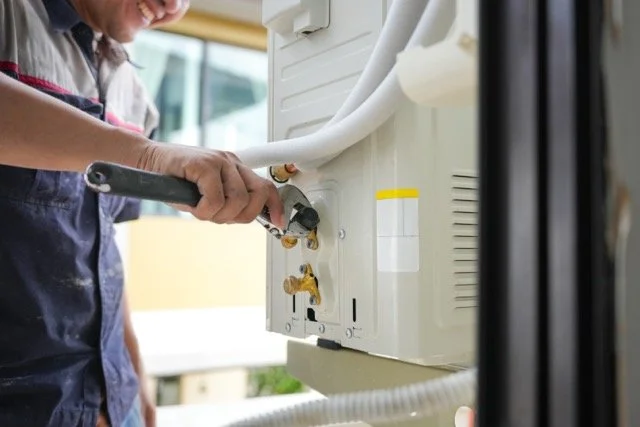
A proper refrigerant service isn't just "adding Freon." Here's what a NATE-certified HVAC technician does:
- Pressure testing: Measure refrigerant levels using gauges on both the low-pressure (suction) and high-pressure (discharge) sides
- Leak detection: Use UV dye, electronic leak detectors, or bubble solution to find where refrigerant is escaping
- Leak repair: Fix the leak point (if accessible and economical)
- System evacuation: Remove air and moisture using a vacuum pump
- Refrigerant charge: Add the manufacturer-specified amount of refrigerant by weight, not pressure
- Performance verification: Test temperatures, pressures, and airflow to confirm proper operation
Any contractor who just "tops off" your system without finding and fixing the leak is wasting your money. You'll be low again within weeks or months, and you'll have paid for refrigerant that's now leaking into the atmosphere.
What AC Refrigerant Recharge Costs in Macomb County (2026 Pricing)
Here's what you can expect to pay for refrigerant service in Sterling Heights, Clinton Township, Warren, and surrounding Macomb County communities in 2026:
Diagnostic Visit
$89 to $150 — This covers the technician's time to inspect your system, test pressures, and identify whether you actually have a refrigerant issue or something else (like a bad capacitor or dirty coil). Many companies, including NEXT Heating & Cooling, waive the diagnostic fee if you proceed with the repair.
Leak Detection
$150 to $400 — Finding small leaks requires specialized equipment. UV dye injection costs $150 to $200. Electronic leak detection runs $200 to $300. Pressure testing with nitrogen (for hard-to-find leaks) can reach $300 to $400. This is separate from the diagnostic visit and only necessary if the leak isn't obvious.
Refrigerant Cost Per Pound
- R-410A: $50 to $75 per pound
- R-22: $100 to $150+ per pound
A typical residential AC holds 2 to 4 pounds per ton of cooling capacity. A 3-ton system (common in Michigan homes) holds 6 to 12 pounds when fully charged. If you're completely empty (rare—most systems still have some refrigerant), a full charge of R-410A costs $300 to $900 in refrigerant alone. For R-22, that jumps to $600 to $1,800.
Labor for Leak Repair
$150 to $500+ — Depends entirely on where the leak is. A loose Schrader valve? $150. A pinhole in an accessible line? $200 to $300. A leaking evaporator coil buried in your furnace cabinet? $500 to $1,200 in labor (plus the coil itself, which runs $400 to $800).
Total Typical Cost
For a small leak in an R-410A system with accessible repair: $300 to $600
For an R-22 system with moderate leak: $600 to $1,200
For a major leak requiring coil replacement: $1,200 to $2,500
Macomb County Reality Check: If you're quoted under $200 for a "recharge" and the tech doesn't mention finding or fixing a leak, you're getting a temporary band-aid. That refrigerant will leak out again, and you'll be back to square one by mid-summer.
When a Refrigerant Recharge Is Worth It
Not every refrigerant leak means it's time to replace your AC. Here's when a recharge makes financial sense:
Your System Is Under 8 Years Old
If your AC is relatively new and has a small, repairable leak, fixing it is usually the right call. Modern systems with R-410A refrigerant are designed to last 15 to 20 years in Michigan's climate. A $500 repair on a 5-year-old Carrier or Lennox unit that has another decade of life left? That's a good investment.
The Leak Is Accessible and Repairable
Some leaks are easy fixes: a loose service valve, a damaged Schrader core, a vibration crack in an exposed line. If your tech can repair the leak for $200 to $400 and the rest of your system is healthy, do it.
You Have R-410A (Not R-22)
R-410A refrigerant is still affordable and will remain available for years. R-22 is a dying refrigerant with skyrocketing prices. If you have an R-410A system, the math favors repair. If you have R-22, the calculation shifts—more on that in the next section.
Your Compressor Is Healthy
The compressor is the heart of your AC—and the most expensive component. If your compressor is still running strong (no grinding noises, no hard starts, good amp draw), it's worth fixing a leak to protect that investment. A new compressor costs $1,200 to $2,500 installed, so keeping your existing one alive makes sense.
Real Example from Warren, MI: We serviced a 6-year-old Trane system with a small leak at a flare connection on the outdoor unit. Repair cost: $320 (including leak fix and 2 pounds of R-410A). The homeowner got another 8+ years from that system. That's a smart repair.
When It's NOT Worth It—And What to Do Instead
Here's the hard truth: many refrigerant leaks aren't worth fixing. We tell homeowners this regularly, even though it means we don't get the repair job. Here's when replacement makes more sense than recharge:
Your System Is Over 12-15 Years Old
AC systems in Michigan typically last 15 to 20 years, but efficiency drops significantly after 12 years. If your system is approaching end-of-life and develops a refrigerant leak, you're throwing money at a system that's already on borrowed time. Better to put that $800 toward a new, efficient system that will cool better and cost less to run.
For context, we covered replacement decisions in depth in our guide to AC installation costs in Macomb County—worth reading if you're on the fence.
You Have R-22 and a Major Leak
If your R-22 system needs 4+ pounds of refrigerant (costing $400 to $600 in refrigerant alone), and you're looking at another $300 to $500 in labor and leak repair, you're at $700 to $1,100 for a temporary fix on an obsolete system. That's 25-35% of the cost of a new R-410A system that will be more efficient and reliable.
R-22 prices will only continue rising as supply dwindles. You're paying premium prices for a dying technology.
You Have Multiple Leak Points
If your tech finds leaks in multiple locations—say, a pinhole in the evaporator coil and a leak at a line set connection—you're dealing with systemic corrosion or poor installation. Fixing one leak doesn't guarantee others won't appear next month. At that point, you're playing whack-a-mole with an unreliable system.
Your Evaporator Coil Is Leaking
The evaporator coil sits inside your furnace cabinet or air handler. Replacing it requires significant labor—removing the old coil, installing the new one, brazing connections, pressure testing, evacuating, and recharging. Total cost: $1,200 to $2,500.
If your system is over 10 years old and the evaporator coil is shot, you're better off replacing the entire outdoor condenser unit at the same time. Mismatched components (new coil with old condenser, or vice versa) reduce efficiency and void many manufacturer warranties.

The Math: Repeated Recharges vs. Replacement
Let's say you have an R-22 system. You pay $800 for a recharge this summer. The leak wasn't fully fixed (or a new one develops), and you need another $600 recharge next summer. You're now $1,400 into a system that's still unreliable. A new 3-ton R-410A system costs $4,500 to $7,000 installed in Macomb County (see our Troy AC installation pricing guide for detailed breakdowns). After two recharges, you're 20-30% of the way to a new system—with nothing to show for it but temporary fixes.
Sterling Heights Case Study: A homeowner called us after paying another company $650 for a refrigerant recharge on a 14-year-old R-22 system. Six weeks later, the system was low again. We found a leaking evaporator coil. Repair estimate: $1,800. Replacement estimate: $5,200 for a new Lennox 16 SEER system. They chose replacement and haven't had a single issue in three years. Their electric bills dropped $40/month in summer. The new system paid for itself in comfort and savings.
Signs Your AC Has a Refrigerant Leak
How do you know if low refrigerant is your problem? Here are the telltale signs we see on service calls across Clinton Township, Warren, and Shelby Township:
1. Warm Air from Vents
This is the most obvious symptom. Your AC runs, the blower is working, but the air coming out of your vents is barely cool—or not cool at all. Low refrigerant means reduced heat absorption, so your system can't pull enough heat out of your indoor air.
2. Ice Buildup on Refrigerant Lines
If you see frost or ice on the copper lines running from your outdoor unit into your house, you likely have low refrigerant. When refrigerant levels drop, the pressure in the evaporator coil drops too, causing temperatures to fall below freezing. Moisture in the air freezes on the coil and lines.
Don't confuse this with ice on the outdoor unit in winter—that's a different issue (and ACs shouldn't run when it's below 60°F outside anyway).
3. Hissing or Bubbling Sounds
A larger refrigerant leak often makes an audible hissing sound as high-pressure gas escapes. If the leak is in an oil-saturated area, you might hear bubbling. These sounds are most noticeable near the outdoor condenser unit or along the line set.
4. Higher Electric Bills
When your AC is low on refrigerant, it runs longer to try to reach your thermostat setpoint—but it never quite gets there. Your compressor and blower motor run constantly, driving up your electric bill without delivering comfort. We've seen summer bills jump $50 to $100/month from a refrigerant leak alone.
5. Short Cycling
Low refrigerant can cause your AC to short cycle—turning on and off every few minutes instead of running in normal 10-15 minute cycles. This happens because the system can't build enough pressure to satisfy the thermostat, so it shuts down on a safety switch, then tries again.
Short cycling is also a symptom of other issues (like a bad capacitor or oversized system), but combined with warm air and ice buildup, it points to refrigerant loss. If you're experiencing this, our guide on why your AC is making loud noise covers additional diagnostic clues.
What to Check Before Calling
Before you call for service, check these basics:
- Thermostat setting: Make sure it's set to "Cool" and the temperature is below current room temp
- Air filter: A clogged filter can mimic refrigerant issues by restricting airflow
- Circuit breakers: Confirm both the indoor air handler and outdoor condenser breakers are on
- Outdoor unit: Make sure the condenser fan is spinning when the system runs
If those all check out and you're still getting warm air or seeing ice, it's time to call a licensed contractor for proper diagnostics.
The Real Cost of Ignoring a Refrigerant Leak
Some homeowners try to "tough it out" through a Michigan summer with a leaking AC, figuring they'll deal with it next year. That's a mistake—and it can cost you far more than the repair.
Compressor Damage ($1,200-$2,500)
Your compressor relies on refrigerant for cooling and lubrication. When refrigerant levels drop too low, the compressor overheats and can seize. A failed compressor on an R-410A system costs $1,200 to $2,000 to replace. On an R-22 system, you're looking at $1,500 to $2,500—if you can even find a compatible compressor.
At that price point, most homeowners choose full system replacement instead. So ignoring a $500 refrigerant leak can turn into a $5,000 AC replacement.
Energy Waste
A system running low on refrigerant is brutally inefficient. Your compressor and blower run constantly, trying to cool a home they can't actually cool. We've measured energy waste of 30-50% on systems with significant refrigerant loss. In a Michigan summer, that's $200 to $400 in wasted electricity over three months—money you could have put toward fixing the leak.
Comfort Loss During Heat Waves
Michigan summers aren't as brutal as the South, but we get our share of 90°F, high-humidity days. When your AC can't keep up, indoor temperatures climb into the 80s. That's not just uncomfortable—it's a health risk for elderly family members, young children, and anyone with respiratory issues.
Environmental Impact
Refrigerant leaking into the atmosphere contributes to ozone depletion (R-22) or global warming (R-410A). The EPA takes this seriously—technicians are required to recover refrigerant, not vent it. Homeowners aren't exempt from environmental responsibility. If you know you have a leak and ignore it, you're releasing potent greenhouse gases for no reason.
What to Expect During a Refrigerant Service Call
When you call a reliable HVAC contractor in Metro Detroit for a refrigerant issue, here's what should happen:
Step 1: Diagnostic Inspection (30-45 minutes)
The technician will:
- Check thermostat settings and system operation
- Inspect the outdoor condenser unit and indoor air handler
- Measure refrigerant pressures on both low and high sides
- Check superheat and subcooling (temperature measurements that indicate proper refrigerant charge)
- Inspect for obvious signs of leaks (oil stains, corrosion, damaged lines)
At this point, the tech should be able to tell you whether you're low on refrigerant and approximately how much you're missing.
Step 2: Leak Detection (15-60 minutes)
If refrigerant is low, the next step is finding the leak. Methods include:
- Visual inspection: Looking for oil residue (refrigerant carries compressor oil, so leaks leave oily spots)
- Electronic leak detector: A handheld sensor that "sniffs" for refrigerant molecules
- UV dye injection: Injecting fluorescent dye into the system, then using a UV light to spot leaks
- Bubble test: Applying soapy water to suspected leak points and watching for bubbles
- Nitrogen pressure test: For hard-to-find leaks, pressurizing the system with nitrogen and monitoring for pressure drop
A thorough leak search takes time. Be wary of any tech who claims to have found and fixed a leak in under 20 minutes—they likely didn't look very hard.

Step 3: Repair Options and Estimate
Once the leak is found, your tech should present options:
- Repair the leak: Cost estimate, timeline, and likelihood of success
- Replace the leaking component: If it's a coil or valve that can't be reliably repaired
- Replace the system: If repair costs approach 50% of replacement cost, or the system is old/obsolete
A good technician will walk you through the pros and cons of each option without pressure. At NEXT Heating & Cooling, our techs aren't on commission—they're paid to diagnose accurately and give you honest information, not upsell you.
Step 4: Leak Repair (1-3 hours)
If you choose to repair the leak, the process typically involves:
- Recovering remaining refrigerant (EPA-required—techs can't vent it)
- Repairing the leak (brazing a line, replacing a valve, etc.)
- Pressure testing with nitrogen to confirm the leak is sealed
- Evacuating the system (pulling a vacuum to remove air and moisture)
- Recharging with the correct amount of refrigerant by weight
- Testing system performance (temperatures, pressures, airflow)
This is not a quick process. If a tech tells you they can recharge your system in 30 minutes, they're skipping steps—and you'll likely have problems down the road.
Step 5: Performance Verification
After the repair and recharge, your tech should verify:
- Supply air temperature (should be 15-20°F cooler than return air)
- Refrigerant pressures match manufacturer specs
- No new leaks (recheck with leak detector)
- System runs through a full cooling cycle without issues
Questions to Ask Your Tech
Before authorizing any work, ask:
- "Where is the leak, and what's causing it?"
- "How much refrigerant am I missing?"
- "What type of refrigerant does my system use?" (R-22 or R-410A)
- "How long will this repair last?"
- "What's the total cost, including refrigerant, labor, and leak repair?"
- "Do I have any warranty coverage?" (Some manufacturers cover refrigerant leaks in the first 5-10 years)
- "What would a replacement system cost, and how does that compare to this repair?"
If your tech can't or won't answer these questions clearly, find a different contractor.
Need an Honest AC Diagnosis?
NEXT Heating & Cooling has been serving Macomb County for over 35 years. Our NATE-certified technicians will find the problem, explain your options, and let you decide—no pressure, no upselling. We've built our reputation on old-school honesty in an industry that desperately needs it.
Schedule Your DiagnosticFrequently Asked Questions
If the leak is properly repaired, a refrigerant recharge should last the life of your AC system—10 to 20 years. If the leak isn't fixed, you could be low again in weeks or months. That's why finding and repairing the leak is critical, not just adding refrigerant. Any contractor who tells you refrigerant "needs to be recharged every year" is either incompetent or dishonest. Refrigerant doesn't evaporate or get used up—it only leaves through a leak.
Legally, no—not in Michigan or anywhere in the U.S. EPA Section 608 regulations require anyone handling refrigerant to be certified. DIY "recharge kits" sold at auto parts stores are intended for car AC systems, not home AC units, and using them improperly can damage your system or create safety hazards. More importantly, adding refrigerant without finding and fixing the leak is a waste of money. You need a licensed HVAC technician with proper tools to diagnose the leak, repair it, evacuate the system, and recharge it correctly by weight (not just pressure).
Yes, but only as recycled or reclaimed supply. R-22 production ended in 2020 under EPA regulations. What's left in the market is refrigerant recovered from decommissioned systems, purified, and resold. Supply is shrinking every year, and prices have increased 300-400% since 2015. In Macomb County, R-22 costs $100 to $150+ per pound in 2026, compared to $50 to $75 for R-410A. If you have an R-22 system that needs a major recharge, it's often more cost-effective to replace the system than to keep recharging at these prices.
R-22 (Freon) is an older refrigerant that was phased out due to its ozone-depleting properties. Systems using R-22 were manufactured before 2010. R-410A (Puron, Genetron) is the current standard for residential AC systems—it's more environmentally friendly, operates at higher pressures, and is still widely produced. The two refrigerants are NOT interchangeable—you can't just swap R-410A into an R-22 system. They require different compressors, coils, and system designs. If your R-22 system fails, replacement with an R-410A system is your only long-term option.
Usually not. Most homeowners insurance policies exclude "wear and tear" and mechanical breakdown, which covers most refrigerant leaks (corrosion, vibration damage, manufacturing defects). However, if the leak resulted from a covered peril—like a tree falling on your outdoor condenser unit during a storm—insurance may cover the repair. Check your policy or call your agent. Some homeowners have separate "equipment breakdown" or "home warranty" coverage that might apply, but read the fine print carefully—many home warranty companies have low payout limits and exclude pre-existing conditions.
Never—under normal conditions. Refrigerant circulates in a closed loop and doesn't degrade, evaporate, or get "used up." If your system was installed correctly and has no leaks, the refrigerant charge should last the entire 15-20 year lifespan of the system without ever needing to be replaced. If a contractor tells you refrigerant needs to be "topped off" as part of routine maintenance, they're either misinformed or trying to sell you unnecessary service. The only time refrigerant needs to be added is if there's a leak—and that leak must be repaired, not just recharged.
Common causes include: (1) Corrosion—especially in evaporator coils exposed to moisture and condensation over years; (2) Vibration damage—copper lines can develop cracks from years of compressor vibration; (3) Poor installation—improperly brazed joints or overtightened fittings; (4) Physical damage—lawn equipment hitting the outdoor unit, or a tech accidentally puncturing a line during service; (5) Formicary corrosion—a specific type of corrosion caused by formaldehyde and other volatile organic compounds (common in newer homes with certain building materials). In Michigan's humid climate, corrosion is the most common culprit, especially in systems over 10 years old.
Final Thoughts: Make the Right Call for Your Home
Refrigerant recharge costs in Macomb County range from $150 to $800 depending on your system type, leak severity, and refrigerant type. But cost alone doesn't tell you whether a recharge is worth it. The real question is: will this repair buy you years of reliable cooling, or just a few months before the next breakdown?
If you have a newer R-410A system with a small, repairable leak, fix it. If you have an aging R-22 system with a major leak or multiple issues, replacement is almost always the smarter financial decision.
After 35 years serving Sterling Heights, Clinton Township, Warren, and surrounding communities, we've seen every scenario. The homeowners who make the best decisions are the ones who get honest diagnostics from a contractor they trust—not the cheapest quote or the fastest fix.
If you're dealing with a refrigerant issue and want a straight answer about whether repair or replacement makes sense for your situation, give us a call. We'll diagnose the problem, show you what we found, and give you options—no pressure, no gimmicks. That's how we've stayed in business for over three decades, and it's how we'll treat your home.
Stay cool, Michigan.
Related Reading: If you're considering AC replacement instead of repair, check out our detailed guide on AC installation costs in Macomb County. We break down pricing by system tier, home size, and efficiency level—so you know exactly what to expect before you call for quotes. And if your AC is making strange noises along with cooling issues, our post on what AC noises mean and how to fix them can help you diagnose the problem.
For ongoing AC maintenance that prevents refrigerant leaks and other costly breakdowns, consider the NEXT Care Plan—just $5/month for two annual tune-ups, priority scheduling, and 10% off repairs. It's the most affordable way to protect your investment and avoid emergency service calls during Michigan's hottest weeks.