

Cooling a Garage or Sunroom with a Mini-Split in Oakland County
You converted your garage into a workshop. Or you built that three-season sunroom you always wanted. Now it's June in Oakland County, and the space is unbearable by 10 a.m.
You can't extend your central air conditioning — there's no ductwork out there, and running ducts would mean tearing through walls and ceilings. A window unit rattles, leaks, and barely keeps up. You need something better.
That's where ductless mini-split systems come in. We've installed hundreds of them across Oakland County — in detached garages in Bloomfield Hills, sunrooms in Rochester Hills, workshops in Troy, and home gyms in Royal Oak. They're efficient, quiet, and they actually work in Michigan's climate extremes.
Here's what you need to know about cooling a garage or sunroom with a mini-split, including real costs, sizing guidelines, and what the installation process looks like in 2026.
What Makes Oakland County Garages and Sunrooms So Hard to Cool?
Most garages and sunrooms weren't designed for climate control. They're additions, conversions, or detached structures that never had HVAC in the original building plan. That creates three major challenges:
No Existing Ductwork
Your central air conditioning system relies on a network of supply and return ducts to move conditioned air through your home. Garages and sunrooms — especially detached ones — don't have that infrastructure. Running new ductwork means cutting through walls, insulating the ducts, and potentially upsizing your existing AC system to handle the additional load. That's expensive, invasive, and often not feasible.
Poor Insulation
Many garages in Oakland County were built with minimal insulation. We're talking R-11 in the walls (if you're lucky) and maybe R-19 in the ceiling. Sunrooms are even worse — lots of glass, thin walls, and often no insulation at all in the roof structure. When it's 88 degrees outside in July, that space heats up fast. A poorly insulated 300-square-foot sunroom can feel like a greenhouse by mid-afternoon.
Sun Exposure and Heat Gain
Sunrooms live up to their name. South-facing and west-facing windows let in massive amounts of solar heat gain during Michigan summers. That's great in February when you want passive solar warmth. It's miserable in July when you're trying to keep the space cool. Standard cooling calculations don't always account for that level of direct sun exposure, which is why undersized systems struggle.
If you're dealing with AC units that can't keep up in other parts of your home, the problem might be related — but garages and sunrooms face unique challenges that require dedicated solutions.
Why Ductless Mini-Splits Work Better Than Window Units or Space Heaters
When homeowners in Oakland County need to cool a garage or sunroom, they usually consider three options: extending their central AC, installing a window unit, or putting in a ductless mini-split. Here's why we recommend mini-splits for these applications.
No Ductwork Required
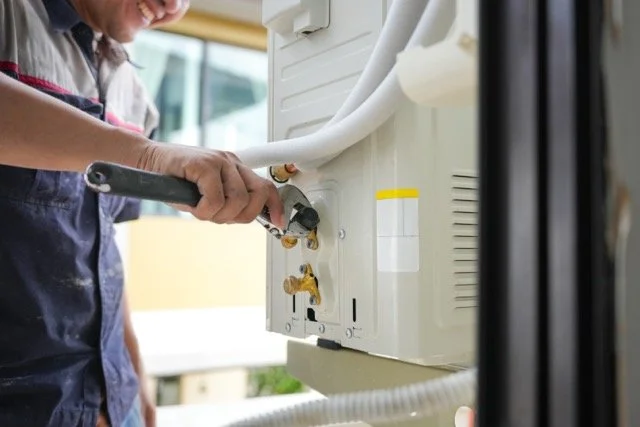
A ductless mini-split has two main components: an outdoor condenser (like a regular AC unit) and one or more indoor air handlers mounted on the wall or ceiling. They're connected by a small refrigerant line that runs through a 3-inch hole in the wall. That's it. No ductwork, no major construction, no tearing up finished spaces.
Energy Efficiency That Actually Matters
Modern mini-splits operate at SEER2 ratings between 16 and 30, depending on the brand and model. That's significantly more efficient than window units (typically SEER 10-12) and far more efficient than portable AC units. In practical terms, that means lower electric bills and better performance in Michigan's humid summers.
The best systems use inverter-driven compressors that ramp up or down based on demand, rather than cycling on and off like traditional AC units. That keeps the temperature consistent and reduces energy waste. If you're concerned about SEER2 ratings and what they mean, we've written a detailed breakdown for Michigan homeowners.
Year-Round Heating and Cooling
Most mini-splits are heat pumps, which means they provide both cooling in summer and heating in winter. That's a huge advantage for garages and sunrooms in Oakland County. You can use the space comfortably in March and April when it's still too cold for a window unit to help, and you can keep it warm enough to work in November without running a space heater.
Cold-climate mini-splits from brands like Mitsubishi and Fujitsu are rated to heat efficiently down to -13°F. That covers most Michigan winter days without needing backup heat. For workshops, home offices, and converted garages, that makes mini-splits a true four-season solution.
Quiet Operation
Window units are loud — 50 to 60 decibels at full blast, which is about as loud as normal conversation. Mini-split indoor units run at 19 to 30 decibels, quieter than a whisper. If you're using your garage as a home office or your sunroom as a reading space, that difference matters.
Michigan Homeowner Tip: If you're cooling a detached garage, make sure your electrical panel can handle the additional load. Most mini-splits require a dedicated 20-amp or 30-amp circuit. We always check electrical capacity during the site assessment before quoting installation.
How to Size a Mini-Split for Your Garage or Sunroom
Getting the size right is critical. An undersized mini-split will run constantly and never reach the temperature you want. An oversized unit will short-cycle, waste energy, and fail to dehumidify properly. Here's how we calculate the correct capacity for Oakland County installations.
Start with Square Footage
The baseline rule is 20 to 25 BTU per square foot for Michigan climate conditions. A 300-square-foot sunroom would need 6,000 to 7,500 BTU. A 500-square-foot garage would need 10,000 to 12,500 BTU. That's your starting point, but it's not the whole story.
Adjust for Insulation Quality
If your garage or sunroom has poor insulation (R-11 or less in the walls), increase the BTU requirement by 20-30%. If it's well-insulated (R-19 walls, R-38 ceiling), you can stay on the lower end of the range. Insulation makes a massive difference in how hard the system has to work.
Account for Windows and Sun Exposure
Sunrooms with lots of south or west-facing glass need extra cooling capacity. Add 1,000 BTU for each large window with direct sun exposure. If the space has cathedral ceilings or skylights, add another 10-15% to the total. Heat rises, and high ceilings trap warm air that the mini-split has to work harder to cool.
Consider How You'll Use the Space
A home gym generates more heat than a reading room. A workshop with power tools and multiple people working generates more heat than a storage area. If you're using the space for high-activity purposes, size up slightly. If it's a low-use space, you can stay conservative.
Get a Professional Load Calculation
The most accurate way to size a mini-split is with a Manual J load calculation. That's a detailed assessment that factors in insulation, windows, ceiling height, sun exposure, local climate data, and usage patterns. It's what NATE-certified HVAC technicians use to ensure the system is sized correctly the first time.
We've seen too many DIY installations where homeowners bought a 12,000 BTU unit online without measuring properly, only to find it's either too small or too large for their space. Getting it right from the start saves money and frustration.
What a Mini-Split Installation Actually Costs in Oakland County
Let's talk real numbers. Mini-split costs vary based on system capacity, brand, installation complexity, and electrical requirements. Here's what Oakland County homeowners are paying in 2026.
Equipment Costs by Brand
Mini-split systems range from budget-friendly to premium performance. Here's what we're seeing for single-zone systems (one indoor unit, one outdoor condenser):
- Budget Tier (9,000-12,000 BTU): $1,200-$1,800 for equipment. Brands include Pioneer, MRCOOL, and Senville. These work fine for basic cooling needs but may lack advanced features like Wi-Fi control or low-temperature heating.
- Mid-Tier (9,000-18,000 BTU): $2,000-$3,500 for equipment. Brands include Daikin, Fujitsu, and LG. Better energy efficiency (SEER2 18-22), quieter operation, and more reliable performance in Michigan winters.
- Premium Tier (9,000-24,000 BTU): $3,500-$5,000 for equipment. Mitsubishi and Fujitsu Halcyon series. Top-tier SEER2 ratings (25-30), advanced filtration, hyper-heating for sub-zero temps, and 10-12 year warranties.
Most Oakland County homeowners choose mid-tier systems for garages and sunrooms. They offer the best balance of performance, reliability, and cost.
Installation Labor
Professional installation typically costs $1,500 to $3,000, depending on the complexity of the job. Factors that affect labor costs include:
- Distance between indoor and outdoor units: Longer refrigerant line runs (over 25 feet) increase labor time and material costs.
- Electrical work: If your garage or sunroom doesn't have a dedicated circuit, you'll need an electrician to run a new line from your main panel. That adds $300-$800.
- Wall penetrations: Drilling through brick, stone, or thick exterior walls takes more time than standard wood siding.
- Mounting height: Installing the indoor unit on a high wall or vaulted ceiling requires additional equipment and labor.
Total Installed Cost
For a typical single-zone mini-split installation in an Oakland County garage or sunroom, expect to pay $3,500 to $6,500 for a complete, professionally installed system. That includes equipment, labor, electrical work, refrigerant line set, condensate drain, and startup.
Compare that to extending your central AC system (often $5,000-$10,000 with ductwork) or replacing multiple window units every few years, and the mini-split starts to look like a smart investment.
If you're comparing costs for other HVAC projects, check out our guide on AC installation costs in Metro Detroit for a broader cost perspective.
Installation Process: What to Expect
A professional mini-split installation takes 4 to 8 hours for a single-zone system. Here's what happens during the process.
Site Assessment and Load Calculation
Before we install anything, we measure the space, check insulation, assess sun exposure, and verify electrical capacity. We perform a load calculation to determine the correct BTU size. This step ensures the system is properly sized and positioned for optimal performance.
Mounting the Indoor Unit
The indoor air handler mounts on an interior wall, typically 7-8 feet above the floor for best air circulation. We install a mounting bracket, level it carefully, and secure the unit. Placement matters — you want the airflow to reach the entire space without blowing directly on seating areas or workbenches.
Installing the Outdoor Condenser
The outdoor unit sits on a concrete pad or wall-mounted bracket. It needs to be within 25-50 feet of the indoor unit (depending on the system specs) and positioned where it has good airflow and drainage. We make sure it's level, secure, and protected from snow drifts and ice buildup during Michigan winters.
Running the Refrigerant Line
We drill a 3-inch hole through the exterior wall and run the refrigerant line, electrical wiring, and condensate drain between the indoor and outdoor units. The line set is insulated and protected with a weatherproof cover. This is the most critical part of the installation — improper refrigerant line work leads to leaks, efficiency loss, and system failure.
Electrical Connection and Startup
We connect the system to a dedicated circuit (usually 20-30 amps), verify voltage, and test all connections. Then we vacuum the refrigerant lines to remove moisture and air, open the refrigerant valves, and start the system. We monitor pressures, check for leaks, and verify the system is cooling (or heating) properly before we leave.
A proper installation includes a full startup checklist and homeowner walkthrough. We show you how to use the remote, set schedules, and maintain the filters. Most mini-split systems have washable filters that need cleaning every 4-6 weeks during heavy use.
Permit Requirements: Most Oakland County municipalities require a mechanical permit for mini-split installations. A licensed contractor like NEXT Heating & Cooling pulls the permit, schedules inspections, and ensures the installation meets Michigan mechanical codes. DIY installations often fail inspection due to improper refrigerant handling or electrical work.
Signs a Mini-Split Is the Right Choice for Your Space
Not every garage or sunroom needs a mini-split. Here's when it makes the most sense.
You Use the Space Year-Round
If your garage is a workshop, home gym, or home office that you use in all four seasons, a mini-split gives you reliable heating and cooling without the hassle of swapping out window units or running space heaters. The upfront cost pays off in comfort and energy savings.
Extending Your Central AC Isn't Practical
Running ductwork to a detached garage or sunroom often costs more than installing a mini-split, and it may require upsizing your existing AC system. If your home's ductwork is already undersized or your AC is near the end of its lifespan, a mini-split is usually the smarter choice.
You Want Quiet, Efficient Cooling
Window units are noisy, inefficient, and a security risk (they're easy to remove from the outside). Mini-splits are quiet, secure, and far more energy-efficient. If you're using the space for work, reading, or relaxation, the noise reduction alone is worth the upgrade.
You Have Poor Insulation or Lots of Windows
Spaces with poor insulation or heavy sun exposure struggle with traditional cooling methods. Mini-splits are designed to handle high heat loads and can maintain consistent temperatures even in challenging conditions. Pair a mini-split with improved insulation, and you'll have a comfortable space year-round.
If you're also dealing with older AC equipment in your main home, it might be time to think about a comprehensive cooling strategy for your entire property.

Ready to Cool Your Garage or Sunroom?
NEXT Heating & Cooling has installed ductless mini-splits across Oakland County for over 35 years. Our NATE-certified technicians provide honest assessments, accurate load calculations, and professional installations backed by manufacturer warranties. No pressure, no upselling — just straight answers and reliable service.
Schedule Your Free EstimateWhy NEXT Heating & Cooling for Mini-Split Installation
We've been installing and servicing HVAC systems in Southeast Michigan since 1991. Our technicians are licensed, NATE-certified, and trained on all major mini-split brands including Mitsubishi, Daikin, Fujitsu, and LG. We handle the entire process — site assessment, load calculation, permit pulling, installation, and startup — so you don't have to coordinate multiple contractors.
We also offer the Next Care Plan — a $5/month maintenance subscription that includes seasonal tune-ups, priority scheduling, and 10% off repairs. Regular maintenance keeps your mini-split running efficiently and extends its lifespan, which is especially important for systems that run year-round.
Whether you're cooling a converted garage in Bloomfield Hills, a sunroom in Rochester Hills, or a workshop in Troy, we'll help you choose the right system and install it correctly the first time. That's how we've built our reputation in Oakland County — honest diagnostics, fair pricing, and work that lasts.
Explore our full range of heating and cooling services in Metro Detroit to see how we can help with all your HVAC needs.
Frequently Asked Questions
Yes, but you need a cold-climate mini-split rated for low temperatures. Standard mini-splits lose efficiency below 30°F. Cold-climate models from Mitsubishi, Fujitsu, and Daikin are rated to heat efficiently down to -13°F, which covers most Michigan winter days. For extreme cold snaps (polar vortex events), you may need supplemental heat from a space heater or electric baseboard.
Operating costs depend on system size, usage hours, and local electricity rates. A 12,000 BTU mini-split running 8 hours per day in July costs approximately $25-$40 per month in Oakland County (at $0.15-$0.17 per kWh). That's about half the cost of running a comparable window unit due to higher efficiency. Heating costs in winter are similar, assuming the space is well-insulated.
Yes. Most Oakland County municipalities require a mechanical permit for mini-split installations. The permit ensures the installation meets Michigan building codes and includes an inspection of electrical connections and refrigerant work. Licensed contractors like NEXT Heating & Cooling handle permit applications and inspections as part of the installation process. DIY installations without permits can result in fines and complications when selling your home.
With proper maintenance, a quality mini-split lasts 15-20 years. That's comparable to central AC systems and significantly longer than window units (5-8 years). Regular filter cleaning, annual professional maintenance, and keeping the outdoor unit clear of debris and snow extend the system's lifespan. Mitsubishi and Fujitsu systems often outlast budget brands due to better build quality and more reliable components.
Technically yes, but it's not recommended. Mini-split installation requires EPA 608 certification to handle refrigerants, knowledge of electrical codes, and specialized tools (vacuum pump, manifold gauges, torque wrenches). Improper installation leads to refrigerant leaks, compressor damage, and voided warranties. Most manufacturers require professional installation to honor the warranty. In Michigan, unlicensed refrigerant work violates state law and can result in fines.
Mini-splits need regular filter cleaning (every 4-6 weeks during heavy use) and annual professional maintenance. The indoor unit has washable filters that slide out easily — rinse with water, let dry, and reinstall. Professional maintenance includes cleaning the coils, checking refrigerant levels, inspecting electrical connections, and testing system performance. Our Next Care Plan includes two annual visits (spring and fall) to keep your mini-split running efficiently year-round.
It will work, but not efficiently. An uninsulated garage loses heat and cooling rapidly, forcing the mini-split to run constantly. You'll pay higher electric bills and the system will struggle to maintain comfortable temperatures during temperature extremes. If you're investing in a mini-split, it's worth adding insulation to the walls and ceiling first. R-13 to R-19 in the walls and R-30 to R-38 in the ceiling makes a massive difference in performance and operating costs.