

AC Sizing Guide for Macomb Township Homes | NEXT Heating

I've been sizing air conditioners for Michigan homes for over two decades, and the most expensive mistake I see homeowners make isn't buying the wrong brand—it's installing the wrong size. A 3-ton AC in a home that needs 2.5 tons wastes thousands in energy costs and wears out years early. An undersized 2-ton unit in a home that needs 3 tons runs constantly during July heat waves and never quite gets the job done.
In Macomb Township, where we see everything from 1960s ranch homes with minimal insulation to brand-new two-story colonials built to modern energy codes, proper AC sizing isn't about rules of thumb or guessing based on square footage. It requires a Manual J load calculation that accounts for your home's specific characteristics—and that's exactly what NATE-certified HVAC technicians are trained to do.
This guide walks you through how professional contractors size air conditioners, what factors matter most in Southeast Michigan, and what you should expect when you're ready to replace your AC. Whether you're in a 1,200-square-foot ranch near the Clinton River or a 2,800-square-foot colonial in one of Macomb Township's newer subdivisions, the right-sized system makes all the difference between comfort and constant frustration.
Why AC Size Matters More Than You Think
Air conditioner capacity is measured in tons—not weight, but cooling power. One ton equals 12,000 BTUs (British Thermal Units) of heat removal per hour. A 2-ton AC removes 24,000 BTUs per hour. A 3-ton AC removes 36,000 BTUs per hour. The goal is to match your home's heat gain with the right amount of cooling capacity.
When an AC unit is oversized, it cools the air too quickly without running long enough to remove humidity. Here's what happens:
- Short cycling: The unit turns on, cools the air rapidly, shuts off, then repeats the cycle every few minutes. This constant starting and stopping wears out the compressor—the most expensive component in your AC system.
- High humidity: Air conditioners remove moisture as they run. An oversized unit shuts off before it can dehumidify properly, leaving your home feeling clammy even when the thermostat says 72°F.
- Uneven temperatures: Short cycles mean the air doesn't circulate long enough to reach every room, creating hot and cold spots throughout the house.
- Higher energy bills: Starting the compressor uses more electricity than running it steadily. Constant cycling wastes energy.
When an AC unit is undersized, it runs constantly trying to keep up with demand but never quite reaches the thermostat setting. The problems:
- Inadequate cooling: During Michigan's hottest days—when we hit 90°F with high humidity in July and August—an undersized unit can't remove heat fast enough. Your home stays warm no matter how low you set the thermostat.
- Premature failure: Running 24/7 without rest wears out components faster. Compressors, fan motors, and capacitors fail years earlier than they should.
- Excessive energy costs: A unit running constantly uses more electricity than a properly sized system that cycles on and off normally.
Michigan Reality: I've seen oversized AC units in Macomb Township homes that were installed by contractors who used the old "one ton per 500 square feet" rule. A 2,000-square-foot home doesn't automatically need a 4-ton AC—it might only need 2.5 or 3 tons depending on insulation, windows, and sun exposure. That extra capacity costs you money every month.
How HVAC Contractors Actually Size Air Conditioners
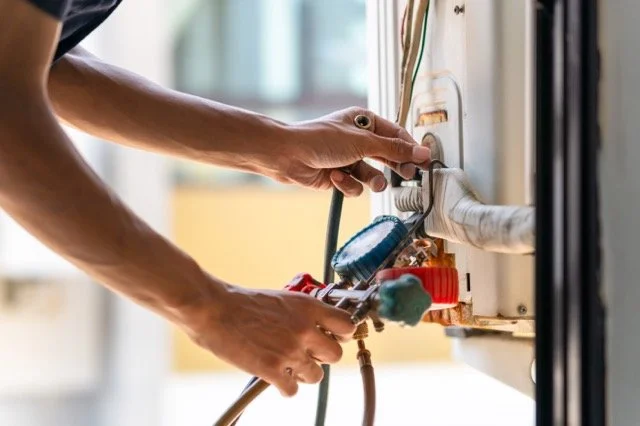
Professional HVAC contractors use a Manual J load calculation—a standardized method developed by the Air Conditioning Contractors of America (ACCA). This calculation determines your home's exact cooling load based on dozens of factors, not just square footage.
What Goes Into a Manual J Calculation
A proper load calculation accounts for:
- Square footage and layout: Total conditioned space, room-by-room measurements, ceiling heights, and floor plan configuration.
- Insulation levels: Attic insulation R-value, wall insulation quality, basement or crawlspace insulation. Older Macomb Township homes built in the 1960s and 1970s often have minimal wall insulation—sometimes just R-11 or less—while newer homes meet modern building codes requiring R-15 to R-21 in walls and R-38 to R-60 in attics.
- Windows and doors: Number, size, orientation (north, south, east, west), glass type (single-pane, double-pane, Low-E coating), and shading. South and west-facing windows gain the most heat in Michigan summers.
- Air infiltration: How tight or leaky your home is. Older homes with original windows and doors lose more conditioned air than newer, well-sealed homes.
- Ductwork condition: Leaky ducts in unconditioned spaces (attics, crawlspaces) lose cooling capacity before the air reaches your rooms.
- Internal heat sources: Number of occupants, kitchen appliances, lighting type (incandescent vs. LED), electronics, and other heat-generating equipment.
- Local climate data: Macomb Township's design temperature for cooling is around 91°F (the temperature we design systems to handle on the hottest days). We also factor in humidity levels, which are higher near Lake St. Clair and the Clinton River.
A Manual J calculation takes 2-3 hours to complete properly. The contractor measures your home, documents insulation levels, counts windows, and enters all the data into specialized software that calculates your exact cooling load in BTUs per hour. That number determines the right tonnage for your AC system.
Why "Rules of Thumb" Fail
Some contractors still use shortcuts like "one ton per 500-600 square feet" or "400 square feet per ton" to size AC units quickly. These rules ignore everything that makes your home unique. Two 1,800-square-foot ranch homes in Macomb Township can have completely different cooling loads:
- Home A: Built in 1965, original single-pane windows, R-19 attic insulation, minimal wall insulation, south-facing picture window, mature trees providing shade. Actual cooling load: 28,000 BTUs (2.3 tons).
- Home B: Built in 2015, double-pane Low-E windows, R-49 attic insulation, R-21 wall insulation, west-facing windows with minimal shade, open floor plan. Actual cooling load: 32,000 BTUs (2.7 tons).
Using the "one ton per 500 square feet" rule would suggest both homes need a 3.5-ton AC. Home A would be oversized by more than a full ton, causing short cycling and humidity problems. Home B would be slightly oversized but closer to correct. Neither would be right.
This is why heating and cooling services in Metro Detroit that include proper load calculations matter. You're paying for precision, not guesswork.
What Size AC Do Macomb Township Homes Actually Need?
While every home is different, here's what we typically see in Macomb Township based on thousands of Manual J calculations over the years:
Ranch Homes (1,200-1,800 Square Feet)
Most single-story ranch homes in Macomb Township were built between 1960 and 1990. These homes typically need 1.5 to 2.5 tons of cooling capacity depending on:
- Attic insulation levels (many older homes have been upgraded to R-38 or higher)
- Window replacement status (original single-pane vs. newer double-pane)
- Tree coverage and sun exposure
- Basement vs. crawlspace foundation
A well-insulated 1,500-square-foot ranch with updated windows and good shade might only need a 2-ton AC. The same size home with original windows, minimal insulation, and full sun exposure might need 2.5 tons.
Two-Story Colonial Homes (2,000-2,800 Square Feet)
Two-story homes are common in Macomb Township's newer subdivisions built from 1990 onward. These homes typically need 2.5 to 4 tons of cooling capacity. Key factors:
- Vaulted ceilings and open floor plans increase cooling load
- Second-floor heat gain is significant—hot air rises, and upstairs bedrooms are often warmer
- Newer homes built to modern energy codes need less capacity than older construction
- West-facing two-story walls with large windows gain substantial afternoon heat
A 2,400-square-foot colonial built in 2010 with R-49 attic insulation, Low-E windows, and good ductwork might need a 3-ton AC. An older 2,400-square-foot colonial from 1995 with less insulation and original windows might need 3.5 to 4 tons.
Larger Homes (3,000+ Square Feet)
Larger homes in Macomb Township—including custom builds and executive homes—typically need 4 to 5 tons or more. Many of these homes use multiple AC systems (zoned cooling) rather than a single large unit. Zoning allows you to cool different areas independently, improving comfort and efficiency.
Real Example: Last summer we replaced an oversized 4-ton AC in a 2,200-square-foot colonial in Macomb Township with a properly sized 3-ton Carrier system. The homeowner's first comment after a week: "Why does it feel more comfortable even though it's a smaller unit?" The answer: proper dehumidification and even temperatures from correct sizing. Their energy bills dropped by about 18% compared to the previous summer.
Signs Your Current AC Is the Wrong Size
If you're not sure whether your current AC is properly sized, watch for these warning signs:
Signs Your AC Is Oversized
- Short cycling: The unit runs for 5-7 minutes, shuts off, then starts again shortly after. Properly sized systems run for 15-20 minutes per cycle.
- High indoor humidity: Your home feels sticky or clammy even when the thermostat is set to a comfortable temperature. You might see condensation on windows or feel the need to run a dehumidifier.
- Uneven cooling: Some rooms are cold while others stay warm. The unit cools the area near the thermostat quickly but doesn't run long enough to circulate air to distant rooms.
- Frequent repairs: Compressors and contactors wear out faster from constant starting and stopping. If you're calling for AC repairs every year or two, oversizing might be the root cause.
Signs Your AC Is Undersized
- Constant running: The unit runs all day during hot weather and rarely shuts off. You hear the outdoor condenser running continuously.
- Can't reach thermostat setting: You set the thermostat to 72°F, but the indoor temperature stays at 76-78°F during the hottest part of the day.
- Hot upstairs: If you have a two-story home, the second floor is significantly warmer than the first floor even with the AC running.
- High energy bills: Your summer electric bills are consistently higher than your neighbors with similar homes because your AC runs non-stop trying to keep up.
If you recognize any of these signs, it's worth having a reliable HVAC contractor in Metro Detroit perform a Manual J calculation to determine whether your current system is properly sized. Sometimes the issue isn't the size—it could be refrigerant levels, ductwork leaks, or other problems that affect performance. But if the calculation shows your system is significantly oversized or undersized, replacement with the correct capacity will solve the problem permanently.
Related issues with AC blowing warm air or noisy air conditioning units can sometimes be traced back to improper sizing or installation issues that affect system performance.
The Cost Reality of Right-Sized AC Installation
Properly sized AC installation in Macomb Township typically costs $4,500 to $8,500 for a complete system replacement including equipment, labor, refrigerant, electrical work, and startup. The wide range depends on several factors:
What Affects AC Installation Cost
- System size: A 2-ton AC costs less than a 4-ton AC. Equipment prices increase with capacity.
- Efficiency rating (SEER): Higher SEER ratings cost more upfront but save money on energy bills. A 16 SEER system costs $1,000-$1,500 less than a 20 SEER system of the same size.
- Brand and features: Carrier, Lennox, and Trane systems with variable-speed technology and advanced features cost more than single-stage Goodman or Amana units. Both work well—the difference is in efficiency, noise levels, and comfort features.
- Installation complexity: Replacing an existing system in a straightforward installation costs less than adding AC to a home that never had it or upgrading electrical service to handle a new system.
- Ductwork modifications: If your existing ductwork is undersized or leaky, repairs or modifications add to the cost but improve system performance significantly.
Typical Price Ranges for Macomb Township
- 1.5-2 ton system (small ranch): $4,500-$6,000
- 2.5-3 ton system (average home): $5,500-$7,500
- 3.5-4 ton system (larger home): $6,500-$8,500
- 5 ton or zoned systems: $8,500-$12,000+
These prices include a complete installation by a licensed Michigan contractor with proper permits, refrigerant disposal, electrical work, and warranty registration. They do NOT include ductwork replacement (add $3,000-$6,000 if needed) or electrical panel upgrades (add $1,500-$3,000 if required).
Long-Term Savings: A properly sized AC system saves money in three ways: lower energy bills (10-20% reduction compared to an oversized system), fewer repairs (less wear from correct cycling), and longer equipment life (15-20 years instead of 10-12 years). Over the life of the system, correct sizing saves thousands of dollars.
For detailed cost breakdowns, see our guides on AC condenser unit replacement costs and comparing AC brands for Southeast Michigan homes.
Maintenance Plans Save Money
Once you've invested in a properly sized AC system, protecting that investment with regular maintenance is critical. Our Next Care Plan costs just $5 per month and includes two annual home visits—a fall furnace tune-up and a spring AC tune-up. We catch small problems before they become expensive repairs, keep your system running at peak efficiency, and extend equipment life. Members also get priority scheduling, 10% repair discounts, and no service call fees.
Preventive maintenance prevents the most common AC failures: dirty coils reducing efficiency, low refrigerant levels causing compressor damage, and electrical issues that lead to system shutdowns during the hottest days of summer.
How NEXT Heating & Cooling Sizes AC Units
When you call us for AC replacement in Macomb Township, here's exactly what happens:
Step 1: In-Home Assessment
A NATE-certified technician visits your home and spends 1-2 hours performing a complete Manual J load calculation. We measure every room, document insulation levels, count and measure windows, check ductwork condition, and assess your home's specific characteristics. We don't guess—we calculate.
Step 2: Equipment Recommendations
Based on your calculated cooling load, we recommend 2-3 system options at different price points. We work with Carrier, Lennox, Trane, Rheem, Bryant, Goodman, Amana, and York—all quality manufacturers with strong warranties and local parts availability. We explain the differences between single-stage, two-stage, and variable-speed systems so you can make an informed decision based on your budget and comfort priorities.
We never upsell unnecessary capacity. If your home needs a 2.5-ton AC, we won't try to sell you a 3-ton unit "just to be safe." Oversizing costs you money and comfort.
Step 3: Transparent Pricing
We provide written estimates with line-item pricing for equipment, labor, materials, permits, and warranty details. No hidden fees. No pressure. We give you time to review options and make the right decision for your home and budget. Our technicians aren't on commission—they're paid to diagnose accurately and recommend honestly.
Step 4: Professional Installation
Installation typically takes one day for a straightforward replacement. Our crew arrives on time, protects your home with floor coverings and drop cloths, removes the old system, installs the new equipment according to manufacturer specifications, tests everything thoroughly, and cleans up completely. We pull permits, register warranties, and provide you with all documentation.
Step 5: Follow-Up and Maintenance
We schedule a follow-up visit after the first month to verify system performance and answer any questions. We also recommend enrolling in the Next Care Plan to keep your new system running efficiently for years to come.
This is the same process we've used for 35+ years under Premier Builder Inc., the same family-owned company that operates NEXT Exteriors. We're not the biggest HVAC contractor in Southeast Michigan, and that's exactly the point—we're small enough to care about every installation and every customer.
Ready to Get Started?
NEXT Heating & Cooling has been keeping Michigan homes comfortable for over 35 years. Get honest diagnostics and fair pricing from NATE-certified technicians who show up on time. We'll perform a proper Manual J load calculation and recommend the right-sized AC system for your Macomb Township home—no guessing, no upselling.
Schedule Your Free EstimateFrequently Asked Questions
Most 1,500-square-foot homes in Macomb Township need between 2 and 2.5 tons of cooling capacity, but the exact size depends on insulation levels, window quality, sun exposure, and other factors. A Manual J load calculation is the only accurate way to determine the right size. Using the old "one ton per 600 square feet" rule would suggest 2.5 tons, but your home might need more or less depending on its specific characteristics. An oversized 3-ton unit would short cycle and waste energy, while an undersized 1.5-ton unit would struggle to keep up on hot days.
An oversized AC cools the air too quickly without running long enough to remove humidity, causing short cycling (frequent on-off cycles), high indoor humidity, uneven temperatures, increased energy bills, and premature equipment failure. The compressor wears out faster from constant starting and stopping, and you'll likely need repairs more frequently. Oversizing is one of the most common and expensive mistakes in AC installation—it costs more upfront and more to operate over time.
Yes. A Manual J load calculation is the only accurate way to size an AC system for your specific home. It accounts for square footage, insulation levels, window types and placement, air infiltration, ductwork condition, local climate, and dozens of other factors that affect cooling load. Rules of thumb like "one ton per 500 square feet" ignore everything that makes your home unique and often result in oversized or undersized systems. Professional HVAC contractors who follow industry standards always perform Manual J calculations before recommending equipment.
Complete AC installation in Macomb Township typically costs $4,500 to $8,500 depending on system size, efficiency rating (SEER), brand, and installation complexity. A 2-ton system for a small ranch costs less than a 4-ton system for a larger colonial. Higher SEER ratings (18-20) cost more upfront but save money on energy bills. This price includes equipment, labor, refrigerant, electrical work, permits, and warranty registration. Ductwork modifications or electrical panel upgrades add to the cost if needed.
No—oversizing an AC doesn't improve cooling performance. It creates problems. An oversized unit cools the air quickly but shuts off before removing humidity, leaving your home feeling clammy and uncomfortable. It also short cycles, which wastes energy and wears out components faster. The solution to inadequate cooling is rarely a bigger AC—it's usually addressing insulation problems, ductwork leaks, refrigerant levels, or other issues that affect system performance. A properly sized AC matched to your home's actual cooling load provides better comfort and efficiency than an oversized unit.
Most single-story ranch homes (1,200-1,800 square feet) need 1.5 to 2.5 tons. Two-story colonial homes (2,000-2,800 square feet) typically need 2.5 to 4 tons. Larger homes (3,000+ square feet) need 4 to 5 tons or multiple systems with zoned cooling. These are general ranges—your home's actual cooling load depends on insulation, windows, sun exposure, ductwork, and other factors that a Manual J calculation accounts for. Two homes with the same square footage can have significantly different cooling needs.
A properly sized AC system with regular maintenance typically lasts 15-20 years in Southeast Michigan. Oversized systems that short cycle frequently wear out in 10-12 years. Undersized systems that run constantly also fail earlier. Regular maintenance through a plan like the Next Care Plan ($5/month) extends equipment life by catching small problems before they cause major failures, keeping coils clean for efficient operation, and ensuring proper refrigerant levels.