

DIY vs. Pro HVAC Maintenance: What Michigan Homeowners Can Do
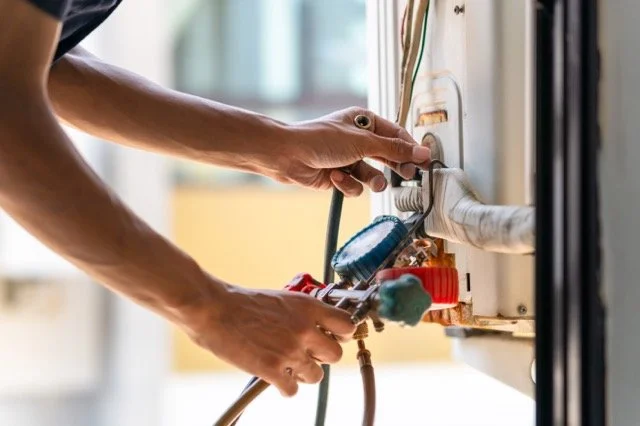
The Maintenance Question Every Michigan Homeowner Asks
We get this question at least three times a week from homeowners in Sterling Heights, Royal Oak, and across Macomb County: "What can I do myself, and what needs a tech?"
It's a fair question. Michigan's brutal winters and humid summers put serious demands on HVAC systems. You want to keep your furnace and AC running efficiently without paying for service calls you don't need. But you also don't want to void a warranty, create a safety hazard, or turn a $200 repair into a $2,000 replacement.
After 35 years of heating and cooling services in Metro Detroit, we've seen both sides of this equation. We've seen homeowners successfully handle basic maintenance that extends equipment life by years. We've also responded to emergency calls where well-intentioned DIY work created dangerous conditions or expensive damage.
The line between safe DIY maintenance and work that requires a Michigan-licensed contractor isn't always obvious. Some tasks that look simple—like adding refrigerant or adjusting a gas valve—are actually illegal for homeowners to perform. Other jobs that seem intimidating are perfectly safe if you know what you're doing.
This guide breaks down exactly what you can handle, what you shouldn't touch, and why the distinction matters for your safety, your wallet, and your equipment's lifespan.
Safe DIY Tasks: What You Can Handle
Let's start with the good news. There are several maintenance tasks that every Michigan homeowner can and should perform regularly. These don't require special tools, licensing, or technical expertise. They're safe, effective, and they genuinely extend the life of your system.
Monthly Air Filter Changes
This is the single most important thing you can do for your HVAC system. A clogged filter restricts airflow, forcing your furnace or AC to work harder. In Michigan homes with forced air systems, that means higher energy bills and increased wear on the blower motor.
Here's how to do it right:
- Turn off your system at the thermostat (not required, but safer)
- Locate the filter slot—usually at the return air duct or inside the furnace cabinet
- Slide out the old filter and note the size printed on the frame (typically 16x20x1, 16x25x1, or 20x25x1)
- Check the airflow direction arrow on the new filter—it must point toward the furnace
- Slide in the new filter and make sure it seats properly with no air gaps
During Michigan's heating season (October through April), check filters monthly. If you have pets, old ductwork, or run your system constantly, you might need to change them every 3-4 weeks. A $15 filter changed on schedule prevents thousands in repair costs. This simple task is covered in detail in our guide on what HVAC maintenance plans cover.
Outdoor Unit Clearing and Cleaning
Your AC condenser sits outside year-round, exposed to Michigan weather. Leaves, grass clippings, cottonwood seeds, and winter debris accumulate around the unit and reduce airflow through the coil fins.
Safe DIY cleaning process:
- Turn off power at the outdoor disconnect box (the gray box mounted near the unit)
- Remove leaves, sticks, and debris from around the condenser
- Clear at least 2 feet of space on all sides—trim back bushes and vegetation
- Gently spray the exterior coil fins with a garden hose from inside out (never use a pressure washer—it bends the fins)
- Remove the top grille and clear out any debris that's fallen inside
Do this twice a year: once in spring before cooling season starts, and once in fall after the leaves drop. If you're dealing with a noisy outdoor unit, check our article on why air conditioning units get loud before attempting any repairs.

Register and Vent Cleaning
Supply and return registers accumulate dust, pet hair, and debris. Blocked registers restrict airflow and create pressure imbalances in your ductwork.
Simple cleaning routine:
- Remove register covers (most just lift out or have simple clips)
- Vacuum dust and debris from the register and the first few inches of visible ductwork
- Wipe covers with a damp cloth and mild soap
- Make sure furniture, curtains, or rugs aren't blocking airflow when you reinstall them
Do this seasonally—four times a year is ideal. It takes about 20 minutes for a whole house and makes a noticeable difference in airflow and dust levels.
Thermostat Battery Replacement and Basic Adjustments
Most programmable thermostats use AA or AAA batteries as backup power. When batteries run low, you'll see a low battery icon on the display. Replace them immediately—a dead thermostat means no heating or cooling.
You can also safely adjust thermostat settings, change programming schedules, and switch between heating and cooling modes. What you shouldn't do is remove the thermostat from the wall and start rewiring it unless you're comfortable with low-voltage electrical work. If you're considering an upgrade, our comparison of smart thermostats vs programmable thermostats can help you decide.
Basic Visual Inspections
You don't need to be an HVAC tech to spot obvious problems. Make it a habit to look at your equipment monthly:
- Check for water pooling around the furnace or AC—that's never normal
- Look for rust, corrosion, or soot stains on the furnace cabinet
- Listen for unusual sounds—grinding, squealing, or banging
- Smell for gas odors near the furnace (if you smell gas, leave immediately and call DTE from outside)
- Watch for ice buildup on the outdoor AC unit during summer (sign of a refrigerant problem)
These visual checks don't fix anything, but they alert you to problems early—before they become emergencies. If you notice ice forming on your AC coils, read our guide on why AC units freeze up.
Tasks That Look Simple But Aren't
This is where homeowners get into trouble. Some HVAC maintenance tasks seem straightforward—until you understand what's actually happening inside the system. These jobs require specialized knowledge, tools, or licensing. Attempting them yourself can void warranties, violate state codes, or create serious safety hazards.
Adding Refrigerant ("Topping Off" the System)
If your AC isn't cooling well, you might assume it's "low on Freon" and needs a recharge. Here's the reality: refrigerant doesn't get used up like gasoline. An AC system is a sealed loop. If refrigerant is low, there's a leak.
Adding refrigerant without finding and fixing the leak is like inflating a tire with a nail in it. The refrigerant will leak out again, and you'll have wasted money.
More importantly, it's illegal. EPA Section 608 regulations require certification to purchase, handle, or add refrigerant. Venting refrigerant into the atmosphere carries fines up to $37,500 per violation. The equipment to properly recover, evacuate, and recharge a system costs thousands of dollars.
If your AC isn't cooling, the problem might be a dirty coil, a failed capacitor, a stuck expansion valve, or a compressor issue. Refrigerant level is just one possibility. Our NATE-certified technicians diagnose the actual cause before recommending repairs. With the upcoming R-410A refrigerant phase-out, proper refrigerant handling is more critical than ever.
Electrical Component Repairs
HVAC systems use both 120-volt and 240-volt circuits. The outdoor condenser typically runs on 240 volts—the same voltage as your electric dryer. Inside the system, you've got capacitors that store electrical charges, contactors that switch high-voltage circuits, and transformers that step down voltage for the thermostat.
It looks simple: just swap out the bad capacitor or contactor. But if you don't discharge the capacitor first, you can get a dangerous shock. If you wire the new component incorrectly, you can damage the compressor or create a fire hazard.
Michigan electrical code requires licensed electricians for most 240-volt work. While HVAC technicians can legally work on HVAC electrical components under their mechanical contractor license, homeowners performing their own electrical work must pull permits and pass inspections for anything beyond basic outlet or switch replacement.
Reality check: We've responded to service calls where homeowners replaced a $30 capacitor incorrectly and destroyed a $1,800 compressor in the process. The capacitor was fine—the real problem was a failing contactor. Professional diagnosis costs $89. The compressor replacement cost $3,200.
Gas Line Work and Combustion Adjustments
Never touch gas lines, gas valves, or burner adjustments. This isn't a warranty issue or a code technicality—it's a life safety issue.
Natural gas is odorless. The smell you associate with gas is an additive called mercaptan. If you smell it, you have a leak. If you don't smell it, you might still have a leak—mercaptan can fade over time or be absorbed by rust and debris in old pipes.
Improper gas line work can cause:
- Gas leaks leading to explosion risk
- Carbon monoxide production from incomplete combustion
- Flame rollout that can ignite nearby materials
- Cracked heat exchangers from incorrect gas pressure
Michigan mechanical contractor licensing exists specifically because this work is dangerous. Our technicians carry gas leak detectors, combustion analyzers, and manometers to measure gas pressure. We test for carbon monoxide after every furnace repair. This equipment costs thousands of dollars and requires training to use correctly.
If you suspect a gas problem, don't investigate it yourself. Leave the house, call DTE from outside, and then call a licensed contractor.
Ductwork Modifications
Adding a register to heat a cold room or closing off vents to "save energy" in unused rooms seems logical. In reality, it creates problems.
Your furnace and AC are sized for a specific airflow volume measured in cubic feet per minute (CFM). When you close vents or add ductwork without recalculating the system, you change the static pressure. Too much pressure causes:
- Reduced airflow across the heat exchanger, leading to overheating and cracks
- Frozen evaporator coils in summer
- Increased blower motor wear and premature failure
- Duct leaks at seams from excessive pressure
Proper duct design requires load calculations, CFM measurements, and static pressure testing. Adding or modifying ductwork without these calculations often makes comfort problems worse, not better.
What Requires a Licensed Technician
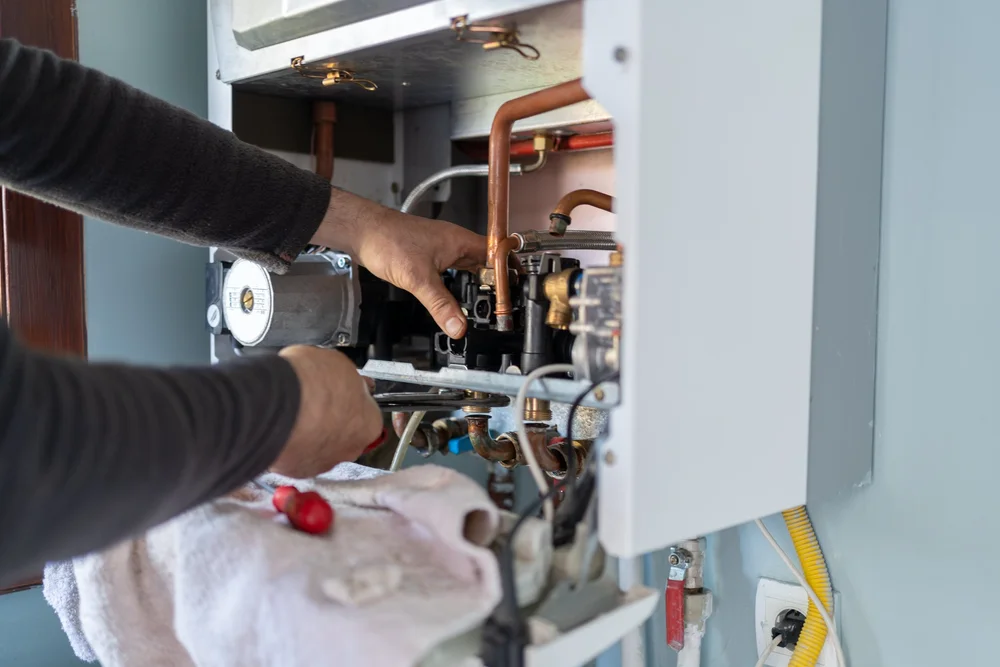
Some HVAC work isn't just inadvisable for homeowners—it's legally restricted to licensed professionals. Michigan mechanical contractor licensing exists to protect public safety. Here's what requires a licensed tech.
Refrigerant System Service
Any work involving refrigerant—leak repair, system evacuation, refrigerant recovery, or recharging—requires EPA Section 608 certification. This isn't optional. It's federal law.
Licensed technicians use vacuum pumps to remove air and moisture from the system, nitrogen to pressure-test for leaks, and electronic leak detectors to find refrigerant leaks as small as 0.1 ounces per year. We recover old refrigerant into certified tanks rather than venting it to the atmosphere.
The process for properly servicing a refrigerant system involves:
- Recovering existing refrigerant into a recovery tank
- Pulling a vacuum to remove air and moisture (takes 30-60 minutes)
- Pressure testing with nitrogen to verify the system holds pressure
- Recharging with the exact refrigerant weight specified by the manufacturer
- Measuring superheat and subcooling to verify correct charge
You can't do this with a can of refrigerant from the auto parts store. The equipment costs thousands, the certification requires testing, and the liability if something goes wrong is enormous.
Heat Exchanger Inspection
The heat exchanger is the metal chamber inside your furnace where combustion happens. Hot combustion gases flow through the exchanger, heating the metal. Your home's air blows across the outside of the exchanger, picking up heat without ever touching the combustion gases.
When a heat exchanger cracks—and they all eventually do—combustion gases can leak into your home's air. That means carbon monoxide.
Inspecting a heat exchanger requires removing the burner assembly, using a borescope camera to look inside the exchanger, and sometimes performing a tracer gas test. You need to know what a crack looks like versus normal surface rust or harmless stress lines.
We inspect heat exchangers during every furnace tune-up. It's not a DIY job. The consequences of missing a crack are too severe.
Load Calculations and System Sizing
If you're replacing a furnace or AC, proper sizing requires a Manual J load calculation. This calculation accounts for:
- Square footage and ceiling height
- Insulation levels in walls, attic, and basement
- Window area, orientation, and quality
- Air infiltration rates
- Internal heat gains from appliances and occupants
- Michigan's design temperatures (outdoor temperature extremes)
The old rule of thumb—"400 square feet per ton of cooling"—doesn't account for any of these factors. An oversized furnace short-cycles, wasting energy and creating comfort problems. An undersized system can't keep up during Michigan's polar vortex events or July heat waves.
Professional load calculations take 45-60 minutes and use specialized software. The result is equipment sized correctly for your specific home—not a guess based on the old unit's size. When homeowners in Clinton Township need new systems, we always start with proper load calculations before recommending equipment.
Combustion Analysis and Efficiency Testing
A combustion analyzer measures oxygen, carbon monoxide, and carbon dioxide levels in the flue gases. This tells us if the furnace is burning efficiently and safely.
Ideal combustion produces minimal carbon monoxide—under 50 parts per million (ppm) in the flue. High CO readings indicate incomplete combustion, which wastes energy and can be dangerous. Low oxygen readings suggest restricted airflow or a blocked vent.
We perform combustion analysis during every furnace tune-up. The equipment costs $1,500-$3,000 and requires annual calibration. It's not something homeowners can do without the proper tools and training.
The Cost Reality: When DIY Becomes Expensive
The appeal of DIY maintenance is obvious: save the service call fee and the labor cost. But when DIY goes wrong, the costs multiply fast. Here's what we've seen in real service calls across Macomb and Oakland counties.
Common DIY Mistakes and Their Repair Costs
Incorrect capacitor replacement: A homeowner in Sterling Heights watched a YouTube video and replaced the run capacitor on his AC. He bought the wrong capacitance rating and wired it incorrectly. The compressor ran for three days before failing. Cost: $2,400 for compressor replacement plus refrigerant. The original problem was a $35 contactor.
Refrigerant overcharge: A homeowner bought refrigerant online and added it to his system without gauges or temperature measurements. He overcharged the system, causing high head pressure that damaged the compressor valves. Cost: $3,100 for compressor replacement. Professional diagnosis and proper recharge would have cost $285.
Furnace filter installed backward: This sounds harmless, but a backwards filter (arrow pointing away from the furnace instead of toward it) can collapse and get sucked into the blower wheel. We pulled a shredded filter out of a blower assembly in Royal Oak. Cost: $680 for blower motor replacement and labor. A correctly installed $12 filter would have prevented it.
Closed too many vents: A homeowner closed vents in unused bedrooms to "save energy." The reduced airflow caused the heat exchanger to overheat and crack. Cost: $1,800 for heat exchanger replacement on a 12-year-old furnace. At that point, replacing the entire furnace made more sense. Our article on furnace replacement costs in Michigan breaks down what to expect.
The pattern: In each case, the homeowner was trying to save $150-$300 on a service call. The DIY attempt cost $1,800-$3,100 in repairs. That's not counting the days without heating or cooling while waiting for parts.
Warranty Implications
Most furnace and AC manufacturers offer parts warranties ranging from 5 to 10 years. Some offer lifetime heat exchanger or compressor warranties. These warranties have conditions.
Common warranty requirements:
- Installation by a licensed contractor
- Annual professional maintenance
- Repairs performed by licensed technicians using OEM parts
- Registration within 90 days of installation
If you install a capacitor yourself and the compressor fails a year later, the manufacturer can void the warranty claim. They'll argue that improper repair caused the failure. You're now paying out of pocket for a $2,000 compressor that should have been covered.
This is why we recommend the Next Care Plan—our $5/month maintenance subscription. Two annual tune-ups (fall and spring) keep your warranties valid and catch problems early. The plan costs $60 per year. A single warranty claim can save you thousands.
Safety Code Violations
When you sell your home in Michigan, the buyer's inspector will look at the HVAC system. If they find unpermitted work, code violations, or obvious DIY repairs, it creates problems.
Common violations we see:
- Incorrect gas line sizing or connections
- Missing or improperly sized combustion air openings
- Vent pipes that don't meet clearance requirements
- Electrical work that doesn't meet NEC standards
- Refrigerant lines installed without proper insulation or support
The buyer's lender might require these issues be fixed before closing. Now you're hiring a contractor on a tight timeline to correct work you did yourself years ago. It's expensive and stressful.
How Professional Maintenance Pays Off
Professional HVAC maintenance isn't just about fixing what's broken—it's about preventing failures before they happen. Here's what a proper tune-up includes and why it matters.
What's Included in a Professional Tune-Up
When our technicians perform a furnace or AC tune-up, the process takes 60-90 minutes. Here's what we check:
Furnace tune-up (fall):
- Inspect heat exchanger for cracks or corrosion
- Test gas pressure and adjust if needed
- Clean and inspect burners
- Test ignition system (hot surface igniter or pilot)
- Measure temperature rise across the heat exchanger
- Test safety controls (limit switches, rollout switches)
- Inspect and test vent system for proper draft
- Lubricate blower motor bearings
- Test and calibrate thermostat
- Check electrical connections and tighten terminals
- Measure amp draw on blower motor and inducer motor
- Perform combustion analysis
- Test for carbon monoxide
- Change air filter
AC tune-up (spring):
- Check refrigerant charge (superheat and subcooling)
- Inspect compressor and condenser fan motor
- Test capacitors and contactors
- Clean condenser coil
- Inspect evaporator coil for dirt or mold
- Check condensate drain and clean if needed
- Test thermostat operation in cooling mode
- Measure amp draw on compressor and fan motor
- Check electrical connections
- Inspect refrigerant lines for damage or insulation issues
- Test low-voltage wiring
- Measure supply and return air temperatures
- Change air filter
We catch problems like weak capacitors, dirty coils, or incorrect refrigerant charge before they cause failures. A capacitor that's starting to fail might still work—but it's stressing the compressor. We replace it during the tune-up for $75. If we don't catch it, it fails on the hottest day of July, and you're without AC until we can get there with the part.
Energy Efficiency Gains
A well-maintained HVAC system uses 15-20% less energy than a neglected one. Here's why:
Dirty coils reduce heat transfer. A condenser coil covered in cottonwood seeds and dust can't reject heat efficiently. The compressor works harder, runs longer, and uses more electricity. Cleaning the coil during a tune-up restores efficiency.
Low refrigerant charge reduces capacity. An AC that's 10% low on refrigerant loses about 20% of its cooling capacity. The system runs constantly but never reaches the thermostat setpoint. Your electric bill climbs while the house stays warm.
Dirty burners waste gas. Furnace burners covered in rust and debris don't burn efficiently. You're sending unburned gas up the chimney. Combustion analysis during a tune-up verifies efficiency and identifies problems.
Worn belts and bearings increase friction. A blower motor with dry bearings or a worn belt uses more electricity. The motor works harder and runs hotter. Eventually it fails. Lubrication and belt replacement during maintenance prevent this.
For a typical Michigan home using 1,000 therms of gas per year for heating, a 15% efficiency improvement saves 150 therms—about $180 per year at current gas prices. An AC running 800 hours per summer at 3 kW with a 20% efficiency improvement saves 480 kWh—about $75 per year.
The Next Care Plan costs $60 per year. The energy savings alone often pay for it. That's before you account for avoiding emergency repairs.
Equipment Lifespan Extension
The national average lifespan for a furnace is 15-20 years. For an AC, it's 12-15 years. In Michigan, where systems work hard for six months of heating and three months of cooling, those numbers drop without maintenance.
We've seen furnaces fail at 8 years because they never had a tune-up. We've also seen 30-year-old furnaces still running because they had annual service every fall.
The difference is wear. Every time a blower motor starts, the bearings wear slightly. Every time a compressor cycles on, the electrical contacts in the contactor wear. Every heating season, combustion byproducts accumulate on the heat exchanger.
Professional maintenance addresses this wear before it causes failure. We lubricate bearings, clean burners, test capacitors, and replace components that are starting to fail. The system lasts longer because it's not running in a degraded state.
If annual maintenance extends your furnace's life from 12 years to 18 years, you've delayed a $5,000-$7,000 replacement by six years. The maintenance cost over those six years? About $600. The return on investment is obvious. For homeowners comparing high-efficiency options, our analysis of 96% AFUE furnaces in Michigan can help with the decision.
Signs You Need Professional Help Now
Some HVAC problems can wait for a scheduled service appointment. Others require immediate professional attention. Here's how to tell the difference.
Immediate Safety Concerns
Gas odor: If you smell gas (rotten egg smell) near your furnace or anywhere in your home, leave immediately. Don't turn lights on or off, don't use your phone inside, don't investigate the source. Get everyone out, then call DTE's emergency line (800-947-5000) from outside. After DTE secures the gas line, call us to inspect the furnace.
Carbon monoxide alarm: If your CO detector goes off, treat it seriously. Get everyone outside into fresh air. Call 911. Don't re-enter until the fire department clears the house. CO is odorless and deadly. Even low-level exposure causes headaches, nausea, and confusion.
Flames or smoke from furnace: This is an emergency. Shut off the gas valve if you can reach it safely, leave the house, and call 911. Flame rollout or flames outside the burner chamber indicate a serious malfunction.
Burning smell or sparking: If you see sparks, smell burning plastic, or see smoke coming from your furnace or AC, shut off power at the breaker and call for service immediately. This indicates an electrical problem that could cause a fire.
Problems That Need Service Soon
Furnace short-cycling: If your furnace runs for 2-3 minutes, shuts off, then starts again a few minutes later, something's wrong. Common causes include a clogged filter, a failing limit switch, or an oversized furnace. Short-cycling wastes energy and stresses components. Our guide on furnace short-cycling explains the causes.
No heat or no cooling: If your system won't start at all, check the obvious stuff first: thermostat batteries, thermostat settings, circuit breakers, furnace power switch. If everything looks right and it still won't run, call for service. You might have a failed control board, a tripped safety switch, or a bad transformer.
Weak airflow: If air is barely coming out of the registers, you might have a clogged filter, a failing blower motor, or ductwork problems. Change the filter first. If that doesn't help, call for service.
Strange noises: Grinding, squealing, or banging sounds indicate mechanical problems. Grinding usually means worn bearings. Squealing often indicates a worn belt or dry bearings. Banging can be delayed ignition (gas builds up before igniting) or ductwork expanding and contracting. None of these fix themselves.
Water leaking from furnace or AC: AC condensate is normal—there's a drain line that carries it away. But if water is pooling around the furnace or indoor AC unit, the drain is clogged or the condensate pump failed. This needs service before it causes water damage.
Ice on outdoor AC unit: If you see ice forming on the outdoor condenser coil or refrigerant lines during summer, shut the system off and call for service. This indicates low refrigerant, restricted airflow, or a failed expansion valve. Running the system with ice buildup can damage the compressor. We explain the causes in our article about why AC units freeze up.
Seasonal Warning Signs
Fall (before heating season):
- Furnace won't start when you first turn it on in October
- Yellow or flickering burner flames (should be steady blue)
- Soot or rust stains on the furnace cabinet
- Pilot light won't stay lit (older furnaces)
Spring (before cooling season):
- AC won't start when you first turn it on in May
- Outdoor unit makes loud humming but fan doesn't spin
- Musty or moldy smell when AC runs
- Circuit breaker trips when AC starts
Don't wait until the first 90-degree day or the first polar vortex to discover your system doesn't work. Test your furnace in September and your AC in April. If there's a problem, you'll have time to schedule service before the rush.
Ready to Get Started?
NEXT Heating & Cooling has been keeping Michigan homes comfortable for over 35 years. Get honest diagnostics and fair pricing from NATE-certified technicians who show up on time. Whether you need a seasonal tune-up or emergency repair, we're here to help.
Schedule Your ServiceFrequently Asked Questions
No. EPA Section 608 regulations require certification to purchase, handle, or add refrigerant to any AC or heat pump system. This is federal law, not a state regulation. Venting refrigerant to the atmosphere carries fines up to $37,500 per violation. Additionally, if your AC is low on refrigerant, there's a leak that needs to be found and repaired—simply adding refrigerant doesn't fix the underlying problem. Licensed HVAC contractors have the equipment and training to properly diagnose refrigerant issues, locate leaks, and recharge systems to manufacturer specifications.
Check your filter monthly during heating season (October through April) and change it when it looks dirty—typically every 30-60 days. Homes with pets, high dust levels, or older ductwork may need monthly changes. Homes with newer construction and no pets might get 60-90 days from a filter. The key is checking it regularly. A clogged filter restricts airflow, forcing your furnace to work harder and potentially causing overheating that can crack the heat exchanger. Standard 1-inch pleated filters work well for most Michigan homes. Avoid ultra-thick filters (4-5 inches) unless your system was designed for them—they can restrict airflow if your furnace doesn't have the blower capacity.
No, and it can actually damage your system. Your furnace is sized for a specific airflow volume. Closing vents increases static pressure in the ductwork, which reduces overall airflow. This causes the heat exchanger to overheat, potentially cracking it. It also increases blower motor wear and can cause duct leaks at seams. The energy savings from closing a few vents are minimal—maybe 5-8%—while the risk of a $1,500-$2,500 heat exchanger replacement is real. If you have rooms that are consistently too hot or too cold, the solution is balancing the ductwork or adding zone controls, not closing vents. Our technicians can assess your ductwork and recommend proper solutions.
The Next Care Plan includes two comprehensive maintenance visits per year—a fall furnace tune-up and a spring AC tune-up. Each visit includes a complete system inspection, cleaning, testing of all components, combustion analysis (for furnaces), refrigerant charge verification (for AC), safety testing, filter replacement, and a detailed report of findings. You also get priority scheduling, 10% off any needed repairs, and no service call fees. The plan costs $5 per month ($60 per year). Regular maintenance extends equipment life, maintains warranty coverage, improves efficiency, and catches small problems before they become expensive failures. Learn more about what the Next Care Plan covers.
You can do basic exterior cleaning safely. Turn off power at the outdoor disconnect box, remove leaves and debris from around the unit, and gently spray the exterior coil fins with a garden hose from the inside out (never use a pressure washer—it bends the fins). However, thorough coil cleaning requires removing the top grille and fan assembly, accessing the interior of the coil, and using professional coil cleaners that break down the oily film that accumulates on the fins. This is best left to professionals during your spring tune-up. We have specialized coil cleaners, fin combs to straighten bent fins, and the experience to clean thoroughly without damaging components. Dirty coils reduce efficiency by 20-30%, so professional cleaning every 2-3 years is worth the investment.
You can't reliably diagnose a cracked heat exchanger without professional equipment. Warning signs include: soot or rust stains on the furnace cabinet, yellow or flickering flames instead of steady blue flames, excessive rust inside the burner compartment, or your carbon monoxide detector going off. However, many heat exchanger cracks are invisible from the outside. Professional inspection requires removing the burner assembly and using a borescope camera to look inside the exchanger. Some cracks only open when the metal heats up and expands. We sometimes use tracer gas testing to definitively identify cracks. If your furnace is 15+ years old and showing any of these symptoms, schedule an inspection. A cracked heat exchanger is a safety issue—it allows combustion gases including carbon monoxide to enter your home's air.
It can, depending on what you do and what fails. Most manufacturer warranties require installation by a licensed contractor and annual professional maintenance. If you attempt a repair yourself—even something that seems simple like replacing a capacitor—and a major component fails later, the manufacturer can argue that improper repair caused the failure and deny the warranty claim. This is especially true for compressor warranties, which often require proof of annual professional maintenance and refrigerant system service performed by certified technicians. The risk isn't worth it. A compressor replacement costs $2,000-$3,500. If your warranty would have covered it but gets voided because of DIY work, you're paying out of pocket for an expensive repair. Stick to the safe DIY tasks (filter changes, register cleaning, exterior debris removal) and leave component repairs to licensed professionals.