

Furnace Keeps Tripping Breaker: What's Actually Wrong
You reset the breaker. The furnace runs for twenty minutes, maybe an hour. Then the heat stops again. You walk downstairs, check the panel, and find the same breaker flipped off.
This pattern isn't random. Your furnace is drawing more electrical current than the circuit breaker is rated to handle, or there's a fault somewhere in the system creating a dangerous condition. Either way, the breaker is doing exactly what it's designed to do: protect your home from an electrical fire.
After 35 years servicing furnaces across Macomb County, Oakland County, and St. Clair County, we've diagnosed this issue hundreds of times. The cause is almost always one of six specific problems, and most homeowners can narrow it down before we arrive. Here's what you need to know.
How Your Furnace Electrical System Works
A modern gas furnace in Michigan runs on a dedicated 120-volt circuit, typically protected by a 15-amp or 20-amp breaker. Michigan electrical code requires this circuit to serve the furnace alone, not shared with outlets or lights.
The furnace uses electricity to power several components:
- Blower motor: Circulates air through your ductwork. This is the biggest electrical load, drawing 6 to 12 amps depending on the motor size and speed.
- Inducer fan motor: Exhausts combustion gases through the vent pipe. Draws 1 to 3 amps.
- Hot surface igniter or electronic ignition: Lights the gas burners. Draws 3 to 5 amps during the ignition cycle.
- Control board and transformer: Manages the sequence of operations. Draws less than 1 amp.
- Gas valve: Opens to allow gas flow. Minimal draw, typically under 1 amp.
During normal operation, the total amp draw stays well below the breaker rating. A typical furnace pulls 10 to 14 amps at full operation. A 15-amp breaker can handle this continuously without issue.
When something goes wrong, one of those components starts drawing more current than it should. The breaker detects the overload and trips to prevent the wiring from overheating. If you're experiencing this issue alongside other heating problems, you might also want to read about furnace running but no heat scenarios we commonly diagnose.
The 6 Reasons Your Furnace Trips the Breaker
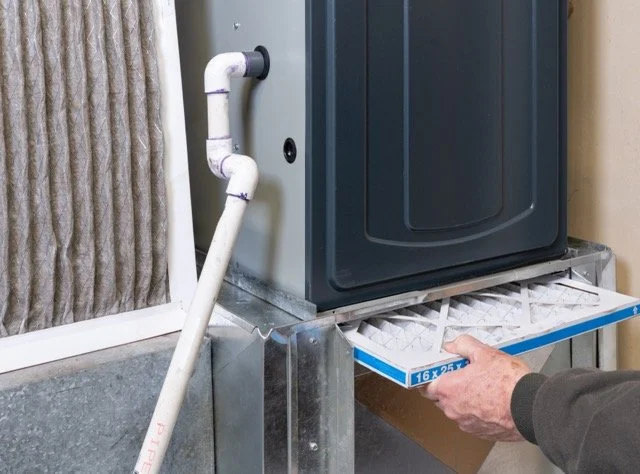
1. Dirty Air Filter Causing Blower Motor Overload
This is the most common cause we see in Southeast Michigan homes, especially during extended cold snaps when the furnace runs constantly.
A clogged filter restricts airflow. The blower motor has to work harder to push air through the blockage, drawing more amperage than normal. If the filter is dirty enough, the motor can pull 15 to 18 amps, enough to trip a 15-amp breaker.
The fix is simple: replace the filter. Use a filter rated for your furnace's airflow capacity. In Michigan, where furnaces run heavily from November through March, check your filter monthly.
2. Failing Blower Motor Drawing Excess Amperage
Blower motors wear out. Bearings degrade, windings deteriorate, and internal resistance increases. A motor that once drew 8 amps might now pull 14 or 16 amps to do the same work.
We see this most often in furnaces 12 to 20 years old. Carrier, Lennox, Trane, and Bryant motors are built to last, but nothing runs forever. When a motor starts drawing excess current, it's on borrowed time.
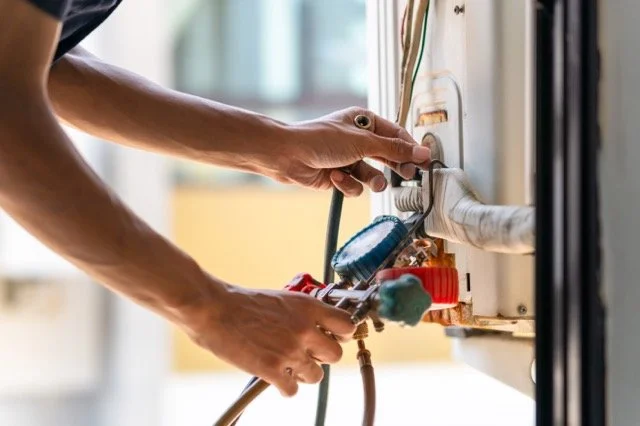
A technician can measure the amp draw with a clamp meter. If the motor is pulling more than its nameplate rating, replacement is the only safe option. Continuing to run an overloaded motor risks burning out the windings completely, which can damage the control board and create a fire hazard.
3. Shorted Control Board or Transformer
The control board manages every function of the furnace: ignition sequence, blower speed, safety lockouts. It runs on 24 volts supplied by a step-down transformer.
When a control board develops a short circuit, it creates a direct path to ground. This can happen from power surges, moisture infiltration, or simple age. The sudden spike in current trips the breaker instantly.
If your breaker trips the moment the furnace tries to start, before the blower even kicks on, a shorted control board is the likely culprit. This repair requires a licensed technician. Control boards are furnace-specific and must be programmed correctly to match your system.
4. Bad Capacitor or Relay
The blower motor capacitor stores electrical energy and releases it to help the motor start. When a capacitor fails, the motor struggles to start, drawing excessive current during the startup cycle.
You'll often hear a humming sound from the furnace when this happens. The motor tries to spin but can't overcome the initial resistance. The amp draw spikes, and the breaker trips within seconds.
Capacitors are inexpensive parts, but they're critical. A failing capacitor stresses the motor and shortens its lifespan. Replacing it early prevents a more expensive motor replacement down the road. Our furnace cleaning and tune-up service includes capacitor testing as part of the inspection.
5. Undersized Breaker or Shared Circuit
Older homes in Royal Oak, Sterling Heights, and Clinton Township sometimes have furnace circuits that don't meet current code. We've found furnaces wired to 15-amp breakers when they should be on 20-amp circuits. We've also found furnaces sharing a circuit with basement outlets or garage lights.
If your furnace only trips the breaker when something else on the circuit is running, you've got a shared circuit problem. Michigan electrical code requires a dedicated circuit for the furnace. No exceptions.
Upsizing the breaker without checking the wire gauge is dangerous. A 15-amp breaker protects 14-gauge wire. If you swap in a 20-amp breaker, the wire can overheat before the breaker trips. That's how electrical fires start.
A licensed electrician or HVAC contractor can verify the wire gauge and install the correct breaker size. If the wire is undersized, it needs to be replaced.
6. Loose Wiring Connections Creating Arcing
Loose connections at the breaker panel, furnace disconnect, or inside the furnace create resistance. Resistance generates heat. Heat causes arcing. Arcing trips the breaker and damages the connection point.
This is more common in homes with aluminum wiring, which was popular in Michigan construction during the 1960s and 1970s. Aluminum expands and contracts more than copper, causing connections to loosen over time.
If you see discoloration around the breaker, smell burning plastic, or feel heat on the breaker itself, stop using the furnace immediately and call a licensed contractor. These are signs of a dangerous electrical fault.
Why This Happens More in Michigan Winters
We see a spike in breaker-tripping calls every January and February. There are three Michigan-specific reasons why.
Extended runtime during polar vortex events: When outdoor temperatures drop below zero for days at a time, furnaces run almost continuously. A blower motor that's marginal during mild weather can't handle the sustained load. The extra runtime pushes it over the edge.
Age of housing stock: Southeast Michigan has thousands of homes built between 1950 and 1980. Many still have original electrical panels and furnace circuits. A 40-year-old breaker doesn't trip as reliably as a new one. It might allow higher amperage before tripping, or it might trip prematurely from wear.
Dust and debris in basement furnace rooms: Most Michigan furnaces sit in unfinished basements. Dust, pet hair, and construction debris get pulled into the blower compartment. Over years, this builds up on the motor windings and bearings, increasing friction and electrical resistance.
This is why we recommend seasonal maintenance through the Next Care Plan. A fall tune-up cleans the blower assembly, tests amp draw, and catches these problems before they leave you without heat in the middle of a cold snap.

What to Check Before Calling a Technician
You can safely troubleshoot a few things on your own. Start here:
Replace the air filter. Use a filter that matches your furnace specifications. If you're not sure what size you need, check the filter slot or the owner's manual. A clean filter solves the problem about 30% of the time.
Check for obstructions around the furnace. Make sure return air vents aren't blocked by furniture, storage boxes, or laundry. Verify the furnace cabinet door is fully closed and latched. Many furnaces have a safety switch that prevents operation if the door is open.
Inspect the breaker panel. Look for signs of overheating: discoloration on the breaker or panel, a burning smell, or a breaker that feels hot to the touch. If you see any of these, do not reset the breaker. Call a licensed contractor immediately.
Reset the breaker once. If everything looks normal, reset the breaker and observe what happens. If it trips immediately when the furnace starts, you've got a short circuit or a severely overloaded component. If it runs for a while and then trips, the problem is likely a failing motor or capacitor.
Do not upsize the breaker. Installing a larger breaker without verifying the wire gauge is dangerous. The breaker protects the wire, not the furnace. If the wire is undersized, a larger breaker won't trip when it should, and the wire can overheat.
When to Call a Licensed HVAC Contractor
Some situations require professional diagnosis. Call a reliable HVAC contractor in Metro Detroit if:
- The breaker trips immediately upon furnace startup, before the blower runs.
- You smell burning plastic, rubber, or electrical insulation from the furnace or breaker panel.
- The breaker trips randomly, not tied to the furnace cycle. This suggests a wiring fault or a problem elsewhere on the circuit.
- Your furnace is 15 years or older. At this age, multiple components may be wearing out simultaneously.
- You've replaced the filter and the problem persists.
A licensed technician has the tools and training to diagnose electrical faults safely. We carry clamp meters, multimeters, and infrared thermometers to measure amp draw, voltage, and temperature at every connection point.
We also understand Michigan mechanical code and can verify that your furnace installation meets current safety standards. Many older installations don't, and upgrading them prevents future problems.
What a Tech Will Diagnose
When you call heating and cooling services in Metro Detroit, here's what the diagnostic process looks like:
Amp draw testing on the blower motor. We clamp an ammeter around the motor's power wire and measure the current draw during startup and continuous operation. We compare this to the motor's nameplate rating. If the draw is high, we know the motor is failing.
Control board inspection. We visually inspect the board for burn marks, swollen capacitors, or corrosion. We test the transformer output voltage. We verify that all safety switches are functioning correctly.
Wiring integrity check. We inspect every connection from the breaker panel to the furnace. We look for loose terminals, oxidized wires, and signs of arcing. We use an infrared thermometer to detect hot spots that indicate high resistance.
Load calculation for circuit sizing. We add up the amp draw of every component and verify that the breaker and wire gauge are correctly sized for the load. If the circuit is undersized, we'll recommend an upgrade.
This diagnostic process takes 30 to 60 minutes. We'll explain what we find, show you the readings, and give you options for repair. No pressure, no upselling. Just honest information so you can make the right decision for your home.
Cost Reality for Michigan Homeowners
Repair costs depend on what's failing. Here's what we typically see in Southeast Michigan:
Blower motor replacement: $400 to $800, depending on the motor type and furnace brand. Variable-speed motors cost more than single-speed motors. Carrier and Lennox motors tend to be on the higher end. Goodman and Rheem are more affordable.
Control board replacement: $300 to $600, including the board and labor. Boards are furnace-specific. We stock common models for Carrier, Trane, Bryant, and Lennox, but some older or specialty models require ordering.
Capacitor replacement: $150 to $250. This is a quick repair, usually completed in one visit.
Electrical circuit upgrade: $300 to $600 if you need a new dedicated circuit run from the panel to the furnace. This is electrical work, and it must be done by a licensed electrician or HVAC contractor with electrical credentials.
Full furnace replacement: $3,500 to $7,000 for a complete system in a typical Southeast Michigan home. This includes the furnace, labor, permits, and disposal of the old unit. High-efficiency models (95% AFUE or higher) cost more upfront but save on gas bills long-term.
If your furnace is 15 years or older and needs a major repair like a blower motor or control board, replacement often makes more financial sense. A new furnace comes with a 10-year parts warranty and 20+ years of reliable service. Repairing an old furnace buys you a few more years at best.
We'll walk you through the cost-benefit analysis based on your specific situation. No sales pitch, just the numbers. For similar cost breakdowns on other HVAC issues, check out our guide on common HVAC repairs in Metro Detroit.
Preventive Maintenance Saves Money: The Next Care Plan costs $5 per month ($60 per year) and includes two annual visits: a fall furnace tune-up and a spring AC tune-up. During these visits, we test amp draw, clean the blower assembly, inspect electrical connections, and catch problems before they cause breakdowns. Members also get priority scheduling, 10% off repairs, and no service call fees. A single avoided furnace repair pays for the plan several times over.
Ready to Get Started?
NEXT Heating & Cooling has been keeping Michigan homes comfortable for over 35 years. Get honest diagnostics and fair pricing from NATE-certified technicians who show up on time.
Schedule Your Service