

Furnace Running But No Heat? Here's What's Wrong
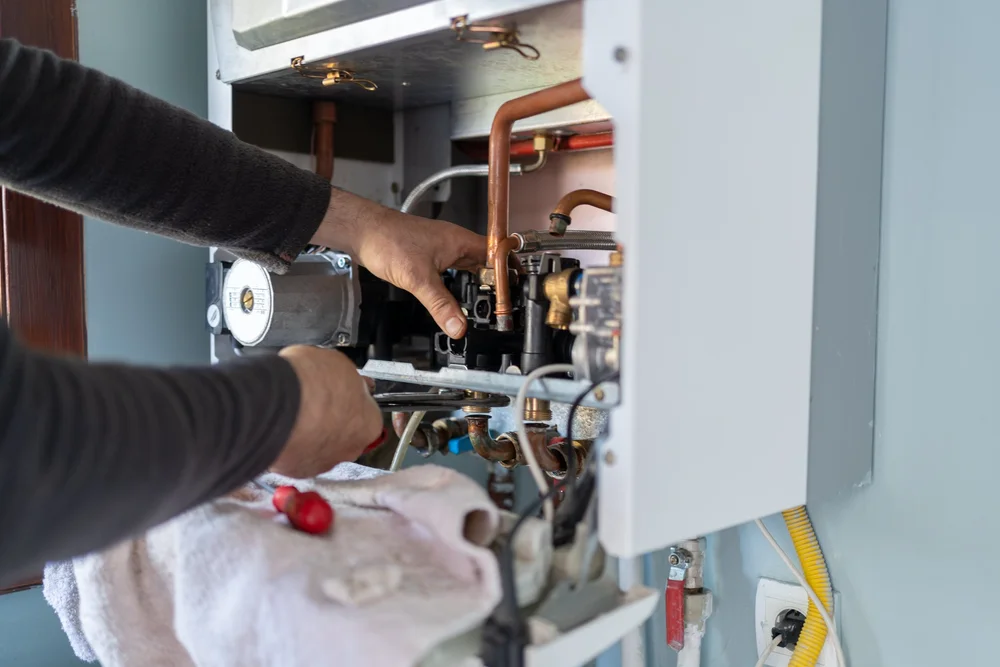
It's 11 PM on a Tuesday in January. The temperature outside your Sterling Heights home just dropped to 8 degrees. Your furnace is humming along in the basement, the blower is running, but the air coming out of your vents feels like a cool breeze. You check the thermostat: it's set to 70, but the house is 62 and dropping.
This is one of the most frustrating HVAC problems a Michigan homeowner can face. The furnace sounds normal. It's using electricity. But there's no heat. After 35 years of heating and cooling services in Metro Detroit, we've diagnosed this exact scenario hundreds of times, and the cause is almost always one of seven specific issues.
Some you can fix yourself in five minutes. Others require a licensed technician with specialized tools. This guide will walk you through each possibility, explain what's happening inside your furnace, and help you decide whether to grab a screwdriver or call for backup.
The Thermostat Is Set Wrong or Malfunctioning
Before you open the furnace cabinet, check the most common culprit: your thermostat. This accounts for about 30% of the "furnace running but no heat" calls we get in Macomb County.
Here's what happens: the thermostat controls two separate systems. One tells the furnace when to ignite and create heat. The other tells the blower fan when to circulate air. If the fan is set to ON instead of AUTO, the blower runs continuously, pushing air through your ducts whether the furnace is heating or not. That air feels cool because it's just recirculating room-temperature air without passing over the heat exchanger.
Walk to your thermostat right now and look for a switch or setting labeled FAN. If it says ON, switch it to AUTO. Within 30 seconds, you should notice a difference. In AUTO mode, the fan only runs when the furnace is actively heating, so every burst of air from your vents will be warm.
Other thermostat issues to check:
- Dead batteries: Many thermostats use AA or AAA batteries as backup power. When they die, the display might stay lit (powered by the furnace's 24-volt transformer), but the thermostat can't send proper signals. Replace them once a year, ideally when you change your furnace filter.
- Wrong mode: Verify the system is set to HEAT, not COOL or OFF. It sounds obvious, but we've seen it dozens of times.
- Temperature setting too low: The set temperature needs to be at least 5 degrees above the current room temperature to trigger a heating cycle.
- Thermostat location: If your thermostat is mounted near a drafty window, exterior door, or heat source like a lamp, it might be getting false temperature readings and shutting off the furnace prematurely.
If your thermostat is more than 10 years old and you're experiencing erratic behavior, a faulty temperature sensor or worn relay could be the problem. Modern programmable and smart thermostats are more accurate and can be installed by a technician during a routine service call.
Michigan Winter Tip: If you have a smart thermostat and your furnace seems to run without heating during extreme cold snaps, check for a "temperature swing" or "differential" setting. Some models allow the indoor temperature to drop 2-3 degrees before calling for heat. In a polar vortex event, that delay can make your home uncomfortably cold.
Dirty or Clogged Air Filter
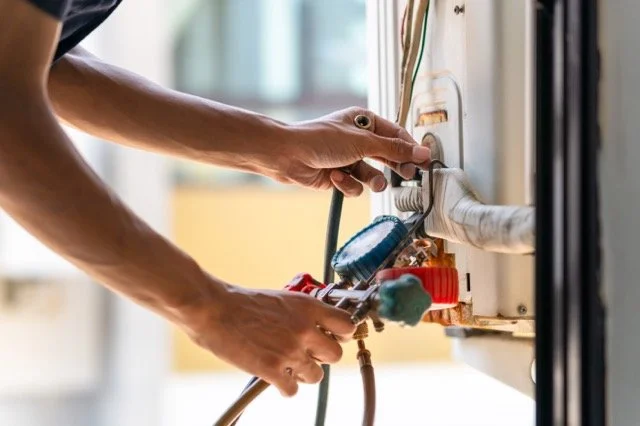
A clogged air filter is the second most common cause of a furnace running without heat, and it's also one of the easiest to fix. Your furnace pulls air through the filter before it reaches the blower and heat exchanger. When that filter gets packed with dust, pet hair, and debris, airflow drops dramatically.
Here's what happens inside the furnace: the burners ignite and the heat exchanger gets hot, but there's not enough air moving across it to absorb and distribute that heat. The furnace's limit switch (a safety device) detects the overheating and shuts down the burners. The blower keeps running to cool things down, but it's only pushing a trickle of lukewarm air through your vents.
In Michigan homes, filters get dirty faster than the national average. We deal with:
- Heavy pollen loads in spring and fall
- Construction dust from ongoing road work
- Pet dander (especially in homes with multiple animals)
- Fine particulate from wood-burning fireplaces and stoves
- Basement furnace installations that pull in concrete dust and lint from nearby laundry areas
A standard 1-inch pleated filter should be replaced every 30-60 days during heating season. If you have pets or allergies, aim for 30 days. Thicker 4-inch or 5-inch media filters (common in newer furnaces) can last 6-12 months, but still need regular checks.
To check your filter, locate the return air grille (usually a large rectangular vent on a wall or ceiling) or the filter slot inside the furnace cabinet. Pull it out and hold it up to a light. If you can't see light through it, it's too dirty. Even if it looks okay, run your finger across the surface. If it comes away gray or black, replace the filter.
Use the exact size printed on the filter frame (for example, 16x25x1 or 20x20x4). A filter that's too small allows unfiltered air to bypass it. One that's too thick might not fit properly and can restrict airflow even when clean. We see this often in Troy and Rochester Hills homes where homeowners upgrade to high-MERV filters without checking compatibility. A MERV 13 filter provides excellent filtration but requires a furnace blower strong enough to pull air through the dense media. If your furnace wasn't designed for it, you'll end up with the same overheating and shutdown cycle.
Pilot Light or Ignition System Failure
If your furnace is running but producing no heat, the ignition system might not be lighting the gas burners. Older furnaces (pre-2000) typically use a standing pilot light, a small flame that burns continuously and ignites the main burners when the thermostat calls for heat. Newer furnaces use electronic ignition: either a hot surface igniter (a glowing ceramic element) or an intermittent pilot (a spark that lights a pilot, which then lights the burners).
When the ignition system fails, you'll hear and feel the furnace go through its startup sequence. The blower might run, the inducer motor (a small fan that vents combustion gases) will spin up, but the burners never light. After 3-5 attempts, the furnace goes into safety lockout and shuts down completely.
For standing pilot lights, the most common issue is the flame going out due to a draft, a faulty thermocouple, or dirt blocking the pilot orifice. You can sometimes relight it yourself by following the instructions printed on the furnace cabinet, but if it won't stay lit after two or three tries, the thermocouple (a safety sensor that shuts off gas if the flame goes out) likely needs replacement.
Hot surface igniters are fragile. They look like a small glowing bar near the burners and reach temperatures around 2,500°F. Over time, they crack from thermal stress. We replace dozens of these every winter in Southeast Michigan, especially in furnaces that short-cycle (turn on and off frequently). Carrier, Lennox, and Trane models typically use silicon nitride igniters, which last 5-7 years. Older furnaces might use silicon carbide, which is more brittle and fails sooner.
If you look into the furnace cabinet and see the igniter glowing orange but the burners don't light, the problem is usually downstream: a stuck gas valve, a failed flame sensor (covered next), or low gas pressure.
Safety Warning: If you smell natural gas (a sulfur or rotten egg odor) or propane (which smells similar), do not attempt to relight the pilot or troubleshoot the furnace. Leave the house immediately, call your gas utility or propane supplier from outside, and do not return until they've inspected the system. Gas leaks are rare but extremely dangerous.
Flame Sensor Is Dirty or Failed
The flame sensor is a thin metal rod (usually stainless steel) positioned in the path of the burner flames. Its job is to verify that gas is actually burning after the ignition sequence. If the sensor doesn't detect a flame within a few seconds, it assumes there's a gas leak and shuts off the gas valve to prevent unburned gas from accumulating in the heat exchanger.
When a flame sensor gets coated with carbon, soot, or oxidation, it can't conduct the tiny electrical current needed to signal the control board that a flame is present. The furnace ignites, the burners light, and then 3-5 seconds later everything shuts off. The blower keeps running (to clear any residual gas), but there's no heat.
This is the single most common repair we make during furnace service calls in Macomb County. It happens more often in furnaces that run on propane (which burns dirtier than natural gas) and in systems that haven't had regular maintenance. A dirty flame sensor can also be caused by a poorly adjusted burner, which produces a lazy yellow flame instead of a crisp blue one.
Cleaning a flame sensor is straightforward if you're comfortable working inside the furnace. Turn off power at the furnace switch and the circuit breaker. Remove the flame sensor (usually held by a single screw), and gently polish the metal rod with fine-grit sandpaper or a dollar bill. Don't use steel wool or anything abrasive, which can scratch the sensor and make the problem worse. Reinstall it, restore power, and test the furnace.
If cleaning doesn't solve the issue, the sensor itself might be failing. Sensors are inexpensive ($15-$30), but correct installation matters. The sensor must be positioned in the flame at the right distance and angle, or it won't read properly. This is one of those repairs that looks simple but benefits from a technician's experience, especially if you're not familiar with your furnace model.
Homes in Clinton Township and Sterling Heights with hard water often see faster sensor deterioration. Humidity from the water heater (if it's in the same utility room) can accelerate oxidation. Our Next Care Plan includes flame sensor inspection and cleaning during every fall tune-up, which prevents most of these mid-winter failures.
Gas Supply Issues
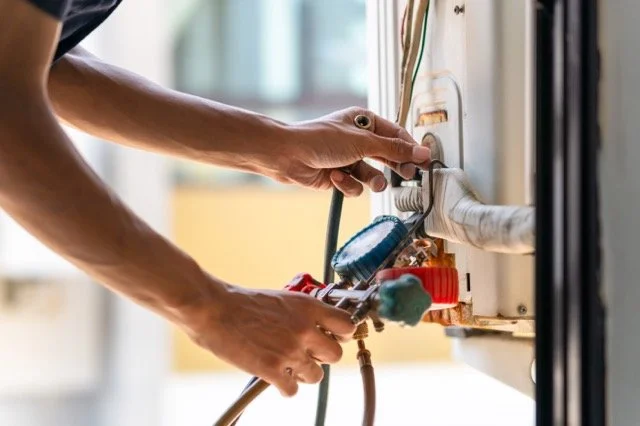
If the igniter glows and the furnace tries to light but nothing happens, you might have a gas supply problem. This is less common than the issues above but still worth checking.
Start with the gas valve near the furnace. It should have a handle that's parallel to the gas pipe, indicating it's fully open. If the handle is perpendicular (forming a T with the pipe), the valve is closed. Someone might have turned it off during a repair or inspection and forgotten to reopen it.
Next, check if other gas appliances in your home are working. Try your gas stove, water heater, or fireplace. If none of them work, the problem is with your main gas supply, not the furnace. Call your gas utility (DTE Energy for most of Southeast Michigan) or your propane supplier.
For propane systems, check the tank gauge. If it's below 20%, you might not have enough pressure to operate the furnace, especially during extreme cold when propane doesn't vaporize as efficiently. Schedule a delivery and have the tank topped off. Some older propane furnaces also have a secondary regulator near the furnace that can freeze or fail in very cold weather.
Internal gas valve failures are rare but do happen, especially in furnaces over 15 years old. The valve is controlled by the furnace's circuit board and opens when the ignition sequence begins. If the valve's solenoid coil burns out or the valve body gets clogged with debris, gas won't flow to the burners. Replacing a gas valve requires a licensed technician with an EPA 608 certification, proper tools to test gas pressure, and knowledge of your furnace's specific model.
We occasionally see gas pressure issues in new construction developments in Shelby Township and Chesterfield where the gas main is undersized for the number of homes being served. During peak heating hours (6-9 AM and 5-10 PM), pressure can drop just enough to cause ignition problems. This requires coordination between the builder, the gas utility, and the HVAC contractor to diagnose and resolve.
Blower Motor or Capacitor Failure
The blower motor is the heart of your furnace's air distribution system. It's a large fan inside a metal housing (the blower assembly) that pulls air through the return ducts, pushes it across the heat exchanger, and sends it out through the supply ducts to your home. If the blower fails, the furnace can light and create heat, but that heat has nowhere to go. The limit switch will shut down the burners to prevent overheating, and you'll feel little or no warm air at the vents.
Blower motors rarely fail outright without warning. You'll usually hear signs first: squealing (worn bearings), grinding (metal-on-metal contact), or a loud hum with no airflow (seized motor or failed capacitor). If your furnace is silent except for the burners igniting, the blower might not be running at all.
The most common blower issue is a failed capacitor. The capacitor is a small cylindrical component (about the size of a D battery) that stores electrical energy and gives the motor the jolt it needs to start spinning. Capacitors wear out over time, especially in systems that cycle frequently. A failing capacitor might allow the motor to run intermittently or not at all. You'll hear a clicking or humming sound as the motor tries to start but can't.
Replacing a capacitor is a 15-minute job for a technician but requires working with live electrical components. Capacitors store a charge even when the furnace is off, and touching the terminals can deliver a painful shock. If you're not trained in HVAC electrical work, don't attempt this yourself. Our technicians carry a range of capacitor sizes and can swap one out during the same visit.
Blower motors themselves can last 15-20 years in well-maintained systems. Failure is usually caused by worn bearings, overheating from restricted airflow (often due to dirty filters), or electrical issues. Variable-speed blower motors (common in high-efficiency furnaces from Carrier, Lennox, and Trane) are more expensive to replace ($600-$1,200 installed) but provide better comfort and efficiency than single-speed models.
Older furnaces (1990s and earlier) sometimes use a belt-driven blower instead of a direct-drive motor. The belt connects the motor to the blower wheel and can stretch, crack, or snap over time. If you hear the motor running but feel no airflow, a broken belt is the likely cause. These are inexpensive to replace but require proper tensioning to avoid premature wear.
Ductwork Leaks or Disconnection
If your furnace is running, the burners are lit, and the blower is moving air, but you still feel little or no heat at the vents, the problem might be in your ductwork. This is especially common in Michigan homes with basement furnace installations, where ducts run through unconditioned spaces and are vulnerable to damage, disconnection, or poor original installation.
Ductwork leaks happen at the seams where sections of duct connect. Over time, the mastic sealant or foil tape dries out and cracks. Vibration from the blower motor, settling of the house, or even rodents can worsen the problem. When a supply duct (the one carrying warm air from the furnace to your rooms) leaks, that heat escapes into the basement, crawl space, or attic instead of reaching your living areas. You might notice one room is freezing while the basement feels toasty.
Disconnected ducts are more dramatic. A section of duct might have pulled apart completely, dumping all the furnace's output into an unfinished space. This often happens near the furnace plenum (the large metal box where the main trunk line connects to the furnace) or at sharp bends where the duct wasn't properly secured.
To check for duct issues, go to your basement or crawl space while the furnace is running. Listen for a loud rushing sound near the ductwork. Feel along the seams for air leaking out. Look for sections that have separated or fallen. Pay special attention to flexible duct (the ribbed silver or insulated kind), which can kink, sag, or develop holes more easily than rigid sheet metal.
According to the U.S. Department of Energy, the average forced-air heating system loses 20-30% of its heat through duct leaks. In older Michigan homes with original 1960s or 1970s ductwork, that number can be even higher. Sealing and insulating your ducts can improve comfort and reduce heating bills by 15-20%.
Professional duct sealing uses mastic (a paste-like sealant that hardens into a flexible seal) rather than standard duct tape, which fails within a few years. Insulating ducts that run through cold spaces prevents heat loss and condensation. If your home has significant duct issues, a full duct inspection and sealing service (often $800-$1,500 depending on the size of the system) pays for itself in energy savings within 3-5 years.
We've worked on homes in Lake Orion and Bloomfield Hills where the original ductwork was undersized for a furnace upgrade, creating excessive air velocity, noise, and uneven heating. In those cases, partial duct replacement or upsizing was necessary to match the furnace's capacity.
When to Call a Technician
Some furnace problems are safe and simple enough for a homeowner to fix. Others require specialized tools, technical knowledge, and licensing. Here's how to know when to call a professional.
You can probably handle it yourself if:
- The thermostat is set to FAN ON instead of AUTO
- The air filter is visibly dirty and you have a replacement on hand
- The gas valve near the furnace was accidentally turned off
- The furnace circuit breaker tripped and resetting it restores operation
Call a technician if:
- You smell gas or see soot around the furnace
- The furnace is making loud banging, screeching, or grinding noises
- The pilot light won't stay lit after two attempts
- You see error codes flashing on the control board and don't know what they mean (like error code 31 or error code 13)
- The blower motor hums but doesn't spin
- The burners light but shut off within a few seconds
- You've replaced the filter and reset the thermostat but still have no heat
- The furnace is more than 15 years old and this is the second or third repair in two years
Furnace repairs involve natural gas (or propane), high-voltage electricity, and components that reach temperatures over 2,000°F. A mistake can cause a gas leak, electrical fire, or carbon monoxide release. Michigan law requires anyone working on gas-fired appliances to hold a mechanical contractor license and carry proper insurance. DIY repairs void most manufacturer warranties and can create liability issues if something goes wrong.
When you call for service, a good technician will arrive with diagnostic tools (a multimeter, manometer for gas pressure, combustion analyzer), not just a toolbox. They'll test the system step by step, explain what they find, and give you options before starting any work. At NEXT Heating & Cooling, our NATE-certified technicians don't work on commission, so you get honest diagnostics instead of a sales pitch.
Emergency service (nights, weekends, holidays) typically costs $150-$250 more than a standard daytime call, but it's worth it when the temperature is dropping and you have young children or elderly family members in the house. Our 24/7 emergency line is staffed year-round because we know Michigan winters don't wait for business hours.
Cost Reality: Furnace Repair in Southeast Michigan
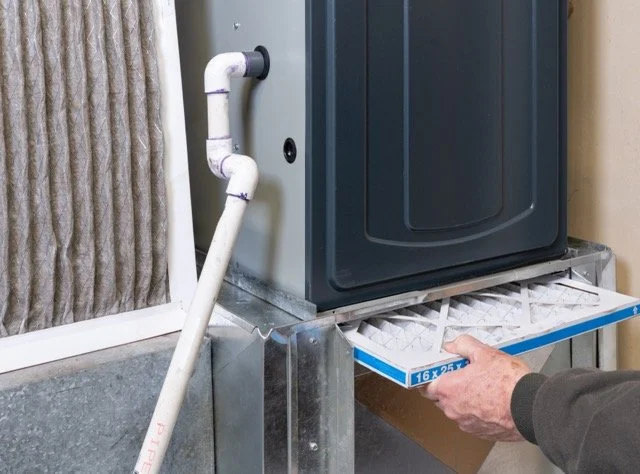
Repair costs vary based on the specific problem, the furnace brand and model, and whether you need emergency service. Here's what we typically see in Metro Detroit:
- Thermostat replacement: $150-$400 (basic programmable to smart WiFi models)
- Air filter replacement: $30-$80 if done during a service call (or $5-$20 if you buy and install it yourself)
- Flame sensor cleaning: $100-$180 (often included in a tune-up)
- Flame sensor replacement: $150-$250
- Hot surface igniter replacement: $200-$400
- Blower motor capacitor: $150-$300
- Blower motor replacement: $500-$1,200 (single-speed) or $800-$1,500 (variable-speed)
- Gas valve replacement: $400-$700
- Limit switch replacement: $200-$350
- Control board replacement: $400-$900 (depending on furnace model)
- Duct sealing and insulation: $800-$1,500 for a typical 1,500-2,000 sq ft home
If your furnace is over 15 years old and needs a repair that costs more than $500, it's worth having a conversation about replacement. A new high-efficiency furnace (95-98% AFUE) costs $3,500-$6,500 installed, depending on the brand, size, and installation complexity. That might sound steep, but an old 80% AFUE furnace wastes 20 cents of every dollar you spend on gas. A new 96% AFUE model can cut your heating bills by 15-20%, paying for itself over 10-12 years while giving you better comfort and reliability.
We've seen too many homeowners pour $1,500-$2,000 into repairs on a 20-year-old furnace, only to have something else fail the next winter. At that point, you've spent half the cost of a new furnace without getting any of the benefits: better efficiency, quieter operation, improved air quality, and a manufacturer's warranty.
The $5/month Next Care Plan includes two annual tune-ups (fall and spring), priority scheduling, and 10% off all repairs. Over the life of a furnace, regular maintenance prevents 80% of the breakdowns we see. A clean flame sensor, fresh filter, and properly calibrated gas pressure can be the difference between a furnace that lasts 12 years and one that makes it to 20.
Need Furnace Repair in Southeast Michigan?
NEXT Heating & Cooling has been keeping Metro Detroit homes warm for over 35 years. Our NATE-certified technicians diagnose the problem right the first time, explain your options clearly, and get your heat back on fast. No upselling, no surprises, just honest service.
Schedule Your ServiceFrequently Asked Questions
The most common cause is the thermostat fan setting being switched to ON instead of AUTO. In ON mode, the blower runs continuously and pushes unheated air through your vents between heating cycles. Switch it to AUTO so the fan only runs when the furnace is actively heating. If that doesn't fix it, check for a dirty air filter, failed ignition system, or dirty flame sensor.
Standard 1-inch pleated filters should be replaced every 30-60 days during heating season. If you have pets, allergies, or live near construction, aim for every 30 days. Thicker 4-inch or 5-inch media filters can last 6-12 months. Check your filter monthly by holding it up to a light. If you can't see through it, replace it. Michigan's dust, pollen, and humidity make filters dirty faster than in drier climates.
You can clean a flame sensor yourself if you're comfortable working inside the furnace. Turn off all power to the furnace (both the switch and circuit breaker), remove the sensor (usually held by one screw), and gently polish the metal rod with fine-grit sandpaper or a dollar bill. Reinstall it carefully, restore power, and test. If you're not confident or the furnace still shuts down after cleaning, call a technician. Incorrect sensor positioning or a failed sensor requires professional diagnosis.
This is classic flame sensor failure. The burners light, but the dirty or failed flame sensor doesn't detect the flame and shuts off the gas valve as a safety precaution. It can also be caused by a cracked heat exchanger (rare but serious), incorrect gas pressure, or a faulty control board. If cleaning the flame sensor doesn't solve it, call a licensed technician for proper diagnosis.
It depends on the cause. A thermostat battery replacement or air filter change costs under $100. Flame sensor cleaning runs $100-$180. Hot surface igniter replacement costs $200-$400. Blower motor capacitor replacement is $150-$300. A full blower motor replacement can be $500-$1,500. Gas valve replacement runs $400-$700. Most repairs fall in the $150-$400 range. A diagnostic service call (which includes troubleshooting and a repair estimate) typically costs $100-$150 and is often waived if you proceed with the repair.
If your furnace is under 12 years old and the repair costs less than $500, repair it. If it's 15-20 years old and needs a repair over $500, replacement usually makes more sense. Consider the total cost of ownership: an old 80% AFUE furnace wastes 20% of your gas, while a new 96% AFUE model cuts heating bills by 15-20%. Also factor in reliability. If this is the second or third repair in two years, you're likely facing more breakdowns ahead. A good technician will give you an honest assessment based on your specific situation, not a sales pitch.
This often indicates an undersized furnace or ductwork issues. When outdoor temperatures drop below 10°F (common during Michigan polar vortex events), your furnace has to work harder and run longer. If it's undersized for your home's heat loss, it can't keep up. Ductwork leaks also get worse in extreme cold as the temperature difference between the heated air and the surrounding space increases. Another possibility is a failing blower motor or capacitor that struggles under heavy load. A proper load calculation and system inspection can identify the root cause.