

Furnace Making Banging Noise? Here's What's Wrong
It's 2 AM on a January night in Sterling Heights. The temperature outside just hit 4 degrees. You're half-asleep when a loud BANG echoes from the basement. Then another. Your furnace sounds like someone's hitting it with a hammer.
You're not imagining it. Furnaces make banging noises for specific mechanical reasons, and some of those reasons are dangerous. After 35 years of heating and cooling services in Metro Detroit, we've diagnosed thousands of these calls. Most happen in the coldest weeks of winter when furnaces run hardest.
This guide walks through what each type of banging noise means, which ones you can troubleshoot yourself, and which ones require immediate shutdown. We'll cover the six most common causes, the diagnostic process NATE-certified techs use, and what repairs actually cost in Southeast Michigan.
What That Banging Sound Actually Means
Not all banging noises are created equal. The timing, frequency, and tone tell us what's failing inside your furnace.
Single loud bang at startup: This usually means delayed ignition. Gas pools in the burner chamber for a second or two before igniting, creating a mini-explosion. You'll hear it right when the furnace tries to light. It's the most common cause we see in Macomb County homes with furnaces over 10 years old.
Rhythmic banging during operation: Something loose is hitting something solid. Blower wheels, motor mounts, and access panels all create rhythmic noise when bolts work loose from vibration. The banging matches the speed of the blower motor.
Loud bang when the furnace shuts off: Metal ductwork expanding and contracting. When hot air stops flowing, ducts cool rapidly and the metal flexes. This is usually harmless but can be loud enough to wake you up. Common in homes built in the 1960s and 70s with undersized or poorly supported ductwork.
Multiple bangs followed by the furnace shutting down: Your furnace is detecting a problem and going into safety lockout. This often happens with cracked heat exchangers or failed flame sensors. The control board shuts everything down to prevent carbon monoxide leaks.
When to shut down immediately: If you smell gas, see visible flames outside the burner area, or if the furnace keeps trying to start and banging repeatedly, turn off the furnace at the emergency switch (usually a red switch on the furnace or at the top of the basement stairs) and call for emergency HVAC service in Macomb County.
The 6 Most Common Causes (And How to Tell Them Apart)
1. Delayed Ignition
When the gas valve opens, the burners should light within one second. If they don't, gas accumulates in the burner chamber. When ignition finally happens, all that pooled gas lights at once. The result sounds like a small explosion.
Causes: Dirty burners, failed flame sensor, weak igniter, or incorrect gas pressure. We see this most often in furnaces that haven't had annual maintenance. Carbon buildup on the burners creates hot spots that delay the flame spread.
How to tell: The bang happens right at startup, within the first 5 seconds of the furnace trying to heat. You might see a brief flash of light from the burner viewing window.
2. Expanding and Contracting Ductwork
Sheet metal ducts expand when hot air flows through them and contract when the air stops. If ducts are undersized, unsupported, or installed without proper expansion joints, the flex creates noise. The sound is often described as "oil-canning," like flexing a cookie sheet.
Causes: Undersized ducts (common in homes where AC was added years after the furnace), missing duct straps, or ducts run through unconditioned spaces like crawlspaces where temperature swings are extreme.
How to tell: The bang happens 10-30 seconds after the furnace shuts off. It's a single loud pop, not repeated banging. If you have hot and cold spots throughout your house, undersized ductwork is likely.
3. Loose Blower Wheel or Motor Mount
The blower wheel spins at 900-1,200 RPM. If the set screw loosens or the wheel becomes unbalanced, it wobbles and hits the blower housing. Motor mounts can also crack or the bolts can vibrate loose over time.
Causes: Lack of maintenance, corrosion from condensation, or age. Blower wheels on furnaces older than 15 years often develop cracks that throw them out of balance.
How to tell: Rhythmic banging that matches the speed of the blower. It continues as long as the blower runs. You might also hear a scraping or grinding noise mixed with the banging.
4. Cracked Heat Exchanger
This is the one you can't ignore. The heat exchanger is the metal chamber where combustion gases flow. Cracks allow those gases (including carbon monoxide) to mix with your home's air. When the metal flexes from heat, cracks make a distinct popping or banging sound.
Causes: Age, corrosion, oversized furnace short-cycling, or running the furnace with a dirty filter that restricts airflow and overheats the exchanger. Most heat exchangers fail between years 15 and 20.
How to tell: The bang happens during the heating cycle, not at startup. You might also notice soot buildup around registers, condensation on windows, or your carbon monoxide detector going off. If you suspect this, shut down the furnace immediately.
5. Dirty Burners
Natural gas burns clean, but dust, pet hair, and debris get pulled into the burner chamber. Over time, carbon deposits build up on the burner ports. This restricts gas flow and creates uneven flame patterns, which can cause small backfires that sound like banging.
Causes: Skipping annual maintenance, running the furnace without an air filter, or having ductwork that pulls air from dusty areas like unfinished basements.
How to tell: Multiple small bangs during the first few minutes of operation. The flames might look yellow or orange instead of blue. You might smell a slight burning odor.
6. Undersized or Poorly Designed Ductwork
If your ductwork can't handle the volume of air your furnace produces, pressure builds up. When dampers open or close, the sudden pressure change creates banging. This is especially common in older Michigan homes where central air was added decades after the original furnace installation.
Causes: Ductwork sized for a smaller furnace, too many closed vents, or ducts with sharp 90-degree turns that restrict airflow.
How to tell: Banging happens when certain zones or rooms call for heat. You might hear it when upstairs vents open or when the basement zone switches on. Airflow from vents feels weak even though the furnace is running.
The One You Can't Ignore: Cracked Heat Exchanger
A cracked heat exchanger is the most serious cause of furnace banging. It's also the most expensive to fix. Here's why it matters.
The heat exchanger separates combustion gases (which include carbon monoxide) from the air that circulates through your home. When cracks form, those gases leak into your breathing air. Carbon monoxide is odorless, colorless, and deadly. Even small exposures cause headaches, dizziness, and nausea. Prolonged exposure is fatal.
Cracks form from thermal stress. Every time your furnace heats up and cools down, the metal expands and contracts. After 15-20 years and thousands of heating cycles, the metal fatigues. Cracks start small, often at welds or bends, then grow over time.
How techs test for cracks: Visual inspection with a camera scope is the first step. We insert a fiber-optic camera through the burner opening to examine the heat exchanger from inside. But not all cracks are visible. The definitive test is a combustion analysis. We measure carbon monoxide levels in the supply air. Any CO in the supply air means the heat exchanger is compromised.
Some techs use a pressure test. We seal off the heat exchanger and pressurize it with air. If pressure drops, there's a leak. This is the most accurate method but requires disassembling part of the furnace.
Replacement vs. repair decision: You can't repair a cracked heat exchanger. The entire heat exchanger assembly must be replaced. For most residential furnaces, the heat exchanger costs $1,200-$2,500 installed. If your furnace is over 15 years old, replacement rarely makes sense. A new high-efficiency furnace costs $3,500-$7,000 installed and comes with a 10-year parts warranty and better efficiency.
We've had homeowners in Clinton Township ask if they can just run the furnace "for one more winter" with a cracked heat exchanger. The answer is no. The risk to your family isn't worth it. If we find a cracked heat exchanger, we red-tag the furnace and shut it down per Michigan mechanical code.
What a Tech Checks During a Banging Noise Call
When you call a reliable HVAC contractor in Metro Detroit for a banging noise, here's the diagnostic process we follow.
Step 1: Listen and observe. We run the furnace through a complete cycle while listening to the timing and type of noise. Startup bang? Shutdown bang? Continuous rhythmic noise? Each points to different components.
Step 2: Visual inspection. We open the furnace cabinet and inspect the burner assembly, blower wheel, motor mounts, and heat exchanger (as much as visible without disassembly). We're looking for obvious issues: loose bolts, cracked welds, carbon buildup, rust, or corrosion.
Step 3: Combustion analysis. We insert a probe into the flue pipe and measure oxygen, carbon monoxide, and carbon dioxide levels. This tells us if combustion is complete and if there are any heat exchanger leaks. Proper combustion should produce less than 50 parts per million (ppm) of CO in the flue gas and zero in the supply air.
Step 4: Blower assembly check. We shut down the furnace and manually spin the blower wheel. It should spin freely with no wobble or scraping. We check the set screw that holds the wheel to the motor shaft and inspect the wheel for cracks or debris buildup.
Step 5: Ductwork assessment. We check for undersized ducts, missing dampers, and poor support. We measure static pressure (the resistance to airflow in your duct system). Residential systems should run between 0.5 and 0.8 inches of water column (IWC). Higher pressure means restricted airflow, which can cause noise and overheat the heat exchanger.
Step 6: Gas pressure test. We measure the gas pressure at the manifold with a manometer. Natural gas furnaces should run at 3.5 inches of water column. Too high or too low causes ignition problems and noise.
This process takes 45-60 minutes for a thorough diagnosis. Techs who skip steps or rush through the inspection miss problems. That's why we don't pay our technicians on commission. There's no incentive to sell you a new furnace if cleaning the burners solves the problem.
DIY Checks Before You Call (And When to Skip Them)
Some banging noise causes are safe to troubleshoot yourself. Others require a licensed tech. Here's what you can check without tools or technical knowledge.
Safe DIY Checks
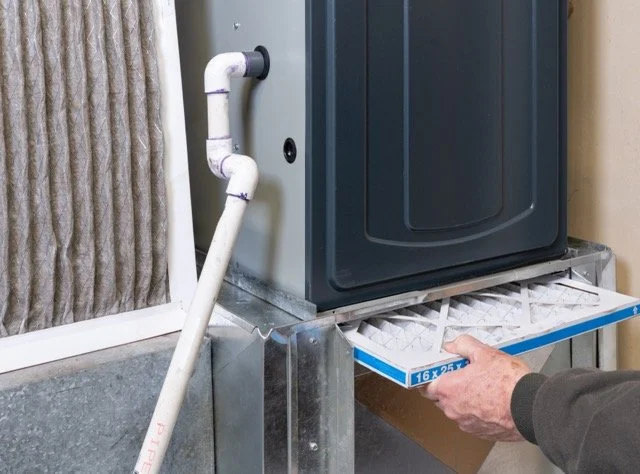
1. Check your air filter. A clogged filter restricts airflow, which overheats the heat exchanger and causes banging. Pull out the filter (usually located in a slot near the blower or in a return air grille). If you can't see light through it, replace it. Filters should be changed every 30-90 days depending on pets, dust, and how often the furnace runs.
2. Check the thermostat. Make sure it's set to "Heat" mode and the temperature is set at least 5 degrees above the current room temperature. If the thermostat is in "Auto" fan mode, switch it to "On" temporarily and listen. If the banging stops, the problem is related to the heating cycle, not the blower.
3. Check the circuit breaker. A tripped breaker can cause partial power to the furnace, which creates erratic behavior. Find your electrical panel and look for the breaker labeled "Furnace" or "HVAC." If it's in the middle position (tripped), flip it fully off, then back on.
4. Inspect the area around the furnace. Make sure nothing is touching the furnace or ductwork. A broom leaning against a duct can rattle and sound like it's coming from inside the furnace.
When to Skip DIY and Call a Pro
Don't open the furnace cabinet if you're not trained. The burner area contains live gas lines and 120-volt electrical connections. Don't attempt to adjust gas pressure, remove the blower wheel, or inspect the heat exchanger yourself.
If you smell gas, see flames outside the burner area, or if your carbon monoxide detector goes off, evacuate your home and call 911. Then call us for emergency HVAC service.
If the banging happens at startup and you've already changed the filter, the issue is likely delayed ignition from dirty burners. This requires disassembly and cleaning by a licensed tech. Attempting it yourself voids your furnace warranty and violates Michigan mechanical code.
Cost Reality: What Fixes Actually Run in Metro Detroit
Homeowners in Royal Oak and Warren always ask what repairs cost before scheduling service. Here's the honest breakdown based on our 2024-2026 service data.
Burner cleaning and tune-up: $150-$300. This includes cleaning the burners, flame sensor, and igniter, checking gas pressure, and testing combustion. If delayed ignition is your only problem, this solves it. Most homeowners who invest in the Next Care Plan get this done annually and avoid the emergency call.
Blower motor replacement: $400-$800 depending on motor size and brand. Variable-speed ECM motors (found in high-efficiency furnaces) cost more than single-speed PSC motors. Labor is typically 2-3 hours.
Blower wheel replacement: $250-$450. The wheel itself costs $80-$150, but accessing it requires removing the blower assembly, which takes time.
Flame sensor replacement: $150-$250. The part costs $20-$40, but diagnosing the issue and testing the system adds labor time.
Heat exchanger replacement: $1,200-$2,500. This is a major repair. The heat exchanger is the most expensive component in your furnace. Labor runs 4-6 hours because the furnace must be partially disassembled. For furnaces over 12 years old, replacement is usually a better investment.
Ductwork modifications: $500-$2,000+ depending on scope. Adding expansion joints to a few noisy ducts costs $500-$800. Resizing undersized ductwork or adding return air runs can cost $2,000-$5,000 depending on home layout and accessibility.
Full furnace replacement: $3,500-$7,000 installed for a high-efficiency gas furnace (95%+ AFUE) in a typical 1,500-2,500 square foot Michigan home. This includes removal of the old furnace, new furnace installation, thermostat upgrade, permits, and startup. Brands like Carrier, Lennox, and Trane fall in the $5,000-$7,000 range. Rheem, Bryant, and Goodman run $3,500-$5,500.
We've written a detailed guide on whether to replace your furnace and AC together if you're considering full system replacement.
How to Prevent Banging Noises
Most banging noises are preventable with regular maintenance. Here's what actually works based on 35 years of keeping Michigan furnaces running.
Annual professional maintenance. This is the single most effective prevention. A fall furnace tune-up includes burner cleaning, combustion testing, blower inspection, and ductwork assessment. Most delayed ignition and dirty burner issues are caught and corrected during annual service.
The Next Care Plan costs $5 per month and includes two annual visits: a fall furnace tune-up and a spring AC tune-up. Members also get priority scheduling, 10% off repairs, and no service call fees. Over 15 years, the average furnace repair costs $1,500-$4,000. Annual maintenance prevents most of those failures.
Change your filter every 30-90 days. This is the one maintenance task homeowners can do themselves. Set a phone reminder. Buy filters in bulk. A clogged filter is the leading cause of premature heat exchanger failure, which is the most expensive repair.
Don't close off more than 20% of your vents. Closing vents in unused rooms seems like it saves energy, but it increases static pressure in your ductwork. This overworks the blower motor and can cause ductwork banging. If you want zone control, invest in a zoned system with motorized dampers, not manual vent closure.
Address ductwork noise when you hear it. If you have one duct that bangs every time the furnace shuts off, call us to add an expansion joint or duct strap. It's a $200-$400 fix that prevents the noise from getting worse and damaging the duct seams.
Replace your furnace before it fails. The average furnace lasts 15-20 years in Michigan. If yours is over 15 and you're starting to hear noises, plan for replacement in the next 1-2 years. Replacing on your schedule is cheaper than replacing during a January cold snap when every HVAC company in Macomb County is booked solid.
Ready to Get Started?
NEXT Heating & Cooling has been keeping Michigan homes comfortable for over 35 years. Get honest diagnostics and fair pricing from NATE-certified technicians who show up on time.
Schedule Your ServiceFrequently Asked Questions
It depends on the cause. Ductwork expansion noise is harmless. Delayed ignition can damage the heat exchanger over time. A cracked heat exchanger is immediately dangerous because it leaks carbon monoxide into your home. If you smell gas, see flames outside the burner, or your CO detector goes off, shut down the furnace and call for emergency service.
You can check the air filter, thermostat settings, and circuit breaker yourself. Those are safe DIY checks. Do not open the furnace cabinet, attempt to clean burners, or adjust gas pressure. Those tasks require a licensed technician and specialized tools. DIY furnace repair voids your warranty and violates Michigan mechanical code.
If the banging is a single loud pop when the furnace shuts off and happens once per cycle, you can schedule service within a few days. If the banging happens at startup and is getting louder, schedule service within 24 hours. If the furnace bangs repeatedly and shuts down, or if you smell gas, shut it down immediately and call for emergency service. Don't wait on heating issues during Michigan winters.
Yes. Delayed ignition causes carbon buildup that makes the problem worse each heating cycle. Loose blower wheels damage the motor shaft and housing. Cracked heat exchangers grow larger with each heating cycle. Ductwork noise usually stays consistent but can worsen if ducts are poorly supported. Address banging noises when you first hear them. The repair is cheaper and safer than waiting.
Standard homeowners insurance does not cover furnace repairs due to normal wear and tear or lack of maintenance. If a covered peril (like a lightning strike or power surge) damages your furnace, insurance may cover it. Some policies offer equipment breakdown coverage as an add-on. Check with your insurance agent. Most furnace repairs are out-of-pocket expenses, which is why preventive maintenance and a plan like the Next Care Plan save money long-term.
If your furnace is under 12 years old and the repair costs less than $1,000, repair usually makes sense. If it's over 15 years old and the repair costs more than $1,500, replacement is often the better investment. Cracked heat exchangers almost always mean replacement because the repair costs 60-80% of a new furnace. We walk through the math with every homeowner and never pressure you into a decision you're not comfortable with.
We install Carrier, Lennox, Trane, Rheem, Bryant, Goodman, Amana, York, and RUUD. For Michigan winters, we recommend 95%+ AFUE high-efficiency models with two-stage or modulating burners. Carrier and Lennox offer the best warranties and parts availability. Rheem and Bryant offer excellent value for budget-conscious homeowners. We size every furnace with a Manual J load calculation, not guesswork. The right size matters more than the brand.