

Should I Replace My Furnace and AC Together? Metro Detroit
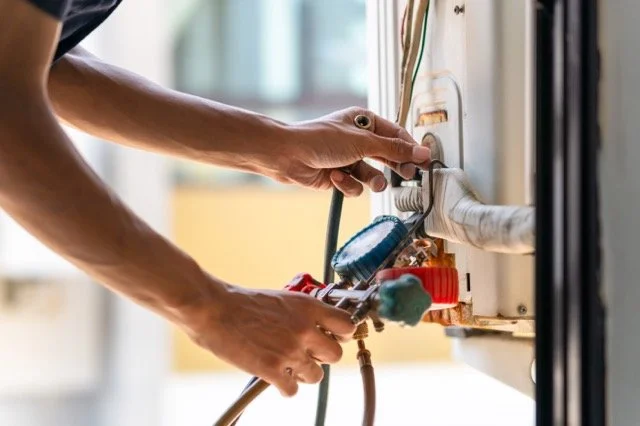
Your furnace is 14 years old. Your air conditioner is 16. Both are still running — barely — but you know the clock is ticking. A Sterling Heights homeowner called us last November with this exact scenario. The furnace was short-cycling during the polar vortex, and the AC had limped through another humid Michigan summer with refrigerant leaks and compressor noise.
The question we hear constantly: "Should I replace both systems at the same time, or just fix whichever one dies first?"
Here's the honest answer from 35+ years of heating and cooling services in Metro Detroit: replacing both your furnace and air conditioner together saves most Southeast Michigan homeowners between $800 and $2,500 in installation costs, creates a matched system that runs more efficiently, and eliminates the headache of coordinating two separate projects within a few years of each other.
But it's not always the right call. If one system is significantly newer, or if budget constraints make dual replacement unrealistic right now, a phased approach can work. The key is understanding when simultaneous replacement makes financial and mechanical sense — and when it doesn't.
In this guide, we'll walk through the real costs, the efficiency benefits of matched systems, and the specific situations where replacing both at once is the smartest move for Michigan homes.
Why Replacing Both Systems Together Makes Financial Sense
The cost savings from dual replacement come from shared labor, permits, and system modifications that would otherwise be duplicated. Here's what you pay for once instead of twice:
Installation labor overlap. Whether we're installing a furnace or an air conditioner, the crew is already at your home, pulling permits, accessing your mechanical room, and working with your existing ductwork. When we install both systems during the same visit, you're not paying for two separate service calls, two permit fees, or two rounds of ductwork modifications. That typically saves $600 to $1,200 in labor costs alone.
Shared ductwork modifications. Older homes in Royal Oak, Troy, and Warren often have ductwork that was sized for lower-efficiency systems. When we upgrade to a high-efficiency furnace or a higher-SEER air conditioner, we sometimes need to adjust duct sizing, add return air pathways, or seal leaky joints. Doing this work once — for both systems — costs significantly less than making incremental changes years apart.
Single permit and inspection process. Macomb County and Oakland County require mechanical permits for both furnace and AC installations. Pulling a dual-system permit costs less than two separate permits, and you only go through one inspection cycle. If you're curious about the specific requirements, we've covered AC permit requirements in Macomb County for 2026 in detail.
Manufacturer rebates and contractor packages. Carrier, Lennox, Trane, and other manufacturers frequently offer rebate programs when you purchase a matched furnace and air conditioner together. These rebates can range from $300 to $1,000 depending on the efficiency tier. Contractors also structure pricing more competitively for dual installations because the job is more efficient to complete.
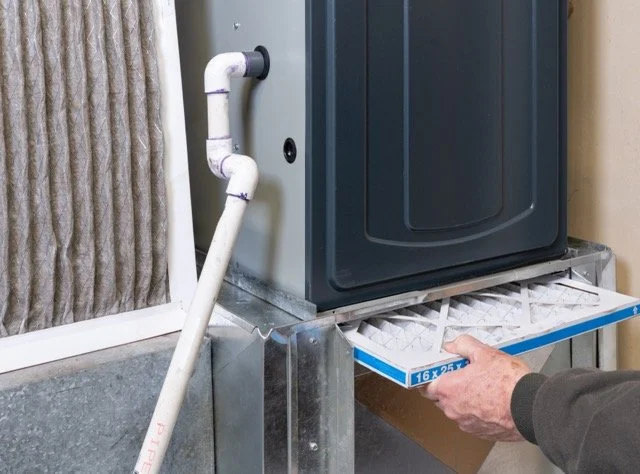
At NEXT Heating & Cooling, we've seen homeowners in Clinton Township and Shelby Township save anywhere from $800 on the low end (for straightforward replacements in homes with good ductwork) to $2,500 on the high end (for homes needing ductwork upgrades, zoning modifications, or high-efficiency system packages). The exact savings depend on your home's configuration, the brands you choose, and the efficiency levels you're targeting.
When You Should Replace Both Your Furnace and AC
There are four scenarios where simultaneous replacement makes the most sense for Michigan homeowners:
1. Both Systems Are 12-15+ Years Old
Furnaces and air conditioners installed in the same year — common in new construction or whole-home HVAC upgrades — tend to age out around the same time. A furnace installed in 2010 is now 16 years old, well past the typical 15-18 year lifespan for gas furnaces in Michigan. An air conditioner from the same era has likely endured 16 summers of humidity, refrigerant stress, and compressor cycling.
Even if one system is technically still functional, you're looking at replacement within the next 2-3 years. Replacing both now avoids the scenario where you install a new furnace in November, only to have the AC fail the following June — forcing you to pay for a second installation, second permit, and second round of ductwork modifications.
2. Major Repair Costs Are Approaching 50% of Replacement
When a furnace heat exchanger cracks or an AC compressor fails, you're often looking at repair costs in the $1,500 to $3,000 range. If the system is already 12+ years old, that repair buys you maybe 2-4 more years of operation — and you'll still need a full replacement soon.
The "50% rule" is a practical guideline: if the repair cost exceeds 50% of what a new system would cost, and the equipment is in the final third of its expected lifespan, replacement usually makes more financial sense. When both your furnace and AC are in this zone, dual replacement avoids throwing money at aging equipment that's on borrowed time. For a detailed breakdown of what you might encounter, check out our guide on furnace replacement in Troy, MI.
3. You're Targeting Significant Efficiency Gains
If your current furnace is an 80% AFUE single-stage model from 2008, and your AC is a 10 SEER unit, you're leaving serious energy savings on the table. Upgrading to a 96% AFUE two-stage furnace and a 16 SEER air conditioner can cut your heating and cooling costs by 30-40% annually — which, for a 2,000-square-foot home in Michigan, translates to $400-$700 per year in savings.
But here's the catch: those efficiency gains are maximized when the furnace and AC are designed to work together. A matched system from the same manufacturer — say, a Carrier furnace paired with a Carrier AC, or a Lennox furnace with a Lennox AC — allows the components to communicate, optimize airflow, and balance heating and cooling cycles. Mismatched systems can work, but you won't get the full efficiency benefit.
4. You're Already Upgrading Ductwork or Adding Zones
If you're planning ductwork modifications — adding a second zone for a finished basement, upgrading undersized ducts in a 1960s ranch, or installing a whole-home humidifier — it makes sense to do the furnace and AC replacement at the same time. The ductwork is already open, the crew is already on-site, and you avoid the disruption of multiple projects.
We recently completed a project in Lake Orion where the homeowner was adding a zoned system for a new primary suite addition. We replaced both the furnace and AC, installed new ductwork for the addition, and added a programmable zoning system — all in one coordinated project. Doing it piecemeal would have cost significantly more and taken three times as long.
When to Replace Only One System
Dual replacement isn't always the right call. Here are the situations where replacing only the failing system makes more sense:
Significant Age Gap Between Systems
If your furnace is 5 years old and your air conditioner is 18 years old, there's no reason to replace a relatively new furnace just to match the AC. Install a new air conditioner that's compatible with your existing furnace, and you'll get another 10-12 years out of the AC before the furnace needs replacement.
The key word here is compatible. Not all air conditioners work efficiently with all furnaces, especially if there's a mismatch in airflow capacity or refrigerant type. A qualified HVAC contractor will perform a load calculation and verify that the new AC matches your furnace's blower capacity and ductwork design. If you're dealing with a failing air conditioner and want to understand what's causing the issue, we've written about why air conditioning units get loud and when noise signals a serious problem.
Budget Constraints and Phased Replacement Strategy
Not everyone has $8,000 to $14,000 available for a dual replacement. If your furnace dies in January and you need heat immediately, replace the furnace now and plan for AC replacement in the next 2-3 years when budget allows.
The phased approach works best when you communicate your long-term plan to your contractor. At NEXT Heating & Cooling, we'll install a furnace that's compatible with a future AC upgrade, ensuring that when you're ready to replace the air conditioner, the systems will work together efficiently.
Many homeowners also use financing to spread the cost over 12-36 months, making dual replacement more accessible. We offer financing options specifically because we know that unexpected HVAC failures don't wait for convenient budget timing.
One System Has Already Been Replaced Recently
If you replaced your air conditioner 3 years ago and your furnace just failed, there's no benefit to replacing a nearly-new AC. Install a new furnace that's compatible with your existing AC, and you're set for the next 12-15 years.
The Real Costs of Furnace and AC Replacement in Southeast Michigan
Let's talk real numbers. HVAC pricing varies based on equipment brand, efficiency tier, home size, and installation complexity, but here's what we're seeing in Metro Detroit in 2026:
Furnace Replacement Costs
- 80% AFUE single-stage furnace: $3,200 - $4,800 installed (Goodman, Amana, York)
- 95-96% AFUE two-stage furnace: $4,500 - $6,500 installed (Carrier, Lennox, Trane, Bryant)
- 96-98% AFUE modulating furnace: $6,000 - $7,500 installed (Carrier Infinity, Lennox Signature, Trane XV)
These prices include labor, permits, basic ductwork modifications, and removal of the old furnace. Homes requiring significant ductwork upgrades, new gas line installation, or structural modifications will be on the higher end. For a deeper dive into what drives these costs, we've published a complete breakdown of new furnace installation costs in Troy.
Air Conditioner Replacement Costs
- 14 SEER single-stage AC: $3,500 - $5,200 installed (Goodman, Amana, RUUD)
- 16 SEER two-stage AC: $4,800 - $6,800 installed (Carrier, Lennox, Trane, Rheem)
- 18+ SEER variable-speed AC: $6,500 - $8,000 installed (Carrier Infinity, Lennox XC25, Trane XV20i)
AC pricing includes the outdoor condenser unit, indoor evaporator coil, refrigerant lines, electrical connections, permits, and removal of the old system. Homes with challenging outdoor unit placement, long refrigerant line runs, or electrical panel upgrades will be on the higher end.
Dual Replacement Package Costs
When you replace both systems together, you typically save $800 to $2,500 compared to replacing them separately. Here's what dual packages look like:
- Budget-friendly package: $6,500 - $9,000 (80% AFUE furnace + 14 SEER AC, Goodman or Amana)
- Mid-tier efficiency package: $8,500 - $11,500 (95% AFUE two-stage furnace + 16 SEER AC, Carrier or Lennox)
- High-efficiency package: $11,000 - $14,000 (96-98% AFUE modulating furnace + 18+ SEER variable-speed AC, Carrier Infinity or Lennox Signature)
These are installed prices for a typical 1,500 to 2,500-square-foot home in Southeast Michigan. Larger homes, complex ductwork, or premium features like zoning systems or advanced air filtration will increase costs.
What About Heat Pumps? If you're considering a heat pump as an alternative to a traditional furnace and AC setup, the cost structure is different. A cold-climate heat pump system (which handles both heating and cooling) typically runs $7,000 to $12,000 installed, depending on capacity and efficiency. We've written a complete guide on heat pump costs in Metro Detroit if you want to explore that option.
Matched System Benefits Michigan Homeowners Need to Know
Beyond the installation cost savings, matched furnace and AC systems deliver performance benefits that matter in Michigan's extreme climate:
Optimized SEER and AFUE Ratings
A furnace's AFUE (Annual Fuel Utilization Efficiency) rating and an air conditioner's SEER (Seasonal Energy Efficiency Ratio) rating are tested and certified as a matched system. When you pair a Carrier furnace with a Carrier AC, the manufacturer has engineered the blower motor, airflow dynamics, and refrigerant system to work together at peak efficiency.
Mismatched systems — say, a Lennox furnace with a Goodman AC — can still function, but you may not achieve the rated efficiency levels. The blower speed, duct static pressure, and airflow balance are optimized for matched components.
Warranty Alignment and Simplified Service
When both systems are from the same manufacturer and installed at the same time, the warranties run concurrently. Most manufacturers offer 10-year parts warranties on both furnaces and air conditioners. If something goes wrong, you're dealing with one warranty claim process, one manufacturer, and one service history.
Matched systems also simplify maintenance. When you sign up for our Next Care Plan — a $5/month HVAC maintenance subscription — our techs service both systems during the same visit. We check the furnace in the fall, the AC in the spring, and everything is documented in a single service file. You're not juggling multiple maintenance schedules or trying to remember which system was serviced when.
Ductwork Compatibility and Airflow Balance
Furnaces and air conditioners share the same ductwork and blower system. When the furnace blower is sized correctly for the AC's cooling capacity, you get balanced airflow year-round. Oversized or undersized blowers create problems: too much airflow in cooling mode causes short-cycling and poor dehumidification; too little airflow in heating mode reduces efficiency and creates hot and cold spots.
Matched systems are designed with compatible blower capacities, ensuring that the same ductwork delivers optimal performance in both heating and cooling modes. This is especially important in Michigan, where we're asking the system to handle 90-degree summer humidity and -10-degree polar vortex winters.
Single-Source Accountability
When both systems are installed by the same contractor at the same time, there's no ambiguity about who's responsible if something goes wrong. If you install a furnace in 2024 and an AC in 2027 from different contractors, and you develop airflow problems or efficiency issues, you'll spend time and money figuring out which system is the culprit.
With a matched system from a single installation, the contractor who installed both systems owns the entire performance outcome. At NEXT Heating & Cooling, we stand behind our work — and when we install both your furnace and AC, we're accountable for making sure they work together flawlessly.
How to Decide: Questions Your HVAC Tech Should Ask
A good HVAC contractor won't push you toward dual replacement if it doesn't make sense for your situation. Here are the questions we ask every homeowner when evaluating whether to replace both systems or just one:
1. What Are the Ages of Your Current Furnace and AC?
If both systems are 12+ years old, dual replacement usually makes sense. If there's a 5+ year age gap, phased replacement may be smarter. We'll check the manufacturer date stamps on both units and give you an honest assessment of remaining lifespan.
2. What's the Condition of Your Ductwork?
Older homes in Metro Detroit — especially 1950s-1970s ranches — often have undersized or leaky ductwork. If we're already modifying ductwork for a new furnace, it makes sense to size it correctly for a new AC at the same time. If your ductwork is in good shape and properly sized, replacing only the failing system may be fine.
3. What Are Your Efficiency and Comfort Goals?
If you're tired of high energy bills and want to upgrade to high-efficiency equipment, matched systems deliver the best results. If you're just looking to restore basic functionality and aren't concerned about efficiency gains, a single-system replacement may meet your needs.
4. What's Your Budget and Financing Availability?
We'll walk you through the cost difference between single and dual replacement, show you the long-term savings from matched systems, and discuss financing options. If budget is tight, we'll help you prioritize which system to replace first and plan for the second replacement down the road.
5. Have You Had Recurring Repairs on Both Systems?
If you've spent $800 on furnace repairs and $600 on AC repairs in the past two years, you're already partway to the cost of new equipment. Continuing to repair aging systems is like putting new tires on a car with 200,000 miles — you're just delaying the inevitable. We've seen this pattern countless times, and we've written about furnace and AC repair in Royal Oak to help homeowners recognize when repair costs signal it's time for replacement.
Red Flag: Commission-Based Sales Tactics — Some HVAC companies pay their techs commissions on equipment sales, which creates an incentive to upsell unnecessary replacements. At NEXT Heating & Cooling, our technicians are salaried — not commission-based. We diagnose the actual problem, explain your options clearly, and let you decide. If your system can be repaired cost-effectively, we'll tell you. If replacement makes more sense, we'll explain why. No pressure, no games.
Ready to Get Started?
NEXT Heating & Cooling has been keeping Michigan homes comfortable for over 35 years. Get honest diagnostics and fair pricing from NATE-certified technicians who show up on time. Whether you need a single system replacement or a full furnace and AC upgrade, we'll walk you through your options with no pressure and no upselling.
Schedule Your ServiceFrequently Asked Questions
Dual replacement typically costs $6,500 to $14,000 installed, depending on equipment brand, efficiency tier, and home size. Budget-friendly packages (80% AFUE furnace + 14 SEER AC) start around $6,500-$9,000. Mid-tier efficiency systems (95% AFUE + 16 SEER) run $8,500-$11,500. High-efficiency packages (96-98% AFUE modulating furnace + 18+ SEER variable-speed AC) cost $11,000-$14,000. Replacing both systems together saves $800-$2,500 compared to separate installations.
Yes, and in some cases it makes more sense. If one system is significantly newer (5+ years difference in age), or if budget constraints require a phased approach, replacing only the failing system is a smart strategy. The key is ensuring the new system is compatible with the existing one in terms of blower capacity, airflow, and ductwork sizing. A qualified contractor will verify compatibility before recommending a single-system replacement.
Matched systems from the same manufacturer deliver optimized SEER and AFUE ratings, warranty alignment, simplified maintenance, and balanced airflow. The blower motor, refrigerant system, and ductwork are engineered to work together at peak efficiency. You also get single-source accountability — one contractor, one warranty, one service history. Matched systems typically perform 5-10% more efficiently than mismatched combinations.
Gas furnaces in Michigan typically last 15-18 years with regular maintenance. Air conditioners last 12-15 years. Michigan's extreme temperature swings — from polar vortex winters to humid summers — put significant stress on HVAC systems, which can shorten lifespan if maintenance is neglected. Systems enrolled in preventive maintenance programs (like our Next Care Plan) tend to last on the longer end of that range.
Not always, but often. Homes built before 1990 frequently have undersized or leaky ductwork that was designed for lower-efficiency systems. When upgrading to a high-efficiency furnace or higher-SEER air conditioner, you may need duct modifications to handle the new airflow requirements. A load calculation and ductwork assessment will determine if upgrades are needed. If modifications are necessary, doing them during a dual replacement saves money compared to two separate projects.
We install and service all major brands: Carrier, Lennox, Trane, Rheem, Bryant, Goodman, Amana, York, and RUUD. For budget-conscious homeowners, Goodman and Amana offer solid reliability at lower price points. For mid-tier efficiency and performance, Carrier, Lennox, and Trane are excellent choices. For top-tier efficiency and advanced features (modulating burners, variable-speed compressors), Carrier Infinity, Lennox Signature, and Trane XV series are the best options. We'll recommend brands based on your budget, efficiency goals, and home size.
Heat pumps are a viable option in Michigan, especially newer cold-climate models that work efficiently down to -15°F. A heat pump handles both heating and cooling, eliminating the need for separate furnace and AC systems. Installation costs for a cold-climate heat pump typically run $7,000-$12,000, comparable to mid-tier dual replacement packages. Heat pumps are ideal for homeowners prioritizing energy efficiency and electrification. However, many Michigan homeowners still prefer gas furnaces for backup heating during extreme cold snaps. We've written a detailed guide on heat pump costs and performance for Metro Detroit homes if you want to explore this option further.