

Fall Furnace Tune-Up Metro Detroit: What a Pro Checks
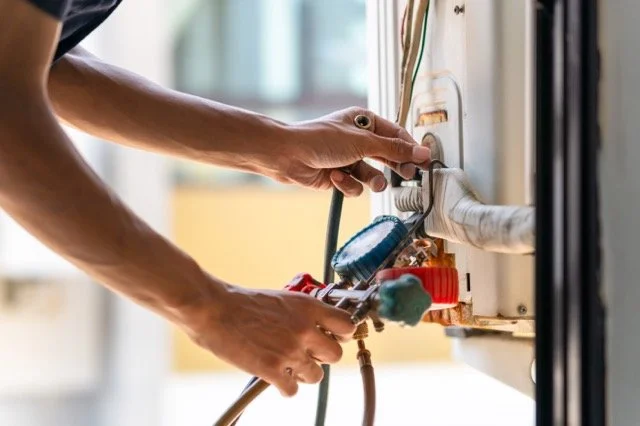
Every October, we get the same question from homeowners across Sterling Heights, Troy, and Rochester Hills: "What actually happens during a furnace tune-up?" It's a fair question. You're inviting someone into your basement, they disappear for 45 minutes, and you get a bill for preventive maintenance that feels abstract until your furnace quits on the coldest night of the year.
Here's the truth from 35 years of keeping Michigan homes warm: a real furnace and AC installation service tune-up isn't just changing a filter and checking a box. It's a diagnostic process that catches the problems you can't see — cracked heat exchangers, failing capacitors, combustion inefficiencies — before they strand your family in a polar vortex event or cost you $2,500 in emergency repairs.
This is what actually happens when a NATE-certified tech shows up for a fall furnace tune-up in Metro Detroit. No marketing fluff. Just the mechanical reality of what we check, why it matters, and what happens when you skip it.
Why Fall Furnace Tune-Ups Matter in Michigan
Michigan isn't a climate where you can afford to hope your furnace works. We see sustained stretches below 20°F from December through February. Polar vortex events drop overnight lows to -15°F in Macomb County. Lake-effect cold fronts off Lake St. Clair add wind chill that makes a failing furnace a genuine safety issue, not just an inconvenience.
The data from our service calls tells the story. Between November and January, we respond to roughly 60% more emergency furnace breakdowns than any other three-month period. The most common failures — cracked heat exchangers, failed blower motors, igniter burnout — are all problems that show early warning signs during a fall tune-up.
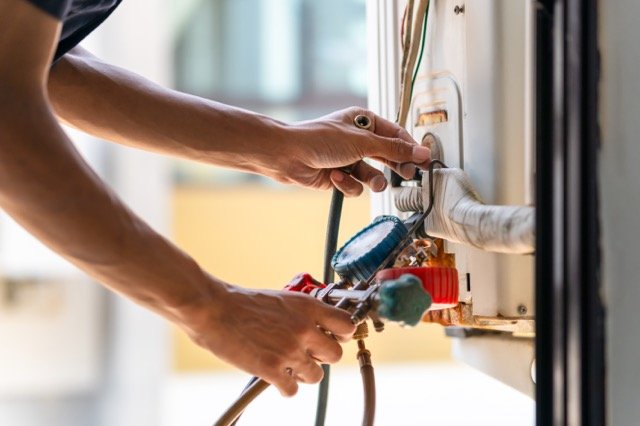
Here's the cost reality: a fall tune-up through our $5/month HVAC maintenance plan costs $60 for the year and includes both your fall furnace check and spring AC tune-up. An emergency service call in January — when we're running 24-hour shifts and parts are backordered — starts at $150 just to diagnose the problem. If your blower motor failed because a capacitor wasn't tested in the fall, you're looking at $400-$800 for the repair. If your heat exchanger cracked and you've been breathing carbon monoxide for two weeks, the replacement furnace starts around $3,500.
Preventive maintenance isn't about selling you something you don't need. It's about catching $800 problems when they're still $40 parts.
What Happens During a Professional Furnace Tune-Up
When our techs arrive for a fall tune-up, they're not just running through a checklist. They're looking for the specific failure modes that show up in Michigan furnaces after a summer of sitting idle and before months of continuous operation. Here's what actually happens, step by step.
Heat Exchanger Inspection
This is the most critical part of the tune-up, and it's where experience matters. The heat exchanger is the metal chamber where combustion gases heat the air that circulates through your house. When heat exchangers crack — usually from thermal stress cycling or corrosion — combustion gases (including carbon monoxide) can leak into your home's air supply.
A visual inspection involves removing the burner assembly and using a flashlight and inspection mirror to check for cracks, rust-through, or carbon buildup that indicates incomplete combustion. On older Carrier, Lennox, and Goodman furnaces (common in 1990s-era homes across Clinton Township and Shelby Township), we pay special attention to the weld seams and the areas where the heat exchanger meets the burner box.
If we see anything questionable, we run a combustion analysis (more on that below) and may recommend a camera inspection or pressure test. A cracked heat exchanger isn't repairable — it's a furnace replacement. But catching it in October means you have time to shop for a new system and schedule installation before the first freeze. Catching it in January means you're choosing between a $4,000 emergency install or running space heaters until we can get a Trane or Rheem furnace delivered.
Burner Assembly Cleaning and Flame Pattern Analysis
Gas burners accumulate dust, rust particles, and carbon deposits over time. Dirty burners produce irregular flame patterns — yellow or orange flames instead of steady blue — which indicates incomplete combustion. Incomplete combustion wastes gas, reduces efficiency, and produces carbon monoxide.
We pull the burner assembly, vacuum out debris, clean the burner ports with a wire brush, and reinstall it. Then we fire up the furnace and watch the flame pattern. A properly tuned natural gas furnace should produce a steady, blue flame with minimal yellow tipping. If we see lazy, rolling yellow flames, there's a combustion air problem — either the burners are still dirty, the gas pressure is wrong, or there's a draft issue with the flue.

This is where homeowners who've had questionable HVAC contractors show up in the past get burned. A tech who doesn't pull the burners and actually clean them isn't doing a tune-up — they're doing a visual once-over and calling it maintenance.
Blower Motor and Capacitor Testing
Blower motor failures are the second most common reason we get called out for emergency heat loss in Michigan winters. The blower motor is what moves heated air from your furnace through your ductwork and into your living spaces. Most residential furnaces use a PSC (permanent split capacitor) motor or an ECM (electronically commutated motor).
During a tune-up, we test the motor's amperage draw with a clamp meter to see if it's pulling more current than the nameplate rating — a sign the motor is struggling or the bearings are failing. We also test the run capacitor, which is what gives the motor the electrical boost it needs to start. Capacitors fail gradually, and a weak capacitor forces the motor to work harder, shortening its lifespan.
A replacement capacitor costs $40-$80 installed. A replacement blower motor costs $400-$800. Testing the capacitor in October and replacing it if it's weak is the difference between a planned $60 service call and a panicked $800 emergency repair when the motor burns out on a Sunday night in December.
Thermostat Calibration and Cycle Testing
We verify that your thermostat is accurately reading room temperature and that it's cycling the furnace correctly. A thermostat that's reading 2-3 degrees off will cause your furnace to short-cycle (turn on and off too frequently), which wastes energy and accelerates wear on the heat exchanger.
On older mechanical thermostats, we check the heat anticipator setting. On newer digital and smart thermostats (Nest, Ecobee, Honeywell), we verify that the wiring is correct and that the thermostat is communicating properly with the furnace control board.
Ductwork and Airflow Inspection
Proper airflow is critical for furnace efficiency and longevity. Too little airflow causes the heat exchanger to overheat and crack. Too much airflow (rare, but possible with oversized blowers) causes temperature swings and comfort problems.
We measure static pressure in the ductwork to verify that the system is moving the right amount of air. We also inspect accessible ductwork for leaks, disconnected sections, and crushed flex duct — all common problems in older homes across Royal Oak and Grosse Pointe Farms where ductwork runs through unfinished basements or crawlspaces.
Duct leaks are expensive. If 20% of your heated air is leaking into your basement or attic, you're wasting $300-$600 per year on your heating bill. Sealing duct leaks is one of the highest-ROI energy efficiency improvements you can make.
Michigan-Specific Issue: Basement furnace rooms in older ranch-style homes (common in Warren, Sterling Heights, and St. Clair Shores) often have return air grilles that pull air directly from the basement instead of from the living spaces. This creates negative pressure in the basement, which can backdraft combustion gases from the furnace or water heater. If we see this setup during a tune-up, we'll flag it and recommend installing a proper return air duct.
The Combustion Analysis Most Homeowners Never See
This is where a real tune-up separates from a $79 "safety inspection" that doesn't actually inspect anything. A combustion analysis involves inserting a probe into the flue pipe and measuring the exhaust gases coming out of your furnace. We're looking at:
- Carbon dioxide (CO₂) percentage: Should be 8-10% for natural gas furnaces. Lower numbers indicate excess air (inefficient combustion). Higher numbers indicate incomplete combustion.
- Oxygen (O₂) percentage: Should be 5-7%. Too much oxygen means you're heating outside air and venting it up the chimney.
- Carbon monoxide (CO) in parts per million: Should be under 50 ppm in the flue. Anything over 100 ppm indicates a serious combustion problem — dirty burners, cracked heat exchanger, blocked flue, or improper gas pressure.
- Draft pressure: Measures whether combustion gases are flowing properly up the flue or backdrafting into the house. Negative draft pressure (measured in inches of water column) should be -0.02 to -0.04 for natural draft furnaces.
A combustion analysis tells us whether your furnace is burning fuel efficiently and safely. If the numbers are off, we know there's a problem — and we can diagnose it before it becomes a safety hazard or a $2,000 repair.
Most homeowners never see this data because most "tune-ups" don't include it. It requires a $1,500 combustion analyzer and a tech who knows how to interpret the readings. But it's the only way to know for certain that your furnace isn't leaking carbon monoxide or wasting 15% of your heating dollars on incomplete combustion.
Signs Your Furnace Needs More Than a Tune-Up
Sometimes a tune-up reveals that your furnace is beyond the point where maintenance makes financial sense. Here are the red flags we look for that indicate it's time to start shopping for a replacement rather than sinking money into repairs.
Age-Related Failures (15+ Years)
A well-maintained furnace in Michigan typically lasts 15-20 years. Once you're past the 15-year mark, you're entering the failure zone where multiple components start wearing out simultaneously. If your furnace is 16 years old and needs a new blower motor ($600), a new control board ($400), and a new inducer motor ($500), you're looking at $1,500 in repairs on a furnace that's worth maybe $800.
At that point, the smart move is to replace it with a new high-efficiency Carrier, Lennox, or Trane furnace (95-98% AFUE) that will cut your heating bills by 20-30% and come with a 10-year parts warranty. For more on when to replace aging HVAC equipment, we've written extensively about the cost-benefit math.
Cracked Heat Exchanger
This is non-negotiable. A cracked heat exchanger is a failed furnace. It cannot be repaired, and running a furnace with a cracked heat exchanger is a carbon monoxide poisoning risk. If we find a crack during a tune-up, we red-tag the furnace and shut it down.
The good news: if we catch it in October, you have time to get quotes, compare options, and schedule a replacement installation at a time that works for you. The bad news: if you skip the fall tune-up and the crack develops in January, you're replacing your furnace under emergency conditions with limited options and higher prices.
Frequent Cycling or Uneven Heating
If your furnace is short-cycling (turning on and off every 5-10 minutes) or you're getting hot and cold spots throughout the house, there's usually an underlying problem — oversized equipment, ductwork issues, or a failing control board. These aren't always tune-up fixes. Sometimes they require duct modifications, zoning systems, or equipment replacement.
For homeowners dealing with uneven heating and cooling issues, the root cause is often ductwork design, not the furnace itself. A proper Manual J load calculation and duct sizing analysis will tell you whether you need equipment changes or airflow corrections.
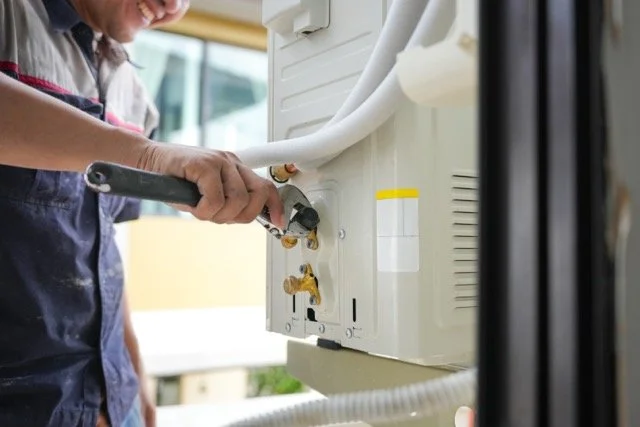
What the Next Care Plan Includes
We built the Next Care Plan around the reality that most Michigan homeowners don't want to think about their HVAC system until it stops working — and by then, it's too late to prevent the problem.
For $5 per month ($60 per year), you get:
- Two annual tune-ups: Fall furnace inspection and spring AC inspection. Everything described in this article — heat exchanger check, combustion analysis, blower motor testing, ductwork inspection, the full diagnostic process.
- Priority scheduling: Care Plan members get first access to our schedule during peak seasons (October/November for furnace, May/June for AC).
- 10% discount on repairs: If we find a problem during a tune-up, you get 10% off the parts and labor to fix it.
- No service call fees: If your furnace breaks down mid-winter, the $150 diagnostic fee is waived for Care Plan members.
The math is straightforward. A single emergency service call in January costs more than two years of the Care Plan. And the odds of avoiding that emergency call go up dramatically when your furnace is inspected and maintained every fall.
For a deeper breakdown of HVAC maintenance plan costs and ROI, we've published real data from Macomb County service calls showing what preventive maintenance actually prevents.
Real Cost Comparison: Tune-Up vs. Emergency Repair
Let's put real numbers to this. Here's what we see in our service records from Metro Detroit over the past three heating seasons:
Fall Tune-Up (Next Care Plan): $60/year
Common Emergency Repairs We See in January-February:
- Failed blower motor: $400-$800
- Cracked heat exchanger (furnace replacement): $3,500-$6,500
- Failed igniter: $250-$400
- Failed inducer motor: $450-$700
- Failed control board: $350-$600
- Emergency service call fee: $150 (waived for Care Plan members)
The failures we catch during fall tune-ups — weak capacitors, dirty burners, early-stage heat exchanger cracks, failing blower motor bearings — are the same failures that turn into $500-$800 emergency repairs when they happen at 11 PM on a Thursday in January.
From a pure cost-avoidance perspective, a fall tune-up pays for itself if it prevents even one mid-winter breakdown. And statistically, it does. Homeowners who schedule annual maintenance have 60-70% fewer emergency breakdowns than homeowners who run their furnaces until they fail.
Ready to Schedule Your Fall Furnace Tune-Up?
NEXT Heating & Cooling has been keeping Michigan homes warm for over 35 years. Our NATE-certified technicians perform real diagnostics — heat exchanger inspections, combustion analysis, and airflow testing — not just filter changes. Get honest answers and fair pricing from a reliable HVAC contractor in Metro Detroit.
Schedule Your ServiceFrequently Asked Questions
Mid-September through early October is ideal. You want to schedule before the first freeze (typically late October in Southeast Michigan) and before HVAC contractors get slammed with service calls in November. Scheduling early gives you time to address any problems we find without the pressure of an imminent cold snap.
A thorough tune-up takes 45-90 minutes depending on the furnace type and age. If we find issues that require additional diagnostics (combustion analysis, duct pressure testing, heat exchanger camera inspection), it can take longer. We'll let you know upfront if we need extra time and why.
You can and should change your furnace filter every 1-3 months and keep the area around your furnace clear. But the diagnostics that matter — heat exchanger inspection, combustion analysis, blower motor testing, gas pressure verification — require specialized tools and training. A cracked heat exchanger or a failing capacitor won't show obvious symptoms until it fails completely. That's what professional maintenance catches.
We explain what we found, why it matters, and what your options are. If it's a minor repair (capacitor replacement, thermostat adjustment), we can often handle it on the spot with your approval. If it's a major issue (cracked heat exchanger, failing blower motor), we give you a written estimate and let you decide how to proceed. We don't do commission-based sales, so our techs have no incentive to upsell you on repairs you don't need.
One-time tune-ups typically run $120-$180 depending on the contractor and what's included. Through our Next Care Plan, you get two annual tune-ups (fall furnace and spring AC) for $60 per year — which works out to $30 per visit. Care Plan members also get priority scheduling, 10% off repairs, and waived service call fees.
We service all major brands — Carrier, Lennox, Trane, Rheem, Bryant, Goodman, Amana, York, and RUUD. Our techs are NATE-certified and trained on both older and current equipment. If you have a furnace installed in the 1990s or a brand-new high-efficiency model, we have the diagnostic tools and parts access to service it properly. Learn more about our certifications and manufacturer partnerships.
Yes. We offer 24/7 emergency HVAC service across Macomb, Oakland, and St. Clair counties. If your furnace fails in the middle of the night or on a weekend, call us. Emergency service calls start at $150 for diagnostics (waived for Next Care Plan members), and we carry common parts on our trucks so we can complete most repairs on the first visit. For more on what to expect during 24-hour furnace repair in Michigan, we've written a detailed guide.