

Furnace Not Working First Cold Day? Here's What to Do

It's the first truly cold night in Southeast Michigan. You walk over to the thermostat, turn up the heat, and wait for that familiar hum. Nothing. The furnace sits silent in your basement while the temperature drops into the 30s outside.
You're not alone. Every October and November, our phones at NEXT Heating & Cooling light up with calls from homeowners in Sterling Heights, Troy, and across Macomb County facing the same problem. The furnace worked fine last March, so what happened?
Most furnace failures on the first cold day stem from preventable issues. Some you can fix yourself in five minutes. Others require a licensed technician. This guide walks you through exactly what to check, what to skip, and when to call for heating and cooling services in Metro Detroit.
Why Furnaces Fail on the First Cold Day
Furnaces don't fail randomly. They fail because specific components wear out, get dirty, or stop working after months of sitting idle. Here's what actually happens during those warm months when your furnace isn't running.
Dust and debris accumulate everywhere. Your furnace pulls air through return vents all summer long, even when it's not heating. That air carries dust, pet hair, pollen, and everything else floating around your house. The filter catches some of it. The rest settles on the blower motor, the heat exchanger, and inside the combustion chamber.
When you fire up the furnace for the first time, that layer of dust can block airflow, trigger safety sensors, or prevent proper ignition. It's like trying to start a lawn mower that's been sitting in your garage since October.
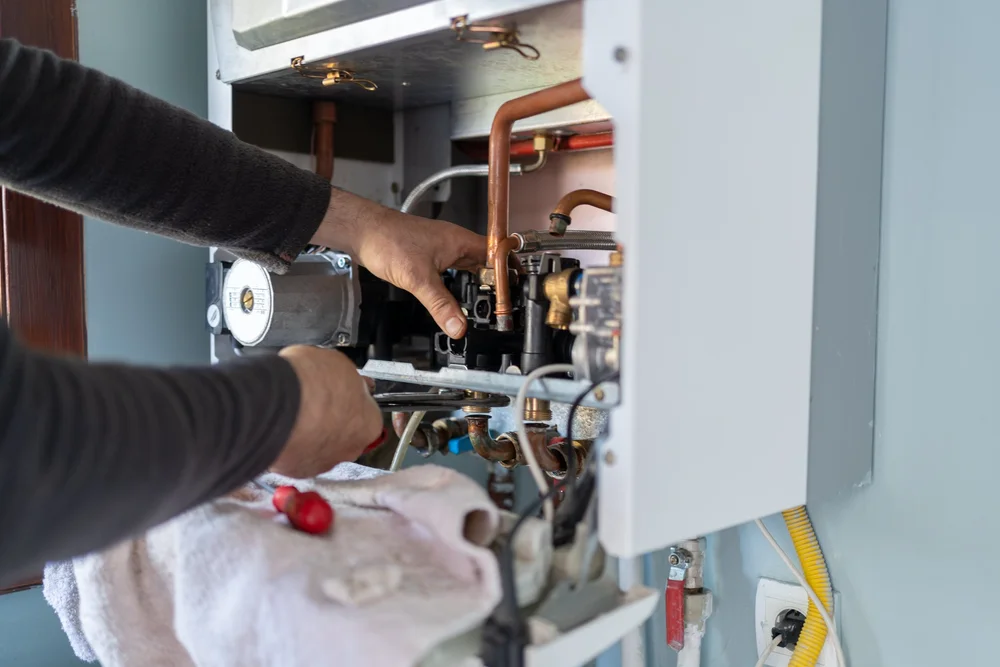
Thermostat batteries die slowly. Most programmable thermostats run on AA or AAA batteries. Those batteries typically last 8-12 months. If you installed fresh batteries last winter, they're probably weak or dead by now. A thermostat with dying batteries might display the temperature but fail to send the signal to start your furnace.
Pilot lights go out. If you have an older furnace with a standing pilot light (common in homes built before 2000), that tiny flame needs to stay lit all year. A strong draft, a spider web in the pilot tube, or a dirty thermocouple can extinguish it. No pilot light means no ignition when you need heat.
Electronic ignition systems corrode. Newer furnaces use electronic ignition instead of pilot lights. The hot surface igniter (a ceramic element that glows orange-hot) or the flame sensor (a thin metal rod) can corrode or crack during the off-season. When the furnace tries to light, the igniter fails or the sensor can't detect the flame, so the system shuts down as a safety precaution.
Michigan's humidity makes this worse. Basements in Clinton Township and Warren stay damp through summer. That moisture accelerates corrosion on electrical components.
Safety switches get tripped. Modern furnaces have multiple safety switches. The door switch prevents operation if the access panel isn't fully closed. The pressure switch verifies proper airflow through the vent pipes. The flame rollout switch detects dangerous backdrafting. Any of these can trip during the off-season or fail to reset when you need heat.
7 Things to Check Before Calling for Repair
Before you spend money on a service call, walk through these seven checks. They take 15 minutes total and solve about 40% of first-day furnace failures we see in Southeast Michigan homes.
1. Check Your Thermostat Settings and Batteries
This sounds obvious, but we've driven to houses in Royal Oak where the thermostat was set to COOL instead of HEAT. It happens more than you'd think, especially in households where different people adjust the temperature.
Set your thermostat to HEAT mode. Bump the temperature up at least 5 degrees above the current room temperature. You should hear a click as the thermostat calls for heat.
If the display looks dim or blank, replace the batteries. Keep the thermostat face open and watch for a few seconds. Many models show a low-battery icon that's easy to miss.
2. Verify Power Supply to the Furnace
Your furnace needs electricity to run, even if it burns natural gas for heat. Two things control that power: the circuit breaker and a wall-mounted switch near the furnace.
Go to your electrical panel. Look for a breaker labeled "Furnace" or "HVAC." If it's in the middle position (tripped), flip it all the way OFF, then back to ON. Don't just flip it to ON from the middle position. That won't reset it properly.
Next, find the power switch on or near your furnace. It looks like a regular light switch, often in a red or gray metal box. Someone might have accidentally flipped it off while moving storage boxes or doing laundry. Make sure it's in the ON position.
3. Inspect and Replace the Air Filter
Pull out your furnace filter. Hold it up to a light. If you can't see light through it, it's clogged and needs replacement.
A dirty filter is the single most common cause of furnace problems we see during fall service calls in Shelby Township and Chesterfield. The filter gets packed with dust over the summer. When you start the furnace, restricted airflow triggers the limit switch, which shuts down the burners to prevent overheating.
Filters are cheap. A standard 16x25x1 filter costs $3-8 at any hardware store. Buy a few and keep them in your basement. Change the filter every 60-90 days during heating season, more often if you have pets or allergies.
If you're not sure about your filter maintenance schedule, our $5/month HVAC maintenance plan includes filter checks during seasonal tune-ups.
4. Check the Gas Valve Position
Follow the gas line to your furnace. You'll see a valve with a handle. The handle should be parallel to the pipe (in line with it) for the ON position. If it's perpendicular (at a 90-degree angle), the gas is shut off.
Someone might have turned it off last spring for maintenance or safety and forgot to turn it back on. This happens in homes with older furnaces where homeowners manually shut off the gas during summer to save the pilot light fuel.
Safety note: If you smell gas (a rotten egg odor), do not touch the valve. Do not flip any switches. Leave your house immediately and call DTE Energy's emergency line at 800-947-5000 from outside. Then call a licensed HVAC contractor once the gas company clears your home.
5. Examine the Pilot Light or Electronic Ignition
For furnaces with standing pilot lights (older models), remove the access panel and look for a small blue flame near the burners. If you don't see one, check your furnace manual for relighting instructions. Most involve holding down a button while using a long lighter to ignite the pilot.
For electronic ignition systems (most furnaces installed after 2000), you'll need to listen and watch. Set the thermostat to call for heat. Go to the furnace and listen. You should hear the draft inducer motor start (a whirring sound), followed by clicking as the igniter tries to light the gas.
If you hear clicking but see no flame through the observation window, the igniter might be cracked or the flame sensor might be dirty. Both require a technician to replace or clean safely. If you're experiencing this issue, it's similar to the problems covered in our guide on why furnaces short-cycle and fail to maintain temperature.
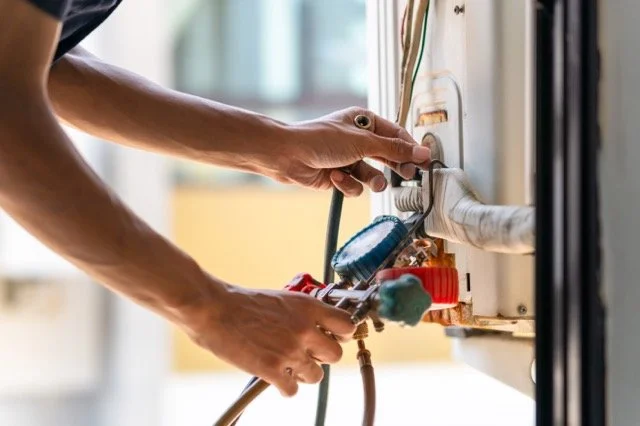
6. Verify Furnace Door and Safety Switches
The access panel on your furnace must be fully seated and closed. There's a small switch (usually white or black plastic) that gets pressed when the door closes. If the door is loose or not properly aligned, the switch stays open and the furnace won't start.
Remove the access panel completely, then reinstall it carefully. Make sure it slides all the way into the tracks or clips. You should feel it click or seat firmly.
Some furnaces have multiple panels. If your model has both an upper and lower panel, both must be properly closed.
7. Check Vents and Registers Throughout Your Home
Walk through your house and open every supply register (the vents in your floors, walls, or ceilings where warm air comes out). Closing too many registers creates back pressure that can trip safety switches in your furnace.
Go outside and find your furnace exhaust vent. It's usually a white PVC pipe coming out of your basement wall or roof. Make sure nothing is blocking it: no leaves, no snow, no bird nests, no storage items leaning against it. A blocked exhaust vent will trip the pressure switch and shut down your furnace immediately.
This is especially common after the first snowfall in Lake Orion or Rochester Hills. Snow drifts can completely cover ground-level exhaust vents.
When to Call a Professional Immediately
Some furnace problems require a licensed technician. Don't try to fix these yourself. You risk injury, carbon monoxide exposure, or making the problem worse.
You smell gas. Natural gas has a distinctive rotten egg smell (mercaptan additive). If you smell it anywhere in your house, leave immediately. Call DTE Energy's emergency line from outside. Do not flip switches, use your phone inside, or try to locate the leak yourself.
Your carbon monoxide detector is beeping. This is an emergency. Get everyone out of the house. Call 911. Carbon monoxide is invisible and deadly. A cracked heat exchanger or blocked vent can cause CO to leak into your living space instead of venting outside.
Every Michigan home should have working CO detectors on every floor, especially near bedrooms. If yours are more than 7 years old, replace them.
The furnace tries to ignite repeatedly but fails. You hear the clicking, see the igniter glow, but the burners won't stay lit. This usually means a bad flame sensor, a faulty gas valve, or a pressure switch problem. Continued failed ignition attempts can flood the combustion chamber with unburned gas, creating a safety hazard.
You hear loud banging, screeching, or grinding noises. These sounds indicate mechanical failure: a broken blower wheel, a failing inducer motor, or a cracked heat exchanger. Running the furnace in this condition can cause catastrophic damage. Shut it off at the breaker and call for service.
You see rust, cracks, or corrosion on the heat exchanger. The heat exchanger is the metal chamber where combustion gases heat the air that circulates through your house. If it's cracked, combustion gases (including carbon monoxide) can mix with your home's air. This is a life-threatening condition. Furnaces with cracked heat exchangers must be replaced, not repaired.
Your furnace is 15+ years old and won't start. At this age, repair costs often approach or exceed the cost of replacement. A new furnace offers better efficiency (96% AFUE vs. 80% on older models), lower operating costs, and a full warranty. We cover the financial math in detail below.
If you're facing any of these situations, contact a reliable HVAC contractor in Metro Detroit who can diagnose the problem safely and give you honest options.
How to Prevent First-Day Furnace Failures
The best time to discover your furnace doesn't work is not the first night temperatures drop below freezing. Here's how to avoid that 2 AM panic call.
Schedule a fall furnace tune-up every September. Professional maintenance catches problems before they become failures. A technician will clean the burners, test the ignition system, check the heat exchanger for cracks, measure combustion efficiency, and verify all safety switches work correctly.
We've seen this pattern for 35 years: homeowners who get annual tune-ups have furnaces that last 18-22 years. Homeowners who skip maintenance replace their furnaces at 12-15 years. The math is simple.
Our Next Care Plan includes two visits per year (fall furnace check, spring AC check) for $5/month. You also get priority scheduling, 10% off repairs, and no service call fees. It pays for itself if you need even one repair during the year.
Test your furnace before you need it. Pick a cool evening in late September or early October. Set the thermostat to HEAT and bump it up 5 degrees. Let the furnace run through a complete cycle (about 15-20 minutes). Walk around and make sure every room is getting warm air from the registers.
If something's wrong, you'll discover it when technicians are available during normal business hours, not during the first cold snap when every HVAC company in Macomb County is booked solid.
Replace your filter before heating season starts. Even if the old filter looks okay, start fresh. A clean filter ensures maximum airflow and prevents the limit switch from tripping on that first cold day.
Mark your calendar to change it again in December and February. Set a phone reminder if you need to. This one habit prevents more service calls than anything else.
Clear the area around your furnace. Basement storage tends to creep toward the furnace over the summer. Boxes, holiday decorations, paint cans, and tools end up stacked near the unit. This blocks airflow and creates a fire hazard.
Michigan code requires 30 inches of clearance on all sides of your furnace. More is better. Keep the area swept clean. Make sure nothing is touching the exhaust vent pipes.
Know your furnace's age and service history. Write down the installation date, model number, and serial number. Keep a folder (physical or digital) with service records, warranty information, and the manual. When something goes wrong, this information helps a technician diagnose problems faster and order the right parts.
If you don't know your furnace's age, look for a manufacturing date on the rating plate (a metal tag attached to the unit). It's usually formatted as a month and year code. A furnace manufactured in 2010 is 16 years old and approaching end-of-life.
Cost Reality: Repair vs. Replacement in Southeast Michigan
Let's talk money. You're standing in your basement, the furnace won't start, and a technician is giving you a repair estimate. How do you know if you should fix it or replace it?
Common first-day repair costs in Metro Detroit (2026 prices):
- Flame sensor cleaning or replacement: $150-$300. This is one of the most common repairs. The sensor gets coated with carbon deposits and can't detect the flame, so the furnace shuts down after a few seconds.
- Hot surface igniter replacement: $200-$400. The ceramic igniter cracks from repeated heating and cooling cycles. This part typically lasts 5-7 years.
- Pressure switch replacement: $200-$350. The switch verifies proper draft through the exhaust vent. When it fails, the furnace won't start.
- Blower motor replacement: $500-$900. The motor that circulates air through your ducts can fail from worn bearings or electrical problems.
- Gas valve replacement: $400-$700. The valve controls gas flow to the burners. When it fails, you get no heat.
- Control board replacement: $300-$600. The circuit board that manages all furnace functions can fail from power surges or age.
For detailed cost breakdowns on common repairs, see our guide on furnace repair costs in Michigan.
When repair makes sense: Your furnace is under 10 years old, has been well-maintained, and the repair costs less than $500. Fix it. A well-maintained furnace should last 18-20 years.
When replacement makes more sense: Your furnace is 15+ years old and the repair costs more than $500. Here's why. A 15-year-old furnace that needs a $700 repair today will likely need another $500-1000 in repairs over the next 2-3 years. You're throwing good money after bad.
A new high-efficiency furnace (96% AFUE) costs $3,500-$6,000 installed in Southeast Michigan, depending on size and brand. That includes labor, permits, and a 10-year parts warranty. Brands we install regularly: Carrier, Lennox, Trane, Rheem, Bryant, and Goodman.
The efficiency upgrade alone saves $300-600 per year on heating costs compared to an 80% AFUE furnace. Over 15 years, that's $4,500-9,000 in energy savings. The furnace pays for itself.
Financing and rebates: Most manufacturers offer 0% financing for 60 months on new equipment. DTE Energy and Consumers Energy offer rebates ($300-1200) for high-efficiency furnaces. We handle the rebate paperwork for you.
If your furnace is 12-15 years old and you're facing a major repair, get a replacement quote before you decide. You might be surprised how close the numbers are.
Ready to Get Your Furnace Running?
NEXT Heating & Cooling has kept Michigan homes comfortable for over 35 years. Our NATE-certified technicians provide honest diagnostics, fair pricing, and same-day service in Sterling Heights, Troy, Warren, and across Southeast Michigan. No pressure, no upselling, just straight answers.
Schedule Your Service CallFrequently Asked Questions
Intermittent operation usually points to a dirty flame sensor or a failing limit switch. The flame sensor gets coated with carbon deposits over time. When it can't detect the flame properly, the furnace shuts down after 5-10 seconds, waits, then tries again. The limit switch monitors temperature inside the furnace. If it's failing or if airflow is restricted (dirty filter), it will cycle the furnace on and off. Both issues require cleaning or replacement by a technician.
Work through the seven checks in this guide first (thermostat, power, filter, gas valve, pilot light, door switches, vents). That takes 15-20 minutes. If none of those solve the problem, call for service immediately. Don't wait overnight hoping it fixes itself. Furnace problems don't resolve on their own, and the first cold snap is when HVAC companies get slammed with calls. The sooner you call, the sooner you get on the schedule.
Yes, but with caution. Use only electric space heaters with automatic tip-over shutoff and overheat protection. Never use gas-powered heaters, propane heaters, or your oven for heat. Keep space heaters at least 3 feet away from curtains, furniture, and bedding. Plug them directly into wall outlets, never into extension cords or power strips. Don't leave them running overnight or when you're not home. Space heaters are a temporary solution, not a replacement for furnace repair.
A tune-up is preventive maintenance performed when the furnace is working. The technician cleans components, tests safety systems, measures efficiency, and catches small problems before they cause breakdowns. A repair call happens when something is already broken and you have no heat. Tune-ups cost $100-150 and prevent expensive emergency repairs. Our Next Care Plan includes two tune-ups per year (fall and spring) for $60 annually. Most homeowners save $200-500 per year by catching problems during tune-ups instead of waiting for failures.
Yes, immediately. Loud banging, screeching, grinding, or rattling noises indicate mechanical failure. Continued operation can cause catastrophic damage and turn a $300 repair into a $2,000 replacement. Shut off the furnace at the thermostat and at the circuit breaker. Call for service. The only exception: a brief popping or rumbling sound when the furnace first starts (metal ducts expanding from heat) is normal. But sustained or loud noises mean something is broken.
You can't reliably diagnose this yourself. A cracked heat exchanger requires a visual inspection with the furnace disassembled and a combustion analysis test. Warning signs include: soot buildup inside the furnace, rust or corrosion on the heat exchanger, frequent carbon monoxide detector alarms, yellow or flickering burner flames (should be steady blue), and a metallic smell when the furnace runs. If you see any of these, shut down the furnace and call for immediate inspection. A cracked heat exchanger leaks carbon monoxide into your home and cannot be repaired, only replaced.
It depends on the situation. If temperatures are below 40°F outside, you have young children or elderly family members in the house, or your pipes are at risk of freezing, emergency service is worth it. You'll pay $150-300 more for after-hours or weekend service, but you get heat restored quickly. If temperatures are mild (50s-60s) and you can safely wait until morning with space heaters and extra blankets, schedule a regular service call to save the emergency fee. At NEXT Heating & Cooling, we offer 24/7 emergency service because we know Michigan winters don't wait for business hours. Learn more about what qualifies as an HVAC emergency.