

HVAC Maintenance Plans in Macomb County: Costs & Real ROI
Every HVAC contractor in Southeast Michigan is selling maintenance plans these days. Some charge $150 a year. Others want $400. A few offer monthly subscriptions at $5, $10, or $20. And if you're like most homeowners in Macomb County, you're wondering: what am I actually paying for, and does any of this pencil out?
Here's the straight answer from someone who's been crawling through basement furnace rooms across Sterling Heights, Clinton Township, and Chesterfield for over 35 years: a good HVAC maintenance plan can absolutely save you money — but only if you understand what you're getting, what it costs, and how the math actually works in Michigan's climate.
This isn't a sales pitch. It's the breakdown I'd give my neighbor if they asked me over the fence whether they should sign up for one of these plans. We'll walk through exactly what's covered during a tune-up, what maintenance plans cost in Macomb County right now, and the real ROI calculation based on what we see in the field every single day.
What's Actually Covered in an HVAC Maintenance Plan
Let's start with what you're actually buying. A legitimate HVAC maintenance plan in Michigan should include two visits per year: one in the fall before heating season kicks in, and one in the spring before you fire up the AC. That timing matters because Michigan weather doesn't give you a grace period — when the polar vortex hits in January or we get that first 90-degree day in May, your system needs to work.
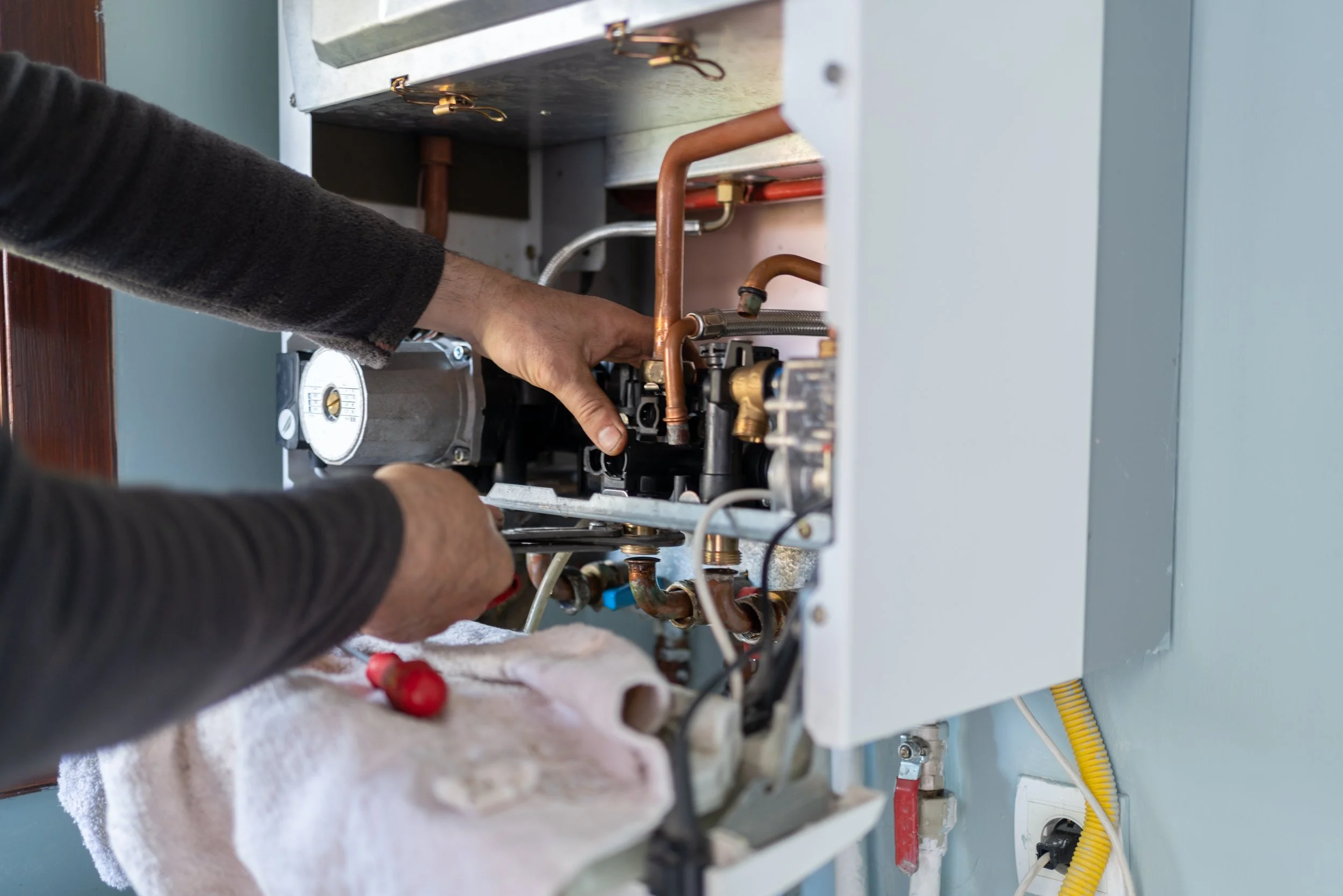
Here's what a qualified HVAC technician should be checking during a fall furnace tune-up:
- Heat exchanger inspection: This is the part that can crack and leak carbon monoxide into your home. We're looking for rust, cracks, or signs of stress. In Michigan, where furnaces run hard for six months straight, heat exchangers take a beating.
- Burner cleaning and flame sensor check: Dirty burners cause incomplete combustion, which wastes gas and creates soot buildup. The flame sensor tells your furnace when ignition happens — if it's coated in carbon, your furnace short-cycles or won't stay lit.
- Blower motor and belt inspection: The blower moves heated air through your ducts. We check the motor bearings, measure amp draw, and inspect the belt (if your system has one) for cracks or wear.
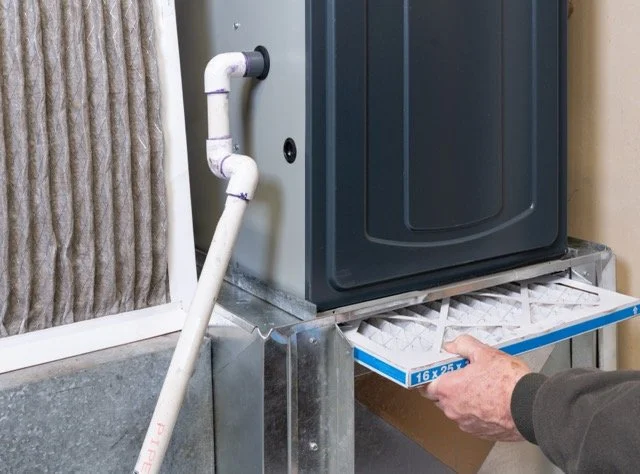
- Air filter replacement or evaluation: Some plans include a basic filter. Most just tell you what size you need and whether it's clogged.
- Thermostat calibration: If your thermostat is reading two degrees off, your furnace is working harder than it needs to.
- Gas pressure and valve check: Too much gas pressure creates soot and can damage the heat exchanger. Too little means your furnace isn't heating efficiently.
- Flue pipe and venting inspection: Blocked or improperly vented flues are a carbon monoxide hazard. We check for obstructions, corrosion, and proper draft.
- Safety controls and limit switches: These shut your furnace down if something goes wrong. We test them to make sure they actually work.
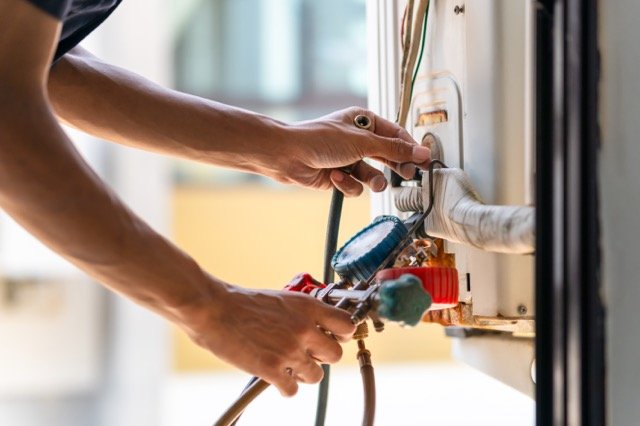
Spring AC tune-ups cover different ground:
- Refrigerant charge check: Low refrigerant means your AC isn't cooling efficiently. We measure superheat and subcooling to verify the charge is correct for your system.
- Condenser coil cleaning: The outdoor unit collects cottonwood seeds, grass clippings, and dirt. A dirty coil reduces efficiency by 20-30% and makes your compressor work harder.
- Evaporator coil inspection: The indoor coil can grow mold or collect dust if your filter isn't doing its job. We check for blockages and biological growth.
- Condensate drain clearing: In Michigan's humid summers, your AC produces gallons of condensation. A clogged drain line floods your basement or shuts your system down.
- Electrical connections and capacitor test: Loose connections cause arcing and component failure. Capacitors are one of the most common AC failure points — we test them under load.
- Compressor amp draw and performance: High amp draw means your compressor is struggling. We catch this before it fails and costs you $1,500-$3,500 to replace.
- Thermostat functionality and cooling cycle timing: Your AC should run for 15-20 minute cycles. Short-cycling wears out components and wastes energy.
Now here's what's typically not covered in most maintenance plans, and this is where homeowners get surprised:
- Parts and repairs beyond basic adjustments
- Emergency service calls outside of the scheduled visits
- Ductwork repairs or modifications
- Refrigerant top-offs (some plans include this, most don't)
- Filter replacements between visits
- Thermostat upgrades or replacements
The NEXT Care Plan includes two annual visits, priority scheduling when you need emergency service, and a 10% discount on any repairs we find during the tune-up. No service call fees for plan members, which matters when your furnace quits at 11 PM on a Saturday in January. That's $60 a year, or $5 a month — about what you'd pay for a couple of coffees.
Real Costs: What Maintenance Plans Cost in Macomb County
Let's talk numbers. If you call around to HVAC contractors in Macomb, Oakland, and St. Clair counties right now, here's what you'll find:
- Budget plans ($100-$150/year): Usually one visit per year, basic inspection only, no priority service or discounts. You're getting a safety check and not much else.
- Standard plans ($150-$250/year): Two visits (fall and spring), basic filter included, maybe a small discount on repairs. This is the most common tier.
- Premium plans ($250-$400/year): Two visits, filters included, priority scheduling, 10-20% repair discounts, sometimes includes one refrigerant top-off or minor parts.
- Subscription models ($5-$20/month): Monthly billing instead of annual. Same coverage as standard or premium plans, but easier to budget.
The $5/month HVAC maintenance plan we offer falls into the subscription category. Two visits a year, priority scheduling, 10% repair discount, no service call fees. That's $60 annually — less than what most contractors charge for a single tune-up visit if you're paying out of pocket.
Cost Reality Check: A one-time furnace tune-up from most contractors in Southeast Michigan runs $125-$175. An AC tune-up is usually $100-$150. If you're paying for both separately, you're spending $225-$325 per year. A maintenance plan at $150-$250 starts to make sense just on the visit cost alone, before you factor in any other benefits.
Here's where homeowners get burned: hidden fees and upsell pressure. Some companies advertise a low annual rate but charge $75-$100 service call fees on top of the plan cost. Others use the tune-up visit as a sales opportunity to push you toward a new system you don't need yet. We've seen homeowners in Warren and Sterling Heights told their 10-year-old furnace "needs to be replaced immediately" when all it needed was a $200 part and a thorough cleaning.
If you're comparing plans, ask these questions upfront:
- What's the total annual cost, including any service call fees or trip charges?
- Are your technicians paid on commission, or do they earn a flat wage? (Commission creates upsell pressure.)
- What happens if you find a problem during the tune-up — do I get a discount on the repair?
- Can I cancel anytime, or am I locked into a contract?
- Do you offer priority scheduling for emergencies if I'm a plan member?
For context on what maintenance plans should include, we've written a detailed breakdown of what Michigan homeowners actually need versus what gets marketed to them.
The ROI Math: Does a Maintenance Plan Actually Pay Off?
Here's where we get into the numbers that actually matter: does spending $60-$250 a year on maintenance save you more than it costs?
Let's start with the big-ticket repairs that regular maintenance helps you avoid. These are costs we see regularly in Macomb County homes:
| Component | Replacement Cost | How Maintenance Helps |
|---|---|---|
| Heat exchanger | $1,500-$4,000 | Catches cracks early, prevents carbon monoxide leaks |
| AC compressor | $1,200-$3,500 | Identifies electrical issues and refrigerant problems before failure |
| Blower motor | $400-$800 | Lubrication and amp draw testing catch bearing failures early |
| Ignitor or flame sensor | $150-$300 | Cleaning during tune-up prevents no-heat calls |
| Capacitor | $150-$300 | Testing under load identifies weak capacitors before they fail |
If a $60 annual maintenance plan catches a heat exchanger crack before it becomes a carbon monoxide hazard, you've just avoided a $2,000-$4,000 furnace replacement. That's 33-66 years of maintenance plan costs avoided with one early catch.
But let's be more conservative and look at energy efficiency gains. According to the U.S. Department of Energy, a well-maintained HVAC system operates 5-15% more efficiently than a neglected one. For the average Macomb County home spending $1,800-$2,400 annually on heating and cooling, that's $90-$360 in annual savings.
Here's the ROI calculation for a typical Michigan home:
Scenario: 2,000 sq ft home in Sterling Heights
- Annual HVAC energy cost: $2,000
- Maintenance plan cost: $60/year (NEXT Care Plan)
- Conservative efficiency gain from maintenance: 5%
- Annual energy savings: $100
- Net benefit in year one: $40
Over 10 years, assuming no major repairs avoided: $400 net savings. But if maintenance catches just one $800 blower motor failure early, your 10-year ROI jumps to $1,200.
Then there's equipment lifespan. The industry standard is that regular maintenance extends HVAC equipment life by 3-5 years. A furnace that would normally last 15 years can run 18-20 years with consistent care. If a new furnace costs $3,500-$6,000 installed (common range for Macomb County homes), delaying that replacement by even three years means you're avoiding $3,500 in present-day costs.
Amortized over those three extra years: $1,167 per year in avoided replacement costs. Your $60 annual maintenance plan just paid for itself 19 times over.
The math gets even better when you factor in emergency service calls. A no-heat call in January typically costs $150-$300 for the service call alone, before any repairs. If your maintenance plan includes priority scheduling and no service call fees (like ours does), you've already recouped the annual cost with one emergency visit.
For homeowners wondering about the broader cost picture, we've written extensively about what furnace replacement actually costs in Southeast Michigan, which helps you understand the full financial context of maintenance versus replacement decisions.
What Michigan Homeowners Need to Know Before Signing Up
Not all maintenance plans are created equal, and not every contractor offering one has your best interests in mind. Here's what to watch for before you sign anything.
Red Flags to Avoid
Commission-based sales structures: If the technician who shows up for your tune-up earns a commission on equipment sales, you're going to hear about all the reasons you need a new system — even if yours has 10 good years left. Ask the company directly: are your techs on commission? At NEXT Heating & Cooling, our technicians earn a flat wage. They have zero financial incentive to upsell you.
Locked contracts with auto-renewal: Some companies lock you into multi-year contracts that auto-renew unless you cancel in writing 60 days before expiration. That's a hassle designed to keep you paying whether you're getting value or not. Look for plans you can cancel anytime without penalty.
Vague coverage language: "Comprehensive inspection" and "full system check" mean nothing. The contract should list exactly what's inspected, tested, cleaned, and adjusted during each visit. If it doesn't spell it out, assume they're not doing it.
Upsell pressure disguised as safety concerns: Yes, safety matters. But if a tech tells you your 8-year-old furnace is "dangerous" and needs immediate replacement without showing you the specific problem and explaining why it can't be repaired, get a second opinion. We've diagnosed plenty of furnaces in Clinton Township and Chesterfield that other companies said were "done" — and they ran fine for another 5-7 years with proper maintenance.
Questions to Ask Before Signing Up
- What's covered in each visit? Get the specific checklist, not marketing language.
- Who performs the work? Are the technicians NATE-certified? Licensed? How long have they been with the company?
- What's your response time for emergencies? If you're paying for priority service, define what "priority" actually means. Same day? Within 4 hours? Next available slot?
- Do you offer a discount on repairs found during the tune-up? If they find a problem, you shouldn't pay full retail to fix it when you're already a plan member.
- Can I see a sample inspection report? Legitimate contractors document what they find. If they can't show you what their reports look like, they probably aren't writing them.
For homeowners in Rochester Hills considering heat pump systems, understanding what proper installation and maintenance looks like is critical — heat pumps require different care than traditional furnaces.
When a Maintenance Plan Makes Sense
A maintenance plan is a smart investment if:
- Your HVAC equipment is 5+ years old (past the warranty period when manufacturer defects would have shown up)
- You plan to stay in your home for at least 3-5 more years
- You're not comfortable doing basic filter changes and visual inspections yourself
- You want priority access to emergency service during Michigan's extreme weather
- You'd rather budget $5-$20/month than face surprise $300-$500 repair bills
A maintenance plan might not be worth it if:
- Your equipment is brand new (under 2 years old) and still under full manufacturer warranty
- You're planning to replace your system in the next 1-2 years anyway
- You're comfortable performing basic maintenance tasks yourself and have the time to do them
- You're handy enough to diagnose and fix minor issues without calling a pro
Signs Your HVAC System Needs Professional Attention Now
Even with a maintenance plan, you need to know when something's wrong between scheduled visits. Here are the symptoms that mean you should call a licensed HVAC contractor right away, not wait until your next tune-up:
Furnace Warning Signs
- Unusual noises: Banging, screeching, or rumbling sounds aren't normal. A loud bang at startup can mean delayed ignition (gas building up before igniting). Screeching usually means a bad blower motor bearing. Rumbling might indicate a cracked heat exchanger. We've written a detailed guide on what different furnace noises actually mean.
- Yellow or flickering pilot light: Your pilot flame should be blue. Yellow or orange means incomplete combustion and potential carbon monoxide production.
- Furnace short-cycling: If your furnace runs for 2-3 minutes, shuts off, then restarts a few minutes later, something's wrong. Could be a dirty flame sensor, a failing limit switch, or an oversized system. This wears out components fast.
- Cold air blowing from vents: If your furnace is running but only blowing cold air, you've got an ignition problem or a broken heating element. Don't let this go — you're wasting gas and electricity. Here's our breakdown of why furnaces blow cold air and what causes it.
- Rising energy bills without usage changes: If your gas bill jumped 20-30% but you're not using more heat, your furnace is working harder than it should. Usually means a failing component or airflow restriction.
AC Warning Signs
- AC running but not cooling: This is the most common summer service call we get in Macomb County. Could be low refrigerant, a frozen evaporator coil, a bad capacitor, or a failing compressor. We've documented the most common causes of AC not cooling and how to diagnose them.
- Ice forming on the outdoor unit or refrigerant lines: This means your system is low on refrigerant or has an airflow problem. Don't try to chip the ice off — call a tech. Running an iced-up system damages the compressor.
- Water pooling around the indoor unit: Your condensate drain is clogged. In Michigan's humid summers, this happens a lot. If you don't clear it, water backs up and floods your basement or shuts the system down via the float switch.
- Outdoor unit not running at all: If the indoor blower is running but the outdoor condenser isn't, you've got an electrical issue or a dead compressor. This isn't a DIY fix.
- Burning smell from vents: Electrical burning smell means wires are overheating. Shut the system off and call for service immediately.
System Age Considerations
If your furnace or AC is 15+ years old and you're seeing any of the above symptoms, you're at the point where repair costs start competing with replacement costs. A $1,200 compressor replacement on a 17-year-old AC doesn't make financial sense when a new system costs $3,500-$5,000 and comes with a 10-year warranty.
That said, we've seen plenty of 20-year-old furnaces in Warren and Sterling Heights still running strong because they were maintained properly from day one. Age alone doesn't dictate replacement — it's age plus condition plus repair history.
For homeowners comparing options, understanding the real costs and performance differences between heat pumps and furnaces helps you make informed decisions about replacement timing.
How to Choose the Right HVAC Maintenance Plan
You've got the cost breakdown, you understand the ROI math, and you know what to look for in a contractor. Here's how to actually choose a plan that makes sense for your home in Macomb County.
Match Coverage to Your Climate Reality
Michigan isn't Florida. You don't need three AC tune-ups a year. You need one solid furnace check in the fall before the polar vortex hits, and one thorough AC inspection in the spring before the humidity kicks in. Two visits per year is the right cadence for Southeast Michigan.
If a contractor is pushing quarterly visits or monthly service agreements, ask yourself: what are they actually doing in those extra visits that matters? Unless you're running a commercial building with 24/7 HVAC operation, you don't need that level of service.
Verify Contractor Credentials
In Michigan, anyone performing HVAC work for hire needs a mechanical contractor license issued by the state. Ask to see it. NATE certification (North American Technician Excellence) is the gold standard for technician training — it means they've passed hands-on competency exams, not just watched some videos.
Check their BBB rating. Look for real customer reviews on Google, not just testimonials on their website. Ask how long they've been in business and whether they're locally owned. A company that's been serving Macomb County for 30+ years isn't going to disappear after they sell you a maintenance plan.
NEXT Heating & Cooling operates under Premier Builder Inc., which has been in business since 1991. Our technicians are NATE-certified, and we carry full Michigan mechanical contractor licensing. We're BBB A+ accredited, and we're involved with Habitat for Humanity of Oakland County and LifeBUILDERS in Detroit. That's not marketing fluff — it's accountability. You can learn more about our credentials and community involvement on our site.
Prioritize Transparency Over Marketing
The contractor who clearly explains what they're going to do, why it matters, and what it costs is more trustworthy than the one with the slickest website and the biggest truck. You want someone who shows up on time, walks you through what they found, and gives you options without pressure.
We've built our reputation in Metro Detroit on old-school values: honest diagnostics, fair pricing, no upselling unnecessary equipment. Our techs show up on time, explain the problem clearly, and give you options without pressure. No commission-based sales. The same values that built NEXT Exteriors now applied to HVAC.
Consider Service Area Coverage
Make sure the contractor actually serves your area with their own employees, not subcontractors. If you're in Chesterfield or St. Clair Shores, you don't want a company based in Ann Arbor that's going to take three days to get to you in an emergency.
We serve Macomb County, Oakland County, and St. Clair County — communities like Sterling Heights, Clinton Township, Warren, Troy, Rochester Hills, Royal Oak, Grosse Pointe, and Lake Orion. We're based in Mount Clemens, which means we're local to the area we serve.
Ready to Protect Your HVAC Investment?
The NEXT Care Plan costs $5 a month and includes two annual tune-ups, priority scheduling, 10% repair discounts, and no service call fees. NATE-certified technicians, honest diagnostics, and over 35 years serving Southeast Michigan families.
Schedule Your ServiceFrequently Asked Questions
HVAC maintenance plans in Macomb County typically range from $100-$400 per year depending on coverage. Budget plans ($100-$150) usually include one annual visit. Standard plans ($150-$250) include two visits per year (fall furnace and spring AC tune-ups). Premium plans ($250-$400) add priority scheduling, repair discounts, and sometimes include filters or minor parts. The NEXT Care Plan costs $60 per year ($5/month) and includes two annual visits, priority scheduling, 10% repair discounts, and no service call fees.
A fall furnace tune-up should include heat exchanger inspection, burner cleaning, flame sensor check, blower motor inspection, air filter evaluation, thermostat calibration, gas pressure testing, flue pipe inspection, and safety control testing. A spring AC tune-up should cover refrigerant charge verification, condenser coil cleaning, evaporator coil inspection, condensate drain clearing, electrical connection tightening, capacitor testing, compressor amp draw measurement, and thermostat functionality check. Legitimate contractors document their findings in a written report.
Yes, when you factor in avoided repairs, energy efficiency gains, and extended equipment lifespan. Regular maintenance improves HVAC efficiency by 5-15%, which saves $90-$360 annually on energy costs for the average Michigan home. Catching problems early prevents major failures like heat exchanger cracks ($1,500-$4,000) or compressor failures ($1,200-$3,500). Maintenance also extends equipment life by 3-5 years, delaying replacement costs of $3,500-$6,000. A $60-$150 annual plan typically pays for itself within the first year through energy savings alone.
In Michigan, you should have your furnace serviced once per year in the fall (September-October) before heating season, and your AC serviced once per year in the spring (April-May) before cooling season. This timing ensures your system is ready when Michigan weather extremes hit. If your equipment is 10+ years old or you have indoor air quality concerns, twice-yearly service for each system (four visits total) may be beneficial, but that's not necessary for most residential systems.
Look for plans that clearly list what's inspected during each visit (not vague "comprehensive inspection" language). Verify the contractor holds a Michigan mechanical contractor license and employs NATE-certified technicians. Check their BBB rating and customer reviews. Ask whether technicians work on commission (creates upsell pressure) or flat wages. Confirm you can cancel anytime without penalty. Priority scheduling for emergencies and repair discounts add significant value. Avoid contractors who pressure you to replace equipment during tune-up visits without clear documentation of safety or performance issues.
You can handle basic tasks like changing filters monthly, keeping outdoor units clear of debris, and checking thermostat batteries. However, critical safety checks (heat exchanger inspection, gas pressure testing, carbon monoxide testing), refrigerant work (requires EPA 608 certification), electrical testing under load, and combustion analysis require professional tools and training. In Michigan, where furnaces run hard for six months and safety is critical, professional annual inspections are worth the cost. If you're mechanically inclined and own the diagnostic tools, you can supplement professional service with your own quarterly checks.
A maintenance plan covers preventive service (tune-ups, inspections, cleaning) to keep your system running efficiently and catch problems early. It does not typically cover repairs or parts. A home warranty is insurance that covers repair or replacement costs when equipment fails, but usually doesn't include preventive maintenance. Many home warranties have service call fees ($75-$125), coverage exclusions, and caps on repair costs. For optimal protection, some homeowners carry both: a maintenance plan to prevent failures and a warranty to cover unexpected breakdowns. However, well-maintained systems rarely need warranty claims.