

Metro Detroit HVAC Contractor: What to Look For in 2026
You're comparing HVAC contractors in Metro Detroit, and the quotes you're getting range from $4,200 to $9,800 for the same furnace. One company sent a "comfort specialist" who spent 90 minutes pitching financing. Another tech was in and out in 15 minutes with a one-page estimate. A third quoted you over the phone without ever looking at your ductwork.
This isn't unusual. The HVAC industry in Southeast Michigan has a wide range of business models, pricing structures, and service standards. Some contractors employ licensed, NATE-certified technicians who perform proper load calculations and ductwork inspections. Others send commission-based salespeople who are trained to upsell, not diagnose.
After 35 years serving Macomb, Oakland, and St. Clair counties, we've seen what separates honest heating and cooling services in Metro Detroit from companies that prioritize sales volume over technical accuracy. This guide breaks down what credentials actually matter, how pricing should work, and what red flags to watch for when you're choosing a contractor for your Michigan home.
Michigan Licensing and Credentials That Actually Matter
Michigan law requires anyone installing, altering, or repairing HVAC systems to hold a valid Michigan Mechanical Contractor License issued by the Department of Licensing and Regulatory Affairs (LARA). This isn't optional. If a contractor can't provide their license number, they're operating illegally.
The license requirement exists because HVAC work involves gas lines, electrical connections, refrigerant handling, and combustion systems. An improperly installed furnace can produce carbon monoxide. A refrigerant leak can damage a $2,500 compressor. Undersized ductwork can cost you $400 per year in wasted energy.
Beyond the state license, look for these credentials:
NATE Certification (North American Technician Excellence)
NATE is the industry's leading certification for HVAC technicians. It's not required by law, but it demonstrates that a technician has passed competency exams covering installation, service, and system design. NATE-certified techs understand refrigerant charging, airflow diagnostics, heat exchanger inspection, and electrical troubleshooting at a level that unlicensed "handymen" don't.
At NEXT Heating & Cooling, all our technicians are NATE-certified. It's part of how we ensure accurate diagnostics rather than guesswork.
EPA 608 Certification
Federal law requires anyone handling refrigerants to hold EPA Section 608 certification. This applies to air conditioning and heat pump work. If a contractor is working on your AC system without this certification, they're breaking federal law—and they likely don't understand refrigerant pressures, superheat, subcooling, or leak detection.
Manufacturer Authorizations
Major equipment manufacturers like Carrier, Lennox, Trane, Rheem, Bryant, Goodman, Amana, York, and RUUD require contractors to complete training and meet service standards before authorizing them to install their equipment. These authorizations matter because they give you access to manufacturer warranties and ensure the contractor knows the specific installation requirements for your system.
A contractor who installs multiple brands (rather than pushing only one) is more likely to recommend equipment based on your home's needs rather than their profit margin on a particular line.

BBB Accreditation
Better Business Bureau accreditation isn't a technical credential, but it indicates a contractor has agreed to ethical business practices and dispute resolution standards. An A+ rating with the BBB suggests a track record of resolving customer concerns fairly.
Credential Verification: Before hiring any contractor, verify their Michigan Mechanical Contractor License through LARA's online database. Ask for proof of NATE certification and EPA 608 certification. Check their BBB profile for complaint history.
How HVAC Contractors Price Their Work (And Why It Varies)
The $5,600 difference between your highest and lowest furnace quote isn't random. It reflects different business models, pricing structures, and compensation systems.
Commission-Based vs. Salaried Technicians
Some HVAC companies pay their technicians on commission—a percentage of every sale they close. This creates a financial incentive to sell you the most expensive system, add unnecessary upgrades, and pressure you into same-day decisions.
Other companies, including NEXT Heating & Cooling, pay technicians a salary. Our techs earn the same whether they recommend a $4,800 repair or a $12,000 replacement. This removes the upselling incentive and allows them to give you honest diagnostic information.
When you're getting quotes, ask how technicians are compensated. If they're on commission, expect more aggressive sales tactics.
Flat-Rate Pricing vs. Time-and-Materials
Flat-rate pricing means the contractor charges a fixed price for specific repairs (e.g., $450 to replace an inducer motor, regardless of how long it takes). Time-and-materials pricing charges an hourly labor rate plus the cost of parts.
Both models can be fair, but flat-rate pricing sometimes inflates costs on simple jobs to cover the risk of complex ones. Time-and-materials pricing is more transparent but requires trust that the contractor won't pad hours.
We use a hybrid approach: transparent parts pricing plus a fair labor rate based on actual work performed. You get a written estimate before we start, and we explain what we're doing and why.
What a Fair Furnace Replacement Costs in Southeast Michigan
As of 2026, here's what you should expect to pay for a complete furnace replacement in Metro Detroit, including equipment, labor, permits, and disposal of the old unit:
- 80% AFUE single-stage gas furnace (60,000-80,000 BTU): $3,800-$5,200
- 95-96% AFUE two-stage gas furnace (60,000-80,000 BTU): $5,200-$7,500
- 96-98% AFUE modulating gas furnace (60,000-100,000 BTU): $7,200-$10,500
Prices increase if you need ductwork modifications, new gas line runs, electrical upgrades, or zoning systems. A contractor quoting significantly below these ranges is likely cutting corners on installation quality, using refurbished equipment, or planning to upsell you once they're in your home.
For a detailed breakdown of furnace efficiency and costs, read our analysis on whether a 96% AFUE furnace is worth it in Michigan.
Red Flags in Pricing
Watch for these warning signs:
- Pressure to decide immediately: "This price is only good if you sign today" is a sales tactic, not a legitimate business practice
- No written estimate: Verbal quotes lead to disputes and surprise charges
- Vague line items: "Installation" or "Labor" without detail makes it impossible to compare quotes
- Unusually low pricing: If one quote is 40% lower than others, ask why—they may be planning to cut corners or add charges later
The Diagnostic Process: What Honest Techs Do Differently
A proper HVAC diagnostic isn't a 10-minute visual inspection. It's a systematic process that identifies the root cause of the problem and determines whether repair or replacement makes financial sense.
Load Calculations for Equipment Sizing
When you need a new furnace or air conditioner, the contractor should perform a Manual J load calculation. This engineering calculation accounts for your home's square footage, insulation levels, window types, air leakage, and Michigan's climate to determine the correct equipment size.
Many contractors skip this step and size equipment based on the old unit's capacity or rough square footage estimates. This leads to oversized systems that short-cycle, undersized systems that can't keep up during polar vortex events, and wasted energy year-round.
An oversized furnace in a 1,600-square-foot ranch in Sterling Heights will cycle on and off every 5-8 minutes, never reaching steady-state efficiency. You'll burn 15-20% more gas than necessary and wear out components faster. We see this constantly in homes where the previous contractor installed an 100,000 BTU furnace when a 60,000 BTU unit would have been correct.
If you're experiencing short-cycling issues, our guide on furnace short-cycling causes explains what's happening and how to fix it.
Ductwork Inspection
Your ductwork is as important as your furnace. Leaky ducts waste 20-30% of heated air before it reaches your living spaces. Undersized ducts create high static pressure that reduces airflow and efficiency. Poorly designed duct systems cause hot and cold spots throughout your home.
A thorough diagnostic includes inspecting accessible ductwork for leaks, measuring supply and return airflow, and checking static pressure. If your ductwork has problems, no amount of expensive equipment will solve your comfort issues.
In older homes across Macomb County—especially 1960s ranches with crawlspace or basement ductwork—we routinely find disconnected ducts, missing insulation, and return air pulled from unconditioned spaces. These problems cost $300-$600 per year in wasted energy.

When Replacement Is Necessary vs. When Repair Works
The "50% rule" is a reasonable guideline: if a repair costs more than 50% of replacement value and your equipment is past 70% of its expected lifespan, replacement usually makes more financial sense.
For example, if your 18-year-old furnace needs a $1,200 heat exchanger replacement and a new furnace costs $4,500, replacement is the better choice. The old furnace is near the end of its 20-25 year lifespan, and you'll likely face additional repairs within 2-3 years.
But if your 8-year-old furnace needs a $400 inducer motor, repair is clearly the right call. The furnace has 12+ years of life remaining, and the repair cost is minimal compared to replacement.
An honest contractor will explain both options, show you the math, and let you decide. A sales-driven contractor will push replacement regardless of the numbers.
Our article on common furnace repairs in Sterling Heights covers the most frequent failure points and typical repair costs.
The Upsell Problem in HVAC
The HVAC industry has an upselling problem. Many companies train their techs to sell add-ons regardless of need: UV lights, whole-home humidifiers, air purifiers, duct cleaning, zoning systems, smart thermostats.
Some of these upgrades provide real value. A whole-home humidifier in Michigan's dry winter climate improves comfort and reduces static electricity. A smart thermostat with proper programming can cut heating costs 10-15%.
But UV lights are often sold with exaggerated claims about killing viruses and mold, when their actual effectiveness depends on installation location, bulb intensity, and exposure time. Duct cleaning is frequently unnecessary unless you have visible mold, vermin infestation, or excessive dust buildup.
Ask questions. Request evidence. A contractor who can't explain the specific benefit of an upgrade for your home is selling, not solving.
Emergency Service Standards in Michigan Winters
When your furnace quits during a January polar vortex in Rochester Hills, "emergency service" needs to mean something. Not all contractors who advertise 24/7 availability actually deliver it.
What "24/7 Emergency Service" Actually Means
True 24/7 emergency service means:
- A live person answers the phone at 2 AM on a Sunday
- A technician is dispatched within 1-2 hours for no-heat emergencies
- The truck carries common parts for emergency repairs
- The technician has the authority to authorize repairs on-site without waiting for office approval
Some companies route after-hours calls to an answering service that takes messages for next-day callbacks. Others dispatch techs who can only diagnose problems, not fix them, because they don't carry parts or can't approve repair costs.
When you're evaluating contractors, ask specifically: "If my furnace fails at 11 PM on Saturday, what happens?" The answer will tell you whether their emergency service is real or marketing.
Response Time Expectations During Polar Vortex Events
During extreme cold events—when temperatures drop below zero and wind chills hit -20°F—every HVAC contractor in Metro Detroit gets slammed with emergency calls. A 1-2 hour response time may stretch to 4-6 hours.
This is reality, not poor service. When 50 furnaces fail in a single night because of cracked heat exchangers, failed igniters, and frozen condensate lines, even the best-staffed companies have to triage.
A good contractor will be honest about wait times, prioritize homes with children or elderly residents, and provide interim solutions (space heaters, temporary repairs) when full repairs require parts that aren't available.
For guidance on what to do when your heat fails, read our emergency protocol for no-heat situations in Metro Detroit.
Emergency Pricing vs. Regular Pricing
Emergency service costs more than regular business hours. This is standard across the industry because it requires technicians to be on-call, interrupts their personal time, and often involves working in difficult conditions (unheated basements at midnight).
Expect emergency service fees of $150-$250 on top of regular diagnostic and repair costs. This should be disclosed upfront when you call.
What's not acceptable: price gouging during emergencies. A $450 inducer motor shouldn't become a $1,200 inducer motor just because it's installed at 1 AM. Labor rates may increase, but parts pricing should remain consistent.
Backup Plans When Parts Aren't Available
Supply chain issues affect HVAC parts availability. Control boards, gas valves, and heat exchangers sometimes require 2-5 day lead times.
A good contractor has relationships with multiple suppliers, keeps common parts in inventory, and can source hard-to-find components quickly. They also have backup plans: temporary repairs to restore partial heat, loaner equipment for critical situations, or expedited shipping for urgent parts.
When a contractor tells you a part will take "a week or two," push back. Ask if they've checked alternate suppliers, contacted the manufacturer directly, or explored temporary solutions. Waiting two weeks without heat in a Michigan winter isn't acceptable when alternatives exist.
Preventive Maintenance Programs Worth Paying For
Annual furnace and AC maintenance prevents most emergency breakdowns, extends equipment life, and maintains efficiency. But not all maintenance programs deliver equal value.
What Seasonal Tune-Ups Should Include
A legitimate furnace tune-up includes:
- Combustion analysis to verify proper gas-to-air ratio
- Heat exchanger inspection for cracks or corrosion
- Burner cleaning and flame sensor maintenance
- Blower motor lubrication and amp draw testing
- Air filter replacement
- Thermostat calibration
- Condensate drain cleaning
- Safety control testing (limit switches, pressure switches, flame rollout switches)
- Electrical connection inspection and tightening
- Ductwork inspection for leaks
An AC tune-up includes:
- Refrigerant pressure check and charging if needed
- Condenser coil cleaning
- Evaporator coil inspection
- Condensate drain cleaning
- Fan motor lubrication and amp draw testing
- Capacitor testing and replacement if failing
- Contactor inspection
- Thermostat calibration
- Airflow measurement
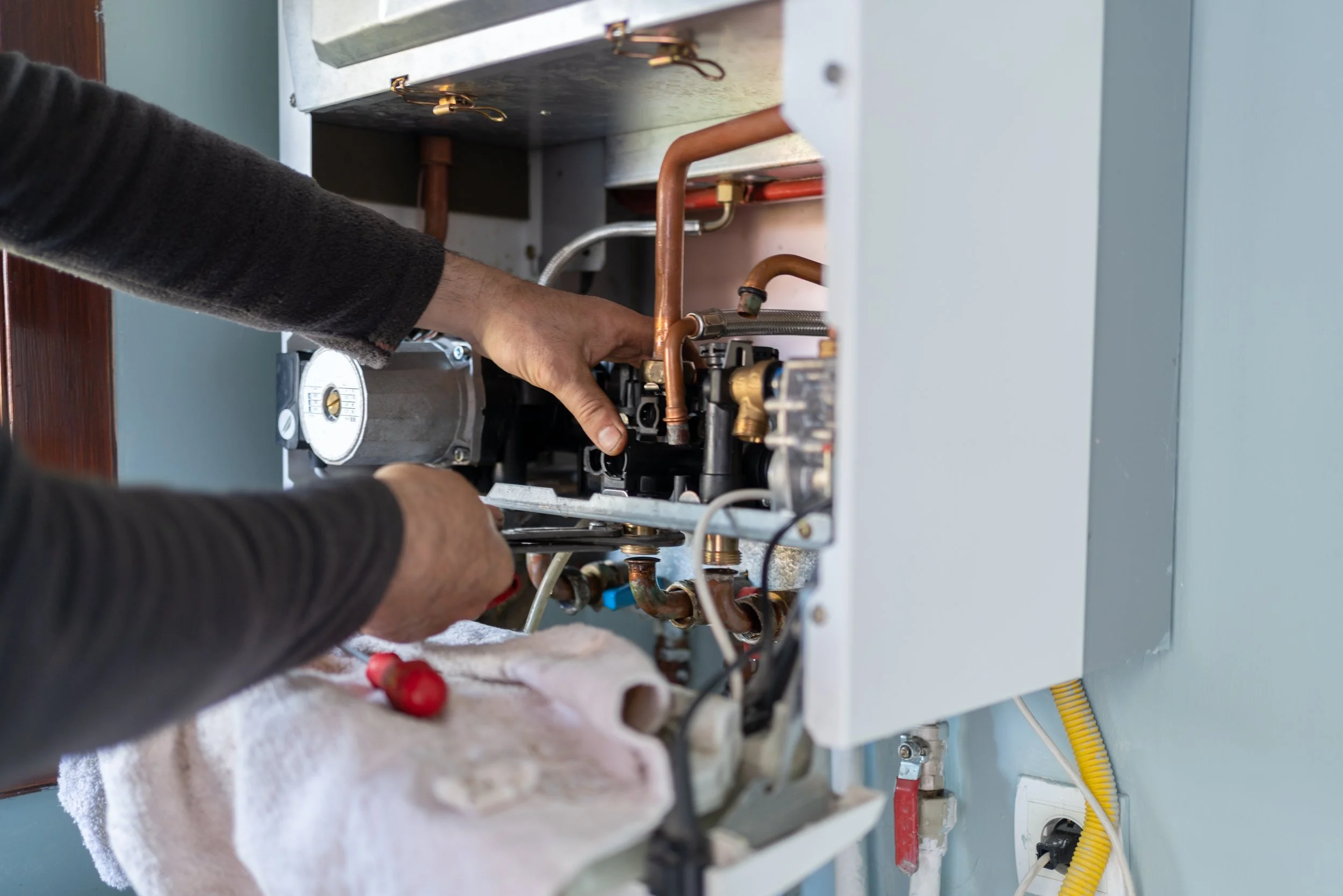
If a contractor finishes a "tune-up" in 20 minutes, they're not doing this work. A thorough maintenance visit takes 60-90 minutes.
Cost Comparison: Maintenance Plan vs. Pay-Per-Visit
Individual tune-ups typically cost $120-$180 per visit. If you're paying for both fall furnace maintenance and spring AC maintenance, that's $240-$360 per year.
Maintenance plans bundle these visits at a discounted rate and often include additional benefits like priority scheduling, repair discounts, and waived service call fees.
Our Next Care Plan costs $5 per month ($60 per year) and includes two annual visits, 10% off repairs, priority emergency scheduling, and no service call fees. Over a year, that's a $180-$300 savings compared to paying for individual visits.
ROI on Preventive Maintenance in Michigan Climate
Michigan's climate is hard on HVAC equipment. Furnaces run 6-7 months per year. Temperature swings from -10°F to 90°F stress components. Humidity levels fluctuate dramatically between seasons.
Regular maintenance prevents 80% of emergency breakdowns. The most common furnace failures we see in November—cracked heat exchangers, failed igniters, dirty flame sensors—are all detectable during fall tune-ups.
The financial impact:
- Avoided emergency repairs: Average furnace repair costs $400-$800. Emergency service adds $150-$250. Annual maintenance at $60-$180 prevents most of these.
- Energy savings: A dirty furnace runs 10-15% less efficiently. On a $1,200 annual heating bill, that's $120-$180 wasted.
- Extended equipment life: Well-maintained furnaces last 20-25 years. Neglected furnaces fail at 12-15 years. Replacing a furnace 5 years early costs $5,000+.
The ROI is clear: $60-$180 per year in maintenance prevents $500-$1,500 in avoidable costs.
For seasonal preparation guidance, read our spring AC startup checklist.
Questions to Ask Before Hiring an HVAC Contractor
Before you sign a contract or approve work, ask these questions. The answers will tell you whether you're dealing with a professional contractor or a sales-focused company.
Licensing and Insurance Verification
- "What's your Michigan Mechanical Contractor License number?" (Verify it through LARA)
- "Are your technicians NATE-certified?" (Ask for certification numbers)
- "Do you carry liability insurance and workers compensation?" (Request certificates of insurance)
- "Are you bonded?" (Protects you if the contractor fails to complete work)
References and Review Platforms
- "Can you provide references from recent jobs similar to mine?" (Call them)
- "What's your BBB rating?" (Check it yourself on BBB.org)
- "Can I see reviews from Google, Yelp, or other platforms?" (Look for patterns, not just star ratings)
Warranty Coverage on Equipment and Labor
- "What warranty does the manufacturer provide on this equipment?" (Typical: 10 years parts, 20 years heat exchanger)
- "What warranty do you provide on installation labor?" (Should be minimum 1 year, preferably 2-5 years)
- "What does the warranty cover and exclude?" (Get it in writing)
- "If you go out of business, is the manufacturer warranty still valid?" (It should be—manufacturer warranties transfer)
Service Area Confirmation
- "Do you regularly service my area?" (Contractors outside their normal service area may charge travel fees or provide slower response times)
- "What's your typical response time for service calls in my city?" (Should be same-day or next-day for non-emergencies)
- "Do you have technicians based near me, or will they be driving from across the metro?" (Affects response time and travel charges)
Diagnostic and Pricing Process
- "Will you perform a load calculation before recommending equipment?" (They should—it's required for proper sizing)
- "Can you provide a written estimate before starting work?" (Never approve work without one)
- "How do you compensate your technicians—salary or commission?" (Affects whether they're incentivized to upsell)
- "What's included in your diagnostic fee, and does it apply toward repairs?" (Typical diagnostic fees: $90-$150, often credited toward repair)
Red Flags and Warning Signs to Avoid
Some warning signs indicate a contractor you should avoid. Here's what to watch for:
High-Pressure Sales Tactics
If a contractor uses any of these lines, walk away:
- "This price is only good if you sign today"
- "We have a truck in your neighborhood right now, so we can give you a special discount"
- "Your furnace is dangerous and needs to be replaced immediately" (without showing you specific evidence)
- "We can only offer this financing rate if you decide in the next hour"
Legitimate contractors give you time to compare quotes, check references, and make informed decisions. Pressure tactics are designed to prevent you from doing due diligence.
Lack of Written Estimates
Verbal estimates lead to disputes. "I thought you said $4,500" vs. "No, I said $5,400" is a conversation you don't want to have after work is completed.
A professional estimate should include:
- Detailed equipment specifications (brand, model number, AFUE/SEER rating, BTU capacity)
- Labor costs broken down by task
- Permit fees
- Disposal fees for old equipment
- Warranty terms
- Payment schedule
- Project timeline
If a contractor won't provide this in writing, don't hire them.
No Physical Business Address
Contractors who operate out of a truck with no physical office location are higher risk. If something goes wrong, how do you contact them? If they go out of business, how do you pursue warranty claims?
Look for contractors with an established business address, phone number that goes to a real office (not just a cell phone), and a professional website. These indicate a stable business that plans to be around for warranty service.
Unlicensed "Handyman" HVAC Work
Some handymen offer HVAC services at cut-rate prices. This is illegal in Michigan and dangerous for your home.
HVAC work requires understanding gas combustion, refrigerant pressures, electrical systems, and building codes. A handyman who installs a furnace incorrectly can create carbon monoxide hazards, void your homeowner's insurance, and leave you liable if something goes wrong.
If a contractor can't provide a Michigan Mechanical Contractor License number, don't hire them regardless of price.
Unusually Low Bids
If one quote is 40-50% lower than others, ask why. Possible explanations:
- They're using lower-quality equipment than quoted by other contractors
- They're cutting corners on installation (no load calculation, improper ductwork connections, skipped permit)
- They plan to add charges once work begins ("We found additional problems that need to be fixed")
- They're unlicensed or uninsured
Sometimes a lower bid is legitimate—smaller companies have lower overhead. But if the price seems too good to be true, it usually is.
Ready to Work with a Trusted Metro Detroit HVAC Contractor?
NEXT Heating & Cooling has been serving Southeast Michigan for over 35 years with honest diagnostics, fair pricing, and NATE-certified technicians. We're licensed, insured, and locally owned. No commission-based sales. No pressure tactics. Just straightforward HVAC service from techs who show up on time and explain what's actually wrong with your system.
Schedule Your ServiceFrequently Asked Questions
Visit the Michigan Department of Licensing and Regulatory Affairs (LARA) website and search their public database of licensed contractors. Enter the contractor's business name or license number. The database will show their license status, expiration date, and any disciplinary actions. Every legitimate HVAC contractor in Michigan must hold a valid Mechanical Contractor License—if they can't provide this, don't hire them.
Flat-rate pricing charges a fixed price for specific repairs regardless of how long they take. For example, $450 to replace an inducer motor whether it takes 45 minutes or 2 hours. Time-and-materials pricing charges an hourly labor rate plus the actual cost of parts. Flat-rate pricing provides cost certainty but can be higher on simple jobs. Time-and-materials is more transparent but requires trust that the contractor won't pad hours. Both can be fair—ask which model the contractor uses and request a written estimate before work begins.
Yes, especially for major work like furnace or AC replacement. Get at least three written estimates that include equipment specifications, labor costs, warranty terms, and project timelines. This allows you to compare not just pricing but also equipment quality, contractor credentials, and service approach. Be wary of quotes that vary by more than 30-40%—either someone is cutting corners or someone is overcharging. Use the estimates to ask questions: "Why is this brand recommended over that one?" "Why does this quote include ductwork modifications and others don't?"
Annual maintenance for both systems is the industry standard and manufacturer recommendation. Schedule furnace service in fall (September-October) before heating season, and AC service in spring (April-May) before cooling season. Michigan's climate is hard on HVAC equipment—furnaces run 6-7 months per year, and temperature extremes stress components. Regular maintenance prevents 80% of emergency breakdowns, maintains efficiency, and extends equipment life. A maintenance plan that bundles both visits typically costs less than paying for them separately.
First, check the simple fixes: verify the thermostat is set to heat mode and the temperature is set above current room temperature, check that the furnace power switch (usually on or near the unit) is on, replace the air filter if it's clogged, and check your circuit breaker panel for tripped breakers. If none of these solve the problem, call for emergency HVAC service. While waiting for the technician, use space heaters safely (never leave them unattended, keep them away from flammable materials, don't overload electrical circuits). If you have a fireplace, use it for supplemental heat. Dress in layers and close off unused rooms to conserve heat. For detailed emergency protocols, read our guide on what to do when your heat fails.
Quote variations reflect different equipment brands and quality levels, business overhead costs (larger companies with more trucks and office staff have higher costs), compensation structures (commission-based techs push higher-priced systems), installation quality and thoroughness (proper load calculations, ductwork modifications, and code compliance take more time), and warranty coverage (longer labor warranties cost more upfront but provide better long-term value). A $4,500 furnace quote might include a builder-grade 80% AFUE single-stage unit with minimal warranty, while a $7,200 quote might include a premium 96% AFUE two-stage unit with extended warranty and ductwork modifications. Compare what's actually included, not just the bottom-line price.
We serve all of Macomb, Oakland, and St. Clair counties in Southeast Michigan. This includes Detroit, Mount Clemens, Bloomfield Hills, Rochester Hills, Royal Oak, Grosse Pointe Farms, Lake Orion, Sterling Heights, Shelby Township, Clinton Township, Macomb Township, Chesterfield Township, Troy, Warren, St. Clair Shores, and surrounding communities. We're based in Mount Clemens and have been serving Metro Detroit for over 35 years. For service scheduling or to confirm we serve your specific area, visit our contractor page or call our office.