

AC Refrigerant Leak Signs in Bloomfield Hills: When to Call a Pro

Your air conditioner stopped keeping up during the last heat wave. The system runs constantly, but your Bloomfield Hills home stays uncomfortably warm. Your electric bill jumped 30% last month. And this morning, you noticed ice forming on the copper refrigerant lines outside.
These aren't random problems — they're textbook signs of a refrigerant leak, one of the most common and misunderstood AC failures we diagnose across Oakland County. After 35 years of heating and cooling services in Metro Detroit, we've seen hundreds of homeowners lose thousands of dollars because they didn't recognize the warning signs early or hired someone who treated symptoms instead of finding the actual leak.
Here's what you need to know about refrigerant leaks, what causes them in Michigan's climate, and when to call a licensed HVAC contractor before a $400 repair turns into a $5,000 system replacement.
How Refrigerant Actually Works in Your AC System
Most homeowners think of refrigerant as "AC fuel" that gets used up like gas in a car. That's not how it works. Refrigerant is a heat transfer medium that circulates in a closed loop between your indoor evaporator coil and outdoor condenser unit. In a properly functioning system, you should never need to add refrigerant — it doesn't get consumed.
Here's the basic refrigerant cycle:
- Evaporator coil (inside): Liquid refrigerant absorbs heat from your home's air as it evaporates into a gas. This is what creates the cooling effect you feel from your supply vents.
- Compressor (outside): The compressor pressurizes the refrigerant gas, raising its temperature above the outdoor air temperature.
- Condenser coil (outside): Hot refrigerant gas releases heat to the outdoor air and condenses back into a liquid.
- Expansion valve: The liquid refrigerant passes through a metering device that drops its pressure and temperature, then returns to the evaporator to repeat the cycle.
This process happens continuously while your AC runs. The refrigerant charge — the exact amount of refrigerant the system needs — is determined by the manufacturer based on the evaporator coil size, condenser capacity, and refrigerant line length. Too much or too little refrigerant disrupts the pressure balance and destroys efficiency.
In Southeast Michigan homes built before 2010, you'll typically find R-22 refrigerant (Freon) in older systems. Newer installations use R-410A (Puron), which operates at higher pressures and requires different equipment. The EPA banned production of R-22 in 2020, making repairs on older systems increasingly expensive as refrigerant prices climb.
Key point: If a technician tells you your AC "just needs more refrigerant," that's a red flag. Low refrigerant always means there's a leak. Adding refrigerant without finding and fixing the leak is like inflating a tire with a nail in it — you're wasting money on a temporary fix.
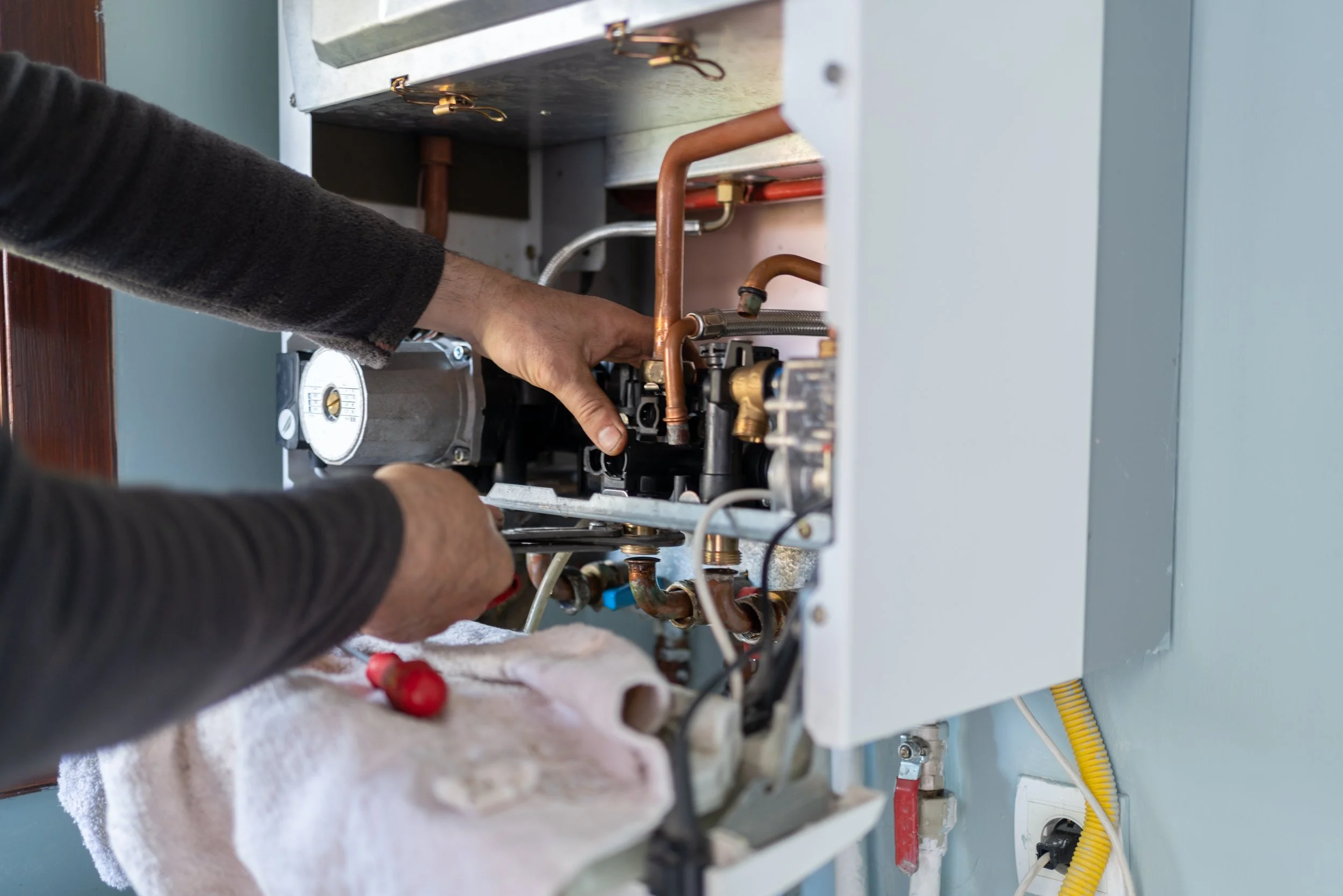
7 Warning Signs Your AC Is Leaking Refrigerant
Refrigerant leaks don't announce themselves with alarm bells. The symptoms develop gradually, and many homeowners mistake them for other problems — a dirty filter, a failing compressor, or just an aging system. Here are the seven warning signs we look for during service calls in Bloomfield Hills, Troy, and Rochester Hills:
1. AC Runs Constantly But House Stays Warm
Your thermostat is set to 72°F, but your home never gets below 76°F even though the system runs nonstop. Low refrigerant reduces your AC's cooling capacity — there's simply not enough refrigerant circulating to absorb heat from your indoor air. The system keeps running because it can't satisfy the thermostat, driving up your electric bill while delivering minimal comfort.
2. Ice Buildup on Refrigerant Lines or Evaporator Coil
This is the most visible symptom. When refrigerant pressure drops due to a leak, the evaporator coil gets too cold — below 32°F — and moisture in the air freezes on contact. You'll see frost or ice on the copper refrigerant lines running from your outdoor unit, or ice coating the evaporator coil in your furnace cabinet. Ironically, ice on your AC means it can't cool properly.
3. Hissing or Bubbling Sounds Near the Outdoor Unit
Refrigerant escaping under pressure makes a distinct hissing sound, similar to air leaking from a tire. Larger leaks produce a bubbling or gurgling noise. These sounds are most noticeable when the system first starts up or near the service valves on the outdoor condenser unit. If you hear this, shut down your AC and call for service immediately — continuing to run the system can damage the compressor.
4. Higher Electric Bills Without Usage Changes
Compare your summer electric bills to the same months last year. If you see a 20-30% increase without changing your thermostat settings or adding new appliances, low refrigerant is a likely culprit. The system runs longer cycles trying to compensate for reduced cooling capacity, consuming more electricity to deliver less cooling. This is similar to issues we discuss in our guide on how long AC units last in Michigan — efficiency loss is often the first sign of system decline.
5. Warm Air From Supply Vents
Put your hand in front of a supply vent while the AC runs. The air should feel noticeably cool — around 55-60°F if your indoor temperature is 75°F. If it feels barely cool or room temperature, your evaporator coil isn't absorbing enough heat due to low refrigerant charge. This is different from AC making loud noise issues, which typically indicate mechanical problems rather than refrigerant loss.
6. Visible Oil Stains Around AC Components
Refrigerant circulates with compressor oil to lubricate moving parts. When refrigerant leaks, it often carries oil with it, leaving dark, greasy stains around the leak point. Check the area around your outdoor unit's service valves, refrigerant line connections, and the base of the compressor. Oil stains are a smoking gun — they tell us exactly where to look for the leak.
7. AC Short-Cycling (Turning On and Off Rapidly)
Your AC starts up, runs for 3-5 minutes, shuts off, then starts again a few minutes later. This rapid cycling happens because low refrigerant causes low pressure, which triggers the system's safety switches. The compressor shuts down to protect itself, pressure equalizes, the system restarts, and the cycle repeats. Short-cycling puts enormous stress on the compressor and can lead to premature failure.
What Causes Refrigerant Leaks in Michigan AC Systems
Refrigerant leaks don't happen randomly. Based on thousands of service calls across Macomb and Oakland counties, we see five common causes:
Vibration Damage From Compressor Operation
Your compressor vibrates during operation — that's normal. But over years of use, those vibrations can work-harden copper refrigerant lines and cause microscopic cracks, especially at connection points and bends. This is more common in systems that run heavily during Michigan's humid summers, where AC systems in Bloomfield Hills might run 10-12 hours a day during July and August heat waves.
Corrosion From Humidity and Seasonal Temperature Swings
Southeast Michigan's climate is tough on AC systems. We go from sub-zero winter temperatures to 90°F summer heat with high humidity. This constant expansion and contraction stresses metal components. Add in moisture from summer humidity, and you get corrosion on copper refrigerant lines, aluminum coil fins, and brazed connections. We see this most often on systems 10+ years old that sit unused all winter.
Factory Defects in Coil Welds
Not all leaks are age-related. Some evaporator coils and condenser coils leave the factory with weak welds or microscopic pinhole leaks that don't show up until the system has been running for a few years. This is why manufacturer warranties matter — Carrier, Lennox, Trane, and other quality brands we install typically cover parts for 5-10 years, which catches most factory defects before you pay out of pocket.
Damage During Installation or Service
Improper installation causes a surprising number of refrigerant leaks. If the refrigerant lines weren't properly supported, they can rub against the house framing and wear through over time. If a technician over-tightened a flare connection or failed to properly braze a joint, it might hold pressure for a few years before failing. This is one reason we emphasize choosing a qualified HVAC contractor with proper licensing and NATE certification.
Age-Related Wear in Systems 10+ Years Old
AC systems have a typical lifespan of 12-15 years in Michigan. As systems age, every component degrades — rubber seals harden and crack, copper oxidizes, aluminum corrodes, and brazed joints weaken. A system that's been running 12 summers in Bloomfield Hills has been through over 15,000 hours of operation. At that point, refrigerant leaks become increasingly common, and you need to weigh repair costs against replacement value.
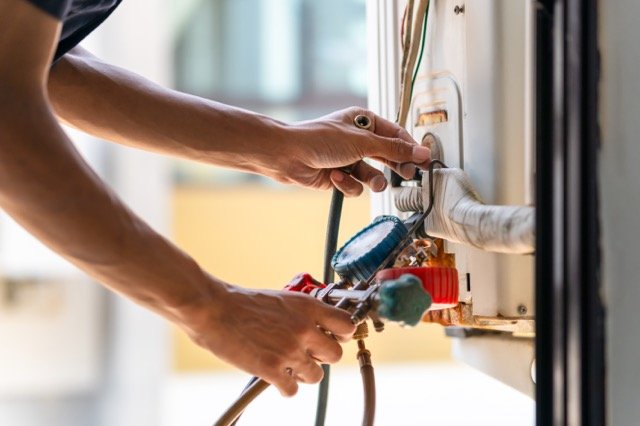
Why You Can't Just "Top Off" Refrigerant
We get this question on almost every refrigerant leak call: "Can't you just add more refrigerant and I'll deal with the leak later?" Here's why that doesn't work:
The leak will continue and worsen. Refrigerant leaks don't heal themselves. Whatever caused the leak — corrosion, vibration damage, a weak weld — is still there. The leak will continue, and you'll need another "top off" in a few months. We've seen homeowners spend $1,500 over two summers on repeated refrigerant charges when a $600 coil repair would have fixed it permanently.
EPA regulations prohibit knowingly releasing refrigerant. Under EPA Section 608 regulations, it's illegal for a technician to add refrigerant to a system with a known leak without making a reasonable effort to repair it. Refrigerants are potent greenhouse gases — R-410A has a global warming potential 2,088 times higher than CO2. Technicians who violate this can face fines up to $44,539 per day. Any reputable contractor will refuse to "top off" a leaking system.
Refrigerant charge must match manufacturer specs exactly. Your AC was designed to operate with a specific refrigerant charge measured in ounces. Too little refrigerant causes low pressure and reduced cooling. Too much refrigerant causes high pressure, which can damage the compressor. Without finding and fixing the leak, there's no way to know how much refrigerant you've lost or how much to add. Guessing leads to more problems.
You're paying for refrigerant that's just going to leak out again. R-410A refrigerant costs $80-$150 per pound in 2026. A typical residential AC system holds 6-12 pounds. If you add 4 pounds to a leaking system, you just spent $400+ on refrigerant that will leak out over the next few months. Meanwhile, the leak continues damaging your compressor by forcing it to run with incorrect pressures.
Cost reality: A proper leak repair — finding the leak, fixing it, evacuating the system, and recharging with the correct amount of refrigerant — typically costs $600-$1,500 depending on the leak location. A new evaporator coil runs $1,200-$2,500 installed. A full system replacement for a Bloomfield Hills home ranges from $4,500-$8,000. Understanding these numbers helps you make informed decisions about repair vs. replacement.
When to Call a Licensed HVAC Technician
Some AC problems you can troubleshoot yourself — a tripped breaker, a dirty filter, a dead thermostat battery. Refrigerant leaks aren't in that category. Here's when to call a professional:
Immediately if you see ice on refrigerant lines. Ice formation means your evaporator coil is freezing, which can crack the coil and turn a $600 repair into a $2,000 coil replacement. Shut down your AC at the thermostat and the outdoor disconnect switch, then call for service. Don't try to "melt the ice" by running the system — you'll make it worse.
If you hear hissing or bubbling sounds. These sounds indicate active refrigerant loss. The longer refrigerant leaks, the more likely you are to damage the compressor by running it with insufficient lubrication. Turn off the system and schedule service within 24 hours.
When cooling performance drops noticeably. If your AC used to keep your home at 72°F but now struggles to reach 76°F, and you've already changed the filter and checked the outdoor unit for debris, you likely have a refrigerant leak or compressor problem. Don't wait until the system stops working completely — early diagnosis prevents additional damage.
If your electric bills spike without explanation. A 20-30% increase in summer electric costs suggests your AC is running inefficiently. Low refrigerant is one common cause. A diagnostic service call costs $89-$150 in Southeast Michigan — worth it to identify the problem before you waste hundreds more on electricity.
What does a proper leak diagnosis involve? Here's what our NATE-certified technicians do during a refrigerant leak service call:
- Visual inspection: Check for oil stains, corrosion, and obvious damage to refrigerant lines and coils
- Pressure testing: Connect gauges to measure refrigerant pressures and compare to manufacturer specs
- Electronic leak detection: Use a heated diode or infrared detector that can sense refrigerant concentrations as low as 0.1 ounces per year
- UV dye injection: Add fluorescent dye to the refrigerant, run the system, then use a UV light to make leak points glow bright green
- Nitrogen pressure test: For difficult-to-find leaks, we evacuate the refrigerant, pressurize the system with nitrogen, and use soap bubbles or ultrasonic detectors to pinpoint the leak
This process takes 1-3 hours depending on leak location. It's not something you can do with a $40 leak detector from Amazon — professional equipment costs thousands of dollars and requires EPA 608 certification to use legally.
Why DIY refrigerant work is illegal and dangerous: Under EPA regulations, only EPA 608-certified technicians can purchase refrigerant, recover refrigerant from systems, or perform repairs that involve opening the refrigerant circuit. Violations carry fines up to $44,539 per day. Beyond the legal issues, refrigerant is dangerous — R-410A operates at pressures up to 400 PSI, and exposure to liquid refrigerant causes severe frostbite. This isn't a YouTube tutorial project.
What to Expect During a Refrigerant Leak Repair
Once we've located the leak, here's what the repair process looks like:
Diagnosis Process and Timeline
The diagnostic visit takes 1-3 hours. We'll identify the leak location, assess the damage, and provide a written estimate for repair. For straightforward leaks (loose service valve, damaged refrigerant line), we can often complete the repair the same day if you approve the estimate. For larger repairs (evaporator coil replacement, condenser coil replacement), we'll need to order parts and schedule a follow-up visit, typically within 3-5 business days.
Common Repair Locations
Service valve leaks: The Schrader valves where we connect gauges can develop leaks from repeated use or corrosion. These are quick fixes — replace the valve core or the entire valve assembly. Cost: $150-$300.
Refrigerant line connection leaks: Flare connections and brazed joints can fail from vibration or poor installation. We'll cut out the damaged section, braze in new copper line, pressure test, evacuate, and recharge. Cost: $400-$800 depending on location and accessibility.
Evaporator coil leaks: The indoor coil is the most common leak location, especially on systems 8+ years old. Depending on the leak location, we might be able to braze the coil, but most evaporator coil leaks require full coil replacement because the leak is inside the coil fins where we can't access it. Cost: $1,200-$2,500 for coil replacement including refrigerant recharge.
Condenser coil leaks: The outdoor coil faces weather, lawn chemicals, and pet urine — all of which cause corrosion. Small leaks can sometimes be repaired, but extensive corrosion usually means coil replacement. Cost: $1,000-$2,200 for condenser coil replacement.
Cost Ranges for Bloomfield Hills Homeowners
Here are typical refrigerant leak repair costs we quote in Oakland County:
- Diagnostic service call: $89-$150
- Minor leak repair (valve, small line leak): $300-$600
- Refrigerant line replacement: $400-$800
- Evaporator coil replacement: $1,200-$2,500
- Condenser coil replacement: $1,000-$2,200
- Refrigerant recharge after repair (R-410A): $300-$600 depending on system size
- Refrigerant recharge for R-22 systems: $800-$1,500 due to refrigerant scarcity
These costs include parts, labor, proper refrigerant recovery and recycling, EPA-required documentation, and warranty on the repair work. Beware of quotes that seem too good to be true — if someone offers to "fix your refrigerant leak for $200," they're either not doing it correctly or not doing it legally.
When Replacement Makes More Sense Than Repair
This is the conversation we have with homeowners multiple times a week: when does it make more financial sense to replace the entire system instead of repairing a refrigerant leak?
Our rule of thumb: If the repair cost is more than 50% of replacement cost, and your system is more than 10 years old, replacement is usually the better investment. Here's the math:
Let's say you have a 12-year-old AC with an evaporator coil leak. The coil replacement costs $2,000. A new, high-efficiency system costs $5,500. That repair is 36% of replacement cost — at first glance, repair seems like the smart choice. But consider:
- Your 12-year-old system has a SEER rating of 13. A new system has a SEER rating of 16-18, saving you $200-$400 per year on cooling costs.
- After spending $2,000 on the coil, your compressor, condenser fan motor, and capacitor are still 12 years old and approaching end of life. You might face another $800-$1,500 repair within 2-3 years.
- The new system comes with a 10-year parts warranty and 5-year labor warranty, protecting you from repair costs for the next decade.
- R-22 refrigerant (if that's what your old system uses) will only get more expensive and harder to find as supplies dwindle.
In this scenario, spending $3,500 more now for a new system gives you better comfort, lower operating costs, warranty protection, and 12-15 years of reliable service. That's often the smarter financial decision than nursing an aging system along with expensive repairs. We cover this topic in more depth in our article on best HVAC brands for Michigan homes.
The key is getting honest advice from a contractor who isn't on commission. At NEXT Heating & Cooling, our technicians don't earn sales commissions — they make the same wage whether they repair your system or replace it. That's part of our commitment to changing contractor culture in Southeast Michigan.
Need AC Repair in Bloomfield Hills?
NEXT Heating & Cooling provides honest diagnostics and fair pricing from NATE-certified technicians. We've been serving Oakland County families for over 35 years — no commission-based sales, just straight talk about what your system needs.
Schedule Your Service CallOne more thing worth mentioning: preventive maintenance catches most refrigerant leaks before they become emergencies. Our $5/month HVAC maintenance plan includes spring and fall tune-ups where we check refrigerant pressures, inspect for leaks, and catch small problems before they turn into expensive failures. It's the same principle as changing your car's oil — a small investment in prevention saves thousands in repair costs. Many of the refrigerant leak calls we get in July could have been prevented with a spring tune-up in April.
Frequently Asked Questions
Leak detection typically takes 1-3 hours depending on the leak size and location. Obvious leaks with visible oil stains or audible hissing can be found in 30-45 minutes. Small, slow leaks require electronic leak detectors or UV dye injection, which takes 2-3 hours because we need to run the system and methodically check every connection, coil, and line segment. If the leak is inside an evaporator coil or buried in a wall, it can take longer to confirm the exact location.
No, you should shut down your AC if you suspect low refrigerant. Running the system with insufficient refrigerant causes the compressor to run without proper lubrication (refrigerant carries compressor oil), which can destroy the compressor — the most expensive component in your AC system. You'll also freeze your evaporator coil, which can crack the coil and turn a $600 repair into a $2,000+ coil replacement. It's better to be uncomfortable for a day or two while waiting for service than to cause thousands in additional damage.
For systems using R-410A refrigerant (most systems installed after 2010), a complete recharge costs $300-$600 depending on system size. A typical 3-ton residential AC holds 6-8 pounds of refrigerant at roughly $80-$100 per pound. For older systems using R-22 refrigerant, costs are much higher — $800-$1,500 or more — because R-22 production was banned in 2020 and remaining supplies are limited and expensive. These prices include the refrigerant, labor for proper evacuation and recharge, and EPA-required documentation. Remember: you should never need a recharge unless there's a leak, so the recharge cost is in addition to the leak repair cost.
R-22 (brand name Freon) was the standard refrigerant in AC systems installed before 2010. It's an HCFC (hydrochlorofluorocarbon) that depletes the ozone layer, which is why the EPA banned its production in 2020. R-410A (brand name Puron) is an HFC (hydrofluorocarbon) that doesn't deplete ozone and has been the standard in new systems since 2010. R-410A operates at higher pressures (up to 400 PSI vs 250 PSI for R-22), so the two refrigerants are not interchangeable — you can't use R-410A in an R-22 system without replacing all major components. If your AC uses R-22 and needs major refrigerant work, it's usually time to consider system replacement rather than paying premium prices for increasingly scarce R-22.
Annual spring maintenance is the best preventive measure. During a professional tune-up, technicians check refrigerant pressures, inspect all connections and coils for signs of leaks, and catch problems while they're still small and inexpensive to fix. Our Next Care Plan includes spring and fall tune-ups for $5/month — the spring visit focuses on AC performance and refrigerant system inspection. Between professional visits, homeowners should watch for the warning signs we covered in this article: reduced cooling, ice on refrigerant lines, hissing sounds, or unexplained increases in electric bills. Systems older than 10 years or systems that have had previous refrigerant leaks should be monitored more closely.
Typically no. Most homeowners insurance policies exclude coverage for maintenance-related issues and normal wear and tear, which includes refrigerant leaks from age, corrosion, or vibration damage. Insurance might cover a refrigerant leak if it resulted from a covered peril — for example, if a tree fell on your outdoor unit and damaged the condenser coil, or if your AC was damaged in a storm. But a leak from normal aging, corrosion, or poor installation won't be covered. Check your specific policy or call your insurance agent to confirm. This is another reason why preventive maintenance is so important — catching leaks early when they're small and inexpensive to repair saves you from large out-of-pocket costs later.
Refrigerant exposure can cause health problems, though serious issues are rare in residential settings because leaks are usually small and outdoors. R-410A and R-22 are heavier than air and displace oxygen in confined spaces, which can cause dizziness, rapid heartbeat, and in extreme cases, loss of consciousness. Direct skin contact with liquid refrigerant causes frostbite. Inhaling high concentrations can cause irregular heartbeat. However, the small, slow leaks common in residential AC systems typically don't create dangerous concentrations, especially since most of the refrigerant is in the outdoor unit. The bigger concern is the environmental impact — refrigerants are potent greenhouse gases — and the damage continued operation causes to your AC system. If you smell a sweet, ether-like odor near your AC or experience unexplained dizziness or headaches when the AC runs, ventilate the area and call for service immediately.