

How Long Do AC Units Last in Michigan? Real Lifespan Data

If you're a homeowner in Sterling Heights, Troy, or anywhere across Southeast Michigan, you've probably wondered: how long do AC units last in Michigan? It's one of the most common questions we get after 35+ years serving Macomb, Oakland, and St. Clair counties.
Here's the straight answer: Most central air conditioning systems in Michigan last between 12 and 18 years. That's the average we see in the field — but it's not the whole story. Some units fail at 8 years. Others run strong past 20. The difference comes down to five critical factors we'll break down in this guide.
At NEXT Heating & Cooling, we've installed, repaired, and replaced thousands of AC systems across Metro Detroit. We know what makes units fail early and what keeps them running decades past their warranty. This isn't generic advice — it's data from real Michigan homes with real Michigan weather.
Average AC Lifespan in Southeast Michigan (By Equipment Type)
Not all air conditioners are built the same. Here's what we see in the field across Metro Detroit, broken down by equipment type:
Central Air Conditioners: 12-15 Years
This is the standard split system — outdoor condenser unit paired with an indoor evaporator coil and air handler. It's what most Michigan homes have. With proper maintenance, quality brands like Carrier, Lennox, and Trane regularly hit the 15-year mark. Builder-grade units (Goodman, Amana, York) typically land in the 10-13 year range.
We've seen premium two-stage and variable-speed units from Carrier and Lennox push past 18 years when homeowners stay on top of maintenance. Single-stage builder-grade units? They're usually showing serious wear by year 10.
Heat Pumps: 10-15 Years
Heat pumps do double duty — cooling in summer, heating in winter. That year-round workload shortens their lifespan compared to AC-only systems. In Michigan, where we don't run heat pumps as hard during winter (most homes have gas furnaces), they tend toward the higher end of that range.
If you're considering a heat pump for Michigan winters, read our detailed breakdown: Do Heat Pumps Work in Michigan Winters? Real Performance Data.
Ductless Mini-Splits: 15-20 Years
Ductless systems last longer because they have fewer mechanical components and no ductwork to leak or collect debris. Brands like Mitsubishi and Daikin are known for 20+ year lifespans when maintained properly. The compressor is still the weak point, but these systems run more efficiently and experience less wear.
Window Units: 8-10 Years
Window AC units are cheap and convenient, but they're not built to last. Most fail between 8-10 years due to exposure to the elements, poor sealing, and lower-quality components. If you're relying on window units to cool your home, it's worth exploring central AC installation services for better efficiency and comfort.
What Makes Michigan Different for AC Longevity
Michigan isn't Florida. We're not running our AC units 10 months a year. That's actually a huge advantage for AC lifespan — but Michigan weather brings its own challenges that affect how long your cooling system lasts.
Shorter Cooling Season (The Good News)
Most Michigan homeowners run their AC from late May through early September — roughly 3-4 months. Compare that to southern states where AC runs 8-10 months a year. Fewer runtime hours mean less compressor wear, which is the #1 reason AC units fail.
A unit in Royal Oak running 1,200 hours per year will outlast an identical unit in Phoenix running 3,000 hours annually. It's simple math. This is why well-maintained Michigan AC systems regularly hit 15-18 years while the national average is 12-15.
High Humidity from the Great Lakes
Southeast Michigan sits between Lake Huron, Lake St. Clair, and Lake Erie. Summer humidity here averages 60-75%, and we see plenty of days hitting 85-90%. High humidity forces your AC to work harder removing moisture from the air, not just cooling it.
Humid air accelerates corrosion on coils, especially if you have an older unit with an aluminum evaporator coil. We've replaced coils on 10-year-old systems in Clinton Township and Chesterfield Township due to corrosion that wouldn't happen in drier climates.
Temperature Swings and Thermal Cycling
Michigan weather is unpredictable. We'll hit 90°F in June, then drop to 55°F overnight. Those temperature swings cause thermal expansion and contraction in your AC's components — refrigerant lines, electrical connections, and compressor mounts.
Over time, this cycling loosens connections and stresses seals. It's why we always check electrical connections and refrigerant charge during spring tune-ups. Loose connections cause voltage drops that overheat compressors and shorten their life.
Ice Storms and Power Surges
Michigan gets ice storms. We lose power. When the grid comes back online, voltage surges can fry control boards, capacitors, and compressor windings. A $15 surge protector can save you a $1,200 compressor replacement.
We recommend whole-home surge protection for any home with HVAC equipment over $5,000. It's a $300-$500 investment that protects your AC, furnace, and every other appliance in your house.
Basement Installations vs Outdoor Pad Placement
Many Michigan homes have the air handler in the basement and the condenser on an outdoor concrete pad. That's fine — but outdoor units need proper clearance and drainage. We've seen condensers in Warren and Sterling Heights fail early because they were installed too close to dryer vents, landscaping, or downspouts that flooded the pad.
Proper outdoor unit placement matters. Two feet of clearance on all sides. Level pad. No debris buildup. These aren't small details — they add years to your system's life.
The 5 Factors That Determine How Long Your AC Actually Lasts
Age is just one piece of the puzzle. Here are the five factors that actually determine whether your AC lasts 10 years or 20:
1. Maintenance Frequency (Annual Tune-Ups Add 3-5 Years)
This is the single biggest factor. Annual professional maintenance extends AC lifespan by an average of 3-5 years. That's not marketing — it's data from the Air Conditioning Contractors of America (ACCA) and our own service records.
During a proper AC tune-up, we check refrigerant charge, clean coils, tighten electrical connections, test capacitors, inspect the condensate drain, and measure airflow. Each of these prevents a failure that would otherwise happen in 2-3 years.
Skipping maintenance is the fastest way to kill an AC system. We've seen 8-year-old Carrier units fail because they never had a tune-up. We've also seen 18-year-old Trane units running strong because the homeowner scheduled service every spring.
Our Next Care Plan costs $5/month and includes two annual visits (spring AC tune-up, fall furnace tune-up), priority scheduling, and 10% off repairs. It's the easiest way to protect your investment and extend your AC's life.
2. Installation Quality (Load Calculations, Refrigerant Charge)
A perfectly good AC unit will fail early if it's installed wrong. We see this constantly — oversized units that short-cycle, undersized units that run nonstop, incorrect refrigerant charge, kinked refrigerant lines, undersized ductwork.
Proper AC installation starts with a Manual J load calculation. That's the industry-standard method for sizing equipment based on your home's square footage, insulation, window placement, and orientation. Skip that step, and you're guessing.
Refrigerant charge is critical. Too little, and the compressor overheats. Too much, and you damage the compressor with liquid slugging. We've replaced compressors on 5-year-old systems because the original installer didn't measure superheat and subcooling.
If you're getting a new AC installed, make sure your contractor is licensed, insured, and willing to show you the load calculation. At NEXT Heating & Cooling, we're Michigan-licensed, NATE-certified, and we document every installation with load calculations and startup reports.
3. Equipment Tier (Builder-Grade vs Premium)
Not all AC brands are created equal. Here's the reality from 35 years in the field:
Premium Tier (15-18+ years): Carrier Infinity, Lennox Signature, Trane XV, Rheem Prestige. These units use two-stage or variable-speed compressors, higher-quality coils, and better control boards. They cost more upfront but last longer and run more efficiently.
Mid-Tier (12-15 years): Carrier Comfort, Lennox Elite, Trane XR, Rheem Classic, Bryant Evolution. Solid single-stage or two-stage units with decent warranties. Good value for most homeowners.
Builder-Grade (10-13 years): Goodman, Amana, York, RUUD. These are the units builders install in new construction to hit a price point. They work fine, but they use thinner coils, basic single-stage compressors, and cheaper components. Expect shorter lifespans and more repairs after year 8.
We install all of these brands depending on the homeowner's budget and priorities. But if you want 15+ years from your AC, spend the extra $1,500-$2,500 for a mid-tier or premium unit. It pays back in longevity and efficiency.
4. Usage Patterns (Thermostat Setpoints, Runtime Hours)
How you use your AC affects how long it lasts. Running your thermostat at 68°F all summer forces your compressor to cycle more often and run longer. Every degree you raise the setpoint reduces runtime and extends compressor life.
We recommend 78°F when you're home, 82-85°F when you're away. Use a programmable or smart thermostat to automate this. The Ecobee and Honeywell T6 are both excellent options that integrate with most systems.
Avoid extreme temperature swings. Don't set your thermostat to 65°F hoping it cools faster — it doesn't work that way. AC systems cool at a fixed rate. You're just forcing the compressor to run longer cycles, which increases wear.
5. Environmental Factors (Shade, Debris, Airflow)
Where your outdoor condenser sits matters. Units in full sun run hotter and work harder than units in partial shade. A condenser in direct sunlight in Troy can run 10-15°F hotter than one shaded by a tree or awning.
Debris kills AC units. Grass clippings, leaves, cottonwood seeds, dryer lint — all of it clogs the condenser coil and restricts airflow. Restricted airflow raises head pressure, which overheats the compressor and shortens its life.
Keep 2 feet of clearance around your outdoor unit. Trim back shrubs and landscaping. Hose down the coils once per season (gently, from the inside out). These simple steps prevent 80% of the premature failures we see.
Signs Your AC Is Reaching End of Life (When to Replace vs Repair)
How do you know when your AC is done? Here are the signs we look for when deciding whether to recommend repair or replacement:
The 50% Rule (Age + Repair Cost)
If your AC is over 10 years old and the repair costs more than 50% of a new system, replace it. Example: Your 12-year-old AC needs a $1,800 compressor replacement. A new system costs $4,500. That repair is 40% of replacement cost — borderline call, but we'd lean toward replacement given the age.
Why? Because once the compressor fails, other components aren't far behind. You'll spend $1,800 now, then $800 on a blower motor next year, then $600 on a coil leak the year after. You're throwing good money after bad.
Rising Energy Bills
AC efficiency drops as components wear out. If your summer electric bills have climbed 20-30% over the past 2-3 years and your usage hasn't changed, your AC is losing efficiency. That's a sign the compressor is struggling or the coils are fouled.
Compare your current SEER rating to what's available today. If you have a 10 SEER unit from 2008, upgrading to a 16 SEER system cuts your cooling costs by 35-40%. The energy savings alone can justify replacement.
Frequent Breakdowns (More Than One Repair Per Year)
If you're calling for AC repairs more than once per cooling season, the system is telling you it's done. One repair per year is normal for aging equipment. Two or three repairs per year means you're in the failure cascade.
We track service history for all our customers. When we see repeat calls on the same system, we have an honest conversation about replacement. No one wants to spend $600 on repairs in June and another $800 in August when a new system costs $4,500.
R-22 Refrigerant Systems (Phase-Out)
If your AC uses R-22 refrigerant (Freon), it's at least 14 years old. The EPA phased out R-22 production in 2020. You can still get recycled R-22, but it costs $150-$200 per pound vs $10-$15 for R-410A.
If you have an R-22 system with a refrigerant leak, replacement is almost always the right call. A typical recharge costs $800-$1,500, and the leak will probably return within 1-2 years. That money is better spent on a new R-410A or R-32 system.
For more on refrigerant leaks, read our guide: AC Refrigerant Leak: What Detroit Homeowners Need to Know.
Uneven Cooling and Comfort Issues
If your AC can't maintain consistent temperatures or you have hot and cold spots throughout your house, the system may be undersized, failing, or you have ductwork problems. Aging AC units lose capacity as the compressor wears out.
Sometimes the AC is fine and the ductwork is the problem. Leaky ducts waste 20-30% of your cooled air. We always inspect ductwork before recommending AC replacement. For more on this, check out our post: Troy AC Repair: Why Your AC Is Not Cooling Evenly.
How to Extend Your AC's Lifespan in Michigan
Want to get 15-18 years from your AC? Here's exactly what to do:
Schedule Annual Professional Maintenance
We covered this already, but it's worth repeating: annual maintenance is the #1 way to extend AC lifespan. Schedule your tune-up in April or early May before the summer rush. By June, every HVAC contractor in Metro Detroit is slammed with emergency calls.
What we check during a spring AC tune-up:
- Refrigerant charge (superheat and subcooling measurements)
- Electrical connections (tighten terminals, check voltage)
- Capacitors (test microfarad ratings, replace if weak)
- Condenser and evaporator coil cleaning
- Condensate drain cleaning and treatment
- Blower motor and wheel inspection
- Thermostat calibration
- Airflow measurement (CFM per ton)
Our $5/month Next Care Plan includes this service plus a fall furnace tune-up, priority scheduling, and 10% off repairs. It's the easiest way to protect your investment.
For more on what happens during a tune-up, read: Spring AC Tune-Up Benefits Every Michigan Homeowner Needs.
Change Air Filters Every 1-3 Months
Dirty filters are the #1 cause of AC failures. A clogged filter restricts airflow, which causes the evaporator coil to freeze. Frozen coils lead to compressor damage. Compressor damage means $1,500-$2,500 repair or full system replacement.
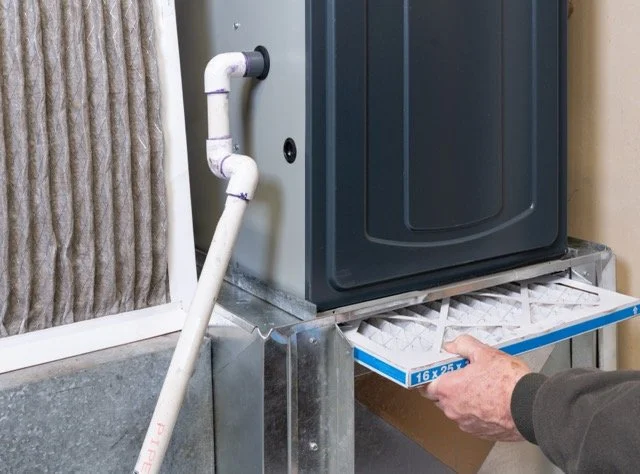
Check your filter monthly. If it's visibly dirty or you can't see light through it, replace it. Standard 1-inch filters should be changed every 30-60 days. If you have pets or allergies, change them every 30 days. If you have a 4-inch or 5-inch media filter, change it every 6-12 months.
Use MERV 8-11 filters for most homes. MERV 13+ filters restrict airflow unless your system is designed for them. Check your furnace or air handler manual for the maximum MERV rating.
Use a Programmable Thermostat
Programmable and smart thermostats reduce runtime by automatically raising the temperature when you're away or asleep. Less runtime means less compressor wear and longer AC life.
Set your thermostat to 78°F when you're home, 82-85°F when you're away. Every degree you raise the setpoint saves 3-5% on cooling costs and reduces compressor cycles.
Smart thermostats like Ecobee and Honeywell T6 learn your schedule and adjust automatically. They also send alerts when filters need changing or maintenance is due.
Maintain Your Outdoor Condenser Unit
Your outdoor condenser needs care too. Here's what to do:
- Keep 2 feet of clearance around the unit. Trim back shrubs, move planters, and keep grass clippings away.
- Hose down the coils once per season. Turn off power at the disconnect, then gently spray from the inside out with a garden hose. Don't use a pressure washer — it bends the fins.
- Check the pad for settling or tilting. The unit should be level. If it's tilted, the compressor oil won't circulate properly.
- Remove debris from the top grille. Leaves, cottonwood seeds, and dryer lint clog the fan and restrict airflow.
These are simple 15-minute tasks that prevent expensive failures. We see condensers in Sterling Heights and Warren that are choked with debris because homeowners didn't know to clean them.
Inspect Ductwork Every 3-5 Years
Leaky ductwork forces your AC to run longer cycles to maintain temperature. That increases compressor wear and shortens lifespan. Duct leaks also waste 20-30% of your cooled air, which drives up energy bills.
Have your ductwork inspected every 3-5 years. Look for disconnected joints, torn insulation, and leaks at register boots. Sealing ductwork with mastic (not duct tape) improves efficiency and reduces AC runtime.
If you have an older home with original ductwork, it's worth having a full duct inspection. Many 1960s-1980s Michigan homes have undersized or poorly sealed ducts that rob your AC of performance.
What a New AC Actually Costs in Southeast Michigan (2026 Budget Reality)
Let's talk numbers. If your AC is 12-15 years old and showing signs of failure, you need to know what replacement costs. Here's what we see in Metro Detroit:
Equipment Tiers and Pricing Ranges
Builder-Grade Systems (Goodman, Amana, York): $3,500 - $5,500 installed for a 2.5-3 ton system. Single-stage compressor, basic 13-14 SEER efficiency, 10-year parts warranty. These are fine if you're on a tight budget and plan to move in 5-7 years.
Mid-Tier Systems (Carrier Comfort, Lennox Elite, Trane XR, Bryant Evolution): $5,000 - $7,500 installed. Single-stage or two-stage compressor, 15-16 SEER efficiency, 10-year parts warranty with optional extended coverage. Good balance of cost, efficiency, and longevity.
Premium Systems (Carrier Infinity, Lennox Signature, Trane XV): $7,500 - $11,000 installed. Variable-speed compressor, 18-20+ SEER efficiency, 10-12 year parts warranty, advanced humidity control. These are the units that last 18-20+ years and deliver the best comfort and efficiency.
Prices vary based on home size, ductwork condition, electrical upgrades, and installation complexity. A straightforward replacement in a ranch home costs less than a two-story colonial with undersized ductwork.
What's Included in Installation
A proper AC installation includes:
- Manual J load calculation (equipment sizing)
- Outdoor condenser unit
- Indoor evaporator coil
- Refrigerant line set (or reuse existing if compatible)
- Condensate drain line
- Thermostat (if needed)
- Electrical disconnect and whip
- Startup, testing, and commissioning
- Removal and disposal of old equipment
- Permits and inspections (if required by municipality)
Beware of quotes that seem too cheap. If someone quotes you $2,500 for a full AC replacement, they're either skipping steps (no load calc, no permit) or using refurbished equipment. You'll pay for it later in repairs and shortened lifespan.
At NEXT Heating & Cooling, we provide transparent pricing, detailed proposals, and written warranties on all installations. We're Michigan-licensed, insured, and BBB A+ accredited. No surprises, no upselling, no pressure.
Energy Efficiency ROI
Higher SEER ratings cost more upfront but save money over time. Here's the math:
A 3-ton 13 SEER unit uses about 2,300 kWh per cooling season in Michigan. At $0.17/kWh (DTE Energy average), that's $391 per year.
A 3-ton 16 SEER unit uses about 1,875 kWh per season — $319 per year. You save $72 annually.
If the 16 SEER unit costs $1,500 more, it pays back in 21 years. Not great ROI on efficiency alone — but the 16 SEER unit also runs quieter, dehumidifies better, and lasts longer. The total value proposition is worth it for most homeowners.
Premium variable-speed systems (18-20 SEER) offer better ROI if you plan to stay in your home 10+ years and value comfort over just cooling capacity.
Financing and Rebate Options
Most HVAC contractors offer financing through third-party lenders. We work with several financing partners that offer 0% APR for 12-24 months or low-rate longer-term options.
Check for utility rebates and federal tax credits. DTE Energy and Consumers Energy both offer rebates for high-efficiency AC installations. The federal Energy Efficient Home Improvement Credit offers up to $600 for qualifying systems (check IRS guidelines for current rates).
For detailed pricing on new AC systems, read our guide: New Furnace Cost Michigan 2026: Real Pricing Breakdown (the AC pricing logic is similar).
Ready to Get Started?
NEXT Heating & Cooling has been keeping Michigan homes comfortable for over 35 years. Get honest diagnostics and fair pricing from NATE-certified technicians who show up on time. Whether you need AC repair, replacement, or just a second opinion, we're here to help.
Schedule Your ServiceFrequently Asked Questions
Central air conditioning systems in Michigan typically last 12-18 years with proper maintenance. Michigan's shorter cooling season (3-4 months vs 8-10 months in southern states) extends AC lifespan compared to national averages. Premium brands like Carrier, Lennox, and Trane regularly reach 15-18 years, while builder-grade units (Goodman, Amana, York) typically last 10-13 years. Annual professional maintenance can add 3-5 years to your system's life.
Lack of maintenance is the #1 cause of premature AC failure. Skipping annual tune-ups leads to dirty coils, low refrigerant charge, weak capacitors, and clogged condensate drains — all of which stress the compressor and shorten system life. Dirty air filters are the second most common cause, restricting airflow and causing the evaporator coil to freeze. Poor installation quality (incorrect refrigerant charge, undersized ductwork, improper load calculations) is the third leading cause of early failure.
Use the 50% rule: If the repair costs more than 50% of a new system and your AC is over 10 years old, replacement is usually the better investment. For example, if your 12-year-old AC needs a $1,800 compressor replacement and a new system costs $4,500, that's 40% of replacement cost — a borderline call. Consider additional factors: Does your system use R-22 refrigerant? Have you had multiple repairs in the past year? Are your energy bills climbing? If yes to any of these, replacement makes more financial sense than repair.
In Metro Detroit, expect to pay $3,500-$5,500 for builder-grade systems (Goodman, Amana), $5,000-$7,500 for mid-tier systems (Carrier Comfort, Lennox Elite, Trane XR), and $7,500-$11,000 for premium variable-speed systems (Carrier Infinity, Lennox Signature). Prices include equipment, installation, refrigerant lines, condensate drain, electrical work, permits, and removal of old equipment. Costs vary based on home size, ductwork condition, and installation complexity. Always get at least two quotes and verify the contractor is licensed, insured, and provides written warranties.
Yes. Southeast Michigan's summer humidity (60-75% average, often 85-90% on muggy days) forces your AC to work harder removing moisture from the air, not just cooling it. High humidity accelerates corrosion on evaporator and condenser coils, especially on older units with aluminum coils. This is why annual maintenance is critical — cleaning coils and checking refrigerant charge prevents humidity-related failures. Ductless mini-splits and premium variable-speed systems handle humidity better than single-stage builder-grade units.
In our 35+ years serving Southeast Michigan, Carrier, Lennox, and Trane consistently deliver the longest lifespans — regularly reaching 15-18 years with proper maintenance. Rheem and Bryant also perform well in the 14-16 year range. Builder-grade brands (Goodman, Amana, York) typically last 10-13 years. Ductless mini-splits from Mitsubishi and Daikin often exceed 20 years. Brand matters, but installation quality and maintenance frequency matter more. A properly installed and maintained Goodman will outlast a neglected Carrier every time.
Schedule professional AC maintenance once per year, ideally in April or early May before the cooling season starts. Annual tune-ups include refrigerant charge checks, coil cleaning, electrical connection tightening, capacitor testing, and condensate drain cleaning — all of which prevent failures and extend system life by 3-5 years. If you have a heat pump that runs year-round, consider twice-annual service (spring and fall). NEXT Heating & Cooling's Next Care Plan includes two annual visits for $5/month, plus priority scheduling and 10% off repairs.