

Whole-House Dehumidifier Add-On for AC in West Bloomfield MI
Your central air conditioner runs all day. The thermostat says 72°F. But your West Bloomfield home feels like a swamp — sticky, clammy, and uncomfortable. You're not imagining it. Michigan's summer humidity is brutal, and your AC wasn't designed to handle it alone.
I've been installing and servicing HVAC systems across Southeast Michigan for over two decades with NEXT Heating & Cooling, and whole-house dehumidifiers have become one of the most requested add-ons for good reason. They solve a problem that air conditioning alone cannot fix, especially in Oakland County where lake-effect moisture and summer storms create indoor humidity levels that overwhelm standard AC systems.
This isn't about comfort alone. High indoor humidity damages hardwood floors, promotes mold growth, and forces your air conditioner to work harder while delivering less actual comfort. A whole-house dehumidifier integrates directly with your existing HVAC system and removes moisture from every room — not just the one where a portable unit sits.
Here's what you need to know about adding a whole-house dehumidifier to your AC system in West Bloomfield, including real equipment specs, installation costs, and whether your home actually needs one.
Why Michigan AC Systems Struggle With Humidity
Air conditioners remove some moisture as a byproduct of cooling air — but that's not their primary job. When warm, humid air passes over your AC's cold evaporator coil, water vapor condenses and drips into a drain pan. This is called latent cooling. The actual temperature drop is sensible cooling.
Here's the problem: most AC systems in West Bloomfield are sized to handle Michigan's peak cooling load — those 90°F days in July and August. But on mild, humid days when it's 75°F outside with 80% relative humidity, your oversized AC cools the air too quickly. It reaches your thermostat setpoint before the coil has time to pull enough moisture out of the air.
This is called short cycling, and it's the reason your house can feel clammy even when the AC is running. The compressor kicks on, drops the temperature a few degrees, shuts off, then repeats. Each cycle is too short to dehumidify effectively. We see this constantly in larger West Bloomfield homes where contractors installed 4-ton or 5-ton AC units when a properly sized 3-ton system would have run longer cycles and removed more humidity.
Southeast Michigan's climate makes this worse. We're surrounded by the Great Lakes. Summer storms roll through Oakland County and dump moisture into the air. Morning dew points regularly hit 65°F to 70°F — that's tropical-level humidity. Your AC can handle temperature. It struggles with sustained moisture loads.
A whole-house dehumidifier doesn't replace your AC. It works alongside it, focusing exclusively on moisture removal while your AC handles temperature. The result is air that feels cooler at higher thermostat settings, which saves energy and extends your AC's lifespan by reducing runtime. If you've been dealing with short cycling issues, adding a dehumidifier can stabilize your system's performance.
How Whole-House Dehumidifiers Work With Your AC
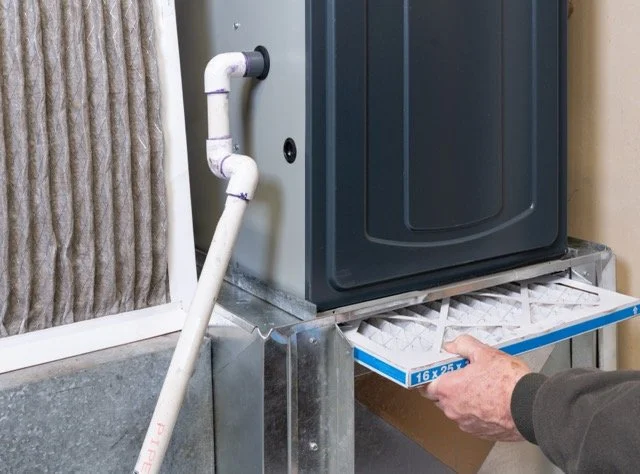
A whole-house dehumidifier installs directly into your ductwork, typically in the return air plenum near your furnace or air handler. When indoor humidity rises above your set point (usually 50% to 55% relative humidity), the dehumidifier pulls air through its own cold coil, condenses moisture, and returns drier air to your duct system.
There are two common installation methods:
Bypass installation: The dehumidifier taps into your existing supply and return ducts. It relies on your HVAC system's blower to move air through it. This is less expensive but only works when your furnace or AC blower is running.
Ducted installation with internal blower: The unit has its own fan and can operate independently of your HVAC system. This is more effective because it can dehumidify even when your AC isn't calling for cooling. Most professional HVAC installations in West Bloomfield use this method for better control and performance.
Capacity is measured in pints per day. A typical 2,500-square-foot West Bloomfield home needs a unit rated for 90 to 130 pints per day, depending on basement size, number of occupants, and how much moisture enters through windows and doors. Undersized units run constantly without reaching your target humidity level. Oversized units cost more upfront and cycle too frequently.
Michigan-Specific Consideration: If you have a basement — and most West Bloomfield homes do — moisture migrates upward through the house. A whole-house dehumidifier installed in your main HVAC system handles the entire home, including basement humidity that portable units miss.
The dehumidifier drains condensate through a dedicated drain line, usually tying into the same drain used by your AC or routed to a floor drain or sump pump. Some installations require a condensate pump if gravity drainage isn't available. Electrical requirements vary by model — smaller units run on standard 120V circuits, while larger units (130+ pints/day) may need a dedicated 240V circuit.
Signs Your West Bloomfield Home Needs a Dehumidifier
Not every home needs a whole-house dehumidifier. But if you're experiencing any of these issues, your AC system can't keep up with Michigan's humidity load:
1. Condensation on windows during summer. Water droplets forming on the interior side of your windows means indoor humidity is too high. This is especially common on north-facing windows and in rooms with poor air circulation. If you see this regularly when your AC is running, you have a humidity problem.
2. Musty odors that won't go away. That basement smell creeping into your main floor? It's mold and mildew thriving in high-humidity conditions. Air fresheners mask it. Dehumidification eliminates the root cause.
3. Mold growth in corners, closets, or bathrooms. Visible mold spots on walls, ceilings, or around windows indicate sustained indoor humidity above 60%. Your AC is cooling the air but leaving too much moisture behind.
4. The house feels warmer than the thermostat setting. Set your thermostat to 72°F and it feels like 76°F? High humidity makes air feel warmer because it slows evaporation of sweat from your skin. This is why 72°F at 60% humidity feels hotter than 72°F at 45% humidity.
5. Hardwood floors are warping or buckling. Wood absorbs moisture. If your floors are cupping, crowning, or developing gaps, indoor humidity is too high for too long. This is expensive damage that a $3,000 dehumidifier would have prevented.
6. Wallpaper is peeling at the edges. Moisture gets behind wallpaper and breaks down the adhesive. Once it starts peeling, the damage accelerates. Dehumidification stops the progression.
7. You're running the AC colder than you'd prefer just to feel comfortable. If you're setting the thermostat to 68°F or 69°F because 72°F feels too sticky, you're fighting humidity with temperature. That's inefficient and expensive. A dehumidifier lets you raise the thermostat 3 to 4 degrees while maintaining the same comfort level, which saves 10% to 15% on cooling costs.
We installed a whole-house dehumidifier in a 3,200-square-foot colonial in West Bloomfield last summer. The homeowner had been setting the thermostat to 68°F all season and still complained about feeling sticky. After installation, they raised it to 73°F and reported better comfort. Their July electric bill dropped $62. That's real money saved every month during cooling season.
Equipment Recommendations for Michigan Homes
We install several brands depending on home size, budget, and existing HVAC equipment. Here's what actually works in Southeast Michigan's climate:
AprilAire 1850 (130 Pints/Day)
This is the workhorse for larger West Bloomfield homes — 3,000+ square feet with finished basements. It has its own internal blower, so it operates independently of your HVAC system. Energy Star certified. Drains automatically. Digital control with humidity sensor. We install these in homes with significant moisture loads from large families, indoor plants, or frequent cooking.
The 1850 pulls 130 pints per day at AHAM test conditions (80°F, 60% RH). In real-world Michigan conditions, expect 90 to 110 pints per day, which is more than enough for most residential applications. It's quiet — around 55 decibels when running, which is about the same as normal conversation.
Honeywell TrueDRY DR90 (90 Pints/Day)
Mid-size homes (1,800 to 2,800 square feet) do well with the DR90. It's a bypass model, so it relies on your HVAC blower for airflow. Less expensive than the AprilAire 1850, but still effective if your AC or furnace fan runs regularly. We typically pair this with two-stage or variable-speed air handlers for best performance.
The DR90 works well in homes where the AC already runs enough to move air through the unit. If you have a properly sized AC system that cycles normally (not short cycling), this is a cost-effective option.
Carrier Performance Series Dehumidifier
If you already have a Carrier HVAC system, their whole-house dehumidifier integrates seamlessly with Carrier thermostats and Infinity control systems. Available in 65-pint and 95-pint capacities. The advantage here is unified control — you manage temperature and humidity from a single thermostat interface.
Carrier's units are well-built and backed by strong warranty support. We see fewer service calls on Carrier dehumidifiers compared to some other brands. If you're considering a complete AC system upgrade, adding a Carrier dehumidifier at the same time saves on installation labor.
Lennox Healthy Climate Solutions
Lennox offers whole-house dehumidifiers that pair with their iComfort thermostats. The Healthy Climate HCWB3-17 (70 pints/day) and HCWB3-27 (90 pints/day) are solid mid-range options. They're quieter than most competitors and include washable filters that last longer than disposable media.
Lennox equipment tends to run at the higher end of the price spectrum, but build quality is excellent. If you value quiet operation and already have Lennox heating and cooling equipment, staying within the same ecosystem makes sense for warranty coverage and service consistency.
Capacity Sizing for West Bloomfield: As a rule of thumb, plan on 40 to 50 pints per day of dehumidification capacity per 1,000 square feet of conditioned space in Michigan. A 2,500-square-foot home needs 100 to 125 pints/day. Finished basements add to the load — add 20% to 30% capacity if you have a walkout or daylight basement with windows.
Installation Cost Reality in Oakland County
Let's talk numbers. Whole-house dehumidifiers aren't cheap, but they're a fraction of the cost of replacing hardwood floors or remediating mold.
Equipment cost: $1,400 to $2,800 depending on brand and capacity. The AprilAire 1850 runs around $2,200 to $2,500. The Honeywell DR90 is closer to $1,400 to $1,600. Carrier and Lennox units fall in between at $1,800 to $2,400.
Installation labor: $600 to $1,200 depending on complexity. Straightforward installations in accessible mechanical rooms with nearby ductwork and drainage take 3 to 4 hours. More complex jobs requiring new duct runs, condensate pumps, or electrical circuit additions take longer and cost more.
Ductwork modifications: Most installations require cutting into existing supply and return ducts to create connection points. This adds $200 to $400 in materials and labor. If your ductwork is older or poorly sealed, we'll recommend sealing the entire system while we're in there — that's another $300 to $600 but improves overall HVAC efficiency.
Electrical work: Smaller units plug into standard 120V outlets. Larger units (130+ pints/day) need a dedicated 240V circuit. If your electrical panel has available capacity and the run isn't too long, expect $250 to $400 for electrical. If the panel is full, you're looking at a subpanel addition, which pushes costs higher.
Total installed cost: $2,200 to $4,500 for most West Bloomfield homes. That's a one-time investment that lasts 10 to 15 years with proper maintenance.
Operating cost: A whole-house dehumidifier running during Michigan's cooling season (May through September) uses 300 to 500 kWh of electricity. At $0.15/kWh (typical DTE Energy residential rate), that's $45 to $75 per season. Compare that to running your AC 3 to 4 degrees colder all summer — you'll spend $150 to $200 more on AC electricity trying to achieve the same comfort level.
The payback isn't immediate, but it's real. Lower AC runtime, extended equipment lifespan, and avoided damage to flooring and furnishings add up. Most homeowners break even within 3 to 5 years, then enjoy 10+ years of improved comfort and lower energy costs.
If you're working with a trusted HVAC contractor, they'll provide a detailed quote that includes equipment, labor, materials, and any necessary electrical or ductwork modifications. No surprises.
Maintenance and Long-Term Performance
Whole-house dehumidifiers are low-maintenance compared to other HVAC components, but they're not maintenance-free. Here's what you need to know to keep one running reliably in your West Bloomfield home:
Annual filter changes: Most units use washable or replaceable filters. Washable filters need cleaning every 3 to 6 months during cooling season — just rinse with water and let dry before reinstalling. Disposable filters cost $15 to $30 and should be replaced annually.
Drain line maintenance: The condensate drain line can develop algae or mold buildup, especially in warm, humid conditions. Flush the line with a bleach solution (1/4 cup bleach to 1 gallon water) once per year to keep it flowing freely. Clogged drain lines cause the unit to shut down on a safety float switch.
Coil inspection: The cold coil inside the dehumidifier can collect dust and debris over time, reducing efficiency. During your annual HVAC tune-up, have your technician inspect and clean the coil if needed. This is part of our Next Care Plan — two annual visits that cover both your heating and cooling equipment plus add-ons like dehumidifiers.
Humidity sensor calibration: Most whole-house dehumidifiers have built-in humidity sensors. Over time, these can drift out of calibration. If your unit seems to run constantly or not enough, check the sensor reading against a standalone hygrometer. If they don't match within 5%, the sensor may need recalibration or replacement.
Expected lifespan: Plan on 10 to 15 years with proper maintenance. The compressor and refrigerant circuit are the primary wear items. Once the compressor fails, replacement cost usually exceeds the value of repair, and you're better off installing a new unit. We've seen well-maintained AprilAire and Honeywell units run 12 to 14 years without major issues.
Winter operation: Most whole-house dehumidifiers shouldn't run when indoor temperatures drop below 65°F because the coil can freeze. In Michigan, that means they're inactive from October through April. Some units have automatic shutdown based on temperature sensors. If yours doesn't, manually turn it off in fall and back on in late spring.
Next Care Plan Coverage: Our $5/month HVAC maintenance plan includes inspection and basic maintenance of whole-house dehumidifiers during your spring AC tune-up. We check the drain line, clean or replace filters, inspect the coil, and verify the unit is operating within spec. It's the easiest way to keep your dehumidifier running reliably without remembering to schedule service.
The biggest maintenance mistake we see is neglecting the drain line. A clogged line shuts the unit down, and homeowners don't realize it until humidity creeps back up and mold starts growing. Annual flushing takes 10 minutes and prevents expensive problems.
Ready to Add a Whole-House Dehumidifier?
NEXT Heating & Cooling has been keeping Michigan homes comfortable for over 35 years. Our NATE-certified technicians will assess your home's humidity load, recommend the right equipment, and install it correctly the first time. No upselling. No pressure. Just honest diagnostics and fair pricing.
Schedule Your Free AssessmentFrequently Asked Questions
It depends on your home and Michigan's humidity levels. If your AC keeps the temperature comfortable but the house still feels sticky, or if you see condensation on windows during summer, your AC isn't removing enough moisture. Whole-house dehumidifiers work alongside your AC to control humidity independently of temperature. In Southeast Michigan's humid climate, many homes benefit from both systems working together.
A typical whole-house dehumidifier in West Bloomfield uses 300 to 500 kWh during Michigan's cooling season (May through September). At current DTE Energy rates around $0.15/kWh, that's $45 to $75 for the entire season. This is offset by reduced AC runtime since you can set your thermostat 3 to 4 degrees higher while maintaining the same comfort level. Most homeowners see net energy savings of $50 to $100 per cooling season.
Not recommended. Installation requires cutting into existing ductwork, running condensate drain lines, electrical work (sometimes 240V circuits), and proper refrigerant handling if there are any issues. Improper installation can create air leaks in your duct system, drainage problems that cause water damage, or electrical hazards. A licensed Michigan HVAC contractor has the tools, training, and insurance to do it correctly. Most installations take 3 to 6 hours depending on complexity.
For Michigan homes, target 45% to 50% relative humidity during summer. Below 40% feels too dry and can cause respiratory irritation. Above 55% promotes mold growth and makes the house feel uncomfortably sticky. Most whole-house dehumidifiers have adjustable humidistats — set it to 50% and let the unit maintain that level automatically. In winter, you'll want slightly lower humidity (35% to 40%) to prevent condensation on cold windows.
Yes, indirectly. High humidity promotes dust mites, mold, and mildew — all common allergens. By maintaining indoor humidity below 50%, you create an environment where these allergens can't thrive. Dust mites need humidity above 50% to survive. Mold spores need moisture to grow. A whole-house dehumidifier won't filter allergens out of the air (that's what HEPA filters do), but it prevents them from multiplying in the first place. Many homeowners with allergies or asthma report significant improvement after installing a dehumidifier.
Annual maintenance is sufficient for most units. This includes cleaning or replacing the filter, flushing the condensate drain line, and inspecting the coil for dust buildup. If you're on the Next Care Plan, we handle this during your spring AC tune-up. Between professional visits, check the drain line every few months to make sure it's flowing freely — a clogged line is the most common failure point. Total hands-on maintenance time is about 15 minutes per year.
No, and it shouldn't run in winter. Michigan winters are cold and dry. Indoor humidity typically drops too low during heating season, not too high. Running a dehumidifier when it's cold can freeze the coil and damage the unit. Most whole-house dehumidifiers have automatic shutoff when temperatures drop below 65°F. You'll manually turn it off in October and back on in May. During winter, you might actually need a humidifier to add moisture back into the dry, heated air.