

AC Repair in West Bloomfield: When to Call & What It Costs

West Bloomfield homes sit under mature tree canopies, many built in the 1960s and 70s with central air added later. The combination of older ductwork, shaded outdoor units, and Michigan's humid summers creates specific AC challenges — and most homeowners can't tell when a problem needs a filter change versus a service call.
I've spent over 15 years diagnosing AC failures across Oakland County. Most emergency calls in July could have been prevented with a spring tune-up. But when your system does break down, knowing what's actually wrong and what it costs to fix helps you make smart decisions without pressure.
This guide covers the seven signs that mean you need professional heating and cooling services in Metro Detroit, what common repairs actually cost in 2026, and when it makes more sense to replace than repair. No upselling, no scare tactics — just what we'd tell our own neighbors.
Signs Your AC Needs Professional Repair
Not every AC issue requires a technician. A dirty filter can cause weak airflow. A tripped breaker explains why the system won't turn on. But certain symptoms point to mechanical failure that gets worse the longer you wait.
Warm Air From the Vents
When your thermostat is set to 72°F and the vents blow 78°F air, something's wrong with refrigerant flow or the compressor. Check your outdoor unit first — if the fan isn't spinning or the compressor isn't running, you need a technician. Low refrigerant doesn't just happen; it means there's a leak somewhere in the system.
In West Bloomfield's older homes, refrigerant leaks often develop at the service valves or where the copper lines enter the house. These leaks are slow — you might lose cooling capacity over several weeks before it becomes obvious.
Strange Noises You Can't Ignore
AC systems make normal sounds: a low hum from the compressor, air whooshing through vents, the click of the thermostat relay. Abnormal sounds mean mechanical failure:
- Grinding or metal-on-metal screeching: Blower motor bearings are failing. This gets louder over days, then the motor seizes completely.
- Loud banging when the system starts: The compressor's mounting hardware has failed, or there's a problem inside the compressor itself.
- Hissing near the outdoor unit: Refrigerant leak, often at a valve or connection point.
- Buzzing that won't stop: Electrical issue — contactor, capacitor, or compressor struggling to start.
If you're hearing sounds similar to those described in our guide on AC making loud noise and what it means, don't wait for the system to fail completely during a heat wave.
Short Cycling: System Runs for 5-7 Minutes, Then Shuts Off
A properly sized AC should run for 15-20 minutes per cycle in moderate weather, longer on 90°F days. If your system runs for less than 10 minutes before shutting off, then starts again a few minutes later, that's short cycling.
Common causes include a failing compressor, refrigerant overcharge, dirty evaporator coil, or a bad thermostat. Short cycling destroys efficiency and wears out components faster. It also means your house never reaches the set temperature — the system shuts off before completing a full cooling cycle.
Ice Buildup on the Refrigerant Lines
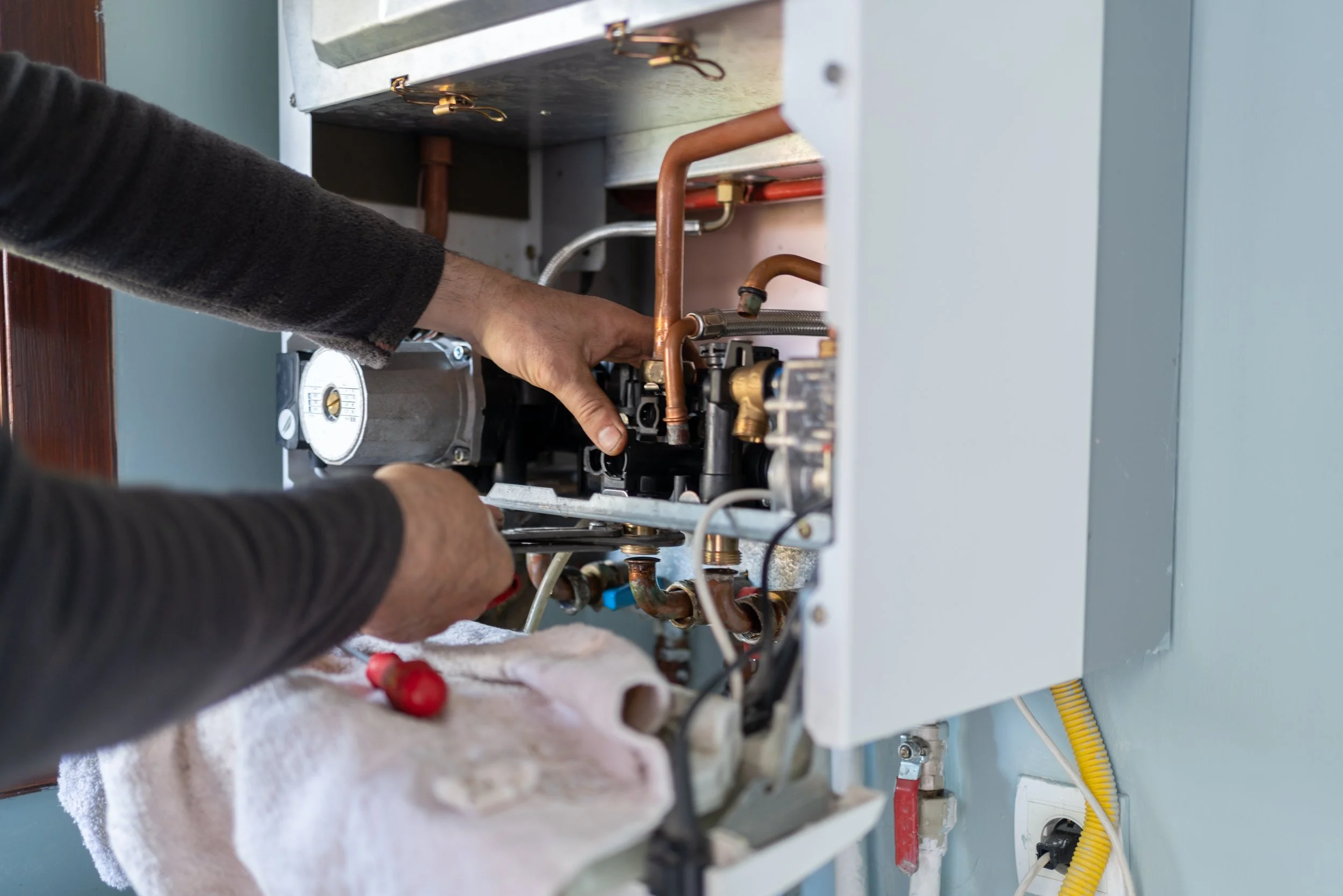
If you see frost or ice on the copper lines running from your outdoor unit to the house, or on the indoor evaporator coil, the system is freezing up. This happens when airflow is restricted (dirty filter, blocked return vent, failed blower motor) or when refrigerant pressure drops too low (leak, failed metering device).
Don't just turn the system off and let it thaw. The underlying problem will cause it to freeze again. We cover the full diagnostic process in our article on why your AC freezes up in summer.
High Indoor Humidity
Your AC removes humidity as it cools. If the house feels clammy even when the temperature is comfortable, the system isn't dehumidifying properly. This usually means the evaporator coil isn't cold enough (low refrigerant), the system is oversized (short cycling prevents dehumidification), or the blower speed is set too high (air moves across the coil too fast to condense moisture).
Michigan summers are humid enough without an AC that can't keep up. West Bloomfield sits close to several lakes, which makes humidity control even more important.
Weak Airflow From the Vents
Check your filter first — a clogged filter is the most common cause of weak airflow. If the filter is clean and airflow is still weak, the blower motor might be failing, the blower wheel could be clogged with dust, or there's a problem with the ductwork (disconnected section, crushed flex duct in the attic).
In homes built before 1980, the ductwork was often undersized when central air was added later. That's a design problem, not a repair issue, but it's worth knowing if you're planning an upgrade.
Unusual Odors When the System Runs
Burning smell when the AC first starts after months of sitting idle is normal — dust burning off the heat exchanger. But persistent burning smells, or the smell of hot plastic, mean electrical failure somewhere in the system. Shut it down and call for service.
Musty or moldy smells point to biological growth on the evaporator coil or in the ductwork. This is common in humid climates when the drain pan doesn't dry out between cycles. It's not just unpleasant — it's a health issue.
Common AC Repairs in West Bloomfield Homes
Most AC service calls fall into a handful of categories. Here's what we actually fix most often in Oakland County, and what each repair involves.
Refrigerant Leaks
Refrigerant doesn't get "used up" — if your system is low, there's a leak. Small leaks at flare fittings or service valves can be repaired. Leaks in the evaporator coil or condenser coil usually mean replacing the coil, because the leak will return even after a patch.
Older systems use R-22 refrigerant, which was phased out in 2020. If your R-22 system has a major leak, recharging it costs $150-$200 per pound, and you might need 3-5 pounds. At that price point, replacement often makes more sense.
Newer systems use R-410A (Puron), which is cheaper and more efficient. But if you're still running R-22 equipment installed before 2010, a refrigerant leak is a decision point: repair now and face the same issue later, or upgrade to a modern system.
Capacitor Failure
The capacitor stores electrical energy to start the compressor and fan motors. When it fails, the compressor hums but won't start, or the outdoor fan won't spin. Capacitors fail from age, heat, and voltage spikes (common during summer thunderstorms).
This is one of the most common repairs we make in June and July. A failed capacitor is a quick fix — 30 minutes on-site — but it requires a service call because working with capacitors is dangerous. They store enough voltage to cause serious injury even when the power is off.
Contactor Replacement
The contactor is an electrical relay that switches power to the compressor and condenser fan. The contacts wear out over time, especially if the system short-cycles. When the contactor fails, the outdoor unit won't start at all, or it chatters and buzzes without engaging.
Contactors are inexpensive parts, but they require diagnostic work to confirm that's the actual problem. A buzzing sound could also be a failing compressor, which is a much bigger issue.
Blower Motor Failure
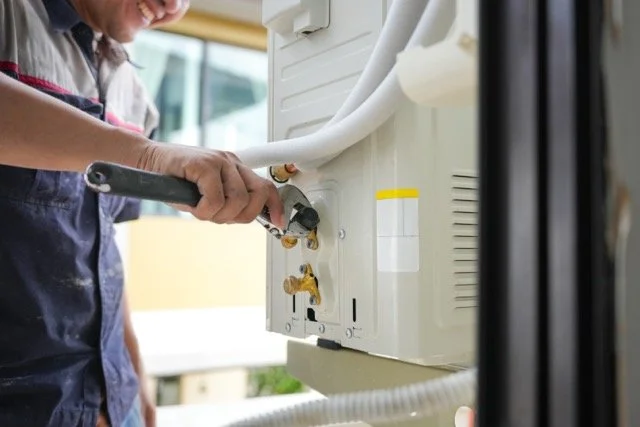
The blower motor circulates air through your ductwork. When it fails, you get no airflow from the vents even though the outdoor unit is running. Motors fail from age, dirt buildup on the blower wheel (which creates resistance), or bearing failure.
Blower motors in systems over 15 years old are often no longer available. We can usually find a compatible replacement, but if the system is that old and the blower has failed, it's worth evaluating the whole system before sinking $600-$800 into a motor replacement.
Thermostat Problems
Not all AC problems originate in the AC. A failing thermostat can cause short cycling, prevent the system from starting, or create temperature swings. Modern programmable and smart thermostats have more failure points than old mechanical thermostats, but they also offer better control and efficiency.
If your thermostat is more than 10 years old and you're having intermittent issues, upgrading to a modern unit often solves the problem and improves comfort.
Condensate Drain Clogs
Your AC removes moisture from the air, which drains out through a PVC pipe. In Michigan's humid summers, that drain line can produce gallons of water per day. When the drain clogs (algae growth, dust, insulation debris), water backs up into the drain pan.
Most modern systems have a float switch that shuts the system down if the pan fills. That's a safety feature to prevent water damage, but it means your AC stops working on the hottest day of the year because of a clogged drain.
This is preventable. Our Next Care Plan includes drain line cleaning twice a year — once during the spring AC tune-up, once during the fall furnace service.
What AC Repairs Actually Cost in 2026
Repair costs vary based on the part, labor time, and whether you need emergency service. Here's what we're charging in Southeast Michigan this year. These are real numbers from our service department, not national averages.
Diagnostic Fee: $89-$150. This covers the service call, system inspection, and diagnosis. If you proceed with the repair, most contractors (including us) apply this fee toward the repair cost.
- Capacitor Replacement: $150-$400 installed. The part costs $15-$40; you're paying for the technician's time, expertise, and the risk of working with high-voltage components.
- Contactor Replacement: $150-$350 installed. Similar to capacitors — inexpensive part, specialized labor.
- Blower Motor Replacement: $450-$800 installed. Motors are more expensive, and the labor is more involved (accessing the blower compartment, wiring, testing airflow).
- Refrigerant Recharge (R-410A): $200-$600 depending on how much refrigerant is needed and whether we're just topping off or doing a full recovery and recharge. This assumes we've already found and repaired the leak.
- Refrigerant Recharge (R-22): $400-$1,200+. R-22 is expensive and getting harder to source. If your system needs more than 2-3 pounds, replacement is usually the smarter investment.
- Compressor Replacement: $1,200-$3,500 installed. The compressor is the heart of the system. At this price point, most homeowners choose to replace the entire outdoor unit or the whole system, especially if it's over 10 years old.
- Evaporator Coil Replacement: $600-$1,400 installed. Coils fail from corrosion (formaldehyde off-gassing in newer homes, a known issue) or refrigerant leaks.
- Condenser Coil Replacement: $800-$2,000 installed. The outdoor coil is exposed to weather, lawn chemicals, and debris. Coil leaks are common in systems over 12 years old.
For context on full system replacement costs, our guide on AC installation cost in Troy breaks down what new equipment actually costs in 2026.
Emergency Service Costs More
If you call at 9 PM on a Saturday in July because your AC just failed, expect to pay $150-$250 more for after-hours service. That's industry standard. The technician is coming from home, outside normal business hours, and parts availability is limited.
This is why we push preventive maintenance so hard. A $60/year Next Care Plan catches most failures before they become emergencies. Our members get priority scheduling and discounted service rates, which more than pays for the plan if you ever need a repair.
When to Repair vs. Replace Your AC
The decision to repair or replace isn't always obvious. Here's the framework we use when advising homeowners.
The 5x5 Rule
If the repair cost is more than half the cost of a new system, and your current system is more than halfway through its expected lifespan, replacement usually makes more financial sense.
Example: Your 12-year-old AC needs a $2,000 compressor replacement. A new system costs $4,500 installed. The repair is close to half the replacement cost, and the system is already 12 years into a 15-20 year lifespan. In this case, we'd recommend replacement.
But if the same system only needs a $300 capacitor, repair makes sense even at 12 years old. You'll get another 3-5 years of service for a reasonable cost.
Age and Efficiency Considerations
AC systems installed before 2006 have a SEER rating of 10-13. Modern systems start at SEER 14 and go up to SEER 20+. Higher SEER means lower operating costs.
If your current system is 15+ years old with a SEER of 10, and you're facing a $1,000+ repair, upgrading to a SEER 16 system will cut your cooling costs by 30-40%. The energy savings help offset the replacement cost over time.
We cover this in more detail in our article on the best central air conditioner for Michigan homes, which compares efficiency ratings across major brands.
R-22 Refrigerant Phase-Out
If your system uses R-22 (common in equipment installed before 2010), any refrigerant leak becomes a major expense. R-22 is no longer manufactured in the US, so supply is limited and prices are high.
A system that needs 4 pounds of R-22 might cost $800+ just for the refrigerant recharge, not including labor or leak repair. At that point, upgrading to an R-410A system makes more sense.
How to Prevent Emergency AC Repairs
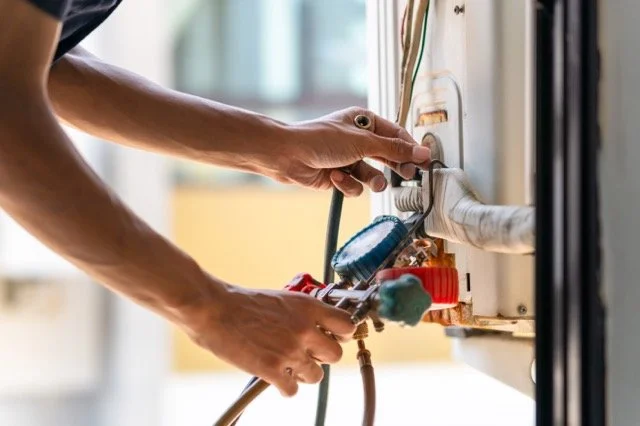
Most AC failures are predictable. Capacitors wear out. Contactors pit and burn. Drain lines clog. Refrigerant leaks develop at connection points. A spring tune-up catches these issues before they leave you without cooling in July.
What a Professional Tune-Up Includes
When our technicians perform a spring AC tune-up, here's what we're actually doing:
- Test capacitor voltage and microfarad rating (capacitors fail gradually — we can predict failure before it happens)
- Inspect contactor for pitting and wear
- Check refrigerant pressures (subcooling and superheat readings tell us if charge is correct)
- Measure amp draw on compressor and fan motors (high amp draw indicates a motor nearing failure)
- Clean condenser coil (dirt and cottonwood buildup reduces efficiency and causes high head pressure)
- Clear condensate drain line and test float switch
- Check thermostat calibration and operation
- Tighten electrical connections (loose connections cause arcing and failure)
- Inspect ductwork for leaks at accessible points
This isn't a 15-minute "check and go" visit. A real tune-up takes 60-90 minutes because we're testing, measuring, and documenting system performance.
What Homeowners Should Do Between Service Visits
Change your filter every 1-3 months depending on usage and filter type. A clogged filter is the number one cause of airflow problems, frozen coils, and blower motor failure.
Keep the area around your outdoor unit clear. Trim bushes back at least 2 feet. Don't stack firewood, lawn equipment, or storage bins next to the condenser. The unit needs airflow to reject heat.
Listen for changes in how the system sounds. If it starts making noise it didn't make last week, that's a sign something is failing.
If you're already enrolled in our maintenance program, you're covered. If not, the $5/month Next Care Plan includes two visits per year — spring AC tune-up and fall furnace service — plus priority scheduling and 10% off repairs.
What to Expect When You Call NEXT
We don't do commissioned sales. Our technicians aren't paid to upsell you on equipment you don't need. When you call us for AC repair in West Bloomfield, here's what the process looks like.
The Diagnostic Process
We start by asking what symptoms you're seeing: no cooling, weak airflow, strange noises, ice buildup, whatever brought you to call. That helps us bring the right tools and parts.
On-site, we test the system while it's running (if it runs at all). We measure refrigerant pressures, electrical voltages, amp draw, airflow, and temperature split across the coil. These aren't guesses — we're using calibrated instruments to diagnose the actual problem.
Once we know what's wrong, we explain it in plain language. Not HVAC jargon, not a sales pitch. Just: "Here's what failed, here's why it failed, here's what it costs to fix it."
Transparent Pricing
We give you the price before we start the work. If the repair costs more than expected once we're into it (rare, but it happens), we stop and get your approval before continuing.
If the repair cost is high enough that replacement makes sense, we'll tell you. We'll show you the math: repair cost vs. replacement cost, age of the system, efficiency of a new system, expected lifespan. You make the call.
Same-Day Service When Possible
Most AC repairs don't require ordering parts. Capacitors, contactors, thermostats — we stock these on the truck. If we can fix it the same day, we will.
For larger repairs (compressors, coils, motors), we might need to order parts. We'll give you a timeline and keep you updated. Next Care Plan members get priority on parts orders and scheduling.
NATE-Certified Technicians
Every technician we send to your house is NATE-certified. That's North American Technician Excellence — the industry standard for HVAC competency. It means they've passed exams on refrigeration theory, electrical systems, airflow, and diagnostics.
It also means they've been background-checked, drug-tested, and trained on our no-pressure service approach. They're there to fix your AC, not to sell you something you don't need.
You can learn more about our approach and credentials on our About page, which covers our 35+ years in business and community involvement.
Ready to Get Your AC Fixed?
NEXT Heating & Cooling has been keeping Michigan homes comfortable for over 35 years. Get honest diagnostics and fair pricing from NATE-certified technicians who show up on time.
Schedule Your Service