

AC Short Cycling in Metro Detroit: Why It Happens & How to Fix It
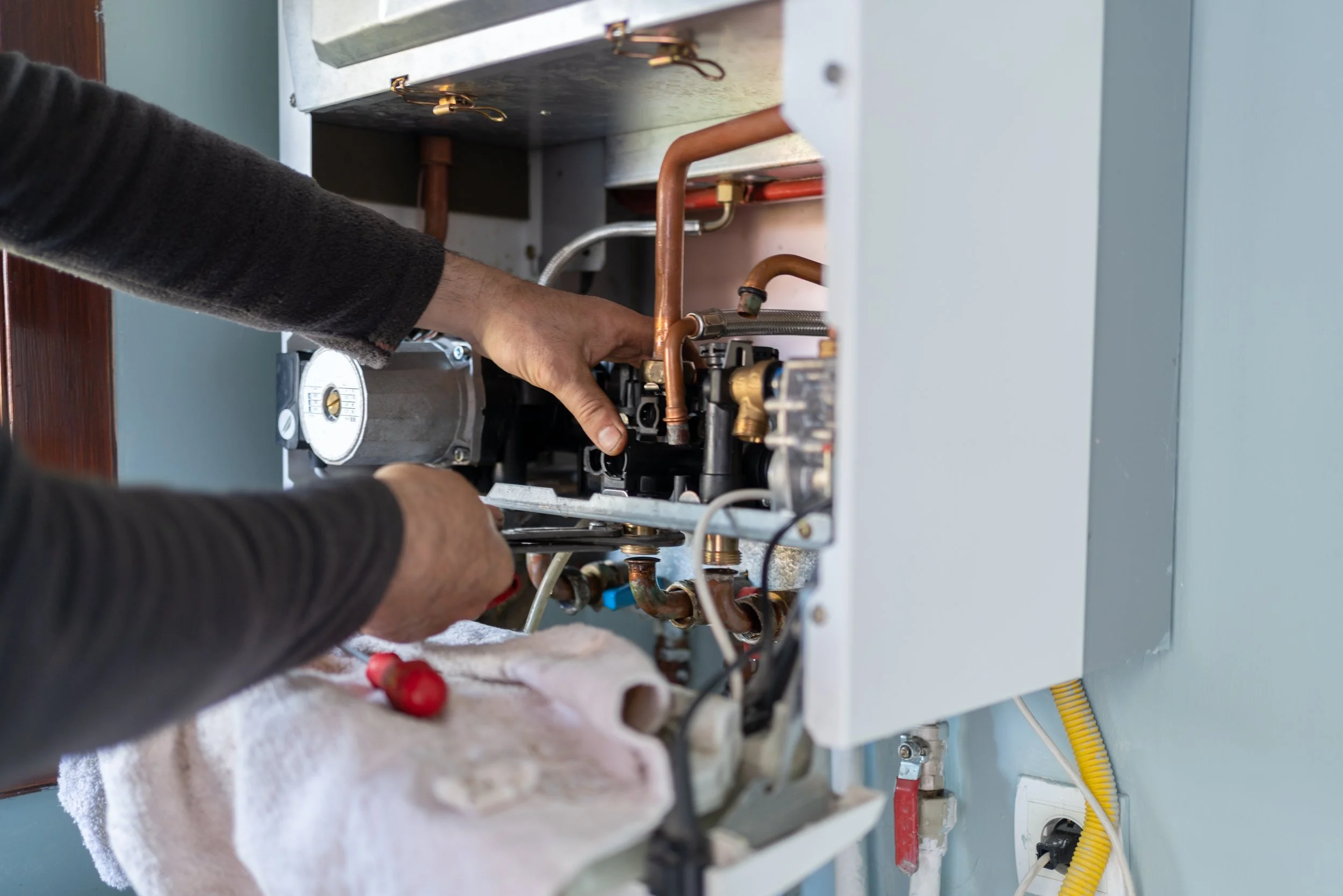
You hear your air conditioner kick on. Sixty seconds later, it shuts off. Three minutes pass. It fires up again. Then stops. Again.
That's AC short cycling — and it's one of the most common problems we diagnose in Southeast Michigan homes during cooling season. It's not just annoying. It's expensive, hard on your equipment, and often signals a problem that will get worse if you ignore it.
Short cycling means your air conditioner is turning on and off in rapid bursts instead of running through complete cooling cycles. A healthy AC system should run for roughly 15-20 minutes per cycle when it's hot outside. When it runs for less than 5-10 minutes before shutting down, something's wrong.
Over 35 years serving Macomb County, Oakland County, and St. Clair County, we've seen short cycling cause everything from $400 energy bills to $3,500 compressor failures. The good news: most causes are fixable — and some you can troubleshoot yourself before calling a technician.
This guide walks through the seven most common causes of AC short cycling we see in Metro Detroit, why Michigan's climate makes the problem worse, what it costs you in wasted energy, and when you need professional heating and cooling services in Metro Detroit to fix it properly.
7 Common Causes of AC Short Cycling
Short cycling isn't a single problem — it's a symptom. Here are the seven root causes we diagnose most often in Southeast Michigan homes, listed from most common to least common.
1. Oversized Air Conditioning Unit
This is the number one cause of short cycling we see in homes built or renovated in the 1990s and 2000s. An oversized AC cools your house too fast. It reaches the thermostat setpoint before completing a full cooling cycle, so it shuts off. Then the temperature creeps back up quickly, and the unit fires up again.
The problem: your AC never runs long enough to remove humidity from the air. You get a cold, clammy house that feels uncomfortable even when the temperature reads 72°F. And because your compressor is starting and stopping constantly, it wears out faster than it should.
Why it happens: Many HVAC contractors skip the load calculation (ACCA Manual J) and just size equipment based on square footage or what the old unit was. A 1,800-square-foot ranch in Sterling Heights might only need a 2.5-ton AC, but the installer puts in a 4-ton unit "just to be safe." That's not safe — it's expensive and uncomfortable.
At NEXT Heating & Cooling, we perform Manual J load calculations on every AC installation in Metro Detroit to match equipment capacity to your home's actual cooling needs. It's the only way to get it right.
2. Low Refrigerant Charge (Leak)
When your AC loses refrigerant through a leak, the system can't absorb heat properly. The compressor runs, but the evaporator coil gets too cold and triggers the low-pressure safety switch, shutting the system down. Once pressure builds back up, the system restarts — and the cycle repeats.
Signs of a refrigerant leak:
- Ice buildup on the copper lines running to your outdoor unit
- Hissing or bubbling sounds near the indoor coil
- The outdoor unit runs but the house doesn't cool down
- Your energy bills climb even though you're not using the AC more
Refrigerant doesn't "run out" like gasoline. If your charge is low, you have a leak. Topping it off without finding and fixing the leak is a waste of money. We've seen homeowners spend $600 on refrigerant recharges over two summers when the actual fix — repairing a $200 coil leak — would have solved it permanently.
Modern systems use R-410A refrigerant. Older units still on R-22 (Freon) face a bigger problem: R-22 production ended in 2020, so recharge costs have skyrocketed. If you have an R-22 system with a leak, replacement usually makes more financial sense than repeated recharges.
3. Thermostat Problems
Your thermostat tells your AC when to run and when to stop. If it's malfunctioning or poorly located, it sends bad signals that cause short cycling.
Common thermostat issues:
- Bad location: Thermostats in direct sunlight, near heat sources (lamps, TVs, kitchen appliances), or in drafty hallways read the wrong temperature. Your AC thinks the house is warmer or cooler than it actually is.
- Loose wiring: Vibration from foot traffic or a nearby door can loosen thermostat wiring over time. Intermittent connections cause erratic cycling.
- Dust buildup: Older mechanical thermostats use a metal coil that expands and contracts with temperature changes. Dust on that coil throws off the calibration.
- Wrong settings: If the fan is set to ON instead of AUTO, the blower runs constantly, and the thermostat gets confused about when the AC is actually cooling.
We see this frequently in older homes in Grosse Pointe and Royal Oak where thermostats were installed decades ago in locations that made sense then but don't work well with modern AC systems.
4. Dirty or Clogged Air Filter
A clogged filter restricts airflow across your evaporator coil. Without enough air moving through, the coil gets too cold, freezes over, and triggers the safety switch. The system shuts down until the coil thaws, then restarts — and the cycle repeats.
How often should you change your filter? It depends:
- Standard 1-inch filters: Every 30-60 days during cooling season
- Pleated filters (MERV 8-11): Every 60-90 days
- Homes with pets: Every 30-45 days
- High-efficiency filters (MERV 13+): Every 90 days, but check monthly
Michigan summers are humid. Your AC pulls moisture out of the air, and that moisture collects on the filter along with dust, pollen, and pet dander. A filter that would last 90 days in Arizona might clog in 45 days here.
If you're experiencing high humidity with your AC running, a dirty filter is often part of the problem — the system can't run long enough to dehumidify properly because it keeps short cycling.
5. Frozen Evaporator Coil
When your indoor evaporator coil freezes, it's usually a symptom of another problem (dirty filter, low refrigerant, blocked return air), but the ice itself causes short cycling. The frozen coil blocks airflow, the system can't cool properly, and the safety switch shuts everything down.
You'll see ice buildup on the copper refrigerant lines or, if you open your furnace cabinet, on the A-frame coil itself. Once ice forms, you need to shut the system off and let it thaw completely — usually 4-6 hours — before restarting.
But thawing the coil doesn't fix the underlying cause. If you turn the AC back on without addressing the root problem, it'll freeze again within hours.
6. Electrical Issues
Faulty wiring, a failing capacitor, or a bad contactor can cause intermittent power delivery to your compressor or condenser fan. The system tries to start, fails, shuts down, then tries again a few minutes later.
Electrical problems are harder to diagnose without proper tools. You might notice:
- A clicking sound from the outdoor unit without the fan or compressor starting
- The breaker tripping repeatedly
- A burning smell near the outdoor disconnect or indoor air handler
- Lights dimming when the AC tries to start
Electrical short cycling is more common in older homes with undersized electrical service (100-amp panels) or homes where the AC circuit shares a breaker with other loads. We see this frequently in 1950s and 1960s ranches in Warren and Clinton Township where the electrical panel was never upgraded when central air was added.
7. Ductwork Problems and Airflow Restrictions
Poorly designed or damaged ductwork creates pressure imbalances that confuse your AC system. Closed or blocked vents, crushed ducts in the crawlspace or attic, or disconnected return air ducts all restrict airflow and can trigger short cycling.
Michigan basements are notorious for ductwork problems. We've found:
- Flex duct crushed by stored boxes or holiday decorations
- Return air grilles blocked by furniture
- Supply vents closed in unused bedrooms (homeowners think this saves energy — it doesn't, it creates pressure problems)
- Undersized return air ducts that can't move enough air back to the furnace
If you're hearing unusual noises from your air conditioner, ductwork issues might be part of the problem. Whistling, banging, or rattling sounds often point to airflow restrictions or loose connections.
Why Michigan Conditions Make Short Cycling Worse
Southeast Michigan's climate creates specific challenges that amplify short cycling problems. Here's what makes our region different.
High Humidity Levels
Metro Detroit sits between Lake St. Clair, Lake Erie, and Lake Huron. Summer humidity regularly hits 70-80%, especially in July and August. High humidity makes your AC work harder because it has to remove moisture from the air in addition to lowering the temperature.
When your AC short cycles, it never runs long enough to dehumidify properly. The result: a cold, sticky house that feels uncomfortable even at 72°F. You turn the thermostat down to 68°F trying to feel better, which makes the short cycling worse and drives up your energy bill.
Proper dehumidification requires 15-20 minute run cycles. Short cycling prevents that, leaving you with indoor humidity levels above 60% — the threshold where mold growth becomes a concern.
Wide Temperature Swings
Michigan weather is unpredictable. We'll see 55°F mornings and 85°F afternoons in June. Your AC might not need to run at all in the morning, then suddenly it's cycling constantly in the afternoon trying to catch up.
This creates a specific problem with oversized units. An oversized AC that's "fine" on mild days becomes a short-cycling nightmare on hot, humid days when the load increases. The unit cools the house too fast, shuts off, but outdoor temperatures and solar gain push the indoor temperature back up quickly, triggering another short cycle.
Aging Equipment in Older Homes
Southeast Michigan has a large stock of older homes — 1950s ranches, 1960s colonials, 1970s split-levels. Many still have original ductwork and electrical systems that weren't designed for modern high-efficiency AC units.
We see this constantly in Shelby Township, Rochester Hills, and Troy. A homeowner replaces their 20-year-old AC with a new high-efficiency Carrier or Lennox system, but the installer doesn't address the undersized return air duct or the 30-year-old thermostat. The new equipment short cycles because the supporting infrastructure can't keep up.
That's why proper AC installation in Macomb County requires more than just swapping equipment — you need a technician who evaluates the entire system and addresses weak points before they cause problems.
What Short Cycling Does to Your Energy Bills
Short cycling is expensive in two ways: higher energy bills now, and premature equipment failure later.
Energy Waste
Your AC uses the most electricity during startup. The compressor draws a surge of current to get moving, the condenser fan spins up, and the blower motor kicks into high speed. Once everything's running, power consumption drops to a steady state.
When your AC short cycles, you're paying for that startup surge over and over again without getting the benefit of a full cooling cycle. It's like city driving versus highway driving — constant stop-and-go burns more fuel than steady cruising.
Real numbers from Southeast Michigan homes we've worked on:
Example 1: 1,800 sq ft ranch in Sterling Heights
Oversized 4-ton AC short cycling every 5 minutes during peak cooling days. Energy bill: $285/month in July 2025. After we replaced it with a properly sized 2.5-ton two-stage Carrier system, July 2026 bill: $178/month. Savings: $107/month during peak season.
Example 2: 2,400 sq ft colonial in Troy
Low refrigerant causing short cycling. Homeowner was adding refrigerant twice per summer at $400 per recharge. We found and repaired a coil leak for $650. Problem solved permanently. Total savings over 3 years: $1,750.
With DTE Energy and Consumers Energy rates averaging $0.18-$0.21 per kWh in 2026, inefficient AC operation adds up fast. A system that short cycles can easily add $50-$150 to your monthly cooling bill compared to a properly functioning unit.
Equipment Lifespan
Every time your compressor starts, it experiences mechanical stress. Manufacturers design residential AC compressors for roughly 10,000-15,000 start cycles over a 15-20 year lifespan. When your unit short cycles, it might hit 15,000 starts in 5-7 years instead.
Compressor replacement costs in Southeast Michigan (2026):
- 2-ton system: $1,800-$2,400
- 3-ton system: $2,200-$2,800
- 4-ton system: $2,600-$3,500
At those prices, most homeowners choose to replace the entire outdoor unit rather than just the compressor. You're looking at $3,500-$6,000 for a full condenser replacement — money you wouldn't have spent if the short cycling had been diagnosed and fixed early.
The math is simple: spending $200-$400 to fix a thermostat, filter, or refrigerant leak now saves you thousands in premature equipment replacement later.
DIY Troubleshooting Steps You Can Try
Before calling a technician, there are several things Michigan homeowners can check themselves. These steps are safe, don't require special tools, and might solve the problem without a service call.
Step 1: Check and Replace Your Air Filter
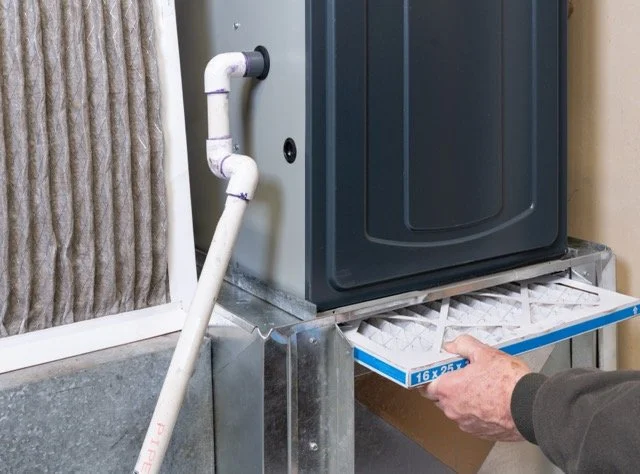
This fixes roughly 30% of short cycling cases we get called for. Walk to your furnace or air handler (usually in the basement or utility closet). Open the filter cabinet — it's typically a slot near the bottom of the unit or in the return air duct.
Pull out the filter. Hold it up to a light. If you can't see light through it, or if it's gray and clogged, replace it. Make sure you install the new filter with the airflow arrow pointing toward the furnace.
Standard 1-inch filters cost $3-$8 each. Pleated filters run $8-$15. Buy a pack of 6-12 at a time so you always have spares on hand.
Step 2: Verify Thermostat Settings
Walk to your thermostat. Check these settings:
- Mode: Should be set to COOL, not AUTO or HEAT
- Fan: Should be set to AUTO, not ON. If the fan runs constantly, the thermostat can't accurately sense when the AC has cooled the house enough.
- Temperature: Set it to a reasonable target (72-76°F). Setting it to 65°F won't cool the house faster — it just makes the AC run longer.
If you have a programmable or smart thermostat, check that the schedule makes sense. We've seen thermostats programmed to cycle between 68°F and 78°F multiple times per day, which creates unnecessary short cycling.
Step 3: Clear Outdoor Unit Obstructions
Walk outside to your condenser unit (the big metal box with the fan on top). Look for:
- Grass clippings, leaves, or cottonwood seeds clogging the fins
- Shrubs or plants within 2 feet of the unit blocking airflow
- Debris on top of the unit blocking the fan discharge
Use a garden hose to gently spray the condenser fins from the inside out (spray from inside the unit toward the outside). Don't use a pressure washer — it'll bend the fins. If the fins are already bent, you can buy a fin comb at a hardware store for $10-$15 to straighten them.
Step 4: Inspect Indoor Vents and Registers
Walk through your house and check every supply vent (the ones that blow cold air). Make sure:
- They're all open (louvers fully spread)
- No furniture, curtains, or rugs are blocking them
- Return air grilles (usually larger vents on walls or ceilings) aren't blocked by furniture
Closing vents in unused rooms doesn't save energy — it creates pressure imbalances that can cause short cycling. Your AC system is designed to move a specific volume of air. Blocking vents throws off that balance.
Step 5: Document the Cycling Pattern
If the above steps don't fix the problem, grab your phone and time how long your AC runs before shutting off. Note:
- How many minutes between startup and shutdown
- How many minutes between shutdown and the next startup
- Whether it happens all day or only during certain times
- Whether it's worse on hotter days
This information helps your HVAC technician diagnose the problem faster, which saves you money on labor. When you call a reliable HVAC contractor in Metro Detroit, having this data ready makes the service call more efficient.
When to Call a Professional HVAC Technician
Some short cycling problems require diagnostic tools and technical expertise you don't have. Here's when to stop troubleshooting and call a licensed technician.
Signs You Need Professional Help
- Ice buildup on refrigerant lines or indoor coil: This indicates low refrigerant, restricted airflow, or a failing expansion valve. You need a technician with EPA 608 certification to diagnose and repair refrigerant systems.
- Burning smell or smoke: Shut the system off immediately and call for service. Electrical problems can cause fires.
- Breaker trips repeatedly: This signals an electrical short, a failing compressor, or undersized wiring. Don't keep resetting the breaker — you risk damaging the compressor or starting a fire.
- Loud banging, grinding, or screeching sounds: These indicate mechanical failure inside the compressor, condenser fan motor, or blower motor. Continuing to run the system can turn a $400 repair into a $2,500 replacement.
- No improvement after filter replacement and vent checks: If you've done the DIY steps and the short cycling continues, the problem is deeper — refrigerant charge, oversized equipment, thermostat wiring, or ductwork issues.
What to Expect During a Service Call
When you schedule service with NEXT Heating & Cooling, here's what our NATE-certified technicians check during a short cycling diagnosis:
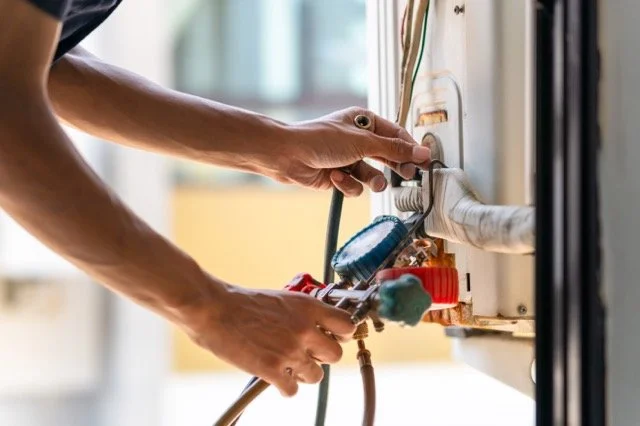
- Refrigerant pressures: We measure suction and discharge pressures to verify proper charge and rule out leaks
- Electrical readings: We test voltage and amperage at the compressor, condenser fan, and blower motor to identify failing components
- Thermostat calibration: We verify the thermostat is reading accurate temperatures and sending proper signals to the equipment
- Airflow measurements: We measure static pressure and airflow across the coil to identify duct restrictions or blower problems
- Coil condition: We inspect the evaporator and condenser coils for dirt buildup, corrosion, or damage
- Capacitor and contactor testing: We test electrical components that control compressor startup
A thorough diagnostic takes 45-90 minutes depending on the complexity of the problem. We explain what we find, show you the problem when possible, and give you repair options with upfront pricing before doing any work.
We don't work on commission. Our technicians get paid the same whether you approve a $150 repair or a $5,000 replacement. That's part of changing contractor culture — honest diagnostics, fair pricing, no pressure.
Cost Range for Common Short Cycling Repairs
Here's what homeowners in Southeast Michigan typically pay to fix short cycling problems (2026 pricing):
- Thermostat replacement: $180-$350 (basic programmable to Wi-Fi smart thermostat)
- Capacitor replacement: $150-$280
- Contactor replacement: $140-$250
- Refrigerant leak repair + recharge: $400-$1,200 (depends on leak location and accessibility)
- Evaporator coil cleaning: $180-$350
- Blower motor replacement: $400-$800
- Expansion valve replacement: $350-$650
If the diagnosis reveals an oversized AC unit, replacement is the only permanent fix. Trying to band-aid an oversized system with thermostat adjustments or cycle timers doesn't solve the underlying problem — you'll still have humidity issues and premature equipment wear.
For accurate pricing on your specific situation, the best approach is to schedule an HVAC service call with detailed diagnostics before committing to repairs.
How Proper Maintenance Prevents Short Cycling
Most short cycling problems don't appear overnight — they develop gradually as components wear out, filters get dirty, and refrigerant slowly leaks. Regular maintenance catches these issues before they cause breakdowns.
What Professional Maintenance Includes
A proper AC tune-up (not the $49 "safety inspection" some companies advertise) includes:
- Refrigerant pressure check and leak inspection
- Electrical component testing (capacitors, contactors, wiring)
- Condenser coil cleaning
- Evaporator coil inspection
- Blower motor and wheel cleaning
- Condensate drain cleaning and treatment
- Thermostat calibration check
- Airflow measurement and adjustment
- Safety control testing
This level of service takes 60-90 minutes. Companies that advertise 20-minute tune-ups aren't doing thorough work — they're checking a few basics and upselling you on repairs you may not need.
The Next Care Plan Advantage
The Next Care Plan is our $5/month preventative maintenance subscription. You get two visits per year — a fall furnace tune-up and a spring AC tune-up — plus priority scheduling, 10% off repairs, and no service call fees.
For $60/year, you're preventing the common causes of short cycling:
- We catch refrigerant leaks early before they cause compressor damage ($2,500+ saved)
- We replace failing capacitors before they strand you on a 90°F day ($150-$280 repair vs. $150 emergency service call + after-hours rates)
- We clean coils before they restrict airflow enough to cause freezing and short cycling
- We verify proper refrigerant charge so your system runs efficiently all summer
The plan pays for itself if it prevents just one emergency service call or catches one component failure before it damages other parts of the system.
We're not selling you a maintenance plan because we make money on it — the margins are thin. We're selling it because we've seen too many homeowners spend $3,500 replacing a compressor that would still be running if they'd invested $60/year in maintenance.
Similar to our approach with furnace maintenance in Macomb County, regular AC service prevents small problems from becoming expensive emergencies.
When to Schedule Maintenance
Best practice for Michigan homeowners:
- Spring AC tune-up: April or early May, before cooling season starts
- Fall furnace tune-up: September or early October, before heating season starts
Scheduling early avoids the June and November rush when HVAC companies are slammed with emergency calls. You get better appointment times, and technicians aren't rushing through tune-ups to get to the next emergency.

Stop Wasting Energy on AC Short Cycling
NEXT Heating & Cooling has been diagnosing and fixing short cycling problems in Metro Detroit homes for over 35 years. Our NATE-certified technicians show up on time, explain the problem clearly, and give you honest repair options without pressure. No commission-based sales. Just straight answers and quality work.
Schedule Your Service CallFrequently Asked Questions About AC Short Cycling
A properly sized and functioning AC should run for 15-20 minutes per cycle on hot days. On milder days (75-80°F), cycles might be shorter — 10-15 minutes — but anything less than 5-10 minutes consistently indicates a problem. The system needs enough run time to remove humidity from the air, not just cool it. If your AC is shutting off after 2-5 minutes, you're experiencing short cycling and should investigate the cause.
You can fix some causes yourself: replacing a dirty air filter, adjusting thermostat settings, clearing debris from the outdoor unit, and opening blocked vents. These steps solve roughly 30-40% of short cycling cases. However, refrigerant leaks, electrical problems, oversized equipment, and frozen coils require professional diagnosis and repair. If basic troubleshooting doesn't fix the problem within a day or two, call a licensed HVAC technician. Continuing to run a short-cycling AC risks expensive compressor damage.
Repair costs depend on the cause. Simple fixes like thermostat replacement run $180-$350. Capacitor or contactor replacement costs $140-$280. Refrigerant leak repair and recharge runs $400-$1,200 depending on leak location. If the problem is an oversized AC unit, replacement is the only permanent solution — typically $3,500-$6,000 for a properly sized system. The diagnostic service call itself usually costs $100-$150, which gets credited toward repairs if you proceed with the work. At NEXT Heating & Cooling, we provide upfront pricing before starting any repair.
Yes. Short cycling causes premature wear on your compressor, which is the most expensive component in your AC system. Every startup creates mechanical and electrical stress. Compressors are designed for 10,000-15,000 start cycles over 15-20 years. A short-cycling AC can hit that limit in 5-7 years. Compressor replacement costs $1,800-$3,500 depending on system size, and at that price point, most homeowners choose to replace the entire outdoor unit instead. Fixing short cycling early prevents this expensive failure.
This usually indicates an oversized AC unit. On mild days, the oversized system can handle the load without obvious problems. But on hot, humid days when the cooling load increases, the unit cools the house too quickly, shuts off before removing humidity, then restarts as temperature and humidity climb back up. You end up with a cold, clammy house and constant cycling. The only permanent fix is replacing the oversized unit with properly sized equipment based on a Manual J load calculation. Southeast Michigan's high summer humidity makes this problem particularly noticeable here.
Absolutely. A clogged filter restricts airflow across your evaporator coil. Without enough air moving through, the coil gets too cold and freezes. Ice buildup blocks airflow completely, triggering the safety switch that shuts down the compressor. Once the coil thaws (usually 20-30 minutes), the system restarts — and the cycle repeats. We diagnose dirty-filter short cycling in roughly 30% of service calls during peak cooling season. The fix is simple: replace the filter every 30-60 days during summer, or more often if you have pets or run the AC constantly.
Yes. The Next Care Plan includes two annual tune-ups (spring AC service and fall furnace service) where we check all the common causes of short cycling: refrigerant charge, electrical components, coil cleanliness, airflow, and thermostat operation. We catch small problems — a failing capacitor, a slow refrigerant leak, a dirty coil — before they cause short cycling or system failure. At $5/month ($60/year), the plan pays for itself if it prevents just one emergency service call or catches one component failure early. Members also get priority scheduling and 10% off repairs, which matters when you need fast service during a heat wave.