

Why Won't My AC Shut Off? Constant Running in Michigan Summers
You walk past the thermostat for the third time today and notice the little "cool on" indicator is still lit. The outdoor unit has been humming nonstop since this morning. Your AC isn't cycling off like it should—it's just running constantly, trying to catch up to a temperature it never quite reaches.
This is one of the most common service calls we get at NEXT Heating & Cooling during Michigan summers. An air conditioner that won't shut off isn't just annoying—it's burning through electricity, wearing out components faster than they should, and often means something in your cooling system needs attention.
After 35 years of diagnosing heating and cooling services in Metro Detroit, I can tell you that constant AC operation usually points to one of seven specific problems. Some you can fix yourself in ten minutes. Others require a licensed technician with refrigerant certification and diagnostic equipment.
Let's walk through what's actually happening, why it matters in Michigan's humid climate, and how to figure out whether you need a service call today or just a new air filter.
How Your AC Should Actually Cycle
Before we diagnose what's wrong, let's establish what "normal" looks like. A properly functioning air conditioner in Southeast Michigan should cycle on and off throughout the day based on indoor temperature and humidity levels.
Here's what you should expect on a typical 85-degree summer day in Sterling Heights or Rochester Hills:
- Cycle duration: 15-20 minutes of runtime per cycle
- Frequency: 2-3 cycles per hour during peak afternoon heat
- Off time: At least 7-10 minutes between cycles
- Temperature differential: Supply air should be 15-20°F cooler than return air
When your thermostat calls for cooling, the compressor and condenser fan kick on outside, the blower starts inside, and refrigerant begins circulating through the system. The AC runs until the indoor temperature drops to your setpoint (let's say 72°F), then everything shuts off. The thermostat waits until the temperature rises a degree or two above setpoint before starting another cycle.
That off time between cycles is critical. It gives the compressor a chance to equalize pressure, prevents short-cycling that damages components, and allows the evaporator coil to drain condensate properly—especially important in Michigan's humid summers when your AC is pulling gallons of moisture out of the air every day.
7 Reasons Your AC Won't Stop Running
When your air conditioner runs continuously without cycling off, it's trying to tell you something is wrong. Here are the seven most common causes we diagnose during service calls in Macomb, Oakland, and St. Clair counties—listed from simplest to most complex.
1. Thermostat Set to "ON" Instead of "AUTO"
This is the easiest fix and the first thing I check. Most thermostats have two fan settings: AUTO and ON. In AUTO mode, the blower fan runs only when the AC is actively cooling. In ON mode, the fan runs constantly even when the compressor is off.
If your thermostat fan is set to ON, you'll hear continuous airflow from the vents, but the outdoor unit will still cycle normally. The confusion happens because homeowners hear the indoor blower and assume the whole system is running nonstop.
The fix: Switch your thermostat to AUTO mode. Problem solved in five seconds.
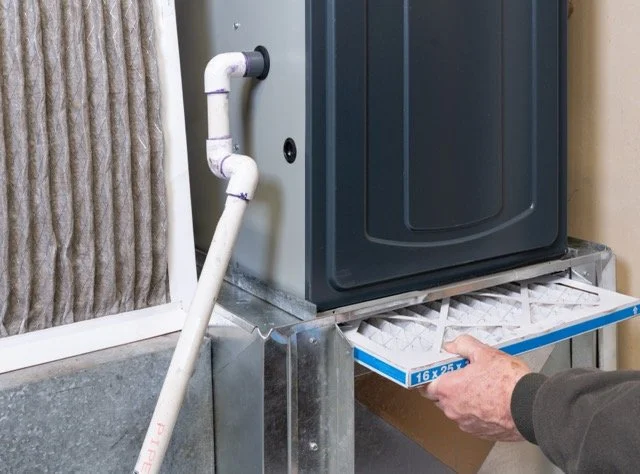
2. Dirty or Clogged Air Filter
A restricted air filter is the single most common cause of AC performance problems we see. When airflow across the evaporator coil drops, the system can't remove heat efficiently. The compressor keeps running because the house isn't cooling down fast enough.
In Michigan homes—especially older ranches in Warren or Clinton Township with limited return air—a clogged filter creates a cascade of problems. Reduced airflow causes the evaporator coil to get too cold, potentially freezing up. Ice blocks even more airflow, making the problem worse. The compressor runs continuously trying to compensate.
The fix: Pull out your filter and hold it up to light. If you can't see through it clearly, replace it. Use a quality pleated filter (MERV 8-11) and change it every 60-90 days during cooling season. If you have pets or allergies, change it monthly.
If you're not sure when you last changed your filter, our $5/month HVAC maintenance plan includes seasonal tune-ups where we check and replace filters as part of the service.
3. Low Refrigerant from a Leak
Refrigerant doesn't get "used up" like gasoline—it circulates in a closed loop. If your system is low on refrigerant, there's a leak somewhere. And when refrigerant charge drops below design specifications, cooling capacity drops with it.
A system that's 20% low on refrigerant might only deliver 70% of its rated cooling capacity. So a 3-ton AC that should cool 1,500 square feet is now struggling to handle 1,000. The compressor runs constantly trying to meet demand it physically can't satisfy.
Signs of low refrigerant include:
- Ice formation on the outdoor refrigerant lines
- Hissing or bubbling sounds near the outdoor unit
- Supply air that's cool but not cold (less than 15°F differential)
- Higher-than-normal electric bills
The fix: This requires a licensed HVAC technician with EPA 608 certification. We locate the leak using electronic detectors or UV dye, repair it, vacuum the system to remove moisture and air, then recharge to manufacturer specifications. Just adding refrigerant without fixing the leak is a temporary band-aid that violates EPA regulations.
If you notice signs of a refrigerant leak in your system, don't wait—continued operation with low charge damages the compressor and leads to much more expensive repairs.
4. Undersized AC Unit for Your Home
If your air conditioner has always run constantly during hot weather—not just this year—it might simply be too small for your house. This happens more often than you'd think, especially in homes where additions were built, insulation was upgraded, or the original installer guessed at sizing instead of doing a proper load calculation.
A 2-ton AC might be adequate for a 1,000-square-foot ranch on a mild 80-degree day. But when temperatures hit 90°F with 70% humidity—typical Michigan summer conditions—that same undersized unit will run continuously and still struggle to maintain setpoint.
The problem is exacerbated by:
- Large south or west-facing windows without shade
- Poor attic insulation (common in 1960s-1980s homes)
- Air leaks around windows, doors, and rim joists
- Heat gain from kitchens, home offices, or bonus rooms above garages
The fix: A properly sized replacement requires a Manual J load calculation—not guesswork based on square footage. We measure your home, account for insulation levels, window area, orientation, and occupancy, then size equipment to match actual cooling demand. This is part of every air conditioner installation we do in Clinton Township and throughout Southeast Michigan.

5. Dirty Condenser Coils on the Outdoor Unit
The outdoor condenser unit does one job: reject heat from your home to the outside air. When the aluminum fins and copper coils get caked with cottonwood seeds, grass clippings, dirt, or pollen—all common in Michigan—heat rejection efficiency plummets.
Think of it like trying to cool down by standing in front of a fan while wearing a heavy coat. The system is working, but it can't transfer heat effectively. The compressor runs longer trying to achieve the same cooling, and high-pressure readings climb into the danger zone.
We see this constantly in homes near Lake St. Clair or in heavily wooded areas of Bloomfield Hills where cottonwood and maple seeds coat outdoor units every spring.
The fix: Turn off power to the unit at the disconnect box. Gently spray the coils from the inside out using a garden hose with a spray nozzle—never a pressure washer, which bends the delicate fins. Remove any debris from the top grille. For heavy buildup, professional coil cleaning with specialized detergent is worth the service call. This is included in our spring AC tune-ups as part of the Next Care Plan.
6. Failing Compressor or Run Capacitor
The compressor is the heart of your AC system—it pressurizes refrigerant and pumps it through the loop. When a compressor starts failing, it often struggles to build pressure efficiently. The system runs constantly because it's working harder to achieve less cooling.
Common symptoms include:
- Hard starting (lights dim when the AC kicks on)
- Loud humming or grinding noises from the outdoor unit
- The outdoor fan runs but the compressor doesn't start
- Circuit breaker trips repeatedly
Often the problem isn't the compressor itself but the run capacitor—a cylindrical component that provides the electrical boost needed to start the compressor motor. Capacitors weaken over time, especially in hot attic-mounted air handlers or outdoor units exposed to direct sun. A weak capacitor means the compressor struggles to start and run efficiently.
The fix: Capacitor replacement is straightforward and relatively inexpensive ($150-$300 installed). Compressor replacement is a different story—often $1,500-$2,500 depending on the unit. At that point, replacing the entire outdoor unit often makes more financial sense, especially if the system is over 12 years old.
If you're hearing unusual loud noises from your AC unit, don't ignore them—early diagnosis can prevent a complete system failure during the hottest week of summer.
7. Ductwork Leaks Losing Conditioned Air
You can have a perfectly functioning AC system that runs constantly because half the cold air it produces never makes it to your living space. Duct leaks in unconditioned attics, crawlspaces, or basements waste an enormous amount of cooling capacity.
In older Michigan homes—especially 1960s-1980s ranches with flex duct in vented crawlspaces—we routinely find 20-30% duct leakage. That means your 3-ton AC is effectively operating like a 2-ton system. The equipment runs continuously trying to compensate for air that's cooling the crawlspace instead of your bedrooms.
Signs of duct leakage include:
- Rooms that are always warmer than others
- Dusty surfaces despite regular cleaning
- High utility bills relative to neighbors with similar homes
- Musty odors when the AC runs (pulling in crawlspace air)
The fix: Professional duct sealing using mastic sealant (not duct tape, which fails quickly) at all joints and connections. In severe cases, sections of ductwork may need replacement. A blower door test and duct leakage test quantify the problem and verify the repair. This work requires a licensed mechanical contractor—like our team at NEXT—not a handyman.
The Energy Cost of Constant Running
Let's talk about what continuous AC operation costs you beyond just the discomfort of knowing something is wrong. A typical 3-ton residential air conditioner draws about 3,500 watts (3.5 kW) when running. In Southeast Michigan, average residential electricity rates are around $0.18 per kilowatt-hour.
Here's the math:
Normal operation: 8 hours of actual runtime per day during peak summer = 28 kWh × $0.18 = $5.04 per day, or about $150 per month.
Constant operation: 20 hours of runtime per day = 70 kWh × $0.18 = $12.60 per day, or about $380 per month.
That's an extra $230 per month—nearly $700 over a typical Michigan cooling season—just in wasted electricity. And that doesn't account for the accelerated wear on components. Compressors, fan motors, and contactors have rated lifespans based on normal cycling. Continuous operation cuts that lifespan significantly.
A compressor designed to last 15 years with normal cycling might fail in 8-10 years under constant operation. When you consider that replacing a central air conditioner in Michigan costs $4,000-$8,000 depending on size and efficiency, the long-term cost of ignoring constant runtime adds up quickly.
Real-world example: We had a customer in Shelby Township whose AC ran 22 hours a day all summer. Turned out the thermostat was reading 5 degrees high because it was mounted on an exterior wall in direct afternoon sun. The AC was fighting a phantom heat load that didn't exist. We relocated the thermostat to an interior wall, and runtime dropped to normal immediately. That $175 service call saved them over $200 per month in electricity.
When to Call a Professional
Some AC problems are DIY-friendly. Others require diagnostic equipment, refrigerant certification, and mechanical expertise. Here's how to know which category you're in.
Try These First (DIY-Friendly)
- Check thermostat settings: Verify it's in AUTO mode, not ON. Make sure the temperature setpoint is reasonable (72-74°F, not 65°F).
- Replace the air filter: If it's dirty or you can't remember when you last changed it, put in a new one.
- Clear debris from outdoor unit: Remove leaves, grass clippings, and cottonwood seeds from around the condenser. Trim vegetation back at least 2 feet on all sides.
- Check the circuit breaker: Make sure the AC breaker hasn't tripped. If it has, reset it once. If it trips again immediately, call for service—there's an electrical problem.
Call a Licensed HVAC Contractor If:
- You see ice on the outdoor refrigerant lines or indoor evaporator coil
- The outdoor unit makes grinding, squealing, or clicking noises
- Supply air is barely cool (less than 15°F cooler than return air)
- The problem persists after changing the filter and checking thermostat settings
- The system is more than 12 years old and has never been serviced
- You notice refrigerant oil stains around connections or fittings
If you're in Macomb County, Oakland County, or St. Clair County and need a diagnostic service call, our NATE-certified HVAC technicians can usually schedule same-day or next-day appointments during summer. We diagnose the problem, explain what we find in plain language, and give you options with upfront pricing—no pressure, no commission-based upselling.
For urgent situations where your AC has quit completely during a heat wave, we offer 24/7 emergency AC repair in Metro Detroit.

How to Prevent This Problem
Most AC problems that cause constant operation are preventable with routine maintenance. Here's what actually works based on 35 years of keeping Michigan homes comfortable.
Change Your Air Filter Religiously
Set a phone reminder for every 60 days during cooling season. Buy a 6-pack of filters at the start of summer so you have them on hand. This single habit prevents more service calls than anything else.
Schedule Annual Spring Tune-Ups
A professional AC tune-up before Michigan's summer heat arrives catches small problems before they become expensive failures. Our technicians check refrigerant charge, test capacitors, clean coils, verify electrical connections, and measure airflow. We find issues like weak capacitors or developing refrigerant leaks while they're still minor repairs.
The Next Care Plan includes two annual visits (spring AC tune-up and fall furnace tune-up) for just $5 per month. Members also get priority scheduling, 10% off repairs, and no service call fees. Over the life of your equipment, preventive maintenance extends system lifespan by 5-7 years on average.
Keep the Outdoor Unit Clear
Once a month during summer, walk outside and check your condenser unit. Pull any weeds growing around it, remove leaves or debris from the top grille, and make sure landscaping isn't crowding it. Airflow matters.
Don't Ignore Small Problems
If your AC starts running longer than usual, making new noises, or struggling to cool on hot days, call for service. Small problems caught early cost $150-$400 to fix. The same problems ignored until something fails cost $800-$2,500. We see this pattern constantly.
Upgrade Your Thermostat
If you're still using a manual dial thermostat from 1985, consider upgrading to a programmable or smart thermostat. Modern thermostats maintain tighter temperature control, reducing unnecessary runtime. They also provide diagnostic alerts when something is wrong—like if the system runs more than 4 hours without satisfying the call for cooling.
We install and configure smart thermostats for homes throughout Novi and Metro Detroit, including proper setup for multi-stage systems and humidity control.
Ready to Get Started?
NEXT Heating & Cooling has been keeping Michigan homes comfortable for over 35 years. Get honest diagnostics and fair pricing from NATE-certified technicians who show up on time.
Schedule Your ServiceFrequently Asked Questions
No, even on the hottest Michigan summer days, your AC should cycle off periodically. During peak afternoon heat (90°F+), you might see longer runtimes—maybe 20-25 minutes per cycle instead of 15—but there should still be 5-10 minutes of off time between cycles. If your AC literally never shuts off for hours at a time, something is wrong. Either the system is undersized, there's a refrigerant leak, airflow is restricted, or you have significant duct leakage.
It depends entirely on the cause. Simple fixes like thermostat adjustment or air filter replacement cost nothing to $50. Capacitor replacement runs $150-$300. Refrigerant leak repair with recharge costs $400-$1,200 depending on leak location and refrigerant type. Compressor replacement is $1,500-$2,500, at which point replacing the entire outdoor unit often makes more sense. Duct sealing for significant leakage runs $800-$2,000 depending on accessibility and extent of damage. The only way to know for sure is a diagnostic service call where a technician tests the system and identifies the specific problem.
You can, but you're treating the symptom instead of fixing the problem. Turning off the AC at night gives the compressor a break and reduces your electric bill temporarily, but it doesn't address why the system won't cycle properly. The underlying issue—whether it's low refrigerant, a failing capacitor, or restricted airflow—will continue to worsen. It's better to schedule a service call and get the actual problem diagnosed and repaired. In the meantime, turning the system off overnight won't cause additional damage and might prevent a complete failure.
Yes, humidity increases your AC's workload significantly. Your air conditioner removes both heat and moisture from indoor air. On a humid Michigan day (70-80% relative humidity), the system works harder and runs longer to dehumidify the space in addition to cooling it. You'll notice longer cycle times on humid days compared to dry days at the same temperature. However, "longer cycles" doesn't mean "never shuts off." Even on the most humid days, your AC should still cycle off periodically. If it runs continuously for 3-4 hours straight, that's a problem regardless of humidity levels.
Only if the problem is thermostat-related, which is relatively uncommon. A programmable or smart thermostat maintains tighter temperature control and can reduce unnecessary runtime, but it won't fix mechanical problems like low refrigerant, dirty coils, or a failing compressor. If your current thermostat is very old (20+ years), poorly located (exterior wall, near a window, in direct sun), or malfunctioning, upgrading might help. But in most cases, constant AC operation points to an equipment or airflow problem that a new thermostat can't solve. Get a diagnostic service call first to identify the actual cause before spending money on a thermostat upgrade.
On a typical 85-degree Michigan summer day, expect your AC to run 15-20 minutes per cycle, with 2-3 cycles per hour during the hottest part of the afternoon. That works out to roughly 30-45 minutes of actual runtime per hour, or 50-75% duty cycle. Early morning and evening when temperatures are cooler, runtime drops to maybe 10-15 minutes per hour. On extremely hot days (90°F+), you might see 40-50 minutes of runtime per hour, but there should still be some off time. If your AC runs 55-60 minutes out of every hour for extended periods, something is wrong—either the system is undersized or there's a performance problem that needs diagnosis.
Yes, over time. Compressors are designed for cyclic operation with rest periods between cycles. During off time, oil circulates back to the compressor, internal pressures equalize, and components cool down slightly. Continuous operation without adequate rest increases wear on bearings, valves, and windings. A compressor designed to last 15 years with normal cycling might fail in 8-10 years under constant operation. Additionally, whatever problem is causing the constant operation—like low refrigerant or restricted airflow—often creates conditions (like high discharge pressure or low suction pressure) that directly damage the compressor. The sooner you diagnose and fix the underlying problem, the better your chances of avoiding expensive compressor replacement.