

Furnace Clicking But Not Starting? Here's What's Wrong
You turn down the thermostat on a cold Michigan morning, hear the furnace click a few times, then nothing. The blower never kicks on. No warm air. Just repeated clicking.
This is one of the most common furnace problems we see in Sterling Heights, Troy, and across Macomb County every winter. The clicking sound tells us the furnace is trying to start, but something in the ignition sequence is failing. The good news: most of these issues are fixable without replacing the entire furnace.
We've been providing heating and cooling services in Metro Detroit for over 35 years, and our NATE-certified technicians diagnose clicking furnaces almost daily during heating season. This guide explains what's actually happening inside your furnace, what the clicking sound means, and when you need professional help.
What the Clicking Sound Actually Means
The clicking you hear is part of your furnace's normal ignition sequence. When the thermostat calls for heat, the control board sends power to the igniter. After the igniter heats up, the gas valve opens with an audible click. The igniter should light the gas, the flame sensor confirms ignition, and the blower motor starts circulating warm air.
That entire sequence takes 30 to 90 seconds on most modern furnaces. If everything works correctly, you hear one or two clicks, then the whoosh of the burners lighting.
When the furnace clicks repeatedly without starting, one component in that chain is failing. The control board keeps trying to complete the ignition sequence, clicking each time it attempts to open the gas valve or fire the igniter. After three to five failed attempts, most furnaces lock out for safety and stop trying altogether.
Safety Note: If you smell gas along with the clicking, leave your home immediately and call your gas utility company. Do not attempt to troubleshoot. A gas smell means unburned fuel is escaping, which is a serious safety hazard.

6 Most Common Causes of Clicking Without Starting
After three decades of furnace repairs in Southeast Michigan, we've narrowed down the clicking-but-not-starting problem to six primary causes. Here's what we find most often.
1. Faulty or Worn-Out Igniter
The igniter is the most common culprit. Modern furnaces use either a hot surface igniter (HSI) or a spark igniter. Hot surface igniters are silicon carbide or silicon nitride elements that glow orange-hot to light the gas. They're fragile and typically last 3 to 7 years before cracking or weakening.
When an igniter fails, you hear the clicking of the gas valve trying to open, but no flame appears. The furnace detects the failure and shuts down. On older furnaces with spark igniters, the electrode can become corroded or the gap can widen, preventing a strong enough spark to ignite the gas.
We see igniter failures spike during the first cold snap each fall. Homeowners who skip annual furnace maintenance often discover a cracked igniter the moment they need heat.
2. Dirty or Failing Flame Sensor
The flame sensor is a thin metal rod positioned in the burner flame. It confirms that gas is burning safely. When the sensor detects flame, it sends a signal to the control board to keep the gas valve open.
Over time, the sensor gets coated with carbon buildup, soot, or corrosion. A dirty sensor can't detect the flame properly, so the control board shuts off the gas valve within a few seconds. You hear the clicking, the burners might light briefly, then everything shuts down.
Flame sensor cleaning is one of the simplest furnace repairs. A technician removes the sensor, polishes it with fine steel wool or emery cloth, and reinstalls it. The entire process takes about 15 minutes. This is exactly the kind of issue that our $5/month HVAC maintenance plan prevents with annual tune-ups.
3. Gas Valve Problems
The gas valve controls fuel flow to the burners. It's an electromechanical component with solenoids that open and close when the control board sends voltage. If the valve sticks, the solenoids fail, or internal components wear out, you hear the clicking sound of the valve trying to actuate, but gas doesn't flow.
Gas valve issues are less common than igniter or flame sensor problems, but they happen. We see them more often in furnaces that are 15+ years old or in homes where the gas pressure fluctuates. A failed gas valve requires replacement, not repair.
4. Pressure Switch Lockout
The pressure switch monitors airflow through the furnace. It's a safety device that confirms the inducer motor is creating proper draft before allowing ignition. If the switch doesn't close, the control board won't send power to the igniter or gas valve.
Common causes of pressure switch problems include clogged condensate drains, blocked vents, or a failing inducer motor. In Michigan, we also see ice buildup on outdoor vent terminations during extreme cold. A blocked vent prevents proper draft, the pressure switch stays open, and the furnace clicks but won't fire.
This is a frequent issue we address during first cold day furnace failures in Oakland and Macomb counties.
5. Control Board Failure
The control board is the furnace's brain. It manages the ignition sequence, monitors safety switches, and controls the blower motor. When the board fails or develops bad solder joints, it can send erratic signals. You might hear clicking as the board attempts to start the furnace, but the sequence never completes.
Control board failures are more common in furnaces exposed to high humidity (basement installations with water intrusion) or power surges. We see a spike in board failures after summer thunderstorms in Southeast Michigan, similar to the AC power surge damage we repair during storm season.
6. Thermostat or Wiring Issues
Sometimes the problem isn't the furnace at all. A failing thermostat can send intermittent signals to the furnace, causing repeated start attempts. Loose wiring at the thermostat or furnace terminal board can create the same symptom.
We've also seen homeowners accidentally set the thermostat to the wrong mode (cooling instead of heating) or set the temperature too close to the current room temperature. The furnace tries to start, doesn't receive a clear call for heat, and shuts down.
What to Check Before Calling a Technician
Before you schedule a service call, there are a few simple things you can check yourself. These steps take less than 10 minutes and might save you a trip charge.
Check Your Thermostat Settings
Verify the thermostat is set to HEAT mode, not OFF or COOL. Set the temperature at least 5 degrees above the current room temperature. If your thermostat uses batteries, replace them. Weak batteries can cause erratic behavior.
Inspect the Circuit Breaker
Check your electrical panel for a tripped breaker. Even though your furnace burns gas, it requires electricity for the ignition system, control board, and blower motor. A tripped breaker will prevent the furnace from starting.
Verify the Furnace Door Is Closed Properly
Most furnaces have a safety switch that prevents operation if the access panel isn't fully seated. Remove the panel and reinstall it, making sure it clicks into place. Some switches are finicky, especially on older units.
Check the Air Filter
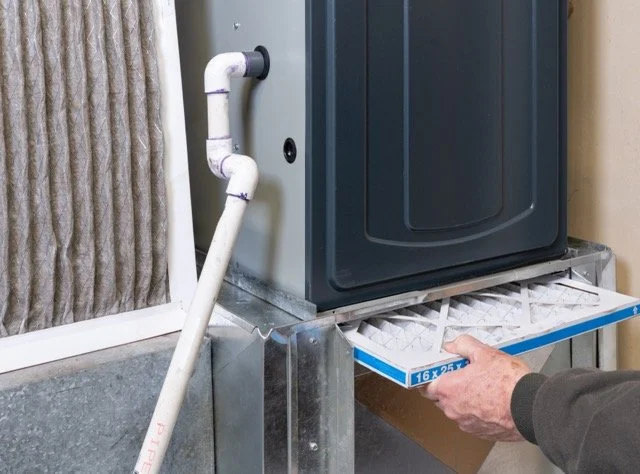
A severely clogged filter restricts airflow, which can trigger pressure switch lockouts. If your filter looks like a gray or black mat, replace it. Filters should be changed every 60 to 90 days during heating season in Michigan.
If you've checked all four of these items and the furnace still clicks without starting, it's time to call a professional. The remaining causes require diagnostic tools and HVAC expertise.
When to Call for Professional Repair
Furnace ignition systems involve natural gas, electrical components, and precise safety mechanisms. This isn't a repair for DIY troubleshooting beyond the basic checks above.
Call a licensed HVAC contractor if:
- You smell gas at any point during the clicking sequence
- The furnace has locked out and won't attempt to start anymore
- You see error codes flashing on the control board
- The furnace is more than 15 years old (ignition problems often signal broader component wear)
- You've replaced the filter and checked the basics, but the problem persists
Our technicians at NEXT Heating & Cooling carry diagnostic tools that measure flame sensor microamps, test igniter resistance, check gas pressure, and read control board error codes. We can pinpoint the exact failure in 15 to 30 minutes.
We also provide 24/7 emergency service for situations like this. A furnace clicking but not starting on a 10-degree January night in Warren or Clinton Township is an emergency, and we treat it that way.
What Furnace Ignition Repairs Cost in Southeast Michigan
Repair costs depend on which component failed. Here's what you can expect to pay in the Metro Detroit area in 2026.
Igniter Replacement: $150 to $400
Hot surface igniter replacement is straightforward. The part itself costs $30 to $100 depending on the furnace brand (Carrier, Lennox, Trane, Rheem, Bryant, Goodman). Labor adds another $120 to $300. Total cost ranges from $150 to $400.
Spark igniter electrode replacement is slightly less, usually $120 to $250 total.
Flame Sensor Cleaning: $80 to $200
Flame sensor cleaning is one of the least expensive furnace repairs. If the sensor just needs cleaning (not replacement), expect to pay $80 to $150 for the service call and labor. If the sensor is corroded beyond cleaning and needs replacement, the total cost is $150 to $200.
This is exactly why our Next Care Plan saves homeowners money. For $5 per month, you get two annual tune-ups that include flame sensor cleaning. That alone pays for the plan.
Gas Valve Replacement: $300 to $600
Gas valves are more expensive. The part costs $150 to $350, and labor adds another $150 to $250. Total replacement cost is $300 to $600. Gas valve work also requires careful leak testing and safety checks, which adds time.
Control Board Replacement: $400 to $800
Control boards are the most expensive ignition-related repair. The board itself costs $200 to $500 depending on the furnace model. Labor adds another $200 to $300. Total cost: $400 to $800.
At this price point, if your furnace is 15+ years old, we'll have an honest conversation about furnace replacement costs versus repair. Sometimes a control board replacement makes sense. Sometimes it's better to invest in a new, more efficient furnace.
Service Call Fees and Next Care Plan Benefits
Most HVAC companies in Southeast Michigan charge a diagnostic fee or service call fee, typically $75 to $150. That fee usually applies toward the repair if you proceed with the work.
Our Next Care Plan members pay no service call fees. If your furnace clicks but won't start and you're a plan member, we come out, diagnose the problem, and you only pay for the repair itself. Over the course of a Michigan winter, that benefit alone can save $200 to $400.
How to Prevent Clicking and Ignition Problems
Most ignition failures are preventable with regular maintenance. Here's what actually works.
Annual Furnace Tune-Ups
A professional tune-up includes igniter inspection, flame sensor cleaning, gas pressure testing, and control board diagnostics. Technicians catch failing components before they leave you without heat.
We recommend scheduling your furnace tune-up in September or early October, before the first freeze. By November, HVAC companies are swamped with emergency calls. Get ahead of the rush.
Replace Air Filters Every 60 to 90 Days
Clogged filters reduce airflow, which stresses the blower motor and can trigger pressure switch problems. Set a phone reminder to check your filter monthly during heating season. If it looks gray or clogged, replace it.
Standard 1-inch pleated filters work fine for most homes. If you have allergies or pets, consider upgrading to a MERV 11 or MERV 13 filter, but check your furnace manual first. Some older blowers can't handle the airflow restriction of high-MERV filters.
Keep Outdoor Vents Clear
High-efficiency furnaces vent through PVC pipes on the side of your house. During Michigan winters, snow, ice, or even bird nests can block these vents. Walk around your house after heavy snow and make sure the vent terminations are clear.
Address Ductwork and Airflow Issues
Leaky or undersized ductwork can create pressure imbalances that stress the furnace. If you have hot and cold spots in your house or notice weak airflow from some registers, you might have ductwork problems that need professional sealing.
Invest in the Next Care Plan
For $60 per year ($5 per month), the Next Care Plan includes a fall furnace tune-up, a spring AC tune-up, priority scheduling, 10% off repairs, and no service call fees. It's the most cost-effective way to prevent ignition problems and extend your furnace's lifespan.
We've been offering this plan for years, and the data is clear: plan members experience 60% fewer emergency breakdowns than homeowners who skip maintenance.
Need Help with a Clicking Furnace?
NEXT Heating & Cooling has been diagnosing and repairing furnaces in Southeast Michigan for over 35 years. Our NATE-certified technicians provide honest diagnostics, transparent pricing, and same-day service. No upselling. No pressure. Just reliable HVAC service.
Schedule Your RepairFrequently Asked Questions
The clicking sound means your furnace is attempting to start its ignition sequence but failing at some point. The most common causes are a faulty igniter (which lights the gas), a dirty flame sensor (which confirms ignition), or a gas valve that won't open. Less common causes include pressure switch lockouts, control board failures, or thermostat wiring issues. A licensed HVAC technician can diagnose the exact cause in 15 to 30 minutes using diagnostic tools.
You can perform basic checks: verify the thermostat is set to HEAT and at least 5 degrees above room temperature, check for a tripped circuit breaker, make sure the furnace door is fully closed, and replace a clogged air filter. Beyond those steps, furnace ignition repairs involve natural gas and electrical components that require professional tools and expertise. Attempting DIY repairs on gas-burning equipment is dangerous and can void your warranty.
Repair costs in Southeast Michigan range from $150 to $800 depending on the failed component. Igniter replacement costs $150 to $400. Flame sensor cleaning or replacement costs $80 to $200. Gas valve replacement costs $300 to $600. Control board replacement costs $400 to $800. Most companies charge a $75 to $150 diagnostic fee that applies toward the repair. Next Care Plan members pay no service call fees.
Hot surface igniters typically last 3 to 7 years. They're fragile silicon carbide or silicon nitride elements that crack or weaken over time. Igniters fail more quickly if the furnace cycles on and off frequently (short cycling), if the air filter is chronically clogged, or if the furnace runs more than average during harsh Michigan winters. Annual maintenance helps technicians spot a weakening igniter before it fails completely.
Most furnace control boards are programmed to attempt ignition three to five times before locking out for safety. If your furnace clicks three times then stops completely, it has entered lockout mode. This is a safety feature that prevents repeated ignition attempts when something is wrong. The most common cause is a failed igniter or dirty flame sensor. You'll need to reset the furnace (usually by turning off power for 30 seconds) or call a technician to diagnose and repair the underlying problem.
A clicking furnace by itself is not immediately dangerous. It indicates the furnace is attempting to start but failing. However, if you smell gas along with the clicking, leave your home immediately and call your gas utility company. A gas smell means unburned fuel is escaping, which is a serious safety hazard. Otherwise, a clicking furnace is more of a reliability issue than a safety issue, but it should be repaired promptly to restore heat.
The Next Care Plan includes two annual tune-ups (fall furnace, spring AC) that prevent many ignition problems through flame sensor cleaning, igniter inspection, and control board diagnostics. Plan members also receive 10% off all repairs, no service call fees, and priority scheduling. If your furnace clicks but won't start and you're a plan member, we'll diagnose and repair it faster and at lower cost than non-members. The plan costs $5 per month ($60 per year) and typically saves members $200 to $400 annually.