

Furnace Won't Ignite? Here's What's Wrong (Michigan)
It's 11 PM on a Tuesday in January. The temperature outside your Sterling Heights home just hit 8 degrees. You walk past the thermostat and notice it's set to 70, but the house feels like 62. You head down to the basement and hear the furnace blower running, but no heat is coming from the vents.
The ignition system has failed. Your furnace won't ignite.
This is the most common furnace failure mode we see at NEXT Heating & Cooling during Michigan winters. The blower runs, the thermostat calls for heat, but the burners never light. After 35+ years servicing heating and cooling systems in Metro Detroit, we've diagnosed thousands of no-ignition calls. Most fall into six categories, and three of them are preventable with annual maintenance.
This guide explains exactly what happens when a gas furnace tries to ignite, why that process fails, what you can check yourself, and when to call a professional. We'll reference real costs, specific parts (hot surface ignitors, flame sensors, pressure switches), and the Michigan-specific conditions that make ignition failures worse here than in warmer climates.
How a Gas Furnace Ignition System Actually Works
Modern gas furnaces use a precise ignition sequence controlled by the furnace control board. Understanding this sequence helps you diagnose where the failure is happening.
When your thermostat calls for heat, the furnace goes through these steps in order:
- Inducer motor starts: A small blower at the top of the furnace creates a draft through the heat exchanger and venting system. This ensures combustion gases will exhaust safely before the burners light.
- Pressure switch closes: Once the inducer creates sufficient airflow, a pressure switch confirms proper draft. If this switch doesn't close, the sequence stops here.
- Ignitor heats up: The hot surface ignitor (a ceramic element) glows orange-white, reaching around 2,500°F. This takes 15-45 seconds depending on the furnace model.
- Gas valve opens: Once the ignitor is hot enough, the control board energizes the gas valve. Gas flows to the burners.
- Burners ignite: Gas hits the glowing ignitor and ignites. Flames spread across all burners within 1-2 seconds.
- Flame sensor confirms ignition: A small metal rod (the flame sensor) sits in the burner flame. It detects the presence of flame by measuring electrical current through ionized combustion gases. If it doesn't detect flame within 5-7 seconds, the gas valve shuts off.
- Blower starts: After the heat exchanger warms up (30-90 seconds), the blower motor starts and pushes heated air through your ductwork.
This entire sequence is designed with multiple safety lockouts. If any step fails three times in a row, most furnaces enter a lockout mode and won't try again until you reset power to the unit or wait 1-3 hours for the automatic reset.
When we get a same-day furnace repair call for a furnace that won't ignite, we're troubleshooting which step in this sequence is failing.
6 Reasons Your Furnace Won't Ignite
Based on our service records across Macomb County, Oakland County, and St. Clair County, these are the six most common causes of ignition failure, listed in order of frequency.
1. Dirty or Failed Flame Sensor (40% of No-Ignition Calls)
The flame sensor is a thin metal rod positioned in the burner flame. Over time, it develops a coating of carbon deposits, corrosion, or combustion residue. This coating acts as an insulator and prevents the sensor from detecting flame current.
What you'll see: The burners light for 3-5 seconds, then shut off. The furnace tries this 2-3 times, then goes into lockout. You might hear the ignitor clicking repeatedly.
This is the single most common failure mode we see, especially in furnaces that haven't had annual cleaning. The flame sensor costs $15-25 for the part, but cleaning it takes a technician about 20 minutes. We use fine-grit sandpaper or a wire brush to remove the coating without damaging the sensor rod.
If you skip annual maintenance, you're almost guaranteed to experience this failure within 3-5 years of operation. The Next Care Plan includes flame sensor cleaning during every fall furnace tune-up, which is why our maintenance customers rarely call with this issue.
2. Failed Hot Surface Ignitor (25% of Calls)
Hot surface ignitors are ceramic elements that glow white-hot to ignite the gas. They're fragile. The thermal cycling (heating to 2,500°F, then cooling down, 10-20 times per day) eventually causes them to crack or lose conductivity.
Average lifespan: 3-7 years, depending on furnace runtime and how often the furnace short-cycles. If your furnace short-cycles frequently, the ignitor wears out faster because it heats and cools more often.
What you'll see: The inducer motor runs, but the ignitor doesn't glow at all, or it glows dim orange instead of bright white. No ignition occurs. The furnace may try a few times, then lock out.
Ignitors are model-specific. A Carrier ignitor won't fit a Lennox furnace. We stock the most common ignitors for brands we service (Carrier, Lennox, Trane, Rheem, Bryant, Goodman, Amana), but older or less common models may require ordering the part, which adds 1-2 days to the repair timeline.
Replacement cost in Metro Detroit typically runs $150-$300 depending on the furnace model and whether the service call is during regular hours or emergency after-hours.
3. Pressure Switch Stuck Open or Failed (15% of Calls)
The pressure switch is a safety device that confirms the inducer motor is creating proper draft before allowing the gas valve to open. It's a small round switch with a rubber hose connected to the inducer housing.
Common failure modes:
- The rubber hose develops a crack or comes loose, preventing the switch from sensing pressure.
- The switch diaphragm fails and can't close even when proper pressure is present.
- The inducer motor is weak and doesn't create enough draft to close the switch.
- The vent pipe is blocked (ice, bird nest, disconnected section), preventing proper draft.
What you'll see: The inducer motor runs, but nothing else happens. No ignitor glow, no gas valve click. The furnace control board won't proceed past the inducer stage if the pressure switch doesn't close.
This is more common in Michigan than in warmer climates because our PVC vent pipes can develop ice blockages during extreme cold snaps, especially if the vent termination isn't properly installed with a slight downward slope to drain condensation.
4. Gas Valve Failure (10% of Calls)
The gas valve is an electromechanical device that controls gas flow to the burners. It can fail in two ways: stuck closed (no gas flows) or the solenoid coil burns out (valve won't open even when energized).
What you'll see: The ignitor glows bright white, but no gas ignites. You don't hear the distinctive "whoosh" of the burners lighting. After 10-15 seconds, the ignitor shuts off and the sequence repeats.
Gas valves are expensive parts, typically $200-$400 depending on the furnace model, plus labor. Before replacing a gas valve, a good technician will verify that the valve is actually receiving voltage from the control board and that the manual gas shutoff valve upstream is fully open.
5. Thermostat Wiring or Communication Issues (5% of Calls)
If the furnace control board isn't receiving a proper heat call from the thermostat, it won't start the ignition sequence at all.
Common causes:
- Loose wire at the thermostat or furnace terminal strip
- Dead batteries in a battery-powered thermostat
- Thermostat set to COOL or OFF instead of HEAT
- Blown fuse on the furnace control board (usually a 3-amp or 5-amp automotive-style fuse)
What you'll see: Nothing. The furnace is completely silent. No inducer, no clicks, no lights on the control board.
This is the easiest category for homeowners to troubleshoot themselves before calling for service.
6. High Limit Switch Tripped (5% of Calls)
The high limit switch is a safety device that shuts down the burners if the heat exchanger gets too hot. This usually happens when airflow is restricted (dirty filter, closed supply vents, failed blower motor).
What you'll see: The furnace may run normally for a few minutes, then shut off. The blower keeps running to cool down the heat exchanger. After the limit switch resets, the furnace tries to ignite again, runs for a few minutes, and shuts off again. This cycle repeats.
If your furnace is doing this, check your air filter first. A severely clogged filter is the most common cause. If the filter is clean and you're still seeing this behavior, you likely have a ductwork problem or a failing blower motor.
What You Can Check Before Calling a Technician
Before you call for emergency furnace repair, there are four things you can safely check yourself. These take 5-10 minutes and might save you a service call.
1. Thermostat Settings
Confirm the thermostat is set to HEAT mode (not COOL or OFF). Set the temperature at least 5 degrees above the current room temperature. Check that the display is lit. If it's dim or blank and your thermostat uses batteries, replace them.
If you have a programmable or smart thermostat and you're not sure how to check these settings, consult the manual or look for a SYSTEM or MODE button.
2. Circuit Breaker
Go to your electrical panel and find the breaker labeled "Furnace" or "HVAC." Make sure it's in the ON position. If it has tripped to the middle position, flip it fully OFF, then back ON.
If the breaker trips again immediately, do not keep resetting it. This indicates a short circuit or ground fault, and you need a professional diagnosis. Repeatedly resetting a tripped breaker can cause electrical fires.
Also check for a separate power switch near the furnace itself (usually looks like a light switch on a metal electrical box). Make sure it's in the ON position. Homeowners occasionally flip this off by accident.
3. Air Filter
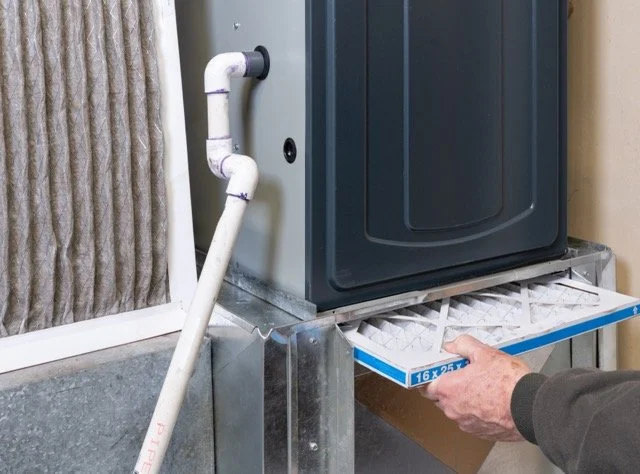
Locate your furnace air filter (usually in a slot on the return air duct or inside the furnace cabinet). Pull it out and hold it up to a light. If you can't see light through it, it's too dirty and needs replacement.
A severely clogged filter can cause the high limit switch to trip, shutting down the burners before they've had a chance to heat your home. This won't prevent ignition entirely, but it will cause the furnace to cycle on and off rapidly.
Standard 1-inch pleated filters should be replaced every 1-3 months depending on household conditions (pets, dust, how often the system runs). Thicker 4-inch or 5-inch media filters last 6-12 months.
4. Gas Supply
If you have natural gas service, locate the gas shutoff valve on the pipe leading to your furnace. It should have a lever handle. When the handle is parallel to the pipe, the valve is OPEN. When the handle is perpendicular (90 degrees) to the pipe, the valve is CLOSED.
Make sure the valve is open. Occasionally during summer maintenance or other work, this valve gets closed and not reopened.
Important safety note: If you smell gas (a rotten egg or sulfur odor), do not attempt to troubleshoot anything. Leave the house immediately, do not use any electrical switches or phones inside the home, and call your gas company's emergency line from outside. Gas leaks are life-threatening.
If you've checked all four of these items and the furnace still won't ignite, it's time to call a reliable HVAC contractor in Metro Detroit. The remaining diagnostic steps require specialized tools (multimeters, manometers, combustion analyzers) and technical knowledge of gas furnace operation.
Why Michigan Winters Make Ignition Failures Worse
Southeast Michigan has specific conditions that accelerate ignition system failures compared to milder climates. After 35 winters servicing furnaces in Macomb, Oakland, and St. Clair counties, we've identified three Michigan-specific factors.
Cold Start Stress on Ignitors
When your furnace sits in a 40-degree basement and has to fire up to heat a house that's dropped to 58 degrees overnight, the ignitor experiences maximum thermal stress. It's heating from room temperature to 2,500°F in 30 seconds, then cycling back down.
In warmer climates where the furnace might only need to bring the house from 65 to 70 degrees, the ignitor cycles less frequently and experiences less thermal shock. Michigan furnaces run harder and longer, which is why we see ignitor failures more often here than HVAC techs in southern states report.
Condensation in High-Efficiency Venting
High-efficiency furnaces (90+ AFUE) produce cool exhaust that condenses inside the PVC vent pipes. This is normal and expected. The condensate is supposed to drain back into the furnace and exit through a condensate drain line.
But during Michigan's polar vortex events (when outdoor temps hit -10°F to -20°F), that condensate can freeze inside the vent pipe, especially if the vent run is long or poorly insulated. A frozen vent blocks airflow, which prevents the pressure switch from closing, which stops the ignition sequence.
We see this most often in homes where the furnace vent terminates on a north-facing wall or where the vent pipe runs through an unheated attic space. Proper vent installation includes a slight downward slope toward the furnace and insulation in cold zones, but many older installations don't meet current best practices.
Power Surges from Ice Storms
Michigan ice storms cause power outages and voltage fluctuations that can damage furnace control boards and ignition modules. When power comes back on after an outage, the voltage spike can fry sensitive electronics.
We saw a wave of control board failures after the January 2024 ice storm that knocked out power across Metro Detroit. Many of those furnaces were 10-15 years old with original control boards that had no surge protection.
If you live in an area with frequent power quality issues (older neighborhoods with overhead power lines, rural areas), consider installing a whole-home surge protector at your electrical panel. It costs $300-$500 installed and protects all your major appliances, not just the furnace.
Michigan-specific maintenance tip: Schedule your annual furnace tune-up in September or early October, before the first hard freeze. This gives you time to address any ignition system issues before you actually need heat. Waiting until November means you're competing with hundreds of other homeowners for emergency service appointments during the coldest weeks of the year.
When to Call a Professional (and What It Costs)
If you've checked the thermostat, breaker, filter, and gas supply and the furnace still won't ignite, you need professional diagnosis. Here's what to expect when you call NEXT Heating & Cooling or any reputable Michigan HVAC contractor.
The Diagnostic Process
A qualified technician will arrive with a multimeter, manometer (pressure gauge), and combustion analyzer. The diagnostic process typically takes 30-60 minutes and includes:
- Checking voltage at the thermostat terminals and furnace control board
- Testing the pressure switch and inducer motor operation
- Measuring ignitor resistance (should be 40-90 ohms for most models)
- Inspecting the flame sensor for carbon buildup or corrosion
- Testing gas pressure at the manifold (should be 3.5 inches water column for natural gas)
- Checking for proper flame signal (measured in microamps)
- Inspecting the heat exchanger for cracks (a cracked heat exchanger is a safety hazard and requires furnace replacement)
Our NATE-certified HVAC technicians will explain what they find in plain language and give you repair options with upfront pricing before starting any work.
Typical Repair Costs in Southeast Michigan (2026)
These are real-world costs based on our service records across Metro Detroit. Prices include parts, labor, and trip charge. Emergency after-hours service (nights, weekends, holidays) typically adds $100-$150.
- Flame sensor cleaning: $100-$150 (20-minute service call)
- Ignitor replacement: $150-$300 (part $50-$100, labor 1 hour)
- Pressure switch replacement: $150-$250 (part $30-$60, labor 45 minutes)
- Gas valve replacement: $350-$600 (part $200-$400, labor 1.5 hours)
- Control board replacement: $400-$800 (part $250-$500, labor 1.5 hours)
- Inducer motor replacement: $400-$700 (part $250-$450, labor 2 hours)
If your furnace is 15+ years old and needs a major component replacement (gas valve, control board, inducer motor), you should also get a quote for new furnace installation. At that age, you're likely to face additional failures within 1-3 years, and a new high-efficiency furnace will save you money on gas bills while providing better comfort and reliability.
When It's a Safety Issue (Do Not Delay)
Some furnace problems are immediate safety hazards. Call for emergency service right away if you experience:
- A strong gas smell anywhere in the house
- Yellow or orange flames instead of blue (indicates incomplete combustion and potential carbon monoxide production)
- Soot buildup around the burners or vent pipes
- The furnace cabinet is hot to the touch on the outside
- Your carbon monoxide detector is alarming
These symptoms indicate a cracked heat exchanger, blocked venting, or gas leak. Do not attempt to use the furnace. Open windows, leave the house if you smell gas, and call for immediate service.
How the Next Care Plan Prevents Ignition Problems
The single most effective way to prevent no-ignition failures is annual professional maintenance. Our service data shows that homeowners on the Next Care Plan experience 70% fewer emergency breakdowns than homeowners who skip maintenance.
Here's what we do during a fall furnace tune-up that directly prevents the ignition failures discussed in this article:
- Clean the flame sensor: We remove carbon buildup before it causes ignition lockout. This alone prevents 40% of no-heat calls.
- Test the ignitor: We measure ignitor resistance and check for cracks. If the ignitor is showing signs of wear (resistance above 80 ohms, visible hairline cracks), we recommend replacement before it fails on the coldest night of the year.
- Inspect and test the pressure switch: We check the rubber hose for cracks, test the switch operation, and verify proper draft pressure.
- Clean the burners: We vacuum dust and debris from the burner assembly, which ensures proper flame pattern and prevents soot buildup that can coat the flame sensor.
- Check gas pressure: We measure manifold pressure to confirm the gas valve is delivering the correct amount of fuel.
- Test safety controls: We verify the high limit switch and rollout switches are functioning properly.
- Inspect the heat exchanger: We look for cracks, corrosion, or signs of failure that could create a carbon monoxide hazard.
The Next Care Plan costs $5 per month ($60 per year) and includes two annual visits: a fall furnace tune-up and a spring AC tune-up. Members also get priority scheduling (we'll fit you in same-day or next-day even during peak demand), 10% off all repairs, and no service call fees.
When you consider that a single emergency ignitor replacement during a January cold snap costs $250-$350 after hours, and that a dirty flame sensor service call costs $100-$150, the maintenance plan pays for itself the first time it prevents a breakdown.
Furnace Won't Ignite? We'll Fix It Today
NEXT Heating & Cooling has been keeping Southeast Michigan homes warm for over 35 years. Our NATE-certified technicians diagnose ignition failures fast, explain the problem in plain language, and give you honest repair options with upfront pricing. No upselling. No pressure. Just reliable service from a local contractor you can trust.
Schedule Furnace RepairFrequently Asked Questions
This is almost always a dirty or failed flame sensor. The burners light, but the flame sensor doesn't detect the flame (because it's coated with carbon deposits), so the control board shuts off the gas valve as a safety measure. The furnace will try this 2-3 times, then go into lockout mode. A technician can clean the flame sensor in about 20 minutes, which typically costs $100-$150 in Metro Detroit.
Hot surface ignitors typically last 3-7 years depending on furnace runtime and cycling frequency. Furnaces that short-cycle (turn on and off frequently due to oversizing or thermostat issues) wear out ignitors faster because the ignitor heats and cools more often. If your furnace is 5+ years old and the ignitor has never been replaced, it's a good idea to have it tested during annual maintenance.
If you're comfortable working around gas appliances and have basic tools, yes. Turn off power to the furnace at the breaker, remove the flame sensor (usually held by a single screw), and gently clean it with fine-grit sandpaper or a wire brush. Don't use chemical cleaners. Reinstall the sensor, restore power, and test the furnace. However, if you're not confident doing this, or if the furnace still won't stay lit after cleaning, call a professional. Gas furnace work requires care to avoid creating safety hazards.
The clicking sound is usually the gas valve trying to open or the ignitor relay on the control board. If you hear clicking but no ignition, the most likely causes are: (1) failed ignitor that isn't glowing hot enough, (2) gas valve not opening even though it's receiving voltage, or (3) no gas supply reaching the furnace. Check that the manual gas shutoff valve is open. If it is and the furnace still won't light, you need a technician to diagnose whether it's the ignitor or gas valve.
Repair costs depend on the failed component. Flame sensor cleaning costs $100-$150. Ignitor replacement costs $150-$300. Pressure switch replacement costs $150-$250. Gas valve replacement costs $350-$600. Control board replacement costs $400-$800. These prices include parts, labor, and the service call fee. Emergency after-hours service typically adds $100-$150. At NEXT Heating & Cooling, we provide upfront pricing before starting any work so there are no surprises.
Not necessarily. If your furnace is less than 15 years old and the repair is minor (flame sensor, ignitor, pressure switch), repair is usually the better choice. If your furnace is 15+ years old and needs a major component replacement (gas valve, control board, heat exchanger), you should get a quote for replacement. At that age, you're likely to face additional failures within 1-3 years, and a new high-efficiency furnace will save you money on gas bills while providing better reliability.
The Next Care Plan is a preventive maintenance subscription, not a warranty or repair plan. It includes two annual tune-ups (fall furnace, spring AC) that clean and inspect the components most likely to fail, including the flame sensor and ignitor. Members get priority scheduling, 10% off all repairs, and no service call fees. While the plan doesn't cover parts and labor for repairs, it prevents most ignition failures from happening in the first place. Our data shows maintenance plan members experience 70% fewer emergency breakdowns than homeowners who skip annual service.