

Is It Time for Central Air Replacement? 5 Signs Warren MI

Your central air conditioner kept your Warren home comfortable through another Michigan summer. But now you're noticing the system struggles more each year—longer run times, higher bills, rooms that never quite cool down. The question every homeowner eventually faces: is it time to replace the whole system, or can you squeeze out a few more years?
We've been installing and servicing heating and cooling systems in Metro Detroit for over 35 years, and we've helped thousands of Warren homeowners make this exact decision. The answer isn't always straightforward—it depends on your system's age, repair history, efficiency, and what's actually failing.
Here are the five clearest signs that central air replacement makes more sense than another repair. We'll walk through the technical reasons behind each one, what it means for your specific situation, and the real costs you're looking at in 2026.
Sign #1: Your AC is 12-15+ Years Old
Age alone doesn't mean your air conditioner needs replacement tomorrow. But once a system crosses the 12-15 year threshold in Michigan's climate, you're entering the replacement zone where major failures become increasingly likely and repair costs start outweighing the value of the equipment.
Most residential central air systems are designed for a 12-15 year service life. That's the point where manufacturers engineer their components—compressors, coils, capacitors, contactors—to reach end-of-service. In Southeast Michigan, where systems work hard through humid summers and sit dormant through long winters, thermal cycling accelerates wear on refrigerant seals, electrical components, and mechanical parts.
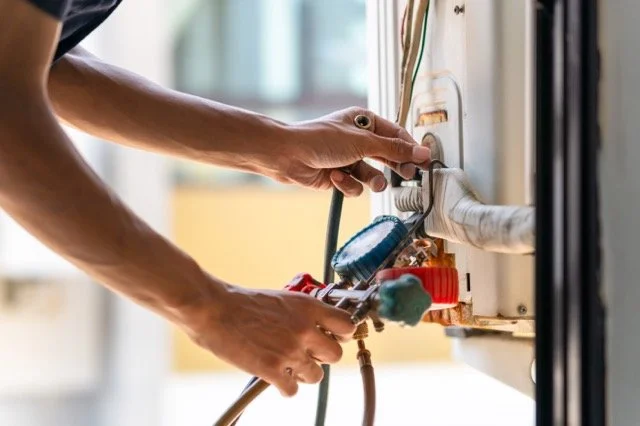
Here's what happens as systems age past 12 years:
- Compressor efficiency drops: The heart of your AC loses capacity over time. A 3-ton system that once delivered 36,000 BTU/hour might only produce 30,000-32,000 BTU/hour after 15 years. That's why your system runs longer to achieve the same temperature.
- Refrigerant leaks become common: Copper coils develop micro-leaks from vibration and corrosion. You'll need refrigerant added every 1-2 years, and each recharge on an older R-22 system costs $150-$400.
- Electrical components fail more frequently: Capacitors, contactors, and fan motors wear out. These aren't expensive repairs individually ($150-$400 each), but when you're replacing multiple components every season, the costs add up.
- Energy efficiency degrades: Even if your system was SEER 13 when new, it's likely operating at SEER 10-11 now. That's 20-30% higher operating costs compared to a new SEER 16 system.
If your Warren home has a system installed between 2009-2014, you're in the replacement consideration window. The decision gets clearer when you factor in the next sign.
Sign #2: Frequent Repairs and Rising Costs
One repair doesn't mean you need a new system. But when you're calling for service multiple times per season, or facing a major component failure on an aging unit, the math changes quickly.
We use what's called the "$5,000 rule" when helping homeowners decide between repair and replacement. Here's how it works:
The $5,000 Rule: Multiply the repair cost by the age of your system. If the result exceeds $5,000, replacement typically makes better financial sense than repair.
Example: Your 14-year-old AC needs a new compressor ($1,800 installed). 14 × $1,800 = $25,200. That's well over $5,000, suggesting replacement is the smarter move.
The most common end-of-life repairs we see in Warren homes:
- Compressor failure: $1,500-$2,800 installed. If your system is over 10 years old, this repair rarely makes sense. The compressor is the most expensive component, and replacing it doesn't address aging coils, refrigerant leaks, or declining efficiency elsewhere in the system.
- Condenser coil leaks: $1,200-$2,200 for coil replacement. Coils corrode over time, especially in areas with hard water or where sprinklers regularly hit the outdoor unit. Once coils start leaking, other leaks often follow.
- Evaporator coil replacement: $1,000-$1,800. The indoor coil sits in a humid environment and can develop leaks or freeze due to restricted airflow. Replacing it on a 12+ year system means you're putting new parts on an old compressor and outdoor unit.
- Multiple smaller repairs: If you've spent $400-$600 on repairs in each of the last 2-3 seasons (capacitors, contactors, refrigerant top-offs, fan motors), you're likely looking at $1,200-$1,800 in cumulative costs. That's money better invested toward a new system.
For Warren homeowners dealing with frequent AC repairs, our $5/month HVAC maintenance plan can help catch small issues before they become expensive failures. But once you're in the frequent-repair cycle on an older system, maintenance alone won't change the underlying reality: the equipment is wearing out.
When Repair Still Makes Sense
There are situations where repair is absolutely the right call:
- Your system is under 8 years old and the repair is minor (capacitor, contactor, fan motor)
- The repair cost is under $500 and your system has been reliable otherwise
- You're planning to sell the house within 1-2 years and just need the system functional
- Budget constraints make replacement impossible right now, and the repair will get you through one more season
A reliable HVAC contractor in Metro Detroit will be honest about when repair makes sense versus when you're throwing good money after bad. We're not here to sell you a new system if your current one has years of life left.
Sign #3: Your Energy Bills Keep Climbing
If your summer electric bills have been creeping up year after year—even though your usage patterns haven't changed—your air conditioner's declining efficiency is likely the culprit.
Here's the efficiency reality for Warren homeowners:
Older systems (pre-2015): Most central air systems installed before 2015 were SEER 13 (the federal minimum at the time). After 10-15 years of operation, real-world efficiency typically drops to SEER 10-11 due to compressor wear, refrigerant loss, and dirty coils.
Current systems (2026): Entry-level equipment now starts at SEER 14-15. Mid-tier systems run SEER 16-17. High-efficiency systems reach SEER 18-20+. The difference in operating costs is substantial.
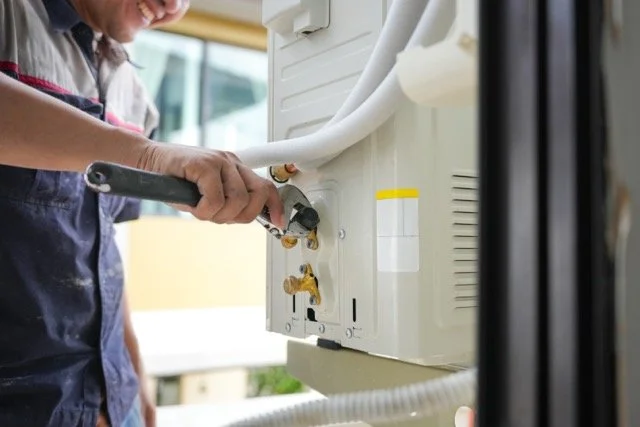
Real Cost Comparison for a Warren Home
Let's look at actual numbers for a typical 1,800 sq ft Warren home with a 3-ton AC system running approximately 800 hours during Michigan's cooling season (roughly May through September):
Old SEER 10 system:
- Power consumption: 3,600 watts (36,000 BTU ÷ 10 SEER)
- Seasonal electricity use: 2,880 kWh (3,600 watts × 800 hours)
- Cost at $0.17/kWh: $490/season
New SEER 16 system:
- Power consumption: 2,250 watts (36,000 BTU ÷ 16 SEER)
- Seasonal electricity use: 1,800 kWh (2,250 watts × 800 hours)
- Cost at $0.17/kWh: $306/season
Annual savings: $184
Over a 15-year lifespan, that's $2,760 in electricity savings. If you upgrade to a SEER 18 variable-speed system, the savings increase to $220-$250 per year, or $3,300-$3,750 over the system's life. These savings help offset the upfront cost of replacement.
If you've noticed your cooling costs increasing while your thermostat settings stay the same, pull out your electric bills from 3-5 years ago and compare June, July, and August usage. A 20-30% increase in cooling-season electricity consumption—with no other explanation—is a clear sign your system is losing efficiency.
Michigan-Specific Efficiency Considerations
Southeast Michigan's climate makes efficiency particularly important. We get hot, humid summers where systems run hard, but not the extreme heat of southern states. That means:
- SEER 16-17 systems offer the best value for most Warren homeowners—enough efficiency gain to see real savings without paying premium prices for SEER 20+ systems designed for Arizona or Texas
- Two-stage or variable-speed compressors make a bigger comfort and efficiency difference here than in milder climates, because they can run at lower capacity during the many 75-82°F days we get, not just the 90°F peaks
- Proper dehumidification matters more than raw cooling power—Michigan humidity is often the bigger comfort issue than temperature
For more on how different system types perform in Michigan's climate, see our guide comparing central air vs. heat pump systems.
Sign #4: Uneven Cooling and Comfort Issues
When your Warren home has rooms that never quite cool down, or the upstairs is always 5-8 degrees warmer than the main floor, the problem might not be fixable with a repair. It could be a system that's lost capacity, never was sized correctly, or is fighting against ductwork issues that replacement gives you a chance to address.
Declining Capacity
As air conditioners age, they lose cooling capacity. The compressor wears, refrigerant slowly leaks, coils get dirty despite regular maintenance, and airflow decreases as the blower motor weakens. A system that once delivered 36,000 BTU/hour might only produce 30,000-32,000 BTU/hour after 15 years.
That 15-20% capacity loss means:
- Longer run times to reach your thermostat setting
- Inability to maintain temperature on the hottest days (90°F+)
- Poor dehumidification because the system runs longer at lower efficiency
- Uneven temperatures between rooms as the system struggles to push air through the full duct system
If your system runs almost continuously on hot days but never quite reaches your set temperature, it's lost the capacity to cool your home effectively.
Undersized Systems
Many older Warren homes—particularly 1960s-1980s ranches and colonials—have air conditioning systems that were undersized from day one. Contractors used rough rules of thumb (1 ton per 500-600 sq ft) rather than proper Manual J load calculations. Or homeowners added insulation, replaced windows, or finished basements without upsizing the AC.
Replacement gives you the opportunity to properly size the new system using actual load calculations that account for:
- Square footage and ceiling heights
- Window size, orientation, and quality
- Insulation levels in walls, attic, and basement
- Air infiltration rates
- Number of occupants and internal heat sources
We frequently find that Warren homes with 1,800-2,000 sq ft need 2.5-3 tons of cooling, not the 4-ton system someone installed 15 years ago because "bigger is better." Proper sizing improves comfort, efficiency, and equipment longevity.
Ductwork Issues
Uneven cooling often points to ductwork problems that have nothing to do with your AC unit itself:
- Undersized or poorly designed ducts: Many older Warren homes have 6-inch flex duct runs that can't deliver adequate airflow to second-floor bedrooms or additions. Replacement gives you the chance to upsize critical runs or add zone dampers.
- Duct leakage: Basement ductwork in older homes often has disconnected joints, holes, or crushed flex duct. You might be losing 20-30% of your cooled air to the basement or crawlspace before it reaches living areas.
- Poor return air design: Many homes have a single return air grille (often in a hallway) trying to serve the entire house. That creates pressure imbalances that prevent proper airflow to distant rooms.
When we install a new central air system, we evaluate your ductwork and recommend modifications that will actually solve comfort problems—not just swap out the outdoor unit and hope for the best.
If you're dealing with hot and cold spots in your Warren home, our technicians can perform a duct inspection and airflow analysis to identify whether the problem is equipment capacity, ductwork design, or both. Sometimes the answer is strategic ductwork modifications along with AC replacement.
Sign #5: R-22 Refrigerant System
If your air conditioner uses R-22 refrigerant (also called Freon), you're operating equipment that's at least 14 years old—and you're facing increasingly expensive and limited repair options.
The R-22 Phase-Out Timeline
The EPA banned production and import of R-22 refrigerant in the United States on January 1, 2020, as part of the Montreal Protocol to phase out ozone-depleting substances. Here's what that means for Warren homeowners:
- R-22 is no longer manufactured: The only R-22 available is recycled refrigerant reclaimed from old systems. Supply is limited and shrinking every year.
- Prices have skyrocketed: R-22 that cost $80-$120 per pound in 2015 now costs $150-$200+ per pound in 2026. A typical recharge (3-5 pounds) costs $450-$1,000+ in labor and refrigerant.
- Availability is uncertain: As more R-22 systems are replaced, the supply of reclaimed refrigerant decreases. Within 5 years, finding R-22 will be extremely difficult and expensive.
- Leak repairs don't solve the problem: Even if you fix a leak and recharge the system, you're still operating aging equipment that will need more refrigerant in the future—refrigerant that keeps getting more expensive and harder to find.
How to Tell If You Have R-22
Check the label on your outdoor condenser unit. Look for the refrigerant type—it will say "R-22," "HCFC-22," or "Freon-22." If your system was installed before 2010, it's almost certainly R-22. Systems installed 2010-2015 might be R-410A (the current refrigerant standard), but many contractors continued installing R-22 equipment through 2014 to use up remaining inventory.
If you're unsure, any HVAC technician can tell you during a service call—or you can call us and we'll check your system information over the phone if you have the model number.
Why You Can't Just Convert to R-410A
R-22 and R-410A are not compatible. R-410A operates at much higher pressures (up to 1.6 times higher than R-22), which means:
- Your existing coils, compressor, and lines aren't rated for R-410A pressures—they could fail or develop leaks
- R-410A requires different lubricating oil than R-22, which means flushing the entire system
- The expansion valve and other components are designed for different refrigerant properties
There are "drop-in" replacement refrigerants (like R-421A or MO99) that some contractors promote, but these are temporary band-aids at best. They don't perform as well as R-22, void manufacturer warranties, and still don't address the fact that you're operating a 14+ year old system that's nearing end-of-life anyway.
If your Warren home has an R-22 system and you're facing a repair that requires adding refrigerant, replacement is almost always the better long-term decision. You'll get a more efficient system, avoid future refrigerant cost uncertainty, and eliminate the risk of a major failure on equipment that's already past its design life.
For more on how the refrigerant transition affects Michigan homeowners, see our article on the R-410A refrigerant phase-out and what comes next.
What Central Air Replacement Actually Costs in Warren
Let's talk real numbers. Central air replacement costs in Warren and Macomb County vary based on system size, efficiency level, equipment brand, and installation complexity. Here's what homeowners are actually paying in 2026.
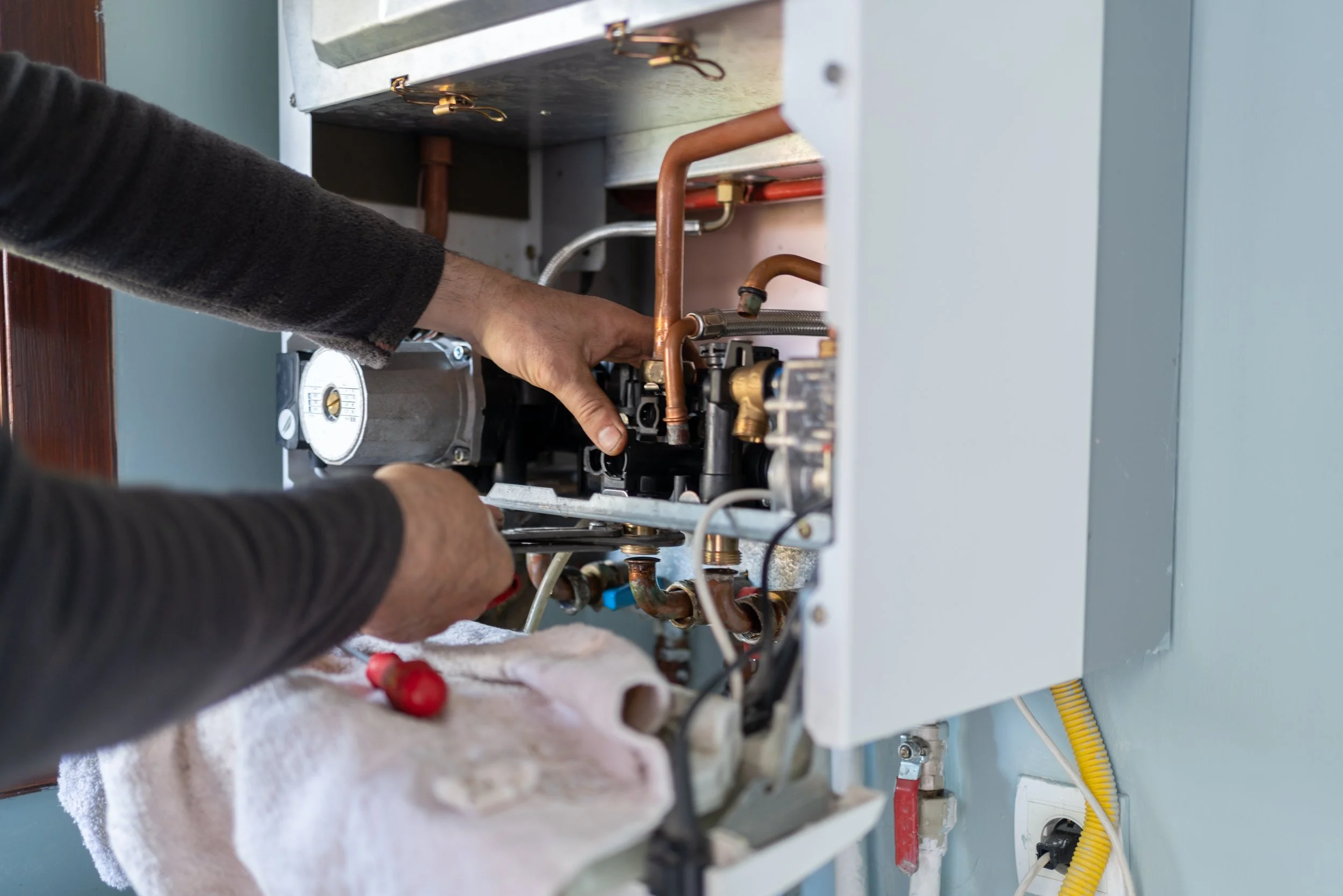
Pricing Tiers for Warren Homes
Economy Tier: $4,500-$6,500
- SEER 14-15 single-stage systems
- Brands: Goodman, Amana, York, RUUD
- Standard warranties (5-10 years parts)
- Best for: Homeowners on a tight budget, rental properties, homes you're planning to sell within 3-5 years
- Typical system: 2.5-3 ton Goodman GSX14 or Amana ASX14
Mid-Tier: $6,500-$9,500
- SEER 16-17 two-stage systems
- Brands: Carrier, Bryant, Lennox, Rheem, Trane
- Extended warranties (10-12 years parts)
- Better humidity control and quieter operation
- Best for: Most Warren homeowners planning to stay in their home 5+ years
- Typical system: 2.5-3 ton Carrier Comfort 16 or Lennox Merit 16
Premium Tier: $9,500-$14,000+
- SEER 18-20+ variable-speed systems
- Brands: Carrier Infinity, Lennox Signature, Trane XV
- Lifetime warranties on select components
- Superior comfort, humidity control, and efficiency
- Best for: High-performance homes, homeowners prioritizing comfort and long-term savings
- Typical system: 2.5-3 ton Carrier Infinity 20 or Lennox XC25
What Affects Installation Cost
The price ranges above assume a straightforward replacement—swapping out an existing system with similar capacity and using existing ductwork, electrical, and refrigerant lines. Your actual cost may be higher if you need:
- Electrical upgrades: Many older Warren homes have 100-amp electrical service or undersized circuits. Modern high-efficiency equipment may require a 200-amp panel upgrade or dedicated 220V circuit. Add $800-$2,500.
- Ductwork modifications: If your existing ducts are undersized, leaking, or poorly designed, fixing them during AC replacement makes sense. Duct sealing and insulation: $800-$1,500. Major duct redesign or upsizing: $2,000-$5,000+.
- Thermostat upgrade: Most new systems work best with programmable or smart thermostats. Budget $150-$400 for a quality thermostat installed.
- Refrigerant line replacement: If you're upsizing from a 2-ton to a 3-ton system, or if existing lines are damaged, you'll need new refrigerant lines. Add $400-$1,200.
- Concrete pad or stand: Outdoor units need a stable, level base. Most homes already have this, but if yours is cracked or settling, budget $200-$500 for a new pad.
Financing and Payment Options
Most Warren homeowners finance their AC replacement rather than paying cash upfront. Common options include:
- HVAC contractor financing: Many contractors (including NEXT Heating & Cooling) offer financing through partners with terms ranging from 12-84 months. Look for 0% promotional periods if you can pay off the balance within 12-24 months.
- Home equity line of credit (HELOC): If you have equity in your Warren home, a HELOC typically offers lower interest rates than contractor financing for longer-term loans.
- Personal loans: Banks and credit unions offer unsecured personal loans for home improvements, usually with fixed rates and 3-5 year terms.
- Energy efficiency rebates: Check DTE Energy and Consumers Energy for rebates on high-efficiency equipment. Rebates vary but can be $200-$500 for SEER 16+ systems.
For detailed pricing breakdowns by system tier and brand, see our complete guide to AC installation costs in Macomb County.
How to Choose the Right Replacement System
Once you've decided replacement makes sense, the next question is: which system? Here's how to choose equipment that matches your home, budget, and comfort priorities.
Proper Sizing: The Most Important Decision
An oversized air conditioner short-cycles (runs in short bursts), which reduces efficiency, increases wear on components, and fails to dehumidify properly. An undersized system runs constantly and can't maintain comfortable temperatures on hot days.
Proper sizing requires a Manual J load calculation that accounts for:
- Your home's square footage, ceiling heights, and layout
- Window area, orientation (south-facing windows gain more heat), and quality
- Insulation levels in walls, attic, and basement
- Air infiltration (how "tight" your home is)
- Number of occupants and heat-generating appliances
- Local climate data (Warren's design temperature is 91°F for cooling)
For most 1,500-2,000 sq ft Warren homes, the right size is typically 2.5-3 tons—not the 3.5-4 ton systems we often find installed. If a contractor quotes you without measuring your home and running load calculations, find a different contractor.
SEER Rating: How Much Efficiency Do You Need?
Higher SEER ratings mean better efficiency and lower operating costs, but also higher upfront costs. Here's how to think about it for Michigan:
- SEER 14-15: Minimum legal efficiency. Fine for budget-conscious replacements or homes you won't own long-term, but you'll pay more in electricity costs over the system's life.
- SEER 16-17: The sweet spot for most Warren homeowners. Meaningful efficiency gains over older systems, reasonable upfront cost, and good long-term value. This is what we recommend most often.
- SEER 18-20+: Premium efficiency. Makes sense if you prioritize comfort and efficiency over upfront cost, plan to stay in your home 10+ years, or have a high-performance home with excellent insulation and air sealing.
Remember that SEER ratings are laboratory maximums. Real-world efficiency depends on proper installation, ductwork quality, and maintenance. A SEER 16 system installed correctly will outperform a SEER 18 system with leaky ducts and poor airflow.
Single-Stage vs. Two-Stage vs. Variable-Speed
This determines how your compressor operates and affects comfort, efficiency, and noise:
Single-stage: On or off—100% capacity or 0%. Least expensive, but less efficient and less comfortable because it can't modulate output to match your home's actual cooling needs. More temperature swings and humidity issues.
Two-stage: Runs at low capacity (typically 60-70%) most of the time, ramping to high capacity only on the hottest days. Better humidity control, more even temperatures, quieter operation, and 10-15% more efficient than single-stage. Best value for most Warren homeowners.
Variable-speed: Modulates from 40-100% capacity in small increments, matching output precisely to your home's needs. Best comfort and efficiency, but highest upfront cost. Worth it if you prioritize comfort and plan to stay in your home long-term.
For a detailed comparison of how these systems perform in Michigan's climate, see our guide to single-stage vs. two-stage vs. modulating HVAC systems.
Equipment Brands: What We Actually Install in Warren
We install and service all major brands, but here's what we recommend most often and why:
Carrier: Excellent reliability, wide product range from economy to premium, strong warranty support. The Comfort 16 (SEER 16) is our most popular mid-tier system for Warren homes.
Lennox: High build quality, particularly in their upper-tier systems. The Merit 16 offers great value, and the Signature series delivers premium performance.
Trane: Known for durability and long service life. Slightly higher upfront cost but excellent track record for lasting 15-20 years with proper maintenance.
Rheem: Strong value in the mid-tier range. Good equipment at competitive prices, particularly for homeowners who want SEER 16 efficiency without premium brand pricing.
Bryant: Sister brand to Carrier (same parent company, similar equipment). Often slightly less expensive than equivalent Carrier models.
Goodman/Amana: Budget-friendly options that meet basic efficiency requirements. Fine for rental properties or tight budgets, but not our first choice for homeowners planning to stay long-term.
The brand matters less than proper sizing, quality installation, and regular maintenance. A mid-tier Rheem installed correctly will outperform a premium Carrier installed poorly.
What About Heat Pumps?
Heat pumps provide both heating and cooling, and modern cold-climate models work well in Michigan winters. If you're also considering furnace replacement, a heat pump might make sense—especially if you're interested in reducing natural gas use or qualifying for federal tax credits.
For Warren homeowners comparing options, see our guide on central air vs. heat pump systems.
Ready to Replace Your Central Air System?
NEXT Heating & Cooling has been keeping Warren and Macomb County homes comfortable for over 35 years. Our NATE-certified technicians provide honest assessments, proper load calculations, and quality installations—no high-pressure sales, just straightforward guidance on what your home actually needs.
We're a licensed Michigan HVAC contractor with an A+ BBB rating, and we back every installation with manufacturer warranties and our own workmanship guarantee.
Schedule Your Free EstimateFrequently Asked Questions About Central Air Replacement in Warren, MI
Most straightforward AC replacements take 6-8 hours for a complete installation. Our crews typically arrive in the morning and finish by mid-afternoon the same day. If you need ductwork modifications, electrical upgrades, or other additional work, the installation might extend to 1.5-2 days. We'll give you an accurate timeline during your estimate so you know exactly what to expect.
It depends on your furnace's age and condition. If your furnace is 12+ years old, replacing both together saves on labor costs (we're already in your home working on the system) and ensures compatibility between components. You'll also get matched equipment that works together efficiently. However, if your furnace is 5-8 years old and running well, there's no need to replace it just because you're doing the AC. We'll inspect your furnace during the AC estimate and give you an honest assessment. For more details, see our guide to furnace replacement costs and timing.
Spring (April-May) and fall (September-October) are ideal. You'll avoid the summer rush when contractors are slammed with emergency calls, which means better scheduling flexibility and sometimes better pricing. That said, if your system fails in July, don't wait—we offer emergency service and can usually install a replacement within 2-3 days even during peak season. Just avoid waiting until the first 90-degree day when everyone else is calling.
Many older Warren homes have 100-amp electrical service, which is often sufficient for a standard AC replacement. However, if you're upgrading to a larger system or high-efficiency equipment with variable-speed components, you might need a 200-amp panel upgrade or dedicated circuit. We'll evaluate your electrical service during the estimate and let you know if upgrades are needed. Electrical work typically adds $800-$2,500 to the project cost, but it's required for safety and code compliance in some situations.
Yes, if you're replacing an older, less efficient system. A 15-year-old SEER 10 system uses 35-40% more electricity than a new SEER 16 system. For a typical Warren home, that translates to $150-$250 in annual savings. Higher-efficiency systems (SEER 18-20) save even more. The exact savings depend on your home's size, insulation, and how much you run your AC, but most homeowners see noticeable reductions in their summer electric bills. For detailed cost comparisons, see our article on AC efficiency and operating costs.
New AC systems need annual professional maintenance—ideally in spring before cooling season starts. This includes checking refrigerant levels, cleaning coils, testing electrical components, and ensuring proper airflow. You should also change your air filter every 1-3 months depending on filter type and household conditions (pets, allergies, etc.). Our Next Care Plan covers two annual tune-ups (spring AC, fall furnace) for just $5/month, plus priority scheduling and 10% off repairs. Regular maintenance extends equipment life, maintains efficiency, and catches small problems before they become expensive failures.
Look for a contractor who's properly licensed in Michigan, carries liability insurance and workers comp, and has NATE-certified technicians. Check their BBB rating and online reviews. During estimates, they should measure your home, ask about comfort issues, and perform load calculations—not just quote you based on square footage. Avoid contractors who push you toward the biggest or most expensive system without explaining why, or who offer prices that seem too good to be true (they usually are). For a detailed guide, see our article on how to choose the right HVAC contractor in Metro Detroit.