

24/7 Emergency AC Service Rochester Hills MI | What to Do
It's 11 PM on a Thursday in July. The temperature inside your Rochester Hills home has climbed to 82 degrees. Your AC has been running all evening, but nothing's coming out of the vents except warm air. You've got two kids trying to sleep upstairs, and the forecast shows 90 degrees tomorrow with high humidity.
This is the call we get multiple times every summer at NEXT Heating & Cooling. AC failures don't wait for business hours, and they rarely happen on mild spring days. They die during heat waves, when you need them most, and when every other HVAC contractor in Southeast Michigan is already booked solid.
After 35 years of emergency service calls across Macomb and Oakland counties, we've seen every type of AC failure scenario. This guide walks you through exactly what to do when your air conditioner dies, when you actually need emergency service versus when you can wait until morning, and what to expect when you call for after-hours help.
Immediate Steps When Your AC Dies
Before you call anyone, there are six things you should check. Some AC "failures" are actually simple fixes that take two minutes. Others require professional help immediately. Here's how to tell the difference.
Check Your Thermostat First
This sounds obvious, but we've driven to emergency calls where the thermostat was accidentally switched to HEAT instead of COOL, or someone bumped the temperature setting up to 78 degrees. Check three things:
- Mode is set to COOL (not AUTO, not HEAT)
- Temperature setting is at least 3-4 degrees below current room temperature
- Display is lit up and responding (if battery-powered, try fresh batteries)
If you have a programmable or smart thermostat, check whether a schedule override kicked in. We've seen Nest and Ecobee thermostats switch to Eco mode during peak hours, raising the temperature setpoint to save energy.
Inspect Your Electrical Panel
AC systems pull significant amperage, especially on startup. A tripped breaker is one of the most common causes of sudden AC failure. Your system typically has two breakers:
- One at your main electrical panel (usually 30-60 amps, labeled "AC" or "Air Conditioner")
- One at the outdoor disconnect box mounted on the exterior wall near your condenser unit
Check both. If a breaker is tripped, it will be in the middle position (not fully ON or OFF). Flip it all the way OFF, then back ON. If it trips again immediately, do not keep resetting it. You have an electrical problem that needs professional diagnosis.
Look at Your Air Filter
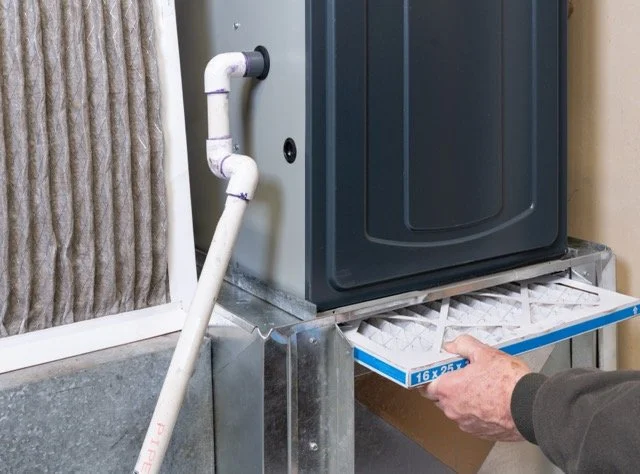
A completely clogged air filter can cause your system to overheat and shut down on a safety limit. Pull your filter out and hold it up to a light. If you can't see light through it, it's too dirty. Replace it with a new one rated MERV 8-11 for residential systems.
In Michigan homes, filters get dirty faster during spring (pollen season) and fall (leaf debris). If you haven't changed your filter in three months, that might be your problem. Our NEXT Care Plan includes filter changes during seasonal tune-ups to prevent this exact scenario.
Check the Outdoor Condenser Unit
Walk outside and look at your condenser unit (the big metal box with the fan on top). Is the fan spinning? Is the unit making any noise at all? Clear away any debris, grass clippings, or leaves that might be blocking airflow around the unit.
In Rochester Hills, we see a lot of cottonwood seed buildup in June that clogs condenser coils. If your unit looks like it's covered in white fluff, that can restrict airflow enough to cause shutdown. You can carefully spray it off with a garden hose from the inside out (never use a pressure washer).
Listen for Unusual Sounds
If your system is making noise but not cooling, pay attention to what you hear. Different sounds indicate different problems:
- Clicking: Usually a failing capacitor or contactor
- Buzzing or humming: Electrical issue, possibly a stuck compressor
- Grinding or squealing: Motor bearing failure
- Hissing: Refrigerant leak
If you're hearing any of these sounds, take a video on your phone. It helps technicians diagnose faster when they arrive. We've written a detailed guide on why AC units make loud noises that covers the most common causes.
When to Stop Troubleshooting and Call for Help
Stop what you're doing and call for professional HVAC service if you notice any of these conditions:
- Burning smell coming from vents or equipment
- Ice buildup on refrigerant lines or indoor coil
- Water pooling around indoor air handler
- Breaker keeps tripping repeatedly
- System is completely unresponsive (no sounds, no fan, nothing)
These situations won't fix themselves, and continuing to run the system can cause more expensive damage. If you see ice on your AC coils, turn the system off immediately to prevent compressor damage.
What Qualifies as an AC Emergency
Not every AC failure requires immediate emergency service. Emergency calls cost more (typically $150-$300 after-hours service fee on top of diagnostic and repair costs), and you might be waiting several hours if multiple emergencies are ahead of you in the queue.
Here's how to determine whether you need emergency service tonight or whether you can wait until the next business day.
True AC Emergencies
Call for immediate 24/7 emergency service if:
- Extreme heat with vulnerable occupants: Indoor temperature above 85°F with elderly residents, infants, or anyone with heat-sensitive medical conditions
- Electrical hazards: Burning smell, sparking, or smoke coming from equipment
- Water damage risk: Significant water leak from indoor unit threatening floors or ceilings
- Complete system failure during heat advisory: When the National Weather Service has issued a heat advisory or warning for Southeast Michigan
These situations present genuine health or property damage risks. Every reliable HVAC contractor should prioritize these calls.
Situations That Can Wait Until Morning
You can likely wait for next-day service if:
- Outdoor temperature is below 80°F
- You can manage overnight with fans and open windows
- The system is running but just not cooling efficiently (blowing slightly warm air)
- No electrical burning smells or safety concerns
In these cases, call first thing in the morning and ask for same-day service. Most HVAC companies in Rochester Hills reserve emergency slots for true emergencies and can fit you in during regular hours for less urgent issues.
The Health Risk Factor
Michigan summers are humid. The heat index (what it actually feels like) is often 5-10 degrees higher than the actual temperature. Indoor temperatures above 85°F combined with high humidity create genuine heat exhaustion risk, especially for:
- Adults over 65
- Infants and young children
- Anyone with cardiovascular conditions
- People taking medications that affect heat tolerance
- Pregnant women
If anyone in your household falls into these categories and your indoor temperature is climbing above 82-85°F, that's an emergency. Period.
Common Emergency AC Failures in Rochester Hills
After three decades of emergency calls in Southeast Michigan, we see the same failure patterns every summer. Understanding what's likely wrong helps you make better decisions about repair versus replacement.
Compressor Failure
The compressor is the heart of your AC system. It's the most expensive component, and it works hardest during peak cooling days. Compressor failures typically happen when:
- The unit is 12+ years old and has high operating hours
- The system has been running low on refrigerant for months (starving the compressor of lubrication)
- Electrical issues caused voltage spikes or brown-outs
- The unit has been short-cycling due to oversizing or thermostat problems
Compressor replacement costs $1,800-$3,500 for the part and labor on most residential systems. If your AC is over 10 years old and the compressor fails, replacement usually makes more financial sense than repair. We cover this decision process in detail in our guide on when to replace your air conditioner.
Capacitor Failure
Capacitors are small cylindrical components that give motors the electrical boost they need to start. They're cheap ($15-$40 for the part), but they fail regularly, especially on systems that cycle on and off frequently.
Symptoms of capacitor failure:
- Outdoor fan won't spin, but you hear humming
- System tries to start but shuts off after a few seconds
- Clicking sound from outdoor unit
This is one of the most common emergency calls we get in Rochester Hills. The good news: it's usually a quick fix. A qualified technician can diagnose and replace a failed capacitor in 20-30 minutes. Total cost typically runs $150-$300 including the service call.
If you're experiencing clicking sounds, our article on AC contactor replacement explains the related component that often fails alongside capacitors.
Refrigerant Leaks
Refrigerant doesn't "run out" like gasoline. If your system is low on refrigerant, you have a leak. Common leak points include:
- Coil connections and joints
- Service port valve cores
- Evaporator coil (especially on systems 10+ years old)
- Condenser coil damaged by weed trimmers or hail
Symptoms of low refrigerant:
- AC runs constantly but doesn't cool effectively
- Ice buildup on refrigerant lines or indoor coil
- Hissing sound near indoor or outdoor unit
- Higher electric bills without increased cooling
Small leaks can be repaired and the system recharged. Large leaks or leaks in the evaporator coil often mean replacement is more cost-effective, especially if your system uses R-22 refrigerant (which is being phased out and costs $80-$150 per pound to recharge).
Frozen Evaporator Coils
This is extremely common in Michigan's humid climate. When airflow across the indoor coil is restricted or refrigerant charge is low, the coil temperature drops below freezing and ice forms. Causes include:
- Dirty air filter (most common)
- Closed or blocked supply vents
- Dirty evaporator coil
- Low refrigerant charge
- Blower motor failure
If you see ice, turn the system OFF immediately. Let it thaw completely (usually 2-4 hours). You can speed this up by running the fan on FAN ONLY mode. Once thawed, replace the air filter and try running the system again. If it freezes again within an hour, you need professional diagnosis.
Electrical Component Failures
Rochester Hills gets severe thunderstorms in summer. Lightning strikes and power surges damage AC components regularly. We also see electrical failures from:
- Corroded wire connections (especially in outdoor disconnect boxes)
- Failed contactors (the relay switches that control compressor and fan)
- Burned control boards
- Transformer failures
Electrical problems require professional diagnosis. Never attempt to repair AC electrical components yourself. Michigan code requires licensed contractors for any work beyond basic thermostat replacement.
What to Expect from 24/7 Emergency Service
When you call for emergency AC service, here's what the process looks like with a reputable contractor like NEXT Heating & Cooling.
Response Time Reality
During peak cooling season (late June through August), emergency response times in Southeast Michigan typically range from 2-6 hours depending on call volume. We prioritize based on:
- Health and safety risks (elderly, infants, medical conditions)
- Severity of failure (electrical hazards, water leaks)
- Indoor temperature and outdoor conditions
- Geographic location (we try to route efficiently)
When you call, be prepared to answer questions about who's in the home, indoor temperature, symptoms, and any safety concerns. This helps us prioritize appropriately.
The Diagnostic Process
A qualified technician will:
- Check thermostat settings and operation
- Inspect electrical connections and measure voltage
- Test capacitors and contactors with a multimeter
- Check refrigerant pressures and temperatures
- Inspect indoor and outdoor coils
- Test blower motor operation and airflow
- Look for any obvious damage or wear
This typically takes 30-45 minutes. A good technician will explain what they're finding as they go and show you the problem when possible. At NEXT Heating & Cooling, our NATE-certified technicians don't work on commission, so you get honest diagnosis without pressure to replace equipment unnecessarily.
Repair vs. Replacement Decision
Once the problem is diagnosed, you'll get options. For emergency repairs, you're typically choosing between:
- Immediate repair: Fix what's broken tonight to restore cooling
- Temporary repair + follow-up: Get cooling restored now, schedule bigger repair for business hours
- System replacement: If the unit is old and repair costs approach 50% of replacement value
A reputable contractor will give you transparent pricing for each option and explain the pros and cons. They should never pressure you into replacement during an emergency call. If the system is 15 years old and needs a $2,000 compressor, replacement probably makes sense. But that's a decision you should make with clear information, not under pressure at midnight.
What Emergency Service Costs
Emergency AC service typically includes:
- After-hours service fee: $150-$300 (covers technician availability outside business hours)
- Diagnostic fee: $89-$150 (often waived if you proceed with repair)
- Repair costs: Depends on what's wrong (see cost section below)
Get pricing upfront before any work is done. Michigan law doesn't require written estimates for emergency service, but good contractors provide them anyway.
Preventing AC Emergencies
Most AC failures are preventable. After 35 years in the HVAC business, I can tell you that 70% of emergency calls we get are from systems that haven't had maintenance in years.
The Case for Preventive Maintenance
An annual AC tune-up costs $89-$150. An emergency service call costs $300-$500 before you even start fixing anything. The math is pretty simple.
During a professional tune-up, we:
- Clean condenser and evaporator coils
- Check and tighten all electrical connections
- Test capacitors and contactors
- Measure refrigerant charge
- Lubricate motors and inspect belts
- Test system performance and airflow
- Identify small problems before they become failures
Our $5/month NEXT Care Plan includes two annual tune-ups (spring AC check, fall furnace check), priority scheduling, and 10% off any repairs. Over three years, it typically saves homeowners $800-$1,200 compared to paying for emergency repairs and replacements.
Warning Signs to Watch For
Your AC usually gives warning signs before it fails completely. Call for service if you notice:
- Cooling performance declining over several days or weeks
- System running longer cycles than normal
- Unusual noises developing (clicking, grinding, squealing)
- Higher electric bills without increased usage
- Musty or burning odors from vents
- Moisture or water stains around indoor unit
Addressing these issues during business hours costs less and prevents midnight emergencies.
Filter Changes Matter More Than You Think
In Michigan homes, air filters should be changed every 1-3 months depending on:
- Pets (dog and cat hair clogs filters fast)
- Occupancy (more people = more dust and dander)
- Outdoor air quality (pollen season, construction nearby)
- Filter type (cheap fiberglass filters need monthly changes; MERV 11 pleated filters last 2-3 months)
A clogged filter causes more AC problems than any other single factor. It restricts airflow, which leads to frozen coils, overheating, and premature component failure. Set a phone reminder. Buy filters in bulk. Just don't skip this.
Cost Reality of Emergency AC Service
Let's talk actual numbers. Emergency AC service in Rochester Hills and surrounding Oakland County cities typically costs more than scheduled service for three reasons: after-hours labor rates, limited technician availability, and the urgency premium.
After-Hours Service Fees
Most HVAC contractors charge an emergency service fee for calls outside normal business hours:
- Evenings (6 PM - 10 PM): $150-$200 service fee
- Late night (10 PM - 6 AM): $200-$300 service fee
- Weekends: $150-$250 service fee
- Holidays: $250-$400 service fee
This fee covers the cost of having technicians on call and compensates them for working outside normal hours. It's separate from diagnostic and repair costs.
Common Emergency Repair Costs
Here's what you can expect to pay for common AC repairs during emergency service calls in Southeast Michigan:
- Capacitor replacement: $150-$300
- Contactor replacement: $150-$350
- Thermostat replacement: $150-$400 (depending on model)
- Blower motor replacement: $400-$800
- Condenser fan motor: $350-$700
- Refrigerant recharge (R-410A): $300-$600
- Refrigerant leak repair: $500-$1,500 (depends on location)
- Control board replacement: $400-$900
- Compressor replacement: $1,800-$3,500
These prices include parts, labor, and the emergency service fee. Prices are higher during peak season (July-August) when demand is highest.
When Replacement Makes More Sense
Use the 50% rule: If repair costs exceed 50% of replacement value AND your system is over 10 years old, replacement is usually the smarter financial decision.
For example, if you have a 14-year-old AC that needs a $2,000 compressor replacement, and a new system costs $4,500-$6,000, you're better off replacing. Here's why:
- The repaired system is still 14 years old with other components nearing end of life
- New systems are 30-40% more efficient (lower electric bills)
- You get a full warranty (typically 10 years parts, 1-2 years labor)
- You avoid another emergency failure next summer
That said, if your system is 5 years old and needs a $300 capacitor, obviously repair it. The decision gets tougher in the 8-12 year range when major components fail.
Financing Options
Most established HVAC contractors offer financing for emergency replacements. We work with several lenders that offer:
- 0% interest for 12-24 months (with approved credit)
- Low monthly payments spread over 5-10 years
- Same-day approval
Don't let a middle-of-the-night AC failure force you into a bad financial decision. A reputable contractor will work with you on payment options.
Need Emergency AC Service in Rochester Hills?
NEXT Heating & Cooling has NATE-certified technicians available 24/7 for emergency service across Southeast Michigan. We've been keeping Oakland and Macomb County homes comfortable for over 35 years with honest diagnostics, fair pricing, and no-pressure service. Get help now.
Call for Emergency Service