

AC Contactor Replacement: Symptoms & Cost in Sterling Heights
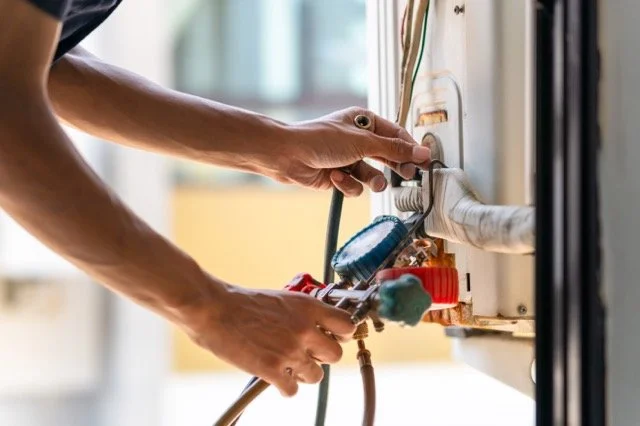
Your air conditioner stops working on the hottest day of summer. You walk outside to check the condensing unit and hear a clicking sound, but the compressor never kicks on. You might be dealing with a failed AC contactor — one of the most common electrical components to wear out in residential cooling systems.
We've replaced hundreds of contactors across Sterling Heights, Clinton Township, and Macomb County over the past 35 years. It's a straightforward repair when caught early, but homeowners often mistake the symptoms for more serious problems. This guide walks through what an AC contactor actually does, the warning signs it's failing, what replacement costs in the Sterling Heights area, and when to call for professional AC repair services.
What Is an AC Contactor and Why Does It Matter?
The contactor is an electromagnetic switch inside your outdoor condensing unit. When your thermostat calls for cooling, it sends a low-voltage signal (typically 24 volts) to energize the contactor coil. That coil pulls a set of contacts together, completing a 240-volt circuit that powers your compressor and condenser fan motor.
Think of it as a heavy-duty relay. The thermostat can't directly handle the high amperage required to run the compressor — that's where the contactor comes in. It bridges the gap between your low-voltage control circuit and the high-voltage power circuit.
Most residential AC systems use single-pole or double-pole contactors rated for 30 to 40 amps. The contacts are typically made of silver alloy designed to handle repeated arcing as they open and close. Over time, that arcing causes pitting and carbon buildup, which eventually prevents proper contact closure.
When a contactor fails, your AC loses the ability to complete the power circuit. The compressor won't start, the outdoor fan won't spin, and you're left with warm air blowing through the vents. It's a critical component, but fortunately one of the easier parts to replace when you know what you're doing.
5 Warning Signs Your AC Contactor Is Failing
Contactors don't usually fail without warning. Here's what we see most often when diagnosing AC problems in Sterling Heights and surrounding Macomb County communities:
1. Clicking Sound Without Compressor Starting
You hear a rapid clicking from the outdoor unit, but the compressor never engages. This happens when the contactor coil is energizing, but the contacts can't close fully due to pitting or debris. The coil tries repeatedly, creating that distinctive click-click-click sound.
2. AC Won't Turn On at All
The thermostat is set correctly, the breaker is on, but nothing happens when you call for cooling. A completely failed contactor coil won't pull the contacts together, so no power reaches the compressor. This is often confused with a bad capacitor or compressor failure, which is why proper diagnosis matters — more on that in a moment.
3. Intermittent Cooling
The system works fine for a few hours, then stops cooling. After sitting for a while, it works again. Worn contacts can make inconsistent connection, especially as they heat up during operation. You might notice this more on the hottest days when the system runs continuously.
4. Visible Pitting or Burn Marks on Contacts
If you open the condensing unit and look at the contactor, you can often see the damage. The silver contacts should be smooth and shiny. Pitted, blackened, or eroded contacts indicate arcing damage and imminent failure. We recommend annual inspections as part of our Next Care Plan specifically to catch these issues before they leave you without cooling.
5. Humming from the Outdoor Unit
A low humming sound from the condenser with no compressor start can indicate a stuck contactor or one that's partially closed. The compressor is trying to start but can't get enough voltage through degraded contacts. This situation can damage the compressor if left unaddressed, turning a simple contactor replacement into a much more expensive repair.
Tech Note: We see a lot of homeowners assume these symptoms mean the compressor is shot. Before replacing a compressor — which can cost $1,500 to $3,000 — always verify the contactor, capacitor, and electrical connections. A $200 contactor replacement beats a $2,500 compressor swap every time.
What Causes AC Contactors to Fail in Michigan?
Contactors are wear items. They're designed to cycle on and off thousands of times, but they don't last forever. Here's what accelerates failure in Southeast Michigan systems:
Electrical stress from hot summers: When outdoor temperatures hit 90°F and above — which we see regularly in Sterling Heights from June through August — AC systems run longer cycles. More runtime means more contact closures, which means faster wear. A system running 8-10 hours a day in summer will cycle the contactor 15-20 times daily.
Age and wear: Most contactors last 10 to 15 years under normal conditions. If your AC system is approaching that age and you've never replaced the contactor, it's on borrowed time. The silver alloy contacts erode with each arc, and eventually there's not enough material left to make solid contact. Similar to how aging AC units show multiple signs of wear, contactors degrade predictably over time.
Power surges and voltage fluctuations: Michigan summer storms bring lightning strikes and grid fluctuations. A voltage spike can weld contactor contacts together or burn out the coil. We always recommend whole-home surge protection for HVAC equipment, especially if you've invested in a newer high-efficiency system from Carrier, Lennox, or Trane.
Debris and moisture in outdoor units: Condensing units sit outside year-round, exposed to rain, snow, cottonwood seeds, grass clippings, and everything else Michigan weather throws at them. Moisture can corrode electrical connections. Debris can interfere with contact closure. Keeping the area around your outdoor unit clear and scheduling annual cleanings prevents a lot of premature failures.
Undersized or oversized contactors: Some budget AC installations use contactors that aren't properly rated for the compressor amperage. An undersized contactor will overheat and fail quickly. Oversized contactors can have issues with proper magnetic pull. When we install systems — whether it's a Goodman, Bryant, or Rheem — we always match contactor specs to manufacturer requirements.
AC Contactor Replacement Cost in Sterling Heights
Let's talk real numbers. Here's what contactor replacement costs in the Sterling Heights, Macomb County, and Southeast Michigan market as of 2026:
Parts cost: A replacement contactor typically runs $25 to $75 depending on amperage rating and brand. Single-pole contactors for smaller systems are cheaper. Double-pole contactors for larger tonnage units or heat pump systems cost more. We stock contactors for all major brands — Carrier, Lennox, Trane, Rheem, Bryant, Goodman, Amana, York, and RUUD.
Labor cost: Expect to pay $150 to $250 for professional installation. That includes diagnostic time, electrical safety checks, proper wire termination, and system testing. A qualified NATE-certified technician can typically complete the job in 30 to 60 minutes, but you're paying for expertise and safety, not just wrench time.
Total replacement cost: Most homeowners in Sterling Heights pay between $175 and $325 for complete contactor replacement, including parts and labor. If you're a Next Care Plan member, you receive 10% off repair costs and no service call fees, which can bring that down to $160 to $290.
Factors that affect price: Emergency service calls (evenings, weekends, holidays) typically carry premium rates. If the contactor failure caused secondary damage — like a burned wire or damaged capacitor — repair costs increase. And if your system uses a hard-to-source contactor for an obsolete model, parts cost can climb.
Cost Reality Check: Some companies quote $400 to $600 for contactor replacement, banking on homeowner panic during a breakdown. That's excessive for a straightforward repair. Get a second opinion if a quote seems inflated. Our pricing philosophy at NEXT Heating & Cooling is transparent — we show you the failed part, explain what it does, and give you fair pricing without upselling unnecessary equipment.
Can You Replace an AC Contactor Yourself?
Technically, yes. Practically, we don't recommend it unless you have electrical experience. Here's why:
You're working with 240-volt power. The contactor sits on the high-voltage side of your AC system. Touch the wrong terminal with power on, and you're getting shocked — potentially fatally. Even with the breaker off, capacitors can hold a charge that'll knock you on your back. This isn't a YouTube DIY project for someone without electrical training.
Misdiagnosis is common. Homeowners often replace the contactor when the real problem is a bad capacitor, seized compressor, or faulty thermostat wiring. You can spend money on parts that don't fix the issue. A qualified technician tests voltage, amperage, and continuity to confirm the diagnosis before replacing anything. That's the difference between a $200 fix and a $500 parts-swapping experiment.
Improper installation creates new problems. Wire terminals must be torqued correctly. Loose connections overheat and fail. Wires must be properly sized for amperage. The contactor must be mounted securely. Get any of this wrong, and you're creating a fire hazard or premature failure. Much like diagnosing why an AC isn't blowing cold air, contactor replacement requires systematic electrical troubleshooting.
You lose warranty protection. Most manufacturers void equipment warranties if unlicensed individuals perform repairs. If your AC is still under warranty and you DIY a contactor replacement, you might forfeit coverage on the compressor, coil, or other components. That's a costly gamble.
What a tech checks beyond the contactor: When we diagnose a no-start AC in Sterling Heights or Clinton Township, we don't just swap the contactor and leave. We test the dual run capacitor, check compressor windings, verify proper voltage at the disconnect, inspect wire insulation for damage, measure amp draw during startup, and confirm the thermostat is sending the correct signal. We're looking at the whole system, not just one component.
If you're comfortable working with electrical systems and understand the risks, replacing a contactor is mechanically simple — it's usually four wire terminals and two mounting screws. But for most homeowners, the $200 service call is money well spent for safety, proper diagnosis, and peace of mind.
How to Prevent Premature Contactor Failure
You can't eliminate contactor wear — it's a consumable part — but you can extend its lifespan and catch problems early:
Schedule annual AC maintenance. A spring tune-up before cooling season starts should include contactor inspection. Your technician will look for pitting, measure voltage drop across the contacts, and clean any carbon buildup. Catching a degraded contactor before it fails completely means you can schedule replacement at your convenience instead of during a 95-degree emergency.
Install whole-home surge protection. A quality surge protector at your electrical panel protects HVAC equipment from voltage spikes. It won't stop every surge, but it'll handle most grid fluctuations and nearby lightning strikes. This is especially important if you've invested in a variable-speed Carrier or Lennox system with sensitive electronics.
Keep the outdoor unit clean. Clear debris from around the condensing unit. Trim back vegetation at least 2 feet. Hose down the condenser coils annually (with power off) to remove cottonwood seeds, grass clippings, and dirt. A clean unit runs cooler, which reduces electrical stress on all components including the contactor.
Don't short-cycle the system. Constantly adjusting your thermostat up and down forces the contactor to cycle repeatedly. Every cycle creates an arc across the contacts, accelerating wear. Set your thermostat to a comfortable temperature and leave it. If your system is short-cycling on its own, that's a separate problem — often a bad thermostat or oversized equipment — that needs professional attention. We've covered why short-cycling happens and how to fix it in detail.
Consider the Next Care Plan. Our $5/month maintenance plan includes two annual tune-ups — one for your furnace in fall, one for your AC in spring. During those visits, we inspect contactors, capacitors, electrical connections, and all wear components. Members get priority scheduling, 10% off repairs, and no service call fees. It's the most cost-effective way to prevent small problems from becoming expensive emergencies.
Preventive maintenance reduces HVAC failures by an estimated 60%. For a $60 annual investment, you're protecting a $5,000 to $10,000 cooling system. The math is pretty straightforward.
Need AC Repair in Sterling Heights?
NEXT Heating & Cooling has served Macomb County homeowners for over 35 years with honest diagnostics and fair pricing. Our NATE-certified technicians show up on time, explain the problem clearly, and give you options without pressure. No commission-based sales. Just old-school service done right.
Schedule Your Service