

Heating Repair Near Me: What Michigan Homeowners Actually Need

Your furnace stopped working at 11 PM on a Tuesday in January. The thermostat says 72, but your house feels like 58 and dropping. You grab your phone and search "heating repair near me" because you need someone qualified, local, and honest. Not tomorrow. Tonight.
We get that call dozens of times every winter across Macomb, Oakland, and St. Clair counties. After 35 years keeping Michigan homes warm, we know what homeowners actually need when they search for heating repair: fast diagnosis, transparent pricing, and a technician who shows up when they say they will. This guide explains what heating repair really involves in Southeast Michigan, what it costs, and how to find a contractor you can trust when your furnace quits during a polar vortex.
What "Heating Repair Near Me" Actually Means in Michigan
When Michigan homeowners search for heating repair, they are usually dealing with one of three systems: forced-air furnaces (gas or electric), boilers (hot water or steam), or heat pumps. In Southeast Michigan, natural gas forced-air furnaces dominate. They account for roughly 80% of residential heating systems we service in Sterling Heights, Troy, and Clinton Township.
A forced-air furnace pulls cold air from your home through return ducts, heats it using a gas burner and heat exchanger, then pushes the warm air back through supply ducts using a blower motor. When any component in that chain fails, you lose heat. The repair could be a $150 thermostat replacement or a $1,200 blower motor swap. The only way to know is a proper diagnostic from a licensed technician.
Boiler systems are less common but still present in older homes across Royal Oak and Grosse Pointe Farms. They heat water and distribute it through radiators or radiant floor systems. Heat pumps, which both heat and cool, are gaining ground in new construction and energy-conscious retrofits. Our team handles all three, but the diagnostic process and repair costs vary significantly by system type.
Michigan-Specific Context: Polar vortex events, lake-effect cold snaps, and multi-day sub-zero stretches put extreme stress on heating systems. A furnace that cycles normally at 20°F might short-cycle, overheat, or fail completely at -10°F. We see a spike in heating repair calls every time the National Weather Service issues a wind chill warning.
Emergency repairs differ from scheduled service calls. If your furnace stops working on a Friday night in December, you need 24-hour emergency HVAC service, not a Tuesday morning appointment. At NEXT Heating & Cooling, our emergency response protocol prioritizes homes with no heat and vulnerable occupants (young children, elderly residents, medical conditions). We carry common parts on every truck to minimize repeat visits.
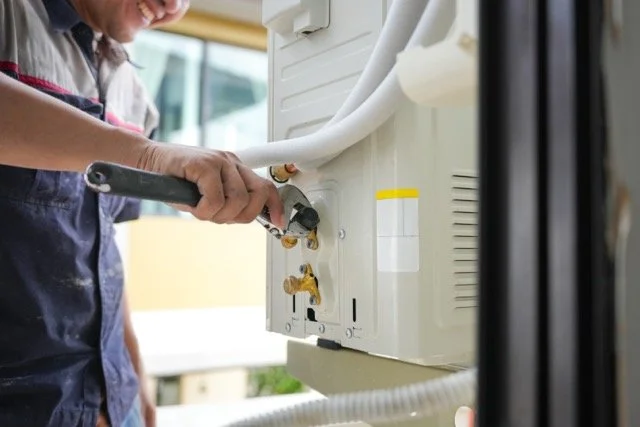
Most Common Furnace Repairs We See in Southeast Michigan
Over three decades of service calls, certain failures show up again and again. Here are the five most common heating repairs we diagnose in Macomb and Oakland counties, listed by frequency.
Ignition System Failures
Modern gas furnaces use electronic ignition (hot surface igniters or spark igniters) instead of standing pilot lights. Hot surface igniters are silicon carbide or silicon nitride elements that glow red-hot to ignite the gas. They crack over time, especially in furnaces that cycle frequently. A cracked igniter will not light the gas, so your furnace blows cold air or shuts down on the first cycle.
Replacement cost: $200 to $400 including labor. The part itself runs $50 to $150 depending on the furnace brand. Carrier, Lennox, and Trane igniters are widely available. Older or discontinued models sometimes require special orders, which adds a day or two to the repair timeline.
Blower Motor and Capacitor Issues
The blower motor circulates air through your ductwork. If it fails, your furnace might heat air but never distribute it, or it might not start at all. Blower motors wear out from continuous use, lack of lubrication, or debris buildup on the squirrel cage fan. Capacitors (which give the motor an electrical boost to start) fail more often than the motors themselves.
Capacitor replacement: $150 to $300. Blower motor replacement: $400 to $800. Variable-speed ECM (electronically commutated motor) blowers cost more than single-speed PSC (permanent split capacitor) motors but run quieter and more efficiently. If your furnace is 15+ years old and the blower motor fails, we discuss whether replacement makes more sense than repair, especially if furnace short-cycling or other issues are also present.
Cracked Heat Exchangers
The heat exchanger is a series of metal chambers where combustion gases heat the air circulating through your home. Over years of heating and cooling cycles, metal fatigue causes cracks. A cracked heat exchanger can leak carbon monoxide into your home's air supply. This is a safety-critical failure.
If we find a cracked heat exchanger during a diagnostic, we red-tag the furnace and recommend immediate replacement. Heat exchanger replacement is technically possible but rarely cost-effective. The part alone can run $800 to $1,500, and labor adds another $600 to $1,200. For a furnace older than 12 years, replacement is almost always the smarter financial decision. We walk homeowners through the numbers with zero pressure.
Symptoms of a cracked heat exchanger include soot buildup, visible corrosion, flame rollout, or a persistent smell of formaldehyde or exhaust. If you see any of these signs, shut down your furnace and call for service immediately. Carbon monoxide is odorless and deadly.
Thermostat Malfunctions
Sometimes the furnace is fine. The thermostat is lying. Mechanical thermostats drift out of calibration. Digital thermostats lose their connection to the furnace due to loose wiring, dead batteries, or software glitches. A thermostat reading 68°F when the room is actually 62°F will never trigger the furnace to run.
Thermostat troubleshooting is part of our standard diagnostic. We test voltage at the furnace control board, verify the thermostat is calling for heat, and check for short circuits in the low-voltage wiring. Replacement costs range from $150 for a basic Honeywell model to $400 for a Wi-Fi-enabled smart thermostat with multi-stage heat and cool programming. For homeowners interested in energy savings, we explain whether smart thermostats actually save money in Michigan climates.
Ductwork Leaks and Airflow Problems
Your furnace might be working perfectly, but if 30% of your heated air leaks into the attic or crawlspace through gaps in the ductwork, you will never feel warm. Duct leaks are especially common in homes built in the 1960s and 1970s, where original ductwork was sealed with cloth-backed tape that deteriorates over time.
We use a combination of visual inspection, pressure testing, and thermal imaging to locate leaks. Sealing ductwork with mastic and metal-backed tape costs $300 to $800 depending on accessibility. In severe cases, sections of ductwork need replacement. Proper duct sealing can improve furnace efficiency by 15% to 25%, which translates to lower gas bills and more consistent temperatures throughout your home.
What Heating Repair Actually Costs in Metro Detroit
Pricing transparency matters. Homeowners deserve to know what they are paying for before the work starts. Here is how heating repair costs break down in Southeast Michigan based on our service data from the past three years.
Diagnostic Fee Structure
Most heating and cooling services in Metro Detroit charge a diagnostic fee to cover the technician's time, truck costs, and expertise. Our diagnostic fee is $89 for standard service hours (Monday through Friday, 8 AM to 5 PM) and $149 for after-hours or weekend calls. If you approve the repair, we credit the diagnostic fee toward the total cost.
The diagnostic includes a full system inspection: igniter, flame sensor, pressure switches, gas valve, blower motor, capacitor, heat exchanger, thermostat wiring, and airflow measurement. We test the furnace through multiple cycles to replicate the failure condition. You get a written estimate before any repair work begins.
Common Repair Price Ranges
- Thermostat replacement: $150 to $400
- Flame sensor cleaning: $100 to $200
- Igniter replacement: $200 to $400
- Pressure switch replacement: $200 to $350
- Capacitor replacement: $150 to $300
- Blower motor replacement: $400 to $800
- Gas valve replacement: $400 to $700
- Inducer motor replacement: $450 to $750
- Control board replacement: $300 to $600
- Ductwork sealing (moderate): $300 to $800
Emergency service outside normal business hours adds a premium. Our after-hours rate is typically 1.5x the standard labor rate. If your furnace dies at 2 AM on Christmas Eve, you pay more than you would on a Tuesday afternoon in October. That premium covers technician availability, parts inventory, and the operational costs of running a 24/7 service.
Repair vs. Replace Decision Framework
Not every furnace failure justifies repair. We use a straightforward decision framework: if the repair cost exceeds 50% of replacement cost AND the furnace is older than 12 years, replacement usually makes more financial sense. For example, if your 16-year-old furnace needs a $1,200 blower motor and a new high-efficiency furnace costs $4,500 installed, you are better off replacing.
Age, efficiency, and total repair history all factor into the equation. A 10-year-old Carrier furnace with a 96% AFUE (Annual Fuel Utilization Efficiency) rating that needs a $400 igniter? Repair it. A 20-year-old builder-grade unit with 80% AFUE that has already had three repairs in the past five years? Time to replace. We present both options with real numbers and let homeowners decide. No commission-based sales pressure.
For homeowners weighing whether to replace furnace and AC together, bundling the jobs often reduces total installation cost and ensures both systems are properly matched for efficiency.
How to Find a Reliable HVAC Contractor Near You
When your furnace fails, you need a contractor fast. That urgency creates an opening for low-quality operators who show up in unmarked vans, quote inflated prices, and disappear when callbacks are needed. Here is how to separate the professionals from the pretenders.
Michigan Licensing Requirements
In Michigan, anyone working on gas-fired heating equipment must hold a valid Mechanical Contractor License issued by the Department of Licensing and Regulatory Affairs (LARA). The license number should be visible on the contractor's website, truck, and invoices. You can verify the license status at michigan.gov/lara.
NEXT Heating & Cooling operates under Premier Builder Inc., which has held a Michigan Mechanical Contractor License since 1991. Our license covers furnace installation, repair, gas piping, ductwork, and refrigeration. Unlicensed work voids manufacturer warranties and creates liability if something goes wrong.
NATE Certification Matters
NATE (North American Technician Excellence) is the leading certification for HVAC technicians. It tests real-world knowledge of heating, cooling, and refrigeration systems through proctored exams. A NATE-certified technician has proven competency in diagnostics, installation, and service.
Our entire service team is NATE-certified. That means they understand refrigerant pressures, combustion analysis, airflow calculations, and electrical troubleshooting at a level that far exceeds the basic licensing requirements. When you call a reliable HVAC contractor in Metro Detroit, ask if their technicians are NATE-certified. If the answer is vague, keep looking.
Red Flags to Avoid
- No written estimate: Any contractor who starts work without a signed estimate is a lawsuit waiting to happen.
- Cash-only pricing: Legitimate businesses accept checks and credit cards. Cash-only operators are often unlicensed and uninsured.
- High-pressure sales tactics: "Your heat exchanger is cracked and you need a new furnace today or your family is in danger." If a technician uses fear to close a sale, get a second opinion.
- No company vehicle or uniform: Professionals arrive in marked trucks with company logos, not personal cars.
- Refusal to pull permits: Furnace replacements require permits in most Michigan municipalities. A contractor who skips permits is cutting corners elsewhere too.
Questions to Ask Before Hiring
Before you commit to a heating repair contractor, ask these five questions:
- What is your Michigan Mechanical Contractor License number?
- Are your technicians NATE-certified?
- Do you carry liability insurance and workers' compensation?
- What does your diagnostic process include?
- Can you provide references from recent heating repair customers in my area?
If a contractor hesitates on any of these questions, move on. There are plenty of qualified HVAC companies in Southeast Michigan. You do not need to settle for mediocrity when your family's comfort and safety are at stake. Our guide on choosing an HVAC contractor you can trust walks through the full vetting process.

When to Call for Emergency Heating Repair
Not every furnace problem requires an emergency call. A furnace that cycles off after 10 minutes can wait until morning. A furnace leaking gas or producing carbon monoxide cannot. Here is when to call immediately.
Gas Smell Protocol
Natural gas smells like rotten eggs (mercaptan is added for safety). If you smell gas near your furnace, follow this protocol:
- Do not touch any electrical switches or create sparks.
- Evacuate everyone from the house.
- Call your gas utility (DTE Energy or Consumers Energy) from outside.
- Once the utility clears the home, call an HVAC contractor for furnace diagnostics.
Gas leaks can occur at the furnace gas valve, supply line connections, or inside the heat exchanger. A cracked heat exchanger allows combustion gases (including carbon monoxide) to mix with your home's air supply. This is why we red-tag furnaces with confirmed heat exchanger cracks.
Carbon Monoxide Signs
Carbon monoxide (CO) is colorless, odorless, and deadly. Symptoms of CO exposure include headache, dizziness, nausea, confusion, and shortness of breath. If multiple people in your household develop these symptoms simultaneously, evacuate and call 911.
Every Michigan home with a gas furnace should have working CO detectors on every floor. Replace detector batteries annually and replace the units themselves every seven years. If your CO detector alarms, take it seriously. Open windows, evacuate, and call for help.
System Completely Dead in Sub-Zero Temps
If your furnace stops working when outdoor temperatures are below zero, you have a time-sensitive problem. Most homes lose 1 to 2 degrees per hour in extreme cold. Within 12 hours, indoor temperatures can drop into the 40s, which risks frozen pipes and structural damage.
This is when 24/7 emergency HVAC service earns its premium. We prioritize calls from homes with no heat, especially those with young children, elderly residents, or medical conditions that make cold exposure dangerous. Our average emergency response time in Macomb and Oakland counties is under two hours.
Strange Noises or Burning Smells
Loud banging, screeching, or rumbling from your furnace indicates mechanical failure. A burning smell (not the normal dust-burning smell during first startup) suggests electrical problems or overheating. Shut down the furnace and call for service. Continuing to run a furnace with these symptoms can turn a $300 repair into a $3,000 replacement.
Understanding what to do when your furnace smells like gas can prevent dangerous situations from escalating.
How Preventative Maintenance Reduces Repair Costs
The best heating repair is the one you never need. Annual furnace maintenance catches small problems before they become expensive failures. A dirty flame sensor that takes five minutes to clean during a tune-up becomes a no-heat service call at midnight if left alone.
What a Furnace Tune-Up Includes
Our fall furnace maintenance visit includes:
- Visual inspection of heat exchanger for cracks or corrosion
- Combustion analysis to verify proper gas-to-air ratio
- Igniter and flame sensor inspection and cleaning
- Blower motor lubrication and amp draw test
- Capacitor voltage test
- Thermostat calibration check
- Gas pressure measurement at the manifold
- Flue pipe and vent inspection
- Air filter replacement (if customer provides filter)
- Full system test through multiple heating cycles
This process takes 45 to 60 minutes. It identifies wear patterns, efficiency losses, and safety hazards before they strand you without heat. For a detailed breakdown, see our furnace inspection checklist that explains what Michigan techs actually look for.
Next Care Plan Structure
Our Next Care Plan costs $5 per month ($60 per year) and includes two annual home visits: a fall furnace tune-up and a spring AC tune-up. Members also receive priority scheduling, 10% off all repairs, and no service call fees.
The cost avoidance data is clear. Homeowners who skip annual maintenance face average furnace repair costs of $1,500 to $4,000 over the life of the system. Those who maintain their furnaces annually spend $300 to $800. The difference comes from catching failures early. A $150 capacitor replacement during a tune-up prevents a $600 blower motor failure six months later.
Energy waste adds up too. A dirty furnace runs 15% to 20% less efficiently than a clean one. For a typical Southeast Michigan home using 800 therms of natural gas per heating season, that inefficiency costs $300 to $600 annually. Maintenance pays for itself in energy savings alone.
When to Schedule Maintenance
Schedule furnace maintenance in September or early October, before the first hard freeze. Waiting until November means competing with emergency repair calls when furnaces start failing. Our fall schedule fills up fast. Early birds get their pick of appointment times.
For homeowners who want to handle basic upkeep themselves, our furnace maintenance guide covers what Michigan homeowners can do between professional visits.
Need Heating Repair in Southeast Michigan?
NEXT Heating & Cooling has kept Michigan homes warm for over 35 years. Our NATE-certified technicians provide honest diagnostics, transparent pricing, and 24/7 emergency service across Macomb, Oakland, and St. Clair counties. No upselling. No pressure. Just reliable heating repair when you need it most.
Schedule Your Heating RepairFrequently Asked Questions
Heating repair costs in Southeast Michigan range from $150 for simple fixes like thermostat replacement or flame sensor cleaning to $800+ for blower motor or gas valve replacement. The diagnostic fee is typically $89 to $149 and gets credited toward approved repairs. Emergency after-hours service adds a 1.5x premium. Total cost depends on the specific failure, furnace age, and parts availability.
Our average emergency response time in Macomb and Oakland counties is under two hours. We prioritize no-heat calls, especially homes with young children, elderly residents, or medical conditions. Our technicians carry common furnace parts on every truck to minimize repeat visits. For non-emergency repairs, we typically schedule within 24 to 48 hours during the heating season.
If the repair cost exceeds 50% of replacement cost AND your furnace is older than 12 years, replacement usually makes more financial sense. For example, a $1,200 blower motor repair on a 16-year-old furnace is rarely worth it when a new high-efficiency unit costs $4,500 installed. We walk through both options with real numbers and let you decide. No pressure, no commission-based sales tactics.
We service all major furnace brands including Carrier, Lennox, Trane, Rheem, Bryant, Goodman, Amana, York, and RUUD. Our technicians carry diagnostic tools and common parts for these manufacturers. For older or discontinued models, we can usually source parts within 24 to 48 hours. If parts are no longer available, we discuss replacement options.
Yes, we offer financing options for both repairs and replacements through approved lenders. This helps homeowners manage unexpected repair costs or spread the investment in a new high-efficiency furnace over time. We can discuss financing options during the diagnostic visit before any work begins.
Annual furnace maintenance is the most effective prevention strategy. A fall tune-up catches small problems before they become expensive failures. Change your air filter every 30 to 90 days depending on filter type and household conditions. Keep the area around your furnace clear of storage and debris. Schedule maintenance in September or early October before the heating season starts. Our Next Care Plan includes two annual visits (fall furnace, spring AC) for $5 per month.
First, check the obvious: thermostat set to HEAT mode and temperature above current room temp, furnace power switch ON, circuit breaker not tripped, air filter not completely clogged. If those check out and you still have no heat, call for emergency service. If outdoor temps are below freezing, do not wait until morning. A furnace failure in sub-zero weather can lead to frozen pipes and structural damage within hours.